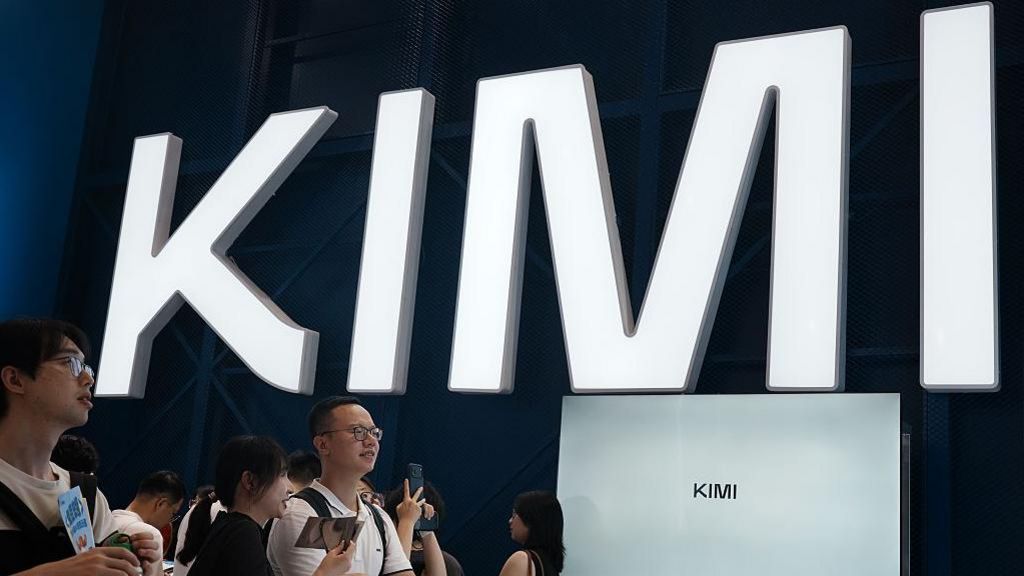
Tensions between the United States and China over artificial intelligence innovation and intellectual property have escalated sharply this week, after senior Trump administration officials publicly accused Beijing-based Moonshot AI of carrying out a large-scale campaign to steal core capabilities from leading U.S. AI models.
Michael Kratsios, Trump’s top science and technology advisor, made the allegations in a public post on the social platform X on Wednesday. He claimed that Moonshot AI used a technical technique called model distillation — a process where a smaller, less advanced model extracts specialized knowledge and response capabilities from a more powerful, established model — to copy cutting-edge AI performance for its recently launched Kimi K3 large language model. Specifically, Kratsios stated that U.S. government intelligence indicates Moonshot distilled capabilities from Anthropic’s Fable AI model to develop Kimi K3.
Beyond the distillation allegations, Kratsios also claimed that Moonshot AI illegally obtained access to restricted, cutting-edge AI computing infrastructure built on Nvidia’s latest GB300 Grace Blackwell platform, which powers high-performance AI model training. Washington first implemented sweeping export restrictions on Nvidia’s most advanced AI chips back in 2022, citing national security concerns over potential military use by China, and governments around the world have since ramped up enforcement efforts to crack down on illegal smuggling of the restricted hardware.
These latest accusations come one day after U.S. Treasury Secretary Scott Bessent warned on Tuesday that the Biden — correction, Trump administration — would launch formal investigations into whether Chinese AI developers have stolen proprietary capabilities from U.S. competitors. Speaking again on Wednesday, Bessent confirmed that economic sanctions would remain a key policy option if Chinese firms “cross the line” and engage in large-scale industrial IP theft through what he labeled “industrial-scale distillation attacks.”
“ We support open-source AI and the innovation it unlocks. But open source is not open season on American IP,” Bessent stated in his social media remarks.
The heightened scrutiny of Chinese AI firms from U.S. officials arrives just months ahead of a planned meeting between U.S. President Donald Trump and Chinese President Xi Jinping scheduled for September, adding a new point of friction to already tense bilateral relations focused heavily on technology and trade competition.
Kimi K3, which was publicly unveiled just last week, quickly drew global attention from AI researchers and industry observers, with many independent analysts noting that the model appears to have significantly narrowed the performance gap between top Western AI models and leading Chinese-developed alternatives. Moonshot AI itself has publicly claimed that Kimi K3 matches or exceeds the performance of the most advanced U.S.-built large language models currently on the market. The company is set to release Kimi K3 as an open-source model on July 27, marking the first large-scale AI model of its size to be made available for free public download and custom modification by developers around the world.
This is not the first time U.S. AI firms have levied such distillation theft allegations against Chinese technology companies. Just last month, leading U.S. AI developer Anthropic accused Chinese e-commerce and technology giant Alibaba of illegally extracting capabilities from its popular Claude AI model via the same distillation technique. At the time, Anthropic called on U.S. Congress to impose penalties on the firms behind the alleged attacks and strengthen regulatory and enforcement measures to block theft of U.S. AI technology.
Back in April, the White House already announced it would deepen collaboration with domestic AI companies to counter what it called “industrial-scale campaigns” by foreign competitors to steal proprietary U.S. technology. In a policy memo released that month, Kratsios argued these campaigns are designed to “systematically undermine American research and development and access proprietary information.”
As of Wednesday, the BBC has reached out to all relevant parties — Moonshot AI, Anthropic, the White House, and Nvidia — for official comment on the latest allegations, but no formal responses have been published yet.