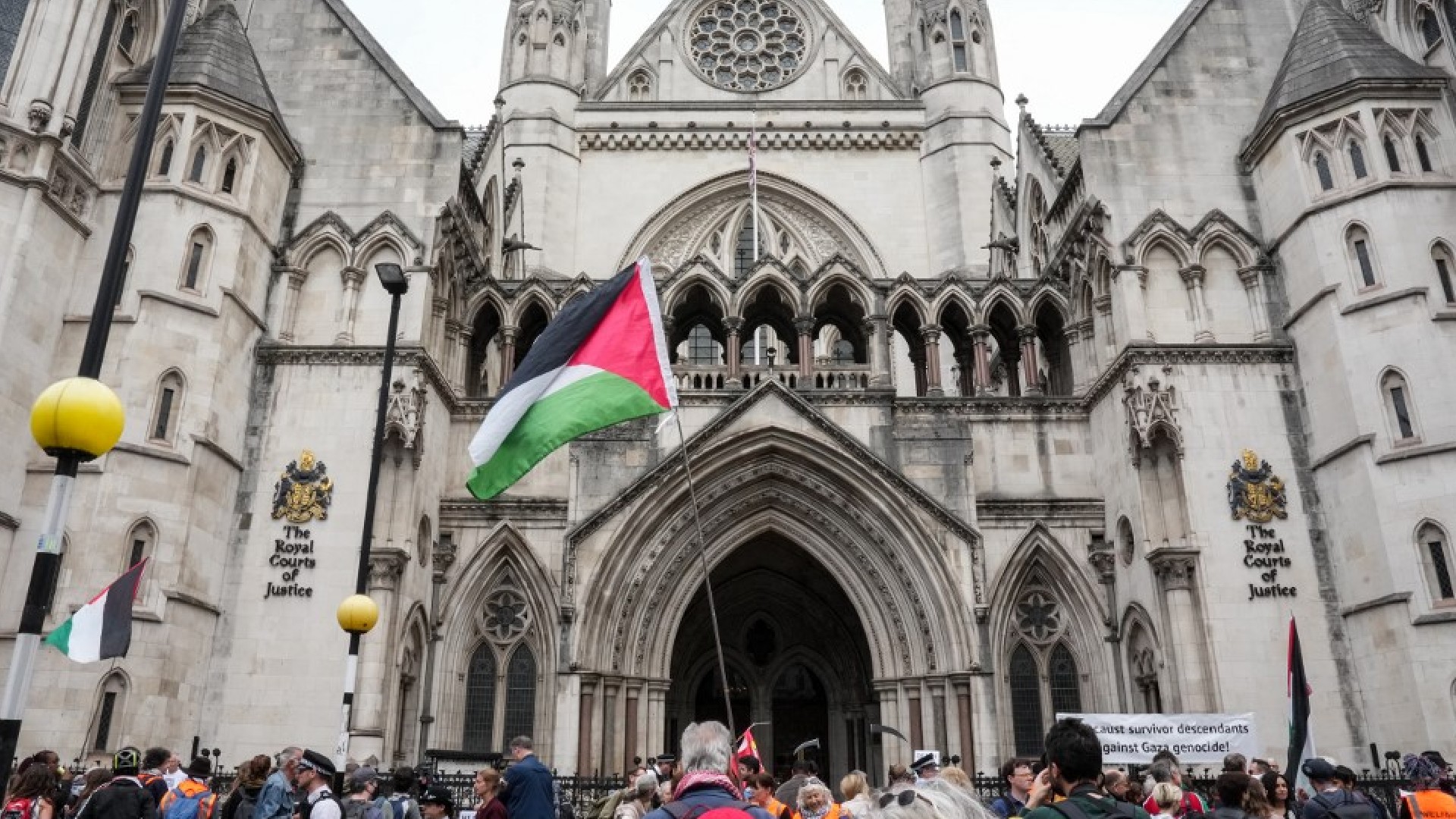
A high-profile contempt of court prosecution targeting a top human rights barrister in the United Kingdom is already creating widespread anxiety across the country’s criminal bar, senior legal leaders have warned. The case centers on Rajiv Menon KC, who represented six activists from the pro-Palestinian advocacy group Palestine Action earlier this year. The activists stood trial on accusations of inflicting criminal damage to weapons stored at an Israeli-owned arms manufacturing facility located outside Bristol.
The allegations against Menon stem from his closing speech delivered in January at the end of the activists’ trial. Trial judge Mr Justice Johnson had explicitly barred the defense team from referencing the jury’s long-standing right to issue an acquittal based on personal conscience. Menon stands accused of violating that judicial direction by raising the issue during his final address to the jury.
At an online gathering of senior legal professionals organized in support of Menon this week, Criminal Bar Association chair Riel Karmy-Jones KC confirmed that the case has already altered the daily work of defense barristers across the UK. “Lawyers are already changing their speeches or being told to change them,” Karmy-Jones told attendees. She emphasized that the uncertainty created by the prosecution cannot be dismissed, noting that criminal barristers now face growing anxiety over the limits of what they can say while representing their clients. “People at the criminal bar have become uncertain and scared of what they can and can’t say, scared that somehow they might be, at the end of a trial where they have faithfully represented their client themselves, facing a charge of criminal contempt,” she added.
The legal process around the case has already faced major procedural pushback. In May, the Court of Appeal ruled that Johnson had acted unlawfully when he directly referred the contempt allegations against Menon to the High Court. The three-judge panel made clear that Johnson was required to either rule on the matter himself during the original trial or pass the case to the UK attorney general for review. Despite that ruling, Johnson refused both options after a subsequent hearing last month, and again referred the case to a separate High Court judge, stating he had concluded Menon “has a case to answer in contempt” and that opening formal proceedings “is in the public interest.” In late June, High Court Justice Nicklin ruled there was “sufficient material to justify the institution of contempt proceedings” against Menon, clearing the way for a formal hearing.
Pete Weatherby KC, who chaired the pro-Menon online meeting, questioned the judge’s decision to bypass the attorney general. “If there was a case to answer, so serious that the public interest pointed toward prosecution, it should obviously have been referred to the AG, and I cannot begin to imagine why the judge thought otherwise,” Weatherby said.
Menon is scheduled to appear for his contempt hearing next week. The barrister confirmed he filed an appeal to push for a delay on Monday, but the trial judge notified him shortly before this week’s support meeting that the hearing date would not be rescheduled. Menon told attendees that his legal team had now filed an urgent appeal to the Court of Appeal to challenge the ruling.
Senior legal figures have levied harsh criticism at the handling of the case, arguing it undermines core principles of the UK justice system. Henry Blaxland KC called the prosecution’s active involvement in pushing for contempt proceedings “disturbing,” noting that the case was initiated via a prosecution submission to the judge. Blaxland argued the move amounts to an “abuse of prosecutorial power.” “If something has happened in the face of the court, it is for the judge to decide whether or not his or her order has been ignored,” Blaxland explained. “The prosecution may raise concerns, but to positively advocate for proceedings to be taken, it seems to me that a line has been overstepped. By initiating these proceedings, the trust between the prosecution and defence has been fundamentally betrayed, it has been broken.”
Raju Bhatt, founder of leading public interest and human rights law firm Bhatt Murphy, went further, arguing that the rule of law itself has been violated not by Menon, but by senior judicial figures. Bhatt referenced the Court of Appeal’s earlier ruling that found two senior judges – Johnson and the initially assigned Justice Edis – had exceeded their legal authority. Bhatt also argued the entire proceedings against Menon are rooted in “fear that the jury might do the right thing” by acquitting the Palestine Action activists.
Liz Davies KC, who attended the online support gathering, told Middle East Eye that roughly 800 people joined the event, including hundreds of lawyers, sitting politicians, and representatives from non-governmental organizations. Davies added that the overwhelming consensus among attendees was deep respect for Menon and widespread shock over the prosecution he now faces. “The unifying message was the extraordinary regard in which Rajiv is held, and the shock that we all have at what is happening to him,” Davies said.