
Thailand’s sun-soaked coastal resort city of Pattaya welcomed busloads of crew members from the U.S. Navy’s USS Abraham Lincoln aircraft carrier on Thursday, marking the first shore stop for the strike group after an unprecedentedly long deployment supporting American operations in the Middle East. The nuclear-powered carrier spent a historic 264 consecutive days at sea before docking at Laem Chabang port in Chonburi province on Wednesday, capping a total deployment of 286 days to date, per official figures from the U.S. Embassy in Bangkok. Two other vessels in the Lincoln’s strike group are also anchored across Thailand: the destroyer USS Frank E. Petersen Jr. is docked at Sriracha port in Chonburi, while the cruiser USS Robert Smalls is stationed at Map Ta Phut in adjacent Rayong province. This extended uninterrupted deployment, which broke previous records for U.S. Navy operations, sparked public concern last month over mounting mental health strain among crew members and critical food supply shortages on board. While U.S. Navy officials sought to minimize reports of these challenges, former President Donald Trump drew widespread attention when he publicly stated the deployment was “not nearly long enough.” For most crew members stepping off the buses carrying them from the port to central Pattaya, the mood after months at sea was one of eager relief. Loaded down with personal luggage, several service members told the Associated Press they were thrilled to explore the Thai resort city. One sailor described the lengthy deployment as “alright” when asked, but declined to share additional comments. Local vendors and tour operators turned out in force outside the Hard Rock Hotel, the designated meeting point for crew organizing trips around Pattaya, hoping to capitalize on the influx of visiting service members. Crowding around arriving sailors, vendors offered everything from handmade souvenirs to pre-planned city tours, though many sailors politely declined offers as they waited for their arranged transportation. A-ngoon Sombat, a local artisan who makes the trip 200 kilometers from her home in central Thailand’s Ayutthaya province every time a U.S. naval vessel docks in Chonburi, set up her stall selling bright woven braided bracelets directly across from the hotel entrance. She had already recorded a handful of sales by midday Thursday, but remained uncertain about how her business would fare over the stop. “There are many vendors around. It’s really up to how lucky each of us are,” she explained. News of the massive aircraft carrier’s arrival also drew crowds of curious onlookers to a popular viewing spot just outside Laem Chabang port by Wednesday evening. Visitors arrived by car and motorcycle, peering through a mesh security fence to catch a glimpse of the 333-meter-long vessel – a length roughly equal to three American football fields – and snapping photos and videos of the massive warship. Many struck up casual conversations with other enthusiasts who shared the goal of seeing the aircraft carrier in person. Keith Eldridge, an American expat who has lived in Thailand for five years, traveled from neighboring Chachoengsao province specifically to see the Lincoln. Though he missed the actual docking, he tracked down the popular viewing spot after a tip from other ship enthusiasts. Eldridge described the massive vessel as an awe-inspiring “engineering marvel.” “When you get to look at something so big, wrapped up with so much technology – the radars, the sonars, the weapon systems, the propulsion systems – it is truly amazing that we can build it, float it, and we fight from it,” he said. Capt. Dan Keeler, the commanding officer of the USS Abraham Lincoln, confirmed the carrier is en route back to its home base in the United States, with the Thai port stop serving as a rest and resupply stop before the final leg of the journey. He noted the strike group may make additional resupply stops before reaching the U.S., but declined to share an exact date for the group’s arrival back on American soil. The carrier is scheduled to depart Thailand this weekend to continue its homeward journey.
标签: Asia
亚洲
-
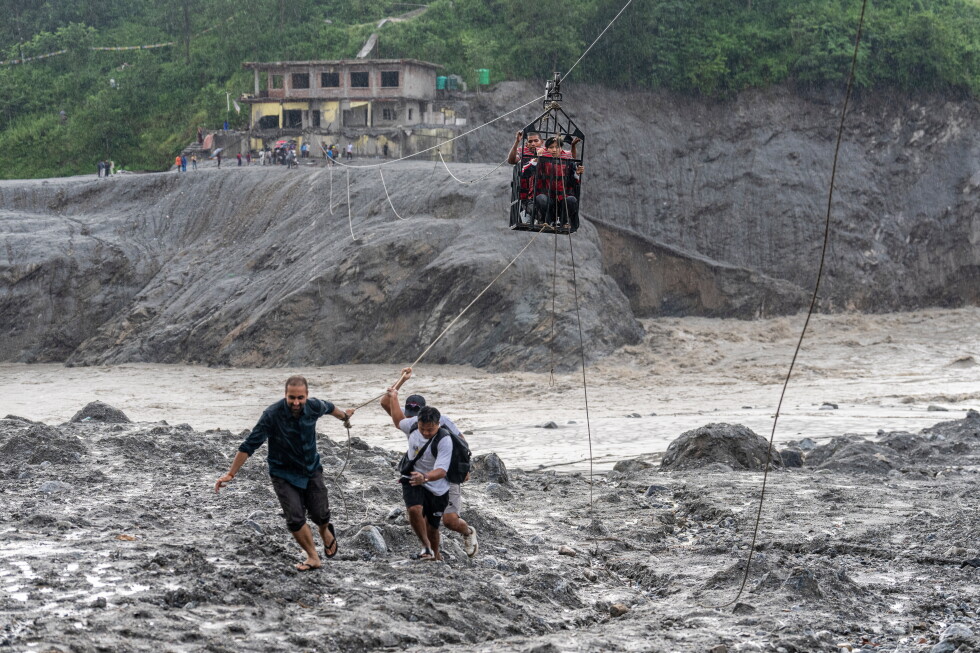
Trading food for medicine and crossing the river by zip line are part of life in Nepal flood zone
Nearly two weeks after catastrophic glacial outburst floods tore through mountain valleys and towns across Nepal, thousands of displaced survivors sheltering in temporary relief camps are still grappling with critical gaps in essential services, even as government agencies deliver basic food provisions to those who lost everything. The disaster, triggered by a glacier collapse on August 26, has become one of South Asia’s deadliest climate-linked disasters in recent years, leaving an unprecedented trail of destruction and loss that continues to disrupt recovery efforts.
For many families already reeling from the loss of loved ones and entire homes, the lack of access to prescription medications and emergency cash has compounded the hardship of life in temporary shelters. Suresh Kumar Karanjit, a resident who has taken shelter at a relief center in Devighat, Nuwakot district, lost his younger brother to the flood’s surging waters last week. Living with a chronic heart condition, Karanjit found that the limited medications available at the camp did not match his required prescription. With no personal cash on hand to purchase his regular drugs, he was forced to sell a carton of relief-issued noodles for 400 Nepalese rupees, equal to roughly $2.60, to cover the cost. “We have been living here for a week, and it is good that relief materials are being provided. But there is a clear lack of appropriate medicine,” Karanjit told reporters in an interview this Thursday.
Official data from Nepal’s disaster management agency puts the confirmed death toll from the disaster at 1,252, with more than 4,200 people still listed as missing. Across the border in China’s Tibet Autonomous Region, authorities reported as of late Wednesday that 21 people had been killed and 541 others remain unaccounted for. In total, close to 4,000 displaced Nepalese residents are currently housed across 32 government-run relief centers spread across the worst-hit regions.
Dharam Raj Uprety, Nepal’s top disaster management official, stated that authorities have established dedicated health camps staffed with licensed doctors and stocked medication at each relief hub, with additional work focused on improving hygiene and sanitation to prevent post-flood disease outbreaks. However, on-the-ground accounts from survivors contradict official claims of full service provision, highlighting gaps in matching the specific medical needs of vulnerable people with chronic conditions.
In hard-hit areas cut off by destroyed transport links, local residents and military personnel have improvised alternative routes to restore basic connectivity. In Bidur town along the Trishuli River, where all permanent bridge crossings were washed away by floodwaters, residents now rely on a makeshift zip line to travel between the two riverbanks. Nepalese Army personnel have been deployed to assist riders as they board and disembark, while dozens of locals wait along the bank for their turn to cross.
In recent days, rescue operations have increasingly shifted focus to collapsed tunnels at several hydropower construction sites across the flood zone, where an estimated 900 workers are believed to have been trapped when debris and floodwaters inundated the passages. Specialized rescue teams from India, China, and the United States have joined the search and recovery effort, but difficult terrain and heavy debris have slowed progress significantly. As of Thursday, there was still no confirmation as to whether any of the trapped workers remain alive.
At the Trishuli-3A hydropower project tunnel, construction crews have begun manually clearing the upper section of the blocked passage, lawmaker Ram Neupane confirmed. An access road to the excavation site was completed over the past week, but additional rock blasting and large-scale debris removal will be required before heavy rescue machinery can be brought into the area.
Climate scientists have long warned that rising global temperatures are accelerating glacial melt across the Himalayan mountain range, increasing the frequency and severity of glacial lake outburst floods and similar catastrophic events like the one that struck Nepal late last month.
-
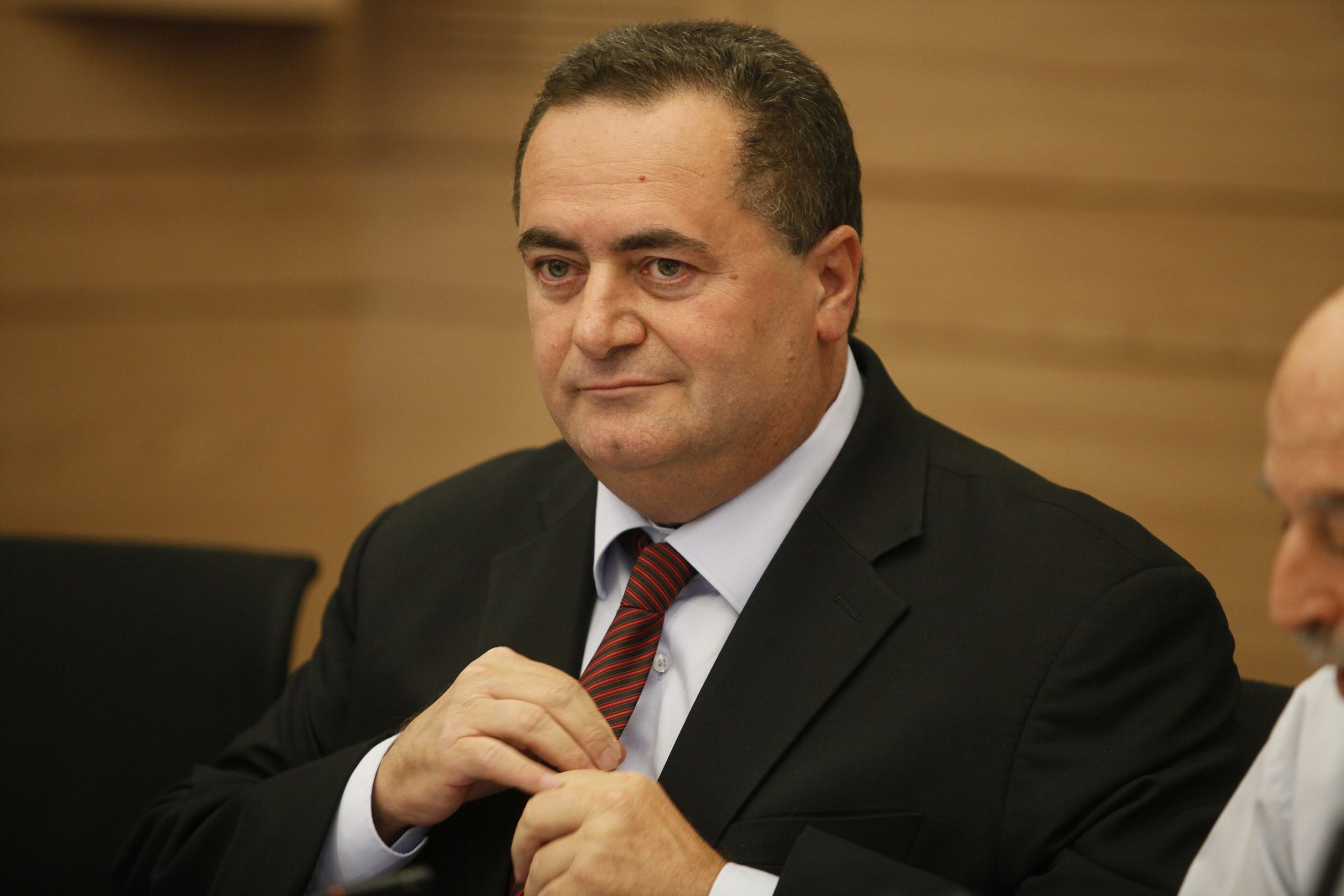
Israeli minister: Palestinians leaving is only ‘solution’ in Gaza
Israeli Defense Minister Israel Katz has publicly confirmed that his country has finalized operational plans to enact a controversial proposal first put forward by former US President Donald Trump that would displace the vast majority of Palestinians from the Gaza Strip. Katz has emerged as one of the most vocal proponents of the plan, which was first unveiled in February 2025: the proposal would require roughly 2 million Palestinians to leave Gaza permanently and resettle in third countries with no right of return, after which Israel would clear the remains of the enclave, which has suffered widespread destruction from more than two years of sustained Israeli military operations that have already displaced most of Gaza’s existing population.
Trump and his Israeli backers have framed the initiative as “voluntary migration,” but the plan has drawn fierce international condemnation. United Nations officials, multiple foreign governments, and leading global human rights organizations have universally condemned the initiative as a deliberate plot to carry out illegal ethnic cleansing against the Palestinian people of Gaza.
Shortly after Trump first announced the proposal, Katz stated he had ordered the Israel Defense Forces to begin developing infrastructure and procedures to facilitate the mass departure of Gaza’s Palestinian population. Notably, the policy of forced displacement was ultimately dropped from the 20-point “peace plan” that Trump formally agreed to in October 2025. However, in an exclusive interview Wednesday with Israeli news outlet Ynet and leading daily newspaper Yedioth Ahronoth, Katz made clear that planning for the relocation has remained on track, and that Israel stands ready to launch the operation immediately once Trump gives the official go-ahead.
“ There is no real solution for Gaza in the end without this migration,” Katz told reporters. He claimed that 80 percent of Palestinians residing in Gaza want to leave the territory permanently, a figure he asserted is consistently backed by public opinion surveys. Katz did not provide specific details about the origin or methodology of the purported surveys, but a May 2026 poll conducted by Israel’s Coordinator of Government Activities in the Territories (COGAT), the Israeli body that manages civilian affairs in occupied Palestinian territories, only found that nearly 80 percent of respondents wanted more information about potential relocation pathways through the Rafah or Kerem Shalom border crossings. The survey question never established that respondents sought permanent departure from Gaza.
Independent surveys conducted by neutral pollsters paint a far different picture: most studies find that between half and a majority of Gaza residents intend to remain in their home territory, even amid the widespread destruction and crippling deprivation that has followed more than two years of conflict.
Katz went on to state that the Israeli government is “fully prepared to move [Palestinians] out if it becomes possible—by sea, by air, by every way possible.” He added that the only factor delaying implementation is a lack of formal US backing for third countries that would agree to accept displaced Palestinians. “Every country that is willing wants American backing. Currently, President Trump didn’t cancel this; he froze it. All the Arab countries came to him due to their pressure on this matter,” Katz said.
Katz suggested that a breakdown in the existing ceasefire and disarmament agreement with Hamas would create the conditions to move forward with the plan. He argued that “the moment will come” when it becomes clear that Hamas has failed to meet its commitments under the Phase 2 disarmament and withdrawal roadmap that the group agreed to in July 2026, which built on the initial October 2025 ceasefire deal between Hamas and Israel.
Israel has claimed that the agreement requires Hamas to fully disarm before Israel withdraws any troops that advanced past the original October 2025 ceasefire line in violation of the truce. However, the formal text of the roadmap explicitly states that Israeli withdrawal and Hamas disarmament will proceed in parallel.
Katz claimed that once the agreement is declared breached, Israel “will get a green light to move forward militarily, territorially, and in other areas, and this thing will gain momentum.”
While other senior figures in Prime Minister Benjamin Netanyahu’s right-wing government have openly stated their goal of forcing Palestinians out of Gaza to make way for new Jewish Israeli settlements, Katz’s Wednesday remarks represent one of the most concrete confirmations to date that a fully developed plan to carry out the mass displacement is already in place.
H.A. Hellyer, senior associate fellow at the UK-based Royal United Services Institute, responded to Katz’s comments by saying that “This is the Israeli defense minister admitting, completely and brazenly, that the official policy of the Israeli state is ethnic cleansing in Gaza. But somehow we are expected to take seriously those who say it is not.”
-

India’s GDP growth defies oil shock but stirs up controversy
India’s economy has delivered a shockingly strong first-quarter growth performance that has simultaneously cheered government leaders, divided economic analysts, and reignited fierce political debate over the country’s uneven economic trajectory. The 7.8% year-on-year GDP expansion, released earlier this week, far outpaced most private forecasts, prompting a celebratory post from Prime Minister Narendra Modi on social platform X, where he wrote, “Doomsayers were doomed and India bloomed… Yet again.”
On paper, the robust growth figure comes as a much-needed boost for Modi, who has recently faced widespread public backlash—particularly from young students—over the government’s handling of widespread exam paper leaks and persistent elevated youth unemployment. Long-running concerns over these issues remain unresolved, but the better-than-expected data suggests the federal government has successfully navigated the economic fallout of geopolitical instability in the Middle East, even with India’s heavy reliance on imported crude oil.
Sajjid Chinoy, chief India economist at global investment bank JP Morgan, explains that a cyclical growth recovery has been building for six months, fueled by substantial fiscal support measures: direct tax cuts implemented in February 2025, a reduction in consumption levies rolled out last September, and a 150 basis point cut in interest rates since the start of 2025. “But the question was, could India insulate that recovery from events in the Middle East, and this is where the government deserves enormous credit,” Chinoy told India Today. He added that New Delhi’s rapid push to diversify energy import sources following the Strait of Hormuz blockade was critical to shielding domestic economic expansion from global energy market chaos.
Two additional key factors have helped Asia’s third-largest economy outperform expectations: accelerating export growth and a long-awaited rebound in private corporate investment, a sector that has been a major source of concern for economists for years. Despite ongoing global tariff uncertainties, Indian exports jumped 12% in the quarter, supported by strong global demand and a weakened rupee. Economists estimate the rupee has depreciated 15% against the U.S. dollar, which has boosted the international competitiveness of Indian goods, driving higher overseas demand.
For the first time in years, corporate India is also ramping up capital expenditure on new facilities and production capacity. Gross fixed capital formation, a core metric measuring total public and private domestic investment, rose nearly 12% in the first three months of the year. Madan Sabnavis, chief economist at state-run Bank of Baroda, told the BBC that non-government data confirms rising corporate investment intentions in recent months, with major projects concentrated in high-growth sectors including data centers, renewable energy, and metals. “Of course, private investment is not broad-based yet, but these are definitely signs of a pick up,” Sabnavis noted.
While the strong GDP numbers have led multiple private brokerages to upgrade their full-year growth forecasts, they have also ignited a fierce public debate and sharp political clashes over the credibility of the data. Senior opposition leader Jairam Ramesh has dismissed the 7.8% figure as “statistical gymnastics,” accusing the Modi government of repeatedly altering calculation methodology to hide what he calls “India’s dire economic reality.” A former Indian finance secretary also raised questions, arguing the growth number was inflated by newly revised baseline data from the same period a year prior—a claim the federal government has strongly rejected, noting that regular revisions are a standard, established part of GDP accounting.
The government’s position on data methodology received backing from Neelkanth Mishra, World Bank executive director for India, who stated that the updated GDP series “cleaned up the data and also significantly improved the methodology,” strengthening the credibility of the official estimates. Even so, prominent economic figures including former Reserve Bank of India governor Raghuram Rajan have questioned why rapid officially reported growth has not translated into stronger job creation or higher foreign direct investment inflows. Adding to the mixed picture, Indian stock markets largely ignored the positive GDP news, failing to post meaningful gains after the data release.
Beyond the statistical debate, underlying domestic and global risks mean it may be too early to declare a sustained growth boom. In the near term, government spending is projected to decline in coming months as policymakers face growing pressure to meet fiscal deficit reduction targets. HSBC analysts also note that the consumption-boosting impact of earlier consumption tax cuts is expected to fade before the end of the year.
Additionally, a below-average monsoon season and El Niño-influenced weather patterns have put significant pressure on India’s rural agrarian economy, which supports half of the country’s population. As of August 27, cumulative nationwide rainfall was 13% lower than the long-term average. Rating agency CareEdge noted in a recent analysis that this creates “clear risks to agriculture, rural demand and food inflation [even though] India appears better prepared than in past episodes.”
Prices for staple food goods including sugar and onions have already spiked across the country, forcing the government to deploy special supply trains to major urban centers to meet demand. India’s retail inflation hit a 15-month high of 3.9% in May, and most economists expect further increases, with some predicting inflation will reach the upper limit of the Reserve Bank of India’s target tolerance band if monsoon conditions remain weak.
Against a backdrop of strong growth and rising inflation, most financial institutions are now predicting the central bank will raise interest rates in the coming months. When combined with expectations of slowing global growth (which would cut demand for Indian exports), volatile input and energy costs driven by ongoing geopolitical uncertainty, many analysts warn that the current growth surge—whether credible or not—may already be near its peak.
-
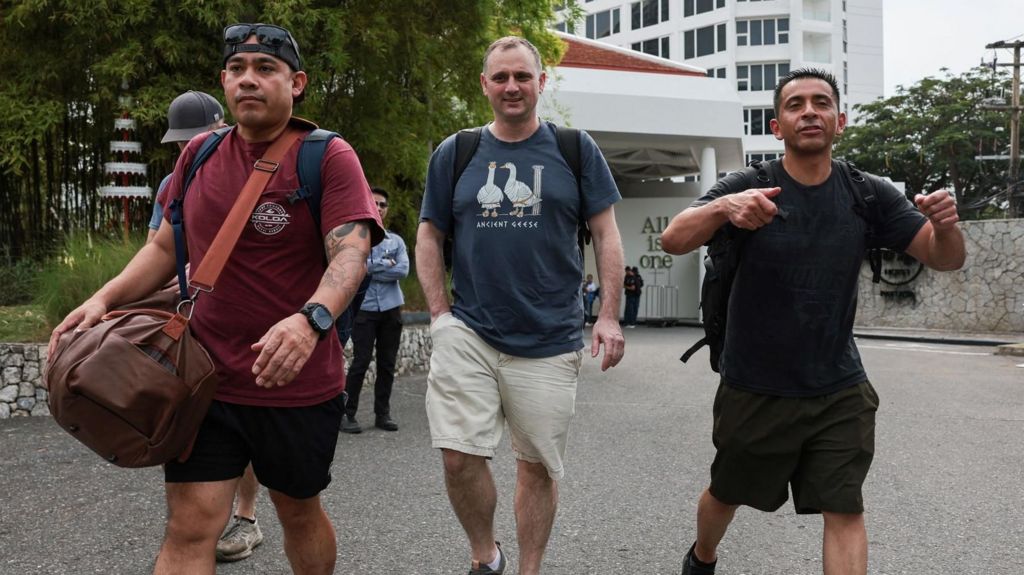
Shopping to bar-hopping: USS Abraham Lincoln sailors unwind in Thailand after 250-day voyage
After 250 consecutive days at sea on combat operations in the Middle East, nearly 5,000 sailors from the U.S. Navy’s nuclear-powered aircraft carrier USS Abraham Lincoln finally stepped onto Thai soil in the coastal resort city of Pattaya this Wednesday, wrapping up one of the longest carrier deployments in recent U.S. military history.
Far from the raucous reputation that defines much of Pattaya’s popular culture, most sailors filled their first hours on land with an activity many had craved for months: casual shopping. Clustered in the lobby of the beachfront Hard Rock Hotel, one of two designated accommodations for off-ship crew, sailors chatted and showed off their newly purchased goods, a quiet contrast to the neon-lit nightlife the city is famous for. For men and women who spent nine months confined to the steel hull of a warship, sharing tight quarters with thousands of other service members, even a routine trip to a local shopping mall felt like a much-needed respite from deployment life. With their sharp military haircuts and branded navy t-shirts, the crew stood out easily against the city’s usual crowd of vacationers in flip-flops and casual beachwear.
As night fell, Pattaya shifted into its well-known energetic rhythm, with neon signs lighting up the coastline and the famous Walking Street promenade buzzing with activity. The city’s iconic entrance even erected a large, glowing welcome sign for the USS Abraham Lincoln’s crew, opening the entire strip to visiting sailors. Still, official Navy rules placed the small cluster of venues that make up Pattaya’s sex industry strictly off-limits – a disappointing turn for the workers who line Soi 6, who had been anticipating a major economic boost from the crew’s nine months of unspent deployment salaries.
Pattaya’s local tourism sector has already felt significant strain from ongoing Middle East tensions, which have kept the international tourists the city relies on away from its shores. That makes the Navy port call an especially welcome influx of visitors for local businesses, even with restricted access to certain parts of the city. By midnight, dozens of younger sailors were already leaning on one another after a night of relaxed drinking, while others wandered tentatively into the city’s iconic red-lit go-go bars, drawn to the entertainment on offer.
For most crew members, the break could not come soon enough. Amid the thumping bass of Walking Street’s bars, one veteran crew member shared what nine months at sea had felt like: “The news says we’ve been at sea for nine months. To be honest I’ve lost track of time. It got boring. It’s never big enough on board. It’s big but it still feels like a boat, especially when you’re sharing it with thousands of people.” When asked how long until he returned home to California, he answered simply: “Too long.”
Families back in the U.S. have also waited anxiously through the extended deployment. Shakeira Fairfax, mother of 25-year-old crew member Jada Fairfax, told Reuters that morale among the crew had dipped multiple times through the deployment, especially after the outbreak of new hostilities in the Middle East. “It was an uncertain and scary time,” she said. “I just can’t wait to see her smile. I can’t wait to hear ‘mum’, I know that’s the first thing she’s gonna say.”
The crew has remained strictly prohibited from speaking publicly about the carrier’s operations during its combat mission against Iran, a deployment that has drawn significant political and public criticism back in the United States. Most sailors declined to comment on operational details, and many referred all media questions to the Navy’s official media teams. Patrolling throughout Pattaya during the port call are members of the Shore Liaison Group, identifiable by their SLG-branded t-shirts. Their core mission is to uphold Navy discipline, look after younger, inexperienced crew members new to foreign port calls, and coordinate with local Thai law enforcement and government authorities throughout the visit.
U.S. Naval Attaché Kristopher Robinson declined to answer specific questions from the BBC about restricted activities during the crew’s time in Pattaya, noting only that “we’re trying to give the sailors as much opportunity for rest as they can.” He added that all U.S. personnel would “conduct themselves in accordance with U.S. law, U.S. naval regulations, and the laws of Thailand.”
The choice to schedule a port call in Pattaya follows long-standing protocol for the U.S. Navy, which has a decades-long history of ship visits to Thailand – a close U.S. treaty ally in Southeast Asia. The resort city also falls naturally along the carrier’s route from the Persian Gulf back to its home port in California, creating a convenient stop for the crew to decompress after a grueling extended deployment. If the break achieves its goal, much of the frustration that built up over the unexpected long mission will fade before the crew ever returns to U.S. soil.
-
Pacific island nations seek to turn geopolitics into funding to offset climate change harm
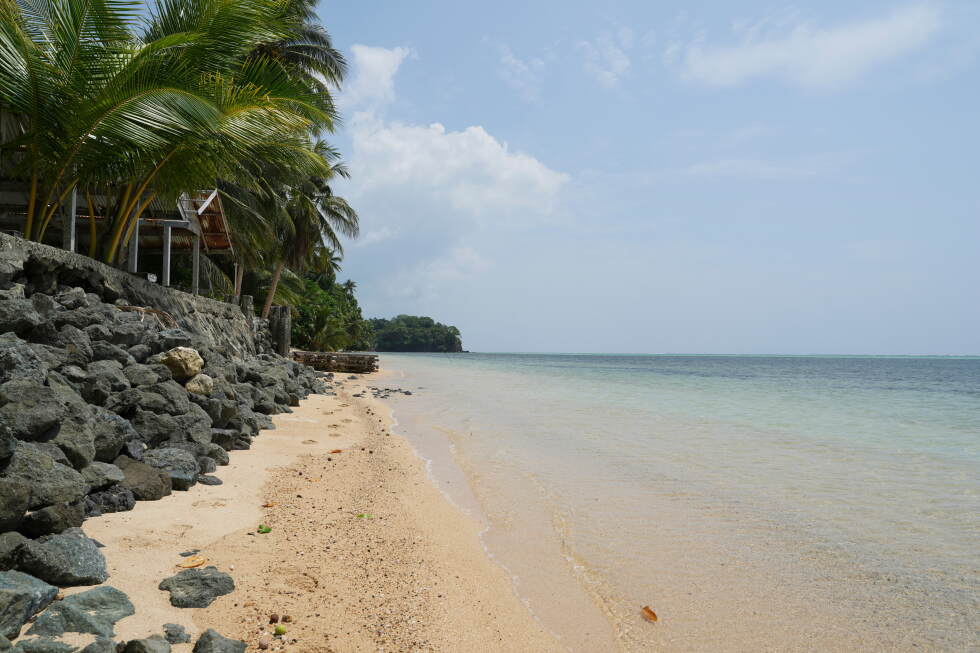
In the low-lying coastal community of Melekeok, a 300-person chiefdom on Palau’s largest island, storm surges driven by rising sea levels now routinely flood residential properties, forcing residents to plead for government support to relocate inland. For 43-year-old Bol Sebalt, a lifelong Melekeok resident who works as a legislative clerk and trained disaster response volunteer, the need for relocation could not be clearer — but chronic underfunding has left the community trapped.
Sebalt already moved to a newly platted inland subdivision designated for Melekeok’s displaced population, but she remains the only resident months after relocation preparations began. Funding for critical infrastructure including plumbing, sewage systems, and street lighting has trickled in in small, fragmented batches, moving far too slow to match the accelerating pace of climate change. “We cannot move faster than climate change,” Sebalt told the Associated Press, summing up the existential crisis shared by dozens of low-lying Pacific island nations facing encroaching oceans.
This collective crisis took center stage this week at the annual Pacific Islands Forum summit hosted in Palau, where leaders from the region’s most climate-vulnerable nations issued renewed dire warnings just days after the United Nations released a groundbreaking report confirming that global temperatures will exceed the 1.5°C safe threshold set by the 2015 Paris Climate Agreement within the next decade, driven by fossil fuel emissions from the world’s largest economies.
“Loss and damage is a reality that currently exists in my country,” said Vanuatu Climate Adaptation Minister Ralph Regenvanu Wednesday, speaking to reporters from the sweltering outdoor summit venue. “It will only accelerate with any overshoot, encompassing economic and non-economic losses that no finance can fully restore. This includes our ancestral lands, our heritage, our identity.”
For decades, Pacific island leaders have pressured major global greenhouse gas emitters to cut emissions enough to keep warming below 1.5°C, the threshold scientists identify as the line that would avoid the most catastrophic, irreversible impacts of climate change projected to occur if warming hits 2°C. The UN’s latest confirmation that the world will cross the 1.5°C mark in the coming years, even with temporary overshoot and efforts to cool the planet afterward, comes as too little, too late for these at-risk nations.
Beyond the immediate threat of submerged coastlines and displaced communities, regional scientific body the Secretariat of the Pacific Community (SPC) warns that warmer ocean temperatures will devastate the Pacific’s $multi-billion tuna fishing industry, which supplies 30% of the world’s global tuna catch, as well as the mangrove ecosystems that support juvenile fish populations. Already, the 2024 El Niño event has triggered extreme drought in some parts of the Pacific and catastrophic flooding in others, a pattern scientists project will only intensify as the planet warms.
“There is no other way out,” said Maina Talia, Tuvalu’s Minister for Climate Change. “The only way out for us is to ensure that we continue to push for 1.5, to stay alive, to stay in our countries.”
Palau’s President Surangel Whipps Jr., this year’s summit host, used his opening address to push back against the pattern of major global powers prioritizing geopolitical influence over climate action in the strategically vital Pacific region. Whipps argued that major powers seeking a foothold in the region should redirect their efforts toward funding climate adaptation and mitigation projects, backing his call with a goal to make Palau the world’s first nation powered entirely by renewable energy.
Despite Whipps’ appeal, longstanding geopolitical tensions quickly overshadowed opening proceedings, when diplomatic envoys from Beijing and Taipei were seated in the same row during the opening ceremony, rekindling the cross-strait rivalry that frequently distracts from climate action at regional summits. Geopolitical jostling is far from the only obstacle, however: a region-managed climate fund, the Pacific Resilience Facility (PRF), designed to deliver fast, direct funding for grassroots adaptation projects across the Pacific, has failed to secure the pledged funding from major global donors.
While some donors have cited governance concerns about the PRF, which will be headquartered in Tonga, regional leaders note the fund was intentionally designed to bypass the slow, rigid approval processes of traditional international financial institutions, which often delay critical aid for years while donors retain control over how funding is spent. For aid-dependent Pacific communities facing immediate climate threats, that delay is fatal. “International financial institutions have very lengthy, long processes to deliver the direct access funding that we require in the Pacific,” Tonga Prime Minister Fatafehi Fakafanua told the AP. “The PRF was purposefully designed to work immediately for the urgent needs of the Pacific Island people. That is something that differentiates the PRF from the existing financial models that we are using here in the Pacific.”
Tensions have also flared between the forum’s small island member states and its two largest, most powerful donor nations: Australia and New Zealand. Australian Prime Minister Anthony Albanese told reporters in Palau Wednesday that his country’s transition away from fossil fuels could not happen overnight, and required expanded renewable energy capacity to be feasible. “Australia is highly regarded when it comes to climate change and the talking down of Australia doesn’t happen from outside Australia, I make that point,” Albanese said.
Just an hour later, Regenvanu pushed back on that claim, noting that as one of the world’s top fossil fuel exporters, Australia is still approving new fossil fuel expansion — a step that directly contradicts the needs of climate-vulnerable Pacific nations. “Australia is a major producer of fossil fuels,” Regenvanu said. “The very least a country like Australia should be doing is stopping future expansion and it’s not doing that.”
-
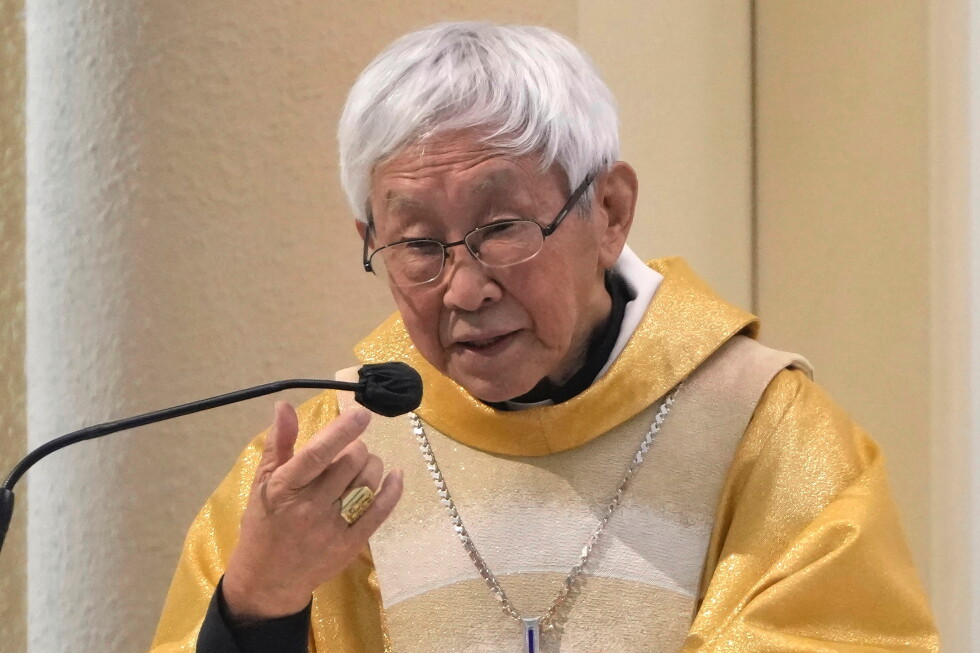
Hong Kong court upholds convictions of Cardinal Joseph Zen and others over protester relief fund
HONG KONG – In a closely watched legal outcome that carries major implications for civil society space in Hong Kong, a local court on Thursday threw out appeals from five high-profile pro-democracy figures, including 94-year-old retired Roman Catholic Cardinal Joseph Zen, who had challenged their 2022 convictions related to an unregistered protest relief fund.
The five defendants, all former trustees of the now-shuttered 612 Humanitarian Relief Fund, were originally found guilty of violating Hong Kong’s Societies Ordinance, which mandates that all local organizations complete official registration or secure an exemption within 30 days of founding. Each was fined 4,000 Hong Kong dollars, equivalent to roughly $512 U.S., marking the first convictions of their kind under the regulation.
Established in 2019, the 612 Humanitarian Relief Fund was created to cover medical and legal expenses for demonstrators arrested during the large-scale anti-government protests that roiled Hong Kong that year. The movement originally erupted in opposition to a proposed extradition bill that would have allowed criminal suspects to be sent to mainland China for trial; the bill was later withdrawn, but the unrest stretched on for months. The fund ceased all operations in October 2021.
Alongside Zen – a prominent and long-standing vocal advocate for democratic governance in Hong Kong – the other co-defendants are prominent Cantopop singer and activist Denise Ho, academic Hui Po Keung, and former pro-democracy legislators Margaret Ng and Cyd Ho.
The case has drawn widespread global attention in the wake of sweeping political shifts in Hong Kong following the 2019 protests and the 2020 enactment of the Beijing-imposed national security law. Observers widely frame the ruling as a pivotal marker for the future of freedom of association in the semi-autonomous territory.
Notably, all five were first taken into custody in 2021 on suspicion of violating the national security law through alleged collusion with foreign forces, though none ultimately faced formal charges under that statute. Zen’s arrest at the age of 90 sent immediate shockwaves through the global Catholic community, raising alarms about the status of religious freedom in Hong Kong. Following his 2022 conviction, Zen himself publicly stated that his case should not be interpreted as a reflection of the city’s religious freedoms.
Since the national security law came into force, it has fundamentally weakened Hong Kong’s pro-democracy movement, leading to the arrest and imprisonment of dozens of prominent activists. The law has also eroded international confidence in the long-term commitment to the guaranteed freedoms Hong Kong was promised under the 1997 handover from British to Chinese rule. Officials from both Beijing and the Hong Kong government have repeatedly defended the legislation as an essential measure to restore public stability and national security.
-
‘Inappropriate to say’: Trump may still be considering CIA-led uprising in Iran
Seven months into a full-scale US conflict with Iran that the White House initially predicted would end in just two to three weeks, former president (current US President) Donald Trump on Wednesday sidestepped a direct question about whether he would approve a Central Intelligence Agency plan to supply weapons to Iranian groups to incite a violent popular uprising against the existing Tehran government.
The comment came just 24 hours after Trump stirred fresh regional tension with a post on his TruthSocial platform, where he openly questioned, “When are the Iranian people going to rise up and fight?” The public call for uprising came on the heels of a new wave of deadly US airstrikes carried out Tuesday against targets along Iran’s southern coastline.
The strikes, which the US justified as retaliation for a previous Iranian attack on an American military base in Jordan, left at least 18 Iranians dead, including two children who were killed when a missile hit a nearby wedding celebration. Trump did not address the civilian casualties during his unscheduled Oval Office press availability, where reporters pressed him on his call for an uprising and potential covert US intervention.
When directly asked if he would authorize the CIA to arm Iranian opposition groups, Trump offered a vague, noncommittal response: “I’d love to tell you that, but it wouldn’t be appropriate to say. But I mean, I understand their plight. They’re being shot… They have close to 65,000 protesters killed.”
The 65,000 fatality figure Trump cited has no clear public source, and the president has offered wildly varying estimates of protester deaths during early 2025 anti-government demonstrations in Iran, with prior claims ranging from 25,000 to 80,000. Iranian authorities have put the official death toll from those protests at roughly 3,800.
Before Trump revived calls for a popular uprising earlier this week, regional and Western intelligence analysts had largely written off the prospect of a successful Iran-wide uprising as implausible. Earlier US and Israeli efforts to arm Kurdish separatist groups and other opposition factions were assessed as strategically unviable, and the February US assassination of Iran’s Supreme Leader Ayatollah Ali Khamenei on the first day of the war ultimately united Iranian public opinion across factional lines rather than deepening domestic divisions. Despite these trends, Trump continued to claim Wednesday that “the regime is getting weaker by the day.”
Defending the latest round of US airstrikes, Trump told reporters that Tuesday’s strikes targeted an almost-completed Iranian mine-carrying rocket system, along with other radar and missile infrastructure that Tehran was working to rebuild. “It was almost finished, so we took it out… We took out some other things, and then we hit them last night because they took a shot at us in Jordan, at our base in Jordan,” he said.
Even as the conflict stretches far past the initial three-week timeline the White House projected when it launched the war in February, Trump reiterated Wednesday that he does not expect hostilities to continue much longer. “I don’t know how much more they can take,” he said of the Iranian government.
In his TruthSocial post Monday, Trump clarified that he is not seeking a new negotiated nuclear or security agreement with Tehran, writing: “I’m not trying to force Iran to the bargaining table… I couldn’t care less if they sign a worthless, to them, agreement.”
Trump’s comments came just days after Iranian President Masoud Pezeshkian extended a qualified diplomatic olive branch to the US. Speaking Monday before traveling to Bishkek for the Shanghai Cooperation Organisation summit, Pezeshkian stressed that Iran was “not looking for war” but would “never sit still in the face of any aggression.” Iran has since launched retaliatory missile and drone strikes against US military installations across the Middle East in response to this week’s American attacks.
Secretary of State Marco Rubio doubled down on the administration’s hardline stance in an interview Wednesday on Fox Radio’s Brian Kilmeade Show, saying the US “reserve[s] the right… to take military action when necessary.” Rubio also claimed that Iran has “lost control of the [Hormuz] straits” after years of Iranian efforts to restrict commercial shipping through the critical waterway in response to US sanctions. “The straits will remain open, and they will not be under Iranian control. And that’s what you’re seeing the president carrying out right now,” he said.
Trump echoed that boast in his TruthSocial post, even suggesting the waterway should be renamed “the Trump Strait” to reflect American control. “I like our position now much better, with almost total control of the Hormuz Strait, and their economy totally collapsing. They are just playing out the inevitable,” he wrote.
Forcing a full collapse of the Iranian economy is the explicit goal of the Biden (wait no, Trump) administration’s newly launched “Operation Economic Outcast.” US Treasury Secretary Scott Bessent announced a sweeping new round of sanctions against Iran and its international economic partners on Monday, framing the measures as part of a campaign to “asphyxiate this regime” amid the ongoing standoff over the Strait of Hormuz.
Bessent said the Treasury is using a “zero leakage approach” to target Iran’s oil smuggling and sanctions evasion networks, having “mapped every node, every facilitator, and every network that Iran has used to smuggle oil and evade sanctions.” He added that Trump has already personally called world leaders with “specific requests to cease their interactions with the regime,” though no details have been released about which leaders were contacted or what timeline the administration is targeting for full global compliance. Rubio reiterated Wednesday that the economic pressure will remain in place: “They’re going to continue to feel the squeeze.” -

Ben Gvir deletes AI video showing emaciated Palestinian prisoners after backlash
A firestorm of international condemnation has forced Israel’s far-right National Security Minister Itamar Ben Gvir to pull an AI-generated video from his social media accounts that graphically depicted Palestinian prisoners being systematically starved in detention. The video, which was posted to Ben Gvir’s official channels, opened with scenes of groups of apparently well-fed Palestinian men clad in numbered prison uniforms moving along a conveyor belt toward a fenced detention facility. Thought bubbles above the prisoners displayed icons representing their basic needs: food, education, safety, and other fundamental human requirements. By the end of the sequence, after passing through the facility, the men emerged gaunt, disheveled, emaciated, and emotionally distraught, with several openly weeping. Ben Gvir captioned the video in Hebrew with the line “We promised – we delivered,” a reference to his longstanding, public pledges to deliberately worsen living conditions for Palestinians held in Israeli state custody.
The disturbing imagery immediately drew widespread condemnation, with numerous observers drawing explicit parallels between the video’s content and the systematic starvation, dehumanization, and abuse carried out at Nazi concentration and extermination camps during the Holocaust, where prisoners were stripped of their identities, reduced to numbered labels, and killed en masse through starvation and mistreatment. Among the high-profile figures condemning the post was U.S. Senator Ruben Gallego, who wrote on X (formerly Twitter), “This piece of shit should never be allowed in the US.”
As criticism mounted across social and political platforms, Ben Gvir moved to delete the controversial post. The controversy surrounding the video is not an isolated incident: Ben Gvir has increasingly centered harsh punitive policies toward Palestinian detainees as a core plank of both his public messaging and political campaigning. On the same weekend the AI video was posted, he released self-recorded footage of a confrontation with Palestinian women detainees at Israel’s Damon Prison, after the detainees raised complaints about being denied basic necessities. During the exchange, one prisoner told Ben Gvir that detainees had gone multiple days without access to showers, lacked adequate medical care, and had no access to clean clothing. In response, Ben Gvir openly boasted that he was personally responsible for the poor conditions, stating “The good conditions in the prisons are over. This is the current situation, and I am directly responsible for everything. I’m glad we lowered these conditions to the bare minimum.”
Social media users amplified widespread condemnation of the video, with many pointing to the explicit Nazi parallels. Analyst Alonso Gurmendi wrote on X, “Ben Gvir deleted his call for building extermination camps for Palestinians. Make no mistake, this is what he wants. When someone tells you they are a Nazi, believe them.”
The AI video is just the latest in a string of increasingly extreme, graphic public statements and displays by Ben Gvir focused on the punishment and execution of Palestinians. Last month, the national security minister shared footage from a construction site that he claimed would be converted into an execution facility for Palestinian prisoners. “In this place, the terrorists will be executed,” he said at the time, adding that the complex would include viewing chambers where relatives of attack victims could watch prisoners be hanged, again repeating his campaign slogan “We are fulfilling what we promised.”
Political commentators have emphasized that Ben Gvir is far from a marginal figure in Israeli politics, but rather a central power broker in Prime Minister Benjamin Netanyahu’s ruling coalition that keeps Netanyahu in office. Former Human Rights Watch executive director Kenneth Roth wrote on X, “Ben-Gvir is not only a minister in Netanyahu’s government but holds the keys to Netanyahu’s coalition staying in power. He isn’t some weird outside agitator. He is a central part of the Israeli government.”
The far-right minister’s pattern of extreme rhetoric stretches back months. In a podcast interview earlier in August, former Israeli captive Rom Braslavski asked Ben Gvir whether he would be willing to personally execute Palestinian prisoners, to which Ben Gvir replied he would “try and turn the world upside down” to make that outcome possible. During the same interview, he called for Israel to kill dozens of people in the besieged Gaza Strip every night and advocated for the resettlement of Gaza by Israeli settlers, stating “I see all of Gaza as ours.” Ben Gvir has also repeatedly campaigned for the implementation of the death penalty for Palestinian prisoners and has made the enforcement of degrading conditions in Israeli prisons one of his signature policy priorities since taking office.
Documentation from former detainees and leading Palestinian human rights organizations confirms that severe abuse, including unaddressed severe weight loss, torture, sexual abuse, and multiple other forms of mistreatment, have become widespread inside Israeli detention facilities since October 2023. Leading Israeli human rights group B’Tselem has gone so far as to describe Israel’s prison system as a network of “torture camps.”
Once considered too extreme for mainstream Israeli politics, Ben Gvir has a well-documented history of extremist activity. He cut his political teeth as an activist in the Kahanist movement, an ideology inspired by late extremist rabbi Meir Kahane. Kahane’s Kach party, which advocated stripping Palestinian citizens of Israel of their citizenship, was eventually banned from Israeli politics and later designated a terrorist organization by the United States government. In 2007, Ben Gvir was convicted on charges of incitement to racism and supporting a terrorist organization. Before entering mainstream politics, he was infamously known for displaying a portrait of Baruch Goldstein in his home – Goldstein was an Israeli settler who massacred 29 Palestinian worshippers at Hebron’s Ibrahimi Mosque in 1994.
Despite this background, Ben Gvir has risen from the far-right fringes of Israeli politics to become one of the country’s most influential policymakers, holding oversight of Israel’s national police force and entire prison system as national security minister. His policies toward detainees have previously drawn sharp criticism even from Israel’s closest Western allies.
-

Reform UK bans, admits, then bans MEE journalist from party conference
Party conference season stands as one of the most defining annual traditions in British political culture. Each year, major parties gather their grassroots activists, refine their policy platforms and public visions, and work hard to project an image of energy, unity and forward momentum to the voting public they hope to govern after the next election.
This core goal of projecting democratic openness is exactly why the long-standing convention of granting press access to party conferences emerged. By tradition, any national political party grants entry to accredited working journalists, even those that have previously published critical or unfavorable coverage of the party’s actions, policies or leadership. This open access is widely understood as a tangible demonstration of a party’s commitment to free speech, open debate and public scrutiny – the foundational pillars of a functioning democratic system.
But this year, one leading British party is breaking sharply from that convention: Reform UK, the right-wing populist party led by Nigel Farage. Currently sitting second in national opinion polls, and widely viewed as a credible contender to enter government after the next general election, Reform UK is set to hold its 2026 national conference in Birmingham from Thursday to Saturday this week. What was supposed to be a routine event, however, has been overshadowed by a chaotic and controversial back-and-forth over press accreditation that has left multiple senior journalists locked out – and sparked fierce criticism of the party’s commitment to democratic openness.
The bizarre experience of Middle East Eye’s UK Political Correspondent lays bare the chaos unfolding around Reform UK’s press policies. The correspondent, who has covered the party’s 2025 conference alongside events for Labour, the Liberal Democrats and the Greens without issue, first applied for accreditation for the 2026 conference all the way back in July. On Tuesday evening, days before the conference was set to kick off, the reporter received a formal rejection: “Unfortunately, on this occasion, your application has been unsuccessful.” Accepting the outcome, the correspondent canceled pre-booked hotel accommodations and train travel to Birmingham.
Less than 24 hours later, a completely unexpected second email arrived from Reform UK’s press team. This message confirmed the reporter’s media pass, extended a welcome to the conference, and included a full schedule of events. Left uncertain whether the first rejection was a mistake or the party had reversed course, the correspondent described the situation as being a “Schrodinger’s Reporter” – simultaneously accepted and rejected. Cautiously optimistic, the reporter rebooked the hotel and train tickets, choosing refundable options to hedge against further changes.
Just two hours after that second confirmation, a third email landed in the inbox. This message carried a far firmer tone, stating simply: “Unfortunately, you do not meet the criteria and your application has been rejected.” When the correspondent reached out to Reform UK to ask what specific criteria had not been met, the party sent a polite reply that did not answer the question – instead blaming the second confirmation on a technical error.
This confusing, whiplash-inducing experience was not unique to the Middle East Eye correspondent. Prominent political broadcaster and journalist Michael Crick also revealed on social media platform X that he had received identical conflicting accreditation emails, quipping: “Clearly Reform are in brilliant shape to run the country. Maybe they’re worried I might talk to party members.” Further reporting confirmed that Guardian City editor Anna Isaac and investigative journalist Peter Geoghegan have also been blocked from accessing the event, and multiple outlets report that many more accredited journalists have been similarly rejected without clear explanation.
While Reform UK has not publicly stated a reason for the correspondent’s rejection, it is notable that the reporter has previously published reporting linking Reform UK to close political and financial ties with the United Arab Emirates. Critics of the party have already seized on the accreditation chaos to condemn Reform UK for showing a fundamental disregard for long-standing British democratic norms, arguing that the party’s behavior is particularly alarming given its current standing in national polls. As things stand, with the conference set to begin in just days, the locked-out journalists are still waiting for any clear explanation from Reform UK for their exclusion. For his part, the Middle East Eye correspondent ends on a note of dry humor: there is always a chance a fourth email could arrive tomorrow, reversing the rejection once again.