标签: Asia

亚洲

  • Gaza City initiates cleanup project to clear path for economic recovery

    Gaza City initiates cleanup project to clear path for economic recovery

    GAZA CITY – Municipal authorities have launched a critical environmental initiative to remove approximately 350,000 cubic meters of accumulated waste from the Firas Market area in central Gaza City. The project, implemented in partnership with the United Nations Development Programme, represents a significant step toward addressing severe public health hazards while attempting to revitalize commercial activity in a region devastated by conflict.

    The operation involves transferring massive waste deposits from the temporary landfill at Firas Market to an alternative designated site in southern Gaza City. Municipal officials describe this as an interim solution until crews can access the primary landfill facility in Juhr al-Dik area, which remains inaccessible due to ongoing restrictions.

    Gaza Mayor Yahya al-Sarraj informed reporters that the transfer process alone would require at least six months to complete given the enormous volume of accumulated refuse. “The continued piling up of garbage has created serious environmental and health challenges for residents,” al-Sarraj stated, emphasizing that proper waste management infrastructure remains essential to preventing further deterioration.

    Health authorities have raised alarms about the proliferation of insects and rodents throughout the city, with municipal spokesperson Husni Muhanna warning that “the proliferation of flies, mosquitoes and rodents increases the risk of disease outbreaks.” Muhanna attributed part of the crisis to restrictions that have limited municipalities’ ability to import necessary equipment and machinery for waste management.

    According to Alaa al-Batta, deputy head of the Union of Municipalities in the Gaza Strip, approximately 700,000 tons of waste are currently accumulated across the territory. This buildup has led to the re-emergence of informal dumping sites and raised concerns about potential groundwater contamination.

    Local residents and business owners have welcomed the cleanup initiative. Ibrahim Nejim, a resident of the al-Samar neighborhood near the market, reported noticeable improvements: “The air has become noticeably cleaner compared with previous months, when foul odors and insects were widespread.”

    Former shop owner Hassan Khalil expressed hope that restoring cleanliness would help revive economic activity in what was once a major commercial hub and social gathering spot. Amjad al-Shawa, director of the NGO Network in Gaza, described the waste removal as “a positive development” that offers “an opportunity to improve the local environment after months of suffering from insects and diseases linked to garbage.”

  • New crystal advances vacuum UV laser

    New crystal advances vacuum UV laser

    Chinese scientists have achieved a groundbreaking advancement in laser technology with the development of a novel crystal capable of producing vacuum ultraviolet lasers at unprecedented wavelengths. The research team, led by Director Pan Shilie from the Xinjiang Technical Institute of Physics and Chemistry, has successfully created ammonium fluorooxoborate (ABF) crystals that generate lasers at a record-breaking 158.9 nanometers, pushing the boundaries of precision technology.

    This scientific milestone, detailed in a recent publication in Nature, represents the culmination of over a decade of dedicated research to overcome significant material science challenges. The team’s persistence has yielded centimeter-sized ABF crystals that demonstrate exceptional durability, stability, and performance characteristics essential for industrial applications.

    The technological implications extend across multiple high-precision industries. In semiconductor manufacturing, these advanced lasers will enable the creation of finer circuit patterns critical for next-generation computing chips. The aerospace sector stands to benefit from ultra-precise surface treatments for satellite components, while medical device manufacturers can achieve new levels of precision in surgical implant production.

    Beyond industrial applications, the breakthrough holds promise for fundamental scientific research. The vacuum ultraviolet lasers produced by ABF crystals may provide researchers with new tools to investigate quantum phenomena and superconductivity mechanisms that have previously remained elusive.

    China’s achievement in developing ABF crystals reinforces the nation’s strategic position in advanced materials science. The Xinjiang institute is now progressing toward large-scale production capabilities, with future efforts focused on integrating these superior crystals into compact, cost-effective laser systems for global industrial deployment.

  • Kim Jong Un chooses teen daughter as heir, says Seoul

    Kim Jong Un chooses teen daughter as heir, says Seoul

    In a significant development regarding North Korea’s political future, the country’s leader Kim Jong Un has reportedly designated his daughter, Kim Ju Ae, as his successor according to assessments from South Korea’s National Intelligence Agency (NIA). The agency informed lawmakers on Thursday that it reached this conclusion after analyzing multiple factors, particularly noting her increasingly prominent appearances at high-profile official events.

    Kim Ju Ae, believed to be approximately 13 years old and the only officially acknowledged child of Kim Jong Un and his wife Ri Sol-Ju, has gradually emerged from obscurity to become a regular fixture in North Korean state media. Her first documented public appearance occurred in 2022 when she was shown inspecting the nation’s latest intercontinental ballistic missile while holding her father’s hand—a powerful image broadcast across state television.

    Since that initial appearance, Kim Ju Ae has accompanied her father to numerous significant events, including a September visit to Beijing for China’s largest-ever military parade. Her presence has notably softened the image of her father, often portrayed internationally as a ruthless dictator. Observers have documented subtle shifts in her positioning during public appearances, with recent photographs showing her standing taller than her father and walking beside him rather than following—a significant symbolic departure in a country where media imagery carries profound political meaning.

    The timing of this development coincides with North Korea’s impending party congress, the nation’s most important political event held once every five years. This gathering is expected to outline Pyongyang’s priorities regarding foreign policy, military strategy, and nuclear ambitions for the coming five-year period.

    The potential succession raises several intriguing questions about North Korea’s future. The selection of a female heir appears contradictory within North Korea’s deeply patriarchal society, where many defectors and analysts had previously dismissed the possibility of a woman leading the country. Additionally, Kim Jong Un’s relatively young age and apparent good health make the early designation of a teenage successor particularly noteworthy.

    The international community now watches with interest to determine what changes, if any, Kim Ju Ae’s eventual leadership might bring to the isolated nation. Previous hopes that Kim Jong Un’s Western education might lead to openness were ultimately unfulfilled, leaving observers to wonder whether his daughter might chart a different course for North Korea’s future.

  • Spy agency says Kim Jong Un’s daughter is close to being designated North Korea’s future leader

    Spy agency says Kim Jong Un’s daughter is close to being designated North Korea’s future leader

    South Korea’s National Intelligence Service (NIS) has presented lawmakers with a significant assessment regarding the political future of Kim Jong Un’s teenage daughter, indicating she is approaching formal designation as North Korea’s successor. The intelligence briefing, conducted Thursday, revealed that Kim Ju Ae (approximately 13 years old) has advanced from what was previously termed ‘successor training’ to the ‘successor-designate stage’—a meaningful shift in terminology that signals her evolving status within the authoritarian regime.

    The assessment comes as North Korea prepares to convene its most substantial political conference later this month, where Kim Jong Un is anticipated to outline major policy objectives for the upcoming five-year period while further consolidating his authoritarian control. Intelligence officials are particularly monitoring whether Kim Ju Ae will appear alongside her father before thousands of delegates at the Workers’ Party Congress, which would represent a substantial symbolic gesture regarding her political positioning.

    Since her initial public appearance at a November 2022 long-range missile test, Kim Ju Ae has accompanied her father with increasing frequency to strategically significant events including weapons demonstrations, military parades, factory inspections, and even diplomatic engagements. Her September 2023 accompaniment to Beijing for Kim Jong Un’s first summit with Chinese leader Xi Jinping in six years demonstrated her growing integration into high-level affairs.

    The most compelling indication of her heir status emerged during a New Year’s Day visit to Pyongyang’s Kumsusan Palace of the Sun—the sacred mausoleum housing the embalmed remains of her grandfather and great-grandfather, North Korea’s first two leaders. This symbolic family presentation before previous generations of leadership represented what analysts consider the clearest signal yet regarding her succession trajectory.

    South Korean officials initially expressed skepticism about a female successor given North Korea’s deeply conservative, male-dominated political culture. However, her escalating visibility in state media and involvement in policy discussions has prompted a substantial reassessment within intelligence circles. The NIS noted that Kim Jong Un appears to be seeking her input on certain policy matters, further reinforcing her developing role.

    The upcoming party congress may provide the platform for Kim Jong Un to formalize succession plans, though analysts suggest any designation would likely involve subtle symbolic gestures rather than explicit appointment to high-ranking party positions due to age restrictions requiring members to be at least 18. Instead, the regime might emphasize narratives regarding successful revolutionary inheritance within party communications—a potential indicator that Kim Ju Ae’s position has been solidified as the prospective fourth-generation leader of the Kim dynasty.

  • China issues new rules to curb auto price war after January passenger car sales drop 20%

    China issues new rules to curb auto price war after January passenger car sales drop 20%

    Chinese regulators have intervened to halt the destructive price competition within the nation’s automotive sector, implementing stringent new guidelines on Thursday following a dramatic 19.5% year-on-year sales decline in January—the most severe contraction in nearly two years.

    The State Administration for Market Regulation unveiled comprehensive measures targeting manufacturers, dealerships, and component suppliers, explicitly prohibiting predatory pricing strategies designed to eliminate competition or establish market dominance. The regulations carry significant legal consequences for violators who attempt to sell vehicles below production costs.

    This regulatory intervention comes amid concerning market indicators. According to the China Association of Automobile Manufacturers, passenger vehicle sales plummeted to 1.4 million units in January, down substantially from December’s 2.2 million units. Industry analysts attribute this downturn to consumer financial constraints, reduced electric vehicle tax incentives, and uncertainty regarding regional trade-in subsidy programs.

    The price war has inflicted substantial damage, with China Automobile Dealers Association member Li Yanwei estimating approximately 471 billion yuan ($68 billion) in industry-wide losses over the past three years. S&P Global Ratings projects further challenges, forecasting up to a 3% decline in light vehicle sales for 2026.

    Despite domestic headwinds, Chinese automakers are achieving remarkable international success. January exports surged 49% year-on-year to 589,000 units, with companies like BYD—which recently surpassed Tesla as the world’s leading EV manufacturer—aggressively expanding into European and Latin American markets.

    Citi analysts project a 19% increase in China’s automotive exports this year, driven primarily by electric and plug-in hybrid vehicles. BYD has established an ambitious target of 1.3 million overseas sales by 2026, building upon last year’s 1.05 million export achievement.

    International trade dynamics are increasingly favorable for Chinese manufacturers. Canada recently agreed to reduce its 100% tariff on Chinese EV imports, while the European Union has established mechanisms for tariff exemptions, as demonstrated by Volkswagen’s successful application for its China-built CUPRA model. China’s Commerce Ministry has expressed support for these developments and anticipates further exemptions.

  • AI cancer detection boosts healthcare

    AI cancer detection boosts healthcare

    A groundbreaking artificial intelligence system is transforming cancer diagnostics in remote regions of China’s Xinjiang Uygur Autonomous Region, where vast distances have historically limited access to specialized medical care. Professor Liu Wen from the Xinjiang Institute of Engineering has pioneered an AI-assisted diagnostic platform that brings expert-level cancer screening to township-level medical facilities.

    The innovation addresses a critical healthcare gap in Xinjiang, where communities are separated by significant geographical barriers. Previously, patients often had to undertake arduous journeys to urban centers for authoritative checkups, frequently missing the crucial early intervention window that dramatically improves survival rates.

    Liu’s cross-disciplinary team, formed in 2019 through partnerships with leading regional hospitals, developed a sophisticated diagnostic system capable of identifying suspected cancerous cells with millimeter-level precision across 12 anatomical areas including breast, thyroid, and abdominal regions. The system demonstrates remarkable 96% accuracy in distinguishing between benign and malignant tumors.

    Since its deployment in May 2023, the technology has facilitated over 1.3 million screenings across more than 100 primary medical institutions in Xinjiang. The project’s development involved extensive data collection efforts spanning five years, during which Liu’s team traveled throughout the region gathering medical imaging data to train their algorithms while conducting cancer screenings and technology exchanges.

    The initiative has significantly enhanced local medical capabilities through comprehensive training programs, having educated more than 9,000 medical personnel across 27 training sessions. As a member of Xinjiang’s regional committee of the Chinese People’s Political Consultative Conference, Liu emphasizes translating technological innovation into tangible social benefits.

    “This AI-assisted diagnosis technology has brought transformative change to grassroots healthcare in Xinjiang,” Liu stated. “It makes quality medical services accessible to people in remote communities who can now receive expert-level medical advice without extensive travel, realizing the vision of AI technology benefiting thousands of households.”

    The professor envisions a future where local doctors confidently handle complex tumor diagnoses and herders no longer need to travel vast distances for basic checkups. “When timely and accurate diagnoses become a solid foundation for health,” Liu reflected, “more families can move beyond the shadow of disease and hold onto reunion and hope. This represents the optimal application of AI in serving people’s livelihoods.”

  • Shanghai eyes tech to drive development

    Shanghai eyes tech to drive development

    Shanghai has unveiled a comprehensive development strategy for its 15th Five-Year Plan period (2026-30), positioning technological innovation as the cornerstone of its economic transformation and urban modernization. The ambitious blueprint aims to significantly enhance the city’s global competitiveness while simultaneously improving living standards for its residents.

    During a Wednesday press conference, Vice-Mayor Wu Wei outlined Shanghai’s target of maintaining approximately 5% annual GDP growth throughout the five-year period. The metropolis additionally aspires to double its per capita GDP by 2035 from the 2020 baseline of over $23,000. This economic expansion will be fueled by strategic investments across multiple sectors, with particular emphasis on technological research, industrial upgrading, urban renewal, and public welfare initiatives.

    The city’s development framework centers on establishing a sophisticated modern industrial ecosystem that integrates digital transformation and sustainable green transition. This system will prioritize three cutting-edge industries—integrated circuits, artificial intelligence, and biomedicine—alongside six emerging industrial clusters encompassing next-generation information technology. Shanghai will also pioneer advancements in future-oriented sectors including energy and advanced materials.

    Luo Dajin, Director of Shanghai’s Science and Technology Commission, revealed that the city intends to allocate approximately 15% of its total research and development expenditure to fundamental research by 2030. This commitment underscores Shanghai’s determination to foster original innovation and achieve critical technological breakthroughs. Supporting infrastructure developments will include expanding the Shanghai hub for the national blockchain network and other advanced digital facilities.

    Human capital development features prominently in Shanghai’s strategy, with plans to cultivate an additional 300,000 highly skilled professionals by 2030, according to Gu Jun, Director of the Shanghai Municipal Development and Reform Commission. This talent initiative will complement the city’s ongoing economic reforms and opening-up policies.

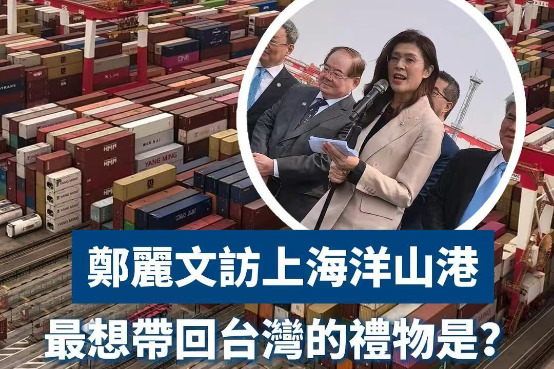
    Shanghai will further consolidate its advantages in international trade and finance, targeting annual container throughput of 58 million TEUs by 2030. The city plans to attract world-leading supply chain management centers and enhance its global commodity resource allocation capabilities. Zhou Xiaoquan, Executive Deputy Director of Shanghai’s Municipal Finance Bureau, indicated that financial market internationalization will accelerate through introducing more products accessible to international investors, attracting prominent global asset managers and financial institutions, and developing offshore financial mechanisms with appropriate regulatory frameworks.

    The Yangtze River Delta regional integration receives dedicated attention in the five-year plan, with commitments to strengthen coordination in technological innovation, industrial collaboration, and regulatory mechanisms. Infrastructure connectivity throughout the region will be enhanced, with cities leveraging their distinctive advantages through coordinated development.

    Domestically, Shanghai will prioritize land and space resources for new infrastructure deployment, including computing facilities, telecommunications networks, and low-altitude transportation systems. Urban rail transit coverage will expand significantly, with total operating mileage projected to exceed 1,260 kilometers by 2030.

    The city will also undertake substantial urban renewal projects, including renovating 30 million square meters of aging residential compounds and initiating new park construction programs. Public wellbeing improvements will focus on making employment, housing, education, healthcare, and childcare services more inclusive. Additional priorities include building a resilient and safe megacity and ensuring carbon emissions peak before 2030.

  • More seniors grow addicted to the internet

    More seniors grow addicted to the internet

    China’s rapidly aging demographic is experiencing a concerning surge in internet addiction, driven primarily by loneliness and diminished social engagement. This emerging trend has prompted mental health experts and aging researchers to call for enhanced family support systems and robust fraud protection measures to safeguard vulnerable seniors from online exploitation.

    Case studies reveal the depth of this growing problem. Wang Qingfeng, a 46-year-old resident of Shaoxing in Zhejiang province, describes his 70-year-old father’s compulsive behavior: “He’s become obsessed with Douyin livestreams, tipping female performers excessively. He begins watching at dawn and sometimes continues late into the night, spending approximately 10,000 yuan in December alone.” This pattern emerged after Wang’s father relocated from rural Anhui province following his wife’s passing in 2023, leaving him socially isolated with digital entertainment as his primary outlet.

    The phenomenon extends beyond livestreaming addiction. Numerous families report elderly parents developing compulsive behaviors including binge-watching paid minidramas, purchasing questionable health products online, and engaging excessively with computer games. Many adult children have turned to online forums seeking guidance, drawing parallels between their parents’ current digital obsessions and their own teenage internet behaviors.

    Recent data from the China Internet Network Information Center reveals the scale of senior internet adoption. As of December 2025, approximately 54% of Chinese citizens aged 60 and above were active internet users within a total national user base of 1.125 billion.

    Psychological experts attribute this trend to fundamental social changes. “Elderly individuals often experience reduced social significance in both familial and professional contexts as they age, creating a void that digital platforms fill,” explains Wang Wenda, Director of Psychological Health Education at Xinhua College of Ningxia University. “The internet provides an escape mechanism and offers perceived respect and control through activities like tipping streamers or online shopping.”

    Clinical indicators of internet addiction among seniors include disrupted daily routines, uncontrollable spending behaviors, credence given to unreliable online information, and irritability when separated from digital devices.

    Yang Xiaoqi, researcher at the China Research Center on Aging, identifies loneliness combined with the internet’s intense stimulation as primary catalysts for this dependency. With advancing artificial intelligence further blurring digital authenticity, experts warn that addicted seniors face heightened vulnerability to sophisticated online fraud schemes.

    Comprehensive solutions require multifaceted approaches. Mental health professionals recommend helping seniors rediscover personal value through real-world activities like grandchild care, pet ownership, and community engagement. Practical measures include family-negotiated screen time limits and payment platform restrictions. Simultaneously, government initiatives utilizing big data analytics and targeted push notifications could significantly enhance anti-fraud education among elderly demographics.

  • Japan’s technology investor SoftBank Group sees profitability return on AI boom

    Japan’s technology investor SoftBank Group sees profitability return on AI boom

    TOKYO — SoftBank Group Corporation has dramatically reversed its financial trajectory, reporting substantial profits for the final quarter of 2025 following strategic investments in artificial intelligence ventures. The Japanese technology and telecommunications conglomerate announced on Thursday that it achieved a profit of 248.6 billion yen ($1.62 billion) during the October-December period, marking a significant recovery from the 369 billion yen losses recorded during the same timeframe in the previous year.

    The company’s quarterly sales demonstrated healthy growth, increasing by 8% to reach 1.98 trillion yen ($12.9 billion). This financial resurgence stems primarily from SoftBank’s calculated pivot toward artificial intelligence technologies, including the October divestment of its Nvidia stake for $5.8 billion to reinforce its AI-focused strategy.

    Among SoftBank’s most notable AI investments is its substantial $35 billion commitment to OpenAI, the pioneering developer behind the ChatGPT chatbot platform. This strategic move has secured SoftBank an approximate 11% ownership stake while generating considerable investment returns. The corporation has additionally expanded its technology portfolio through the $6.5 billion acquisition of Ampere, a prominent U.S.-based semiconductor design firm that now operates as a wholly owned subsidiary.

    Beyond artificial intelligence, SoftBank continues to diversify its technological investments through robotics. The company finalized an agreement with ABB last year to purchase its robotics division for $5.375 billion, though this transaction still awaits regulatory approvals across multiple jurisdictions including Europe, China, and the United States.

    For the nine-month period concluding in December, SoftBank posted remarkable profits of 3.17 trillion yen ($20.7 billion), representing a fivefold increase compared to the previous year. Sales during this extended timeframe rose nearly 8% to 5.7 trillion yen ($37 billion).

    SoftBank Group Chief Financial Officer Yoshimitsu Goto emphasized to reporters that the company’s investment strategy is demonstrating broad-based success, noting that financial gains are emerging from multiple ventures including Arm, an AI semiconductor company, rather than relying exclusively on OpenAI’s performance. Despite this positive momentum, analysts continue to caution that over-dependence on any single investment, including OpenAI, presents inherent risks given SoftBank’s history of volatile financial performance driven by its aggressive investment approach in emerging technologies.

    The market responded favorably to these developments, with SoftBank Group shares climbing 2.4% during Thursday’s trading session.

  • Volunteer passes on torch of guardianship

    Volunteer passes on torch of guardianship

    For over four decades, 81-year-old Mei Jingtian has been the unwavering guardian of an unrestored section of the Great Wall in Shixia village, Beijing’s Yanqing district. Despite his advanced age, Mei continues to navigate the steep slopes with remarkable agility, having dedicated his life to preserving this national treasure since returning to his village in the 1980s.

    Upon his return, Mei was devastated to discover the historical structure had been systematically dismantled, with villagers repurposing ancient bricks for construction projects. “The Great Wall in my childhood stood intact in its original grandeur,” Mei recalled. “Witnessing its deterioration compelled me to act. This monumental achievement of our ancestors, built with extraordinary hardship and wisdom, demanded protection.”

    Armed only with a sickle and boundless determination, Mei single-handedly carved out kilometers of mountain paths to access remote wall sections. His weekly patrols involved clearing invasive vegetation, removing litter, and educating adventurous tourists about the wall’s historical significance. In one particularly grueling endeavor, he spent over two days manually transporting a 34.5-kilogram inscribed stone tablet down the mountain to deliver it to preservation authorities.

    Mei’s initially solitary mission gradually transformed into a community movement. He pioneered innovative conservation approaches, even trading cement with villagers to recover embedded Great Wall bricks from their properties. This grassroots effort culminated in 2007 with the establishment of the Shixia Village Great Wall Protection Association, formalizing what began as one man’s passionate crusade.

    The conservation movement achieved another milestone in 2019 when the government officially incorporated Great Wall protectors into its budgetary framework. This institutional recognition coincided with Mei’s niece, Liu Hongyan, passing rigorous examinations to become one of Shixia’s first six officially recognized protectors—marking the formal transition of guardianship to the next generation.

    Now 45, Liu patrols the same challenging terrain her uncle once protected, monitoring structural integrity while sharing the wall’s rich history with visitors. “This transcends mere employment,” Liu explained. “It represents the custodianship of our cultural heritage and homeland. My uncle demonstrated that genuine commitment stems from love rather than expectation of reward.”

    Despite confronting physical dangers including treacherous topography, extreme weather, and encounters with wildlife such as snakes and wild boars, Liu finds profound purpose in her conservation work. However, she acknowledges concerning demographic challenges: most current protectors are aged 60-70, while many younger villagers have migrated to urban areas.

    “Upon my retirement, I remain confident that successors will emerge to continue this vital work,” Liu stated. “We urgently need more youth to join our protection teams. Ultimately, we are all guardians of the Great Wall—collaborating to preserve our shared heritage and home.”