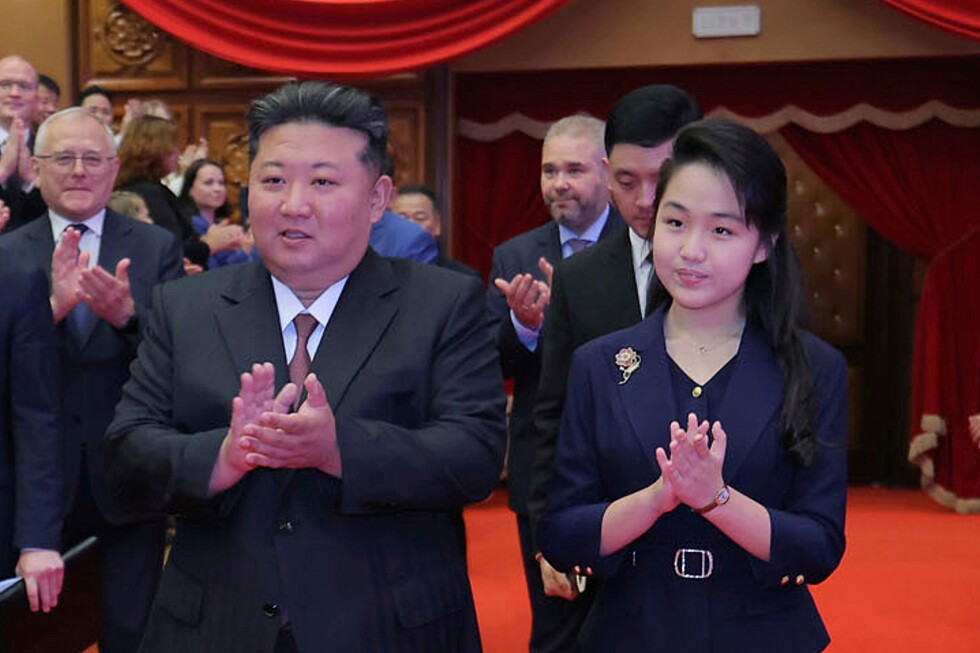
South Korea’s National Intelligence Service (NIS) has presented lawmakers with a significant assessment regarding the political future of Kim Jong Un’s teenage daughter, indicating she is approaching formal designation as North Korea’s successor. The intelligence briefing, conducted Thursday, revealed that Kim Ju Ae (approximately 13 years old) has advanced from what was previously termed ‘successor training’ to the ‘successor-designate stage’—a meaningful shift in terminology that signals her evolving status within the authoritarian regime.
The assessment comes as North Korea prepares to convene its most substantial political conference later this month, where Kim Jong Un is anticipated to outline major policy objectives for the upcoming five-year period while further consolidating his authoritarian control. Intelligence officials are particularly monitoring whether Kim Ju Ae will appear alongside her father before thousands of delegates at the Workers’ Party Congress, which would represent a substantial symbolic gesture regarding her political positioning.
Since her initial public appearance at a November 2022 long-range missile test, Kim Ju Ae has accompanied her father with increasing frequency to strategically significant events including weapons demonstrations, military parades, factory inspections, and even diplomatic engagements. Her September 2023 accompaniment to Beijing for Kim Jong Un’s first summit with Chinese leader Xi Jinping in six years demonstrated her growing integration into high-level affairs.
The most compelling indication of her heir status emerged during a New Year’s Day visit to Pyongyang’s Kumsusan Palace of the Sun—the sacred mausoleum housing the embalmed remains of her grandfather and great-grandfather, North Korea’s first two leaders. This symbolic family presentation before previous generations of leadership represented what analysts consider the clearest signal yet regarding her succession trajectory.
South Korean officials initially expressed skepticism about a female successor given North Korea’s deeply conservative, male-dominated political culture. However, her escalating visibility in state media and involvement in policy discussions has prompted a substantial reassessment within intelligence circles. The NIS noted that Kim Jong Un appears to be seeking her input on certain policy matters, further reinforcing her developing role.
The upcoming party congress may provide the platform for Kim Jong Un to formalize succession plans, though analysts suggest any designation would likely involve subtle symbolic gestures rather than explicit appointment to high-ranking party positions due to age restrictions requiring members to be at least 18. Instead, the regime might emphasize narratives regarding successful revolutionary inheritance within party communications—a potential indicator that Kim Ju Ae’s position has been solidified as the prospective fourth-generation leader of the Kim dynasty.