标签: Asia

亚洲

  • What to know about a mass shooter’s bid to undo his guilty pleas for the Christchurch mosque murders

    What to know about a mass shooter’s bid to undo his guilty pleas for the Christchurch mosque murders

    WELLINGTON, New Zealand — Six years after admitting to New Zealand’s deadliest mass shooting, white supremacist Brenton Tarrant has launched a controversial legal bid to withdraw his guilty pleas, claiming severe prison conditions induced a mental breakdown that compromised his judgment.

    The Australian national, who murdered 51 Muslim worshippers during coordinated attacks on two Christchurch mosques in 2019, unexpectedly pleaded guilty in 2020 to all terrorism, murder, and attempted murder charges. His admission spared victims and the justice system from a high-profile trial that many feared would become a platform for his racist ideology.

    Now, Tarrant’s legal team argues before New Zealand’s Court of Appeal that their client was experiencing psychological deterioration from ‘oppressive’ incarceration conditions when he admitted guilt. They claim isolation and sensory deprivation measures made him ‘temporarily doubt his identity and ideology,’ rendering him incapable of rational legal decisions.

    Appearing via video conference from prison, the shaven-headed Tarrant told the court he had been ‘irrational’ during his 2020 confession. His current lawyers contend he originally intended to represent himself at trial to promote his white supremacist views—a defense strategy New Zealand courts would have invalidated.

    Crown prosecutors challenged these claims, noting Tarrant had multiple opportunities to raise mental health concerns or request trial postponements. Mental health experts, prison staff, and his former lawyers have not supported his claims of severe psychological distress.

    Survivors of the massacre expressed outrage at the appeal attempt. Temel Ataçocuğu, who was shot nine times during the attacks, stated outside the courthouse: ‘He got what he deserved. He has to deal with it as a man.’

    The three-judge panel will issue a ruling later. If unsuccessful in discarding his guilty pleas, Tarrant is expected to pursue an appeal against his life sentence without parole—the most severe punishment in New Zealand’s modern history.

  • Building of rare earth hub highlighted

    Building of rare earth hub highlighted

    During a comprehensive inspection tour of Ganzhou in Jiangxi province, Premier Li Qiang has emphasized China’s strategic commitment to establishing global leadership in rare earth technology and artificial intelligence. The Premier’s two-day visit, occurring just before Spring Festival celebrations, focused on accelerating technological breakthroughs in critical sectors.

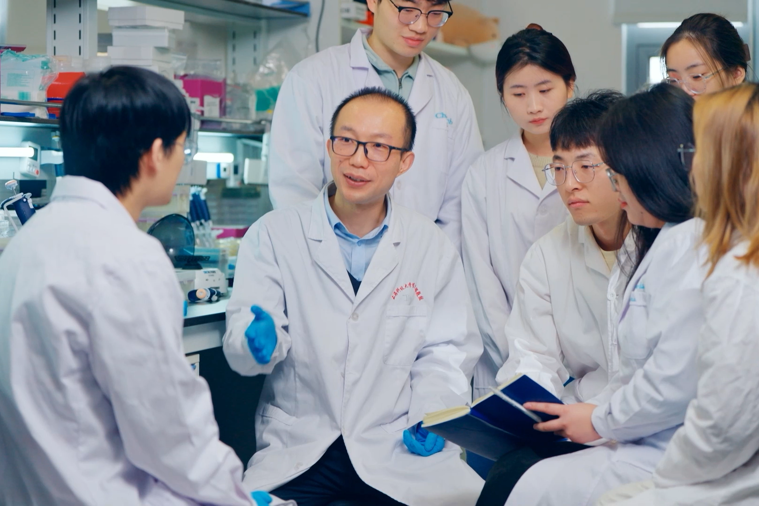
    At the Ganjiang Innovation Academy of the Chinese Academy of Sciences and multiple rare earth enterprises, Li examined current research initiatives and commercialization progress. He specifically highlighted the growing significance of these seventeen elements in advancing high-end manufacturing and facilitating green energy transitions. The Premier called for coordinated development of rare earth resources with stringent environmental protections, advocating for full-cycle green development throughout production and processing.

    Li stressed the necessity of optimizing industrial layouts while enhancing recycling systems and supply chain coordination. He further emphasized expanding technological applications into renewable energy and advanced materials sectors to improve overall sector performance.

    Beyond rare earth development, the Premier chaired a State Council study session addressing artificial intelligence’s transformative potential. Li noted AI’s capacity to revolutionize living and working patterns while generating substantial growth opportunities across diverse industries. He advocated comprehensive efforts to advance AI innovation, industrial development, and practical implementation.

    During his provincial tour, Li also visited rural communities to discuss livelihoods, employment opportunities, healthcare access, and poverty alleviation measures. In recognition of Ganzhou’s historical significance as an early revolutionary base, the Premier called for accelerated revitalization of these regions through supportive policies, competitive industries, and improved public welfare systems.

    The Premier extended formal Spring Festival greetings on behalf of the Communist Party Central Committee and State Council, wishing residents health and prosperity in the Year of the Horse.

  • China comes a step closer to crewed moon mission

    China comes a step closer to crewed moon mission

    China has successfully executed a groundbreaking flight test that marks a significant advancement in its ambitious lunar exploration program. On February 11, 2026, at the Wenchang Spacecraft Launch Site in Hainan province, Chinese aerospace engineers conducted simultaneous tests of both the Long March 10 carrier rocket and the next-generation Mengzhou crewed spaceship system.

    The comprehensive demonstration involved a low-altitude verification flight for the heavy-lift rocket alongside a maximum dynamic pressure (Max Q) abort test for the Mengzhou spacecraft. This dual-purpose mission represented multiple firsts in China’s space exploration history: the inaugural flight test of the Long March 10 prototype, the country’s first Max Q escape operation for a spacecraft, the maiden sea splashdown of both a crew capsule and rocket booster, and the initial operational use of Wenchang’s newly constructed heavy rocket launch infrastructure.

    The meticulously orchestrated sequence began with the Long March 10 prototype booster launching from the coastal spaceport, carrying the Mengzhou spacecraft prototype. At the critical Max Q phase—where aerodynamic forces peak during ascent—the spacecraft’s return capsule successfully separated using its rocket-powered escape tower. After achieving predetermined altitude, the capsule deployed parachutes and was successfully recovered from the South China Sea.

    Concurrently, the rocket booster continued its trajectory, crossing the Kármán line into space before executing a controlled return. Through sophisticated maneuvers involving grid fin deployment, reaction control system activation, and precisely timed engine reignitions, the massive vehicle achieved a stable hover before making a controlled splashdown—marking China’s first successful recovery of a rocket booster and demonstrating reusable rocket capabilities previously mastered only by the United States.

    Technical experts highlighted the extraordinary challenges overcome during the test. Zhu Pingping, chief engineer at China Aerospace Science and Technology Corporation, emphasized that the booster endured unprecedented thermal fluxes and aerodynamic loads during reentry, pushing the limits of structural integrity, thermal protection, and altitude control systems.

    The Mengzhou program’s deputy project manager, Deng Kaiwen, explained that the Max Q escape test validated the spacecraft’s ability to safeguard astronauts during the most aerodynamically demanding ascent phase, requiring exceptional reliability from the escape tower and computer systems.

    Both the Long March 10 rocket and Mengzhou spacecraft, currently in final development phases, represent critical components of China’s strategy to land astronauts on the moon before 2030. The rocket’s configuration includes a 92.5-meter tall moon mission variant capable of delivering 27-ton payloads to lunar transfer orbit, plus a shorter version for space station missions. The Mengzhou spacecraft, measuring 9 meters long with 4.5-meter diameter, will eventually replace the veteran Shenzhou capsules that have served China’s crewed space program for nearly three decades.

  • Israeli president ends a fraught Australia visit to comfort Jews as Gaza war protests follow

    Israeli president ends a fraught Australia visit to comfort Jews as Gaza war protests follow

    MELBOURNE, Australia — Israeli President Isaac Herzog concluded a polarizing four-day state visit to Australia on Thursday, marking the first trip by an Israeli head of state in six years. The visit unfolded against a backdrop of dual purposes: offering solace to Sydney’s Jewish community following December’s antisemitic mass shooting while simultaneously drawing widespread protests against Israel’s military actions in Gaza.

    Herzog’s itinerary included stops in Sydney, Canberra, and Melbourne, where he faced persistent demonstrations from activists labeling him a war criminal. Under heightened police security in Melbourne, Herzog addressed a Jewish community gathering, stating, “We came here to be with you, to look you in the eye, to embrace, to remember and weep together.” He emphasized how the visit had left him “feeling empowered” despite the emotional toll, praising the resilience of Australian Jewish communities.

    The Australian government maintained that the primary invitation extended to Herzog aimed to support a community still reeling from the December 14 Bondi Beach attack, where 15 festival attendees were killed in an assault allegedly inspired by Islamic State. Jeremy Leibler, President of the Zionist Federation of Australia, noted that Sydney’s Jewish community felt “extremely uplifted and seen” following Herzog’s visits, while appealing to protesters to consider the community’s trauma.

    However, the visit exposed significant diplomatic tensions. Herzog told The Associated Press that another objective was to “reinvigorate bilateral relations” and counter “lies and misinformation” about Israel. This statement drew criticism from Australian human rights lawyer Chris Sidoti, who argued the visit had transformed into political propaganda rather than purely a mourning mission. Sidoti referenced a September UN Human Rights Council report that accused Herzog, along with Israeli Prime Minister Benjamin Netanyahu and former Defense Minister Yoav Gallant, of inciting genocide in Gaza.

    Australia-Israel relations have been strained since the Israel-Hamas war began in 2023, particularly after Australia’s decision to recognize Palestinian statehood six months ago. Herzog described his discussions with Australian leaders as conducted with “candor, open-mindedness and mutual respect,” characterizing them as “serious partners” willing to address antisemitism and misinformation.

    Security concerns led to the cancellation of Herzog’s planned visit to the ruins of Melbourne’s Adass Israel Synagogue, destroyed by arson in late 2024 in an attack Australia attributed to Iran. The visit concluded with the removal of anti-Herzog graffiti at Melbourne University, where administrators reaffirmed their stance against antisemitism.

  • Green ties boost bilateral opportunities

    Green ties boost bilateral opportunities

    Singaporean and Chinese enterprises are capitalizing on an expanding framework of bilateral sustainability agreements, creating unprecedented opportunities in the green technology sector. The partnership momentum accelerated significantly following the 21st China-Singapore Joint Council for Bilateral Cooperation held last December in Chongqing, where both nations committed to enhanced collaboration across multiple environmental sectors.

    The high-level agreements have established concrete pathways for cooperation in green finance optimization, clean energy innovation, smart manufacturing advancement, and sustainable technology research. This strategic alignment effectively marries Singapore’s innovation capabilities with China’s manufacturing prowess and engineering scale, creating a complementary ecosystem for green technology development.

    Startups are already experiencing tangible benefits from this collaborative framework. Aqua 3i, a Singapore-based materials innovation company that recently won top honors at the Tianjin Eco-City Green Innovation Competition, has established successful partnerships with Chinese state-owned enterprises. According to founder Shaun Ong, “Chinese engineers provide the industrial expertise to maximize the application of our energy-saving coatings across diverse sectors.”

    Infrastructure supporting this collaboration continues to expand through multiple channels. The A*STAR Partners’ Centre in Suzhou Industrial Park facilitates connections between Singaporean green tech firms and Chinese partners in life sciences, advanced manufacturing, and sustainable economy sectors. Simultaneously, the Singapore University of Technology and Design has established a Tianjin research center to commercialize sustainability innovations, with the Eco-City serving as a testing ground for green startups.

    GreenChar Climate Solutions exemplifies the partnership’s global potential. Co-founder Chloe Hung notes, “Singaporean firms contribute international standards and market access, while Chinese partners provide scale, engineering, and manufacturing expertise.” Her company is currently forming a joint venture with Zhejiang’s Tongao Group to develop international carbon credit assets, leveraging China’s agricultural biomass resources with Singapore’s carbon market expertise.

    The collaboration represents what Hung characterizes as a “blue ocean opportunity” in sustainable infrastructure, carbon management, and advanced manufacturing—a market vast enough to accommodate numerous successful ventures through complementary capabilities.

  • China’s medical tech wins over Middle East

    China’s medical tech wins over Middle East

    Dubai’s World Health Expo, the region’s premier healthcare exhibition, has become the stage for a remarkable technological transformation as Chinese medical innovations capture the attention of Middle Eastern markets. The event showcases how China’s advanced medical technology sector is addressing critical healthcare challenges across the region through intelligent, cost-effective solutions.

    At the forefront of this revolution is Shenzhen-based Mindray, which unveiled its groundbreaking BeneHeart DX system—a sophisticated 5-in-1 external defibrillation monitor that consolidates multiple emergency care functions into a single compact unit. This innovative device represents the industry’s shift toward integrated intelligent systems that enhance clinical efficiency while significantly reducing equipment costs.

    According to Li Xuan, Mindray’s senior brand manager, “This product reduces overall equipment investment by over 50% compared to purchasing standalone devices, while delivering superior integration and clinical usability. China’s robust innovation ecosystem and engineering capabilities have enabled us to address complex emergency scenario requirements effectively.”

    The technology has resonated particularly well with Middle Eastern healthcare providers facing infrastructure challenges. Ahmed Muhialdin, an Iraqi health industry businessman, emphasized how Chinese portable medical devices perfectly address critical gaps in remote healthcare delivery. “The Iraqi government is actively extending medical services beyond hospitals, and these Chinese products will help bridge this accessibility gap,” he noted, adding that Chinese manufacturers provide comprehensive on-site support that Western competitors struggle to match.

    Beyond commercial manufacturers, China’s academic institutions are forging new partnerships in the region. A delegation from Peking University, comprising six affiliated hospitals, made its regional debut at the exhibition. Professor Qiao Jie, Chinese Academy of Engineering academician and executive vice-president of Peking University, stated that the event provided an ideal platform to demonstrate China’s medical technological capabilities.

    Among the standout innovations was the “Digital Rehabilitation Therapist” developed by Peking University Third Hospital—China’s first integrated product covering rehabilitation assessment, prescription, and training. The system enables patients to capture movements via smartphone cameras for personalized remote rehabilitation, addressing specific regional needs given the popularity of sports like soccer and horse racing in the Middle East.

    The technology has impressed regional experts including Assaf Livne from Israel, who noted that “AI-based systems provide innovative solutions for our rehabilitation healthcare sector, particularly relevant for aging population needs.”

    With the global healthcare services market projected to reach $11.2 trillion by 2029, and Saudi Arabia representing one of the region’s largest markets, Chinese medical technology companies are positioned to play an increasingly significant role in shaping the future of Middle Eastern healthcare infrastructure through their combination of technological sophistication, cost-effectiveness, and responsive localized support.

  • South Korea’s former interior minister gets 7-year sentence for aiding martial law

    South Korea’s former interior minister gets 7-year sentence for aiding martial law

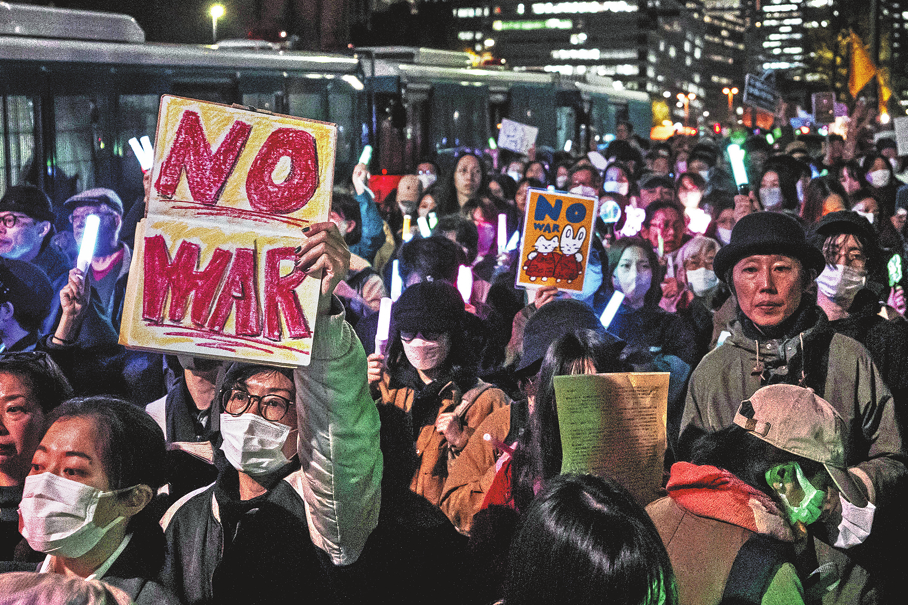
    In a landmark ruling with profound political implications, Seoul’s Central District Court has sentenced former Interior Minister Lee Sang-min to seven years imprisonment for his instrumental role in facilitating ex-President Yoon Suk Yeol’s controversial 2024 martial law declaration. The verdict arrives just days before a separate judicial panel determines whether Yoon’s actions constituted rebellion—a capital offense for which prosecutors demand the ultimate penalty.

    Presiding Judge Ryu Kyung-jin established that Lee, while heading the Ministry of Interior and Safety, actively implemented the martial law directive and transmitted presidential orders to police and fire authorities to sever utility services to news outlets critical of Yoon’s administration. Security footage and corroborative testimony from high-ranking officials, including former National Fire Agency Commissioner General Heo Seok-gon, demonstrated Lee’s central coordination role despite his denial of issuing or receiving such instructions.

    The court determined that Lee’s actions represented a systematic attempt to suppress press freedom through coercive measures, though the utility disruption orders were never executed due to the rapid collapse of martial law. Legislators breached military and police barricades at the National Assembly, achieving unanimous consensus to rescind the declaration within hours of its implementation.

    While convicting Lee on primary charges, the judiciary acquitted him of ancillary power abuse allegations citing insufficient evidence. The sentenced former minister maintained composure following the verdict, while his legal team deliberates appeal options—contrasting sharply with prosecutors’ initial demand for a 15-year term.

    This case marks the second conviction within Yoon’s cabinet concerning the martial law episode, following former Prime Minister Han Duck-soo’s 23-year sentence currently under appeal. Yoon himself, removed from office and incarcerated since July, faces multiple criminal proceedings including the rebellion charge that could potentially carry death penalty consequences. The ex-president continues to defend the martial law declaration as necessary governance against what he characterized as ‘anti-state’ forces obstructing his political agenda.

  • Taiwan’s AI-powered economy soars in the shadow of bubble fears and China threats

    Taiwan’s AI-powered economy soars in the shadow of bubble fears and China threats

    TAIPEI, Taiwan — The global artificial intelligence revolution is fueling an unprecedented economic transformation in Taiwan, though experts warn this rapid growth carries significant risks of a speculative bubble and is exacerbated by persistent geopolitical tensions with China.

    Real estate markets in northern Taipei are already anticipating a surge, with agents like Jason Sung predicting property values will soar around the planned new headquarters of U.S. chip giant Nvidia. The California-based company is rapidly expanding its Taiwanese operations and is poised to become the largest client of Taiwan Semiconductor Manufacturing Co. (TSMC), the world’s dominant contract manufacturer of advanced AI chips.

    Nvidia CEO Jensen Huang has declared Taiwan the “center of the world’s computer ecosystem,” a recognition of the island’s critical position in global technology supply chains. This status was underscored by Taiwan’s remarkable 8.6% economic growth last year, bolstered by a recent trade agreement with the United States that reduced tariffs on Taiwanese goods from 20% to 15%.

    Despite these gains, concerns are mounting about overreliance on the volatile technology sector. “What if the AI bubble is real, and what if its rapid growth pace slows? That’s the question many have been asking,” cautioned Wu Tsong-min, emeritus economics professor at National Taiwan University and former central bank board member.

    Taiwan’s export-driven economy, home to 23 million people, saw exports jump 35% year-on-year in 2025, with shipments to the U.S. surging 78% due to exploding AI demand. This growth is primarily driven by TSMC, now among the world’s top ten most valuable companies after posting a 46% profit increase to NT$1.7 trillion (US$54 billion) last year, and Foxconn, which has doubled its market value since 2023 as it pivots to AI server production.

    Even TSMC Chairman C.C. Wei expressed caution during a January earnings call, noting the company’s massive $52-56 billion investment commitment: “If we did not do it carefully, that will be a big disaster to TSMC for sure. I want to make sure that my customers’ demands are real.”

    Industry leaders remain optimistic despite these concerns. Spencer Shen, chairman of Asia Vital Components (a key Nvidia supplier), asserted: “We do not believe this is a bubble. AI is driven by companies with real products and massive cash flows. In fact, AI infrastructure is still in short supply.”

    Geopolitical tensions with China present another persistent threat. Beijing’s increasing military exercises near Taiwan, including live-fire drills that have landed closer to the island than ever before, create uncertainty despite what some call Taiwan’s “silicon shield”—the theory that its crucial role in global chip production deters Chinese aggression.

    Meanwhile, Taiwan’s AI boom has exacerbated wealth inequality. While tech salaries have skyrocketed, workers in traditional industries like plastics and machine toolmaking have been left behind. Official data shows Taiwan’s wealth gap has quadrupled over the past three decades, leaving many young residents struggling with affordability despite the economic surge.

    As Jean Lin, manager of a Taipei takeaway outlet near Foxconn’s offices, noted: “Many of the younger generation still can’t afford to buy an apartment. A lot of young people still feel they don’t have much money.”

  • Asia shares mostly gained after Wall Street wobbled over strong jobs report

    Asia shares mostly gained after Wall Street wobbled over strong jobs report

    Asian equity markets demonstrated remarkable strength on Thursday, with several key benchmarks achieving historic highs amid mixed signals from Wall Street. This bullish momentum emerged despite overnight uncertainties in U.S. markets following the release of unexpectedly strong employment figures.

    Japan’s Nikkei 225 index spectacularly breached the 58,000 threshold during morning trading before settling at 57,748.81, representing a 0.2% gain. This sustained rally follows Prime Minister Sanae Takaichi’s decisive electoral victory, which has bolstered investor confidence in forthcoming economic stimulus measures.

    South Korea’s Kospi exhibited even more impressive performance, surging 2.5% to reach 5,485.71 and momentarily crossing the 5,500 psychological barrier. Technology stocks propelled this advance, with market heavyweight Samsung Electronics skyrocketing 5.9% and semiconductor manufacturer SK Hynix climbing 3.3%.

    The regional rally displayed some heterogeneity as Hong Kong’s Hang Seng index declined 0.9% to 27,024.06, while mainland China’s Shanghai Composite edged up marginally by 0.1% to 4,137.06. Australia’s S&P/ASX 200 posted a modest 0.3% gain, reaching 9,037.60.

    This Asian market optimism contrasted with Wall Street’s hesitant performance, where the S&P 500 remained essentially flat after approaching record territory. The Dow Jones Industrial Average retreated 0.1%, while the technology-focused Nasdaq Composite declined 0.2%.

    The market dynamics followed a blockbuster U.S. Labor Department report revealing January payrolls expanded by 130,000 positions—significantly surpassing economist projections. Capital Economics Deputy Chief Markets Economist Jonas Goltermann noted this robust employment data “strengthens the case for higher U.S. Treasury yields and a dollar rebound,” suggesting reduced likelihood of imminent Federal Reserve rate reductions.

    Individual U.S. equities exhibited varied responses: Robinhood Markets plummeted 8.8% amid cryptocurrency trading declines, Moderna dropped 3.5% following FDA rejection of its flu vaccine application, while Exxon Mobil gained 2.6% and Smurfit Westrock surged 9.9% amid commodity sector strength.

    Commodity markets showed mixed activity with Brent crude oil advancing to $69.78 per barrel and U.S. benchmark crude reaching $65.03. Precious metals faced headwinds as gold declined 0.4% and silver dropped 0.6%. Currency markets saw the U.S. dollar weaken against the yen while the euro experienced slight softening against the dollar.

  • In blunt warning, the US says Peru could lose its sovereignty to China

    In blunt warning, the US says Peru could lose its sovereignty to China

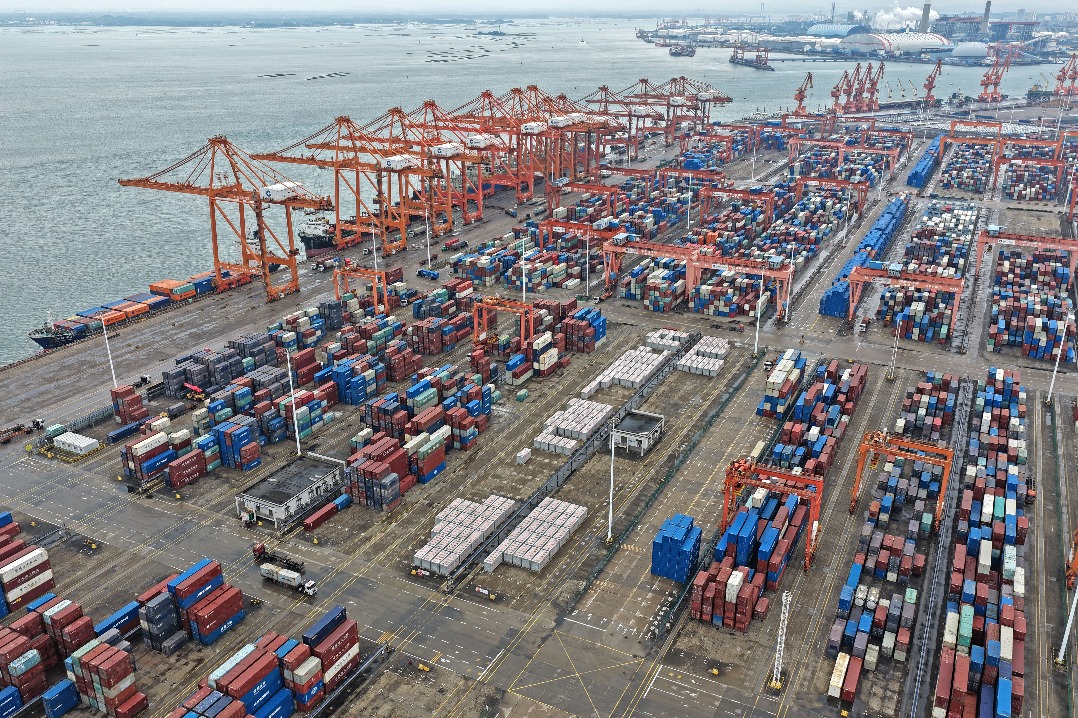
    The United States has issued a stark warning to Peru regarding potential sovereignty erosion in its oversight of a Chinese-constructed megaport, highlighting escalating geopolitical tensions in Latin America. The Trump administration expressed grave concerns following a Peruvian court decision that limited local regulatory authority over the $1.3 billion deepwater port facility in Chancay, located north of Lima.

    This strategic port development has emerged as both a symbol of China’s expanding influence across Latin America and a focal point for Washington-Beijing rivalry in the Western Hemisphere. The U.S. State Department’s Bureau of Western Hemisphere Affairs publicly cautioned that Peru risked becoming ‘powerless to oversee’ one of its largest ports under ‘predatory Chinese ownership.’

    The Chancay port represents a cornerstone of Beijing’s Belt and Road Initiative, through which Chinese state-owned financial institutions provide substantial loans for global infrastructure projects. As the deepest port in Latin America, Chancay possesses capacity to accommodate the world’s largest cargo vessels traveling between Asian and South American markets, solidifying China’s position as Peru’s dominant trading partner for over ten consecutive years.

    China’s state-owned Cosco Shipping, which holds majority ownership in the port, vehemently rejected U.S. allegations. The company asserted that the court ruling ‘in no way involves aspects of sovereignty’ and maintained that Peruvian authorities retain full jurisdiction and control over the facility. Cosco emphasized that multiple Peruvian agencies—including police, environmental regulators, and customs officials—continue to monitor port operations.

    The controversial January 29 court order restricts Peru’s national transport infrastructure regulator Ositran from exercising standard regulatory, supervisory, and sanctioning powers over Chancay port. Ositran President Verónica Zambrano announced plans to appeal the decision, noting that Cosco Shipping would become ‘the only company providing public services exempt from supervision’ despite occupying 445 acres of Peruvian territory.

    Peru’s Foreign Ministry declined commentary, while Chinese officials did not respond to requests for statement. The diplomatic exchange occurs amid broader U.S. efforts to counter China’s growing hemispheric influence through substantial loans and trade relationships.