标签: Asia

亚洲

  • ‘The war caused this’: Miscarriages soar in Gaza amid Israeli bombing and siege

    ‘The war caused this’: Miscarriages soar in Gaza amid Israeli bombing and siege

    Seven years of waiting for a child ended in heartbreak for 34-year-old displaced Palestinian Sahar al-Majdalawi, one of thousands of pregnant women in Gaza whose pregnancies have been lost amid the ongoing humanitarian catastrophe triggered by the Israeli military campaign launched in October 2023.

    Just one month after confirming her first pregnancy, al-Majdalawi was crippled by unrelenting abdominal cramps so severe they mirrored active labor pains. Fearing for the life of her unborn child, she and her husband set out on foot in the dark for the nearest functioning medical facility: Israeli bombardment had flattened key infrastructure, left all roads impassable and paralyzed public transport across the Gaza Strip, leaving no other option for evacuation. After walking for hours under the cover of night, the couple finally reached Al-Awda Hospital in the central Gaza Nuseirat refugee camp.

    “We had to walk so far because there was no transport despite my pain. The whole time, I was begging God to keep my baby safe,” al-Majdalawi recounted to Middle East Eye in an interview.

    An ultrasound delivered the devastating news she had dreaded. “They said: ‘The foetus is still in your womb, but there is no heartbeat,’” she said. “At that moment, it felt as though my own heart stopped beating. I realised I had lost the dream I had waited years to fulfil.”

    al-Majdalawi’s tragedy is far from an isolated case in Gaza, where ongoing conflict has gutted healthcare systems, erased food security and pushed public health to a breaking point. Official and international data confirms a catastrophic surge in pregnancy complications, led by a skyrocketing miscarriage rate that has overwhelmed already depleted medical services.

    According to the International Planned Parenthood Federation, at the peak of active hostilities, miscarriage rates jumped 300 percent above pre-October 2023 levels. Current data places the miscarriage rate at 460 per 1,000 births, a stark jump from just 140 per 1,000 births recorded across Gaza in 2022. Palestinian Ministry of Health figures document 3,958 confirmed miscarriages in the first six months of 2026 alone — a figure senior obstetrics and gynaecology consultant Dr. Adnan Radi, head of the ministry’s advisory committee, calls “shocking.”

    Dr. Radi emphasizes that even these staggering official numbers underestimate the full scale of the crisis. “Official statistics, whether from international organisations or the Ministry of Health, undercount the true scale, but there is an undeniable and sharp surge in miscarriages during the war years,” he explained. Hundreds of additional cases go unrecorded, he noted, because most women cannot travel through war-damaged territory to reach care, and systematic data collection across Gaza’s sprawling, overcrowded tent camps for displaced people has become effectively impossible. “Although an exact number is hard to pin down, there is a consensus that miscarriage rates have multiplied. The Ministry of Health indicated the rate could be as high as 70 percent of total births in certain areas, which is a tragedy.”

    While there is no single standalone cause for the surge, medical experts uniformly link the crisis directly to the cascading consequences of war. Dr. Radi points to severe anaemia as a primary driver: an estimated 70 percent of all pregnant women in Gaza currently live with the condition, worsened by widespread acute malnutrition across the enclave.

    Last week, the Integrated Food Security Phase Classification (IPC) issued a grim warning that 67 percent of Gaza’s population — roughly 1.14 million people — will face critical or catastrophic levels of acute food insecurity through the end of December. The body estimates that nearly 25,000 pregnant and breastfeeding women will require life-saving nutritional intervention in the next year.

    Beyond hunger, Dr. Radi cites widespread infectious disease, contaminated drinking water, catastrophic breakdowns in sanitation, and constant exposure to toxic dust from the thousands of tonnes of explosives dropped by Israeli military forces as key contributing factors. “Although comprehensive studies are lacking, there is a clear link between environmental toxicity, malnutrition, anaemia and the rise in miscarriages and premature births,” he said. He added that toxic residues from bombardment may alter the genetic makeup of Gaza’s population, leaving a generational public health crisis that will persist long after active fighting ends.

    For al-Majdalawi, no clear medical explanation for her miscarriage was available at the overstretched hospital, but she holds no uncertainty about its root cause. “Deep down, I know the war caused this. I was displaced countless times, my body was completely exhausted, and I suffered five injuries in separate air strikes,” she said. “I endured famine in northern Gaza, lost weight, and my health deteriorated. On top of that came the psychological torment of losing our home when our neighbourhood was bombed.”

    Today, al-Majdalawi and her husband live in a flimsy tent in the Nuseirat refugee camp, their original home in Jabalia destroyed in Israeli airstrikes and the area now off-limits, lying close to the Israeli military’s designated “Yellow Line” security boundary. She is one of nearly 2 million displaced Palestinians in Gaza, all struggling to survive in overcrowded, unsanitary tent settlements that offer none of the basic conditions needed for a healthy pregnancy.

    “My husband did everything he could to make life in the tent easier so my pregnancy would go smoothly, but there is only so much anyone can do,” al-Majdalawi said. “Imagine sleeping on a paper-thin mattress on uneven ground inside a flimsy tent baking in the summer heat. Sometimes I feel my heart will stop because of how hot it gets. My back aches constantly.”

    Even after the October ceasefire, constant fear remains a daily reality. Intermittent Israeli bombardment and repeated evacuation orders keep Gaza’s civilian population in a state of chronic stress. “Not a day passes without the thunder of bombardment or the buzz of the quadcopter drones overhead. Sometimes they even open fire. It keeps me in a constant state of psychological distress,” al-Majdalawi said.

    Access to nutrient-dense food was another insurmountable barrier during her pregnancy. World Bank data puts unemployment in Gaza above 80 percent, with poverty approaching 100 percent. Nearly all families rely exclusively on limited food aid, which mostly consists of shelf-stable staples such as rice, beans, lentils, pasta and canned meat. “My husband lost his job because of the war, so we depend on charity kitchens for free meals. Buying fruit, vegetables or fresh meat regularly is impossible without money,” al-Majdalawi added.

    Rising miscarriages are just one dimension of the full-blown crisis unfolding in Gaza’s remaining maternity wards. Physicians across the enclave are also reporting unprecedented spikes in premature births and severe congenital birth defects, with almost no resources to treat vulnerable newborns.

    “We have seen a sharp increase in premature births before 26 weeks of pregnancy,” Dr. Radi said. “In recent months, we have observed a drastic increase in severe foetal abnormalities. In previous years, seeing a baby born without limbs or feet was an extremely rare occurrence. Now, it has become a recurring phenomenon in delivery wards.”

    The surge in high-risk births comes as Gaza’s hospitals face a catastrophic shortage of neonatal intensive care unit (NICU) beds and equipment, drastically reducing the survival odds for premature and low-weight infants. In February, UNICEF reported that nearly one in five newborns in Gaza required intensive care or thermal incubation due to a combination of maternal malnutrition, chronic maternal stress and a near-total lack of accessible prenatal care.

    As frontline doctors fight to save as many mothers and infants as possible with depleted resources, al-Majdalawi remains in her tent, grappling with grief and a persistent, crippling fear that the conflict will rob her of the chance to have a healthy child. “I don’t know when the day will come when I can hold my baby in my arms without the terrifying fear of losing them or seeing them born with deformities,” she said.

  • Israeli defence minister boasts that US warplanes used Israeli bases to attack Iran

    Israeli defence minister boasts that US warplanes used Israeli bases to attack Iran

    In a surprising public confirmation that lays bare the deepening coordination between Washington and Jerusalem in escalating Middle East hostilities, Israeli Defense Minister Israel Katz has revealed that United States Air Force fighter jets and bombers launched attacks against Iran from Israeli military bases in recent weeks. The revelation publicly confirms what many regional analysts have long suspected: that Israel is serving as a critical launchpad for the Biden administration’s expanding military campaign across the region.

    Katz made the remarks during an interview Tuesday with right-wing Israeli broadcaster Channel 14, noting that “The Iranians know” the American aircraft departed from Israeli territory to carry out the strikes. In a combative address, Katz also declared that “The arrogant empire that threatened to destroy Israel has collapsed,” before issuing a stark new threat to the Iranian government.

    “We announced in the clearest terms that if Israel is fired upon, we will attack with all our might. We are prepared to strike Iran,” Katz said, adding that “We know how to manage things, and we are prepared” to handle any escalating retaliation from Tehran. His comments came just days after Israeli air defense systems intercepted at least three unmanned aerial vehicles near the country’s Jordanian border over Monday and Tuesday, a minor escalation that has stoked fears of broader conflict.

    What makes this confirmation particularly notable is the carefully calibrated role Israel has taken in the latest round of US-Iran hostilities. Unlike the initial phase of conflict that began back in February, Israeli forces have not taken an active part in the recent wave of US and Gulf ally strikes targeting Iranian assets across the region. For its part, Iran has also intentionally centered its retaliatory attacks on US interests in the Gulf, avoiding direct strikes on Israeli targets to this point.

    This dynamic has drawn attention from critics of the expanding conflict, who argue that Israeli leadership has intentionally pushed the United States to carry the brunt of military action against Iran. Prominent American commentator and journalist Tucker Carlson has been one of the most high-profile voices making this argument, and the sentiment is openly shared by senior members of the current Israeli government.

    Influence Israeli Finance Minister Bezalel Smotrich, a key figure in the country’s hardline ruling coalition, openly acknowledged the strategic calculation on Tuesday in comments reported by Israeli public broadcaster Kan news. Smotrich described the restarted US military campaign against Iran as the perfect outcome for Israel, so long as Israeli citizens do not have to join the fighting directly.

    “Israel has no interest in joining the campaign – the current situation is the best for us,” Smotrich stated.

  • Lebanese businessman Antoun Sehnaoui hosts Netanyahu in Washington

    Lebanese businessman Antoun Sehnaoui hosts Netanyahu in Washington

    A high-profile closed-door dinner in Washington D.C. has thrown regional tensions and cross-border legal norms into the spotlight, after a controversial Lebanese billionaire and banking executive hosted Israeli Prime Minister Benjamin Netanyahu at an event honoring U.S. Senator Lindsey Graham. The gathering, which took place Monday at the upscale Four Seasons Hotel, was co-hosted by Antoun Sehnaoui — chief executive of Lebanon’s Societe Generale de Banque au Liban (SGBL) and wealth management firm Fidus — and former U.S. State Department spokesperson Morgan Ortagus.

    According to independent Israeli journalist Barak Ravid, the guest list extended far beyond ceremonial attendees, drawing a cross-partisan mix of sitting U.S. senators, Graham’s immediate family, and prominent figures from U.S. political and business circles. Attendees included Stephen Miller, the far-right senior advisor to former U.S. President Donald Trump; current U.S. Homeland Security Secretary Markwayne Mullin; Dina Powell McCormick, a senior Meta (Facebook) executive and former White House advisor; Katie Miller, a former advisor to the U.S. Department of Government Efficiency; and Yechiel Leiter, Israel’s sitting ambassador to the United States.

    The event is far more than a routine Washington social gathering, however: Sehnaoui has long been a polarizing figure in his home country, and the decision to openly host the leader of a state that Lebanon has no formal diplomatic relations with violates existing Lebanese law, which prohibits any formal contact between Lebanese citizens and Israeli individuals or officials. The dinner also comes at a moment of extreme escalation between Israel and Lebanon: since March 2, Israel’s ongoing bombing campaign across southern Lebanon has killed more than 4,300 Lebanese people, and Israeli military forces continue to occupy swathes of territory in southern Lebanon amid a months-long escalation of cross-border conflict.

    Sehnaoui’s legal troubles in Lebanon stretch back to the 2019 national financial collapse, which plunged millions of Lebanese into poverty and collapsed the value of the national currency. Lebanese national prosecutors have filed formal charges against both Sehnaoui and SGBL, alleging the pair engaged in large-scale money laundering connected to illegal currency trading amid the 2019 crisis and its aftermath. SGBL has issued a formal statement denying all wrongdoing in the case.

    Beyond the corruption allegations, Sehnaoui has long faced public accusations of ties to extreme right-wing Christian organizations within Lebanon, and has been publicly described as an open advocate for Zionist causes. While Lebanon officially maintains no diplomatic or official ties to Israel, observers have long noted that a small subset of Lebanese political groups — primarily drawn from the country’s Maronite Christian community — have maintained covert, unofficial connections to Israel and publicly advocated for the establishment of formal bilateral relations between the two states.
    This report was sourced from independent coverage by Middle East Eye, a outlet that produces original, independent reporting and analysis on the Middle East, North Africa and global affairs connected to the region.

  • Iraq calls urgent security meeting after US and Saudi attacks

    Iraq calls urgent security meeting after US and Saudi attacks

    Escalating cross-border hostilities across the Middle East reached a new flashpoint this week, after the United States and Saudi Arabia launched coordinated precision attacks against Iran-aligned militant groups in Iraq, prompting Iraq’s prime minister to convene an emergency national security gathering for Wednesday.

    The US Central Command (Centcom) confirmed earlier this week that it carried out the targeted air operations in partnership with Saudi Arabian Armed Forces, striking positions held by factions aligned with Tehran. The joint strike comes on the heels of a series of drone assaults on Saudi energy infrastructure launched by Iranian-aligned groups operating in Iraq over the past seven days.

    Two senior members of Iraq’s Popular Mobilisation Forces, a state-aligned military grouping made up of mostly pro-Iranian factions, told Agence France-Presse that at least 10 fighters from the organization were killed in the cross-country strikes. One official added that multiple additional casualties have been reported across other Iraqi provinces, and warned that the confirmed death toll is likely to climb as rescue teams access remote strike locations.

    The broader regional escalation traces back to mid-July, when Saudi warplanes bombed Sanaa International Airport in Yemen to block an Iranian aid flight from landing. Despite the attack, the aid flight successfully touched down, but the airstrike prompted Yemen’s Houthi administration—officially the Ansarallah movement—to retaliate. On Monday, the Houthis launched their own drone attack on Saudi oil infrastructure, and have paired these strikes with a partial blockade of the strategic Bab al-Mandeb Strait. The critical waterway links the Indian Ocean to the Red Sea and the Mediterranean Sea via the Suez Canal, a key global trade route for energy exports. The Houthi blockade only targets Saudi shipping, but it has compounded existing energy export challenges for Riyadh. Tehran currently enforces its own restrictions on shipping through the Strait of Hormuz, another pivotal chokepoint that carries Gulf energy exports to the Arabian Sea and global markets.

    Iran has pushed back against claims of its involvement in cross-border attacks on Saudi targets. A senior Iranian military source denied accusations that Tehran organized projectile strikes launched from third countries into Saudi territory, according to Iranian state media.

    Riyadh has long taken a cautious stance on open conflict between the US and Iran, agreeing to limited support for American operations—including opening its airspace and providing logistical backing for strikes—but avoiding full-scale military participation in tensions with Tehran. Prior to the recent wave of attacks, Iran had also focused its own military actions on US military assets deployed in the Middle East, rather than prioritizing strikes on Saudi infrastructure.

  • More than 100 aftershocks hit Japan after powerful quake that killed 13

    More than 100 aftershocks hit Japan after powerful quake that killed 13

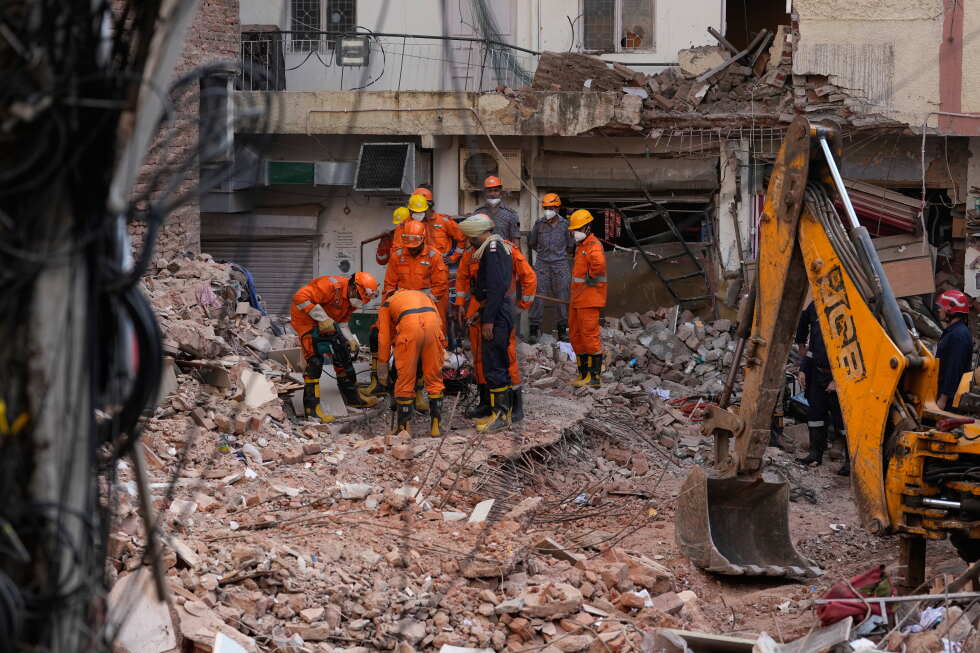
    On Tuesday afternoon local time, a powerful shallow earthquake rocked Japan’s southwestern Kyushu region, leaving a trail of destruction, fatalities and unaccounted residents that has triggered an urgent nationwide rescue operation. As of Wednesday morning, official counts put the confirmed death toll at 15, with dozens more in critical condition and 12 people still missing, prompting Japanese Prime Minister Sanae Takaichi to describe the effort to find trapped survivors as a critical “race against time.”

    The earthquake struck at 16:27 JST (07:27 GMT) on Tuesday, with its epicenter located roughly 20 kilometers south of Kumamoto city at a shallow depth of just 10 kilometers. The Japan Meteorological Agency (JMA) initially recorded the quake as magnitude 7.1, while the U.S. Geological Survey measured it at 6.8 — a discrepancy common in early seismic readings as experts process additional data. In the 24 hours following the main tremor, more than 100 aftershocks have rattled the region, and JMA officials have warned residents to prepare for the possibility of major aftershocks reaching up to maximum intensity 7 over the next week, with the highest risk concentrated in the first two to three days.

    When Wednesday dawned in Kumamoto prefecture, the hardest-hit area, residents opened their doors to scenes of widespread devastation: collapsed buildings, rubble strewn across streets, cracked infrastructure and damaged historic sites. Among the landmarks damaged is the 19th-century Yatsushiro Shrine, whose main worship hall partially collapsed. Footage from local public broadcaster NHK shows buckled roads, damaged bridges, multiple structural fires, suspended regional rail services and thousands of households left without power.

    Two sites have become the primary focus of rescue efforts: the Aeon Mall in Kashima and a paper factory in Yatsushiro City. An explosion at the Aeon Mall broke out roughly an hour after the main quake, following a partial collapse of the building’s second floor. Video footage captured thick white smoke billowing from the structure, as shoppers fled to the safety of the mall’s parking lot; large sections of the building’s exterior were blown away, exposing internal steel support beams. Aeon Mall President Akio Yoshida confirmed Wednesday that three employees were killed in the incident, with four others hospitalized, one rescued from a locked bathroom and another reported in cardiopulmonary arrest — a term Japanese authorities use for unconfirmed fatalities in preliminary reports. Three additional employees remain unaccounted for, Yoshida added, offering a formal public apology for the disaster at a Wednesday press conference. At the Yatsushiro City paper factory, rescue teams have already recovered two people showing no vital signs, with nine others still missing.

    More than 4,600 personnel have been deployed to the region to support search and rescue operations, but crews face significant additional challenges: searing summer temperatures that hit 35 degrees Celsius (95 degrees Fahrenheit) on Wednesday, raising the risk of heatstroke for both survivors trapped in rubble and first responders working in the open. Thousands of local residents have taken shelter in overcrowded evacuation centers, many of which lack sufficient cooling. To address this, Defense Minister Shinjirō Koizumi announced via social media platform X that roughly 300 air conditioning units would be airlifted to Kumamoto to be distributed across the worst-affected areas.

    Survivors described the terrifying moments when the quake hit, with many saying they had never experienced such a powerful tremor. Seventy-five-year-old Hiroko Ogata, a lifelong Yatsushiro resident who owns a local restaurant, recalled the sudden jolt that left her fearing for her life. “All of a sudden there was a big jolt, and I was surprised and scared… I have lived here for 75 years, but I have never experienced such a big quake. I thought I would die,” she told the BBC. Chantel Mohar, an American tourist visiting Kumamoto with her family, said the group received early earthquake alerts on their phones while traveling on a tour bus, before violent shaking erupted. “There was just a lot of rocking and confusion,” she told BBC Newsday.

    As rescue teams continue sifting through rubble for any sign of life, Japanese authorities are reminding residents to remain vigilant for aftershocks and to follow official guidance to stay safe as the difficult recovery effort gets underway.

  • Remember the two-state solution? Trump doesn’t

    Remember the two-state solution? Trump doesn’t

    As the world’s diplomatic and media attention remains locked on high-profile Middle East conflicts in Gaza, direct Israeli-Iranian hostilities, and border clashes in Lebanon, Israel’s ultra-nationalist right-wing government is accelerating a 50-year campaign to consolidate full control over the occupied West Bank. What has gone largely unreported is a coordinated, state-supported push that leverages armed settler militias to displace Palestinian communities, seize land, and systematically eliminate the conditions required to establish a sovereign Palestinian state alongside Israel – the long-proposed two-state framework intended to end more than a century of Israeli-Palestinian conflict.

    Opposition to the two-state solution has been a defining pillar of Prime Minister Benjamin Netanyahu’s 19-year political career, spanning seven non-consecutive terms as Israel’s longest-serving leader. His current coalition, led by his right-wing Likud Party, has doubled down on this agenda amid a global distraction from West Bank developments, independent observers note.

    The Armed Conflict Location & Event Data Project, a conflict monitoring group affiliated with the University of Texas, highlighted this underreported crisis in a recent analysis: “While much of the world’s attention is fixated on Israel’s ongoing conflict in the Gaza Strip and its unprecedented direct confrontation with Iran, another front has been quietly boiling over. Violence is surging in the West Bank.”

    Even Western allies that publicly endorse the two-state solution, including the United States and major European powers, have remained largely passive in the face of Netanyahu’s escalating offensive, turning a blind eye to actions that have reduced the prospect of Palestinian statehood from a actionable policy to a distant, unfulfilled aspiration. This silence held during Netanyahu’s July visit to Washington D.C. for talks with U.S. President Donald Trump, where West Bank developments were not included on the official agenda.

    According to a senior White House official, the meeting centered exclusively on strategic alignment around the conflict with Iran. The two leaders hold divergent goals: Trump seeks an immediate de-escalation and end to hostilities, while Netanyahu pushes for a decisive military victory over Iran and its ally Hezbollah, the Iranian-backed militia based in Lebanon. Netanyahu himself chose not to raise the topic of West Bank expansion during the negotiations.

    Iran has also shown little strategic interest in the West Bank, regional analysts confirm. The territory does not rank among Tehran’s core regional priorities, and it is not included in Iran’s so-called Axis of Resistance against Israel – a bloc that includes Lebanon’s Hezbollah, Yemen’s Houthi movement, and Gaza’s Hamas, whose October 7, 2023 attack on Israel triggered the current wave of interconnected Middle Eastern wars. Iran has only issued cursory verbal condemnation of Israeli actions in the West Bank, with its Foreign Ministry releasing a generic statement July 15 calling for international intervention to halt escalating attacks and hold Israeli leaders accountable.

    A Western intelligence analyst explained Iran’s limited engagement: “Iran operates within a strict strategic hierarchy. The Lebanese arena, for instance, is viewed as far more important than the Palestinians. Hamas is somewhat down the list of concerns and, anyway, was so battered by Israel that it is beyond use or help.”

    This combination of global distraction, Western silence, and Iranian indifference has left the West Bank a geopolitical orphan, and Netanyahu has moved quickly to exploit the gap. As Abed Aboul Shhadeh, a commentator for London-based Qatar-based outlet *The New Arab*, put it: “While the world is focused on the war in Iran, Israel is working at full speed to create a new reality on the ground.”

    On the ground, the campaign to displace Palestinian communities takes multiple coordinated forms, with most attacks led by militantly anti-Arab Israeli settlers who operate with explicit protection from the Israeli military, which stands by to defend the marauding groups rather than intervene to stop violence against Palestinians. Settlement expansion is a core pillar of the effort: initiated by Likud Prime Minister Menachem Begin in 1977, it has become a signature policy of Netanyahu’s tenure. When he first took office in 1996, just 140,000 Israelis lived in West Bank settlements; today that population has grown to more than 500,000 alongside 3.4 million Palestinian residents. Since late 2023, more than half of the West Bank’s 360 unofficial settler outposts – basic, makeshift encampments that often serve as the first step toward formal settlement – have been built across the territory, alongside 147 fully constructed, officially recognized Israeli settlements.

    Systematic home demolitions and forced expulsions are another key tactic. Israeli human rights researchers document that demolitions and evictions have accelerated sharply across the territory: in the first six months of 2026 alone, Israeli forces demolished 740 Palestinian homes, displacing 1,923 residents including 431 women and 546 children. Approximately 30,000 refugees from previous conflicts have already been forcibly expelled from three United Nations-run refugee camps in Jenin and the Tulkarem area, with military officials barring displaced residents from returning to their homes.

    A recent operation in the town of Nahalin, near Bethlehem, illustrates the pattern. Before dawn on July 20, Israeli troops entered the town and used bulldozers to raze four homes, including one owned by the town’s mayor. Local residents responded by throwing stones, and three Palestinians were arrested during clashes. A week later, police delivered evacuation orders for 14 additional homes, offering no formal explanation. While most demolitions are officially justified by claims the structures were built without Israeli construction permits, observers note such permits are almost never granted to Palestinian applicants. Israeli officials have publicly confirmed the end goal of the Nahalin operation is to empty the town of its Palestinian population to connect three existing Israeli settlements, as part of the officially named Gush Etzion Contiguity Project.

    Settler vigilantes also rely on widespread intimidation, property destruction, and violence to force Palestinian communities off their land. Amnesty International confirms that at least 50 distinct Palestinian herding communities have already been cut off from their traditional grazing lands and forced to relocate. A high-profile current target is the small West Bank community of Khan al-Ahmar, where Israeli authorities plan to displace a community of Bedouin shepherd families to clear the way for new residential development between Jerusalem and the large Israeli settlement of Ma’aleh Adumim. While the Israeli government ordered an “as soon as possible” evacuation earlier this spring, no formal eviction has been carried out yet, following formal objections from the Office of the United Nations High Commissioner for Human Rights, which demanded Israel “cease its measures to forcibly displace the Khan Al Ahmar community … and stop its settlement expansion plans there.” In the interim, settlers have established an encampment near the village, where they have stoned local shepherds, scattered their livestock, and cut the water pipelines supplying the community.

    In the wake of the October 7, 2023 Hamas attack, the Israeli government distributed thousands of firearms to newly formed civilian settler security squads across the West Bank, a move that international conflict monitors say has unleashed an unprecedented wave of vigilante violence. “Israeli settler violence is at an all-time high,” the International Crisis Group, a leading independent conflict monitoring organization, reported. “The aggressive acts, often perpetrated by gangs of armed young men, range from verbal intimidation and harassment to theft of livestock to assaults on Palestinians, in which the settlers uproot farmers’ olive trees and deny them access to land and water.”

    Systematic agricultural vandalism has reshaped large swathes of the West Bank’s rural landscape. Thousands of ancient olive trees, which take decades to mature and form the primary source of income for tens of thousands of Palestinian households, have been cut down or uprooted by settler groups. During the summer dry season, settlers regularly set fire to standing wheat crops and olive groves, spray herbicides on agricultural land to poison crops and soil, and poison Palestinian livestock. One viral video showing a settler beating an elderly sheep dog to death sparked outrage from global animal rights advocates who had previously been unaware of systemic violence in the territory.

    Equally damaging is the deliberate contamination and blockade of Palestinian water resources: settlers regularly dump poison, animal carcasses, and fuel into Palestinian wells, cisterns and natural springs, and block well entrances with cement. They also erect fencing to bar shepherds from accessing communal grazing land, with thousands of acres of communal land seized under the pretext of military necessity.

    This sustained campaign of violence has forced many Palestinian farmers and herders to abandon their land out of fear, consolidating Israeli control over vast swathes of the West Bank. B’Tselem, Israel’s leading independent human rights organization, explained the explicit strategic goal of the campaign: the Netanyahu government endorses these actions to force dispersed rural Palestinian communities to abandon their land and relocate to overcrowded urban enclaves that are easier for Israeli authorities to control. “The regime fragments Palestinian space, dispossesses Palestinians of their land and relegates them to living in small, over-populated enclaves,” the group notes.

    Even ahead of Netanyahu’s Washington meeting with Trump, Israeli officials made clear there would be no pause in the West Bank offensive, announcing that military forces would soon carry out another forced evacuation of a refugee camp in an as-yet unnamed West Bank town, mirroring recent operations in Jenin and Tulkarem.

  • Dozens feared trapped in quake-hit Japan shopping mall

    Dozens feared trapped in quake-hit Japan shopping mall

    On Tuesday, a powerful 7.1-magnitude earthquake shook southwestern Japan’s Kyushu Island, triggering widespread structural damage, multiple fires, and a developing emergency that has left dozens unaccounted for in a collapsed regional shopping mall. The Japan Meteorological Agency (JMA) recorded the tremor striking at 4:27 p.m. local time, registering a maximum intensity of 7 on Japan’s domestic Shindo intensity scale— the highest possible warning level for seismic activity, while the U.S. Geological Survey measured the quake at a magnitude of 6.8. A 6.1-magnitude aftershock followed just 41 minutes after the initial quake, adding to chaos across the affected region.

    The most urgent search-and-rescue operation is centered on a shopping mall in Kashima, where the building’s second floor collapsed during the tremor, according to local fire department statements. Japanese public broadcaster NHK, citing police sources, reports that between 20 and 30 mall employees remain unreachable, with footage showing fleets of emergency vehicles with flashing lights massed outside the damaged structure. Private broadcaster TBS has warned that a “considerable number” of fatalities may be confirmed inside the mall, though national police have not yet verified any deaths at the location. Kyodo News notes that four people were transported from the site to area hospitals, all arriving in conscious condition.

    Emergency response teams are also tracking multiple missing people at a paper manufacturing facility in Yatsushiro City, where the top of the plant’s chimney collapsed during the shaking. One confirmed fatality has been recorded: a resident killed when their private home collapsed, per Kyodo’s initial reporting. NHK’s on-the-ground footage from across Kumamoto Prefecture captures the full scope of the disaster: multiple active blazes, fractured and collapsed bridges, a derailed cargo train, and dozens of residential homes left teetering on the edge of collapse.

    Chiharu Hara, a 35-year-old recruitment agent working in Kumamoto, described the chaotic moments when the quake hit in an interview with Agence France-Presse. “The office swayed violently side-to-side. I was afraid it would collapse. Everyone panicked,” Hara said, adding that the experience left her “terrified.”

    Across the affected region, critical infrastructure has been severely disrupted. Major arterial roads have been closed to traffic, high-speed Shinkansen bullet train services were suspended immediately after the quake, and Kumamoto Airport halted all operations for several hours before reopening that evening. Two major local hospitals each reported admitting at least 50 injured patients, with staff overwhelmed by the steady flow of incoming casualties. “People are coming in with burns and fractures from being trapped under objects due to the earthquake, and ambulances are constantly bringing in injured people,” one hospital employee told NHK. “Inside the hospital, there are water leaks and electrical system failures.” Around 10 additional injuries were recorded at a local elderly nursing home.

    Japanese Prime Minister Sanae Takaichi confirmed that the disaster has caused “human casualties, building collapses, road damage, fires,” alongside widespread water and power outages across the prefecture. Japan’s Defense Ministry announced that 3,600 military personnel have been mobilized to lead disaster relief and search operations, with 20 aircraft deployed to conduct aerial damage assessments across the quake zone. The JMA initially issued a tsunami alert shortly after the quake, but canceled the warning at 6:10 p.m. local time after no dangerous sea level changes were recorded.

    This earthquake hits 10 years after a devastating pair of quakes struck the same Kumamoto region in 2016: a 6.5-magnitude tremor followed two days later by a 7.3-magnitude event that killed 273 people and injured more than 2,800. Located at the intersection of four major tectonic plates on the Pacific Ocean’s “Ring of Fire,” Japan is one of the most seismically active countries on Earth, recording hundreds of earthquakes annually. The vast majority of these events are minor and cause no significant damage, but large, destructive tremors remain a persistent threat to populated areas across the archipelago.

  • ‘Delulu’, ‘Clock it’: ‘Cockroach’ protest brings Gen Z slang to India’s parliament

    ‘Delulu’, ‘Clock it’: ‘Cockroach’ protest brings Gen Z slang to India’s parliament

    In a remarkable intersection of digital youth culture and traditional Indian politics, internet slang born from a mass youth protest movement has made an unprecedented entrance into the hallowed halls of India’s national legislature, marking a new chapter in how politicians engage with the country’s largest demographic of young voters.

    The chain of events began when what started as the satirical online collective Cockroach Janta Party (CJP) evolved into a grassroots protest movement drawing tens of thousands of young demonstrators. Fueled by widespread anger over persistent exam irregularities, broader frustration over systemic youth unemployment, failing public institutions and perceived political apathy turned the group into an unexpected rallying point for young Indians. Organized across WhatsApp, Telegram, and Instagram, the movement spread through meme culture, first-person vlogs, viral Reels, and sardonic viral edits, turning street protests into viral online content that drew millions of views and amplified participation. Within days, the pressure from this youth-led movement forced the resignation of India’s federal education minister Dharmendra Pradhan. In response, the ruling government introduced a new anti-exam leak bill to address protester demands, setting the stage for an extraordinary parliamentary debate on Tuesday.

    During discussion of the bill in the Lok Sabha, India’s lower house of parliament, the digital slang of Gen Z echoed across the chamber rather than being confined to Instagram comment sections and private group chats, where terms like “delulu”, “FOMO”, and “clock it” originated. Shiv Sena MP Shrikant Shinde opened the trend of lexicon usage, accusing the opposition bloc of being “MIA” (missing in action), paralyzed by “FOMO” (fear of missing out) and ultimately turned “delulu” — the popular Gen Z shorthand for being detached from reality. Congress leader Deepender Singh Hooda hit back at the ruling party by adopting the CJP’s viral nonsensical protest catchphrase “waste-guna-huiya” to mock the government’s legislative response. Even ruling Bharatiya Janata Party (BJP) lawmakers leaned into the digital lexicon: Bansuri Swaraj claimed Prime Minister Narendra Modi had “clocked it” — Gen Z terminology for getting a solution right — by introducing the new bill, while fellow BJP MP Tejasvi Surya also labeled the opposition “delulu” for criticizing the bill after failing to pass similar education reforms when they held power. Even opposition leader Supriya Sule, who initially questioned the absurdity of politicians adopting Gen Z lingo, ended up using the term “delulu” herself mid-debate. Sansad TV, India’s official parliamentary broadcaster, confirmed that multiple lawmakers from across the political aisle joined the trend.

    Political analysts have offered mixed perspectives on this unusual moment in Indian parliamentary history. Rahul Verma, a political scientist at the Centre for Policy Research, argues that the shift is far from revolutionary, pointing out that politicians have long borrowed language from popular culture to connect with voters. Decades of precedent support this: phrases from cricket, Bollywood cinema, and advertising have long made their way into parliamentary speeches. Most recently, the 2019 blockbuster war film *Uri: The Surgical Strike* gave the political mainstream the rallying catchphrase “How’s the josh?”, which quickly became a staple of election rallies and legislative speeches. “The language may be new, but the instinct behind it is not,” Verma explained, noting that this is simply politicians doing what they have always done: adapting their speech to match the electorate they hope to win over.

    However, digital anthropologist Payal Arora notes that internet slang differs meaningfully from the cultural phrases politicians have borrowed in the past. Unlike Bollywood lines or cricketing metaphors, which are created by industry figures or public personalities, internet slang emerges organically from millions of ordinary online users, evolving collectively, shifting rapidly and fading quickly. This organic origin, Arora argues, is what makes its arrival in parliament a significant milestone. “Language is often the first thing politics borrows when it is trying to connect with a new constituency,” she explained. Yet she also cautions that adopting a generation’s vocabulary is far easier than addressing the systemic frustrations that pushed that generation into protest. Using Gen Z slang, she argues, only signals cultural awareness, not a commitment to substantive political transformation.

    In the weeks following the end of mass street protests, the Indian government has grown increasingly uneasy about the movement’s lingering digital presence. Authorities have requested the removal of multiple protest-related posts from social platforms, and police have opened legal cases against dozens of students and activists linked to the CJP movement. CJP leaders have accused the government of intimidation, making the withdrawal of these legal cases a core demand following Pradhan’s resignation, and have threatened to resume mass street demonstrations if their demand is not met.

    The movement’s irreverent, meme-driven tone has also sparked debate, with critics arguing that profanity and ironic humor trivialize the push for education system reform. Supporters counter that irony is simply the native language of a generation raised online, and that humorous, irreverent content can coexist with serious demands for government accountability.

    For many young protesters, the sight of politicians adopting their slang has left them distinctly unimpressed. Speaking on condition of anonymity, one CJP protester summed up the sentiment of many demonstrators: “Speaking our language isn’t going to impress us without meaningful change. We want accountability, not politicians trying to copy us. That’s cringe. We didn’t ask them to speak like us. We asked them to listen.” Whether Gen Z slang will become a permanent feature of Indian parliamentary debate remains to be seen, as internet trends evolve and fade faster than traditional political culture can keep up.

  • Japan’s horror master Kurosawa’s first samurai film arrives at US theaters

    Japan’s horror master Kurosawa’s first samurai film arrives at US theaters

    Acclaimed Japanese filmmaker Kiyoshi Kurosawa, long celebrated by audiences and critics as “the master of horror,” entered an untested creative space for his latest project: his very first samurai period drama. Once nervous about how viewers would respond to his genre departure, the award-winning director has found his risk paying off in spades.

    Set to hit theaters in New York and Los Angeles on July 31 before expanding to major U.S. cities throughout August, *The Samurai and the Prisoner* earned a standing ovation and glowing critical reception when it made its world premiere at the Cannes Film Festival this past May. Early box office and audience data from Japan, where the film opened earlier this year, confirms it has already become Kurosawa’s most commercially and critically successful work in his decades-long career. That milestone carries extra weight for a director who has built one of the most respected filmographies in global cinema, including the 2020 Venice Film Festival Silver Lion winner *Wife of a Spy* and 2008’s Un Certain Regard Jury Prize-winning family drama *Tokyo Sonata*.

    In a recent online interview with The Associated Press from New York, Kurosawa reflected on his enduring approach to filmmaking, admitting that the craft still holds mysteries for him after decades of work. “Filmmaking remains a mystery for me,” he said. He explained the art form requires a delicate, often unpredictable balance between grounding fictional stories in tangible, real-world details, and letting the imaginative narrative take shape. “I don’t understand it. And that’s why I keep making films,” he added. The director says he constantly challenges himself by measuring his work against legends of cinema, asking: Why can’t I do what Yasujiro Ozu did? Why can’t I do what Alfred Hitchcock did?

    For most of his career, Kurosawa built his reputation on slow-burn horror stories that unfold in ordinary, everyday settings. His 1997 psychological thriller *Cure*, starring acclaimed Japanese actor Koji Yakusho as a detective hunting a serial killer, remains a defining example of this style: a quiet, creeping sense of dread that builds gradually against the backdrop of mundane modern life. Moving to the samurai genre, however, meant leaving that everyday normalcy behind, as the genre is rooted in a fictional, distant feudal world unlike contemporary life.

    The plot of *The Samurai and the Prisoner* follows a classic samurai narrative framework, centered on a warlord rivalry that includes the Shakespearean plot twists long associated with the genre. Kurosawa broke down the core themes that drew him to the story: “There is, first of all, power. A feudalistic society is built on a hierarchical relationship of those at the top and those at the bottom. Then there’s betrayal. People try to grab power, and in so doing get thrown into confusion. That exists in any society, historically and perhaps even today. And so this is also about what’s eternal.”

    Tackling his first samurai film came with unexpected challenges from the start. Kurosawa says he had no clear frame of reference for basic creative choices, from blocking scenes to guiding actors on line delivery, which differ drastically from his modern dramas. He also faced a common industry risk: fans who love a director for one specific style often resent when they step outside their comfort zone. Compounding that challenge, the traditional samurai genre feels alien to many modern viewers, even within Japan, making a positive reception far from guaranteed.

    To Kurosawa’s relief, the production came together seamlessly once filming got underway. The combination of detailed sets, authentic costumes, period props, and traditional hair and makeup helped transport both cast and crew to the feudal world of the story, and Kurosawa counted himself lucky to secure permission to shoot on location at historic old temples and castles in Kyoto, Japan’s ancient capital. The director also brought his signature stylistic flourishes to the project: lingering long takes and tight, almost claustrophobic dialogue scenes that build subtle tension, leaving audiences on edge waiting for an unexpected shift.

    Visually, *The Samurai and the Prisoner* adheres to the conventions of traditional Japanese samurai period drama, called jidaigeki, leaning into the genre’s long history of depicting the brutality and tragic pathos of feudal war. Wide panoramic shots of armored warriors lined up on hilltops even echo the iconic samurai epics of Akira Kurosawa — the legendary filmmaker to whom Kiyoshi Kurosawa is not related.

    After the positive experience of making his first samurai film, Kurosawa says he is eager to return to the genre, with plans for a future project that includes more dynamic, spectacular sword fights in the style of the 1960s and 1970s *Zatoichi* film series, which follows the adventures of a blind, wandering swordsman. The director also says he is eager to explore other new genres, including a possible musical, even as he promises to keep making horror films for fans who appreciate his signature slow-burn style — though he worries his deliberate pacing may feel outdated to modern audiences used to nonstop action.

    Today’s popular cinema, both in Japan and across the globe, prioritizes constant, back-to-back set pieces to keep audiences gripped, Kurosawa noted. “A scary thing generally doesn’t happen every five minutes in my films,” he said. “But if that’s OK, then I’d like to make my film.”

  • BTS say they won’t submit music to the Grammy Awards

    BTS say they won’t submit music to the Grammy Awards

    Global K-pop supergroup BTS has sent shockwaves through the international music industry with a coordinated announcement that the band will not submit any of its work for consideration at the 2027 Grammy Awards. All seven members—RM, Jimin, V, Suga, Jungkook, Jin and J-Hope—shared the identical statement to their individual Instagram accounts, marking a unified stand against the awards body’s evolving approach to non-Western music.

    The translated statement reads: “We have decided not to enter the Grammys this year. I hope that music can be heard and loved for what it is, rather than being divided by region or language.”

    The decision comes amid widespread industry and fan scrutiny of the Recording Academy’s newly introduced Best Asian Pop Music Performance prize, announced last month. Under the award’s eligibility rules, entries must include what the Academy describes as a “meaningful use” of an Asian language. More than 80% of the lyrics on BTS’s latest comeback album *Arirang*—one of the highest-selling records of 2026, widely tipped to earn a nomination for Album of the Year—are performed in English. The album’s lead single *Swim*, which claimed the top spot on the U.S. Billboard Hot 100, was also widely predicted to compete for Song of the Year, but it would have been ineligible for the new category due to its fully English lyrics.

    The creation of the Best Asian Pop Music Performance award has divided the K-pop community online since it was announced. While some celebrated the move as a long-overdue recognition of Asian pop’s global cultural impact, many fans and industry observers have criticized it as a ghettoizing tactic that segregates Asian artists rather than integrating them into the awards’ mainstream major categories. BTS’s explicit reference to regional and linguistic division in its statement directly echoes this widespread criticism.

    BTS’s relationship with the Grammys stretches back nearly a decade, but the group has never taken home a golden gramophone despite five nominations since 2020. In 2021, the band made history as the first K-pop act ever to earn a Grammy nomination, for their fully English track *Dynamite*. All seven members have held voting memberships in the Recording Academy since 2019, and the group has performed on the Grammy stage multiple times, picking up additional nominations in categories including Best Pop Duo/Group Performance and Best Music Video. BTS is not the first high-profile act to distance itself from the Grammys; it joins a growing list of major artists that have boycotted the ceremony, including The Weeknd, Frank Ocean, Morgan Wallen and Will Smith. In 2020, Drake went a step further, calling for the awards to be scrapped entirely, arguing that the institution consistently overlooks impactful Black artistry, particularly hip-hop. “I think we should stop allowing ourselves to be shocked every year by the disconnect between impactful music and these awards and just accept that what once was the highest form of recognition may no longer matter to the artists that exist now and the ones who come after,” Drake wrote at the time.

    Today, BTS closes its statement with a note of gratitude to its global fanbase, dubbed the BTS Army: “Thank you to Army and everyone who is always with us.”

    Formed in 2013, BTS has grown from a South Korean underground act to one of the best-selling pop groups in history. Their ongoing world tour is currently projected to match or even exceed the record-breaking box office revenue of Taylor Swift’s iconic Eras Tour. The Recording Academy, which organizes the annual Grammy ceremony, has not yet issued a public response to BTS’s announcement, and BBC News has confirmed it has reached out to the organization for comment.

    For years, the Recording Academy has faced mounting pressure to adapt its structures to reflect K-pop’s explosive global growth. In 2025, the Academy expanded its voting body to include a number of prominent Korean artists and producers, including Enhypen’s Jungwon, Seventeen’s Woozi and Vernon, Le Sserafim’s Huh Yunjin and all six members of Katseye. This year, the Academy added more K-pop representation, granting voting privileges to all members of Twice and Stray Kids.

    The 2026 Grammy ceremony already marked a milestone for K-pop: *Golden* from the animated film *KPop Demon Hunters* became the first K-pop track ever to win a Grammy, taking home the award for Best Song Written for Visual Media. Ironically, *Golden* would also have been ineligible for the new Best Asian Pop Music Performance prize, as its lyrics are almost entirely in English—mirroring the situation BTS faced with *Arirang* and *Swim*.