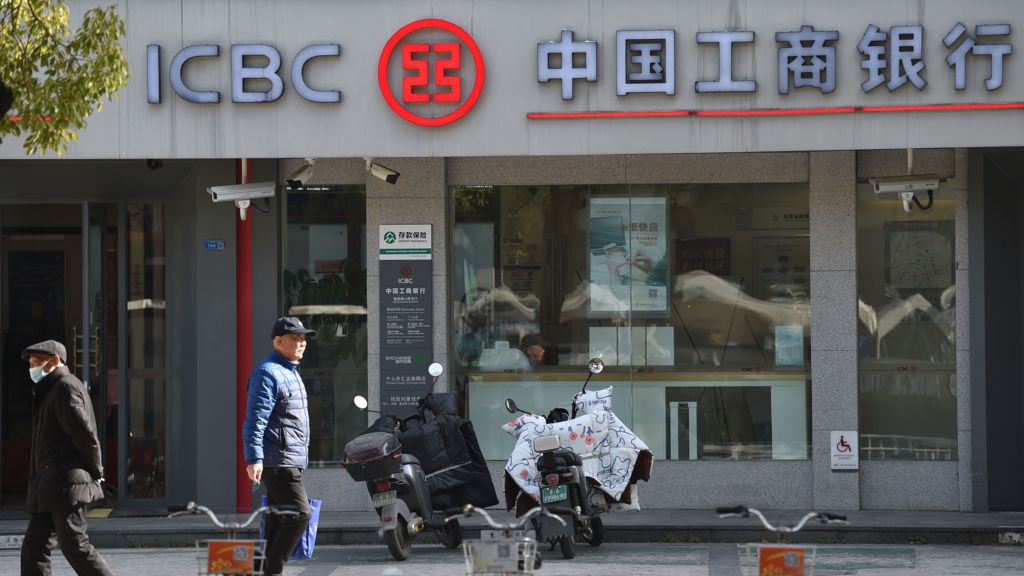
Facing mounting economic headwinds ranging from cross-Pacific trade friction to global market volatility and long-term demographic shifts, Chinese authorities have launched a landmark 360 billion yuan ($53.6 billion) capital infusion into eight major state-owned financial institutions, in a coordinated move to shore up the national financial system and reignite sluggish economic expansion. Led by China’s Ministry of Finance, the targeted cash injection will benefit three of the country’s largest commercial lenders and five top insurance providers — including Industrial and Commercial Bank of China, Agricultural Bank of China, and China Export & Credit Insurance Corporation, according to official statements released Sunday by state news agency Xinhua. Per Xinhua’s reporting, the policy initiative is designed to strengthen the core operating fundamentals, risk resilience, and capacity of these institutions to direct more lending and financial support toward the real economy, the backbone of China’s industrial and employment landscape. This capital injection marks the latest in a series of policy measures rolled out by Beijing to reinvigorate the world’s second-largest economy, which has contended with overlapping challenges in recent quarters. Beyond ongoing trade and technological rivalry with the United States, the economy has felt ripple effects from geopolitical instability such as the Iran conflict, while grappling with structural pressures from a rapidly aging population and shrinking domestic workforce. The Global Times, another leading Chinese state media outlet, noted that the capital boost will equip banks and financial firms with greater capacity to expand credit access for real-economy businesses, while also fortifying the sector against unexpected external disruptions amid widespread uncertainty across global financial markets. For years, Chinese President Xi Jinping has positioned sustained financial stability as a cornerstone of national economic security, framing a resilient financial sector as critical to weathering both domestic and international shocks. The timing of this weekend’s announcement aligns with Beijing’s broader push to recalibrate and rebalance the economy against a backdrop of persistent domestic and external headwinds. Recent official economic data underscores the urgency of the policy move: between April and June this year, China’s year-on-year GDP growth slowed to 4.3%, down from 5% in the first quarter, and falling short of the government’s full-year annual growth target. Weak domestic consumer demand and upward pressure on global oil prices driven by the Iran conflict outweighed strong performance from Chinese exports during the quarter, dragging overall growth down. Back in March, Beijing revised its full-year 2025 growth target down to a range of 4.5% to 5%, the lowest official expansion goal the country has set since 1991. Many independent economic analysts have interpreted this downward adjustment as a deliberate policy choice that gives Chinese authorities more flexibility to acknowledge long-running structural weaknesses in the economy, rather than pursuing unsustainable high growth through excessive stimulus.