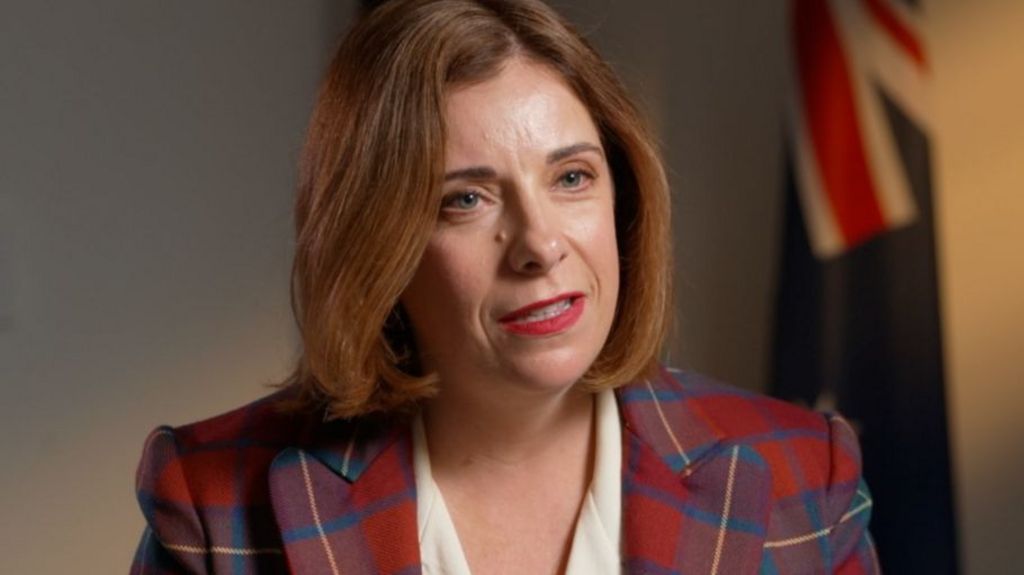
Australia is set to advance landmark digital regulation this week, with Communications Minister Anika Wells set to introduce draft legislation that would require all major social media platforms to offer users the ability to disable content recommendation algorithms entirely. This new proposal builds on the federal government’s 2024 world-first policy that banned users under the age of 16 from accessing social media platforms, and marks another step toward enforcing formal duty-of-care obligations on an industry that has long operated with minimal domestic safety oversight.
Under the terms of the planned reform, big tech firms including Meta, Google and TikTok would face substantial financial penalties if they fail to implement the optional algorithm disable feature for Australian users. Wells confirmed the government is still consulting technical experts to settle a key policy detail: whether algorithms will remain enabled by default (requiring users to actively opt out) or switched off by default (requiring users to opt in to receive algorithmically curated feeds. Mirroring the process that led to the under-16 social media ban, the government intends to introduce the framework legislation before finalizing all implementation specifics.
Speaking to the Australian Broadcasting Corporation on Monday, Wells framed the policy as a measure centered on expanding user choice rather than restricting content. “We recognize that many Australians value algorithms, both for the personal enjoyment they deliver and the practical utility they provide, such as surfacing content from local small businesses in their community,” she explained. “Many users will choose to keep algorithms enabled. But we believe big tech has an obligation to offer customers that choice, and to respect the decision each individual makes. Big tech is not a protected species, and they must meet basic safety standards for their users.”
The proposal has already sparked sharp political division. Opposition Liberal Party leader Angus Taylor has publicly stated he is highly skeptical of the plan, arguing that the reform could function as a de facto tool for government censorship. Taylor told News24 that he fears the policy is a deliberate attempt to restrict free expression on social platforms, and urged the Labor government to first address well-documented enforcement gaps in the existing under-16 ban. Wells, for her part, has pushed back firmly against these claims, telling Channel Nine’s *Today* show that “This is not about censorship. It is about requiring big tech to identify safety risks on their own platforms and take meaningful action to mitigate those harms.”
Notably, Wells has acknowledged that the government has not yet issued any fines to tech firms for failing to enforce the 2024 under-16 ban, despite repeated independent research showing that the vast majority of minors who already had accounts on major platforms prior to the ban’s December implementation continue to access those accounts unchanged.
Opinions among crossbench and opposition stakeholders are split: some opposition lawmakers have expressed support for the principle of expanding user control over feeds, while others echo Taylor’s concerns about free speech. The proposal also received high-profile backing from leading consent advocate Chanel Contos, who used an address last week at the National Press Club of Australia to urge the government to adopt an opt-in default for algorithmic feeds, a design that would make it far harder for platforms to evade the intent of the reform. Contos argued that unmoderated recommendation algorithms are directly driving the spread of harmful content that fuels rates of sexual violence across Australia, including exposing young users to misogynistic “manosphere” rhetoric and ideology.
Beyond the algorithm reform, the upcoming draft legislation is also expected to introduce new mandatory requirements forcing social media platforms to proactively block and remove harmful content, including illegal pornography and content promoting disordered eating behaviors, before it can spread widely across user feeds. The bill is scheduled to be introduced to Australia’s parliament in the coming days, setting off what is expected to be a heated debate over the balance of digital safety, user choice and corporate freedom in the country’s growing regulatory framework for big tech.