标签: Asia

亚洲

  • AIGC science film creation camp launched at Beijing film festival

    AIGC science film creation camp launched at Beijing film festival

    The 16th Beijing International Film Festival made a groundbreaking foray into the intersection of artificial intelligence, science communication and cinematic art on Monday, with the official launch of the first-ever AIGC-powered science film creation camp hosted at the China Science and Technology Museum. The launch kicks off a high-stakes 48-hour extreme creation challenge, designed to test and showcase how generative AI tools can reshape the landscape of science-focused filmmaking.

    This initiative is not an impromptu experiment: it builds on a comprehensive five-day foundational training program held in late March, where more than 100 aspiring creators mastered the end-to-end workflow of AIGC science film production, ranging from structured scientific reasoning to final AI-generated visual output. From that early pool, 19 cross-disciplinary teams were selected to advance to the on-site challenge, where they will work under the expert mentorship of a diverse group including leading scientists, award-winning film directors, and top industry professionals. All teams are centering their projects around the provocative, forward-looking theme “My Brain-Computer Dog 2045”, which blends emerging technology, everyday life and speculative futurism.

    At the official launch ceremony, Ren Hechun, head of the China Science and Technology Museum’s online science popularization department, welcomed participating creators, framing their work as a historic step for public science communication. “You are the first explorers in science popularization venues who hold new tools and define new languages,” Ren said, highlighting the transformative potential of AIGC to expand access to science filmmaking.

    The creation camp was also featured at the opening of the Beijing International Film Festival’s dedicated Science and Technology Unit via a pre-recorded video link, where organizers shared an early look at participants’ innovative conceptual approaches and creative energy. On-site industry and academic experts have already begun offering formative feedback on teams’ interim work to guide their final projects.

    To democratize access to this experimental process, the China Science and Technology Museum has launched a 48-hour uninterrupted panoramic slow livestream of the entire camp. This open broadcast allows global and domestic netizens to follow along in real time, watching as teams turn ideas and AI tools into completed science documentary projects, marking a new level of public transparency for creative innovation at the intersection of technology and art.

    The core goal of the initiative is to explore how artificial intelligence generated content tools can lower long-standing barriers to entry for science film production. Traditionally, creating high-quality science content requires substantial production budgets, specialized technical crews, and access to expensive equipment – barriers that have limited the diversity of creators working in the science communication space. By leveraging AIGC, organizers hope to open the field to new voices, while also finding fresh, more engaging ways to present complex scientific knowledge to general audiences.
  • The head of Myanmar’s army-backed government proposes new peace talks with armed resistance groups

    The head of Myanmar’s army-backed government proposes new peace talks with armed resistance groups

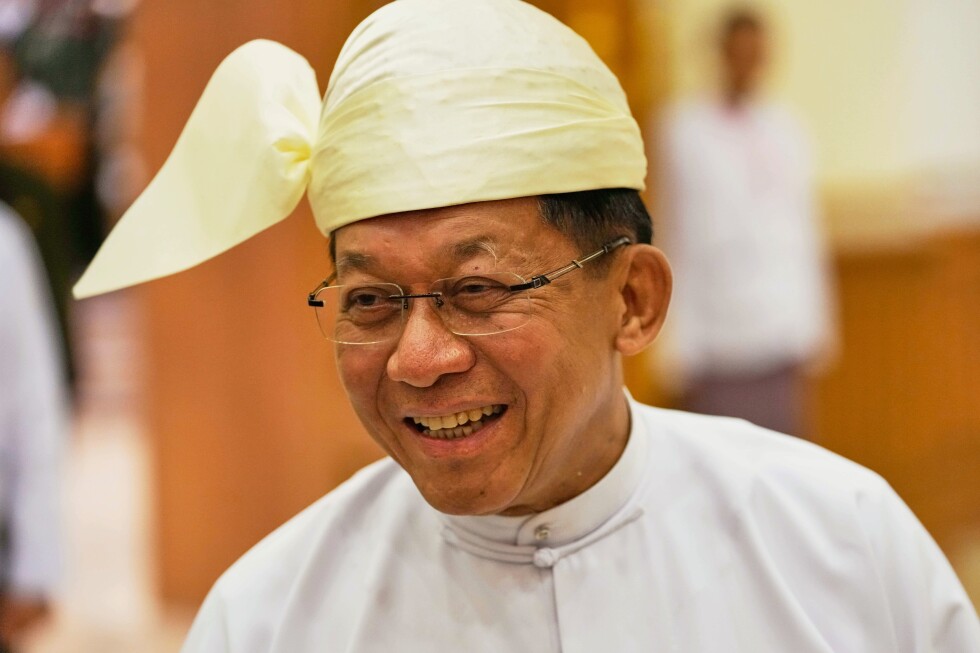
    BANGKOK, April — For the first time since assuming the presidency earlier this month, Myanmar’s military-aligned head of state Min Aung Hlaing has extended an invitation to the country’s sprawling network of armed resistance groups to join a new round of peace negotiations, state-run media confirmed Tuesday. The proposal to resume talks forms a core pillar of the administration’s newly unveiled 100-day policy agenda, which Min Aung Hlaing outlined during a Monday cabinet gathering in the national capital of Naypyitaw, with peace, stability, and national development named as the plan’s top priorities, according to state-owned publication Myanma Alinn.

    Min Aung Hlaing took office on April 10 following a general election that was widely dismissed by international and domestic critics as neither free nor fair. The poll was widely viewed as a calculated maneuver to cement the military’s ongoing control over Myanmar’s political system, half a decade after the armed forces seized power from Aung San Suu Kyi’s democratically elected civilian government in 2021. Min Aung Hlaing, who served as the military’s top commander, led the 2021 coup and headed the unelected junta that governed the country for four years before the recent election.

    The 2021 coup reignited and escalated long-running tensions between the military and armed opposition forces across Myanmar. Pro-democracy activists aligned with the ousted civilian government joined forces with decades-old ethnic armed groups that have fought for greater regional autonomy for generations, spurring a widespread civil conflict that currently impacts the majority of the country’s territory. Between 2022 and the present, the junta held multiple rounds of in-person peace negotiations with ethnic armed leaders, a strategy designed to split anti-military opposition alliances. Those talks failed to deliver any tangible, lasting progress toward ending the conflict.

    Under the terms of Min Aung Hlaing’s new offer, all ethnic armed organizations — both those that signed the 2015 and 2018 Nationwide Ceasefire Agreement (NCA), and those that rejected the deal — are invited to participate in new discussions before the July 31 deadline. The invitation also extends to the People’s Defense Force (PDF), the network of pro-democracy guerrilla groups formed after the 2021 coup to restore civilian rule. Min Aung Hlaing called on all participating groups to lay down their arms and enter the country’s formal legal political framework within the 100-day window of his administration’s plan. The rest of the 100-day agenda focuses on social welfare reforms, economic recovery initiatives, and infrastructure development projects across the country.

    Myanmar has cycled between temporary ceasefires and resumed conflict for more than 70 years. No previous negotiation process has resulted in a comprehensive, lasting political settlement that addresses the core demand of ethnic armed groups: meaningful autonomy for the border regions where they hold majority control.

    The latest peace overture comes at a moment when the military has regained the strategic upper hand in the nationwide civil conflict. After a series of China-brokered temporary ceasefires with key rebel coalitions and a surge in troop numbers following the implementation of a mandatory conscription law in early 2024, the military has retaken large swathes of territory from opposition forces. This includes territory seized by the Three Brotherhood Alliance, a coalition of major ethnic armed groups that launched large-scale coordinated offensives in 2023 along the Chinese border in northeastern Myanmar and in western Rakhine State.

    Despite the new invitation, opposition leaders have rejected the offer outright. Nay Phone Latt, spokesperson for the National Unity Government (NUG) — the ousted civilian administration-in-exile that coordinates most of the country’s anti-military resistance — confirmed Tuesday that the NUG and all PDF units under its command will continue their armed struggle alongside allied resistance forces until their goal of restoring civilian democratic rule is achieved. “We all already understood that the military’s fake invitations are aimed at prolonging people’s subjugation under military rule,” Nay Phone Latt said.

    Of Myanmar’s 21 active ethnic armed organizations, 10 signed the NCA during previous administrations. However, four of those 10 signatories abandoned the agreement and returned to armed conflict immediately after the 2021 coup. Not all opposition groups have rejected the new talks, however. The Ta’ang National Liberation Army, a core member of the Three Brotherhood Alliance, released a statement last Wednesday congratulating Min Aung Hlaing on his presidency and saying it is open to participating in new peace negotiations.

  • 3 soldiers die in a shell explosion inside a tank gun turret during army drill in Japan

    3 soldiers die in a shell explosion inside a tank gun turret during army drill in Japan

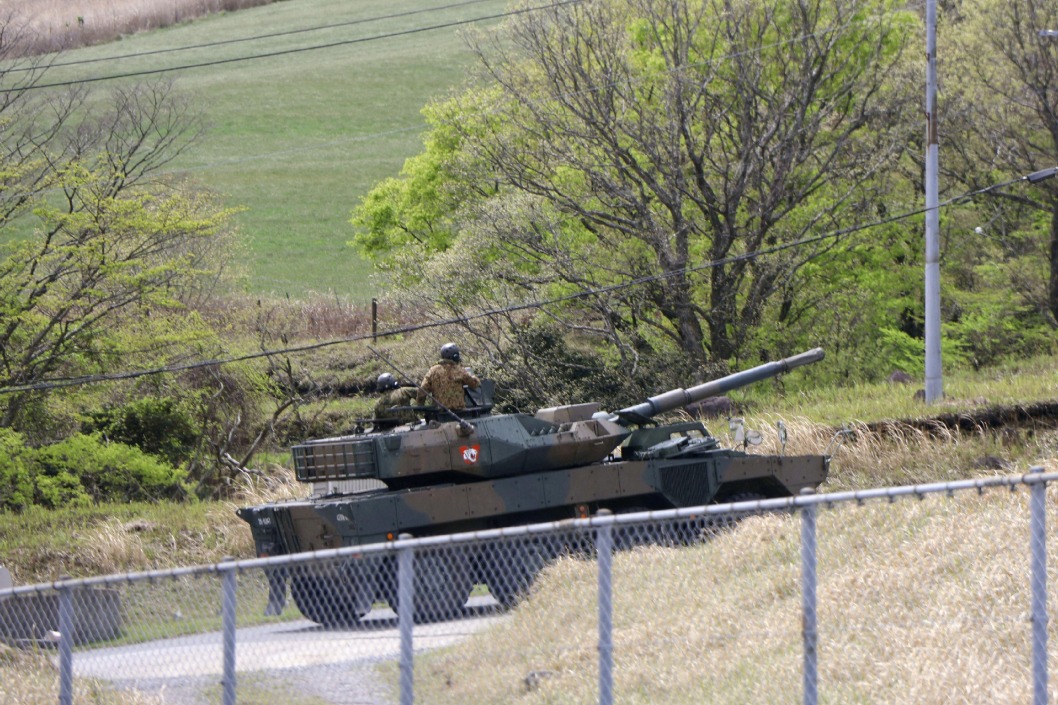
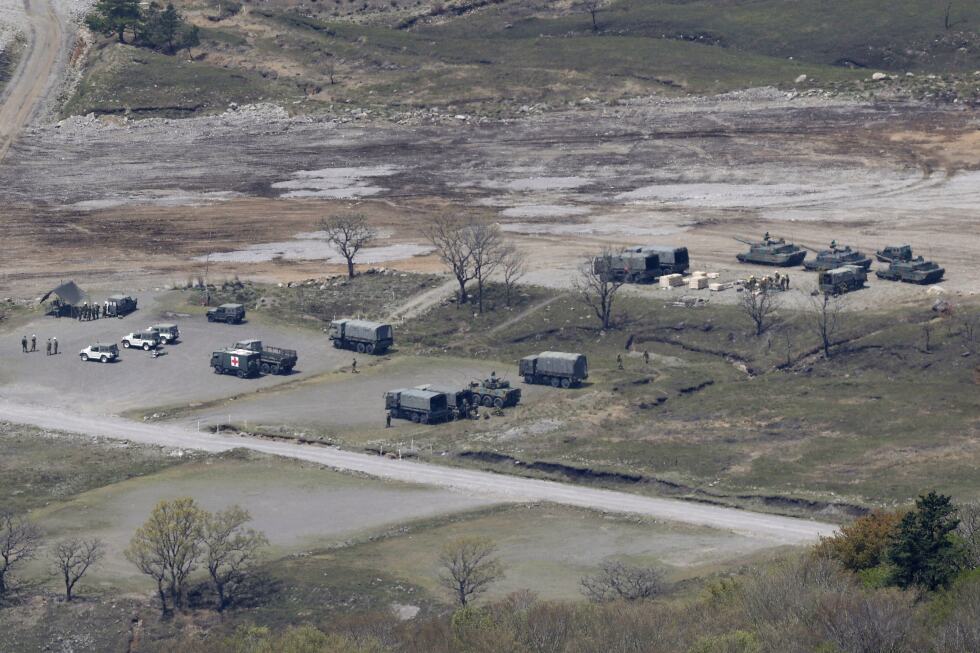
    On a Tuesday military exercise at a training ground in southern Japan, a catastrophic internal explosion inside a Type 10 main battle tank claimed the lives of three Japan Ground Self-Defense Force soldiers and left a fourth service member wounded, defense officials confirmed.

    The fatal incident unfolded at the Hijudai Training Area, located in Oita Prefecture, as the Type 10 tank took part in a live-fire drill alongside two other armored vehicles. At the time of the blast, three service members — the tank’s commander, gunner and a designated safety officer — were positioned inside the vehicle’s gun turret, and all three died as a result of the explosion. The fourth crew member, the tank’s driver, escaped immediate death but sustained injuries that required medical attention.

    In the wake of the tragedy, Japan Ground Self-Defense Force Chief of Staff Masayoshi Arai announced an immediate suspension to all live-fire training operations for two of Japan’s main tank models: the Type 10 and the older Type 90. Both platforms utilize the same type of live ammunition that was in use during Tuesday’s accident. The suspension will remain in place throughout the official investigation into the root cause of the explosion and other key circumstances surrounding the incident.

    “Our priority is to quickly identify the cause of this accident so we can implement thorough preventive measures to stop such a tragedy from happening again,” Arai stated in a press briefing following the blast.

    First rolled out for deployment in 2011, the Type 10 stands as Japan’s most modern domestically produced main battle tank, designed to deliver enhanced mobility, firepower and armor protection for the nation’s ground defense forces.

  • 3 dead, 1 injured after ammunition explosion at GSDF training area in Japan’s Oita

    3 dead, 1 injured after ammunition explosion at GSDF training area in Japan’s Oita

    A deadly ammunition explosion at a Japan Ground Self-Defense Force (GSDF) training range in Oita Prefecture has left three people dead and one additional person injured, according to Japanese public broadcaster NHK. The incident unfolded on a Tuesday morning in the midst of an ongoing military training exercise.

    Citing unnamed sources connected to Japan’s defense ministry, NHK confirmed that the blast struck the Hijudai maneuver area, a GSDF training facility located in the southwestern region of Japan’s main islands. Multiple personnel participating in the training exercise were directly caught in the explosion when it occurred. Initial on-site assessments indicate the training operation was being carried out by a GSDF tank unit.

    In the wake of the incident, GSDF officials have launched a formal investigation to unpack the full details of the tragedy. Investigators are currently working to confirm the full identities and backgrounds of the casualties, assess the extent of the injured person’s harm, and pinpoint the root cause that led to the accidental detonation. As of the latest update, no additional details on the condition of the injured service member or potential contributing factors to the explosion have been released to the public.

  • Xinjiang guide forms deep bonds with Taiwan visitors

    Xinjiang guide forms deep bonds with Taiwan visitors

    In the vast, culturally rich landscapes of the Xinjiang Uygur autonomous region, 26-year-old local tour guide Dilinur Tursunjan has built far more than just professional relationships with her visitors — she has cultivated a deep, lasting emotional connection with a Taiwanese tourist family that transcends the narrow Taiwan Strait separating the two sides.

    Dilinur’s story catapulted her to national social media fame earlier this year, after a TikTok (Douyin) video of her talking about the groundbreaking Tianshan Shengli Tunnel went viral, racking up millions of views from viewers across China. The footage was captured by tourist Lin, who traveled with Dilinur on two separate trips: a tour of northern Xinjiang in October 2025, followed by a journey through southern Xinjiang this past March.

    In the heartfelt viral clip, Dilinur spoke from the heart about the engineering marvel that is the Tianshan Shengli Tunnel. “Because the people needed this accessible highway, our motherland could move mountains and redirect rivers,” she said. “It’s not that cutting through the Tianshan Mountains was ever easy — but on the other side of these peaks, there are people waiting for better lives.”

    Stretching across 2,500 kilometers, the Tianshan Mountains have historically separated northern and southern Xinjiang, creating long, dangerous travel routes between the two regions. The newly opened 22.13-kilometer Tianshan Shengli Tunnel, the longest expressway tunnel in the world, opened to traffic in December 2025. The mega project has cut a treacherous three-hour mountain crossing down to a smooth 20-minute drive, transforming regional connectivity and daily life for local residents.

    Work on the tunnel pushed the limits of engineering: construction teams lived and worked at altitudes above 4,000 meters, facing constant threats of oxygen deprivation, rock bursts, and sudden water inrushes. Even against these extreme challenges, Chinese engineering teams deployed cutting-edge innovative technologies to complete the full drilling process in just 52 months, finishing the project years ahead of early projections.

    For Dilinur, the tunnel’s story is not just a matter of national engineering pride — it is personal. Born and raised in Artux, she moved 1,500 kilometers to Urumqi to attend Xinjiang University of Finance and Economics. What once took an exhausting 18-hour drive by road now takes roughly 13 hours, a change that has made returning home to see her family far easier.

    “Now I can get home much faster, and tourists spend less time traveling on the road and more time enjoying all the beautiful attractions Xinjiang has to offer,” she explained. “That’s why I’m so deeply proud of this project — I’ve seen what it changed for people like me.”

    Lin, the Taiwanese tourist who filmed the viral video, first found Dilinur through the Douyin social media platform before booking their first trip. She said she was particularly moved when she realized the tunnel was built to lift up local communities, not just to claim a global engineering record. Over their two trips together, the group explored some of Xinjiang’s most iconic landmarks, from the stunning blue waters of Sayram Lake to the rugged heights of the Pamir Plateau and the centuries-old Kashgar Ancient City.

    The bond between Dilinur and Lin’s family deepened dramatically when Dilinur invited the group to her home for a traditional Uyghur meal featuring hand-pulled noodles, slow-cooked mutton, and homemade fig jam. The warm gathering stretched late into the night, leaving a lasting impression on the Taiwanese visitors.

    “It felt just like being with my own family at home,” Lin shared in a video of the gathering. “I’d only ever seen moments this warm and genuine on television before — I never got to experience it myself.”

    Today, the connection between the two sides is so strong that Dilinur has already invited the family to her future wedding, and Lin has already said she is eager to attend and even wear traditional Uyghur clothing for the celebration. Before the family departed on their second trip, the group even extended their stay to celebrate the Roza Festival (Eid al-Fitr) together at Urumqi’s bustling Grand Bazaar.

    Now boasting more than 500,000 followers on Douyin, Dilinur uses her growing platform to showcase the real, living culture and beauty of her home region to people across China and around the world. “I hope more people get to know the real Xinjiang, which is very different from the false narratives Western media often spreads,” she said.

    As Lin’s family prepared to leave Xinjiang, they already made plans for a third visit — sharing their hope that one day soon, they will be able to fly directly from Taipei to Urumqi, rather than transferring through Hong Kong as they must do today. For her part, Dilinur says her next big dream is to visit Taiwan in person, to taste the island’s fresh seafood and see its iconic mountain landscapes for herself.

  • BLCU aims to expand international student enrolment

    BLCU aims to expand international student enrolment

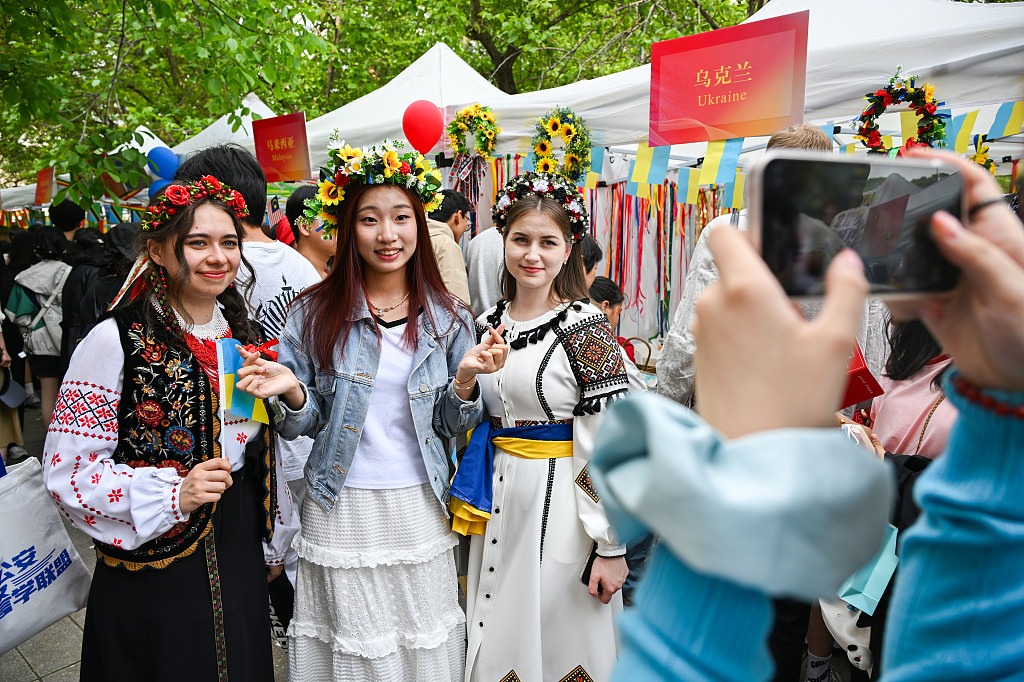
    One of China’s leading institutions for global language and cross-cultural education is pushing forward with ambitious plans to grow its international student population, building on explosive two-year growth that has already cemented its top national ranking. In an exclusive conversation with China Daily, Beijing Language and Culture University (BLCU) President Duan Peng outlined the institution’s rapid progress and long-term growth targets.

    Between 2023 and 2025, BLCU’s total international student enrollment jumped 350% to hit 12,000, data shared by Duan shows. Over that same two-year window, the number of international students pursuing full academic degrees at the university increased even faster, rising fivefold from 2023 levels. These gains have pushed BLCU to the leading position among all Chinese higher education institutions, holding the top rank nationally for both total international student enrollment and the size of its degree-seeking international student cohort.

    Looking ahead, the university is aiming for continued expansion through the end of China’s 15th Five-Year Plan period, which runs from 2026 to 2030. By the conclusion of that planning cycle, Duan said BLCU expects to grow its total international student population to 16,000, a further 33% increase from 2025’s record enrollment. The expansion aligns with broader national efforts to position Chinese higher education as a leading global destination for international study, strengthen people-to-people cultural ties between China and the rest of the world, and boost Beijing’s standing as an international education hub.

    As a university long focused on promoting Chinese language learning globally and fostering cross-cultural exchange, BLCU’s enrollment growth reflects rising international demand for access to Chinese higher education and academic opportunities, university observers note. The planned expansion is also expected to deepen the institution’s role as a bridge connecting Chinese scholars and students with global peers, supporting broader academic collaboration and cultural exchange initiatives.

  • Digital reading boom draws more Chinese into books

    Digital reading boom draws more Chinese into books

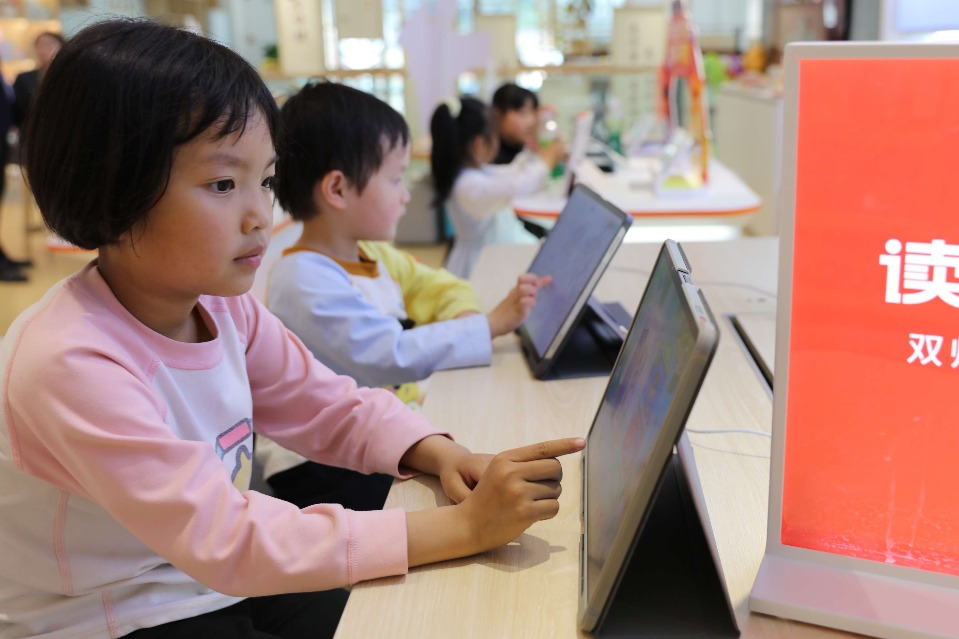
    NANCHANG — A sweeping surge in digital reading has unlocked new access to literary content across China, pushing more citizens to build consistent reading habits as national efforts to cultivate a book-loving society drive steady growth in overall reading engagement.

    New data released Monday during the fifth National Conference on Reading reveals that China’s overall adult reading rate climbed to 82.3 percent in 2025, with the average number of books consumed per capita across both print and digital formats rising to 8.39. The findings, pulled from a national reading survey and the 2025 China Digital Reading Report, confirm that digital formats have become a core driver expanding the country’s total reading population.

    The annual conference, hosted this year in Nanchang, the capital of East China’s Jiangxi province, opened alongside the inaugural launch of China’s first official National Reading Week, which will run through this coming Sunday. The week-long celebration is a key part of broader national initiatives designed to embed a strong reading culture in communities across the country.

    According to the national survey, 80.8 percent of Chinese adults now regularly interact with digital reading content, spanning e-books, serialized online literature, audiobooks, and short-form video book summaries. Researchers behind the data note that the flexibility of digital formats has been instrumental in growing participation: commuters can listen to audiobooks during daily travel, and mobile readers can access serialized fiction at any time, removing long-standing barriers to consistent reading.

    By the end of 2025, China’s total digital reading user base hit 689 million, marking a 2.95 percent year-over-year increase, while the total number of available digital reading works surpassed 70 million. Over the past five years alone, the overall market size of China’s digital reading industry has nearly doubled, expanding from 30.25 billion yuan (approximately 4.4 billion U.S. dollars) to 59.48 billion yuan, a clear indicator of robust growth on both the supply and demand sides of the market.

    Industry leaders attribute much of this market expansion to the evolution of online literature from a niche digital product into a pillar of the broader cultural economy. “The essence of reading is to allow stories to break through boundaries and enter everyday life,” explained Xie Lanfang, vice-president of Yuewen Group, China’s leading digital publishing platform. She added that digital reading content is increasingly expanding beyond online platforms to integrate with offline cultural consumption and interactive consumer experiences, creating new touchpoints for reader engagement.

    Chinese authorities have long prioritized reading as a core driver of national intellectual and ethical development, as well as a catalyst for broader innovation and creativity, spurring ongoing, coordinated efforts to build a nationwide book-loving society. To strengthen institutional support for these goals, a formal regulation on promoting nationwide reading entered into force this past February. The new policy outlines concrete measures to expand public reading facilities, improve public reading services, and strengthen long-term supporting mechanisms for reading promotion.

    Under the new regulation, the fourth week of April is officially designated as National Reading Week, marking 2026 as the first year the initiative has been observed nationwide. Over the course of the week, thousands of reading-focused events will be held across every region of China, including author lectures, book fairs, reading salons, and public book donation drives, all targeted at encouraging greater public participation in reading.

    “Reading service facilities have improved, and public awareness and satisfaction are relatively high,” noted Feng Shixin, president of the Chinese Academy of Press and Publication. He added that continued work is still needed to further improve accessibility for marginalized groups and upgrade the quality of public reading services nationwide.

    Even as digital formats continue their rapid growth, traditional print reading has remained resilient, with new data showing enduring public demand for immersive, long-form reading experiences. The national survey found that 45.9 percent of Chinese adults still prefer reading printed books, particularly full-length literary works, highlighting that digital growth has not displaced demand for traditional reading formats.

    Wu Shulin, chairman of the Publishers Association of China, emphasized that deep, focused reading remains the foundation for personal growth, professional advancement, and moral cultivation even in an increasingly digital age. He called for stronger public guidance to help readers navigate digital content and deepen a national culture of deep reading, encouraging audiences to move beyond superficial fragmented browsing to engage in more intentional, in-depth reading practices.

  • Truce on edge after Iranian ship seizure

    Truce on edge after Iranian ship seizure

    A fragile 14-day ceasefire between the United States and Iran is teetering on collapse following a contentious US seizure of an Iranian-flagged cargo vessel near the Strait of Hormuz and a swift retaliatory drone attack by Iranian forces, throwing the planned second round of bilateral peace talks scheduled for this week in Islamabad into uncertainty. Though cautious hopes for diplomatic progress persist, the escalating maritime confrontation has deepened divisions and raised global concerns over energy market stability.

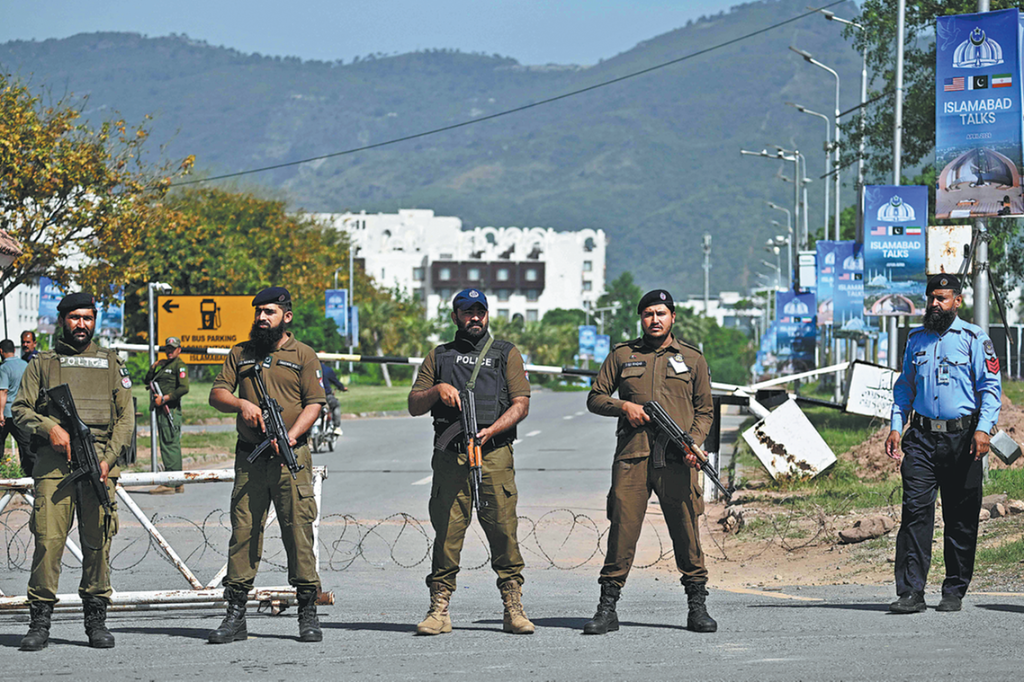
    Pakistan, which has been mediating the peace process between Washington and Tehran, has deployed nearly 20,000 security personnel across Islamabad, putting the capital on high alert to secure the planned talks venue. Two anonymous Pakistani officials confirmed to The Associated Press on Monday that Iranian authorities have signaled willingness to send a negotiating delegation to the talks, though they declined to share further details on security grounds, warning that the scheduling of the meeting remains fluid and urging media to avoid unfounded speculation.

    The current crisis erupted Sunday, when former US President Donald Trump announced that US Navy forces had intercepted an Iranian cargo ship that attempted to evade a newly imposed US naval blockade of Iranian ports near the strategic Strait of Hormuz — the first such interception since the blockade was implemented a week prior. The seizure marked a blatant violation of the existing two-week ceasefire agreement, Iranian officials argued, labeling the action an act of “armed piracy” that proves Washington lacks good faith in diplomatic negotiations.

    In a direct retaliatory response, Iran’s joint military command launched drone strikes against US military vessels operating in the region. Iranian Foreign Ministry spokesman Esmail Baghaei emphasized that while Tehran has no immediate plans to proceed with fresh talks, it has not fully ruled out future diplomatic engagement. The Iranian government also released updated conflict casualty figures Monday, with the country’s forensic chief reporting that at least 3,375 people have been killed since armed conflict between the two nations began on February 28.

    Trump had previously announced Sunday that US negotiators would arrive in Islamabad Monday to resume talks, though Iranian officials offered no direct confirmation of the scheduling in the wake of the maritime confrontation. Pakistan has pushed forward with diplomatic preparations regardless: Interior Minister Mohsin Naqvi, who was part of a Pakistani mediation delegation that traveled to Tehran last week, met Monday with Iranian Ambassador Reza Amiri Moghaddam to brief him on talks arrangements, just hours after holding a parallel briefing with US Charge d’Affaires Natalie Baker. A Pakistani ministry statement following the meetings reaffirmed both sides’ commitment to pursuing a sustainable, diplomatic resolution to de-escalate regional tensions.

    The ongoing standoff has already sent shockwaves through global energy markets, as blockades and security threats have disrupted commercial shipping traffic through the Strait of Hormuz, a chokepoint that carries roughly a fifth of the world’s daily oil supply. By Monday, global oil prices had surged more than 5%, with benchmark Brent crude trading above $95 per barrel — a jump of more than 30% since the conflict began in late February.

    In a social media statement, Iranian First Vice-President Mohammad Reza Aref framed the Strait’s security as a collective responsibility, noting that the international community faces a clear choice: “Either a free oil market for all, or the risk of significant costs for everyone.” He added that stable global fuel prices can only be guaranteed by a permanent end to all economic and military pressure on Iran and its regional allies.

    Beyond the maritime dispute, the decades-long standoff over Iran’s nuclear program remains a core sticking point in negotiations. Last week, Trump stated that the US is seeking a deal to have Iran remove all of its enriched uranium stockpile from the country. CNN, citing anonymous informed sources, reported that Washington is offering to unfreeze $20 billion in Iranian assets held abroad in exchange for the transfer. Iran’s Deputy Foreign Minister Saeed Khatibzadeh has already rejected the proposal as “impossible.”

    Alex Vatanka, a senior fellow at the Middle East Institute in Washington, told Al Jazeera that military escalation cannot resolve either the Hormuz shipping dispute or the nuclear standoff. He argued that the prospect of a sweeping, comprehensive grand bargain between the two sides in the short term is entirely unrealistic. “The best you can do is some kind of agreement of a basic framework, and then you have to go and quickly build on it. It will take at least months, if not years,” Vatanka explained.

  • Asia-Pacific warned of growing challenges

    Asia-Pacific warned of growing challenges

    As the United Nations Economic and Social Commission for Asia and the Pacific (ESCAP) launched its 82nd annual session in Bangkok on Monday, the agency released a stark new report warning that nations across the Asia-Pacific region are facing rapidly intensifying economic, social, and environmental threats driven by accelerating climate change and growing global geopolitical friction.

    Against a backdrop of unprecedented regional integration, the challenges facing Asia-Pacific economies have grown increasingly aligned, the report notes. These overlapping pressures range from muted post-pandemic economic growth and shifting global trade frameworks to the disruptive effects of rapid technological transformation. The five-day conference, centered on the theme “Leaving no one behind: Advancing a society for all ages in Asia and the Pacific”, brings together policymakers, academics, and stakeholders from across the region to address evolving demographic shifts and set shared socioeconomic priorities for the coming years.

    The report outlines that after weathering a prolonged period of sky-high global commodity prices and soaring interest rates, the region now faces new headwinds: rising tariffs, persistent economic policy uncertainty, and a cascade of knock-on effects that have fueled broader economic slowdown, accelerating trade fragmentation, and growing fiscal and debt vulnerability across multiple markets. Beyond economic pressures, the region is also navigating uneven demographic transformation: some nations are grappling with rapidly aging populations, while others continue to manage large, growing youth cohorts. This divergent shift creates a critical policy imperative: policymakers must create quality formal employment, boost labor productivity, and build cohesive, inclusive societies while adapting to major global megatrends including climate change, rapid urbanization, widespread digitization, and the rise of artificial intelligence.

    Despite these significant challenges, Armida Salsiah Alisjahbana, executive secretary of ESCAP, struck a cautiously optimistic tone in her opening remarks. “Despite external pressures, we have strong reasons for optimism as the Asia-Pacific is home to the world’s most dynamic economies and we have navigated past crises before and consistently emerged stronger,” she said. “Our leaders have demonstrated what is possible when countries learn from one another and co-develop solutions.”

    Alisjahbana called for deepened regional collaboration to co-design locally tailored development models that can better withstand unexpected external shocks. “Sustained progress hinges on joint capacity-building, knowledge exchange across national experiences, the scaling of context-appropriate innovations and forward-looking institution-building,” she added.

    In his keynote address to the opening session, Thailand’s Prime Minister Anutin Charnvirakul echoed the conference’s core theme, noting that the promise of leaving no one behind can only be fulfilled if all community members are empowered to reach their full potential. He emphasized the urgent need to reform regional education systems to build widespread adaptability, embedding lifelong learning as a universal social norm.

    Chinese Vice-Foreign Minister Ma Zhaoxu also addressed the gathering, noting that international peace and development face growing threats from rising unilateralism and power politics that undermine global stability. “ESCAP member countries should deepen solidarity and cooperation to help forge an open, inclusive and mutually beneficial Asia-Pacific community of shared destiny, uphold the purposes and principles of the UN Charter, support UN reform and enhanced effectiveness, and strengthen performance through regional mechanisms,” Ma said. He added that the global community must retain a steadfast commitment to openness and the rules-based multilateral trading system, urging regional nations to capitalize on opportunities to expand cooperation and knowledge exchange in innovation and technology, with a particular focus on new materials, clean energy, and artificial intelligence.

  • Hong Kong’s Wang Fuk Court residents return to fire-ravaged units in batches for belongings

    Hong Kong’s Wang Fuk Court residents return to fire-ravaged units in batches for belongings

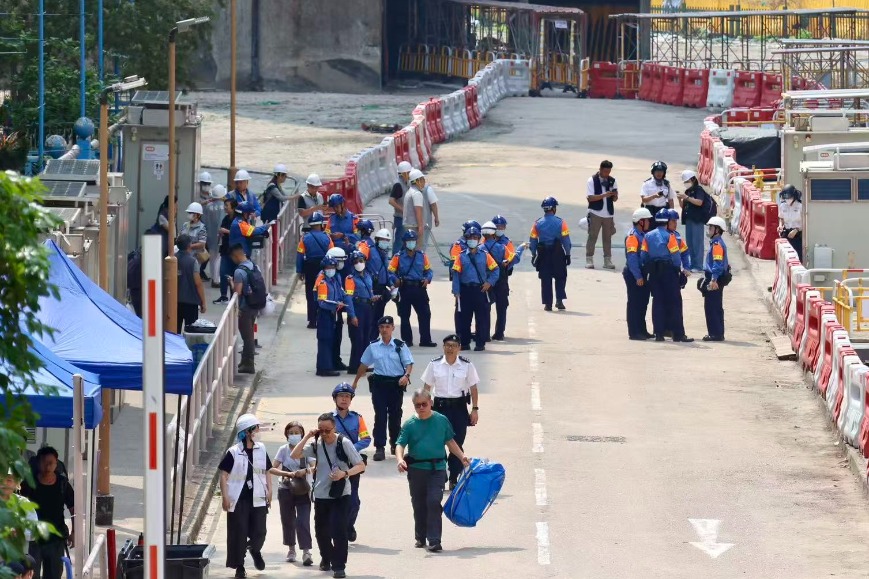
    HONG KONG — Nearly a year after a devastating large-scale blaze tore through Wang Fuk Court in Hong Kong’s Tai Po district, affected residents have begun the long process of returning to their fire-ravaged homes in organized, staggered groups to collect remaining personal belongings, with the first phase of the operation launching on Monday, April 20, 2026.

    To guarantee the safety of every resident entering the damaged building and coordinate the smooth execution of the retrieval operation, the Hong Kong Special Administrative Region (HKSAR) government has mobilized a force of more than 1,000 personnel from multiple government departments and public service agencies. The carefully planned operation is scheduled to run through May 4, giving registered residents adequate time to collect items they left behind after the 2025 fire forced an emergency evacuation of the residential block.

    According to Cheuk Wing-hing, Deputy Chief Secretary for Administration of the HKSAR government, all residents participating in the retrieval process will receive full personal protective gear before entering the site, including safety helmets, disposable face masks, heavy-duty work gloves and other necessary equipment to guard against structural hazards and residual toxic smoke or debris. Every resident is escorted round-trip to their unit by trained personnel, either serving police officers or volunteers from the Civil Aid Service.

    Chris Tang Ping-keung, HKSAR Secretary for Security, further outlined the multi-layered safety arrangements put in place for the operation. To respond to any unexpected situation that may arise during the retrieval, dedicated police and Civil Aid Service personnel will be stationed on every floor of the residential block to provide on-demand, immediate assistance. Additionally, fully qualified medical teams and emergency response staff will remain on standby at the site throughout the operation, with multiple ambulances parked nearby to handle any medical emergencies quickly.