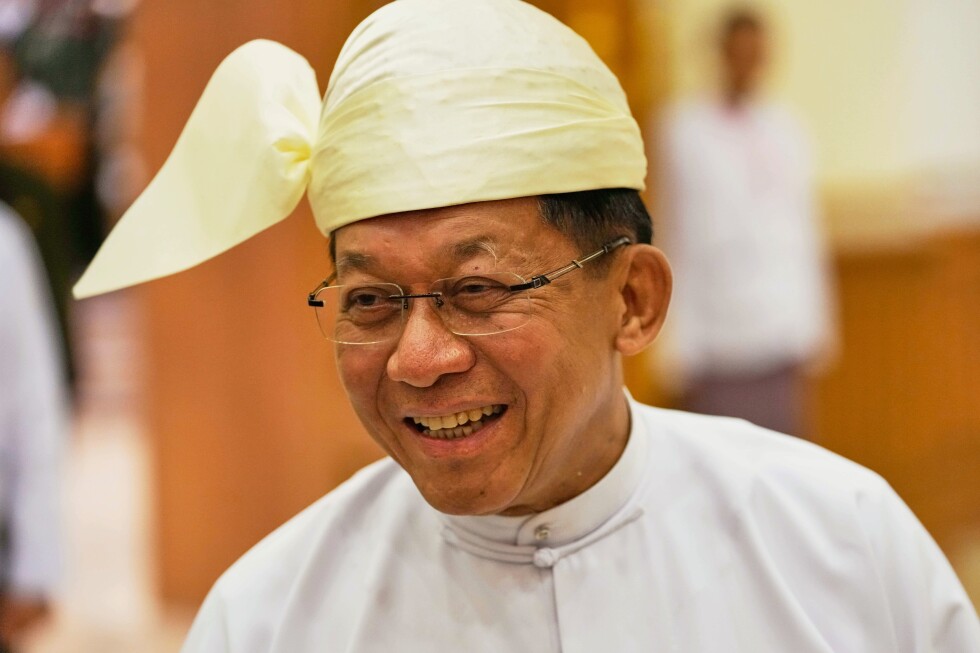
BANGKOK, April — For the first time since assuming the presidency earlier this month, Myanmar’s military-aligned head of state Min Aung Hlaing has extended an invitation to the country’s sprawling network of armed resistance groups to join a new round of peace negotiations, state-run media confirmed Tuesday. The proposal to resume talks forms a core pillar of the administration’s newly unveiled 100-day policy agenda, which Min Aung Hlaing outlined during a Monday cabinet gathering in the national capital of Naypyitaw, with peace, stability, and national development named as the plan’s top priorities, according to state-owned publication Myanma Alinn.
Min Aung Hlaing took office on April 10 following a general election that was widely dismissed by international and domestic critics as neither free nor fair. The poll was widely viewed as a calculated maneuver to cement the military’s ongoing control over Myanmar’s political system, half a decade after the armed forces seized power from Aung San Suu Kyi’s democratically elected civilian government in 2021. Min Aung Hlaing, who served as the military’s top commander, led the 2021 coup and headed the unelected junta that governed the country for four years before the recent election.
The 2021 coup reignited and escalated long-running tensions between the military and armed opposition forces across Myanmar. Pro-democracy activists aligned with the ousted civilian government joined forces with decades-old ethnic armed groups that have fought for greater regional autonomy for generations, spurring a widespread civil conflict that currently impacts the majority of the country’s territory. Between 2022 and the present, the junta held multiple rounds of in-person peace negotiations with ethnic armed leaders, a strategy designed to split anti-military opposition alliances. Those talks failed to deliver any tangible, lasting progress toward ending the conflict.
Under the terms of Min Aung Hlaing’s new offer, all ethnic armed organizations — both those that signed the 2015 and 2018 Nationwide Ceasefire Agreement (NCA), and those that rejected the deal — are invited to participate in new discussions before the July 31 deadline. The invitation also extends to the People’s Defense Force (PDF), the network of pro-democracy guerrilla groups formed after the 2021 coup to restore civilian rule. Min Aung Hlaing called on all participating groups to lay down their arms and enter the country’s formal legal political framework within the 100-day window of his administration’s plan. The rest of the 100-day agenda focuses on social welfare reforms, economic recovery initiatives, and infrastructure development projects across the country.
Myanmar has cycled between temporary ceasefires and resumed conflict for more than 70 years. No previous negotiation process has resulted in a comprehensive, lasting political settlement that addresses the core demand of ethnic armed groups: meaningful autonomy for the border regions where they hold majority control.
The latest peace overture comes at a moment when the military has regained the strategic upper hand in the nationwide civil conflict. After a series of China-brokered temporary ceasefires with key rebel coalitions and a surge in troop numbers following the implementation of a mandatory conscription law in early 2024, the military has retaken large swathes of territory from opposition forces. This includes territory seized by the Three Brotherhood Alliance, a coalition of major ethnic armed groups that launched large-scale coordinated offensives in 2023 along the Chinese border in northeastern Myanmar and in western Rakhine State.
Despite the new invitation, opposition leaders have rejected the offer outright. Nay Phone Latt, spokesperson for the National Unity Government (NUG) — the ousted civilian administration-in-exile that coordinates most of the country’s anti-military resistance — confirmed Tuesday that the NUG and all PDF units under its command will continue their armed struggle alongside allied resistance forces until their goal of restoring civilian democratic rule is achieved. “We all already understood that the military’s fake invitations are aimed at prolonging people’s subjugation under military rule,” Nay Phone Latt said.
Of Myanmar’s 21 active ethnic armed organizations, 10 signed the NCA during previous administrations. However, four of those 10 signatories abandoned the agreement and returned to armed conflict immediately after the 2021 coup. Not all opposition groups have rejected the new talks, however. The Ta’ang National Liberation Army, a core member of the Three Brotherhood Alliance, released a statement last Wednesday congratulating Min Aung Hlaing on his presidency and saying it is open to participating in new peace negotiations.