标签: Asia

亚洲

  • Negative views of Israel soar across 36 countries since Iran war, survey finds

    Negative views of Israel soar across 36 countries since Iran war, survey finds

    A new global public opinion survey released by the Pew Research Center reveals a dramatic year-over-year surge in negative attitudes toward Israel and its Prime Minister Benjamin Netanyahu across every major region of the world, including Europe, Asia, the Middle East, and Latin America. The poll, which gathered responses from adults across 36 nations between February 8 and May 13 this year, found that clear majorities in 32 out of the 36 surveyed countries hold either somewhat or very unfavorable views of the Israeli state. Only four nations — India, Ghana, Nigeria, and Kenya — recorded majority favorable opinions of Israel.

    Aggregated data from the full survey set shows a median 67% of respondents globally hold unfavorable views of Israel, compared to just 25% who report a favorable opinion. The highest levels of disapproval were recorded in Turkey, Pakistan, Malaysia, Indonesia, Japan, the West Bank, and occupied East Jerusalem, with 97% of Turkish respondents and 83% of Japanese respondents holding unfavorable views. Even in majority Anglophone nations long considered sympathetic to Israel, majorities now hold negative views: 60% in the United States, 65% in Canada, 79% in Australia, and 69% in the United Kingdom.

    All ten European countries included in the survey also posted majority unfavorable ratings. Sweden and Spain tied for the highest share of negative views at 78% each, while Hungary recorded the most favorable views among European nations — even there, 54% of respondents held an unfavorable opinion of Israel.

    Pew researchers and analysts link the sharp spike in negative attitudes to two ongoing conflicts: the long-running Israeli military campaign in Gaza that began in October 2023, and the more recent outbreak of hostilities between Israel and Iran that began on February 28 of this year, overlapping with the survey’s fieldwork period. The Iran conflict has had far-reaching global economic ripple effects, particularly after the closure of the Strait of Hormuz — a critical global energy chokepoint through which roughly 20% of the world’s total oil supply passes. While global public opinion had already hardened against Israel over the Gaza campaign over the past three years, the escalation of hostilities with Iran triggered a significant new surge in negative views, researchers found.

    The Gaza conflict, which has been labeled a genocide by hundreds of leading international scholars, major human rights organizations, and dozens of national political leaders, has already killed at least 73,000 Palestinians since October 7, 2023, according to updated counts from local authorities. United Nations assessments estimate that Israeli bombardment has damaged or destroyed 81% of all residential and infrastructure structures across the Gaza Strip, with total reconstruction and recovery damages estimated at $18.5 billion. While last year’s Pew survey already recorded significant negative fallout from the Gaza campaign, the latest data shows a clear additional uptick in unfavorable views linked to the new conflict with Iran.

    Across nearly all surveyed nations, the share of respondents holding unfavorable views rose between 7 and 10 percentage points year-over-year. South Korea recorded the largest single jump at 10 percentage points, while Nigeria saw a 9-point increase in negative views. Germany, Italy, Argentina, Poland, the United Kingdom, and the United States all recorded increases of between 7 and 9 percentage points.

    The survey also identifies a clear ideological divide in attitudes toward Israel, particularly in high-income nations: respondents who identify with left-of-center political positions consistently hold more negative views of Israel than their right-of-center counterparts. This gap is widest in the United States, where 83% of self-identified liberals hold negative views of Israel, compared to just 37% of self-identified conservatives. Survey authors note that this ideological divide is far less consistent across middle-income countries.

    Negative attitudes toward Israel are closely mirrored in global opinions of Prime Minister Netanyahu. Only two surveyed countries — the Philippines and Kenya — recorded majority confidence in Netanyahu’s ability to handle global affairs appropriately. In every other nation included in the poll, majorities reported little or no confidence in the Israeli leader. Just as with views of the country itself, the past year has seen a prominent increase in the share of global respondents who have lost confidence in Netanyahu’s leadership.
  • China can build humanoids at scale. The hard part is finding enough buyers

    China can build humanoids at scale. The hard part is finding enough buyers

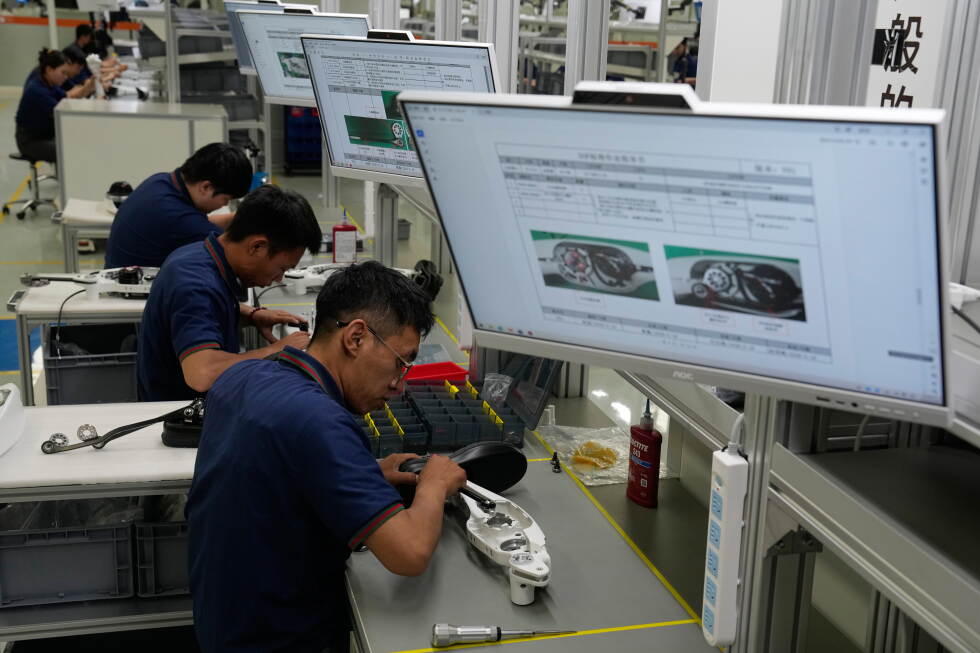
    The global humanoid robot sector is undergoing rapid evolution, with Chinese manufacturers emerging as dominant players in mass production and market deployment, even as industry observers warn of persistent gaps between manufacturing capacity and real-world commercial demand. Against a backdrop of aging domestic populations and rising labor costs across major economies, Chinese robotics startups are positioning humanoid robots as a transformative solution for everything from industrial logistics to consumer household services, drawing strong early interest from both public and private buyers.

    China and the United States currently split leadership in the global race to develop this emerging market, which Morgan Stanley estimates could grow to a $5 trillion valuation. While the U.S. maintains an edge in developing the high-performance artificial intelligence that acts as the advanced “brain” for humanoid systems, China leverages its status as the world’s manufacturing hub to lead in mass production capability, hardware supply chains, and the collection of real-world data required to train robot models.

    Chinese startups are already logging thousands of orders for their humanoid products, spanning government agencies, state-owned enterprises, and private commercial clients. Shanghai-based AI humanoid developer Matrix Robotics, led by former Tesla engineer Allan Zhang, counts roughly 1,000 orders for its flagship MATRIX-3 model, a 5.6-foot-tall robot with precision-controlled manipulator hands priced at approximately $99,000 per unit. Zhang revealed at a recent Macao robotics expo that clients include major coffee chains and hospitality groups, and while the firm has only produced a few hundred units to date, it has the capacity to scale output to 5,000 units annually in 2025 if demand holds.

    Shenzhen-based EngineAI offers a more affordable full-sized humanoid model, with a basic configuration priced at 180,000 yuan ($26,600), targeted at roles including security patrols, museum tour guides, and public performance displays. The company’s brand and marketing head Issac Li says the firm’s next core goal is to expand deployment into more diverse everyday operational scenarios. Leading Chinese manufacturers AGIBOT and Unitree already dominated global shipments in 2025, with each delivering more than 5,000 units that year, compared to just a few hundred or fewer from top U.S. competitors like Figure AI and Tesla. Unitree, one of the sector’s standouts, reported 1.7 billion yuan ($250 million) in 2024 revenue and a net profit of over 278 million yuan ($41 million), marking it as one of the few profitable players in the young industry.

    China’s industry growth has also received substantial backing from national policy. The country’s 2026-2030 five-year plan explicitly names humanoid robotics as a key frontier technology to develop, and by 2025, China was home to more than 140 humanoid robot manufacturers producing over 330 distinct models. Data from Barclays shows Chinese humanoid robots already account for roughly 85% of global supply, and Morgan Stanley projects that annual Chinese sales will more than double in 2025 to around 28,000 units. Industry analysts forecast that widespread adoption will drive down average costs from $46,000 in 2024 to roughly $21,000 by 2050, with Chinese models already selling for 20% less than comparable foreign alternatives on average thanks to localized supply chains, with some entry-level models priced below $6,000.

    Despite this rapid production expansion, industry experts and even government regulators warn that significant hurdles remain before widespread commercialization can be achieved. As early as 2024, China’s Ministry of Industry and Information Technology publicly warned of the risk of industry overcapacity and a market bubble, given the slow pace of viable commercial application development. Most analysts agree that current demand lags far behind existing manufacturing capacity, with most humanoid robots still designed for demonstration rather than reliable functional work in unstructured, unpredictable real-world environments.

    “The use cases of these robots are still so limited,” notes Chibo Tang of venture capital firm Gobi Partners, which invests in early-stage robotics startups. “Without the demand and without that scale from the market, these companies are not able to really go into mass production sustainably.” Samm Sacks, a senior fellow at U.S.-based think tank New America focused on Chinese technology, explains that the core economic barriers remain steep: humanoid robots are still costly to manufacture, prone to operational breakdowns, and only able to function reliably in highly controlled environments. “There’s a long way to go to get to a level of functionality where people will actually feel comfortable having them in their homes providing care for elderly or children,” Sacks added.

    While industry leaders identify industrial logistics as the most near-term viable commercial market for humanoids, many factories across China and the globe already rely on cheaper, more specialized non-humanoid robotic arms for repetitive single tasks, reducing immediate demand for full humanoid systems. The challenge of commercialization is not unique to China: startups in the U.S. and Japan have also struggled to secure consistent bulk buyers for their humanoid models in industrial and service settings.

    Beyond cost and functionality, developers also face the hurdle of accumulating sufficient high-quality diverse real-world data to train robots to handle multiple complex tasks. Eric Guo, founder and CEO of Shenzhen-based AI² Robotics, notes that building a large enough dataset spanning a wide range of public and private scenarios will take years of scaling. “The mass production capability in the robotic area is still at the very early stage,” Guo said.

    Even with these challenges, deployment of humanoid robots in real-world Chinese settings has accelerated sharply over the past year, aided by greater public openness to new technology compared to many other markets. Ye Tian, a former Apple engineer and CEO of Chinese robotics startup RoboScience, notes that Chinese consumers are “used to this rapid change in terms of technology,” creating a more receptive market for early-stage testing.

    Industry insiders remain optimistic about long-term potential, even as they acknowledge near-term headwinds. Lian Jye Su of technology research firm Omdia argues that as the technology matures, humanoids will increasingly take over heavy-lifting and repetitive mundane tasks in warehouses, factories, and ports. Matrix Robotics’ Allan Zhang adds that humanoids can also fill critical gaps in dangerous or labor-short sectors, and predicts a massive untapped consumer market for robots that handle household chores across hundreds of millions of Chinese homes. Early consumer tests already hint at both the potential and remaining flaws: Beijing content creator Yang Ning, who recently tested a robotic cleaning helper that could sort shoes, fold laundry, and replace garbage bags, called the demonstration “amazing” but noted the model was still inefficient, too large, and difficult to maneuver in small living spaces.

    Looking ahead, Omdia forecasts that annual shipments of advanced humanoid robots could surpass 1 million units by the early 2030s, as costs fall and functionality improves, turning a niche experimental sector into a global technology staple.

  • North Korean leader Kim showcases new warship ahead of visit by China’s Xi

    North Korean leader Kim showcases new warship ahead of visit by China’s Xi

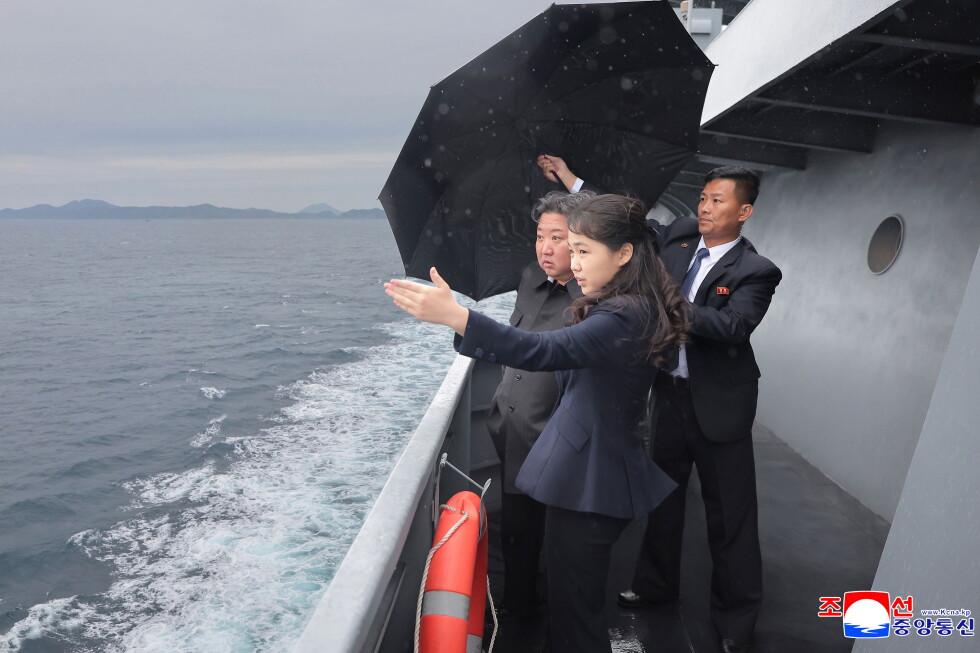
    In a high-profile display of advancing military ambitions just days before Chinese President Xi Jinping’s scheduled visit to Pyongyang, North Korean leader Kim Jong Un has overseen sea trials of a recently repaired 5,000-ton guided-missile destroyer and doubled down on pledges to build out a nuclear-capable navy, according to state-run media reports released Saturday.

    The vessel in question, the Kang Kon, underwent operational capability tests on Thursday, the Korean Central News Agency (KCNA) confirmed. Kim was joined during his inspection by his teenage daughter Kim Ju Ae, whose growing public presence has reinforced widespread speculation among South Korean intelligence officials that she is being prepared as Kim Jong Un’s eventual successor.

    During his remarks to military personnel and shipbuilders, Kim emphasized an urgent push to accelerate naval modernization, framing a robust nuclear-armed maritime force as a core pillar of North Korea’s overall nuclear deterrence strategy. He stressed that the country’s navy must be equipped to deliver a lethal, unpredictable strike against rival forces both on and beneath the sea at any time. The expansion of naval capabilities, Kim noted, is a central priority outlined in the five-year defense development plan adopted by the ruling Workers’ Party of Korea at its congress earlier this year. That blueprint, he added, calls for constructing larger 10,000-ton-class destroyers and advancing development of classified underwater weapons systems.

    Notably, the KCNA report did not include direct commentary from Kim on North Korea’s longstanding regional rivals, the United States and South Korea, even as tensions over Pyongyang’s nuclear program remain high and inter-Korean diplomatic engagement remains frozen.

    The reveal of the warship trials comes on the heels of two linked developments that have underscored shifting regional geopolitics: the official confirmation of Xi Jinping’s Monday visit to North Korea, and the recent unveiling of what South Korea’s military assesses is a new uranium enrichment facility for nuclear weapons production. During his visit to that undisclosed site, Kim pledged to grow North Korea’s nuclear arsenal “at an exponential rate,” a declaration that experts interpret as a deliberate move to solidify Pyongyang’s status as a recognized nuclear weapons state ahead of high-level talks with Beijing. Xi’s upcoming trip marks a key step in China’s efforts to strengthen diplomatic and economic ties with its isolated, nuclear-armed neighbor, at a time when Kim has increasingly deepened his military and political alignment with Russia, including the provision of troops and military hardware to support Moscow’s campaign in Ukraine.

    The Kang Kon is the second 5,000-ton-class destroyer North Korea has unveiled since 2023, following the launch of the Choe Hyon. Kim previously celebrated the Choe Hyon’s development as a transformative step that extends the operational range and preemptive strike capacity of North Korea’s nuclear force. State media says both vessels are engineered to carry a full suite of weaponry, including anti-aircraft systems, anti-ship missiles, and nuclear-capable ballistic and cruise missiles. However, independent defense analysts have raised persistent questions about the ships’ actual operational effectiveness.

    The Kang Kon’s journey to sea trials has been marked by setback: the vessel suffered significant damage during a botched launch ceremony at the northeastern port of Chongjin in May 2023, a failure Kim publicly condemned as “criminal.” Pyongyang announced the ship had been repaired and relaunched in June 2023, but outside experts continue to cast doubt on whether it is fully combat-ready. Despite the setback, Kim has already ordered the construction of two additional 5,000-ton-class destroyers to expand the navy’s conventional and nuclear strike capacity.

  • Maersk is still shipping weapons parts to Israel despite denial, new report says

    Maersk is still shipping weapons parts to Israel despite denial, new report says

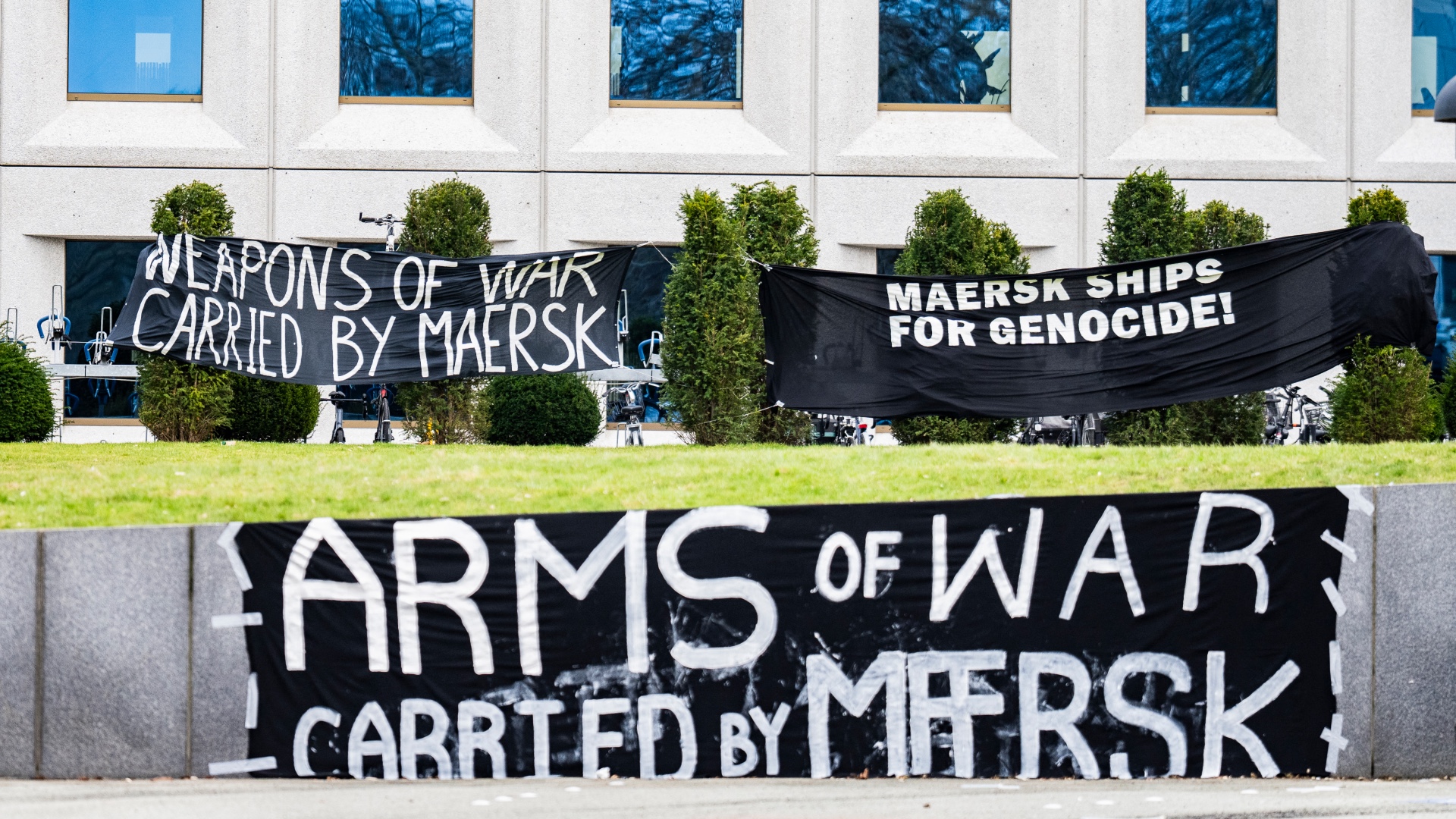
    A joint investigation released Monday by the Palestinian Youth Movement (PYM) and Oxfam Denmark has thrown into sharp question public claims from Danish shipping conglomerate Maersk that it has refused to transport weapons to Israel since the outbreak of the 2023 Gaza conflict. The investigation, the centerpiece of the grassroots #MaskOffMaersk accountability campaign, alleges that Maersk has overseen the consistent shipment of critical small arms parts and large explosive components to top Israeli weapons manufacturers, in direct contradiction of the firm’s stated policies.

    According to the report’s authors, the shipments include small-caliber bullet and rifle parts identical to those used in the 2024 killing of 6-year-old Palestinian child Hind Rajab, a death that drew international outcry, as well as thousands of other civilian casualties in Gaza. The cargo also includes empty casings for the 900-kilogram MK-84 “bunker buster” bombs that the Israeli military has deployed extensively across Gaza and southern Lebanon.

    Investigators cross-referenced shipping records and official bills of lading to trace a steady stream of components from 10 suppliers – nine based in the United States, and one in India – to Israeli defense contractors via Maersk-owned vessels. The largest intended recipient is Elbit Systems, Israel’s biggest weapons manufacturer, which acquired former state-owned defense producer IMI Systems in 2018. Between October 2023 and July 2025 alone, the report documents more than 1.42 million kilograms of bullet cores and brass cartridge casing cups shipped from three U.S. firms to IMI, parts destined for 5.56 mm and 7.62 mm rifle ammunition, the standard rounds used by Israeli infantry forces.

    Additional shipments identified in the report include MK-84 bomb casings from U.S. defense giant General Dynamics, 230-kilogram MPR-series general-purpose bomb parts from Elbit Systems of America, and mortar system components from four additional U.S. suppliers. India’s Sri Kaliswari Metal Powders also used Maersk vessels to ship aluminum powder for explosive manufacturing to Israel, according to the investigation.

    “Their actual practice is to completely ignore the policies that they have on the books,” Nadya Tannous, international coordinator for the #MaskOffMaersk campaign, told Middle East Eye in an interview. “Our question to Maersk is: What’s a weapon? You don’t ship weapons, so what is a weapon?”

    When reached for comment by Middle East Eye on the report’s allegations, Maersk reiterated its longstanding public position: “From the outset of the conflict, we have maintained a strict policy of not shipping weapons or ammunition to Israel. As the conflict escalated, we have further enhanced our screening and acceptance procedures and implemented additional compliance measures. Our compliance processes for military-related cargo are based on EU, US, and Danish laws including the Wassenaar Arrangement, the EU’s common military list and the International Traffic in Arms Regulations as well as UN resolutions.”

    Elbit Systems, which generates roughly $2 billion in annual revenue and employs 20,000 people globally, supplies approximately 85 percent of Israel’s drones and land-based military equipment. The Gaza health ministry reports that at least 72,980 people have been killed and 173,170 wounded in Israel’s ongoing military campaign in Gaza, and UN Special Rapporteur for Palestine Francesca Albanese noted in a 2024 report that Israeli defense firms including Elbit have reaped massive profits from the conflict, describing the Gaza war as a “profitable venture” for the sector. Elbit has long been a target of pro-Palestinian activism across Europe and North America over its ties to Israeli military operations.

    Unlike many other pro-Palestinian campaigns targeting corporate ties to Israel, the PYM-Oxfam Denmark report does not call for a broad boycott of Israel. Instead, the campaign is explicitly calling for a global consumer and industry boycott of Maersk, and demanding immediate policy change from the shipping giant. Tannous emphasized that the campaign is part of a broader push to hold corporations accountable for facilitating what pro-Palestinian activists and numerous international legal experts have labeled genocide in Gaza.

    “We don’t want policy statements, we want material change from the company,” Tannous said. “This campaign is part of a larger nexus of accountability for the Israeli government and the Israeli military. It falls within the corporate accountability campaign for those corporations that facilitated the genocide.”

    The report lays out three clear demands for Maersk: immediately halt all shipments of weapons components to Israel, conduct comprehensive independent human rights audits of all global operations, and end all commercial activity that supports Israeli military operations, warning that continued shipments leave the company open to charges of complicity in war crimes and genocide in Gaza.

    This is not the first time Maersk has faced public pressure over its links to Israeli military activity. Protests have been held consistently outside the firm’s Copenhagen headquarters for more than two years, with a large demonstration held just last month over Maersk’s role in resupplying Israel amid its multi-front regional conflicts. Multiple countries have already moved to restrict military cargo shipments to Israel, with Spain banning the use of its ports for military-bound cargo to Israel in May 2024.

    Tannous noted that Maersk’s near-ubiquitous presence in global port infrastructure makes the company a fair target for collective action by people of conscience around the world. “Maersk is everywhere, right? They’re in every port, for the most part, they use our roads, they use our bridges, they use our public infrastructure,” she said. “What does it mean for us as people of conscience around the world, who majority understand and know that this genocide is ongoing, it’s wrong… to not lose hope in terms of being able to actually affect change for those in power? We demand accountability. There are many methods to do that, and we hope that this report is one of the ways of offering really valuable and precise information.”

    Public records show Maersk’s leadership has sent mixed signals on its military cargo policies in recent months. In March 2025, Maersk’s CEO told shareholders that the firm never transports weapons to active conflict zones, but allows other types of military-related cargo – though he declined to clarify the exact distinction between the two categories. The company has also not publicly revised its policy on transporting components for F-35 fighter jets, which the Israeli Air Force has used extensively to bombard residential areas of Gaza. In a July 2025 statement, Maersk only noted that the full F-35 supply chain is controlled by a coalition of partner governments, an argument that echoes previous framing used by other firms tied to weapons exports to Israel.

    That same July 2025 statement did include one major concession: Maersk announced it would reassess all commercial ties to firms linked to illegal Israeli settlements in the occupied West Bank, a move that came after months of sustained pressure from pro-Palestinian activists. The company stated it already adheres to international standards for responsible business practice, and will align any operational changes with guidance from the United Nations High Commissioner for Human Rights (OHCHR). The OHCHR first published a database of firms operating in and profiting from illegal Israeli settlements in 2020, naming more than 100 companies that contribute to human rights abuses against Palestinians.

    In the same July statement, Maersch also pushed back against Albanese’s 2024 report on corporate complicity in human rights abuses in Palestine, claiming her report drew on unvalidated third-party data.

  • Albanians protest against Kushner-backed project threatening the environment

    Albanians protest against Kushner-backed project threatening the environment

    Mass public demonstrations against a $1.6 billion luxury coastal resort development led by former U.S. President Donald Trump’s son-in-law Jared Kushner have stretched into their fourth consecutive day in Albania, fueled by widespread public anger over untransparent planning and irreversible threats to unique coastal ecosystems.

    Thousands of demonstrators have packed the capital city of Tirana all week, raising alarm over the project’s potential to destroy sensitive habitats located at the proposed construction site on Albania’s southern Adriatic coast. The development footprint encompasses the uninhabited Sazan Island, as well as the ecologically rich wetlands and coastal habitats that surround the landmass, with early groundwork already underway in recent weeks. Kushner’s private equity firm, Affinity Partners, is one of the primary backers of the large-scale tourism project.

    In a recent media interview, Ivanka Trump, Kushner’s wife and former U.S. first daughter, recalled how the pair first encountered Sazan Island during a leisure trip. “We were on a friend’s boat, and we stopped for a swim. Effectively, that’s how we found it,” she explained. “We swam to the island. We went on a hike, barefoot all the way up to the top, and we were just captivated.”

    Protestors have directed their criticism not only at Affinity Partners but also at Albanian Prime Minister Edi Rama and his ruling Socialist Party administration, which has positioned itself as a vocal supporter of the development. For Rama, the resort project is a core pillar of his agenda to transform Albania into a premium international tourist destination, boost foreign direct investment, and advance the country’s bid for European Union membership. The prime minister has argued the initiative would inject an estimated $4.6 billion in total investment into Albania’s economy, generate thousands of local jobs, and upgrade critical national infrastructure. Rama won a fourth consecutive term in 2025 on a platform centered on attracting foreign investment and advancing EU accession.

    Yet more than 40 domestic environmental organizations have signed an open letter to the government demanding an immediate halt to all construction activities. The site is recognized as one of the most biologically diverse areas along the Adriatic coast, serving as a critical stopover for hundreds of migratory bird species. The coastal waters adjacent to Sazan Island are also one of the last remaining protected refuges for the critically endangered Mediterranean monk seal, while the wetlands host populations of pink flamingos and Dalmatian pelicans among more than 200 recorded bird species. Many protestors have carried cutout images of pink flamingos to rallies to highlight the threat the development poses to these vulnerable animal populations.

    Aleksandr Trajce, executive director of the Protection and Preservation of the Natural Environment in Albania (PPNEA)—the country’s leading conservation organization—told reporters the entire project process has been marked by a complete lack of public accountability. “From start to finish there has been a total lack of transparency,” Trajce said. “We have seen no public consultation or public documentation regarding permits, and so now what we are saying is, if they remove the bulldozers, remove the fence and restore the habitats to what they were, then we can start talking.”

    While Rama has stated he is open to meeting with protest representatives to discuss their concerns, he has also ruled out any possibility of canceling the project. “There is absolutely no chance that the investment will stop as long as I am here,” the prime minister confirmed this week.

    Developers involved in the initiative have pushed back against criticism, framing the project as environmentally responsible and beneficial to local communities. “Our focus remains on responsible stewardship, environmental enhancement, job creation and creating long-term value for local communities. We respect the ongoing public and institutional processes,” said Asher Abehsera, chief executive of Sazan Real Estate Development LLC, which is co-developing the project alongside Affinity Partners.

    The Albanian protests are not the first controversy surrounding Kushner’s development projects in the Balkan region. Previously, Kushner planned to build a Trump International Hotel in Belgrade, Serbia, but withdrew from the project earlier this year after a senior Serbian government minister was arrested on charges of abuse of office tied to the development’s approval process. More recently, Kushner drew widespread international criticism for announcing a proposal to develop a “New Gaza” with luxury skyscrapers, coastal tourism hubs, and dedicated commercial districts. Analysts speaking to Middle East Eye described the Gaza plan as a clear example of private actors attempting to profit from conflict and humanitarian disaster in the occupied Palestinian territories.

  • Trump keeps the door open to a call with Taiwan’s president even though China has warned against it

    Trump keeps the door open to a call with Taiwan’s president even though China has warned against it

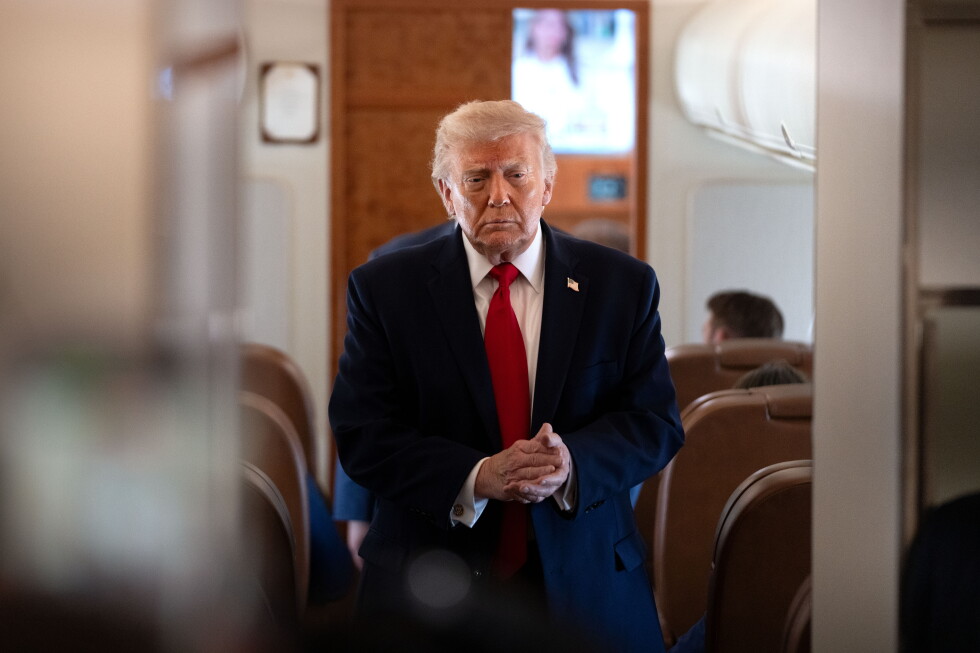
    Aboard Air Force One, U.S. President Donald Trump confirmed Friday that a potential phone conversation with Taiwan’s President Lai Ching-te remains on the table, pushing back against explicit public pressure from Beijing to scrap any direct high-level engagement between the two leaders. China has long claimed the self-governing, democratic island of Taiwan as an inalienable part of its territory, and has repeatedly warned Washington against formal interactions with Taipei’s leadership.

    The possibility of a call first emerged last month, shortly after Trump concluded his summit with Chinese President Xi Jinping in Beijing. At that time, Trump tied the potential dialogue to his ongoing deliberation over whether to approve a $14 billion arms sales package to Taiwan, which was greenlit by the U.S. Congress earlier in the year. When pressed by reporters Friday on whether he still planned to connect with Lai, Trump responded definitively: “I’ll always talk to him.”

    A direct call between sitting U.S. and Taiwanese presidents would break a decades-long diplomatic precedent, making it a highly provocative step in the eyes of Beijing. This week, the Chinese Embassy in Washington issued a formal statement to the Associated Press warning that such a conversation would erode hard-won progress in fragile U.S.-China bilateral ties. The embassy urged the Trump administration to “handle the Taiwan question with utmost prudence” and avoid sending what it called “wrong signals” to Taipei.

    This is not the first time Trump has drawn sharp condemnation from Beijing over cross-strait interactions. Immediately after his 2016 presidential election victory and before his inauguration, Trump accepted a congratulatory phone call from Taiwan’s then-President Tsai Ing-wen, a move that immediately upended decades of unspoken diplomatic protocol around cross-strait relations.

    Today, Trump’s open discussion of a call with Lai comes amid lingering uncertainty over the fate of the pending arms deal. During his Beijing summit, Xi Jinping emphasized to Trump that the Taiwan question is the single most sensitive core issue in U.S.-China relations, warning that mismanagement of the dispute could lead to direct clashes and open conflict between the two global powers, per Chinese official readouts of the meeting. Trump has previously framed the approved arms sales as a “negotiating chip” in the administration’s broader Indo-Pacific policy strategy, leaving unclear whether he will ultimately greenlight the transfer.

    Analysts note that Trump’s willingness to consult China on the Taiwan arms sale marks a departure from longstanding U.S. policy guidelines known as the Six Assurances, first established under the Reagan administration in 1982. The second of these nonbinding principles explicitly states that the U.S. would not agree to consult the People’s Republic of China on arms sales to Taiwan. While Secretary of State Marco Rubio reaffirmed during congressional hearings earlier this week that official U.S. policy toward Taiwan remains unchanged, experts say Trump’s public rhetoric has injected unprecedented uncertainty into cross-strait dynamics.

    “Trump’s comments about framing Taiwan arms sales as a negotiating chip, combined with the uncertainty around a possible call with Lai, have created far more ambiguity than Taipei is comfortable with,” explained Craig Singleton, a China specialist at the Foundation for Defense of Democracies. “The real test will not be rhetoric — it will be whether the pending arms package moves forward, and on what timeline.”

    For his part, Lai has made clear he is prepared to take the call if it happens. The Taiwanese leader has stated that he would use the conversation to stress that cross-strait peace and stability is a critical pillar of global security, and would argue that China’s increasingly aggressive military and diplomatic moves around the island are the primary threat to regional calm. Lai would also note that Taiwan’s growing defense budget and planned purchase of U.S. arms are defensive measures designed to deter aggression and maintain cross-strait stability, he has said.

    Diplomatic context for the current standoff dates back to 1979, when the U.S. switched formal diplomatic recognition from Taipei to Beijing under the One China policy, which acknowledges Beijing’s position that Taiwan is part of Chinese territory. The U.S. maintains informal non-diplomatic relations with Taiwan, and has committed through the Taiwan Relations Act to provide Taipei with the defensive arms needed to maintain its security, while deliberately keeping ambiguous the question of whether it would intervene militarily if China launched an invasion of the island. Past high-level U.S. engagements with Taiwanese leaders have drawn fierce pushback from Beijing: after then-House Speaker Nancy Pelosi led a congressional delegation to Taipei in 2022, China responded with large-scale military exercises that included launching short-range ballistic missiles over the island.

    After Trump’s Friday comments, the Taipei Economic and Cultural Representative Office — Taiwan’s de facto embassy in Washington — reaffirmed its commitment to maintaining close ongoing coordination with the U.S. on arms sales and other key issues. “We will leave it up to the U.S. to announce if there’s any arrangements for President Trump to speak with President Lai,” the office said in a formal statement.

    Edgard Kagan, a former senior State Department East Asia policy official and U.S. ambassador to Malaysia who now holds the China Studies chair at the Center for Strategic and International Studies, noted that Beijing views a potential Trump-Lai call as even more provocative than moving forward with the proposed arms sale. Kagan added that it is notable Trump continues to publicly float the possibility of a call even after receiving explicit warnings from Chinese leaders.

    Kagan laid out a potential strategic path forward for the administration: if Trump chooses to forgo the call, it could create diplomatic space to approve the arms sales while minimizing backlash from Beijing. “This could give him the room to announce an arms sale, defuse criticism that the U.S. is turning its back on Taiwan, and do it in a way that leaves the Chinese feeling there was some respect for their views,” Kagan explained.

    Reporter Madhani contributed reporting from Washington.

  • A sari for Mars: Outfit worn by Indian ‘rocket woman’ at US museum

    A sari for Mars: Outfit worn by Indian ‘rocket woman’ at US museum

    A garment deeply tied to one of India’s most groundbreaking space milestones is now a featured exhibit at one of the world’s most prestigious science museums, bringing the story of women in global space exploration to tens of thousands of annual visitors.

    Nandini Harinath, a leading Indian space scientist who served as Deputy Operations Director for the Mangalyaan mission—India’s first ever attempt to place a spacecraft in Martian orbit—donned a vibrant red and blue silk sari, a gift from her father, on what she calls the most critical day of the entire project. That day, 1 December 2013, Harinath and her team at the Indian Space Research Organisation (ISRO) gathered in the mission control room to execute the trans-Mars injection maneuver, pushing the Mangalyaan probe out of Earth’s orbit and onto its 300-month journey to the Red Planet. In a 2016 interview, Harinath described the moment as a do-or-die juncture: every decision the team made that day would determine whether the years of work that went into the mission would end in success or failure. To Harinath, saris have always been her go-to attire for major professional moments and events where she represents India’s space program, making this silk piece the natural choice for the mission’s most high-stakes day.

    Mangalyaan successfully entered Martian orbit in September 2014, cementing India’s place in history as just the fourth national or geopolitical entity to accomplish the feat. When a photograph of sari-clad women from ISRO celebrating the mission’s success went viral across global social media, it upended long-held stereotypes that framed aerospace engineering and space science as male-dominated fields in India. While ISRO later clarified that the women pictured were administrative staff, the agency also emphasized that multiple female scientists, including Harinath, held core roles on the mission and were present in the control room for the critical injection maneuver.

    That viral image caught the attention of Matt Shindell, curator of space history at the Smithsonian’s National Air and Space Museum in Washington, D.C., who found the story of India’s “Rocket Women” deeply compelling. In 2020, Shindell reached out to Harinath via email to discuss adding an artifact tied to the Mangalyaan mission to the Smithsonian’s collections. After discussing what object could best capture the spirit of the mission and Harinath’s role in it, the pair settled on the iconic sari she wore that day in 2013.

    Once the sari and its matching blue blouse arrived at the museum, a textile conservator even turned to YouTube tutorials to learn how to properly drape the traditional garment for display on a museum mannequin. Shindell draws a parallel between Harinath’s sari and another iconic artifact in the museum’s collection: the flight vest worn by NASA Flight Control Chief Gene Kranz during the 1970 Apollo 13 mission, when he led the emergency operations that brought the imperiled crew safely back to Earth. Both garments are tangible reminders of the human decision-makers who stood at the center of historic space milestones, rather than just the technology that made those milestones possible.

    While the Smithsonian already holds a small number of Indian artifacts in its collections, most are tied to India’s air force or commercial aviation industry, and the museum counts a 2007 commemorative silver tray ISRO presented to science fiction author Arthur C. Clarke for his 90th birthday among its existing ISRO-related holdings. Harinath’s sari marks the first artifact from India added to the museum’s interplanetary science collection, and it is also the first sari of any kind in the museum’s permanent holdings.

    Today, the sari is on display in the museum’s “Futures in Space” gallery, positioned directly alongside the iconic blue t-shirt worn by Sally Ride when she became the first American woman to travel to space on the 1983 Space Shuttle mission. The exhibit is also surrounded by space-themed toys, games, and movie posters, all curated to engage visitors with recent developments in space exploration and spark conversation about the future of human activity beyond Earth.

    Shindell explains that the “Futures in Space” exhibit is designed to prompt visitors to grapple with core questions about modern space exploration: Who gets to participate in space travel? What drives nations and individuals to explore beyond our planet? What will we do once we reach other celestial bodies? For Shindell, Harinath’s sari answers these questions in two powerful ways. First, it stands as a symbol of national pride for India and the remarkable success of the country’s growing, cost-effective space program. Second, it carries a deeply personal, inspiring story that Shindell hopes will encourage more young women around the world to pursue careers in science, technology, engineering, and math. The exhibit includes an interactive touchscreen that allows visitors to learn more about Harinath, the Mangalyaan mission, and the role of women in global space exploration.

    Shindell says he is delighted by the public response to the new addition, calling the sari a fantastic asset to the museum’s collection that brings a fresh, important perspective to the story of modern space exploration.

  • India called on to arrest Israeli reservist holidaying in country

    India called on to arrest Israeli reservist holidaying in country

    A Brussels-based non-governmental organization has launched a formal legal push to force Indian authorities to detain an Israeli army reservist accused of committing war crimes in Gaza during his holiday in the country’s northern Himalayan state of Himachal Pradesh.

    The Hind Rajab Foundation (HRF) submitted an urgent legal complaint on Tuesday to three key Indian bodies: national police, the Ministry of Home Affairs, and the country’s immigration bureau. The filing names the suspect as Eitan Gilboa, a member of the Israel Defense Forces’ 271st Combat Engineering Battalion who is currently traveling in India.

    In the complaint and a public statement accompanying it, HRF detailed its months-long investigation into Gilboa’s actions during the ongoing military campaign in Gaza. The organization alleges that Gilboa directly took part in and publicly celebrated the systematic leveling of entire residential neighborhoods in Gaza as an act of collective retaliation against Palestinian civilians. These actions, HRF argues, qualify as explicit war crimes under India’s 1960 Geneva Conventions Act.

    To back its claims, HRF points to social media content originally shared by Gilboa’s mother, which captures multiple instances of the reservist participating in and commemorating the destruction of civilian infrastructure across southern Gaza, including in the heavily bombed areas of Khan Younis and Rafah.

    The legal filing emphasizes that as a signatory to the Fourth Geneva Convention, India carries a binding international legal obligation to hunt for and prosecute any individual accused of grave breaches of the treaty, regardless of their nationality. This requirement is laid out explicitly in Article 146 of the convention.

    HRF has laid out three clear demands for Indian officials: immediately take Gilboa into custody, file a formal First Information Report (FIR) to open a criminal investigation into the allegations, and if arrest is not pursued, order the reservist’s immediate deportation from Indian territory.

    “Eitan Gilboa is not a tourist. He is a war criminal currently enjoying the hospitality of India while fleeing the consequences of his crimes,” HRF director Dyab Abou Jahjah, a prominent Lebanese political activist, said in a statement. “India must not allow Indian soil to become a safe haven for those who celebrate the destruction of civilian lives,” he added.

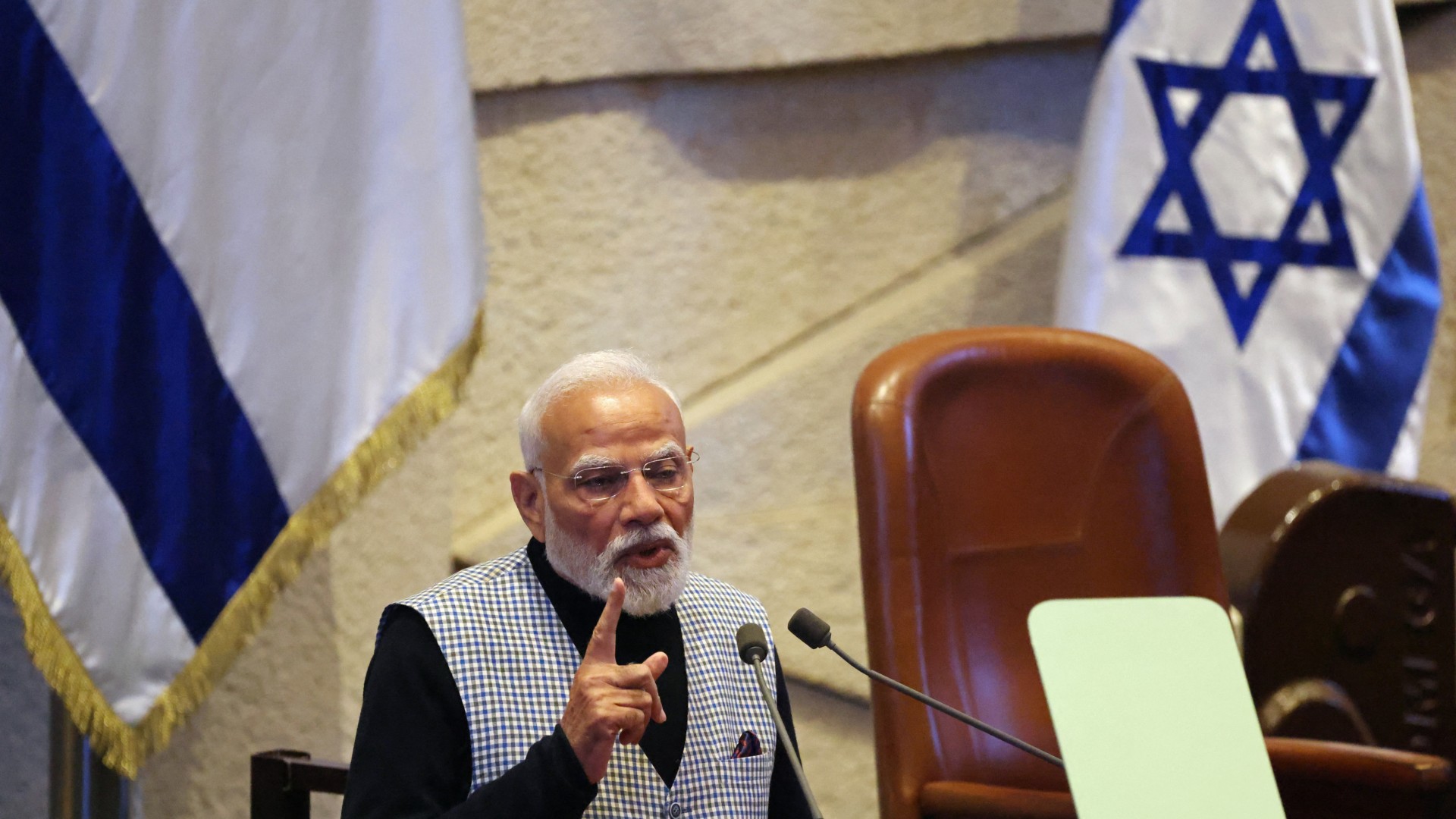
    Local Indian activist Shrishti Khanna, speaking to independent outlet Middle East Eye, noted that mass tourism from Israeli veterans to Himachal Pradesh is a decades-long trend, with thousands of former and active Israeli military personnel vacationing in the state since the 1980s. Khanna argued that the current complaint exposes a long-standing pattern of complicity by the Indian government, one that has deepened dramatically under Prime Minister Narendra Modi’s administration. Modi has overseen increasingly close political, military and ideological alignment with Israel, Khanna said, resulting in Israeli occupying forces being treated as harmless holidaymakers rather than potential suspects requiring scrutiny and legal accountability.

    Khanna added that she does not expect Indian authorities to actually move forward with an arrest and prosecution, but said that “even if no action is taken, the complaint itself will create a permanent public record of India’s position on this issue.”

    This legal action is the latest in a series of efforts by HRF to hold alleged Israeli war criminals accountable across the globe. To date, the organization has filed more than 90 similar criminal complaints in 30 different national jurisdictions, pursuing investigations and litigation against individuals suspected of participating in war crimes against Palestinians.

    The complaint comes amid sustained international and domestic pressure on the Indian government over its long-standing military relationship with Israel. New Delhi has continued to approve and ship arms to Israel throughout the current military campaign in Gaza, a policy that has drawn widespread criticism from human rights groups and civil society activists who argue the weapons are being used to commit widespread human rights abuses against Palestinian civilians.

  • ‘Taking our jobs’: Yemeni workers lose out to lower-paid Ethiopian migrants in low-skilled sectors

    ‘Taking our jobs’: Yemeni workers lose out to lower-paid Ethiopian migrants in low-skilled sectors

    Decades of ongoing conflict have reduced Yemen, already one of the Arab world’s poorest nations, to a state of systemic economic collapse, leaving millions of citizens fighting for daily survival. For the country’s low-skilled working-age population, the challenge of securing stable employment to support families has grown even more dire amid a growing wave of transient East African migrants, who have reshaped local low-wage labor markets.

    Zahed al-Zabidi, a 30-something Yemeni native originally from conflict-battered Hodeidah governorate, knows this struggle intimately. Seven years ago, he relocated to the southern port city of Aden in search of more reliable work, leaving behind a life of inconsistent day labor that barely put food on the table for his five family members. For more than 15 years, Zabidi has made his living washing dishes and cleaning dining spaces at local restaurants – work that requires no formal education or specialized training, the only kind of employment he can access. Where he once had no trouble securing shifts, opportunity has all but dried up in recent years.

    Zabidi blames the growing competition from Ethiopian migrants passing through Yemen on their way to Gulf Cooperation Council nations. “I worked at several restaurants in Aden, but the situation gets worse every day because Ethiopian migrants are taking our jobs, and many restaurants have started hiring them,” he explained. “Ethiopian migrants are ready to work for any amount, so restaurant owners prefer them and fire us.” Zabidi once earned 130,000 Yemeni Riyals, roughly $83, per month – a sum already barely enough to cover his family’s basic needs – before he was replaced by an Ethiopian worker who accepted just 80,000 Yemeni Riyals ($51) for the same role. For Zabidi, that lower wage is impossible to accept: unlike many transient migrants, he has a family of five to support, and the reduced rate cannot cover even the most basic household expenses.

    Today, Zabidi remains out of work, traveling from restaurant to restaurant across Aden seeking any open position, with no luck. His family now survives on just bread and tea for most meals, with meat only appearing on their table when a charitable neighbor shared it during the Eid al-Fitr holiday. “It is difficult for a jobless person like me to buy good food for his family. We are only eating to survive,” Zabidi said. Now, he is planning to leave Aden to seek work on farms in Lahj governorate, where relatives already work, even though he has no prior experience in agricultural labor. “I don’t have experience in farming, but I will learn it from my relatives and try my best to work there,” he said.

    Official data underscores the scale of Zabidi’s crisis: Yemen’s national youth unemployment rate hit 32.39 percent in 2024, with the hardest impacts falling on low-skilled workers like him who rely on informal, unskilled roles. The United Nations estimates that 22.3 million Yemenis – nearly three-quarters of the country’s total population – require some form of humanitarian assistance or protection support in 2025.

    The influx of migrants that has reshaped Yemen’s labor market is part of a long-running regional migration pattern. Yemen’s strategic position on the southwestern edge of the Arabian Peninsula has made it a key transit hub for decades for migrants fleeing conflict and poverty in East Africa and the Horn of Africa, most notably Ethiopia and Somalia, who seek better economic opportunity and safety in Saudi Arabia and other wealthy Gulf states.

    According to the International Organization for Migration (IOM), 110,144 migrants have entered Yemen since the start of 2025, 97 percent of them Ethiopian and 3 percent Somali. More than 90 percent of these new arrivals list Saudi Arabia as their final destination, with only 10 percent planning to settle in Yemen permanently. For most, the country is nothing more than a temporary stopover as they coordinate the next leg of their dangerous journey.

    Because migrants only need enough income to cover immediate daily survival costs while they wait to continue north, most are willing to accept extremely low wages that Yemeni heads of household cannot afford to work for. One Ethiopian migrant, who gave his name as Ramadan, explained this dynamic in a brief interview with Middle East Eye. “We plan to reach Saudi Arabia, and while we are here, we need to eat, so we work just like anyone else,” he said. Ramadan, who has picked up basic Arabic during seven months working at an Aden restaurant, added: “I love Yemen and Yemenis, and I don’t want to make anyone unhappy. Yemenis are our brothers, and we share the same suffering.”

    Restaurant owners in Aden openly admit that they prefer to hire Ethiopian migrants for low-wage cleaning and dishwashing roles for this reason. Ali, an Aden restaurant owner who spoke to MEE on condition of anonymity, acknowledged that the lower labor costs and higher willingness to work long hours make migrants the more attractive option for business owners. “The Ethiopian migrants work hard and they clean the restaurant better than some Yemenis. Moreover, they accept lower wages and don’t complain,” Ali said. “While some Yemeni workers frequently demand higher wages and require a lot of time off, that is not the case with Ethiopians, who work silently and dutifully perform any task requested of them. As a businessman, I prefer to employ Ethiopians for these roles because they work longer hours for less pay.”

    Economic analysts note that while the migrant influx exacerbates strain on low-wage Yemeni workers, it is not the root cause of the country’s unemployment crisis – that stems from the 10-year ongoing civil conflict that collapsed Yemen’s national economy. “These migrants work in cleaning, strenuous domestic labour and farming, especially Qat farming, where they accept low wages,” explained economic expert Wafeeq Saleh. “These low wages are not enough for a Yemeni to eke out a decent living for a family, creating unfair competition in the labour market between Yemeni workers and Ethiopians.”

    Saleh added that shifting cultural norms have already pushed more Yemenis into these once-shunned low-skilled roles. “There used to be a relative reluctance among Yemenis to take up cleaning jobs because it was culturally viewed as ‘shameful’, but the severe economic crisis has contributed to the fading away of this culture, and Yemenis are now in dire need of any opportunity,” he said.

    Even many Yemeni workers who have lost jobs to migrants do not oppose migrants working, but rather call for uniform wage standards that eliminate the unfair advantage low-wage transient migrants give employers. “I am not against Ethiopian migrants working, but I am against the low salaries that encourage restaurant owners to hire them,” Zabidi said. “If we received the same salary for the same working hours, restaurant owners would prefer us.”

  • Israel sent troops to ‘Azerbaijan, UAE, Iraq and Somaliland’ during Iran war

    Israel sent troops to ‘Azerbaijan, UAE, Iraq and Somaliland’ during Iran war

    A bombshell new report published Friday by CNN has laid bare extensive, secretive deployments of Israeli special operations forces and intelligence personnel across four countries in the broader Middle East region, carried out amid Israel’s ongoing open conflict with Iran. Citing four anonymous sources with direct knowledge of the activities, the outlet details that operatives from Israel’s iconic foreign intelligence agency Mossad, alongside elite units of the Israeli military including a specialized airborne rescue detachment from the Israeli Air Force, were positioned in southern Azerbaijan, just kilometers from the Iranian border. At their closest point, these deployments sit roughly 100 kilometers outside of major Iranian city Tabriz, placing critical Iranian infrastructure and military assets well within operational range.

    According to the report, the deployed Israeli personnel have conducted two core mission sets: coordinated drone strikes against targeted individuals and broad, systematic intelligence gathering to map Iranian military movements and facilities. One high-profile strike launched from Azerbaijani soil, a source confirms, was the assassination of Rahman Moghaddam, a senior leader of the Islamic Revolutionary Guard Corps (IRGC) who oversaw the force’s special intelligence operations division. Moghaddam was killed in an attack on March 4. Just 24 hours after that killing, unmanned aerial vehicles targeted Nakhchivan International Airport in Azerbaijan and an adjacent local village. Azerbaijani authorities in Baku immediately pinned the blame for the strike on Iran, a charge Tehran has repeatedly and categorically denied.

    Beyond Azerbaijan, CNN’s investigation reveals that Israel has built and maintained a sprawling network of covert operational outposts and bases scattered across the broader Middle East and Horn of Africa, with additional facilities located in Iraq, the United Arab Emirates, and the self-declared independent state of Somaliland. The report notes that a portion of these sites were developed with the explicit knowledge and approval of host nation governments, while other covert positions may have been established without the host authority’s awareness.

    Within hours of the report’s publication, the Embassy of Azerbaijan in Washington DC issued a sharp rejection of the claims, telling CNN that Baku dismisses all unfounded assertions that Azerbaijani territory has been used to launch offensive operations against any third country.

    On the Somaliland front, the report confirms that the breakaway region in northern Somalia, which has not received widespread international recognition as an independent state, has hosted hidden Israeli operational positions. Notably, Israel made global headlines in December 2024 when it became the first United Nations member state to formally recognize Somaliland’s sovereignty. As of Saturday morning, Somaliland authorities had not issued any public response to CNN’s reporting.

    The new revelations build on similar reporting published in recent weeks by other major international outlets. The Wall Street Journal and The New York Times both reported last month that Israel had constructed two secret operational facilities inside Iraq amid its escalating conflict with Iran. Separately, Axios and the Financial Times also confirmed that Israel has deployed active-duty ground troops, an Iron Dome air defense battery, and additional advanced air defense systems to the UAE since the outbreak of the current conflict with Iran.

    CNN’s sources also shared details of pre-planned Israeli covert activity dating back to earlier this year. When large-scale anti-government protests roiled Iran in January, Israeli special operations command finalized preparations for a secret mission along the Azerbaijan-Iran border. The planned operation was designed to lay groundwork for future strikes by establishing long-term surveillance infrastructure in the border region. After the protests wrapped up, Israeli special forces accompanied by stealth aircraft were deployed to install the intelligence gathering equipment, which has since been used to continuously monitor Iranian military movements and key facilities along the border, the report says.

    Diplomatic records confirm that Israel has long maintained deep, formal strategic partnerships with both Azerbaijan and the UAE. For Baku, Israeli cooperation extends across energy development, advanced defense systems sales, and cybersecurity collaboration. With the UAE, Israeli ties focus heavily on expanding economic integration, joint intelligence sharing, and public and private security partnerships.