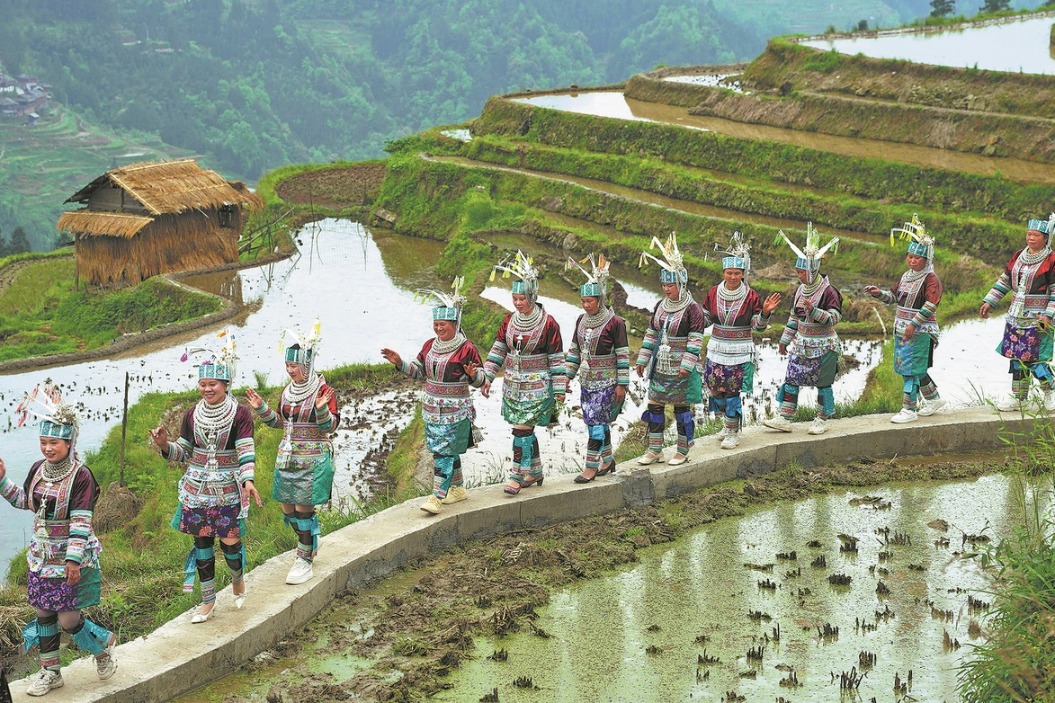
Nestled among the rolling green terraces of Congjiang county in Southwest China’s Guizhou province, hundreds of villagers clad in vibrant traditional ethnic attire gathered on Sunday to celebrate the annual Kaiyang Festival, the traditional ceremonial kickoff to the annual rice-planting season that has sustained communities in the region for generations.
As one of the most enduring cultural rituals of southern China’s rice-growing regions, the Kaiyang Festival carries centuries of history, woven into the agricultural cycles that have shaped local life. This year’s main celebration unfolded in Jiabang, home to the region’s spectacular layered terraced fields that draw both cultural preservationists and tourists each year.
Local Miao ethnic community members led the day’s proceedings: groups of villagers carried hand-woven ceremonial flags down into the flooded terraces, while respected village elders presided over traditional blessing rites. The elders laid out offerings of locally brewed rice wine, cured pork, and incense, before leading the assembled community in collective prayers for favorable seasonal weather, strong crop growth, and a plentiful harvest at the end of the growing cycle. The day also featured cultural competitions, including a popular race up the steep slopes of Jiabang’s terraces, drawing participants from nearby Miao villages and visitors from across the country.
Rooted in the region’s agrarian heritage, the Kaiyang Festival serves not only as a practical marker for the start of planting season but also as a vital gathering that strengthens intergenerational community bonds and preserves centuries-old ethnic cultural traditions for younger generations.