标签: Asia

亚洲

  • Myanmar’s coup leader who set off a brutal civil war becomes president

    Myanmar’s coup leader who set off a brutal civil war becomes president

    On February 1, 2021, Myanmar’s top military leader Min Aung Hlaing ousted the elected government led by Aung San Suu Kyi, promising to transfer power to a civilian government through new elections within 12 months. Five years later, he has finally kept that promise in name only. Last week, the newly convened parliament, stacked entirely with his political allies, selected him as Myanmar’s next president, and he stepped down from his post as armed forces commander to meet constitutional requirements for the office.

    This so-called return to civilian rule is little more than a political reshuffle designed to consolidate military power under a civilian facade. Under Myanmar’s constitution, the military is guaranteed 25% of all parliamentary seats, and the military-aligned Union Solidarity and Development Party (USDP) claimed nearly 80% of the remaining seats in an election widely criticized as heavily rigged in its favor. The final outcome was never in doubt, making the process more of a coronation than a democratic exercise. When the new cabinet is formed, current and former military officials are expected to hold nearly all key portfolios.

    To ensure his influence remains unchallenged even after leaving uniform, Min Aung Hlaing has placed a close, hardline ally, General Ye Win Oo — who has a documented reputation for brutal crackdowns on opposition — in his former role as commander-in-chief. He has also established a new top-level consultative council that will hold supreme authority over all civilian and military matters, effectively guaranteeing he retains full control of the state despite his new civilian title.

    For millions of ordinary Myanmar citizens, this political transition will bring little to no change to the daily chaos and suffering that has defined life since the 2021 coup. For young opposition activist Kyaw Win (a pseudonym to protect his safety), the outcome has extinguished any immediate hope of political change. Arrested in 2022 for joining a flash mob protest against the junta, he spent years in prison, where he describes being systematically tortured: guards beat him with iron rods, burned his skin with cigarettes, slashed his thigh with a knife and sexually assaulted him during interrogations. Recently released from prison, Kyaw Win says his commitment to the pro-democracy movement remains intact, but he can no longer safely organize inside the country and plans to flee abroad to find work.

    The five years since the coup have been an unmitigated catastrophe for Myanmar. Min Aung Hlaing severely miscalculated the level of public outrage that would follow his power grab, which came just as parliament was set to confirm a new term for Aung San Suu Kyi’s National League for Democracy following its landslide victory in the 2020 general election. His decision to deploy lethal force against nationwide peaceful protests ignited a widespread civil conflict that has killed thousands of people, displaced nearly 4 million more, and gutted the country’s once-growing economy.

    Resistance groups now control large swathes of territory across the country, and the junta has responded with indiscriminate air strikes and scorched-earth campaigns against civilian communities in opposition-held areas, using a longstanding counterinsurgency doctrine known as “the four cuts” that aims to cut off rebel groups from access to food, funds, information and new recruits by destroying supporting communities. With military support from China and Russia, the junta has reclaimed some territory lost over the past two years, but the conflict remains deadlocked.

    Earlier this month, Min Aung Hlaing presided over his final annual military parade as commander-in-chief in the capital Nay Pyi Taw, a tradition the junta has maintained every year even as the civil war has raged. BBC correspondents who attended the event listened closely for any hint of regret or reflection over the devastation caused by the coup, but none came. Instead, Min Aung Hlaing repeated his longstanding unapologetic justifications for the 2021 power grab, claiming the military held a constitutional mandate to intervene in national politics to “uphold multi-party democracy”, and labeling all opponents of military rule “armed terrorist factions” backed by foreign enemies and opportunistic politicians. His speech made clear that a civilian title would not lead to any shift in how the country is governed.

    Su Mon, a senior analyst at the Armed Conflict Location & Event Data Project (ACLED), warns that the conflict will only continue unchanged under the new administration. “The new commander-in-chief is a hardline loyalist with deep personal and family ties to Min Aung Hlaing, so he will continue the existing strategy above all else: retake all lost territory from resistance groups,” she explained. With resistance groups still controlling around 90 towns across the country, that means more indiscriminate air and drone strikes on civilian areas, and more devastating scorched-earth campaigns.

    The National Unity Government (NUG), the shadow administration formed by politicians ousted in the 2021 coup and based out of resistance-held territory along the Thai border, rejects the legitimacy of the new presidency, the recent election and the new parliament entirely. While the NUG has struggled to unify the dozens of disparate armed resistance groups operating across the country, it remains firm in its commitment to continue fighting to remove the military from political power entirely and draft a new federal constitution.

    “This is not the time for compromise,” NUG spokesman Nay Phone Latt said. “If the military will not accept our objectives, our revolution will go on. We have to keep going; if we give up now, our people and the next generation will only suffer more.”

    Five years of continuous conflict have left the Myanmar public exhausted, and the country’s economy on the brink of collapse. The United Nations estimates that more than 16 million people — nearly a third of the country’s population — currently need life-saving humanitarian assistance. Runaway inflation has collapsed living standards for most households, and the crisis has been made worse by growing fuel shortages driven by regional export restrictions and the ongoing conflict in the Middle East.

    Myanmar relies on imports for 90% of its oil and petroleum products, and most of those imports come from neighboring countries that have recently cut exports to address their own domestic shortages. Fuel is now strictly rationed, and prices have spiked sharply, far exceeding costs in neighboring Thailand. For most businesses, the situation is even more dire: the national electricity grid only provides a few hours of power per day even in major cities like Yangon, forcing almost all businesses and many households to rely on expensive diesel generators.

    Tin Oo, a motorbike taxi driver working in Yangon’s industrial Hlaing Tharyar district, says daily life has become unrecognizable from a decade ago. “Today, we can’t even earn enough to cover rent and food,” he explained. Like many ordinary Myanmar people, he has no faith that the new civilian-backed military government will improve conditions. “They don’t care about us. We still have to fend for ourselves. These days, it’s almost impossible to survive if you try to make an honest living, but corrupt people get rich.”

    Into this bleak political stalemate, Mya Aye — a veteran pro-democracy activist who has spent decades imprisoned by Myanmar’s military — has emerged this week with a rare call for dialogue and compromise, arguing that the only way to avoid total state collapse is to negotiate a settlement between the military and its opposition. He has launched a new cross-party council to bring together supporters of dialogue, calling for immediate talks and the release of all political prisoners. While only a handful of prominent political figures have publicly joined the initiative, Mya Aye says many more are holding confidential discussions with the group.

    “This election is not a solution. It’s just a political game that Min Aung Hlaing is playing to solidify his control,” Mya Aye said. “The current constitution also can’t get us out of this crisis. But the public is exhausted. If we can’t find a compromise, the country will collapse — and in many ways, it already has.” Mya Aye argues that if the junta releases Aung San Suu Kyi, who remains under house arrest at the age of 80, she could play a decisive role in brokering a widely accepted peace deal. There has been widespread speculation that Min Aung Hlaing may release her later this year, now that he has secured the presidency — the long-held ambition that many analysts say was a core motivation for the 2021 coup.

    While a narrow path to peace may exist in theory, for now, Myanmar’s military leaders show no inclination to walk it, leaving the country stuck in a devastating cycle of conflict and hardship with no clear end in sight.

  • French and South Korean leaders say they’ll work together on the Strait of Hormuz

    French and South Korean leaders say they’ll work together on the Strait of Hormuz

    During an unprecedented Seoul summit held on Friday, French President Emmanuel Macron and South Korean President Lee Jae Myung announced a shared commitment to collaborative diplomatic action aimed at reopening the Strait of Hormuz and easing cascading global economic turbulence sparked by ongoing Middle East conflict. The meeting marked Macron’s first visit to South Korea since he assumed office in 2017, wrapping up the East Asian leg of a regional tour that already included a stop in neighboring Japan. It also unfolded against a backdrop of growing public friction between U.S. President Donald Trump and U.S. global allies, with Trump repeatedly lashing out at partners for failing to back Washington and Israel in their campaign against Iran.

    Opening the bilateral talks, Macron emphasized that both middle-power nations France and South Korea hold unique influence to help de-escalate tensions across the Middle East, particularly around the Strait of Hormuz, where Iran’s control of the strategic waterway has sent major shocks through global energy markets. In a subsequent joint televised briefing to the public, Macron reiterated that coordinated action between Paris and Seoul was critical to clearing the waterway for commercial transit and rolling back rising hostilities across the region. Lee echoed this commitment, confirming the two leaders had “affirmed their resolves to cooperate to secure the safe shipping route in the Strait of Hormuz.”

    Notably, the two leaders did not take questions from reporters, nor did they lay out specific operational details for how their cooperation would unfold to reopen the strait. The 21-mile waterway, wedged between Iran and Oman, typically carries roughly one-fifth of the world’s daily oil supplies, making its disruption a critical threat to global energy and economic stability.

    “We need to clearly define, at the international level, the conditions for a process to ease the crisis and conflict in the Middle East,” Macron stated during the briefing. “We need to ensure that the Strait of Hormuz is reopened.” The French leader has previously ruled out a unilateral military operation to reopen the waterway, calling that approach unrealistic.

    Beyond their Middle East diplomacy, the two leaders also used the summit to advance deepened bilateral cooperation across technology, energy, and critical resource sectors. Officials from both countries signed three landmark agreements covering collaboration on nuclear fuel supply chains, joint investment in a large-scale offshore wind project off southern South Korea, and partnership on critical minerals development. For South Korea, these agreements align with ongoing domestic energy policy shifts: President Lee has prioritized ramping up output at existing nuclear reactors to ease ongoing energy shortages, and accelerated the transition to renewable energy, noting the Middle East conflict has laid bare the country’s dangerous overreliance on imported fossil fuels.

    Macron’s Asian tour comes as Trump has stepped up public criticism of U.S. allies over their lack of engagement on the Hormuz issue. During a speech Wednesday, Trump claimed the United States “doesn’t need” the strait, and argued that other major economies that depend on the waterway “must grab it and cherish it.” At an earlier Easter event at the White House, Trump explicitly called on U.S. Asian allies and China to take the lead on reopening the waterway. “Let South Korea, you know, we only have 45,000 soldiers in harm’s way over there, right next to a nuclear force — let South Korea do it,” Trump said. “Let Japan do it. They get 90% of their oil from the strait. Let China do it.” Official U.S. deployment data contradicts Trump’s claim: roughly 28,000 U.S. troops are stationed in South Korea, a deployment meant to deter potential aggression from North Korea, not for Middle East operations. South Korean officials have confirmed they are in ongoing communication with Washington about the Hormuz issue, but have ruled out the option of paying transit fees to Iran to secure South Korean fuel shipments through the waterway.

  • Myanmar’s parliament elects ruling general as president, keeping the army in charge

    Myanmar’s parliament elects ruling general as president, keeping the army in charge

    In a widely anticipated move that has renewed global scrutiny of Myanmar’s military-backed political order, the country’s rubber-stamp parliament voted Friday to install Min Aung Hlaing, the senior general who seized power from Aung San Suu Kyi’s democratically elected civilian government in a 2021 coup, as the nation’s new president. The vote caps a years-long push by the military to cement its control behind a veneer of civilian rule, even as a brutal civil war rages across large swathes of the country and international powers reject the process as illegitimate.

    Min Aung Hlaing was one of three handpicked nominees for the presidency, and his lopsided victory was never in doubt: lawmakers from military-aligned parties and directly appointed military representatives hold an unassailable majority in the new assembly. Held in Naypyitaw’s newly earthquake-repaired parliament building, the final vote count gave the coup leader 429 of 584 total cast ballots. His two competitors will take vice presidential posts: Nyo Saw, a retired general and long-time Min Aung Hlaing adviser, and Nan Ni Ni Aye, an ethnic Karen politician from the pro-military Union Solidarity and Development Party, who will become Myanmar’s first female vice president. All three are scheduled to be inaugurated next week.

    Consistent with constitutional requirements that bar the president from holding the top military command post, Min Aung Hlaing stepped down as commander-in-chief earlier this week, handing the powerful role to close ally Gen. Ye Win Oo, a move that leaves the military’s core leadership structure unchanged despite the nominal transition to civilian government.

    The military frames the new government as a return to democratic governance after four years of direct military rule following the 2021 coup. But independent observers and political opponents universally dismiss the process as a sham, designed only to legitimize the military’s hold on power after a national election the junta organized last December and January. Major opposition parties, including Suu Kyi’s former ruling National League for Democracy (NLD), were either barred from participating or refused to contest the vote over pre-determined unfair rules. Widespread armed conflict also prevented voting from being held in nearly a third of the country’s 330 townships, due to persistent security risks for election organizers.

    For the country’s main opposition, the National Unity Government (NUG), which claims to be Myanmar’s legitimate elected administration, Min Aung Hlaing’s elevation only confirms that the military has no intention of ceding power to a genuinely popular government. “Min Aung Hlaing is responsible for countless war crimes, and his easy ascent to the presidency proves the nominal political change some foreign actors hoped for will never come to pass,” NUG spokesperson Nay Phone Latt told the Associated Press. “The people of Myanmar do not accept this outcome. Our revolution will continue with undiminished momentum.”

    Myanmar’s modern political history has been defined by military dominance: the armed forces ruled the country directly from 1962 until 2016, when the NLD won a landslide election victory that ended decades of direct military rule. The party secured an even larger mandate in 2020, but the military refused to accept the result, launching a coup days before the new parliament was scheduled to convene. Suu Kyi, now 80 years old, has been detained ever since, serving a 27-year prison sentence on charges widely condemned as politically motivated.

    Peaceful mass protests against the coup were crushed with lethal force by the junta, pushing pro-democracy activists to launch an armed resistance movement that allied with long-running ethnic minority insurgencies fighting for greater regional autonomy. That conflict has since escalated into a full-scale civil war that has killed thousands and displaced millions.

    Independent human rights monitors have documented widespread atrocities committed by junta forces since the 2021 takeover. The Assistance Association for Political Prisoners, an independent watchdog that tracks rights violations in Myanmar, confirms that nearly 8,000 civilians and activists have been killed, and more than 22,870 political prisoners remain detained as of 2025. The U.S.-based Armed Conflict Location & Event Data Project reports that junta warplanes carried out 1,140 airstrikes across the country in 2025 alone, a tactic that has killed hundreds of civilian non-combatants.

    International rights groups warn that Min Aung Hlaing’s new civilian title does not grant him immunity from prosecution for widespread violations of international law. “If Min Aung Hlaing believes that holding an official civilian presidency will protect him from accountability for the grave crimes he is accused of overseeing as military chief, that is not how international justice works,” said Joe Freeman, Myanmar researcher for Amnesty International, in a public statement.

    The senior general already faces international legal action over the military’s persecution of the Rohingya Muslim minority. In 2024, the International Criminal Court launched an investigation into crimes against humanity, after the chief prosecutor requested an arrest warrant for Min Aung Hlaing over the mass atrocities committed against the Rohingya starting in 2017. Earlier this year, the International Court of Justice held long-delayed public hearings in the genocide case brought against Myanmar by Gambia, which first accused the country of orchestrating a campaign of genocide against the Rohingya in 2019.

    The nominal transition to civilian rule is widely viewed as a strategic move by the junta to repair strained relations with some Southeast Asian neighbors and shore up international legitimacy, after the 2021 coup left the regime diplomatically isolated. The military government has retained steady backing from major powers China and Russia throughout the post-coup period, while Western governments have imposed harsh economic sanctions on junta leaders and institutions.

  • Wall Street closed for Good Friday, but US futures inch lower following strong March jobs report

    Wall Street closed for Good Friday, but US futures inch lower following strong March jobs report

    Early trading on Good Friday saw U.S. equity futures edge lower, triggered by unexpectedly robust monthly employment data from the U.S. federal government. While traditional equities markets were shuttered for the Easter holiday, futures trading continued through Friday morning in a muted, low-volume session. The S&P 500 futures contract dropped 0.3%, Dow Jones Industrial Average futures retreated 0.2%, and Nasdaq futures slid 0.4% by early morning.

    The Labor Department’s latest jobs report delivered a far stronger reading than most analysts projected: U.S. employers added 178,000 new positions in March, bouncing back sharply from February’s revised 133,000 job loss. The national unemployment rate also ticked down to 4.3% from 4.4% the prior month, marking a surprise improvement in labor market conditions.

    Meanwhile, global energy markets were also closed for the Good Friday holiday, a day after dramatic price spikes driven by growing fears that the ongoing conflict between the U.S. and Iran will be prolonged. On Thursday, the U.S. benchmark West Texas Intermediate crude surged 11.4% to settle at $111.54 per barrel, while global benchmark Brent crude jumped 7.8% to close at $109.03 per barrel.

    The uncertainty around the conflict stems from remarks made by U.S. President Donald Trump late Wednesday, when he pledged that the U.S. would continue military operations against Iran and declined to provide a clear timeline for withdrawing forces or ending the Middle East conflict. Analysts at BMI, a division of Fitch Solutions, warned that a drawn-out conflict would carry significant risks for global energy supplies. “A more extended conflict raises the threat to physical infrastructure, extends disruptions through the Strait of Hormuz, and will entail a longer postwar recovery period, with price impacts spilling over later into the year,” the BMI report noted.

    Even though the U.S. only sources a small share of its imported oil from the Persian Gulf, global oil pricing operates as a single interconnected market, meaning any disruption to regional supplies pushes up prices for consumers and businesses worldwide. The dynamic is far more acute for Asian economies: Japan, for example, depends on the Strait of Hormuz for the majority of its oil imports, and would need to secure alternative supply routes if transit through the key chokepoint is blocked long-term. Still, some analysts note that many Asian nations are currently negotiating contingency agreements with Iran to keep fuel shipments moving through the strait even amid the conflict.

    Across major European markets, trading was also closed for Good Friday, with sessions suspended in France, Germany and the United Kingdom. In the Asia-Pacific region, market activity was mixed as most major exchanges stayed closed for the holiday. Japan’s Nikkei 225 benchmark gained 1.3% to close at 53,123.49, while South Korea’s Kospi index jumped 2.7% to finish at 5,377.30. The only major open mainland Chinese market, the Shanghai Composite, fell 1.0% to end the session at 3,880.10. Exchanges in Hong Kong, Singapore, Australia, New Zealand, the Philippines, Indonesia and India were all closed for the holiday.

  • China imports US oil for Asian fuel markets amid Hormuz crisis

    China imports US oil for Asian fuel markets amid Hormuz crisis

    Against a backdrop of crippling Middle East energy supply disruptions and tightening fuel markets across the Asia-Pacific, China has announced a major strategic shift, resuming large-scale purchases of United States liquefied natural gas (LNG) and crude oil after nearly a year and a half of suspended trade tied to escalating bilateral trade tensions.

    The pivot comes in the wake of U.S.-Israeli military operations against Iran launched on February 28, which have sent shockwaves through global energy markets. Heightened risks of drone and missile attacks have caused a sharp drop in tanker traffic through the Strait of Hormuz, the world’s busiest chokepoint for crude oil and LNG exports, triggering cascading supply shortages across Asia. By early March, the crisis had forced Thailand to suspend fuel exports on March 6, with China following just five days later when the National Development and Reform Commission (NDRC) ordered a full halt to gasoline, diesel, and aviation fuel shipments to overseas markets.

    According to tanker tracking data cited by Nikkei Asia, approximately 600,000 barrels per day of American crude are scheduled for loading in April, marking the formal resumption of bilateral energy trade after purchases were halted in early 2025 amid new U.S. tariffs imposed by the Trump administration. Some international observers have framed the move as a major concession from Beijing, or even a strategic goodwill gesture ahead of a scheduled May summit between U.S. President Donald Trump and Chinese President Xi Jinping, set for May 13-14 in China.

    Unlike the full halt to domestic refined fuel exports, China has moved to implement a system of targeted exemptions for the April export ban, as confirmed by industry sources speaking to Reuters. The curbs are expected to be extended through the month, with only small volumes of gasoline, diesel, and jet fuel approved for shipment to Southeast Asian nations facing acute supply crunches. Total April export quotas are projected to land between 150,000 and 300,000 metric tons, with shipments earmarked for Bangladesh, Myanmar, Sri Lanka, the Maldives, and Vietnam. This targeted easing, analysts note, allows Beijing to preserve tight domestic fuel supplies while retaining critical market share and expanding political influence across the region at a moment of widespread energy insecurity.

    Chinese officials and commentators have rejected the framing of the energy import pivot as a concession, instead positioning the move as a major competitive victory over U.S. ally Japan in securing access to American energy supplies. Writing in a recent op-ed, Sichuan-based columnist Liang Mi noted that Japanese Prime Minister Sanae Takaichi returned from a high-profile trip to Washington with only symbolic alliance commitments, while China quickly locked in the large-volume energy shipments that Tokyo had spent months negotiating.

    “Japan’s refiners only booked around 3 million barrels of U.S. crude for April – that is just equal to five days of China’s planned purchases,” Liang explained. At current market prices, China’s 18 million barrels of monthly U.S. crude imports are worth close to $10 billion, a scale that Tokyo could not match. Liang added that the United States prioritizes its own commercial interests over alliance commitments, noting that “as the world’s largest energy importer, China has strong, stable demand for crude and natural gas – and larger buyers naturally get higher priority.” He also noted that the resumption of purchases helps build a constructive atmosphere ahead of the May high-level summit between the two global powers.

    The resumption of U.S. energy purchases also reflects constrained strategic options for Beijing, analysts outside of China point out, as existing supply disruptions from Venezuela and the Middle East have limited alternative sources for China’s growing energy demand. But Chinese commentators emphasize that the country’s robust domestic energy infrastructure and strategic reserves leave it well-positioned to navigate the global crisis. Fujian-based commentator Chenkai noted that China produces roughly 200 million tonnes of domestic crude annually, and holds 270 million tonnes in strategic reserves – well above the International Energy Agency’s 90-day safety benchmark. “China could sustain itself for more than a year even if all imports were cut off,” Chenkai wrote.

    By pausing refined fuel exports, China has effectively withdrawn millions of tonnes of product from the global market, putting immediate pressure on net importers like Japan and South Korea, and even leaving the U.S. vulnerable if the crisis escalates, Chenkai argued. “This policy reflects preparation for worst-case scenarios and a reassessment of China’s role in the global energy chain. China is not only a buyer but also a major refiner and exporter. In critical moments, we can flex our muscle by restricting fuel exports,” he added.

    The current energy crisis has already had severe impacts across Asia. In Southeast Asia, more than 40 percent of gas stations in Laos have closed due to supply shortfalls, while Cambodia and Thailand have been forced to implement fuel rationing and price controls. Vietnam has canceled hundreds of domestic and international flights after running low on aviation fuel following China’s export ban. In South Asia, India, Pakistan, and Bangladesh have seen fuel prices skyrocket and have been forced to implement emergency conservation measures, while even Japan and South Korea, which hold significant strategic reserves, remain exposed to further disruptions through the Strait of Hormuz.

    Chinese Foreign Ministry spokesperson Mao Ning framed the global energy crisis as a direct consequence of U.S. military action in the region. “The root cause of the fuel shortages facing the global energy market lies in the tense situation in the Middle East,” Mao Ning said Thursday. “The pressing task is to put an end to U.S. military operations at once and prevent the turmoil in the Middle East from further impacting the global economy.”

    Beyond the resumption of U.S. crude imports, China has emerged as a critical swing supplier of LNG across Asia amid the crisis. Data from energy analysts ICIS, Kpler, and Vortexa shows that China re-exported a record 8 to 10 LNG cargoes in March, bringing year-to-date resales to 1.31 million tonnes across 19 shipments, mostly to South Korea and Thailand, with additional cargoes going to Japan, India, and the Philippines. Chinese firms have been able to capitalize on sky-high regional spot prices, offloading excess cargoes at a premium while domestic demand has softened.

    While the NDRC ordered a full halt to refined fuel exports in March, exports have not stopped entirely, with targeted exemptions granted to key regional partners facing emergency shortages. When the Philippines declared a national energy emergency in late March, reporting less than 10 days of diesel reserves remaining, China dispatched two tankers carrying more than 260,000 barrels of diesel to the country. China now supplies more than half of the Philippines’ total diesel imports, making it a core pillar of the country’s energy security. China also sent a 100,000-barrel diesel tanker to Vietnam to address acute shortages there.

    One Sichuan-based military affairs commentator noted that these targeted shipments send a clear political and economic message to the region. “Cutting supply is easy, but the consequences are far-reaching: disruptions could halt flights, logistics, and power generation across the region. By continuing shipments to key partners, China signals that while differences remain, it will still meet essential needs, underscoring its influence in regional energy markets,” he wrote. Politically, he added, the actions make clear which countries neighboring nations can rely on when energy crises hit.

    For his part, U.S. President Donald Trump claimed in a national address Wednesday that American military operations have “decimated” Iran both militarily and economically, and called on nations dependent on Strait of Hormuz oil shipments to take primary responsibility for safeguarding the critical shipping route. Trump said Washington would offer support, but shifted the burden of security to regional energy importers, leaving a power gap that China has moved quickly to fill through its targeted energy policies.

  • An ancient oracle warned that invading Persia would backfire

    An ancient oracle warned that invading Persia would backfire

    For millennia, launching an invasion of the Persian plateau – the historic heart of modern-day Iran – has proven to be one of the most catastrophic miscalculations a regional power can make. From the early era of Achaemenid expansion to the height of Roman imperial ambition, a consistent pattern has repeated itself: aggressors who enter Persian territory rarely walk away with the gains they predicted, and more often leave their own empires broken or humiliated. Today, as the United States navigates heightened tensions with Iran, ancient history offers a stark lesson about the unique risks of military conflict in this strategic corner of the world. The patterns of the past hold clear warnings for modern policymakers.

    The first recorded example of this fateful pattern dates back to 546 BCE, when Croesus, the fabled wealthy king of Lydia (a kingdom in modern-day western Turkey), set out to stop the rising Achaemenid Persian Empire’s westward expansion. Croesus, uncertain of victory, turned to the renowned Oracle of Delphi in Greece for a prophecy. As ancient historian Herodotus recorded, the oracle delivered an ambiguous warning: if Croesus marched against Persia, he would destroy a great empire. Confident the prophecy referred to his enemy, Croesus invaded. The result was his own total defeat at the hands of Persian king Cyrus the Great, and the annihilation of Croesus’ own Lydian Empire. The oracle was correct – just not in the way Croesus had hoped.

    By the 4th century BCE, the Achaemenid Persian Empire stretched across a massive swath of Eurasia, encompassing modern Iran, Iraq, Turkey, the Persian Gulf, and parts of dozens of neighboring countries. It would fall eventually to Alexander the Great of Macedon, who invaded in 334 BCE and won a string of stunning military victories that ended Achaemenid rule by 330 BCE. But victory proved fleeting. Alexander died suddenly in Babylon just seven years after his invasion, leaving a chaotic patchwork of temporary arrangements to govern the vast territory he had seized. His successors were never able to permanently hold the conquered Persian lands, and within decades, local Iranian rule reemerged. To this day, Alexander is remembered in Iranian history not as a conquering hero, but as a destructive invader held in contempt.

    Seventy years after Alexander’s death, the Arsacid Parthian dynasty rose to power in Iran, controlling most of the former Achaemenid territory for centuries. As Roman power expanded eastward from the 1st century BCE onward, the Parthians became Rome’s most persistent and dangerous eastern rival. The first major Roman invasion of Parthia ended in unmitigated disaster. In 53 BCE, Roman general Crassus led a large army into Parthian territory in southern Turkey, only to be utterly annihilated by Parthian forces near the city of Carrhae. Some 20,000 Roman troops died, including Crassus and his son, and another 10,000 were captured. The defeat haunted Roman collective memory for centuries.

    Even when Roman emperors managed to gain territory in Parthia, the gains proved hollow. In 116 and 117 CE, Emperor Trajan pushed Roman forces all the way to the Persian Gulf, but could not solidify control over any of the land he had seized. A century later, Emperor Septimius Severus seized new territory in Mesopotamia, but contemporary Roman writer Cassius Dio noted that the conquest brought only endless conflict and crippling expense to Rome. “Emperor Septimius Severus used to declare that he had added a vast territory to the empire and had made it a bulwark of Syria,” Dio wrote. “On the contrary, it is shown by the facts themselves that this conquest has been a source of constant wars and great expense to us.”

    In the 3rd century CE, the Sasanian dynasty overthrew the Parthians and took control of Iran and Mesopotamia, and they would inflict even greater humiliations on invading Roman forces. In 244 CE, Emperor Gordian III led a massive invasion of Sasanian territory, aiming to capture the Persian capital of Seleucia-Ctesiphon. He died on the battlefield before he could reach the city, and his successor Philip I was forced to sign a deeply humiliating peace treaty to ransom the remnants of the defeated Roman army.

    The ultimate humiliation came in 260 CE, when Emperor Valerian was captured alive by Sasanian king Shapur I after an invasion attempt. Legend holds that Valerian was forced to serve as a human footstool for Shapur whenever the king mounted his horse. To this day, rock reliefs carved in 3rd-century Iran still depict Valerian and Philip I kneeling in submission to Shapur, a permanent monument to defeated invasion. A century later, Emperor Julian led a 60,000-strong army into Persian territory, only to be killed in battle north of Seleucia-Ctesiphon. The peace treaty that followed forced Rome to cede key strongholds and territory in northern Mesopotamia, a loss the empire took more than a century to recover from.

    Throughout ancient history, two key factors made invasion of Persia uniquely dangerous for aggressors. First, the region’s vast, varied, and often unforgiving geography created massive logistical challenges that stretched even the most well-organized armies to breaking point. Second, Persian dynasties consistently maintained strong national resolve and formidable military preparedness that turned campaigns into costly quagmires. While modern conflict between the United States, its allies, and Iran differs in countless ways from the ancient wars of the Achaemenid, Parthian, and Sasanian eras, those 3rd-century rock reliefs of defeated Roman emperors stand as an enduring reminder of how badly military gambits against Persian powers can go wrong.

    This analysis is by Peter Edwell, associate professor of ancient history at Macquarie University, republished with permission under a Creative Commons license.

  • ‘They call me king’: Highlights from Trump’s unusual Easter lunch speech

    ‘They call me king’: Highlights from Trump’s unusual Easter lunch speech

    A closed-door, press-excluded Easter gathering between U.S. President Donald Trump and a select group of handpicked Christian leaders took an unexpected turn this week, when the White House accidentally livestreamed portions of the private event before hastily pulling the footage from its official YouTube channel within hours. The originally closed designation was not out of the ordinary for such off-the-record meetings with conservative religious allies, but the leaked footage laid bare a series of unscripted, controversial comments that offer a rare unvarnished look at Trump’s relationships with his evangelical base and his approach to foreign and domestic politics.

    Opening his remarks, Trump immediately called on Erika Kirk, widow of late Turning Point USA CEO and conservative commentator Charlie Kirk, urging her to “sue the hell out of” those pushing conspiracy theories that question the official narrative of Kirk’s killing. The arrested young suspect was identified as the perpetrator in official accounts, though emerging forensic evidence has fueled unfounded speculation that other parties were involved, and Trump’s open call for legal action against the spread of these conspiracies marked an unusually blunt intervention into the case.

    Over the course of his 40-minute address delivered to a crowd of long-time religious supporters who have repeatedly backed Trump through prayer and political mobilization, the former real estate developer leaned into uncharacteristically candid banter, leaning into jokes and personal asides that he rarely shares in public settings. Reflecting on the Easter story of Jesus’ entry into Jerusalem as king, Trump seized the moment to reference the widespread “No Kings” protests organized by Democrats across the country just days earlier, joking to the room: “They call me king. Now, do you believe it? I’m such a king. I can’t get a ballroom approved.” The quip came just one day after a federal judge ruled Trump had exceeded his executive authority to approve demolishing part of the White House grounds to construct a resort-style ballroom, adding a sharp topical punchline that drew laughter from the friendly crowd. “Pretty amazing… I could be doing a lot more if I was a king,” he added.

    Trump went on to repeat a long-held talking point pushed by conservative evangelical leaders that has become a core part of his campaign messaging around religious freedom: “I’ve often said that to be a great nation, you have to have religion. I believe that so strongly. You have to have religion, and you have to have God.” This line of rhetoric aligns with claims from leading conservative groups including The Heritage Foundation that Christians face widespread marginalization in the U.S., with liberals allegedly replacing traditional greetings like “Merry Christmas” and “Happy Easter” with generic, secular holiday language. Multiple independent fact-checking efforts have found no documented evidence to support this claim of systemic erasure of Christian expression. Notably, Trump himself has never been outwardly religious, having said publicly on two separate occasions that “nothing will get me into heaven” during his decades in the public eye. Even so, evangelical Christian voters and groups—most of whom identify as Christian Zionists—remain some of the largest donors to Trump’s political campaigns, a loyalty he acknowledged in his remarks, noting, “When someone’s nice to me, I love that person. Even if they’re bad people. I couldn’t care less. I’ll fight to the end for them.”

    Trump’s remark on religion came without any acknowledgment of the ongoing military campaign being waged by the U.S. and Israel against Iran, a conflict that has drawn widespread international condemnation for civilian casualties. He also made only a passing reference to the history of conflict tied to religious difference, noting, “There have been more wars over religion than trade, and everything else.”

    Following Trump’s address, the president’s long-time spiritual advisor Paula White, a prominent televangelist, took the stage to draw a parallel between Trump’s political struggles and the story of Jesus Christ’s resurrection. “Because of his resurrection, you rose up,” White told Trump. “Mister president, no one has paid the price like you have paid the price. It almost cost you your life. You were betrayed and arrested and falsely accused.” Her comments referenced the multiple federal criminal charges Trump faces over his efforts to overturn the 2020 presidential election and two documented assassination attempts against him. “It’s a familiar pattern that our lord and saviour showed us, but it didn’t end there for him, and it didn’t end there for you. God always had a plan.”

    White, who recently called on Christian donors to tithe 10 percent of their income to her ministry, which funds Israeli settler projects in the occupied West Bank, has long been tied to pro-Israel politics within Trump’s orbit. Middle East Eye has previously reported that White was the key figure behind the firing of anti-Zionist Catholic activist Carrie Prejean-Boller from Trump’s Religious Liberties Commission during his first term.

    Leading evangelical figure Franklin Graham, son of iconic evangelist Billy Graham, followed White with a prayer for the president that included fiery anti-Iranian rhetoric. “The Persians, Iranians, are wanting to kill every Jew, woman, child, and do it all in one day,” Graham claimed. “Father, we pray for the people of Iran who want freedom and be set free from these Islamic lunatics. The wicked regime of this government wants to kill every Jew and destroy them with an atomic fire, but you have raised up President Trump. You have raised him up for such a time as this. And Father, we pray that you’ll give him victory.”

    Trump echoed Graham’s calls for victory in the Iran conflict, but blamed North Atlantic Treaty Organization (NATO) allies for failing to back his administration’s efforts to forcibly reopen the Strait of Hormuz to shipping linked to the U.S. and Israel. “Nato treated us very badly, and you have to remember, because they’ll be treating us badly again if we ever need them. And hopefully we’re never going to need them,” Trump told the crowd. He called out specific allies, noting that British King Charles III will visit the U.S. in two weeks, saying “He’s a nice guy… but they [the UK] weren’t the best.” Charles has faced widespread international criticism for accepting the invitation amid the ongoing U.S.-led bombing campaign in Iran that has hit civilian targets including schools and hospitals.

    Trump then turned to French President Emmanuel Macron, mocking both Macron’s refusal to deploy French naval assets to the Gulf and making a crude joke about his marriage to Brigitte Macron. “Then I call up France, Macron, whose wife treats him extremely badly,” Trump said to laughter from the room. He recounted his request for French military support, saying he asked Macron to send ships immediately to the Gulf as the U.S. campaign continues, claiming Macron responded: “No, no, no, cannot do that, Donald. We can do that after the war is won.” Trump delivered the response in a mocking exaggerated French accent, pushing back: “No, no, I don’t need after the war is won, Emmanuel.”

    On Thursday, a day after the closed event, Macron publicly responded to Trump’s comments, calling them “neither elegant nor up to par.” The jab came just one week after Brigitte Macron visited the White House to meet with former first lady Melania Trump to work on a joint initiative to protect children and adults from cyberbullying.

    Trump concluded his criticism of NATO, arguing the alliance is unreliable when the U.S. needs military support: “Many of them said, ‘We’ll be there after the war is completed.’ And so I learned about Nato. Nato won’t be there if we ever have a big one. You know what I mean by the big one,” he said, in an apparent reference to a potential large-scale military conflict between the U.S. and another global great power.

  • Watch: Who is the coup leader who will be Myanmar’s next president?

    Watch: Who is the coup leader who will be Myanmar’s next president?

    In a significant moment that underscores the military’s continued grip on power in Myanmar, the man who led the 2021 coup against the country’s democratically elected government, Min Aung Hlaing, has appeared at what is being billed as his final military parade ahead of his formal swearing-in as the nation’s next president.

    The parade, held on a sprawling ceremonial ground in the capital Naypyidaw, brought together thousands of uniformed military personnel, armored vehicles, and military aircraft in a display of force organized to project unity and authority to both domestic audiences and the international community. The event comes years after Min Aung Hlaing led the military’s seizure of power in February 2021, ousting the elected government led by Aung San Suu Kyi and plunging the country into a protracted period of political instability, armed conflict with ethnic and pro-democracy militias, and deep economic hardship that has impacted millions of ordinary citizens.

    For years following the coup, Min Aung Hlaing has served as the head of Myanmar’s ruling State Administration Council, acting as the de facto leader of the country while holding the formal position of prime minister. The move to elevate him to the presidency has long been expected by political analysts, who frame it as a calculated step to legitimize the military’s rule through a nominal civilian structure, even as most of the international community continues to refuse recognition of the military-led government.

    Widely sanctioned by Western governments and the United Nations over his role in the coup and the subsequent crackdown on opposition, the 67-year-old former military chief has maintained a firm grip on the country’s state institutions, despite ongoing challenges from pro-democracy resistance groups that have gained ground in many border regions in recent years. As he prepares to take on the presidential title, analysts note that the parade served not just as a ceremonial send-off for his current military role, but also as a demonstration that the armed forces remain the ultimate center of power in Myanmar, regardless of formal political titles.

    The event has drawn renewed attention to the ongoing crisis in Myanmar, where human rights groups have documented widespread abuses against civilians by military forces, and millions of people have been displaced by conflict since the 2021 takeover. The international community has largely remained firm in its rejection of the military’s seizure of power, with most countries continuing to recognize the ousted National Unity Government as the legitimate representative of the Myanmar people.

  • Fears cost of water and beer to soar as India’s scorching summer hits

    Fears cost of water and beer to soar as India’s scorching summer hits

    As India prepares to enter its scorching summer season, with peak forecasts predicting temperatures will climb above 45°C across multiple regions, a growing humanitarian and economic crisis is unfolding: the ongoing war with Iran has upended global energy markets, sending shockwaves through India’s $6 billion bottled water sector, an industry that millions of already water-insecure Indians rely on for safe drinking water.

    Already, major industry players have begun passing rising costs down to consumers. Last month, Bisleri, India’s largest bottled water brand, raised prices by 11%, increasing the cost of a case of 12 one-liter bottles by 24 rupees, or approximately $0.26. Other leading brands including Bailley and Clear Premium Water have followed suit with similar hikes, Reuters confirmed.

    Even before the current conflict, access to reliable, clean potable water remained an unresolved public health challenge across India. Data from research organization Data for India shows that 15% of urban households and 6% of rural households depend entirely on bottled water for their drinking needs. For low-income and rural communities, relying on commercially bottled water is already a significant financial burden, but systemic issues including widespread groundwater contamination, chronic water shortages during hot months, and crumbling public water infrastructure leave millions with no alternative.

    Industry leaders warn that a prolonged extension of the Iran conflict could push the cost of this essential commodity out of reach for vast swathes of the Indian population. The root of the crisis lies in the disruption of global energy trade through the Strait of Hormuz, the strategic narrow waterway that typically carries 20% of the world’s total oil and liquefied natural gas supplies. Since the outbreak of war, the strait has been almost completely blocked, triggering a sharp global spike in fuel and crude oil prices. As a country that meets most of its domestic energy demand through imports, India has borne the full brunt of this market disruption.

    Vijaysinh Dubbal, president of the Maharashtra Bottled Water Manufacturers Association, explained that the surge in crude prices is directly driving up the cost of plastic bottled water production. Nearly all commercial bottled water in India is sold in single-use PET plastic bottles, which are manufactured from PET resin pellets derived directly from crude oil. Earlier this week, Brent crude prices briefly spiked to $119 per barrel, near the highest levels recorded since the start of the Iran-US-Israel conflict.

    The production chain for PET bottles starts with crude-based PET resin, which is formed into small, test-tube shaped components called preforms that are then sold to bottlers to be blown into final bottle shapes. According to Dubbal, preform costs have jumped from 115 rupees per kilogram to roughly 180 rupees per kilogram, alongside widespread supply shortages that have idled production. Around 20% of all bottled water manufacturing facilities in Maharashtra, one of India’s most populous industrial states, have already paused operations temporarily.

    To avoid immediately passing steep costs on to consumers, many smaller brands and local vendors have chosen to absorb the extra production expenses so far, keeping retail prices for a one-liter bottle around 20 rupees, and 60 to 70 rupees for a five-liter bottle. But Dubbal stressed that this strategy is not sustainable long-term. If market conditions continue to deteriorate, consumers will inevitably face both higher prices and tighter supply, just as demand for bottled water surges during the April to May peak summer season.

    The impact of the energy crunch extends far beyond the bottled water sector, rippling across India’s entire packaging and manufacturing landscape. Vaibhav Saraogi, director of Chemco Plastic Industries Pvt Ltd, one of India’s largest PET preform suppliers, noted that rising preform prices will raise costs across all industries that rely on PET packaging. India’s PET packaging market was valued at $1.5 billion in 2024 and is projected to grow to $2.2 billion by 2033, with widespread use not just in beverages but also in personal care, pharmaceuticals, food service and food delivery.

    Glass bottle manufacturers, which supply the beverage and pharmaceutical sectors, are also facing severe disruption. Glass production relies on large natural gas-powered furnaces to melt raw materials into molten glass for shaping. Last month, the Brewers Association of India, which represents global brands including Heineken and Carlsberg, told Reuters that glass bottle prices have surged by roughly 20% across the board, prompting the group to ask state governments to approve 12 to 15% increases in retail beer prices (alcohol pricing is regulated at the state level in India). The Confederation of Indian Alcoholic Beverage Companies has submitted similar requests to state authorities.

    Vithob Shet, CEO of Vitrum Glass, a leading producer of amber glass bottles for the pharmaceutical and brewing industries, explained that price hikes stem from natural gas supply disruptions tied to the war. Since the conflict began, the Indian government has tightened natural gas allocation rules, prioritizing supplies for residential use and select critical commercial sectors, cutting commercial gas supplies to glass manufacturers by 20%. While some producers like Vitrum have switched to oil to offset the gas deficit, sky-high crude prices have still sent production costs soaring.

    New Delhi has maintained that the country’s overall national energy supplies remain stable, but the ripple effects of the crunch are already visible across multiple sectors. Dozens of commercial eateries have already shut operations across the country due to cooking gas shortages. The ceramics and fertilizer industries have also been hit hard, while the aviation sector is struggling with rapidly rising jet fuel prices.

    For industry leaders, the stakes extend far beyond corporate profits, as essential consumer goods face growing supply risks. “The situation is serious,” Shet said. “Things like water and medicines are essential commodities and even a slight decline in supply can have major consequences.”

  • Rubio accuses China of ‘bullying’ for holding up Panama-flagged ships after canal clash

    Rubio accuses China of ‘bullying’ for holding up Panama-flagged ships after canal clash

    Geopolitical friction between the United States and China has intensified in recent weeks, sparked by a high-stakes dispute over two strategically critical ports along the Panama Canal that has drawn Washington directly into a growing confrontation in the Western Hemisphere. The conflict traces back to January, when Panama’s Supreme Court issued a landmark ruling deeming the operating concession for the Balboa and Cristóbal terminals — held by a subsidiary of Hong Kong-based conglomerate CK Hutchison Holdings — unconstitutional. Following the ruling, Panama’s government moved to seize control of the two ports, triggering a sharp response from Beijing, which has pledged to protect the legal interests of its domestic companies.

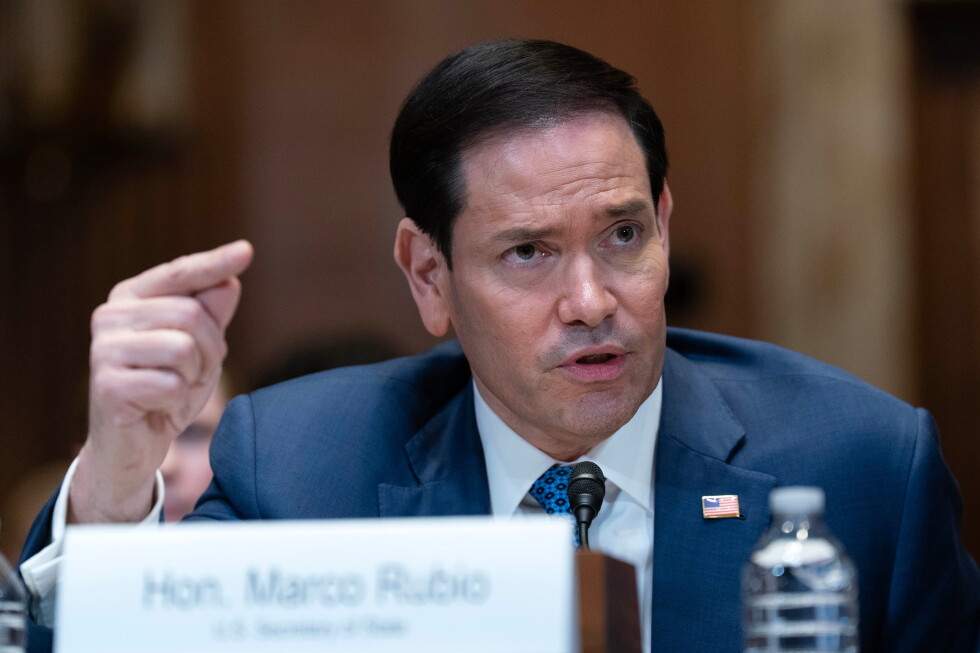
    In a public statement posted to social media Thursday, U.S. Secretary of State Marco Rubio leveled serious allegations against Beijing, claiming China had engaged in coercive “bullying” by disproportionately detaining Panama-flagged commercial vessels at Chinese ports in retaliation for the port seizure. Rubio argued that China’s actions, which saw detentions last between one and 10 days before vessels were released, undermine lawful global trade, destabilize critical international supply chains, raise operational costs for shippers, and erode trust in the rules-based global trading system. “The United States stands with Panama against any retaliatory actions against its sovereignty and will always support our partners in the face of bullying,” Rubio said.

    Data compiled by the Tokyo MOU, a regional port state control coordination body made up of 22 maritime authorities across the Asia-Pacific, appears to show a sharp upward spike in Panama-flagged vessel detentions at Chinese ports in March. Of the 124 total ships detained for inspection that month, 92 — nearly 75 percent — sailed under Panama’s flag. That marks a dramatic jump from earlier in the year: in February, Panama-flagged vessels accounted for just over 40 percent of detained ships (19 out of 45 total), and in January that share stood at just over 30 percent (23 out of 71).

    China has forcefully rejected the U.S. accusations, with Chinese Embassy Washington spokesperson Liu Pengyu arguing that repeated baseless claims from the U.S. only expose Washington’s own ambition to seize control of the Panama Canal. Liu did not directly address the recorded uptick in detentions in his public statement.

    This dispute is the latest flashpoint in a broader, long-running rivalry between Washington and Beijing for influence in Latin America and the Caribbean. The Trump administration has made curbing China’s growing economic and diplomatic sway in the Western Hemisphere a core foreign policy priority, a pledge Donald Trump first articulated during his initial presidential campaign, when he openly discussed the possibility of the U.S. retaking control of the strategically vital Panama Canal. The administration has ramped up U.S. engagement in the region more aggressively than any U.S. administration in decades, highlighted by the military raid that captured Venezuelan leader Nicolás Maduro in January.

    U.S. federal regulators have already begun monitoring the situation closely. Laura DiBella, chair of the Washington-based Federal Maritime Commission, confirmed the agency has been tracking detentions of Panama-flagged vessels in Chinese ports, and echoed Rubio’s criticism of Beijing’s actions. “Secretary Rubio’s statement highlights the disruptive effects of the government of China’s actions against Panama-flagged vessels,” DiBella said, adding that the commission “is not aware of any other country in recent history conducting vessel safety inspections and detentions in a punitive manner.” DiBella also revealed that China’s Ministry of Transport had summoned senior representatives from Danish shipping giant A.P. Moller-Maersk to Beijing for high-level talks, after Panama announced Maersk’s subsidiary APM Terminals would take temporary control of the two seized canal ports while a new long-term operating concession is awarded.

    Panama’s government has sought to de-escalate tensions, downplaying the geopolitical implications of the rising detentions. Panamanian officials have not yet responded to requests for comment on Rubio’s recent allegations, and have previously rejected claims that the detentions are tied to the canal port dispute between Beijing and Panama. In March, Panamanian Foreign Minister Javier Martínez acknowledged the increase in detentions but framed the checks as standard routine maritime safety procedures, noting that vessel detentions for inspection occur at ports across the world, regardless of a ship’s flag. “We want to maintain a respectful relationship with China,” Martínez added. Beijing has previously stated it would “take all measures necessary to firmly protect the legitimate and lawful rights and interests of Chinese companies” following the supreme court ruling that invalidated CK Hutchison’s concession.

    For Panama, a global leader in international ship registration that generates roughly $100 million annually in revenue from its flag registry, the dispute carries significant economic risks. José Digeronimo, former president of the Panama Maritime Chamber, warned that widespread punitive actions against Panama-flagged vessels could cause lasting damage to the country’s flagship maritime industry. Digeronimo compared ship registration to a shipowner choosing a travel passport, noting that operators choose registries that allow unimpeded access to the largest number of global ports. If China, the world’s largest exporter, begins imposing restrictions on vessels using the Panama flag, Digeronimo argued, shipowners will rapidly abandon the registry to avoid delays, threatening a critical source of government revenue for Panama.