标签: Asia

亚洲

  • Israel prevents worshippers from marking Good Friday at Holy Sepulchre

    Israel prevents worshippers from marking Good Friday at Holy Sepulchre

    Jerusalem’s holiest Christian site, the Church of the Holy Sepulchre, hosted a dramatically truncated Good Friday service this year, led by the Latin Patriarch of Jerusalem Pierbattista Pizzaballa, after sweeping Israeli access restrictions across the Old City of occupied East Jerusalem barred all public attendance.

    Traditionally, the annual Liturgy of the Passion of Christ at the basilica — widely venerated by Christians as the exact location of Jesus Christ’s crucifixion and burial — draws thousands of worshippers from across the globe. This year, however, only roughly 15 clergy members were permitted to participate in the ceremony. The restrictions that shuttered the site to the public also impacted Al-Aqsa Mosque, the third-holiest site in Islam, extending sweeping access limits across all major religious sites in the Old City.

    The limited Good Friday service follows a similar scaled-down Holy Thursday gathering led by Pizzaballa at the same church just one day prior. During his remarks at the Good Friday service, the patriarch drew direct links between the restricted worship, rising regional volatility tied to the recent US-Israeli military campaign against Iran, and growing threats to religious freedom in the holy city.

    “Outside, the doors of the Holy Sepulchre are closed,” Pizzaballa told the small gathering of clergy. “War has turned this place into a refuge, an inside cut off from an outside weighed down by tension.”

    The restrictions on worship come on the heels of a controversial incident that sparked global outcry just weeks earlier, when Israeli forces blocked Pizzaballa from reaching the Church of the Holy Sepulchre for Palm Sunday services. The patriarch and Father Francesco Ielpo, Custos of the Holy Land, were both denied entry to the site — a step that Jerusalem church authorities called unprecedented in centuries. Officials noted that the unprecedented denial of access to senior Catholic leaders set a dangerous precedent and ignored the spiritual sensibilities of more than 2 billion Christians worldwide who turn their focus to Jerusalem during Holy Week.

    The incident drew immediate official condemnation from multiple European governments, including France, Spain and Italy. Facing mounting international backlash, Israeli police announced that they would allow a “limited prayer framework” for the Good Friday and Easter observances, though restrictions remained far stricter than in any prior year in recent memory.

    Even with the adjusted limited access, many Palestinian Christians have expressed frustration with both the Israeli restrictions and the response from senior church leadership. Speaking to Middle East Eye on condition of anonymity over safety concerns, one Palestinian shopkeeper in the city argued that Pizzaballa should have taken a more public stand against the entry block for Palm Sunday. The shopkeeper said the patriarch should have challenged the blocking Israeli soldiers, and even held open-air prayers in the street if necessary, adding that church leaders were wrong to enter into negotiations with Israeli authorities over access to sites that fall under occupied territory.

    Israel has occupied East Jerusalem, including the Old City, since the 1967 Six-Day War, a occupation that the International Court of Justice reaffirmed in a 2024 ruling is illegal under international law. Since the launch of the US-Israeli assault on Iran weeks ago, the Old City has remained almost entirely closed to non-resident visitors. Israeli forces have maintained permanent checkpoints at all entry gates, strictly controlling access to all key religious sites.

    Al-Aqsa Mosque has remained fully closed to Muslim worshippers throughout this period, a restriction that was also in place for most of the holy month of Ramadan and during the Eid al-Fitr holiday last month. Israeli officials justify the sweeping access limits by citing public safety concerns linked to potential retaliatory Iranian missile attacks. While debris from intercepted Iranian missiles has caused minor damage in parts of Jerusalem, many Palestinians argue the far-reaching restrictions are actually a deliberate tactic to strengthen Israel’s unilateral control over the occupied Old City, a strategic site with profound global religious significance.

    This report was originally published by Middle East Eye, an outlet that provides independent, in-depth coverage of the Middle East, North Africa and surrounding regions.

  • US fighter jet shot down by Iran came from British base in Suffolk, says IRGC

    US fighter jet shot down by Iran came from British base in Suffolk, says IRGC

    For weeks, public attention has centered on the U.S. use of RAF Fairford in southwest England’s Gloucestershire as a launchpad for bombing missions targeting Iran. Now, a new high-stakes incident has pulled a lesser-known British military installation into the geopolitical crossfire: RAF Lakenheath, a large U.S. Air Force base in eastern England’s Suffolk county.

    On Friday, the Islamic Revolutionary Guard Corps (IRGC) announced its air defense systems had intercepted and shot down an American F-35 fighter jet operating over central Iran, claiming the aircraft belonged to a squadron permanently based at RAF Lakenheath. While U.S. military officials later confirmed to media outlets that an American warplane had indeed been downed in Iranian airspace, they corrected the aircraft type, stating it was an F-15E Strike Eagle rather than the stealth fifth-generation F-35. The UK Ministry of Defense has declined all requests for comment from Middle East Eye on the incident and Lakenheath’s operational role.

    This is not the first time Iranian officials have claimed a U.S. jet shootdown: in late March, Tehran’s claim of downing an F-35 was immediately denied by Washington. Following Friday’s announcement, Tasnim News Agency, an Iranian outlet with close official ties to the IRGC, published purported photos of the downed aircraft’s wreckage. According to the IRGC, a visible “LN” tail code on the debris confirms the jet was part of the 493rd Fighter Squadron under the 48th Fighter Wing, the permanent U.S. Air Force unit stationed at Lakenheath.

    To understand Lakenheath’s role in ongoing U.S. military operations against Iran, it is critical to outline the base’s status. The installation remains property of the UK Ministry of Defense but is leased long-term to the U.S. Air Force, and it hosts the largest American fighter operations on the European continent, centered on the 48th Fighter Wing. Recent weeks have seen a clear and unusual buildup of U.S. air power at the base: five F-35C stealth fighters were spotted landing at Lakenheath on March 24, followed Monday evening by a formation of 12 A-10C Thunderbolt II attack aircraft, commonly nicknamed the “Warthog” for its rugged design. The Warthog is purpose-built as a close air support and “tank buster” platform, and regional military sources report these aircraft have already been used to strike Iranian fast-attack craft and minelaying vessels operating near Iran’s coastline. The U.S. military has refused to confirm or deny these operational reports.

    Local anti-war activists monitoring the base added to the picture of heightened activity, stating that on the morning of April 2, they observed more than 20 military aircraft depart Lakenheath in a coordinated launch. A second Suffolk-based base, RAF Mildenhall, which supports global U.S. Air Force logistics and operations, has also seen a sharp spike in activity over the past week. On March 31, two U.S. EA-37B Compass Call electronic warfare aircraft, designed to disrupt enemy communications and air defenses, were photographed landing at Mildenhall.

    The growing U.S. use of British bases has come alongside a series of policy shifts from the UK government under Prime Minister Keir Starmer, and growing retaliatory threats from Tehran. In an interview with Times Radio Wednesday, Iranian Ambassador to London Seyed Ali Mousavi confirmed that Tehran is actively evaluating whether to launch retaliatory strikes against British military bases in response to their role in U.S. operations against Iran.

    When the U.S.-led campaign against Iran first began, the UK initially blocked American use of the joint UK-U.S. base at Diego Garcia in the Indian Ocean for strike missions. That position changed within 48 hours, when Starmer announced the U.S. would be permitted to use British bases for bomber strikes targeting Iranian missile sites, framing the decision as a purely defensive measure. Two weeks later, Starmer executed a second policy U-turn, approving U.S. use of British bases for broader strikes on Iranian targets to protect commercial shipping transiting the Strait of Hormuz.

    Despite Starmer’s repeated concessions to support U.S. military goals, former President and current U.S. leader Donald Trump has repeatedly launched public attacks against the Prime Minister, even going so far as to suggest the decades-long “special relationship” between the two countries is in serious jeopardy.

    On Thursday, UK Foreign Secretary Yvette Cooper convened a summit of more than 40 nations in London to coordinate a unified international response to the closure of the Strait of Hormuz, one of the world’s most critical maritime chokepoints. Before the IRGC effectively closed the corridor in early March, roughly 20% of the world’s global oil supply transited the strait annually. Following the summit, Cooper stated that the assembled nations would “comprehensively reject” any attempt by Iran to charge commercial vessels fees for passage through the waterway. She added that Iran must “not be allowed” to “hold the global economy hostage” and confirmed that participating nations had discussed the implementation of new, targeted sanctions intended to pressure Tehran to reverse course.

    In a response released Thursday afternoon, Iran’s foreign ministry announced it is working alongside Oman — which declined to attend the London summit — to draft a proposal for a post-war permit system for commercial vessels transiting the strait.

    This report was published by Middle East Eye, a media outlet focused on independent, in-depth coverage of the Middle East, North Africa and surrounding regions.

  • Over 100 US-based legal experts declare Trump’s strikes on Iran as possible war crimes

    Over 100 US-based legal experts declare Trump’s strikes on Iran as possible war crimes

    More than 100 American legal scholars and practicing legal professionals have signed an open letter arguing that the military campaign against Iran launched jointly by former U.S. President Donald Trump and Israel violates core tenets of international law, with multiple military operations rising to the level of potential war crimes. The letter asserts that the campaign was unlawful from its very commencement on February 28.

    “From its initiation, this military offensive stands as a clear violation of the United Nations Charter,” the document reads. “The actions of U.S. armed forces since the campaign began, paired with public remarks from senior U.S. government officials, raise urgent, credible concerns about breaches of international human rights law and international humanitarian law — including the commission of potential war crimes.”

    While the letter centers its criticism on the actions of the U.S. government, it also joins in condemning two distinct sets of unlawful actions: the Iranian government’s violent suppression of internal domestic dissent, and Tehran’s continued unpermitted strikes on civilian infrastructure using explosive ordnance in heavily populated civilian areas.

    The signatories emphasize the foundational importance of the principle that international law must apply equally to all nations, regardless of their global power and influence. They reject the rhetorical framing used by senior U.S. officials that seeks to minimize the importance of international laws governing armed conflict, calling this language “profoundly alarming and dangerously short-sighted.”

    “These claims, particularly when paired with the on-the-ground conduct of U.S. military forces, are eroding the international legal order that our professional lives have been dedicated to building and protecting,” the letter adds.

    The open letter also outlines the far-reaching human and economic costs of the ongoing campaign: it notes the operation has drained between $1 billion and $2 billion from U.S. taxpayers every single day, while inflicting catastrophic harm on Iranian civilians and regional stability across the Middle East. Thousands of civilian lives have been lost, the letter says, while regional ecosystems and national economies have been left severely damaged.

    The legal experts level two core layers of criticism: they challenge both the inherent illegality of the decision to launch the war, and the potentially unlawful conduct of military operations throughout the campaign. First, the group reaffirms a position widely held by legal experts since the offensive began: the attack cannot be justified under the international legal framework governing the right to self-defense.

    “The use of military force against a sovereign state is only permitted in two circumstances: an act of self-defense in response to an actual or imminent armed attack, or explicit authorization from the United Nations Security Council,” the signatories explain. “The Security Council never granted authorization for this attack. Iran never launched an armed attack against either the United States or Israel.” They add that no credible evidence exists to demonstrate that Iran posed an imminent armed threat that would legally justify a pre-emptive self-defense claim.

    Beyond the question of the war’s legality at inception, the letter documents multiple alleged violations of the laws of armed conflict. These include U.S. strikes targeting civilian individuals and infrastructure, among them non-military Iranian politicians, critical energy facilities, and civilian desalination plants that supply drinking water to Iranian communities.

    The letter cites data compiled by the Iranian Red Crescent documenting strikes on more than 67,000 civilian sites across Iran between February 28 and March 23. That tally includes 498 damaged or destroyed schools and 236 health care facilities. The data also confirms that at least 1,443 Iranian civilians have been killed in the joint strikes, including 217 children.

    Of particular note is the February strike on a primary school in the Iranian city of Minab, which killed at least 175 people, the vast majority of whom were young schoolgirls. The letter concludes this strike “likely violates international humanitarian law,” adding that “if evidence confirms that those responsible for the strike acted with reckless disregard for civilian life, it may also qualify as a war crime.” While the Trump administration has denied U.S. involvement in the attack, a preliminary U.S. government investigation has already confirmed that U.S. military forces carried out the strike, and that the school was targeted based on out-of-date intelligence.

    The legal experts also draw attention to inflammatory public remarks made by U.S. Secretary of War Pete Hegseth, including his statement that “We will keep pushing, keep advancing, no quarter, no mercy for our enemies.” Under both U.S. military law and longstanding international military law, declaring that no quarter will be given — a policy that means refusing to spare the lives of combatants who have surrendered — is explicitly prohibited. The signatories note that ordering or threatening a policy of no quarter is explicitly classified as a war crime under international criminal law.

    The letter also denounces additional remarks from Hegseth, who has publicly stated the U.S. military does not abide by “stupid rules of engagement,” as well as a comment Trump made in January stating “I don’t need international law.” The experts add that repeated threats from Trump to attack Iranian energy infrastructure would also qualify as war crimes if carried out.

    Under international law, deliberate strikes on civilian energy infrastructure are strictly prohibited, the letter explains. If an energy facility serves both civilian and military purposes, it can only be classified as a legitimate military target if it makes an “effective contribution to military action” and an attack on it would deliver a “definite military advantage.” Regardless of classification, all strikes must adhere to the international legal principles of proportionality and precaution to avoid unnecessary civilian harm.

    The experts also issue a special warning about potential strikes on Iranian nuclear power plants, noting that such facilities require extraordinary care due to the catastrophic risk that a breach could release radioactive material, endangering the lives of millions of civilians across the region.

    Beyond individual strikes and public statements, the legal experts raise broader concerns about policy changes pushed by Hegseth since he took office as U.S. Secretary of Defense that are designed to weaken U.S. compliance with international law. Under his leadership, the letter says, multiple senior military legal advisors have been fired, and the judge advocates-general of the Army, Navy and Air Force have all been replaced. This systemic shakeup has gutted independent legal oversight of U.S. military operations, the experts argue.

    Additionally, Hegseth’s 2026 U.S. National Defense Strategy removes all explicit references to civilian protection and adherence to international law. “We are gravely concerned that the conduct and threats outlined here are causing serious harm to civilians in the Middle East, and that they also contribute to escalating the conflict, damaging the environment and the global economy, and that they risk degrading the rule of law and fundamental norms that protect every nation’s civilians,” the letter states.

    “Public statements by senior officials indicate an alarming disrespect for the rules of international humanitarian law accepted by states, and which protect both civilians and members of the armed forces,” the authors continue. In closing, the group issued a formal call to action: “We urge U.S. government officials to uphold the UN Charter, international humanitarian law, and human rights law at all times, and to publicly make clear U.S. commitment to and respect for norms of international law.”

  • Vietnam’s Israel defence ties complicate historic Palestinian solidarity

    Vietnam’s Israel defence ties complicate historic Palestinian solidarity

    For decades, Vietnam’s public stance on the Israeli-Palestinian conflict has been rooted in anti-imperialist solidarity forged by its founding father Ho Chi Minh. Today, that long-standing commitment is colliding with a dramatic shift in Hanoi’s geopolitical and economic priorities, as the Southeast Asian nation builds increasingly close military and trade relations with Israel – creating a visible tension that divides even Vietnamese public discourse.

    Vietnam’s support for Palestinian self-determination traces back to the Cold War era, when both Hanoi and the Palestinian national liberation movement positioned themselves at the forefront of global anti-colonial and Third World liberation struggles. In 1968, Hanoi formalized ties with the Palestine Liberation Organization (PLO), and a year later Ho Chi Minh issued a forceful public condemnation of Israeli aggression, reaffirming unwavering backing for the Palestinian people’s struggle. This solidarity extended far beyond rhetoric: Yasser Arafat, the iconic PLO leader, openly drew inspiration from Vietnam’s revolutionary victory against Western powers, dispatching groups of Palestinian fighters to Hanoi to study the guerrilla warfare tactics that brought victory over French and U.S. forces. For Vietnam, this alliance also carried strategic value: aligning with the Palestinian cause cemented the country’s reputation as a leading voice of anti-imperialism and boosted its standing within the Non-Aligned Movement, according to Carlyle Thayer, emeritus professor at the University of New South Wales and a veteran expert on Vietnamese defence policy. Even in the wake of the October 7, 2023 Hamas attack and Israel’s subsequent military campaign in Gaza, Hanoi has stuck to its long-standing positions: it has repeatedly affirmed support for a two-state solution, voted in favor of United Nations resolutions condemning Israeli occupation of Palestinian land, and repeatedly called for an immediate ceasefire in Gaza.

    But Vietnam’s relationship with Israel has evolved dramatically over the past three decades, transforming from distant diplomatic outreach to robust, multi-faceted cooperation rooted in shared strategic interests. Curiously, the two countries’ earliest interactions date back to 1946, when Ho Chi Minh held a brief meeting with David Ben-Gurion, Israel’s future founding prime minister, in Paris, and even floated the idea of hosting a Jewish government-in-exile headquarters in Hanoi. As Zionism evolved into a settler-colonial project, however, Ho Chi Minh and the Vietnamese nationalist movement quickly distanced themselves from Ben-Gurion’s agenda. Full formal diplomatic ties were only established in 1993, and meaningful military cooperation did not emerge until the 2010s, when Hanoi began seeking to diversify its arms suppliers away from its long-time top provider Russia.

    Since that shift, Israeli defence exports to Vietnam have grown exponentially. Today, Israel ranks as Vietnam’s second-largest defence supplier, trailing only Russia, and Vietnam has become one of the top five importers of Israeli arms globally since 2015, according to the Database of Israeli Military and Security Export (DIMSE). Hanoi has acquired a wide range of advanced Israeli military systems in recent years, including Spyder air defence batteries, Heron surveillance drones, and Galil ACE assault rifles produced at a $100 million Israeli-owned manufacturing facility opened in 2011. Most recently, in late January 2026, Vietnam’s defence ministry is reported to have signed a $250 million contract with Israeli state-owned defence giant Rafael Advanced Defence Systems to acquire and locally produce the Spike Firefly loitering munition, also called the “Maoz” suicide drone. While Hanoi has not officially confirmed the deal, Vietnamese state media has already published pieces praising the weapon’s battlefield performance in Gaza – where Rafael has deployed the system to test its capabilities, and has used its operational success in marketing materials to arms buyers around the world, including Vietnam. In 2025, Hanoi finalized a $680 million deal to purchase two spy satellites from Israel Aerospace Industries, marking another major milestone in defence cooperation.

    For Vietnam, Israeli arms hold unique strategic advantages that set them apart from alternative suppliers. Unlike Western weapons, Israeli military sales rarely come with binding political caveats that limit how the systems can be used, and they frequently include generous technology transfer provisions that allow Vietnam to build and modify weapons domestically. Unlike Soviet-designed arms, which Vietnam’s primary potential strategic rival China knows intimately, Israeli systems provide Hanoi with a technological edge in regional disputes. Already, Israeli-made EXTRA coastal rocket launchers have reportedly been deployed to Vietnamese bases in the disputed Spratly Islands in the South China Sea, according to open-source weapons trackers.

    Defence cooperation is not the only area of growing ties: bilateral economic relations have expanded rapidly in recent years. A bilateral free trade agreement between Hanoi and Tel Aviv entered into force after October 2023, pushing total two-way trade to $3.75 billion in 2025. In January 2026, Israeli airline Arkia launched direct commercial flights between Tel Aviv and Hanoi – a connection that could also carry strategic defence benefits, Thayer notes, allowing for rapid shipment of sensitive small defence components between the two countries.

    This shift toward closer ties with Israel aligns with Hanoi’s modern “bamboo diplomacy” doctrine, a foreign policy framework that prioritizes flexibility, pragmatism, and the advancement of core national interests over ideological alignment. However, the growing defence relationship has sparked criticism from within Vietnam, with many observers arguing that it represents a betrayal of the country’s revolutionary commitment to Palestinian liberation.

    “The Vietnamese state has betrayed a lot of its revolutionary promises in order to chart a more neoliberal relationship,” explained Evyn Le Espiritu Gandhi, an associate professor at UCLA who studies Vietnamese transnational solidarity movements. Since the Doi Moi economic reforms of the 1980s, which shifted Vietnam from a centrally planned economy to a socialist-oriented market system, economic growth has replaced revolutionary ideology as the primary source of legitimacy for the ruling Communist Party, a shift that has reshaped all areas of foreign policy.

    A grassroots pro-Palestine movement has emerged online among Vietnamese youth, operating within the constraints of the country’s tightly controlled civic space. The movement’s core work centers on filling information gaps about the Gaza conflict left by state-aligned mainstream media, and it has gained significant traction on social media platforms. For many young Vietnamese activists, the contradiction between Hanoi’s rhetorical support for Palestine and its deepening military ties to Israel is impossible to ignore. “For me, nationalism is heritage, the memory that we inherit,” one prominent activist with more than 20,000 Facebook followers told Middle East Eye. “But to some, nationalism is development, economy, national defence, regardless of the sacrifice of our anti-colonial history.”

    From the perspective of Hanoi’s pragmatic bamboo diplomacy, there is no inherent contradiction in this balancing act, Thayer argues. “The approach is dialectical,” he explained. Vietnam is willing to defend Palestinian sovereignty on the global stage as long as doing so does not conflict with its core economic and security interests. This flexible, interest-driven approach has guided Hanoi’s recent participation in other high-profile global initiatives, including its decision to quickly join the founding membership of U.S. President Donald Trump’s “Board of Peace”, with Communist Party chief To Lam traveling to the U.S. in February 2026 to attend the group’s first meeting and pledging increased purchases of American goods to strengthen bilateral ties.

    Now, as the United States and Israel expand conflict into Iran, Vietnam’s decades-long pursuit of steady economic growth is increasingly colliding with the anti-imperialist legacy that once defined the country’s global identity – leaving Hanoi to navigate a precarious balancing act between its history and its current ambitions.

  • Female runners conquer mountainous trail in Yunnan

    Female runners conquer mountainous trail in Yunnan

    In late March 2026, against the dramatic, rugged backdrop of Tengchong’s mountainous terrain in southwest China’s Yunnan province, a historic moment unfolded for women’s trail running at the 2026 Mt. Gaoligong Ultra. Chi Lingjie, a 35-year-old runner hailing from Shandong province in northern China, crossed the finish line first to claim the top title in the women’s 168-kilometer race, cementing her victory over one of the world’s most challenging long-distance trail courses.

    Long dismissed for decades as a male-dominated endurance sport, long-distance trail running is undergoing a quiet transformation, as growing numbers of elite and amateur female runners showcase their skill, grit, and stamina on some of the planet’s toughest courses. This year’s Mt. Gaoligong Ultra drew competitors from around the globe, including international runners Sonia Ahuja and Andrea Kooiman from the United States, alongside Ren Chunming, a Yunnan-based car salesperson and amateur runner who also joined the women’s field.

    Beyond the race results, competitors gathered to open up about their personal motivations for pushing their limits in trail running, and the unique strategies that have helped them thrive in a sport long defined by male participation. The event offered a powerful platform to highlight the growing influence and achievement of women in endurance sports, breaking long-held stereotypes about gender and physical endurance. More content including original video interviews with competing runners is available on China Daily’s official platforms.

  • Min Aung Hlaing elected Myanmar’s president

    Min Aung Hlaing elected Myanmar’s president

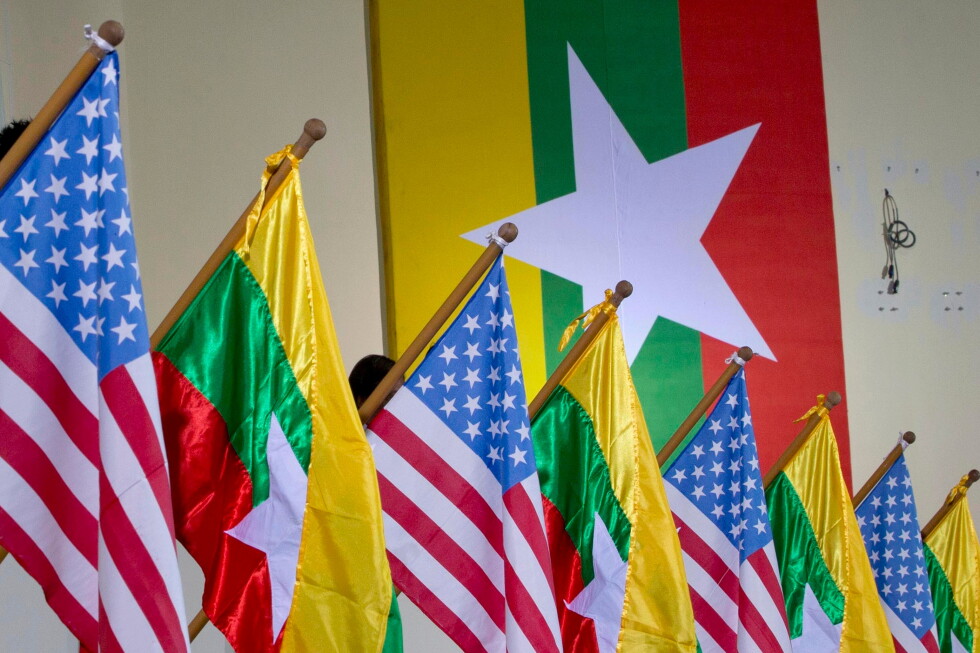
    In a landmark electoral vote held in Myanmar’s capital Nay Pyi Taw on Friday, junta leader Min Aung Hlaing has secured a decisive victory in the country’s presidential election, earning more than half of all votes cast by the Union Parliament, according to a Xinhua update published on April 3, 2026.

    The vote unfolded through the country’s Presidential Electoral College, a legislative body made up of all sitting Union Parliament representatives. A total of 584 members of the Electoral College attended Friday’s voting session, which drew three competing candidates each nominated through different parliamentary blocs under Myanmar’s current electoral framework.

    Under the country’s existing system, three vice presidents are first selected to serve as the only eligible candidates for the presidency. Earlier that week on Tuesday, Min Aung Hlaing, U Nyo Saw, and Nan Ni Ni Aye had been confirmed as the three vice presidents, and by Thursday, the Union Parliament had completed mandatory qualification reviews, clearing all three to appear on the presidential ballot.

    When votes were counted, Min Aung Hlaing — who was put forward as a candidate by members of the Pyithu Hluttaw, Myanmar’s lower parliamentary house — collected 429 votes, a clear majority of the 584 ballots cast. His closest competitor, U Nyo Saw, who ran as a representative of the joint military caucus from both parliamentary houses, secured 126 votes. The third candidate, Nan Ni Ni Aye, who received a nomination from members of the upper parliamentary house, the Amyotha Hluttaw, won 29 votes to round out the results. The outcome of the election formalizes Min Aung Hlaing’s assumption of the country’s highest office, capping a weeks-long electoral process laid out by the country’s current legislative structure.

  • China’s Communist Party investigates ex-Xinjiang leader Ma Xingrui

    China’s Communist Party investigates ex-Xinjiang leader Ma Xingrui

    BANGKOK (AP) — In an announcement made Friday, the Central Commission for Discipline Inspection, the top anti-graft watchdog of the Communist Party of China, confirmed that it has launched a formal investigation into Ma Xingrui, a former top regional party official and sitting member of the party’s Central Committee, over suspected violations of disciplinary rules and national law.

    Ma, who has held a series of high-level leadership positions across China, served as the Communist Party Secretary of the northwestern Xinjiang Uyghur Autonomous Region between 2021 and early 2025. Prior to taking on the top role in Xinjiang, he held posts including director of the National Ethnic Affairs Commission and deputy Communist Party Secretary of southern China’s Guangdong Province. As of the announcement, no specific details have been released regarding the nature of the alleged violations linked to Ma.

    The investigation of Ma marks the latest high-profile leadership shakeup within China’s senior ranks this year. Back in January, Chinese leader Xi Jinping oversaw the removal of the country’s top military general from his post, in a move that drew widespread international attention.

    Ma was actually replaced as Xinjiang’s top party official by Chen Xiaojiang back in July 2024, months before the formal investigation was announced. Xinjiang has long been a region at the center of global controversy, due to a years-long Chinese government campaign that has been widely criticized by international observers and human rights groups.

    For years, international reporting and investigations have documented that Chinese authorities detained over 1 million ethnic minority groups, predominantly Uyghur Muslims, in a network of extrajudicial detention camps across the region. Beijing has repeatedly defended the policy, framing it as a necessary counterterrorism measure aimed at addressing violent attacks carried out by a small faction of Uyghur extremist groups.

    By the time Ma took up his post as Xinjiang’s party secretary in 2021, Beijing announced that it had closed the vast majority of the original detention centers. But reporting from the Associated Press, based on leaked internal information, has confirmed that many former camp facilities were converted into formal, prison-like facilities. Documentation shows that thousands of Uyghur detainees have been transferred to these facilities to serve long criminal sentences, which independent legal and policy experts have widely described as baseless, politically motivated charges.

    Earlier this year in March, China’s national legislature passed a new national-level ethnic affairs law. Independent analysts who study the region say this new law formalizes and codifies the government’s long-running assimilationist policies targeting ethnic minority communities across the country, building on incremental policy changes that have been rolled out at the provincial level in Xinjiang and other regions with large ethnic minority populations over the past decade.

  • China says peace talks between Afghanistan and Pakistan are advancing

    China says peace talks between Afghanistan and Pakistan are advancing

    Border tensions between Pakistan and Afghanistan’s ruling Taliban movement that have killed hundreds of people in recent months have moved toward diplomatic resolution, with Beijing announcing Friday that mediated peace talks between the two sides are steadily advancing. The development comes just 48 hours after representatives from Islamabad and Kabul restarted negotiations in Urumqi, a major city in northwest China, ending a weeks-long pause in dialogue sparked by escalating armed clashes.

    China’s Foreign Ministry spokesperson Mao Ning confirmed that Beijing has been working behind the scenes to bring the two rival parties to the negotiating table, coordinating through multiple channels and across various levels of government to create a viable framework for dialogue. “Since the recent escalation of the Pakistan–Afghanistan conflict, China has been mediating and promoting talks in its own way, maintaining close communication with both sides through multiple channels and at various levels, and creating conditions and providing platforms for dialogue”, Mao told reporters during a regular press briefing.

    Mao added that all three sides have agreed to concrete working arrangements for the talks, including protocols for media coverage, though she declined to share further details on the negotiation agenda or potential confidence-building measures. Both Pakistan and Afghanistan have expressed support for China’s mediation efforts, a development Mao characterized as a positive step forward. “Both countries attach importance to and welcome China’s mediation efforts, and are willing to sit down again for talks, which is a positive development”, she said.

    The diplomatic push comes against a backdrop of persistent unrest that has rocked the shared border region. Even as negotiators convened in Urumqi on Wednesday, a deadly attack underscored the volatility of the security situation: late Thursday, a suicide bomber drove an explosives-packed vehicle into a police station in Bannu District, northwest Pakistan, killing at least five officers and leaving multiple others injured. No group immediately claimed responsibility for the attack, though Pakistan has grappled with a sharp rise in insurgent violence in recent years, with the majority of major attacks claimed by the Tehrik-i-Taliban Pakistan (TTP), commonly known as the Pakistani Taliban.

    The TTP is a separate militant organization from the Afghan Taliban that rules Kabul, but the two groups maintain close ideological and operational alliances. The Afghan Taliban seized full control of Afghanistan in 2021 following the chaotic withdrawal of U.S.-led coalition forces that had occupied the country for 20 years. Islamabad has repeatedly accused the Afghan Taliban government of allowing the TTP to operate safe havens from which to launch cross-border attacks into Pakistani territory, a charge the Kabul administration has consistently denied.

    Large-scale open fighting between the two neighboring states erupted in February, after the Taliban government in Kabul announced that Pakistani military forces had launched airstrikes and ground operations across multiple Afghan regions, resulting in heavy civilian casualties. Islamabad responded that its strikes were exclusively targeting TTP militant hideouts, and later confirmed it was engaged in open armed conflict with the Afghan Taliban government. The months of clashes that followed have left hundreds of people, most of them civilians, dead, raising international concerns about a broader destabilization of South Asia.

  • Fierce competition takes flight

    Fierce competition takes flight

    Nestled along the border between Guangxi Zhuang Autonomous Region and Yunnan Province, Napo County has emerged as a premier destination for China’s fast-growing community of birdwatching enthusiasts, hosting a competitive three-day bird race that drew teams of skilled observers from across the country in late March 2026.

    Among the 15 competing teams was “Cranes Above the Clouds,” a four-person squad led by 55-year-old He Jianzhu, a recently retired birding lover based in Kunming, Yunnan. He first fell in love with birdwatching in 2018, after spotting photographers capturing a striking white-throated kingfisher near her residential park. Since then, she has chased avian sightings across China and competed in multiple bird races, jumping at the chance to register for the Napo event.

    “Napo is only a few hours’ drive from my home, and it’s long been famous among Chinese birders for its incredible diversity of bird life,” He explained. “Even though I’d never visited before, I knew this was an opportunity I couldn’t pass up.” She quickly assembled her team, reuniting with past racing partners Dai Han and Xu Yongbin, a veteran birder, and adding Guo Zhichao, a talented young birder from Hainan Province introduced through a mutual friend. After submitting their application online via the event’s open registration, the group was thrilled to secure one of the limited competitive spots.

    Unlike casual birdwatching, which prioritizes slow observation and high-quality wildlife photography, bird races are fast-paced, team-focused competitions. Participants race against the clock to identify and document as many distinct bird species as possible within a fixed geographic boundary and limited time frame—this year’s Napo race spanned three days, from March 26 to 28. He acknowledges that the format is not for everyone: “Many birders shy away from races because the schedule is extremely tight, you often have to team up with people you don’t know well, and the whole experience is physically draining. But for me, there’s nothing like it. In just two or three days, you get to see a huge range of species, explore some of the most stunning wild habitats in the country, and connect with and learn from other experienced enthusiasts.”

    Securing a spot at top-tier races like the Napo event is no simple feat. As He noted, competitive events in well-known birding hotspots are oversubscribed, and active participation in community conservation work—such as contributing to public bird sighting reports managed by the Rosefinch Center, the race’s co-organizer—is often a key prerequisite for entry. The Rosefinch Center, a national non-profit dedicated to advancing birdwatching and avian conservation across China, partnered with Napo’s local government to host the race as part of the broader Napo Bird-watching Festival.

    The rising popularity of competitive bird races across China over the past decade reflects three key shifts: a dramatic expansion of the domestic birdwatching community, growing public awareness of ecological conservation and outdoor recreational activities, and the role of social media in connecting enthusiasts, coordinating meetups, and sharing rare sightings across regions. For participants like He, events like the Napo bird race are more than just a competition—they are a celebration of China’s rich biodiversity and a shared passion for birdlife among a fast-growing community of observers.

  • New forces reshape how China buys

    New forces reshape how China buys

    As China embarks on its 15th Five-Year Plan (2026-2030), a sweeping transformation is unfolding in the country’s consumer market, driven by the strategic push to cultivate new quality productive forces. Integrated into the national plan’s core goal of high-quality development, these emerging forces — spanning artificial intelligence integration, smart manufacturing, data-centric industries, and green technology — are steering the nation away from traditional mass consumption toward a new era of personalized, premium, and sustainable purchasing. Independent analysts and policy experts across the Asia-Pacific have outlined the far-reaching impacts of this shift, detailing how technological innovation is rewiring both production patterns and consumer expectations.

    Anna Rosario Malindog-Uy, vice president of Manila-based think tank the Asian Century Philippines Strategic Studies Institute, notes that cutting-edge tools like AI and smart manufacturing have dramatically lowered the cost of customized production, allowing brands to rapidly respond to niche market demands while lifting overall product quality. This enabling environment, she explains, is pushing consumers to shift their priorities from purchasing more goods to seeking more selective, higher-quality offerings that align with individual values and needs.

    “China’s consumer future is not about buying more; it’s about buying better, smarter and more meaningfully,” Malindog-Uy said. She projects that consumer demand will continue to grow around three key trends: selective premiumization, AI-powered personalized experiences, and green, health-focused products and services.

    Peter T.C. Chang, a research associate at the Malaysia-China Friendship Association, echoes this assessment, confirming that new quality productive forces are accelerating the transition from one-size-fits-all mass consumption to tailored, high-end consumption. He argues that China’s consumer market is evolving into a purpose-driven ecosystem where purchasing choices reflect personal identity and lifestyle values, not just basic need.

    Thanks to flexible production lines, AI-powered demand forecasting, and intelligent quality control systems, manufacturers can now deliver mass customized goods without charging significant extra costs, Chang explained. He points to Chinese home appliance giant Haier as a leading example: the company allows customers to co-design custom refrigerators via online platforms, and its smart factories fulfill each unique order with the same efficiency that once only applied to large-scale mass production. This innovation upends the long-held trade-off between affordability and individualization, creating a new consumption model that delivers both personalization and quality, Chang added.

    The 15th Five-Year Plan outline, approved by Chinese lawmakers during the annual Two Sessions legislative and political advisory meetings earlier this year, also ties this technological shift to national environmental goals. As part of the Beautiful China Initiative, the government has pledged to continue its anti-pollution campaign, advance ecosystem restoration, speed up the adoption of eco-friendly production and lifestyles, and keep the country on track to meet its 2030 carbon peaking target. Green technology and smart systems are central to this effort, reshaping not just what consumers buy, but how they use resources.

    Yang Muyi, senior analyst at global energy policy think tank Ember, explains that AI and connected smart devices are revolutionizing household energy consumption. As clean energy production becomes more distributed and variable across time of day, AI can help households and local communities adjust their energy use patterns to match supply. For example, a home with rooftop solar panels and battery storage can store excess power when generation is high, then share or trade that surplus within a local community. Widespread smartphone penetration across China means mobile apps can already facilitate these local solar energy exchanges, Yang added. “AI may matter less in telling people what to buy, and more in helping them use energy in a smarter, more efficient way,” he noted.

    Beyond energy, advanced technologies such as AI and biotechnology are also meeting growing consumer demand for healthier and more sustainable consumption patterns, Chang said. AI-powered precision nutrition and connected smart home appliances can deliver personalized wellness solutions, from customized dietary supplements to tailored home health routines, while blockchain-tracked supply chains allow consumers to independently verify the environmental footprint of the products they purchase.

    Digital infrastructure and smart logistics also carry transformative potential for reducing inequality in China’s consumer market, Chang added. These tools can bring high-quality, customized goods to underserved rural areas, helping narrow the persistent consumption gap between urban and rural regions. However, he emphasized that these benefits are not automatic: their full impact depends on targeted supporting infrastructure and inclusive policies, with sustained investment needed in rural digital networks, last-mile logistics delivery, and public digital literacy training. “When paired with inclusive policies, AI and smart manufacturing can serve as powerful tools for more balanced consumption growth,” Chang said.

    One example of this inclusive growth in action is the pairing of smart manufacturing with e-commerce platforms, which has opened access to personalized, high-quality goods for rural consumers that were previously unavailable in local markets. Chang cites Chinese online retailer Pinduoduo’s Duo Duo Farms initiative, which uses AI to connect small-scale rural farmers directly with urban consumers. Beyond improving farmer incomes, the initiative also encourages rural households to purchase customized agricultural equipment and home appliances at affordable prices via group-buying models, bringing the benefits of personalized consumption to underserved communities.