标签: Asia

亚洲

  • Underwater robots battle real-sea blues to boost marine ranching in China

    Underwater robots battle real-sea blues to boost marine ranching in China

    Off the rugged coast of Zhuhai, Guangdong, choppy grey-green South China Sea waters have become an unexpected testing ground for a technological revolution that could reshape China’s rapidly growing marine aquaculture industry. In late March, 16 teams of engineers and researchers gathered here for the final round of the first-ever Guangdong-Hong Kong-Macao Greater Bay Area Marine Underwater Robot Application Challenge – a competition unlike any before, held not in controlled laboratory tanks or calm shallow coastal bays, but in a fully operational working marine ranch.

    This shift from controlled testing environments to unforgiving open-sea conditions is no trivial change. Organizers designed the competition to directly tackle the most persistent operational challenges that have long held back marine ranching operators, turning industry pain points into a catalyst for building more cost-effective, reliable, commercially viable robotic solutions that can power a smarter, more resilient ocean economy.

    Over two days of competition, participating teams put their custom-built machines through real-world tasks that mirror the daily work of marine ranch crews: recovering misplaced submerged mooring anchors, harvesting shellfish from the seabed, and removing accumulated biofouling from aquaculture netting. Unpredictable offshore currents, choppy swells, and high water turbidity – conditions that often disrupt sensitive underwater electronics – put every robot’s capabilities to a rigorous, unforgiving test.

    Judges emphasized that the open-sea setting pushes developers to prioritize practical, industry-ready performance over flashy lab prototypes. Teams are forced to optimize their designs for three critical industry requirements: cost-effectiveness, long-term reliability, and user-friendliness for on-site ranch workers, clearing key barriers to rapid commercial rollout.

    The need for these solutions is far from hypothetical. In 2025, Typhoon Ragasa devastated local marine ranch operations, leaving Yuehe Fisheries, a major local producer, with more than 700 lost iron anchors scattered across the seabed. Hiring human divers to recover the anchors is prohibitively expensive, leaving most of the valuable equipment unrecovered to date.

    “That’s nearly 1 million yuan (around $145,000) in direct losses,” explained Lin Jincheng, general manager of Yuehe Fisheries. Lin noted that multiple competing teams already demonstrated the exact capabilities the industry desperately needs: strong autonomous operation and reliable anti-interference performance in messy, real-sea conditions.

    For winning competitors like Shenzhen Hanhai Huafan Cleaning Robotics, a specialized underwater cleaning robot developer based in nearby Shenzhen, the event has made the massive market opportunity for practical underwater robotics crystal clear.

    Cai Qianxia, the company’s marketing manager, explained that its proprietary cleaning robots can operate around the clock, delivering efficiency more than 10 times higher than traditional manual cleaning methods. “Before, if you wanted to clean even a small sailboat hull, you either had to hire expensive divers or wait weeks for a dry dock slot,” Cai said. “That takes your vessel out of service, costs you money, and there are countless other limitations that robots eliminate.”

    In the competition’s inspection and monitoring category, a team from Westlake University took home first prize by integrating underwater embodied AI with large language models and advanced multimodal perception technology. Team member Wang Zhangyuan noted that the competition broke down the long-standing barrier between lab research and industrial demand, bringing algorithms out of controlled lab environments and into the real-world scenarios where they are needed most.

    The Zhuhai challenge was intentionally built from the ground up to respond directly to unmet industry needs. Before the competition opened, organizers published a 150-million-yuan “opportunity list” of real operational requirements from marine ranch operators, covering everything from aquaculture net inspection to lost debris retrieval and ecological monitoring. That request for solutions has already translated to more than 100 million yuan in potential orders from 17 marine ranch developers across Guangdong province. Four of the competition’s top award-winning teams have already signed preliminary agreements to establish local operations in Zhuhai’s Xiangzhou District.

    This event fits into a much broader national push to develop China’s blue economy and deep-sea technology sector. China’s domestic underwater robotics market surpassed 10 billion yuan in 2024, and industry forecasts project it will grow to 40 billion yuan by 2027. For the first time, the Chinese government identified “deep-sea technology” as a strategic emerging industry in its 2025 Government Work Report, unlocking new investment and policy support for the sector.

    Zhuhai, a coastal city with 9,348 square kilometers of maritime territory under its jurisdiction, has emerged as a leading hub for this development. By the end of 2025, the city had built 10 large truss-type marine ranch platforms and 452 gravity net cages, and is home to 40 oceanographic innovation platforms and 140 high-tech marine enterprises.

    A senior official from the Zhuhai Municipal Marine Development Bureau explained that the competition will accelerate the translation of underwater robotic research into real-world commercial applications, while strengthening connections across the entire “industry-academia-research-application-finance” innovation chain. The end goal is to upgrade China’s marine ranching sector and cement Zhuhai’s position as a leading regional marine economy hub.

  • Syrian government understating kidnappings of Alawite women: report

    Syrian government understating kidnappings of Alawite women: report

    In the months after Syria’s transitional government ousted former President Bashar al-Assad in December 2024, a bombshell new investigation by *The New York Times* has confirmed that authorities in Damascus are drastically underreporting widespread kidnapping, violent assault, and sexual abuse targeting women and girls from Assad’s native Alawite community.

    Since taking power, the administration led by President Ahmed al-Sharaa has publicly acknowledged only one confirmed case of an Alawite woman being abducted. But the Times’ on-the-ground investigation, which relied on anonymous victim testimony to protect survivors from further harm, has verified at least 13 separate kidnappings of Alawite women and girls. Of those confirmed cases, five survivors reported being gang-raped during their captivity, and two of those victims returned to their families after being released with unplanned pregnancies resulting from the abuse.

    The Times’ findings reinforce earlier independent documentation of the crisis. Human rights watchdog Amnesty International warned in July 2025 that it had corroborated credible reports of at least 36 comparable kidnappings, while the Syrian Feminist Lobby has recorded 80 Alawite women and girls as missing since the start of 2025.

    Survivors and observers have offered differing accounts of the motive behind the attacks. Multiple kidnapped women told investigators they experienced explicitly sectarian abuse, with their captors framing the attacks as revenge for the Alawite community’s historical alignment with the Assad regime. Other analysts have characterized many of the incidents as criminal enterprises driven by ransom demands. In one documented case, a family paid kidnappers $17,000 to secure their relative’s release, only for the abductors to keep the money and refuse to free her. Another 24-year-old survivor described being held for three weeks in a squalid, unkempt room, where she was repeatedly raped, beaten, had her head and eyebrows shaved as a humiliation, and cut multiple times with razor blades. She was ultimately freed only after her parents paid a large ransom.

    Tensions between Syria’s new ruling leadership and the Alawite community have remained at a fever pitch ever since Assad’s ouster and subsequent exile to Moscow. Just last year, small-scale armed attacks on transitional government security forces by suspected Assad loyalists in the coastal Alawite stronghold of Latakia escalated into large-scale brutal sectarian violence. A separate investigation by Reuters later traced the bulk of the resulting civilian deaths back to Damascus-based security officials, with at least 1,500 Alawite civilians killed in the crackdown.

    When contacted by *The New York Times* for comment on its latest findings, Interior Ministry spokesman Nour al-Din Baba claimed the government could not respond to the investigation unless the outlet turned over the full names of all interviewed victims. The newspaper declined this request, having granted formal anonymity to all survivors to protect them from retaliation. Baba reaffirmed the government’s stance, standing by an official November 2025 inquiry that examined 42 reported kidnappings and concluded only one of the cases was “authentic.”

    The roots of Syria’s ongoing sectarian tension stretch back to the start of the country’s 13-year civil conflict, which began in 2011 when Assad regime forces opened fire on peaceful pro-democracy protestors. The war ultimately left hundreds of thousands of Syrians dead and millions more displaced internally across the country and as refugees abroad. While a portion of the Alawite community initially backed the pro-democracy movement, widespread government persecution of dissent and growing fears over sectarian extremist groups within the opposition pushed most Alawites to align with Assad over the course of the war.

    Following Assad’s overthrow, Alawite community leaders have repeatedly called for international protection from targeted sectarian revenge attacks. The issue flared into public view this week during al-Sharaa’s official visit to London, where he was met by large protests organized by Alawite and Alevi (a related sect primarily found among Turkey’s Kurdish and Turkish communities) activists. Protesters accused al-Sharaa’s transitional government of enabling what they describe as systematic violence amounting to genocide against Alawite civilians.

    Maher Hamadouch, director of the UK-based Alawite advocacy group Syrian Coastal Society, argued that hosting al-Sharaa in the United Kingdom sends a dangerous message to the international community that accountability for human rights abuses can be ignored. “At a time when Syrians continue to endure displacement, insecurity, and marginalisation, allowing such a figure to enter the UK risks sending the wrong message: that accountability can be overlooked, and that those associated with violence can be normalised on the international stage,” Hamadouch said. His organization has called on the UK government to refuse to grant any public platform or political legitimacy to individuals linked to extremist activity or human rights violations. Hamadouch, who has previously defended Assad’s decades-long rule over Syria, added that al-Sharaa’s public record is “inseparable from violence, sectarianism and the repression of civilian populations in Syria.”

  • Guardians of the South China Sea

    Guardians of the South China Sea

    The official website operated by China Daily Information Co (CDIC) has laid out clear intellectual property guidelines for users and third-party platforms looking to reuse its content. All materials published across the site — including but not limited to written articles, photographic assets, and multimedia products — have been protected under a copyright regime first established in 1994, with all intellectual property rights retained exclusively by CDIC.

    Under the site’s terms of use, no content hosted on CDIC’s platforms may be republished or repurposed in any format without the explicit, written approval of the organization. Beyond copyright regulations, the site also includes a technical recommendation for end users: to ensure optimal browsing performance and layout rendering, visitors are encouraged to use displays with a minimum resolution of 1024*768 or higher.

    Additionally, the site lists its official regulatory credentials: it holds an online multimedia publishing license numbered 0108263 and a official registration number 130349. For audiences and stakeholders, the platform also outlines key navigation points for public engagement, including dedicated sections for learning more about China Daily’s operations, placing advertising inquiries, contacting the editorial and administrative teams, exploring open career opportunities, and checking open roles for expatriate workers, alongside links to follow CDIC’s social media channels.

  • People embrace spring across China

    People embrace spring across China

    Established with formal regulatory registration, China Daily’s official digital platform operates under clear intellectual property guidelines that structure how its content may be used across the internet. All material hosted on the site – including written articles, photographic assets, multimedia segments and other forms of digital content – has been held under exclusive copyright by China Daily Information Co (CDIC) since 1994, with all legal rights reserved.

    The company enforces a strict rule that no part of the site’s content may be republished, redistributed or repurposed in any format without explicit, prior written authorization granted by CDIC’s official management. Alongside its copyright policies, the platform also includes a technical recommendation for visitors: users will get the optimal browsing experience when accessing the site through a display configured to a resolution of 1024*768 or higher.

    Formal regulatory documentation for the site includes an online multimedia publishing license numbered 0108263 and an official registration number 130349. To help visitors engage more deeply with the organization, China Daily’s website also hosts a range of dedicated navigation sections covering key information: an introductory overview of the China Daily organization, details for brands interested in purchasing advertising space on the platform, official contact information for general inquiries, current open job vacancies, and specific employment resources for expatriate workers seeking opportunities with the outlet. Visitors are also invited to follow China Daily’s official content across multiple social media platforms to stay updated on the latest news and updates.

  • A fire at a gas lighter factory near Bangladesh’s capital kills 5 people

    A fire at a gas lighter factory near Bangladesh’s capital kills 5 people

    A deadly fire that erupted at a gas lighter production facility on the outskirts of Bangladesh’s capital Dhaka has claimed at least five lives, local authorities confirmed Saturday. The inferno ignited in the Kadamtali neighborhood of Keraniganj, a suburban area located just outside Dhaka’s city limits, according to Bangladesh’s Fire Service and Civil Defence department.

    In response to the emergency, seven fully-equipped firefighting teams were immediately dispatched to the site to battle the blaze. Fire department officials reported that the intense fire burned for multiple hours before crews were able to fully bring it under control by late Saturday.

    By the time the fire was contained, search and recovery teams had retrieved five bodies from the charred facility. None of the deceased had been immediately identified as of Saturday evening, as authorities work to notify next of kin and confirm identities through forensic processes.

    Officials added that the exact origin and cause of the fire remains unknown, and a full formal investigation has been launched to determine what sparked the blaze and whether any safety violations contributed to the fatal incident.

  • Floods, landslides triggered by heavy rain in Afghanistan leave 77 dead in 10 days, authorities say

    Floods, landslides triggered by heavy rain in Afghanistan leave 77 dead in 10 days, authorities say

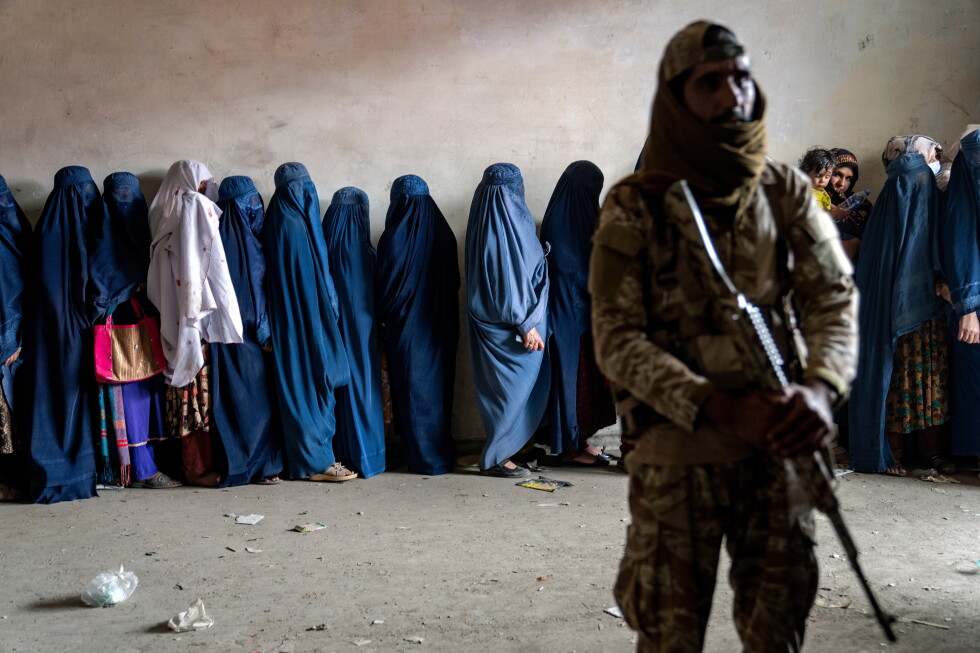
    Over the past 10 days, extreme weather driven by heavy seasonal rainfall and intense storms has unleashed catastrophic damage across Afghanistan, leaving at least 77 people dead and 137 others injured, the country’s National Disaster Management Authority confirmed in an official statement Saturday. Of that fatal toll, 26 deaths have occurred in just the past 48 hours as floodwaters and landslides continued to sweep through vulnerable communities. The disaster has also left a wide trail of infrastructure and property destruction: 793 residential homes have been completely leveled, an additional 2,673 structures have sustained partial damage, and roughly 210 miles of public roadways have been ruined by mudslides and rushing water. More than 5,800 families across the country have been displaced or otherwise impacted, with critical local assets including agricultural plots, business properties, drinking water wells, and irrigation canals also suffering significant damage. Afghanistan’s already fragile transportation network has been hit particularly hard. Multiple key highways connecting the capital city of Kabul to outlying provinces have been closed due to damage, forcing travelers to take lengthy, detoured routes to reach their destinations. One of the most critical disruptions is along the Kabul-Jalalabad highway, the primary artery linking the capital to the Pakistani border and Afghanistan’s eastern provinces. The route was fully shut down early Thursday after a combination of flooding, rockslides, and landslides made it impassable, and maintenance crews have been working around the clock to clear debris and reopen the road, according to Ashraf Haqshinas, spokesperson for Afghanistan’s Public Works Ministry. The ministry has issued an urgent advisory warning all travelers to exercise extreme caution when moving through storm-affected regions. Another critical northern transportation route, the Salang Pass — a high-altitude mountain crossing in the Hindu Kush that connects Kabul to major northern cities including Kunduz and Mazar-e-Sharif — has also been closed by floodwaters. Already one of the world’s poorest nations, Afghanistan is ranked among the countries most vulnerable to the growing impacts of climate change and extreme weather events. This year alone, dozens of Afghans have already been killed by extreme weather events, following deadly flash floods and heavy snowfall that hit the country earlier this year. In 2024, spring flash floods claimed the lives of more than 300 people across the nation. Forecasters are warning that the crisis is far from over, with additional heavy rain predicted across all regions of Afghanistan in the coming days. The Disaster Management Authority has issued a public safety order urging residents to avoid riverbanks and low-lying areas known to be at high risk of flooding, as conditions remain unstable. The Associated Press contributor Elena Becatoros provided on-the-ground reporting from Kabul for this story.

  • Defenses not ‘annihilated,’ Iran reportedly downs two US planes

    Defenses not ‘annihilated,’ Iran reportedly downs two US planes

    Just 48 hours after former President Donald Trump asserted that Iran no longer posed a military threat and that the country’s entire air defense network had been completely destroyed, Iranian military forces carried out a stunning strike that downed two manned U.S. military aircraft on Friday, multiple international news outlets have confirmed.

    Citing an Israeli government official and a second anonymous source with direct knowledge of the incident, Axios first broke the news Friday afternoon that an F-15E Strike Eagle, one of the U.S. Air Force’s primary fighter-attack jets, was hit by Iranian anti-aircraft fire, forcing both crew members to eject over Iranian territory. This strike marks the first documented incident of a manned U.S. aircraft being shot down inside Iranian borders since the U.S.-Israeli military campaign against Iran launched on February 28.

    As of Friday evening, one of the F-15E crew members had been recovered by U.S. special operations forces, though The Washington Post reports that details of his medical condition remain undisclosed. Search operations are still intensifying across the region to locate the second missing crew member.

    Shortly after Axios’ initial report, The Intercept published confirmation that a second U.S. aircraft, an A-10 Warthog ground-attack jet, crashed near the strategic Strait of Hormuz around the same time as the F-15E incident. Matching the pattern of the first crash, one crew member from the A-10 has been recovered, while the second remains unaccounted for.

    Al Jazeera later added that a U.S. Black Hawk search-and-rescue helicopter was also struck by an Iranian projectile while participating in the operation to locate missing pilots. The helicopter was able to exit Iranian airspace before making a safe landing outside Iranian territory, with no reported casualties on board.

    Iran has officially claimed responsibility for downing the F-15E, with Tasnim News Agency — the semiofficial media outlet of the Islamic Revolutionary Guard Corps (IRGC) — releasing a formal statement confirming the strike. U.S. Central Command (CENTCOM) has a history of rejecting previous Iranian claims of downing U.S. aircraft, including a separate claim made near the Strait of Hormuz just one day prior on Thursday. However, CENTCOM has not issued any denial regarding Friday’s incidents, and has publicly confirmed that the F-15E was indeed lost.

    Friday’s development directly contradicts sweeping claims Trump made during a national televised address just this past Wednesday. During the speech, Trump declared that five weeks of intense U.S. bombing campaigns had “eviscerated” Iran’s military capabilities, and that the country was “essentially really no longer a threat” to regional or American interests. He went further to claim that Iran’s entire air defense infrastructure had been wiped out, saying, “They have no anti-aircraft equipment. Their radar is 100% annihilated. We are unstoppable.”

    Just one week prior, Trump claimed that Iran’s leadership was desperate to negotiate a peace deal because it “can’t do a thing” to defend itself against U.S. airstrikes. U.S. Defense Secretary Pete Hegseth echoed this narrative, repeatedly touting unchallenged U.S. “air superiority” over the region.

    Even before Friday’s downing of the two jets, these rosy assessments from the White House were already called into question. A Thursday report from CNN cited internal U.S. intelligence findings that roughly half of Iran’s missile launchers remain fully operational, and that the country still retains around 50% of its drone fleet. One senior source told CNN that Iran remains “very much poised to wreak absolute havoc throughout the entire region.”

    Military analysts have warned that any missing crew members captured by Iranian forces could become critical bargaining chips for Tehran in future negotiations with Washington. Iranian officials have already seized on the incident to mock the Trump administration’s claims. Mohammad Ghalibaf, speaker of Iran’s Parliament, posted a scathing rebuke on social media following news of the downing. “After defeating Iran 37 times in a row,” Ghalibaf wrote, “this brilliant no-strategy war they started has now been downgraded from ‘regime change’ to ‘Hey! Can anyone find our pilots? Please?’”

    The incident also comes amid growing controversy over casualty transparency in the conflict. An analysis published by The Intercept earlier this week found that at least 15 American troops have been killed in the region since the campaign began, with more than 520 others injured. CENTCOM has been accused of covering up the true scope of U.S. casualties after the command released incomplete, outdated casualty figures to reporters and repeatedly declined to share full, updated totals.

  • Death toll from Afghan quake rises, including 8 members of refugee family returned from Iran

    Death toll from Afghan quake rises, including 8 members of refugee family returned from Iran

    Deep in the village of Ittefaq, on the eastern outskirts of Afghanistan’s capital Kabul, the mud-caked rubble of a collapsed wall still holds the traces of a recently shattered life. Piles of salvaged blankets, dented cooking utensils and scattered personal belongings sit alongside broken bricks, a quiet marker of the tragedy that unfolded late Friday, when a 5.8 magnitude earthquake ripped through northern Afghanistan.

    For Mohibullah Niazi, the neighbor who led early rescue efforts, the sounds of that disaster will linger. For three full minutes after the wall collapsed onto the refugee family camped next to his property, Niazi told reporters Saturday, he could hear the trapped family screaming for help. By the time a larger group of rescuers could clear the heavy mud and rock, the screams fell silent.

    Eight members of the family, all Afghan refugees who had just returned to their home country 15 days earlier after being pushed out of neighboring Iran, were killed. The only survivor is 3-year-old Aarash, who was pulled from the rubble with a severe head injury and airlifted to a hospital in central Kabul for emergency care.

    This small, already vulnerable family was among millions of Afghans forced to return to their unstable homeland in 2023, after neighboring Iran and Pakistan launched harsh crackdowns on undocumented foreign residents, most of whom are Afghan refugees who fled years of conflict and economic collapse. Najibullah, the 50-year-old head of the killed family, had nowhere else to go after crossing back into Afghanistan: the family set up a makeshift tent on empty low-lying land adjacent to Niazi’s home, because he could not afford permanent shelter. Just 30 minutes before the earthquake struck, Niazi said he offered the family space in his guest room to escape cold, heavy rains that had soaked the region for days. They declined his invitation.

    Days of heavy rainfall had already softened the sodden earth holding the adjacent retaining wall in place, local residents explained. When the earthquake hit, the wall crumbled directly onto the family’s tent, trapping everyone inside before they could escape. Niazi and a handful of nearby neighbors immediately began digging by hand and with small spades, but the weight of the rock and mud was too much for their small group. “We tried our best,” Niazi recounted Saturday, standing at the disaster site. “But for two or three people, this was impossible work.”

    Local authorities were alerted quickly, and Taliban-led rescue teams and ambulances arrived within an hour to continue recovery efforts. By Saturday morning, all eight bodies had been recovered, and the injured toddler had been transported for care. On Saturday, Health Ministry spokesperson Sharafat Zaman confirmed the boy remained hospitalized for his head injury, saying medical teams were monitoring his condition closely.

    In the wake of the quake, official death toll numbers have seen a small discrepancy: Afghanistan’s deputy government spokesman Hamdullah Fitrat released an updated count Saturday putting the total national death toll at 12, with four additional people injured across the affected regions. Fitrat added that five full homes had been completely destroyed, and another 33 suffered major damage, impacting 40 families across six provinces: Kabul, Panjshir, Logar, Nangarhar, Laghman, and Nuristan. The Afghanistan Disaster Management Authority has meanwhile put the total death toll at nine, and officials have not yet explained the gap between the two counts.

    Friday’s earthquake originated in the seismically active Hindu Kush mountain range, roughly 150 kilometers east of Kunduz in northern Afghanistan, and 290 kilometers northeast of Kabul, according to data from both the Euro-Mediterranean Seismological Center and the U.S. Geological Survey. Afghanistan sits on one of the world’s most active tectonic fault zones, and major earthquakes have killed thousands of Afghans in just the last two years, as poorly constructed, informal housing across much of the country leaves communities extremely vulnerable to seismic activity.

    Just last August 2023, a 6.0 magnitude quake struck a remote mountainous region of eastern Afghanistan, killing more than 2,200 people. In October that same year, a 6.3 magnitude quake and subsequent powerful aftershocks hit western Afghanistan, leaving thousands dead. Two months later, a 6.3 magnitude quake hit Samangan province in the north, killing 27 people, injuring more than 950, and damaging iconic cultural sites including the historic Blue Mosque in Mazar-e-Sharif.

  • Joint initiative aims to boost talent in NEV sector

    Joint initiative aims to boost talent in NEV sector

    Against the backdrop of the global automotive industry’s rapid transition toward electrification and low-carbon mobility, a new cross-regional consortium dedicated to cultivating high-skilled talent for the new energy vehicle (NEV) sector launched Friday in Bangkok, drawing together stakeholders from China and multiple Southeast Asian nations to advance cooperation in green transportation and technical vocational education.

    This joint initiative unites leading NEV manufacturers, government regulatory bodies, industry associations and vocational education institutions from across China and ASEAN member states, creating a unified collaborative platform to develop joint training programs and formalize cross-border partnership agreements. Over 100 delegates from China, Thailand, Vietnam and Malaysia gathered for the launch ceremony, which took place alongside the Thailand leg of the World New Energy Vehicle Congress, the global industry conference that kicked off the same day in the Thai capital.

    Attendees at the event used the gathering to explore pathways to deepen collaborative work in intelligent energy systems, smart mobility solutions and next-generation green technology innovation. The initiative received formal backing from three major Chinese industry and education bodies: the China Association for Science and Technology (CAST), the National Steering Committee of Teaching for Automobile Vocational Education, and the China Society of Automotive Engineers.

    Addressing attendees, CAST President Wan Gang noted that the global automotive sector is currently undergoing a profound structural transformation, shifting steadily toward electrification, intelligent connectivity and low-carbon operations. He emphasized that this industry-wide shift is fundamentally dependent on skilled human capital, with rising demands for advanced technical knowledge, upgraded practical skills, strong management capabilities and cross-cultural global competence among industry practitioners.

    Against the backdrop of 2026 marking the fifth anniversary of the China-ASEAN Comprehensive Strategic Partnership, Wan explained that this new talent development platform is designed to drive coordinated technological innovation, joint workforce cultivation and expanded bilateral and multilateral cooperation between China and ASEAN nations.

    The rapid growth of China’s NEV sector underscores the urgent need for expanded cross-border talent development: data from the China Passenger Car Association shows China’s domestic NEV retail sales hit roughly 12.81 million units in 2025, representing a 17.6% year-on-year increase. Exports of Chinese-branded NEVs surged even faster, jumping 139% year-over-year to 2.04 million units, meaning NEVs accounted for nearly half — 49.5% — of all Chinese brand vehicle exports last year.

    Despite this rapid growth, stakeholders say the globalization of NEV talent still faces multiple persistent barriers, including fragmented international skill certification systems, uneven talent distribution across regions, and divergent cultural and regulatory frameworks between markets. Xu Nianfeng, secretary-general of the National Steering Committee of Teaching for Automobile Vocational Education, called on education regulators, industry groups and leading NEV manufacturers to work together to develop unified automotive competency standards and curriculum frameworks tailored to the specific industrial needs of different regional markets. He also highlighted the importance of establishing mutual recognition agreements for skill certifications, a policy change that would smooth cross-border talent mobility across the Asia-Pacific region.

    As ASEAN’s central automotive manufacturing hub and one of the region’s fastest-growing NEV markets, Thailand has emerged as a top destination for Chinese NEV investment and a leading example of bilateral cooperation to build a skilled workforce aligned with global green growth trends. Yodsapol Venukosess, secretary-general of the Office of the Vocational Education Commission under Thailand’s Ministry of Education, noted that China’s global leadership in NEV innovation and production can support Thailand in building a domestic vocational training system aligned with the latest industry technological trends.

    “We hope to strengthen such cooperation and create more opportunities in this green trend,” Yodsapol said.

  • Iran remains defiant amid rising threats

    Iran remains defiant amid rising threats

    After a month of open conflict between Iran and a US-Israeli coalition, the regional crisis shows no sign of de-escalation, with attacks expanding from military targets to critical civilian infrastructure amid stark new threats from Washington.

    On Friday, cross-border exchanges of fire continued between Iran, Israel and the United States, just days after the war entered its sixth week. Warnings of incoming missile strikes were activated across Israel, Bahrain and Kuwait, even as US and Israeli officials have repeatedly claimed Iran’s core military capabilities have nearly been eliminated. Local Iranian witnesses also confirmed fresh airstrikes hit areas within and around Tehran and the central Iranian city of Isfahan.

    US President Donald Trump has ramped up aggressive rhetoric in recent days as diplomatic negotiations with Iran have stalled with little to no progress. “The US military hasn’t even started destroying what’s left in Iran,” Trump posted on social media late Thursday. “Bridges next, then electric power plants.”

    Alongside the statement, Trump shared footage of a US airstrike on Tehran’s under-construction B1 bridge, a critical planned arterial traffic route that was scheduled to open to the public later this year. Iran’s state media reported the attack left eight civilians dead and another 95 injured.

    But Iranian officials have refused to back down, even in the face of threats to civilian infrastructure. “Striking civilian structures, including unfinished bridges, will not compel Iranians to surrender,” Iranian Foreign Minister Seyed Abbas Araghchi said in response to the attack.

    Iran’s armed forces have vowed to retaliate with even greater force, promising future attacks will be “more crushing, broader and more devastating”. Iran’s Fars news agency later published a list of potential target bridges across Saudi Arabia, Kuwait, the United Arab Emirates and Jordan — all nations that host US military facilities on their territory.

    In a separate development, Iran’s Tasnim news agency, citing the Revolutionary Guards navy command, reported that Iranian forces targeted US tech giant Oracle’s data center in Dubai on Thursday. The Dubai Media Office quickly dismissed the claim as unfounded “fake news”. The Revolutionary Guards have previously warned that major US technology firms would be added to the target list if tensions with Washington escalate, noting more than a dozen US companies are considered valid potential targets.

    The conflict has also drawn in other regional actors, with Yemen’s Houthi militia announcing Thursday it had launched its fourth attack on Israel, firing a barrage of ballistic missiles toward targets in Tel Aviv, expanding its direct involvement in the escalating regional conflict.

    The war began on February 28, when US and Israeli forces launched a preemptive large-scale attack on Iran. Tehran responded with its own strikes against Israel and Gulf states hosting US military installations. Joint US-Israeli airstrikes across Iran and separate Israeli attacks in Lebanon have so far killed thousands of people and displaced millions across the Middle East.

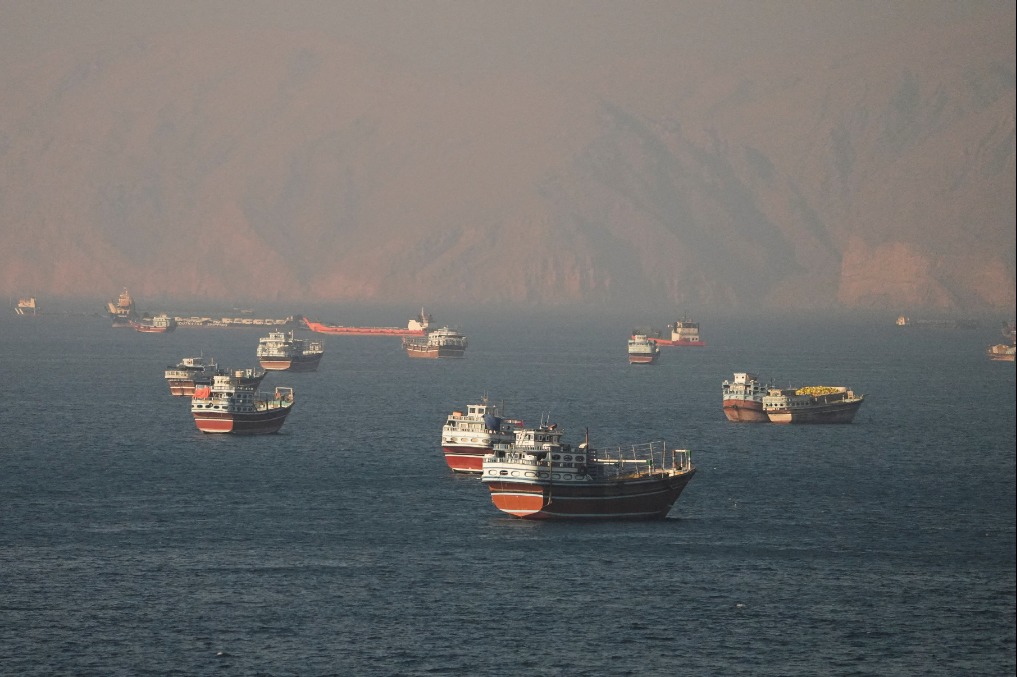
    Beyond the immediate human cost, the conflict has severely disrupted global commerce, with the Strait of Hormuz — one of the world’s most critical chokepoints for global energy trade — effectively closed to commercial shipping. This disruption has sent shockwaves through global financial markets, leaving investors scrambling to assess the long-term risks of the prolonged crisis.

    “The key question in all investors’ minds is, ‘When is this going to be over?’” said Russel Chesler, head of investments and capital markets at VanEck Australia.

    International efforts to resolve the closure of the strait have so far failed to yield concrete results. The United Kingdom chaired a virtual meeting of roughly 40 nations on Thursday to discuss pathways to restore freedom of navigation through the waterway, but the meeting concluded without any binding or specific agreements.

    Trump struck a defiant tone on Friday, claiming the US could reopen the strait unilaterally with a small amount of additional time. “With a little more time, we can easily open the Hormuz Strait, take the oil, and make a fortune,” he wrote on social media.

    Iran has put forward an alternative framework for controlling access to the strait, announcing it is drafting a new transit protocol with neighboring Oman that would require all commercial ships to obtain official permits and licenses before passing through the waterway.

    Bahrain has submitted a draft United Nations Security Council resolution that would authorize the use of military force to guarantee free transit through the strait. The US-backed proposal has deepened divisions among Security Council members, forcing a delay to the scheduled vote on the measure.

    The UAE’s Minister of State Khalifa Shaheen Al Marar said in an interview Thursday that his country is prepared to contribute to international efforts to secure maritime routes through the strait amid ongoing tensions.

    However, French President Emmanuel Macron pushed back against the idea that military force could successfully reopen the strait, calling the expectation unrealistic. A large-scale military operation “would take an infinite amount of time and would expose anyone passing through the strait to coastal threats from Revolutionary Guards”, Macron noted. He added that the reopening of the strait “can only be done in coordination with Iran” through negotiations that would follow a ceasefire agreement.