
NOTTINGHAM, England — The third and final Test between England and New Zealand remains finely poised at the lunch break on Day 3, with the visiting side holding a clear upper hand after a devastating morning session that saw New Zealand claim four key England wickets. Entering Saturday’s play already in a strong position, having posted 438 runs in their first innings, New Zealand’s bowling attack turned the screw as England resumed their first innings on 223 for 2. The breakthrough for New Zealand came early, when veteran batsman Joe Root fell leg before wicket for 21 to a swinging full delivery from seamer Nathan Smith. Not long after Root’s departure, rising England star Jacob Bethell followed him back to the pavilion. Bethell, who had crafted a solid 74, was snapped up at second slip by New Zealand captain Tom Latham off the bowling of Will O’Rourke, leaving England reeling. Wickets continued to tumble for the hosts: young batter Jamie Smith was caught low at first slip by Daryl Mitchell off Nathan Smith’s bowling after adding just one run to the scoreboard, making his total 1. England’s captain Ben Stokes survived a major scare early in his innings, when Devon Conway dropped a difficult low diving chance to his right off Nathan Smith’s bowling when Stokes had only scored 1. But Stokes, who returned to the England side alongside fast bowler Gus Atkinson after missing the second Test due to disciplinary sanctions, could not capitalise on his reprieve. The England captain was dismissed for 15 by Zak Foulkes, the concussion substitute in for injured paceman Blair Tickner, who trapped Stokes with another sharp inswinging delivery that brought the wicket. When the players left the field for the lunch interval, England’s first innings stood at 314 for 6, with Harry Brook holding firm on an unbeaten 51 and Gus Atkinson not out on 8 at the other end. Before the close of the session, Atkinson survived an lbw appeal after a Decision Review System overturn showed the ball would have cleared the stumps. By the lunch break, Nathan Smith had claimed 3 wickets for 85 runs, while O’Rourke had notched 2 wickets for 49 runs. The match remains on a knife’s edge, with the series locked at 1-1 after the first two Tests were split between the two sides. New Zealand’s first innings was built on a historic opening partnership that put the visitors in their strong early position: captain Tom Latham scored 151 and Devon Conway hit 157, combining for a mammoth 317-run opening stand that anchored New Zealand’s total of 438.
标签: Asia
亚洲
-

Two tropical storms pound Japan, causing flooding and landslides
Two powerful tropical storm systems have swept across Japan over the weekend, unleashing catastrophic torrential downpours that triggered widespread landslides and flash flooding, leaving at least one person dead and multiple others injured, according to official statements and national media reports.
The successive storms, named Mekkhala and Higos, hit amid Japan’s annual mid-year rainy season, a period that routinely brings elevated precipitation to the archipelago, but this year’s systems dropped record volumes of rain that overwhelmed local infrastructure across large swathes of the country’s western regions.
The first fatal impact was documented in Yamaguchi Prefecture, where a landslide tore through a residential area on Friday, collapsing a private home. Kyodo News Agency confirmed that a man in his 70s was killed in the incident, while three additional residents suffered injuries of varying severity.
Visual footage broadcast on Japanese national television captured the Kamo River in Kyoto swollen to dangerous levels, churning with thick, sediment-laden muddy water that spilled close to riverbank infrastructure. Local disaster management authorities issued urgent level-three flooding alerts for multiple districts across Kyoto, Osaka, and neighboring prefectures in western Japan, urging residents to evacuate to higher ground in high-risk zones.
Official data from Japan’s Fire and Disaster Management Agency confirms that more than 30 residential properties suffered major flood damage across Nara and Hiroshima Prefitures on Friday, in addition to the fatal landslide in Yamaguchi. The extreme weather also disrupted regional transportation networks: several local and intercity train services suspended operations to avoid risk, while a number of commercial flights departing and arriving at regional airports were delayed or canceled to ensure passenger safety.
-
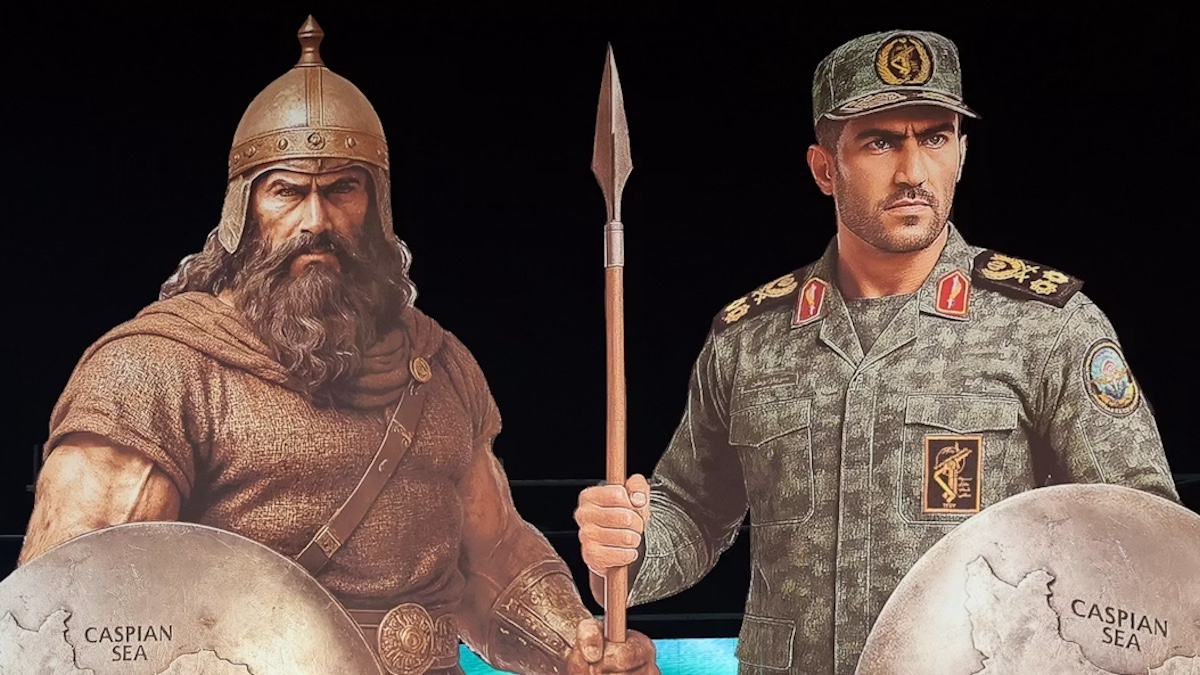
Rome and Persia history lessons for US-Iran peace deal
Against the backdrop of fragile ongoing ceasefire talks between the United States and Iran, a striking historical parallel drawn by an ancient history scholar offers a stark warning: reaching a lasting peace may prove just as destabilizing and painful as enduring open conflict. As the future of any potential US-Iran agreement remains uncertain, with no clear consensus on its terms or longevity, Peter Edwell, an associate professor of ancient history at Australia’s Macquarie University and a specialist on ancient Persia (the historical predecessor to modern Iran), argues that the current diplomatic gridlock facing the Trump administration should come as no surprise.
For centuries, the two great competing powers of the ancient world — the Roman Empire and the Persian Empire, ruled first by the Parthian dynasty from 247 BCE to 224 CE, then by the Sasanian dynasty until 651 CE — cycled endlessly between open war and fragile peace deals that rarely resolved core disputes, and often left underlying tensions worse than before. For these ancient rivals, peace treaties were rarely tools of lasting reconciliation; instead, they were most often just strategic pauses to buy time for military rearmament and preparation for the next conflict.
The first major military clash between Rome and Parthia came in 53 BCE, when Roman general Marcus Crassus launched a disastrous invasion of Parthian territory. The campaign ended in catastrophic defeat on the plains of Carrhae, in modern-day southern Turkey, where Crassus himself was killed and thousands of Roman troops lost their lives. The defeat emboldened Parthia, and by 20 BCE, Rome was forced to accept a peace agreement that formalized the Euphrates River as the official border between the two empires — a major concession for a power that had previously known unbroken territorial expansion.
Conflict reignited in the mid-first century CE, this time over control of strategically located Armenia, a buffer state nestled between the two empires in what is now modern Armenia and eastern Turkey. After the conclusion of hostilities, Roman Emperor Nero and Parthian King Vologases I agreed to the Treaty of Rhandeia in 63 CE, which allowed Parthia to nominate Armenia’s king, on the condition that the coronation be performed by the Roman emperor in Rome. While the treaty resolved the immediate crisis, its awkward power-sharing structure proved unworkable over time. When Parthia ultimately disregarded the agreement’s terms, Roman Emperor Trajan launched a full-scale invasion of Parthia in 114 CE. Though Trajan’s forces won early victories, including capturing the Parthian capital, the invasion ultimately collapsed, and all Roman territorial gains were lost within just three years, by the time of Trajan’s death in 117 CE.
After the Sasanian dynasty replaced the Parthians as rulers of Persia in 224 CE, tensions with Rome escalated dramatically, with control of Armenia once again at the center of most disputes and peace agreements. When Roman Emperor Gordian III died during an invasion of the Sasanian Empire in 244 CE, the two powers struck a new treaty that imposed heavy financial reparations on Rome and included a clause banning any Roman interference in Armenian affairs. Within just a few years, however, Rome violated the agreement, triggering a wave of devastating Sasanian invasions of Roman territory that culminated in the capture of Roman Emperor Valerian by Sasanian forces in 260 CE. A famous rock relief from the period, which depicts Valerian kneeling in submission to Sasanian King Shapur I, remains a lasting symbol of this humiliating Roman defeat.
Rome won a major victory over Sasanian King Narseh in the late 290s CE, and the resulting 299 CE Treaty of Nisibis extended Roman influence deep into the east and gave Rome full control of Armenia. But the lopsided agreement planted deep seeds of resentment among the Sasanians. By the 350s CE, Sasanian King Shapur II launched a major invasion of Roman territory explicitly to overturn the 60-year-old treaty. The conflict escalated when Roman Emperor Julian launched a counter-invasion of the Sasanian Empire in 363 CE, a campaign that ended in devastating Roman defeat and Julian’s death on the battlefield.
While conflict between the two empires cooled slightly in the fifth century CE, it intensified dramatically again in the sixth and seventh centuries CE, when Rome and Persia were almost continuously at war. Dozens of peace treaties were negotiated during this period, but none endured. The most infamous example was the so-called Eternal Peace of 532 CE, which collapsed completely in less than eight years.
Edwell notes that history repeatedly demonstrates that even highly celebrated peace agreements, celebrated as breakthroughs at the time of signing, often lay the groundwork for future discord and renewed conflict. It took more than 400 years of intermittent war and dozens of failed negotiations before Rome and Persia finally reached a lasting agreement to partition Armenia between the two powers in the 380s CE.
Centuries of cyclical conflict, broken treaties, and stalemate preceded even that partial resolution. Today, as the US pursues a peace deal with Iran against the backdrop of a shaky ceasefire, the question lingers: will the current negotiations follow the same fraught path as the ancient clashes between Rome and Persia? Only time will reveal the answer — but the scholar’s hope is that a lasting resolution will not take centuries this time around.
-
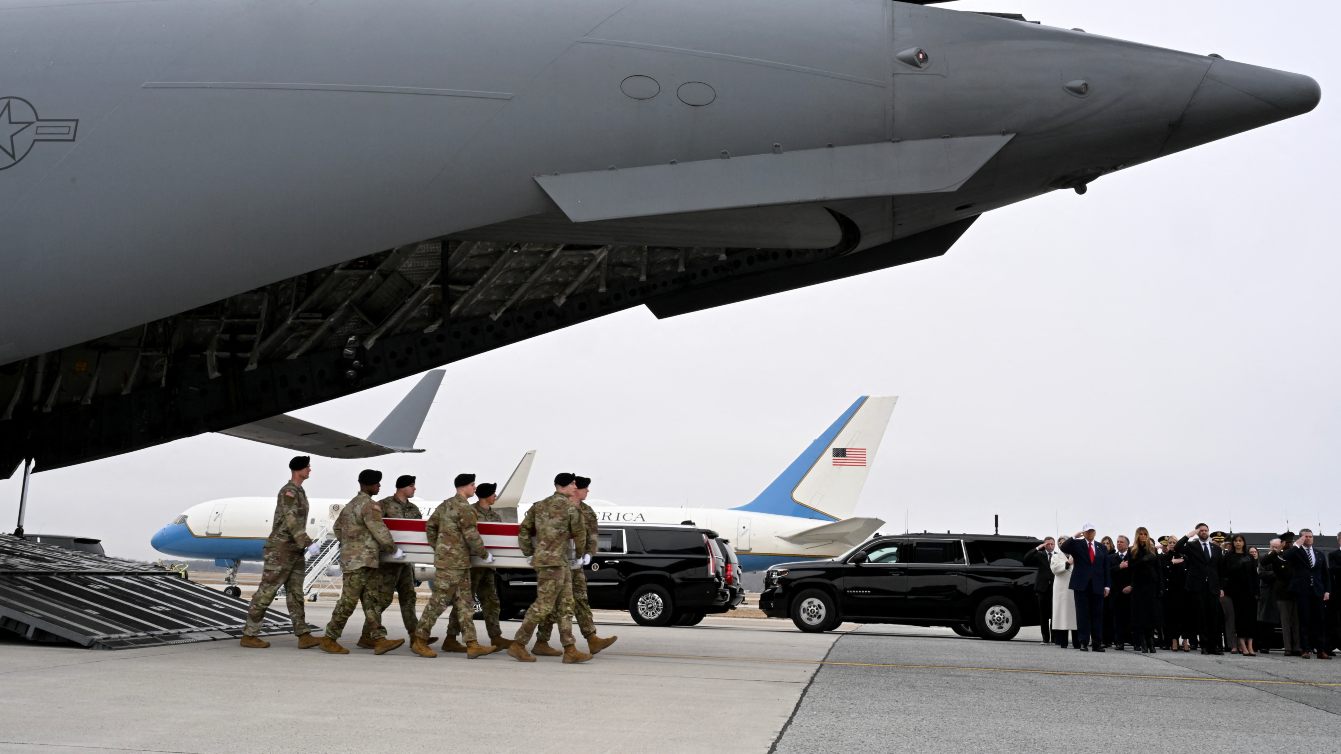
US-Iran MoU ‘conditional surrender’ signed by America, analyst says on Tucker Carlson’s show
In a recent appearance on Tucker Carlson’s political talk show, prominent American author and geopolitical analyst Brandon Weichert has delivered a scathing assessment of the US-Iran ceasefire memorandum of understanding, reached after months of joint US-Israeli military action against Iran, calling the document nothing less than a formal conditional surrender by the United States.
Weichert’s core argument centers on the massive drawdown of American missile stockpiles over the course of the conflict, which he says left the Trump administration with no viable option but to enter negotiations and accept a deal that ultimately handed Iran a strategic victory.
“Ultimately, this is a conditional surrender document,” Weichert stated during the interview. “The United States started a war and it promptly lost. The Iranians have, unfortunately, at a strategic level, achieved victory.” He added that while the Trump administration had no other choice given the pressing timeline of looming resource shortages that left it backed into a corner, the end result remains a surrender regardless of the administration’s reasoning.
Weichert’s controversial remarks land amid intense ongoing partisan and policy debate over the text of the memorandum, which establishes a foundational framework for sustained diplomatic negotiations between Washington and Tehran and codifies the ceasefire that halted months of open military confrontation between the two sides. Citing only unclassified, publicly available data on American weapons usage throughout the conflict, Weichert laid out staggering figures for depleted US munitions inventories.
According to his analysis, roughly half of the United States’ total stockpile of Patriot ballistic missile interceptors were fired during the war, alongside between 50% and 80% of the nation’s Terminal High Altitude Area Defence (THAAD) interceptors. Weichert also claimed that more than 1,000 Tomahawk cruise missiles — approximately one-third of the entire US stockpile — were expended in the conflict. He added that large numbers of JASSM air-to-surface standoff missiles were used, and that nearly the entire pre-war inventory of newly produced Precision Strike Missiles was completely consumed in military operations.
Beyond ground and air-launched munitions, Weichert argued that US naval forces faced far greater and more underreported threats during the kinetic phase of the war than the White House has publicly acknowledged. “The Navy reports that they expended large quantities of their SM-3 and SM-6 naval interceptors,” he said. “That indicates to me, if I may conjecture here, that there must have been one hell of a fight over the security of our ships when the war was in its kinetic phase.” From these figures, he concluded that the White House deliberately misled the public when it claimed US naval vessels operating in the region remained completely safe throughout the conflict, arguing the high interceptor expenditure proves American ships faced severe, unacknowledged risks.
One of the most alarming parts of Weichert’s assessment is his projection of multi-year delays to replenish these drained arsenals. According to his timeline, Precision Strike Missiles can be fully restocked by the end of this year, while JASSM inventories will not be fully replaced until the middle of 2026. Naval SM-3 and SM-6 interceptors, he estimates, will not be back to pre-war levels until 2028. Patriot and THAAD interceptor stockpiles could take until roughly 2030 to fully replenish, and Tomahawk cruise missile inventories may require another five years to restore.
“So, we’d better hope that the Chinese or some other area of interest is no longer requiring our assistance because we have depleted ourselves,” Weichert warned.
Weichert’s analysis aligns with a recent bombshell report from *The New York Times*, which revealed that former President Trump and senior Pentagon leaders have been pressuring major defense contractors to speed up weapons production, while simultaneously pushing Congress to approve an extra $70 billion in funding to cover war costs and restock depleted arsenals. The *Times* reporting confirms that defense companies have told the Trump administration that expanding production capacity will require massive new capital investment, and the administration’s funding request is already projected to face fierce bipartisan opposition on Capitol Hill. The *Times* also independently verified the broad scope of US munitions depletion, confirming that the military used roughly 1,100 long-range stealth cruise missiles, more than 1,000 Tomahawk missiles, over 1,200 Patriot interceptors, and more than 1,000 Precision Strike and ATACMS missiles throughout the conflict.
Beyond the immediate military implications of drawn-down stockpiles, Weichert argued that the conflict has accelerated an irreversible long-term geopolitical shift across the Middle East, moving the region rapidly toward what he calls a “post-American” order that diminishes the central role Israel has played for decades as the anchor of Washington’s regional security architecture.
“There is now going to be a new Middle East,” he said, outlining his prediction that five regional powers will shape the future balance of power in the area: Saudi Arabia, Iran, Pakistan, Egypt, and Turkey. Weichert argued that Turkey’s rapidly expanding domestic defense industry, Pakistan’s established nuclear capabilities, and the competing regional influence of Saudi Arabia, Iran, and Egypt will combine to form a new regional order that is far less dependent on Washington for security and governance. “Those greater Middle East powers are gonna form a new post-American order,” he said. “Where it goes from here really is up to Mr Netanyahu and his government.”
To date, the White House and senior US military officials have publicly defended the memorandum, framing it as a favorable deal that advances US national interests. Even so, the Trump administration has faced widespread criticism from across the US political spectrum for failing to achieve the core stated objectives it laid out at the start of the conflict, including removing the Iranian government, permanently weakening Iran’s regional influence, and decimating its military capabilities.
-

Belgium’s Leandro Trossard adds to successful year with 2 goals in World Cup win over New Zealand
VANCOUVER, British Columbia — Fifteen months after sitting on the bench for every match of Belgium’s underwhelming 2022 World Cup run, Leandro Trossard has cemented his status as one of the most impactful players of his generation for the Belgian national team, delivering a two-goal performance that dragged his side into the tournament’s knockout round with a dominant 5-1 Group G victory over New Zealand on Friday night.
Trossard’s 2024-2025 club season already stands as one of the most successful individual campaigns for any player in European top-flight soccer. As a key member of Mikel Arteta’s Arsenal squad, he lifted the Premier League trophy — the club’s first top-flight title since 2004 — and helped the Gunners reach the UEFA Champions League final. His most critical club goal came in a 1-0 win over West Ham United, the three points that ultimately sealed Arsenal’s long-awaited league crown.
Heading into Friday’s final group stage match, Belgium’s World Cup campaign hung in the balance. After opening the group stage with two underwhelming draws, the 2018 World Cup third-place finishers faced the very real possibility of repeating their 2022 disappointment, when they crashed out in the group stage despite being labeled pre-tournament title contenders. To make matters worse, Belgium had gone more than 200 minutes of game time without finding the back of the net, a dry spell that left them struggling to climb the Group G table.
That all changed the moment Trossard found the ball at his feet inside the 6-yard box in the 28th minute. He tapped home the opening goal of the match, breaking Belgium’s long scoring drought. Twenty-two minutes later, he pounced on his own rebound to slot home his second, doubling Belgium’s lead and setting the Red Devils on course for a comfortable 5-1 win. The result pushed Belgium to the top of the Group G standings, locking in their spot in the knockout round.
The 31-year-old’s journey to this moment has been steady. He earned his first senior cap for Belgium in 2020, quickly emerged as a reliable contributor during the team’s 2022 World Cup qualifying campaign, and served exclusively as a substitute across all three of the Red Devils’ group matches in Qatar four years ago. This tournament, he has earned a starting spot in every group stage match, and repaid his manager’s faith with his decisive performance against New Zealand.
“I feel very good, I think we’re growing into the tournament, myself as well,” Trossard said after the final whistle. “We’re really happy to come first and go to the next round.”
Belgium manager Rudi Garcia heaped praise on the in-form forward after the match, highlighting his ability to deliver under pressure at both the club and international level. “I think he’s the best player of the Belgian selection since the beginning of the World Cup,” Garcia said. “Before the match, I asked him to be more decisive in his play, to be more challenging. Leandro was really able to score a lot at Arsenal, so he’s perfectly capable, and that is what he did tonight.”
Trossard’s clutch display on soccer’s biggest stage confirms what club observers have known all season: the forward has become one of the most dangerous big-game players in the sport, capable of lifting his team when they need it most.
-

Trossard, De Bruyne score and Belgium defeat New Zealand 5-1 to advance at the World Cup
VANCOUVER, British Columbia – After two underwhelming opening matches that left them on the brink of elimination, Belgium’s men’s national football team delivered a dominant second-half scoring explosion to book their spot in the 2026 FIFA World Cup knockout round, crushing New Zealand 5-1 on Friday night. Leandro Trossard led the charge with two clinical goals, while supporting strikes from Kevin De Bruyne, Romelu Lukaku and Alexis Saelemaekers sealed the lopsided win for the Belgian side.
Heading into the final Group G matchday, Belgium faced an unexpected uphill battle. Opening draws of 1-1 against Egypt and 0-0 against Iran left the 2018 World Cup third-place finishers sitting third in the four-team group, a far cry from their pre-tournament expectations as one of the competition’s higher-ranked sides. The result echoes a disappointing turn four years prior, when Belgium crashed out of the Qatar World Cup in the group stage, an early exit that followed their historic 2018 run in Russia.
Friday’s rout, however, flipped the group standings on their head. Belgium’s five-goal outburst pushed them to the top of Group G, earning them a spot in the knockout round, where they will face one of the third-placed group finishers next Wednesday in Seattle. The final group match was played simultaneously with the other Group G finale in Seattle between Egypt and Iran, which finished in a 1-1 draw – a result that worked in Belgium’s favor to open the door for their knockout progression.
For New Zealand, who entered the match knowing only an outright win would keep their World Cup dream alive, the campaign comes to an early end. Elijah Just notched the All Whites’ only goal of the match, but the consolation strike was not enough to turn the tide. The side exits the tournament still chasing their first ever victory in World Cup finals history, heading home with no points to their name in group play.
Fans can follow full coverage of the FIFA World Cup at AP News’ dedicated competition hub.
-
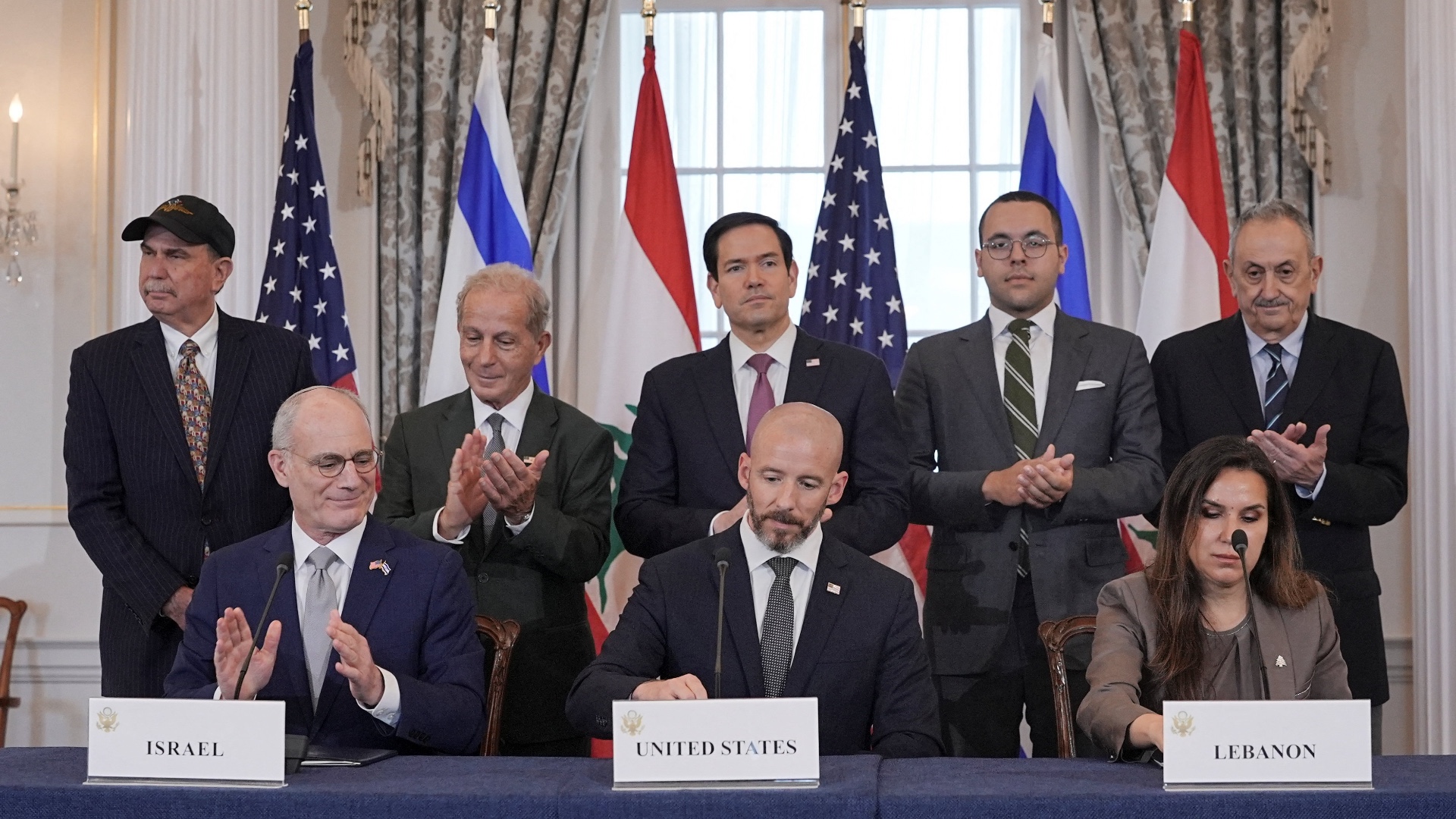
Lebanon and Israel sign ‘framework agreement’ to end war
After five rounds of negotiations mediated by the Trump administration, Lebanon and Israel have finalized a landmark agreement under a US-led trilateral framework, with the official signing ceremony held in Washington on Friday. While full terms of the deal have not yet been released to the public, top US officials have framed the agreement as an opening breakthrough for long-stalled regional peace efforts.
Speaking to reporters shortly before the signing, US Secretary of State Marco Rubio called the deal “the beginning of the beginning” of a process to resolve decades of cross-border tension. Rubio emphasized that the Israeli public deserves to live free from security threats, noting that repeated cross-border attacks targeting northern Israel originated from Lebanese territory – not from the Lebanese government or people, but from the Iran-backed militant group Hezbollah, which did not send representatives to the negotiating table.
Lebanon’s ambassador to the United States, Nada Hamadeh Moawad, characterized the negotiations as “long and difficult”, but framed Friday’s agreement as a critical first step toward reclaiming full Lebanese sovereignty and territorial integrity. She outlined the core goals of the deal for her country: securing a permanent, full end to hostilities, allowing displaced Lebanese civilians to return to their homes, and creating conditions for all Lebanese residents to build peaceful, prosperous lives.
Yechiel Leiter, Israel’s ambassador to Washington, praised Moawad’s tenacity during negotiations, saying she “fought for her country like a lioness”. He emphasized that the deal paves the way for a new future: “Iran is out, Hezbollah is out and the road to peace between Israel [and] Lebanon is in,” he told reporters.
Israeli Prime Minister Benjamin Netanyahu, in a video address posted to X on Friday, highlighted a key Israeli priority preserved in the agreement: Israeli forces will maintain their presence in a security zone in southern Lebanon, a position he called “a major achievement” that will stand until Hezbollah completes full disarmament. Netanyahu added that Israeli authorities will roll out two pilot security zones in the southern region: one located south of the Litani River, and a second north of the critical waterway.
The Litani River is Lebanon’s most important natural water resource, but Israeli officials have pushed to establish a buffer zone extending to the river to protect northern Israeli border communities from potential militant attacks. To date, Israeli military advances have left Israel in control of roughly one-fifth of Lebanon’s internationally recognized territory.
Friday’s signing comes the same week that the United States and Iran reached a separate 14-point agreement to end the US-Israeli military campaign against Iran that launched on February 28. Even after a November 2024 ceasefire between Israel and Lebanon brokered by former US President Joe Biden’s administration, Israel ramped up military operations in Lebanon following the outbreak of the Iran conflict.
According to Lebanon’s Ministry of Public Health, more than 4,200 Lebanese people have been killed by Israeli actions in Lebanon since March 2. Key stakeholders remain divided on core outstanding issues: Hezbollah has repeatedly stated it will not disarm as long as Israel maintains territorial claims and poses a military threat to Lebanon, while senior Israeli officials have openly discussed expanding Israeli borders northward into Lebanese territory.
This is an ongoing, developing story that will be updated as new details emerge. This report is compiled from independent on-the-ground and diplomatic reporting from Middle East Eye, a news organization specializing in original coverage of the Middle East, North Africa and global affairs.
-
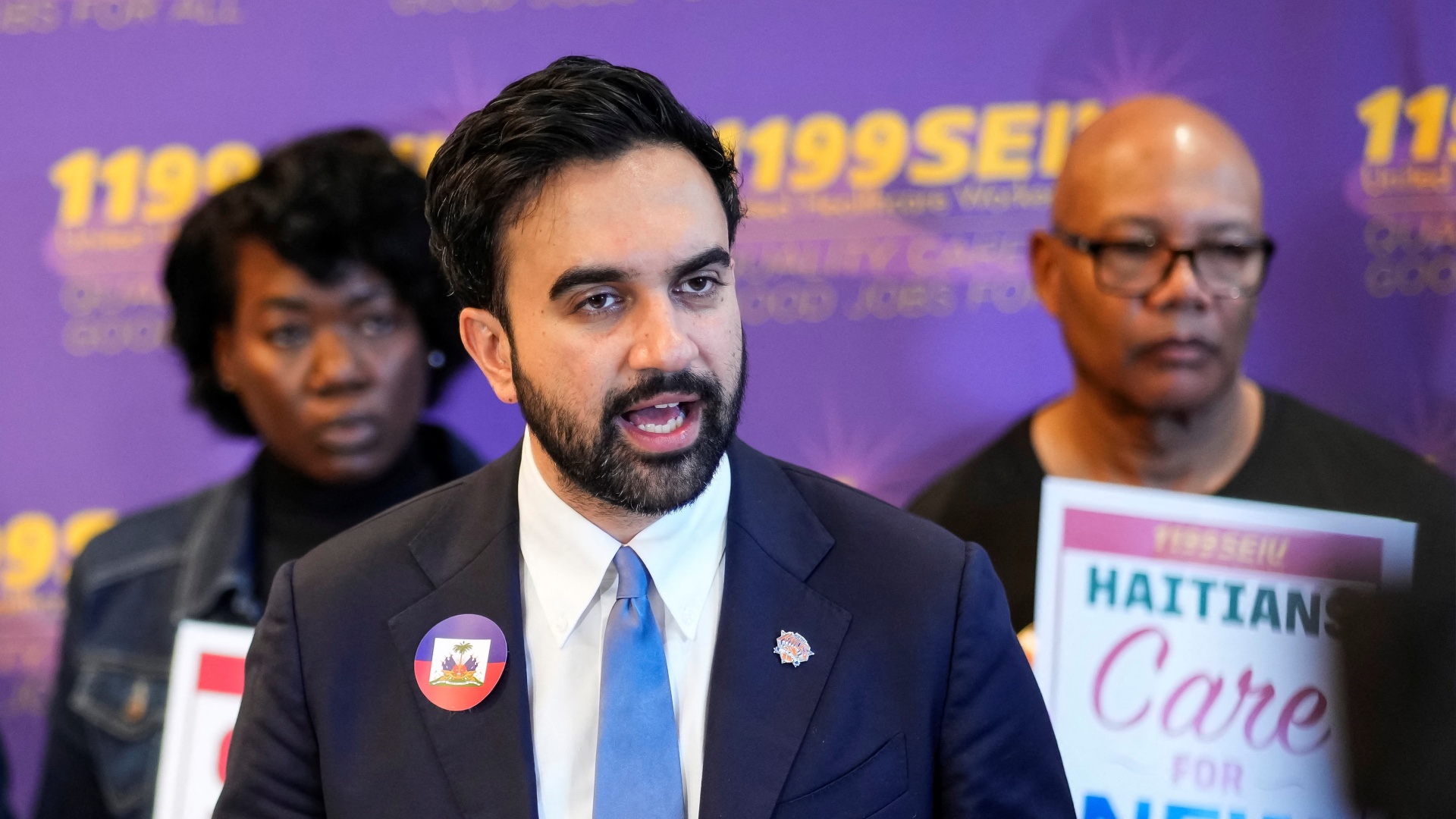
Pro-Israel rabbis demand Mamdani apologise for likening Aipac to ‘monsters’
A new firestorm has erupted in New York City’s charged political landscape after more than 700 pro-Israel rabbis and cantors signed an open letter released Friday calling on Mayor Zohran Mamdani to walk back inflammatory remarks that compared the powerful pro-Israel lobbying group the American Israel Public Affairs Committee (Aipac) to monsters.
Widely recognized as one of the most influential foreign policy advocacy organizations in the United States, Aipac has built its reputation by spending millions of dollars to defeat electoral candidates who take public critical stances toward Israel. The open letter was organized by The Jewish Majority, a relatively new advocacy group launched by Jonathan Schulman, a former Aipac staffer with nearly 20 years of experience working with the organization.
The letter opens by acknowledging the diverse ideological backgrounds of its signatories: “We are rabbis and cantors from across the United States. We serve different communities, hold different political views, and do not speak with one voice on every question concerning Israel, American politics or the war in Gaza.” But it quickly establishes unified condemnation of Mamdani’s rhetoric, adding: “But we are united in our belief that Mayor Zohran Mamdani’s recent speech about pro-Israel civic participation is dangerous, unacceptable and beneath the office he holds.”
Mamdani first made the controversial comments during a June 18 campaign rally alongside independent US Senator Bernie Sanders. At the event, he framed Aipac as a group of “monsters” that leverages millions in unreported dark money to advance a singular goal: holding onto political power by sowing division among the American public.
In the open letter, the rabbis argue that Mamdani’s language constitutes an act of dehumanization that amplifies rising antisemitism across the United States. “History demonstrates that campaigns against Jews often begin with rhetoric portraying them as uniquely sinister, uniquely powerful and somehow less deserving of equal treatment,” the letter reads. “Mr. Mamdani’s words invoke a familiar story about Jewish power, Jewish money and Jewish manipulation of public life.”
For his part, Mamdani has long pushed back against claims that criticism of Israel or anti-Zionist views equate to antisemitism, and he has refused to apologize for his remarks. When pressed by reporters to clarify his comments earlier this week, the mayor doubled down on his criticism, tying his remarks directly to the ongoing humanitarian crisis in Gaza.
“I want to be very clear. We’re talking about a status quo where children are being killed on a daily basis. More than 1,000 Palestinians have been killed by the Israeli military since the so-called ceasefire, [including] Al Jazeera journalist Ahmed Wishah, who was killed this past Saturday by an Israeli strike,” Mamdani told reporters.
“When I am speaking about Aipac, I’m speaking about an organisation that has been supportive of the status quo, that has fought any attempt to actually deliver safety to people, not just in Palestine, but frankly, through much of the region – and it is a status quo for immorality,” he added. “It is one that I will not accept.”
When asked specifically if he regretted using the term “monsters”, Mamdani claimed he was quoting a widely cited line from Italian Marxist philosopher Antonio Gramsci, though scholarly analysis has repeatedly found the specific phrasing he used is often misattributed or misquoted. “The old world is dying and the new world struggles to be born. Now is the time of monsters,” Mamdani explained, arguing he used the term to describe all actors blocking systemic change, not just Aipac.
Mamdani’s refusal to apologize drew fierce condemnation from right-wing media outlets across the US, which lambasted the mayor for his stance. The open letter from rabbis comes just one week after Mamdani’s progressive political movement passed a critical early electoral milestone: all three of the congressional candidates he endorsed won hotly contested Democratic primary races.
All three of the winning candidates have maintained open, consistent criticism of Israeli policy toward Gaza. In the most high-profile upset, public defender and first-time candidate Darializa Avila Chevalier defeated five-term incumbent Congressman Adriano Espaillat, chair of the Congressional Hispanic Caucus. Former city comptroller Brad Lander unseated incumbent Representative Dan Goldman, while state assembly member and former union organizer Claire Valdez defeated Brooklyn Borough President Antonio Reynoso in the race to fill the open seat left by retiring Representative Nydia Velazquez.
Supporters of the progressive movement quickly celebrated the three victories as evidence that Mamdani’s political project is not a passing fad, but rather the start of a lasting ideological shift within New York’s Democratic Party. Not all reactions were positive, however: the Anti-Defamation League (ADL), a prominent national pro-Israel organization, labeled the primary wins antisemitic, claiming they sent a “chilling” message to Jewish New Yorkers. On Friday, the ADL publicly endorsed the rabbis’ open letter on its social media platform X.
Alongside backing the letter, the ADL also issued condemnations of two unrelated political developments this week: a recent United Nations report that documents allegations of Israeli forces intentionally targeting Palestinian children, and a nuclear deal signed by former President Donald Trump’s administration to end escalating hostilities with Iran.
-

Danger of the US‑Iran ceasefire agreement is what it leaves out
After the most recent round of direct military confrontation between the United States and Iran de-escalated, a curious public spectacle emerged: Washington declared its mission a success, Tehran claimed its own victory, and Israel reaffirmed it retained full autonomy to launch strikes against Lebanese Hezbollah. Competing claims over whether Lebanese de-escalation was a formal part of the agreement have left many outside observers writing off the deal as a confused, bad-faith arrangement already teetering toward collapse. But for scholars of war termination and peace durability who have spent decades studying how conflicts end, these apparent contradictions are not a red flag — they are evidence that negotiations are working as intended. The real threat to long-term peace is not competing narratives, but what the Trump-brokered ceasefire leaves unaddressed.
Diplomacy is never a single negotiation between two parties. Political scientist Robert Putnam famously framed international statecraft as a “two-level game,” where leaders must simultaneously strike a deal abroad and sell that agreement to domestic political audiences. No international agreement survives unless it can win buy-in at home. The U.S.-Iran deal is far more complex: it functions as a five-level negotiating game. Washington must satisfy not only Iran, but also its closest regional ally Israel, a divided U.S. Congress, skeptical Gulf Arab partners, and wary European allies. For Tehran, the domestic and international constraints are equally daunting: leaders must win approval from Supreme Leader Ayatollah Ali Khamenei and the Islamic Revolutionary Guard Corps, Iran’s most powerful military institution, contain widespread public anger over crippling economic sanctions that could spill over into mass unrest, and maintain the support of its key global backers Russia and China.
Every concession and gain negotiated at the international table has to be packaged for stakeholders who were never present for the talks. This inherent dynamic is exactly what produces the contradictory public messaging that confuses outside observers. Each side is not speaking to its negotiating rival — it is speaking to its own domestic audience. Washington frames sanctions relief as a temporary, reversible move to appease hardline critics at home, while Tehran emphasizes its uncompromised national sovereignty to rally its public. Israel, meanwhile, underscores its unrestricted right to strike to satisfy its own domestic political base. This is not bad faith; it is standard diplomatic practice, with roots stretching back thousands of years.
The earliest recorded peace treaty in human history, struck between Egypt and the Hittite Empire after the 13th century BCE Battle of Kadesh, follows this exact pattern. Two distinct versions of the treaty survive, each carved into stone for a domestic audience, with framing that serves each side’s narrative. Peace between the two great powers endured not because they agreed on a single public story, but because each could sell the outcome to their own people. The cost of compromise varies by context: in Washington, it may come in the form of electoral backlash, while in Tehran, hardline factions have a long history of extracting severe political costs from leaders who negotiate with the West, as former President Hassan Rouhani and Foreign Minister Mohammad Javad Zarif learned after the 2015 Joint Comprehensive Plan of Action nuclear deal.
Contradictory public messaging is not the core problem with this latest deal. The real flaw is that the same multilevel negotiating pressures that produce messy public narratives also shape what negotiators are willing to include in the final text. Each side fights hard to secure visible, immediate rewards they can showcase to their domestic audiences, and pushes back hard against binding enforcement penalties that would force them to answer for noncompliance down the line. The result is a deal that is heavy on immediate benefits for all sides, and almost entirely lacking in credible enforcement mechanisms.
Research on conflict resolution bears out this risk. In research for the 2009 book *Securing the Peace*, it was found that negotiated settlements ending civil wars break down at roughly twice the rate of conflicts that end in clear military victory. While the research focused on internal conflicts, the core lesson applies broadly to all war settlements: agreements fail not because of conflicting public narratives, but because they lack credible enforcement once implementation begins. This weakness is hidden at the time of signing, when all parties are still collecting the immediate benefits the deal promises. It only emerges later, once those rewards are exhausted, and there are no penalties left to deter parties from defecting.
The 1979 Egypt-Israel Peace Treaty illustrates the alternative path to durable peace. The deal endured not simply because Egypt regained the Sinai Peninsula and Israel earned formal international recognition, but because those gains were embedded in a robust enforcement structure. Israeli withdrawal from the Sinai was phased and tied directly to ongoing compliance, the U.S. committed to long-term economic and military assistance for both nations, and the Multinational Force and Observers was deployed in 1981 to monitor demilitarization. More than four decades later, the treaty remains intact, proving the value of built-in enforcement.
For the U.S.-Iran deal, this lesson is clear: lasting peace depends not just on what parties gain immediately, but on the institutions and incentives built to enforce compliance long after the signing ceremony ends. Measured by that standard, the current agreement is built on unstable ground. It offers generous immediate rewards: the U.S. lifts economic blockades, issues oil export waivers, releases billions in frozen Iranian assets, and promises over $300 billion in reconstruction support. In exchange, Iran reopens the Strait of Hormuz and agrees to dilute its enriched uranium stockpile on domestic soil, while retaining all the infrastructure to ramp up enrichment again in the future. Almost every step delivers immediate benefit to one side or the other, and almost no step imposes meaningful costs on a party that chooses to walk away from the deal.
Enforcement is left to a hypothetical United Nations Security Council resolution that has not even been drafted, and the most contentious issue — long-term uranium enrichment limits — has been kicked down the road to a final agreement that may never be negotiated. An even deeper structural flaw is that the most powerful actors capable of derailing the deal are not bound by its terms at all. Israel, Hezbollah, and the broad network of Iranian-backed militias across the Middle East were never signatories to the agreement. They gain little from complying with its terms, and risk nothing if they choose to defect, leaving the deal with no mechanism to impose costs on spoilers that break the peace.
None of this means the deal is destined for immediate collapse. The history of peacemaking, from the Battle of Kadesh to the Dayton Accords that ended the Bosnian War to the Belfast Agreement that resolved Northern Ireland’s decades-long sectarian conflict, shows that public disputes and threats to walk away are normal growing pains, not proof of imminent failure. But surviving early turbulence is not the same as lasting for the long term. History shows that setbacks are inevitable; the question is whether parties will build robust institutions to deter defection before the immediate rewards are exhausted and the incentives to comply disappear.
The core task for negotiators moving forward is not what most analysts are focused on: it is not reconciling competing public narratives. It is building automatic, meaningful consequences for any actor that returns to violence — including the powerful regional actors that never took a seat at the negotiating table.
This analysis is by Monica Duffy Toft, Professor of International Politics and Director of the Center for Strategic Studies at The Fletcher School, Tufts University, republished from The Conversation under a Creative Commons license.
-

The Bhojpuri singers fighting vulgar tag on one of India’s oldest languages
A haunting century-old Bhojpuri folk song performed on a hit Indian music platform has become a viral overnight sensation, igniting a long-overdue reckoning with harmful stereotypes that have obscured the language’s rich, layered cultural heritage for decades.
When 29-year-old folk singer Udit Utpal, hailing from the rural Saharsa district of India’s northern state of Bihar, took the stage for *Coke Studio Bharat* — the Indian iteration of the global popular music franchise that amplifies underrepresented regional sounds for cross-South Asian audiences — to perform *Kachaudi Gali* alongside acclaimed vocalist Rekha Bhardwaj, the track quickly amassed millions of views. Beyond launching Utpal’s national career, the unexpected breakout hit has drawn renewed attention to Bhojpuri, a language spoken by tens of millions across northern India and a global diaspora stretching from the Caribbean to the South Pacific, yet one long reduced to harmful, one-note stereotypes in mainstream Indian culture.
For most modern Indians, Bhojpuri is synonymous with a commercial entertainment industry dominated by crude, sexually charged lyrics and misogynistic tropes. On film and television, Bihari characters and accents are routinely pushed into one-dimensional roles: comic sidekicks, impoverished migrant laborers, or unrefined rural outsiders. This persistent caricature has completely overshadowed Bhojpuri’s centuries-deep literary and folk canon, which includes thousands of folk songs, epic poetry, theatrical works, and oral storytelling traditions rooted in the lived experiences of Bihar’s people. For decades, regional folk artists have worked to preserve these traditions, but their work has been largely eclipsed by the language’s more visible, negative mainstream image.
For Utpal, changing that misperception has become a life’s mission. Growing up moving across different regions of Bihar for his father’s government job, he absorbed local folk melodies from childhood; in his early 20s, he began diving deeper into the work of iconic Bhojpuri playwrights and poets like Bhikhari Thakur and Mahendra Misir, who shaped the state’s folk artistic identity. A defining throughline of Bhojpuri folk music, he learned, is the experience of migration — a theme that has shaped Bihar for centuries, from the forced colonial labor systems that shipped Bihari workers across the British Empire to the modern pattern of outmigration to India’s wealthy urban centers for work. *Kachaudi Gali* itself embodies this history: it tells the story of a colonial-era woman mourning as her husband leaves to fight in a distant British war, cursing the empire that tore him from her and even imagining taking up arms herself.
“It hurts when you are deeply connected to the music of your roots, yet others perceive it poorly,” Utpal told reporters. “I really want to change that. I want people to realise that Bhojpuri and Bihari music have much more depth than the stereotypes suggest. I want them to hear the stories the music conveys.”
To make these stories accessible to new audiences, Utpal shares detailed contextual explanations of the history and cultural meaning of every song he posts to social media, pairing short performances with reflections on colonialism, migration, and the legacies of Bhojpuri’s greatest artists. It was this commitment to context that caught the eye of Khwab, producer of *Kachaudi Gali* for *Coke Studio Bharat*, who discovered Utpal a year ago through an Instagram video of the singer performing the track in his village.
“Utpal is obviously a brilliant singer, but when I read his explanation of the song’s history, I literally sat up in bed. I knew then that something significant had to come from this,” Khwab recalled.
For the *Coke Studio* reimagining, Khwab crafted a production that balances modern pop polish with uncompromising respect for the song’s traditional roots: all core traditional instruments — including shehnai, tabla, dholak, harmonium, and dotara — were recorded live, rather than relying on synthesized backing tracks. “It’s about preserving what might be lost while creating something fresh. I wanted others to realise that folk music can be cool too,” Khwab explained of the project’s mission.
Utpal’s folk revival is not the only effort to rewrite mainstream narratives about Bhojpuri: hundreds of kilometers away, independent rapper Sanket Shikriwal is challenging stereotypes from an entirely different angle, blending Bhojpuri language and themes with jazz, spoken word, and hip-hop to create a completely contemporary sound that bridges Bihar’s rural past and India’s digital present. Where Utpal’s work centers recovering forgotten traditional heritage, Shikriwal’s thrives on creative collision: his verses weave together village childhood memories with references to Franz Kafka and John Coltrane, pairing stories of migration with modern internet culture, and creating an ongoing conversation between past and present, village and city.
His music often uses raw street language and profanity to express social agitation, a choice he says is no different from the profanity long accepted as a tool for commentary in global hip-hop or even mainstream Punjabi music, which has grown into one of India’s most successful cultural exports under artists like Diljit Dosanjh and Sidhu Moosewala. Shikriwal argues that Bhojpuri is held to a double standard: other regional genres are allowed to experiment and work through raw emotion, but Bhojpuri is constantly expected to sanitize itself to prove its respectability.
“The question isn’t whether Bhojpuri can be made respectable. It’s why Bhojpuri speakers are always expected to prove that they are,” Shikriwal said. “What I hope for is not a sanitised version of Bhojpuri culture, but a more confident one — secure enough to define itself on its own terms. I want people to look at Bihar and see philosophers again. We call it the Land of Buddha, yet we treat its people with such disrespect.”
For Utpal, the viral success of *Kachaudi Gali* is already a sign that change is coming. Millions of listeners across India and beyond have connected with the song’s raw, centuries-old story of grief and resistance, proving that audiences are hungry for the full, unfiltered story of Bhojpuri culture. “It was a reminder that one of India’s most widely spoken languages is still waiting to be heard on its own terms,” Utpal said.