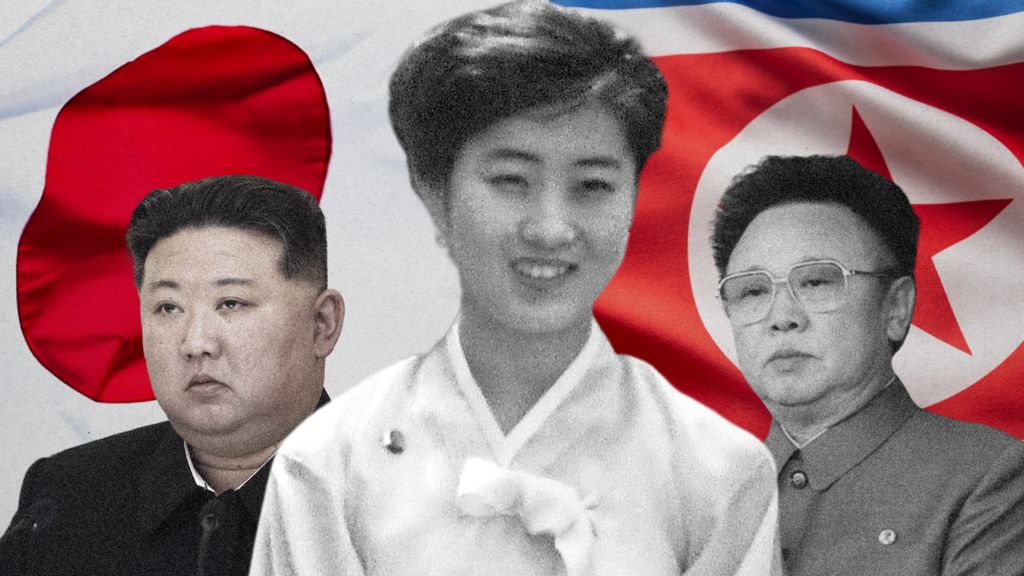
PYONGYANG – A high-profile diplomatic engagement took place in the DPRK capital on Friday, where Kim Jong-un, General Secretary of the Workers’ Party of Korea and President of the State Affairs of the Democratic People’s Republic of Korea (DPRK), held formal talks with visiting Chinese Foreign Minister Wang Yi. Wang, who also serves as a member of the Political Bureau of the Communist Party of China Central Committee, used the meeting to outline key priorities for bilateral cooperation between the two neighboring nations. During the discussion, Wang stated that China remains fully committed to collaborating with the DPRK to turn the important consensus reached by the top leadership of both countries and ruling parties into tangible progress, advancing mutually beneficial practical cooperation across multiple sectors. Against the backdrop of a shifting global landscape marked by overlapping geopolitical shifts and widespread uncertainty, Wang also emphasized the growing need for deeper communication and coordinated policy between Beijing and Pyongyang on major international and regional issues. This meeting marks a key milestone in ongoing diplomatic exchanges between China and the DPRK, coming as both countries navigate an increasingly complex global order.
标签: Asia
亚洲
-

A journey beyond prejudice: Why China deserves a place on your travel list
Fifteen years ago, if anyone had predicted that I would one day spend my vacations exploring China, I would have labeled them completely out of touch. Shaped by years of one-sided external narratives, my mind had already settled on a rigid, unflattering stereotype: a place of endless overwork, smog-choked skies, and a culture so disconnected from my own experience that it would be impossible to understand. I was trapped, not by any external force, but by the limiting prejudices I had chosen to carry.
-

Why Iran could be the one to finally kill Netanyahu’s career
Late Tuesday, Israelis fell asleep amid soaring tensions, after a stark threat from then-US President Donald Trump to erase Iranian civilization. Overnight, however, the landscape shifted dramatically: Trump had unexpectedly reached a ceasefire agreement with the Islamic Republic, ending a short but devastating regional conflict.
Following the White House announcement, Iranian state media released the 10 core terms that underpin Tehran’s agreement to the truce. Key provisions include a full permanent halt to cross-hostilities between Washington and Tehran, authorization for Iran to continue its domestic uranium enrichment program, formal security guarantees for Iran’s regional allied groups, war reparations for damage inflicted during joint US-Israeli strikes, and the right for Iran to impose transit fees on all commercial vessels passing through the Strait of Hormuz.
If these terms are formalized into a lasting US-Iran peace deal, political analysts widely agree it could spell the end of Benjamin Netanyahu’s decades-long political career. As a recent New York Times investigation revealed, Netanyahu was the primary driving force behind the conflict, single-handedly pressuring Trump to enter the war on Israel’s behalf. A ceasefire that leaves Iran strengthened would not only end his political run but also tarnish the hardline legacy he has spent decades building.
Netanyahu launched the conflict on February 28 with an explicit goal: to topple Iran’s ruling Islamic establishment. As Iran withstood weeks of intense strikes without caving to US demands, he gradually walked back that ambition, shifting his stated objective to weakening Iran enough to strip it of its status as a major regional power. He also sought to position Israel as the primary proxy through which the US would manage Middle East affairs—an outcome that never materialized.
Today, Iran’s ruling government remains fully intact, retains full control over its ballistic missile program, retains the capacity to restart full-scale nuclear activities, and has consolidated authority over the Strait of Hormuz, the global energy market’s most critical chokepoint. Many regional analysts now assess that Iran will emerge from the conflict as the most powerful state in the Middle East—a complete reversal of Netanyahu’s core war aims. For 30 years, Netanyahu has framed Iran as an existential threat to Israel and Western influence in the region; the conflict he pushed for has only turned that threat into a more formidable power.
Beyond Netanyahu’s personal political standing, the new ceasefire terms also put the long-term future of the Abraham Accords at risk. The agreements, which normalized relations between Israel and several Gulf Arab states, were built on the framework of excluding the Palestinian issue from negotiations. If Iran solidifies control over the Strait of Hormuz, those same Gulf states will become increasingly dependent on Iranian approval to export their oil and natural gas to global markets. The conflict also exposed the weakness of Gulf states, which failed to respond to Iranian incursions on their territory despite their long-standing security alliances with Washington. This has fueled growing doubt among Gulf leaders about the reliability of US and Israeli security guarantees, opening the door to a gradual shift away from American regional dominance.
The ceasefire also lays bare another major failure for Netanyahu: his claimed victory over Lebanon’s Hezbollah movement. After a November 2024 ceasefire between Israel and Hezbollah, Netanyahu and Israeli military leadership marketed a narrative of total defeat to the Israeli public, claiming the group had been dismantled as a military force and no longer posed a threat to northern Israel. For months, Israeli strikes across Lebanon went unanswered, reinforcing the perception that Hezbollah was broken. But when Hezbollah launched a massive retaliatory attack after Israeli forces killed Iran’s Supreme Leader Ali Khamenei, it shocked both the Israeli public and military leadership. A leaked conversation from the head of Israel’s Northern Command confirmed that military officials had massively underestimated Hezbollah’s remaining capabilities. Since the broader war began, the group has fired an average of 200 missiles into northern Israel daily, crippling economic and civilian life in the region. Now that Iran has demanded the ceasefire include Lebanon, Netanyahu faces political catastrophe: if the demand is met, the Iran-led Axis of Resistance—encompassing Hezbollah, Yemen’s Houthi movement, and Iraqi paramilitaries—will gain formal international recognition for the first time. Netanyahu will be unable to convince Israeli voters, especially displaced residents of the north, that he defeated Hezbollah when he is forced to end the conflict by Iranian pressure.
Across the board, Netanyahu’s war has ended in failure. He convinced the world’s sole superpower to join his campaign to topple the Iranian government, only to leave Iran stronger than before. He claimed to have destroyed Hezbollah, only to see the group emerge as a more potent threat to northern Israel. A Haaretz journalist recently captured the moment perfectly, comparing Netanyahu’s obsession with Iran to Captain Ahab’s obsessive hunt for Moby Dick in Herman Melville’s classic novel: just as Ahab’s obsession destroyed him, Iran’s new strength could end Netanyahu’s political career.
Contrary to expectations that wartime rallying would boost his support, opinion polls conducted during the conflict have shown no gain for Netanyahu’s right-wing coalition. With a national election looming, current polling puts his bloc at roughly 50 seats, 11 short of the 61-seat majority needed to form a new government. Even his core base of right-wing voters is growing disillusioned: for years, his supporters framed him as a leader divinely ordained to reshape the Middle East in Israel’s favor, a narrative that collapses now that Iran has emerged stronger. Even if his most loyal base remains intact, Netanyahu will struggle to rebuild trust with other segments of Israeli society, and disaffected right-wing voters are expected to defect to center-right, centrist, and center-left opposition parties.
Even after Trump’s ceasefire announcement, the Israeli military has continued its strikes against targets in Lebanon, a move Iran has labeled a deliberate violation of the truce. Tehran has already threatened to close the Strait of Hormuz in response to the continued attacks, leaving the ceasefire on extremely shaky ground. Analysts say Netanyahu’s continued aggression is no accident: backed into a corner politically, he has every incentive to sabotage the ceasefire to drag the US back into open war, in a last-ditch effort to salvage his political future and hardline legacy as the leader who secured Israeli dominance in the Middle East. Under heavy US pressure, Netanyahu hinted this Thursday that he was open to direct peace negotiations with the Lebanese government, but few analysts believe he will abandon his push to reverse the ceasefire. For a leader fighting for his political survival, there is little to lose in risking regional war to preserve his legacy.
-

British drone flew over Lebanon hours before and after Israeli massacre
On a Wednesday that would see Israel launch one of its deadliest single waves of attacks on Lebanese territory in months, a British military drone carried out a mysterious flight over Lebanon, including low-altitude circling near the eastern city of Baalbek, flight tracking data analyzed by Middle East Eye (MEE) confirms.
The unmanned Royal Air Force (RAF) MQ-9B Protector drone took off from RAF Akrotiri, the UK’s strategically located permanent military base on the Mediterranean island of Cyprus, in the early hours of Wednesday, and entered Lebanese airspace at approximately 6:20 a.m. local time, according to the analysis. From 6:30 a.m. to 6:50 a.m., the aircraft maintained a circular flight path over a region near the towns of Baalbek and Younine, located in eastern Lebanon’s Beqaa Valley just kilometers from the Syrian border.
Flight tracking logs show the drone crossed into Syrian airspace around 8 a.m., flying north past the central Syrian city of Homs before traversing the northwestern province of Idlib. No public flight data records the drone’s movements for the following roughly 12 hours, but the aircraft reappeared near Baalbek at approximately 8:15 p.m. — several hours after Israel’s large-scale early-afternoon strikes that left more than 300 people dead across Lebanon. It then traveled west across Baalbek, passed north of the capital Beirut, exited Lebanese airspace around 8:30 p.m., and returned to its base in Cyprus.
The Protector drone is a workhorse of RAF operations, regularly deployed for missions ranging from long-range surveillance and search and rescue to armed combat operations alongside NATO and U.S. forces, official RAF documentation confirms. What makes this flight notable is its timing: it operated over Lebanon both before and after Wednesday’s devastating Israeli strike wave, which came just one day after a two-week ceasefire between Iran and the United States was brokered. The purpose of the flight has not been disclosed by UK defense officials.
MEE has submitted two key questions to the UK Ministry of Defence (MoD): whether the flight was coordinated and cleared in advance with the Lebanese Armed Forces (LAF), and whether any intelligence or surveillance data collected during the mission was shared with Israeli or U.S. authorities. As of publication, no response has been received.
Local casualty data confirms the scale of the Israeli strikes that coincided with the British drone’s presence: Lebanon’s civil defense rescue organization reports 18 people killed and 28 wounded in strikes targeting Baalbek alone. Wednesday’s attacks were unannounced and intensive, hitting central Beirut and its suburbs simultaneously alongside multiple locations in southern Lebanon and the eastern Beqaa Valley.
The UK has a long-standing military relationship with Lebanon, focused primarily on border security assistance: since 2009, British military trainers have trained tens of thousands of LAF personnel, most assigned to the force’s Land Border Regiments, and the UK has funded the construction and upgrade of dozens of border observation posts along Lebanon’s northern and eastern frontiers.
RAF Akrotiri, the launch point for Wednesday’s drone flight, has already been a source of significant controversy during the ongoing regional conflict. Throughout Israel’s military campaign in the Gaza Strip, the base has hosted hundreds of RAF surveillance flights over the besieged enclave. The MoD has repeatedly claimed these flights were conducted exclusively to support Israeli hostage rescue operations, but the program has been wrapped in layers of official secrecy. Over the past two years, evidence has emerged that British officials share surveillance intelligence with Israel, and that RAF aircraft captured footage of Gaza on days when Israeli strikes killed British citizens in the territory.
A source familiar with British intelligence capabilities in the Middle East told MEE last year that the Gaza surveillance flights gave Britain an unobstructed, high-altitude “bird’s-eye view of the genocide” unfolding in the enclave. The source added that the UK, a core member of the Five Eyes intelligence-sharing alliance alongside the U.S., Australia, Canada, and New Zealand, is the “number one gatherer of intelligence” across the Middle East, with better situational awareness of on-the-ground events than any other external actor.
The UK also maintains a deep, formal defense partnership with Israel: in 2020, the two countries signed a classified military cooperation agreement designed to formalize and expand bilateral defense ties. The full text of the agreement has never been released to the public. Former Conservative UK defense minister James Heappey stated in 2021 that the accord would “streamline and provide a mechanism for planning our joint activity”. In 2024, Labour defense minister Luke Pollard confirmed the government would not declassify the agreement due to its high security classification, and the MoD confirmed last October that the agreement remains in full force, according to reporting from Declassified UK.
During the open conflict between the U.S.-Israeli alliance and Iran that began in late February, the UK repeatedly stated it would not participate directly in offensive operations, but it did allow American bombers to use British military bases to launch strikes targeting Iranian missile sites.
In comments released Thursday, British Foreign Secretary Yvette Cooper said the UK government believes Lebanon must be included in the terms of the Iran-U.S. ceasefire agreed Tuesday night. That ceasefire has been marked by conflicting claims over its scope: Pakistan, which mediated the bilateral truce, stated the two-week pause in fighting would extend to all fronts, including Lebanon. Israel has rejected that claim, and its large-scale strikes on Lebanon continued unchanged through Wednesday.
Following international outcry over Wednesday’s high-casualty strikes and threats of expanded retaliation from Iran, Israeli officials announced they would reduce the scope of their offensive operations in Lebanon and agreed to hold direct talks with the Lebanese government in Washington next week.
Lebanese government data puts the total death toll from Israeli air strikes across Lebanon at roughly 1,900 people since the outbreak of the war in late February, with more than one million Lebanese displaced from their homes. The conflict spread to Lebanon in early March, after Hezbollah launched a large rocket barrage across the Israeli border. The group said the attack was both in retaliation for the killing of Iran’s supreme leader Ali Khamenei, a key spiritual and political patron for the movement, and a pre-emptive strike to stop a planned large-scale Israeli invasion of Lebanon, a assessment that has been corroborated by independent reporting in Israeli media.
-

US, Iran brace for pivotal talks in Pakistan
As Pakistan finalizes security preparations for a high-stakes diplomatic gathering in Islamabad, negotiators from the United States and Iran are gearing up for what may prove one of the most consequential international negotiations of the year, set to open Saturday April 11, 2026. The talks aim to shore up a fragile two-week-old ceasefire that has already been pushed to the breaking point, undermined by ongoing Israeli military operations in Lebanon and intractable disagreements over core truce terms between Washington and Tehran.
The negotiations, which are scheduled to run for up to 15 days, will tackle a series of explosive, long-simmering issues beyond the immediate ceasefire, including constraints on Iran’s nuclear enrichment program and unimpeded commercial navigation through the strategically critical Strait of Hormuz — the chokepoint through which roughly 20% of the world’s daily oil shipments pass. Even as Islamabad has ramped up security across the capital to safeguard the delegations, Iran has explicitly tied its continued participation in the talks to an immediate end to Israeli attacks on Lebanese territory.
Leading the American delegation is US Vice President JD Vance, while Iran has kept details of its negotiating team closely held. Top Iranian officials have already gone as far as to argue that ongoing Israeli strikes in Lebanon render the entire diplomatic process in Pakistan meaningless. “The holding of talks to end the war is dependent on the US adhering to its ceasefire commitments on all fronts, especially in Lebanon,” Esmaeil Baqaei, Iran’s Foreign Ministry spokesman, confirmed this week.
The fragile truce faced a fresh wave of uncertainty Thursday, when US President Donald Trump publicly questioned its effectiveness in a social media post, accusing Iran of failing to uphold its commitments to allow free oil passage through the Strait of Hormuz. “Iran is doing a very poor job, dishonorable some would say, of allowing oil to pass through the Strait of Hormuz. That is not the agreement we have!” Trump wrote.
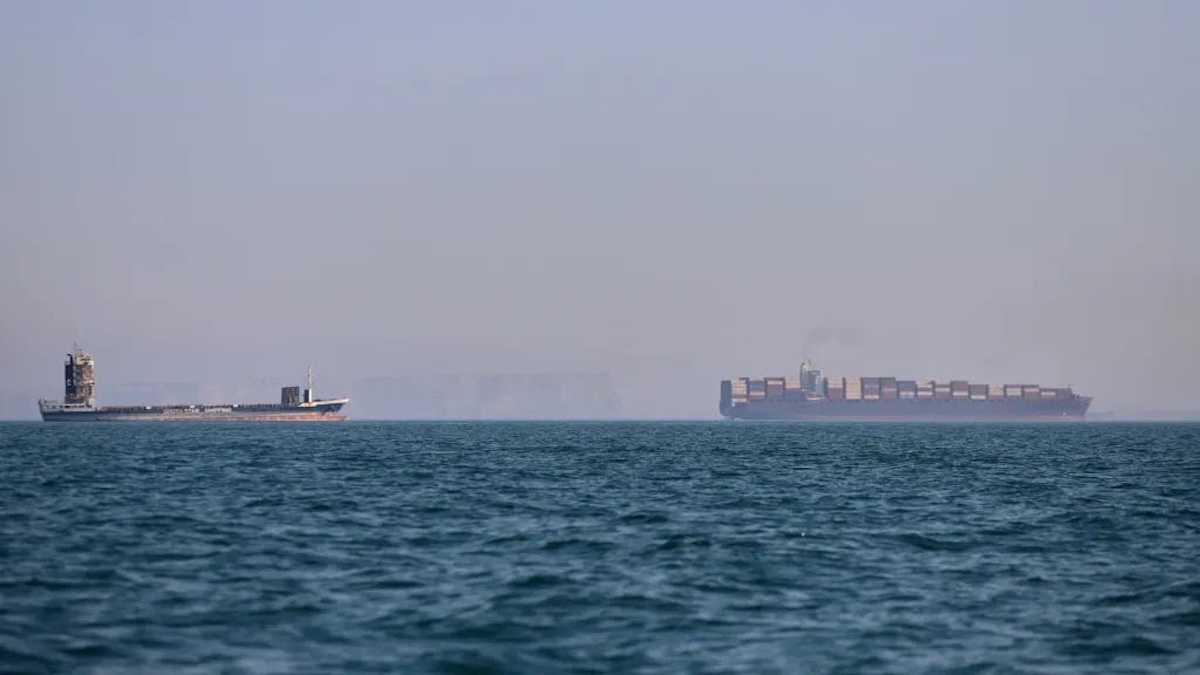
Early Friday, ship-tracking data highlighted the growing volatility around the strait, which Iran effectively controls. A Botswana-flagged liquefied natural gas tanker that had begun moving toward the exit of the Persian Gulf along a route approved by Iran’s Islamic Revolutionary Guard Corps unexpectedly reversed course mid-voyage, stoking market jitters over potential further disruptions to global energy supplies.
On Thursday, Iran’s Supreme Leader Mojtaba Khamenei announced that Tehran would shift management of the strait into what he called a “new phase,” framing the move as a reflection of the Iranian people’s “decisive victory” in the ongoing conflict. The announcement came 40 days after the death of former supreme leader Ali Khamenei, who was killed in US-Israeli airstrikes at the outbreak of hostilities.
The de facto partial closure of the strait has already sent global energy prices skyrocketing, rippling through global supply chains to raise costs for gasoline, food, and essential consumer goods far beyond the Middle East. As of Friday, the spot price of Brent crude, the global benchmark for oil, traded near $96 per barrel — a 35% jump since the start of the conflict.
International economic officials have already sounded the alarm over the conflict’s far-reaching impact. Kristalina Georgieva, Managing Director of the International Monetary Fund, warned Thursday that the Iran war has darkened the outlook for the global economy, regardless of whether the current fragile ceasefire survives. “Had it not been for this shock, we would have been upgrading global growth,” Georgieva told reporters ahead of next week’s joint IMF-World Bank spring meetings. “But now, even our most hopeful scenario involves a growth downgrade.”
Tensions continued to climb Friday, after Israel carried out fresh airstrikes targeting 10 rocket launchers in Lebanese territory. The strikes came just two days after Israel launched its heaviest bombardment of Lebanon since February 28, an attack that killed more than 300 people and delivered a major blow to ceasefire hopes. Iran’s parliament speaker Mohammad Bagher Qalibaf, who is widely tipped as a potential lead negotiator for Tehran in talks with Vance, warned Thursday that continued Israeli attacks on the Iran-aligned militant group Hezbollah in Lebanon would carry “explicit costs and strong responses.”
In a separate development Thursday, Kuwait announced it had faced a drone attack overnight and blamed Tehran for the strike, though Iran’s Revolutionary Guard quickly issued a denial of any involvement in the incident.
Despite the headwinds facing the Islamabad talks, there is a parallel diplomatic track in the works: a US State Department official confirmed Friday that Israel-Lebanon negotiations are scheduled to kick off next week in Washington, a development that could offer a small boost to regional ceasefire efforts. Still, many analysts remain deeply skeptical that any breakthrough is imminent.
Abid Abou Shhadeh, a Jaffa-based Israeli political analyst and activist, described the US-Iran ceasefire talks as “extremely problematic” from Israel’s perspective. According to a report from Al Jazeera, Shhadeh noted that Israeli leadership has no interest in any diplomatic settlement with Lebanon, a position aligned with public opinion: recent polls published in Israeli media show 79% of the Israeli public supports continuing military operations against Hezbollah in Lebanon.
-

South Korea deploys thermal imaging cameras in search for escaped zoo wolf
A large-scale multi-agency search is entering its fourth day in central South Korea, after a young gray wolf escaped a city zoo by burrowing under an enclosure fence last week, sparking public safety alerts and unexpected viral attention online.
Two-year-old male wolf Neukgu broke out of Daejeon O-World, a combined zoo and theme park located in the central South Korean city of Daejeon, on Wednesday, April 8, according to local zoo officials. After completing mandatory daily pre-opening enclosure inspections, staff noticed the wolf was absent from its habitat. A review of closed-circuit security footage confirmed Neukgu had damaged the base of the enclosure’s fence and dug through the underlying soil to escape, a zoo representative told local outlet *The Korea Times*.
Since the escape, authorities have mobilized over 300 personnel to track the animal, including trained firefighters, local police officers, and military troops. Search teams initially deployed thermal imaging cameras and drones to cover the wooded hillsides surrounding the zoo; thermal footage captured by the Korea Wildlife Protection Association on Wednesday did confirm Neukgu was moving through forested terrain within a few kilometers of the zoo. However, search efforts were hampered early Thursday when sudden heavy rain forced operators to ground all drones, an official told AFP.
As a precautionary public safety measure, a nearby elementary school suspended in-person classes on Thursday, and local government officials have issued repeated warnings to area residents to stay vigilant when outdoors, avoid isolated wooded areas, and immediately report any potential sightings of the wolf to search command.
South Korean President Lee Jae Myung publicly addressed the incident in a post on the social platform X Thursday, saying, “I hope no human casualties occur and I pray that Neukgu also returns home safely.”
What makes this search particularly notable is Neukgu’s role in a critical conservation initiative: the wolf, born in captivity in 2024, is part of a long-running program working to restore the Korean wolf, a subspecies that is officially classified as extinct in the wild across the Korean peninsula. A successful recapture would help protect the progress of this ongoing conservation work.
The high-profile escape has already captured the public’s imagination, drawing comparisons to a viral 2023 incident where a zebra named Sero escaped from a Seoul zoo and remained at large for several days. In an unexpected twist, the runaway wolf has already inspired a new meme cryptocurrency named after Neukgu, which launched on decentralized crypto exchanges within 24 hours of the escape being reported, local media confirmed.
-

China asks Japan to take practical steps to safeguard ties
In a formal statement issued on Friday, China has called on Japan to acknowledge and correct its recent missteps, urging Tokyo to implement tangible measures to protect the long-standing political foundation that underpins bilateral relations between the two nations.
The development comes immediately after Japan’s cabinet released its widely-watched annual Diplomatic Bluebook this Friday, which included a notable downgrade in how Tokyo characterizes its relationship with Beijing. For multiple years prior to 2025, Japan had referred to China as “one of Japan’s most important bilateral relations”; this year, the wording was revised sharply to only “an important neighbor.”
Mao Ning, spokesperson for China’s Ministry of Foreign Affairs, told reporters that the root of the current strained trajectory in China-Japan relations can be traced directly to inaccurate and harmful remarks made by Japanese Prime Minister Sanae Takaichi regarding the Taiwan question.
Mao emphasized that these inappropriate remarks have not only severely damaged the core political foundation that has allowed constructive China-Japan engagement for decades, but also pose a clear challenge to the rules-based post-WWII international order that regional stability depends on.
Closing her remarks, the spokesperson reiterated that Japan must abide by the four core political agreements signed between the two countries and honor all binding commitments Tokyo has already made to bilateral relations, in order to reverse the current downward trend in ties and prevent further escalation of tensions.
-

China enhances medical insurance policies to strengthen primary healthcare
China is rolling out a series of targeted updates to its national medical insurance framework, designed to shore up the development of under-resourced primary healthcare systems across the country, a senior official from the National Healthcare Security Administration (NHSA) announced during a Friday press briefing.
Xu Na, deputy director of the NHSA’s Department of Medical Service Management, explained that the new policy direction comes from a joint guideline published one month prior by three top national regulators: the NHSA, the National Development and Reform Commission, and the National Health Commission. The document outlines a full slate of coordinated support measures aimed at strengthening grassroots medical institutions and expanding access to high-quality, easily accessible care for the general public.
Among the key adjustments laid out in the guideline are provisions to gradually increase the share of national medical insurance fund spending directed to primary-level care facilities, revise outpatient reimbursement formulas to favor grassroots providers, roll out customized payment system reforms aligned with the unique needs of primary care, resolve persistent gaps in pharmaceutical access, and integrate smart digital tools to streamline patient experiences.
A concrete and significant requirement in the new framework mandates that the basic medical insurance reimbursement rate for outpatient services delivered at primary medical institutions must meet or exceed 50 percent, a threshold designed to incentivize patients to seek routine care at local grassroots facilities rather than overcrowded large urban hospitals.
To address widespread shortages of essential medications at the community and township level, authorities will leverage the national centralized drug procurement program to guarantee a stable supply of common medications and chronic disease treatments at primary care sites. Additionally, the policy supports grassroots institutions in rolling out biometric technology, including facial recognition devices, to cut down wait times for payment and insurance claim processing.
To refine the rollout and identify effective implementation strategies, the NHSA will select approximately 15 regional pilot sites to test the new policy package. Data and best practices gathered from these pilots will be used to develop replicable models that can be scaled out across all regions of China in the coming years.
-

In Algeria, Pope to pay homage to forgotten home of Christian icon St Augustine
In a groundbreaking moment for the global Catholic Church, Pope Leo XIV will make the first official papal visit to Algeria this April, kicking off a multi-nation African tour that will also take him to Cameroon, Angola and Equatorial Guinea from April 13 to 15. The visit carries deep personal and historical meaning, tied closely to the pontiff’s lifelong connection to Saint Augustine, the iconic fourth-century theologian whose origins are deeply rooted in what is now northeastern Algeria.
Pope Leo, born Robert Francis Prevost in the United States, has identified himself as a devoted Augustinian from his earliest days in the Church. He joined the Augustinian Order at age 22 after studying mathematics and philosophy in Philadelphia, and eventually rose to lead the order as its prior general. His connection to Algeria stretches back more than two decades: in 2001, he first visited the North African country to attend an international symposium on Saint Augustine hosted by the University of Annaba. As Cardinal Jean-Paul Vesco, Archbishop of Algiers, revealed, he encouraged the newly elected pope to prioritize an Algerian visit within the first months of his pontificate.
Saint Augustine, one of the most influential thinkers in Christian history, was born in 354 CE in Thagaste, a Amazigh-Roman settlement that is today the Algerian city of Souk Ahras. He later served as bishop of Hippo Regius, the ancient name for Annaba, the second stop on Pope Leo’s upcoming itinerary. In his first public address after his election in Rome’s St. Peter’s Square last May, the pope highlighted his Augustinian identity, quoting the theologian’s famous words: “With you I am a Christian, and for you I am a bishop.” The remark resonated strongly in Algerian media, which has emphasized the new pope’s deep reverence for the North African-born scholar.
For Algerian historian Abdenasser Smail, author of the recently published *Saint-Augustin, un Nord-Africain universel*, the visit is as much an act of historical reckoning as it is a religious pilgrimage. “Augustine is a figure rooted in North African geography and culture. Yet, this essential dimension has long been obscured, both in Western representations and in contemporary Algerian national narratives,” Smail explained. He argues that the pope’s tribute to Saint Augustine corrects this historical erasure, noting that even in majority-Muslim Algeria, citizens can take pride in the thinker as a native son. “Being proud of one’s history doesn’t mean adopting another faith. It means recognising that this land has produced multiple great figures. To deny this is not to defend Islam. It is to impoverish our own memory,” Smail added.
Pope Leo’s itinerary reflects the dual religious and historical significance of the trip. After arriving in the capital Algiers, he will deliver a public address at the Martyrs’ Monument, a memorial to those who died in Algeria’s war of independence from French rule, followed by a meeting with the country’s top government leaders at the Great Mosque’s conference center. In Algiers, he will also pray at the chapel dedicated to the 19 Christian religious figures killed during Algeria’s brutal 1992–2002 civil war, a period known locally as the “Black Decade.” These victims, which included Bishop Pierre Claverie of Oran and the seven monks of Tibhirine, were declared martyrs by former Pope Francis and beatified in 2018 in the first such ceremony ever held in a Muslim-majority nation. The trip will conclude with a visit to Annaba’s Saint Augustine Basilica, which is currently undergoing maintenance in preparation for the pontiff’s arrival.
Algerian authorities have placed exceptional importance on the historic visit, with President Abdelmadjid Tebboune personally overseeing all preparations. Annaba has undergone extensive public works, including road resurfacing, street cleaning and infrastructure upgrades along the route to the basilica, to welcome the pope.
Beyond honoring Saint Augustine, the visit also offers a gesture of support to Algeria’s small but deeply rooted Catholic community. Out of Algeria’s total population of 46 million, just around 4,200 Catholics live across the country’s four dioceses, a sharp decline from the colonial era when thousands of European Catholics resided in the territory. Most current faithful are foreign migrants from sub-Saharan Africa, with only a few hundred native Algerian Catholics remaining. The community traces its modern evolution to the work of Cardinal Leon-Etienne Duval, who served as Archbishop of Algiers from 1954 to 1988. Duval famously condemned French colonial torture and massacres just one year after the outbreak of Algeria’s independence war, supported Algerian self-determination, and transformed the Catholic Church in the country from a colonial institution into a locally rooted, state-recognized organization that retained its social service missions after independence in 1962.
Today, the small Catholic community coexists peacefully with Algeria’s majority-Muslim population, and its status as an officially recognized religious body allows it to operate openly, even running schools and medical clinics that serve all Algerians. “I live my faith discreetly, as required by the fact that I live in a Muslim society, but I have never received a single derogatory remark,” said Simon, an Ivorian student studying in Algiers who attends weekly mass and participates in the community’s charitable outreach for disadvantaged Algerian children. For Algeria’s Catholic faithful, the pope’s visit is a momentous occasion. “It’s a gift, a grace, for our little flock here in Algeria,” Simon added.
However, the visit also brings forward unresolved issues around religious freedom and human rights that have drawn international attention. While the Catholic Church enjoys official recognition, other Christian groups face severe restrictions. A 2006 Algerian decree requires all religious communities practicing faiths other than Islam to obtain state authorization for their activities and places of worship. The Protestant Church of Algeria, despite official recognition in 2011, has seen all its public places of worship closed by authorities, who accuse evangelical Protestants of proselytizing and unlawful conversions – activities banned under Algerian law. Multiple pastors face legal prosecution, and many minority religious adherents decline to speak publicly for fear of government reprisal. The restrictions also extend to other minority groups, including the Ahmadiyya community, whose members are labeled heretics by the Sunni majority.
In advance of the visit, three major international human rights NGOs – EuroMed Rights, Human Rights Watch and the MENA Rights Group – issued an open letter urging Pope Leo to raise these concerns, as well as the issue of widespread arbitrary detention, during his meetings with Algerian leaders. “Hundreds of protesters, activists, journalists and human rights defenders have been arbitrarily detained, unjustly prosecuted and sentenced to prison terms for exercising their rights to freedom of expression and peaceful assembly,” the groups wrote, calling on the pontiff to press Algerian authorities to end religious discrimination and release unjustly detained individuals.
-

‘We felt death’: Survivors recount Israel’s massacre in Beirut
It was an ordinary Wednesday afternoon for thousands of Lebanese civilians going about their daily routines across Beirut, the Beqaa Valley and southern Lebanon. But just after 2 p.m. local time, that quiet normalcy was shattered forever when Israeli warplanes launched a simultaneous wave of intensive airstrikes targeting densely populated residential neighborhoods, leaving more than 300 people dead and over 1,150 injured, according to Lebanon’s official health ministry.
For 15-year-old Abdelwahab, who only provided his first name to reporters, the strike on Beirut’s working-class Corniche el Mazraa district interrupted his efforts to earn money for his mother’s cancer treatment, where he worked selling bottled water from a small street kiosk near the Cola roundabout. The first sensation he recalled after the blast was an eerie, deafening silence, quickly replaced by thick plumes of mixed black and white smoke, choking dust, and the panicked screams of injured and trapped survivors. When the air began to clear, Abdelwahab ran toward the destroyed site near a local branch of Rifai Nuts, a beloved Lebanese roastery where surrounding apartment buildings and a public parking lot had been torn apart by the impact.
Among the rubble, the teen first spotted a severed, burned arm – a sight that would haunt him, but he pushed past the shock to start pulling survivors and victims from the wreckage. “There was nothing to do but help. Even a one-year-old would try,” he explained to reporters from Middle East Eye. He carried broken bodies from the debris, half-closing his eyes to block out the gore that threatened to stop him, and kept working long after official civil defense teams arrived on scene. Even with a face mask, he said, the acrid smell of smoke and decomposing bodies clung to him.
Among the dead was Nader Khalil, a 35-year employee of the roastery who had bought water from Abdelwahab’s kiosk every single day. “He was a nice man. What did he do to deserve this?” the teen asked. That night, he returned home to his sick mother and made up gentle stories to hide the horrors he had witnessed, unwilling to add to her burden. The next day, he went back to his kiosk, but the once-busy neighborhood felt hollow: shops were shuttered, traffic was sparse, and the street was nearly empty, drained by both fear and a national day of mourning.
Not far from Abdelwahab’s kiosk, 47-year-old Samir Assaf, a Palestinian refugee who fled the destroyed Yarmouk refugee camp in Syria during that country’s civil war to rebuild his life in Beirut, also survived the strike by chance. Assaf makes a meager living selling tissue packets to drivers at the nearby traffic intersection, supporting his wife and two children. On Wednesday afternoon, he had stepped into the shade for a quick break when the blast hit, throwing him straight to the ground. When he scrambled to his feet, his vision was completely obscured by smoke, and the entire parking lot in front of him was turned to black ash. The only thing he could make out through the haze was the red glow of the traffic light, still burning unchanged in the distance.
“I was able to call my wife to tell her I’m alive. But many people who work nearby didn’t make it,” he said. The strike killed civilians across the neighborhood: the owner of a local flower shop, the building’s doorman, a traveling sheikh, and even young patients being treated at a second-floor children’s clinic. “We felt death, we felt it. May no one ever feel it,” Assaf said.
The day after the attack, Assaf and his family were forced back to Corniche el Mazraa. They had received an Israeli evacuation warning for their home neighborhood of Jnah – a notification that almost always precedes new airstrikes – and were seeking temporary shelter with relatives nearby. But they also came back to see what was left of the street corner where Assaf had built his livelihood and daily routine. For Assaf’s wife Wessam, the destruction brought back unbearable trauma from her time fleeing Syria. “We escaped the Yarmouk refugee camp because of the bombardment, and now we are here and there’s bombardment again. This place reminds me of Yarmouk,” she said.
Similar scenes of destruction and grief unfolded across Beirut on Wednesday. In Ain el Mreisseh, a coastal neighborhood known for its charming historic residential architecture, an Israeli airstrike hit a mid-rise apartment block. Neighboring resident Yousef, who only gave his first name, recalled that the building stood for just seconds before half of it collapsed, killing all the civilians trapped inside. “There was no air, just dust,” he said. “Some people were able to get out, others were not so lucky.”
Official rescue operations launched immediately after the strikes and stretched through Thursday night. Civil defense teams set up massive floodlights to work after dark, using heavy excavators to carefully sift through tons of concrete and twisted rebar, searching for any remaining survivors and missing victims. The air hung thick with dust and unspoken grief: one entire side of the collapsed Ain el Mreisseh building had been torn away, leaving the private interiors of family homes exposed to the street. Fragments of ordinary life stood frozen mid-moment: a dress hanging undamaged in a closet, a table lamp still standing upright, a painting hanging crookedly on a half-broken wall, bathroom tiles still intact beneath piles of rubble.
By nightfall, all but one of the victims had been recovered from the Ain el Mreisseh rubble. The only person missing was 26-year-old Zahraa, niece of a middle-aged man who stood watching over the excavation all night, never leaving the top of the rubble pile. When rescue crews got close to where they believed her body was located, the heavy excavator slowed to a delicate, careful pace, its movements almost gentle to avoid causing further damage. At times, crews put down the heavy machinery altogether and picked up shovels, or even dug with their bare hands.
Around the grieving uncle, dozens of other people – relatives of other victims, neighbors, and even complete strangers – stayed long after their own loved ones had been recovered. They stood with him in total silence, an unspoken act of solidarity to make sure he did not have to wait alone, bound by shared grief in the aftermath of a devastating attack that has upended countless civilian lives across Lebanon.