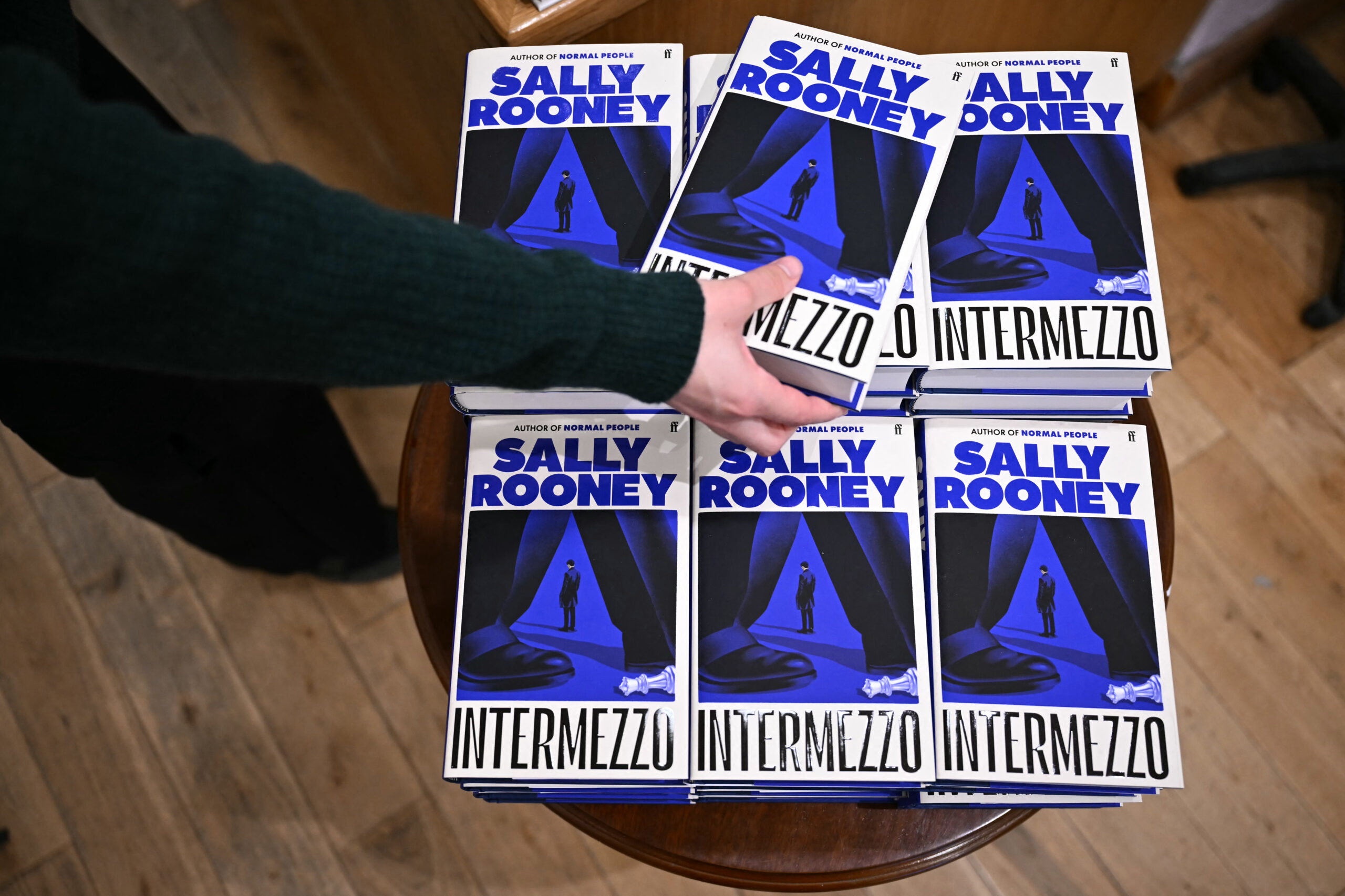
Renowned Irish author Sally Rooney, a long-standing high-profile supporter of the Palestinian cause and the Boycott, Divestment and Sanctions (BDS) movement, has sparked intense global controversy after confirming her latest novel *Intermezzo* will be released in a Hebrew translation, a decision that has split opinion across social media and activist circles.
Rooney first drew international attention to her pro-Palestine stance in 2021, when she rejected a translation offer from Israeli publisher Modan for her third book, adhering to BDS’ call for a cultural boycott of complicit Israeli institutions. That decision cemented her reputation as one of the most prominent literary figures backing Palestinian rights, and she would later sign a 2024 pledge from the Palestine Festival of Literature alongside more than 1,000 other authors, committing to avoid working with Israeli cultural institutions that remain silent on the oppression of the Palestinian people.
On Tuesday, +972 Magazine announced that after five years of negotiations with Rooney to align the project with boycott principles and Palestinian demands for freedom, equality and justice, the Hebrew translation would be published in partnership with small Israeli publishing house November Books and activist group Local Call. The translation will be distributed across both Israel and Palestine.
In a Guardian interview timed to the announcement, Rooney clarified that her 2021 boycott was never targeted at the Hebrew language itself, only at institutions complicit in Israeli violations of Palestinian rights. “Though my refusal to work with complicit Israeli publishing houses made the contractual side of things more complex, I was, of course, never boycotting the Hebrew language or any language. I’m very pleased that *Intermezzo* will soon be available in Hebrew with November Books,” she said.
Rooney went on to outline why November Books meets BDS compliance criteria: the independent press does not operate in illegal Israeli settlements in the occupied West Bank, accepts no Israeli state funding, and explicitly endorses the international legal rights of the Palestinian people, including the right of return. She also confirmed that she remained in regular consultation with the Palestinian Campaign for the Academic and Cultural Boycott of Israel (PACBI), a founding BDS coalition member, throughout the process to ensure the project upheld both the letter and spirit of the institutional boycott. +972 Magazine executive director Haggai Matar later reaffirmed this consultation on social media, noting that PACBI guidelines explicitly state mere affiliation of individual Israeli cultural workers to an Israeli institution does not automatically trigger a boycott. After reviewing 98 different Israeli publishing houses, the project partners concluded November Books was the only publisher that did not meet the boycott criteria of being complicit in violating Palestinian rights.
Despite these justifications, the decision has drawn sharp criticism from prominent Palestinian writers, activists and scholars, who have raised a range of objections. Prominent Palestinian writer and activist Mohammed El-Kurd condemned the move as “creating loopholes to bypass sanctions”, arguing that the core purpose of cultural sanctions is to pressure Israeli society to push for policy change from their leadership. He also pushed back against the framing of the project as an effort to counter claims that BDS is antisemitic, writing: “We are years into a genocide and it is as if we have learned nothing.”
Palestinian-American author and activist Susan Abulhawa echoed this criticism, noting that Rooney’s work does not center Palestinian liberation or anti-colonial themes, and arguing that the five-year effort to secure a Hebrew translation is inconsistent with BDS mission. She also highlighted the double standard at play, pointing out that her own work, which centers Palestinian experiences, has never received the same level of interest for Hebrew translation. Other critics have argued that even if the project technically complies with BDS guidelines, it undermines the broader goal of cultural isolation of Israel, and that framing the collaboration with a small dissident Israeli publisher acts to normalize the status of Israeli occupation. Middle East scholar Khaldoun Khelil dismissed the move as a “meaningless gesture” that delivers no material benefit to Palestinians, while other social media users have gone as far as labeling the decision a “disgusting, insulting betrayal” of the Palestinian cause.
Defenders of the project, however, have pushed back against these criticisms. Matar emphasized in a statement to Middle East Eye that every step of the project was carried out in full alignment with BDS guidelines, pointing to Rooney’s Guardian interview and +972’s public explanation for the collaboration. A small number of social media users also expressed support, describing +972 Magazine as one of the most courageous independent media outlets working across the Israel-Palestine region, and calling the union of a high-profile literary figure with an independent, pro-Palestine Israeli press a positive development.
As of publication, Middle East Eye has reached out to both Rooney’s representative and the BDS national movement for additional comment, and the article has been updated to include Matar’s full statement.