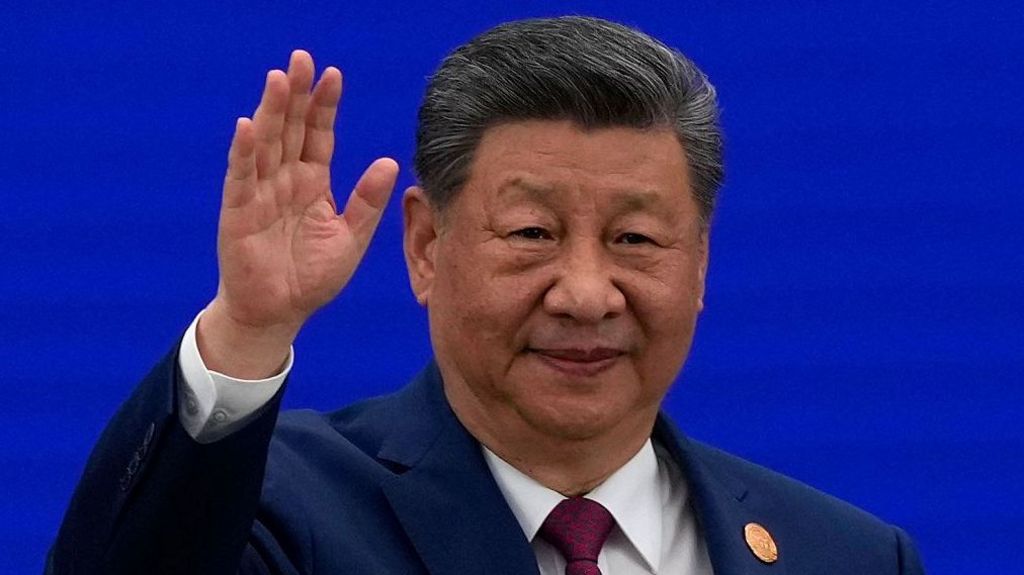
Against a backdrop of growing global alarm over unregulated advanced artificial intelligence development, deep geopolitical tensions between the world’s two largest AI powers—the United States and China—have thrown the future of collaborative AI governance into doubt, with competing national priorities and threat narratives blocking consensus on safety standards.
标签: Asia
亚洲
-

Bali police investigate after Australian man and children found dead in home
Authorities in Bali, Indonesia have launched a full investigation into the tragic deaths of an Australian national and his two young children, whose bodies were discovered inside a rental bungalow in the island’s busy tourist hub of Kuta. The deceased have been identified as 56-year-old Damien John Shaw, originally from Fremantle, Western Australia, his 6-year-old son and 4-year-old daughter.
The sequence of events that led to the discovery began when Shaw’s wife, who was not present in Bali at the time, reached out to local neighbours to check on the family. According to police statements, the woman had been on a phone call with her husband when she heard one of her children crying in the background, before the call cut off unexpectedly. After she was unable to re-establish contact with Shaw in subsequent attempts, she alerted neighbours to the potential emergency. It has been confirmed that the woman had traveled to Jakarta, Indonesia’s capital, several days before the incident.
When neighbours arrived at the property and received no answer to repeated knocks on the door, they forced entry alongside other local residents, and made the grim discovery of the three bodies inside the bungalow on Sunday. Local police have dispatched teams of investigators and forensics officers to process the crime scene, but have so far not confirmed the official cause or manner of death. Further forensic examinations are currently underway to establish a clear timeline and determine how the three victims died.
While Australian media outlets have cited law enforcement sources describing the case as a suspected murder-suicide, Indonesian police have pushed back on premature conclusions, saying they will not confirm any motive or cause until all evidence has been reviewed. Western Australia Premier Roger Cook has publicly responded to the tragedy, describing it as deeply distressing. “This is a very sad situation; our hearts go out to everyone involved. We hope we can get to the bottom of what’s gone on as soon as possible,” Cook told reporters.
-
Hyrox athlete sparks debate for continuing race after soiling herself
A little-known incident at a recent Hyrox indoor fitness competition in Beijing has ignited a fierce global debate across social media and fitness communities, after an unidentified female athlete finished the full race despite an involuntary bodily accident mid-event.
Footage of the athlete, who continued pushing through the course with visibly soiled legs, spread rapidly across major social platforms this weekend, splitting public opinion into sharply contrasting camps. On one side, many observers have praised the competitor’s extraordinary grit and commitment to finishing a race she spent months training for, drawing parallels to well-documented similar incidents among elite endurance athletes. On the other side, critics have raised urgent public hygiene concerns, questioning why event organizers did not pull the athlete from the course immediately to sanitize the affected area before other participants continued competing. Some critics have also targeted event officials for their decision to allow the athlete to continue.
In the wake of the incident, Hyrox, the German-headquartered fitness brand that hosts the global series of races, released an official statement acknowledging the situation. The company confirmed that it launched a large-scale emergency cleanup operation immediately after Saturday’s event, which included full sanitization of all race equipment and replacement of contaminated sections of the event carpet.
While Hyrox recognized that the hygiene concerns raised by participants and the public are legitimate, the firm issued a firm rebuke of online harassment directed at the athlete, after her identity was leaked on social media. The unnamed competitor has since received multiple violent threats from internet users, a development Hyrox condemned in the strongest terms.
“There is no place in our community for threats of violence or encouragement to harm an athlete,” the organization said in its Monday statement. “Any person identified as engaging in this behaviour – whether through comments, direct messages or social media – will be permanently banned from all Hyrox events.”
According to Chinese state media reports, multiple participants who competed in the same Beijing race have demanded a formal apology and full refunds from Hyrox, arguing that they were unnecessarily exposed to potentially contaminated equipment during the race.
For context, Hyrox events combine a sequence of one-kilometer running intervals with eight different functional fitness stations, including sled pushes, burpee broad jumps, indoor rowing, and weighted sandbag lunges. Since its founding in Hamburg, Germany, in 2017, the mass participation fitness competition has exploded in popularity, attracting thousands of recreational and elite athletes across 30+ countries worldwide.
Critics of the organization’s handling of the incident have pointed out that Hyrox’s official rules already penalize other unsanitary acts, including spitting and littering, leading many to ask why officials did not intervene when the incident occurred.
“From a basic health and sanitation standpoint, the athlete should have been stopped immediately, and any contaminated areas should have been closed off and properly cleaned before other athletes were allowed through,” Erica Dodge, a U.S.-based nurse, wrote in a widely shared Instagram comment.
Joe Ho, one of the participants in the weekend Beijing race, has publicly criticized Hyrox’s delayed and insufficient response to the incident, calling on the organization to take accountability for procedural failures. “If the organisation accepts that something went wrong, why not offer affected participants refunds, credits, or some meaningful form of compensation?” Ho asked.
But many members of the global endurance fitness community have come to the athlete’s defense, noting that involuntary bodily accidents are not an uncommon occurrence during high-endurance, long-duration events, when athletes prioritize pushing their physical limits over stopping for mid-race breaks. Many have cited two well-publicized prior incidents to back this perspective: in the 2005 London Marathon, British elite runner Paula Radcliffe famously stopped mid-race to relieve herself on the side of the course in full view of broadcast cameras before going on to win the race, and earlier this year, Chinese elite marathoner Li Meizhen drew public support after finishing the Hengshui Lake Marathon with visible menstrual blood on her leggings, with many praising her commitment to competing.
Supporters of the Beijing Hyrox athlete echo that same reasoning, noting that many competitors spend months of intense training just to earn a spot in major races, and abandoning mid-event is simply not a choice many are willing to make. “They’ve trained too long and too hard to give up just like that,” one Facebook commenter wrote.
-
Police say it could take months to identify Philippine ferry fire victims
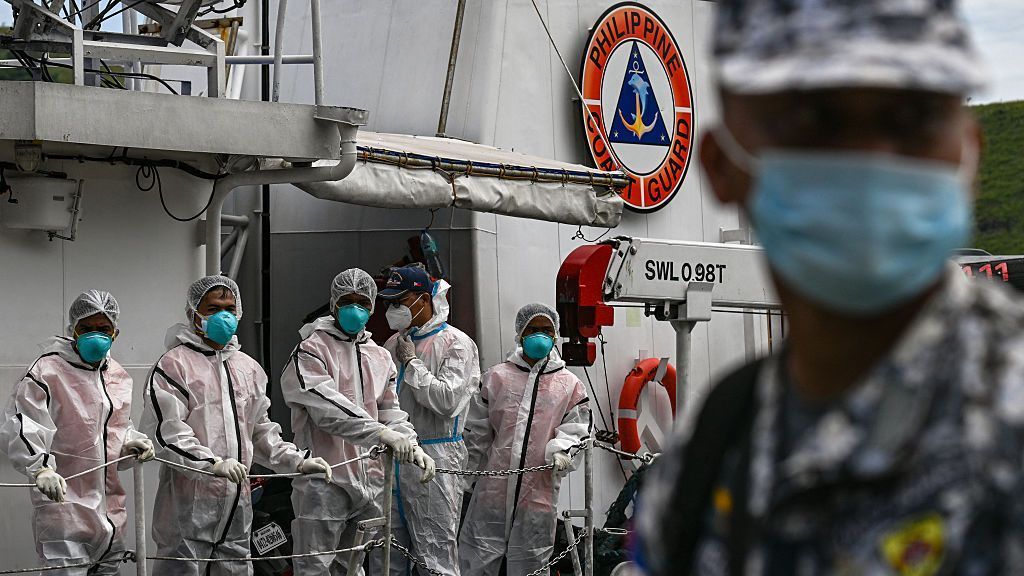
One week after a devastating cargo hold fire tore through the passenger ferry MV June Aster off the Philippine coast, local authorities are facing the grim, labor-intensive task of identifying the remains of 76 confirmed fatalities, a process that forensic officials warn could stretch from weeks to months. The disaster, which unfolded as the vessel sailed from Manila to the popular tourist hub of Coron in Palawan province, has left 13 people still missing and 43 survivors, many of whom have shared harrowing accounts of panic and escape from the rapidly spreading blaze.\n\nSpeaking to reporters on Sunday, Richard Allan Mangalip, a forensic specialist with the Philippine National Police, explained the primary challenge slowing the identification work: most recovered remains are heavily charred from the intense, prolonged fire that burned through the vessel for more than 40 hours. “We are pushing our full efforts to collect any potential identifying markers from the remains,” Mangalip said, noting that the large number of specimens has made it impossible to set a firm, fast deadline for the process. To assist forensic teams, authorities have requested that family members of missing passengers provide DNA samples and information about personal belongings that may help confirm identities.\n\nThe MV June Aster departed Manila last Tuesday on a routine voyage to Coron, a top tourism draw famous for its white-sand beaches and World War II-era shipwreck diving sites. The passenger manifest included a mix of international and domestic tourists, workers commuting to the island, and people traveling to visit family members. Survivor accounts collected in the days after the fire paint a picture of sudden chaos: many reported hearing a loud explosion seconds before smoke began billowing from the cargo hold, and the fire spread so quickly that passengers had only minutes to react before the entire vessel was engulfed. One survivor told the BBC that he was knocked to the deck and trampled in the panicked rush to escape, before managing to jump overboard into the ocean, where he waited hours for rescue.\n\nRescue and recovery operations were severely hampered by the conditions on board: the fire burned for more than 24 hours, generating extreme heat and toxic fumes that kept first responders from accessing the vessel for more than 40 hours. When teams finally were able to board, they found many remains clustered together in sections of the ferry, a grim reminder of how quickly the disaster overtook trapped passengers.\n\nIn an official statement released Sunday, the Philippine Coast Guard, which is leading the ongoing recovery and investigation, expressed its solidarity with those affected by the tragedy. “Our thoughts continue to be with the survivors and the families who are still waiting for word of their loved ones,” the statement read. “We understand the overwhelming pain and uncertainty they are living with every day as we work through recovery and identification, and we are committed to completing this process as thoroughly and expediently as possible.” A senior coast guard official confirmed Saturday that two parallel priorities are guiding the response: identifying all victims, and launching a full investigation to determine the root cause of the blaze.
-
Nearly 86,000 people flee fighting in Yemen, UN says
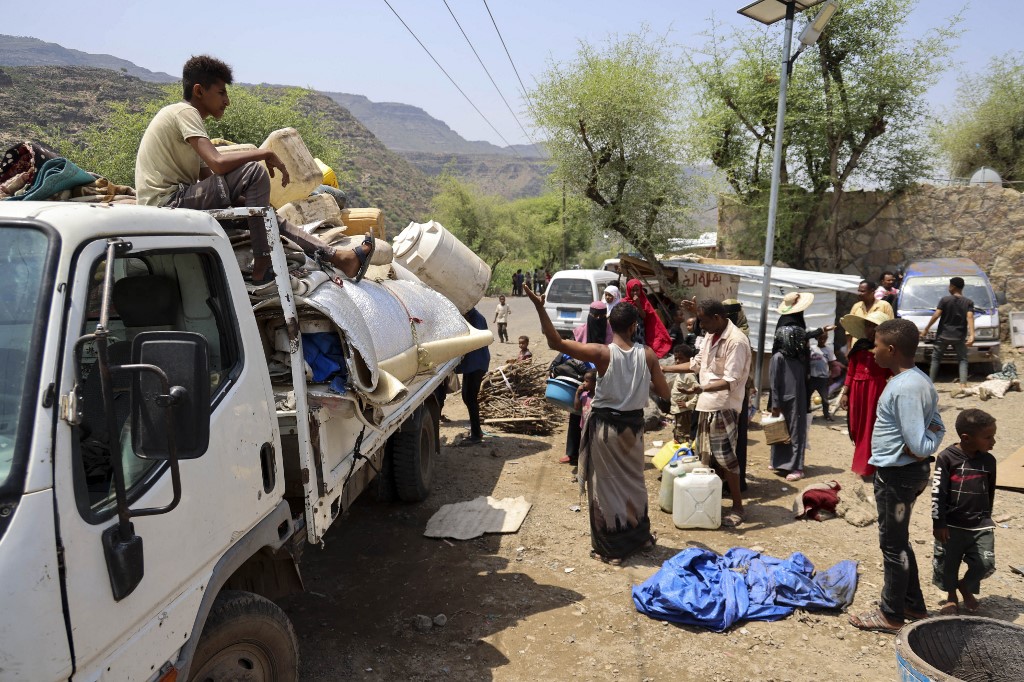
A sharp escalation of armed conflict between Yemen’s internationally recognized government forces and Houthi fighters has triggered a massive new humanitarian displacement crisis, the United Nations’ International Organization for Migration (IOM) confirmed in an official statement released Sunday. The total number of people forced to flee their homes since the resumption of major clashes has reached nearly 86,000, marking an increase of roughly 10,000 displaced people in just 24 hours.
Many of those uprooted by the violence have been forced to abandon their homes multiple times over years of ongoing conflict, the agency emphasized. In a stark appeal for global action, IOM Director General Amy Pope highlighted the human cost hidden behind the raw displacement figures. “Behind every number is a family who’s lost everything,” Pope said. “People are crossing the sea with nothing because they have no other choice left.” She warned that Yemen, already shattered by decades of instability and crippling extreme poverty, cannot bear the weight of this growing crisis without urgent international support.
Since Thursday evening alone, more than 2,000 displaced people — a large share of whom are women and young children — have crossed the Red Sea by boat to reach neighboring Djibouti, IOM data shows. All new arrivals in Djibouti have been moved to a dedicated reception site in the northern town of Obock, where they are currently receiving emergency life-saving aid. The organization, however, cautioned that new waves of displacement are expected as fighting intensifies across western Yemen, and called for significantly increased international assistance to meet growing needs.
The latest escalation of hostilities dates back to September 3, when clashes between Saudi-backed government forces and Houthi fighters reignited across multiple frontlines. The resumption of violence has already killed hundreds of people on both sides. The conflict has spilled across borders, with Houthi forces launching cross-border attacks targeting Saudi territory, while Houthi media outlets confirm that Saudi aviation continues to carry out frequent air strikes on population centers and military positions held by the group in northern and western Yemen.
In a rapid, large-scale offensive launched earlier this week, Houthi fighters captured a broad stretch of Yemen’s Red Sea coastline along the Arabian Gulf, including several strategically vital islands and control of the Bab el-Mandeb Strait — a critical global shipping chokepoint that connects the Mediterranean Sea to the Indian Ocean via the Red Sea.
Local human rights group the Yemeni Network for Rights and Freedoms (YNRF) has documented widespread abuses against civilian populations in the newly captured coastal areas following Houthi fighters’ entry into local cities. The group has recorded more than 950 separate violations against civilians on western frontlines. Among the documented abuses are more than 150 unlawful killings of civilians. Preliminary investigation gathered by YNRF also confirms that Houthi fighters have looted private residences and seized personal property across the seized regions.
Additionally, the rights organization reported that Houthi authorities have launched a widespread mass arrest campaign targeting both civilian residents and former government military personnel. The detainees are being held as leverage to pressure their relatives to surrender themselves, turn over any privately held weapons, and align with Houthi rule, YNRF said.
This report was originally published by Middle East Eye, a media outlet that provides independent, in-depth coverage of political, social and humanitarian developments across the Middle East, North Africa and surrounding regions.
-
Why a fresh wave of North Korean soldiers may fight in Russia’s war in Ukraine
Four and a half years into Russia’s full-scale invasion of Ukraine, a little-discussed but increasingly consequential development has reshaped the conflict’s dynamics: North Korea’s deepening military commitment to Moscow’s campaign. What began as a 2024 deployment of 13,000 elite North Korean troops to defend Russia’s Kursk region amid a Ukrainian offensive has evolved into a long-term, mutually beneficial arrangement that carries sweeping geopolitical ramifications for Europe and East Asia alike.
When North Korean soldiers first entered the Kursk battlefield in late 2024, their presence was unacknowledged by both Moscow and Pyongyang. Ukrainian forces did not confirm their first encounters with the newly deployed troops until November that year, and the first live North Korean prisoner of war was not taken until January 2025. It was only in April 2025 that Russia officially recognized their contribution, with Chief of the General Staff Valery Gerasimov publicly praising their battlefield heroism.
Accounts from Ukrainian troops who faced the North Korean detachments paint a stark picture of their early combat performance. Members of Ukraine’s 95th Air Assault Brigade described North Korean forces as relying on relentless massed assaults, wave after wave of troops advancing on the same positions even after heavy casualties. Early in the campaign, the elite Storm Corps troops – handpicked from North Korea’s most indoctrinated military units – suffered staggering losses: Ukrainian military intelligence (HUR) estimates 3,000 killed and another 1,500 wounded, while a BBC analysis of North Korean memorial sites puts the confirmed death toll at 2,300.
Ukrainian troops also noted critical gaps in the North Korean force’s equipment and coordination with Russian allies. Many troops were found lacking basic protective gear including body armor, helmets and adequate winter clothing, and communication between Russian and North Korean units was reportedly poor. Most strikingly, captured North Korean soldiers and evidence from fallen troops confirm Pyongyang’s strict prohibition on surrender: almost all troops carry suicide ordnance, and thousands chose to kill themselves rather than be captured, a practice publicly celebrated as heroic by North Korean leader Kim Jong Un. To date, only two North Korean soldiers have been taken alive by Ukrainian forces – both captured by accident after being incapacitated by combat injuries.
Despite the heavy human cost, analysts and officials agree that the initial Kursk deployment has already delivered transformative benefits for North Korea’s isolated, sanctions-battered regime. Economically, South Korean security analyst Lim Soo-ho estimates that arms sales and troop deployments to Russia have netted North Korea close to $10 billion over two and a half years – a sum equal to one-third of the country’s entire annual GDP. In exchange for its military contribution, Pyongyang receives critically needed supplies of food, energy and hard currency from Russia, which refuses to enforce international sanctions on the North Korean regime.
Beyond immediate economic gains, the partnership with Moscow has reshaped North Korea’s geopolitical position. For decades, North Korea relied heavily on China for diplomatic and economic support, but its deepening military cooperation with Russia has allowed Kim Jong Un to diversify his country’s alliances and position Pyongyang as a key player in the emerging multipolar order Kim describes as a “new Cold War.” That shift was formalized last September, when Kim stood alongside Chinese President Xi Jinping and Russian President Vladimir Putin in the first trilateral public meeting of the three leaders, marking Pyongyang’s arrival as a core member of the anti-Western bloc.
Militarily, the deployment has given North Korea an unprecedented opportunity to test its troops against modern Western-backed weaponry. “North Korea now knows what modern combat is about,” notes Dr. Yang Uk, a research fellow at Seoul’s Asan Institute for Policy Studies. While early tactics proved costly against Ukrainian drone and artillery fire, Yang says North Korean forces rapidly adapted their tactics to the realities of 21st-century warfare, lessons that will strengthen Pyongyang’s own military capabilities for decades to come.
Today, the remaining 8,500 North Korean troops already deployed to Russia are stationed in four brigades under Russia’s “North” Group of Forces, tasked with defending the Kursk region border against further Ukrainian incursions. HUR confirms no North Korean combat troops have been deployed to Russian-occupied Ukrainian territory so far – but that could soon change.
Ukrainian President Volodymyr Zelensky has issued repeated warnings that North Korea is preparing to deploy up to 50,000 additional troops to Russia, up from an earlier estimate of 30,000, and is preparing to ship additional ballistic weapons to Moscow. Zelensky says preparations for the new deployment are already underway in Russia’s Voronezh region, and he has repeatedly called on South Korea – Ukraine’s ally, which has so far only provided non-lethal aid to Kyiv – to supply advanced air defense systems to counter the expanding North Korean-Russian military partnership.
For Russia, the growing North Korean deployment comes as Moscow faces a crippling manpower shortage four and a half years into its full-scale invasion. Western and Ukrainian intelligence estimates indicate Russia loses roughly 6,000 more troops each month than it can recruit, forcing Moscow to turn to foreign fighters from across the globe to fill its ranks. For North Korea, the arrangement remains a profitable, high-stakes gamble that has already reshaped its global standing – and analysts agree Pyongyang will continue to supply troops and weapons to Russia so long as the benefits outweigh the cost.
The fate of the two captured North Korean soldiers remains unresolved. Both men have explicitly stated they fear returning to North Korea, where they say their families would be punished with execution for their capture, and have requested resettlement in South Korea. While Seoul has agreed to accept them, Ukraine has not yet formalized the transfer, and Russia is the only party that has formally requested their repatriation. Kyiv says it will abide by international human rights rules that prohibit forcing prisoners of war to return to countries where they face persecution, leaving their future in limbo even as a new wave of North Korean troops prepares to deploy to the conflict.
-
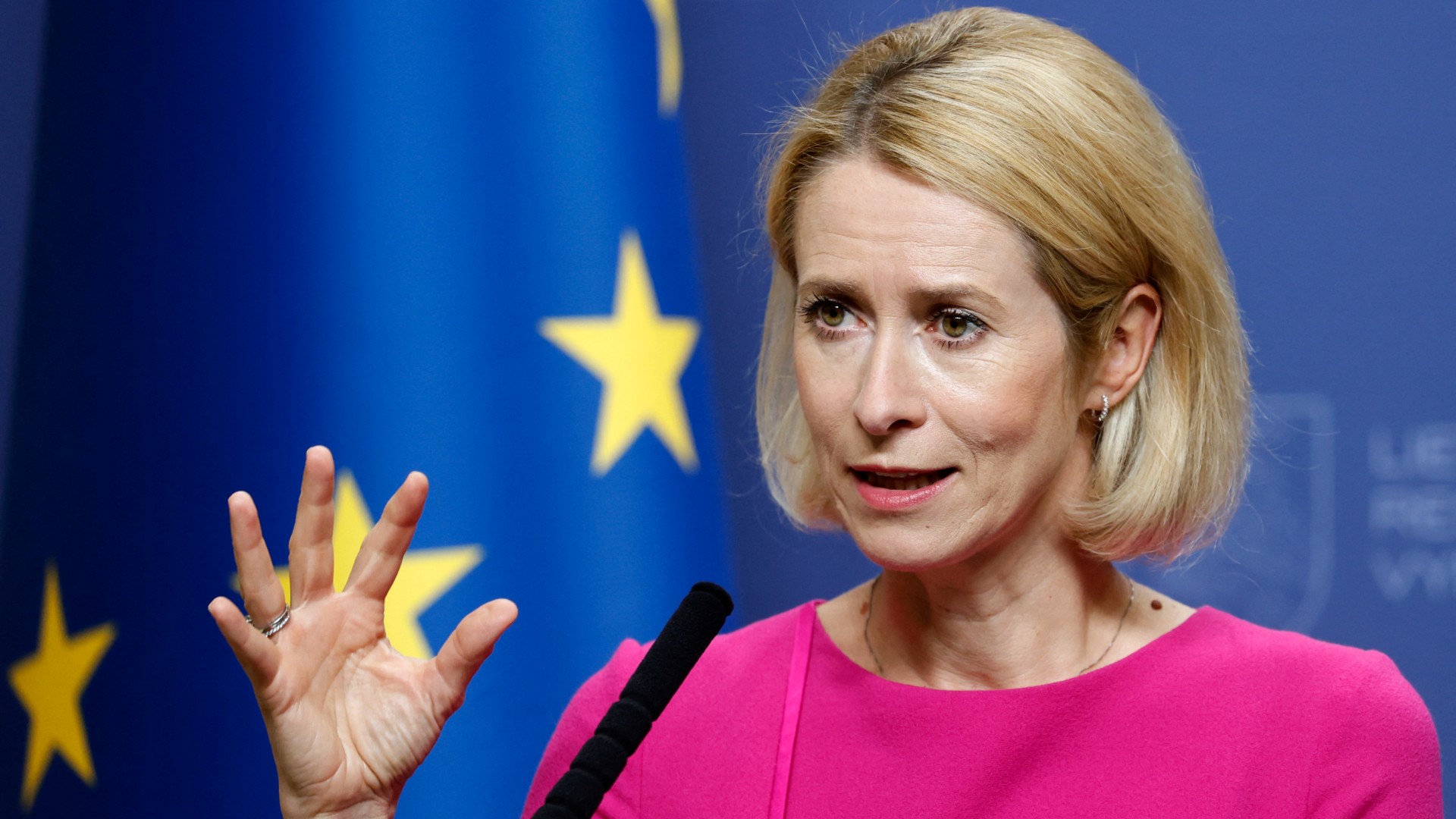
EU foreign policy chief says Israeli settlements should be treated like Russian-occupied Crimea
The European Union’s top foreign policy representative Kaja Kallas has ignited fresh debate over the bloc’s approach to the Israeli-Palestinian conflict by calling on EU member states to adopt the same uncompromising stance on illegal Israeli settlements in occupied Palestinian territories that the bloc took against Russia’s 2014 annexation of Ukraine’s Crimea.
In an interview with The Irish Times published Friday, Kallas argued that the EU cannot maintain its credibility as a global actor if it remains divided on how to respond to aggressive actions by the Israeli government and violent extremist Israeli settlers in the occupied West Bank. She urged member states to align behind a principle-driven policy: a bloc-wide ban on all trade with goods produced in illegal Israeli settlements, a measure that is fully consistent with existing international law, which universally recognizes settlements as a violation of the Fourth Geneva Convention.
Kallas noted that the total volume of EU trade with the settlements remains small in economic terms, but emphasized that implementing the ban would carry outsized symbolic weight, sending a clear message that the bloc does not accept illegal territorial annexation. To circumvent long-standing opposition from a handful of member states—including Germany, Hungary, the Czech Republic and Slovenia, which have blocked unanimous foreign policy sanctions against Israeli settlement activity—Kallas proposed framing the ban as a trade regulation rather than a formal sanctions measure. This procedural shift would only require a majority vote among member states to pass, rather than the unanimous consent needed for foreign policy sanctions, clearing a key path to approval.
According to Kallas, the European Commission is facing explicit pressure from a majority of national governments to formally table the trade ban proposal. She added that EU institutions have faced widespread public and political criticism for their failure to impose any punitive measures on Israel amid the ongoing military campaign in Gaza that has been widely condemned as genocidal by international human rights bodies and legal experts.
“When Russia occupied Crimea, we all agreed it was illegal, we refused to recognize the annexation, and we immediately cut off all trade with goods coming from the occupied peninsula,” Kallas said. “We need to hold the same principled line here: everyone acknowledges these settlements are illegal, so we must end all trade with products from the occupied Palestinian territories.”
Kallas’ comparison is rooted in recent EU history: within four months of Russia’s February 2014 invasion and annexation of Crimea, the bloc had implemented a full ban on Crimean-origin goods and broad economic sanctions on Moscow, eventually expanding restrictions to cover arms, energy, and technology exports to Russia.
Kallas’ call comes as Israel faces mounting diplomatic pressure from its traditional Western allies, as global public approval for Israel’s actions in Gaza and the occupied territories has dropped to historic lows. Earlier this month, on September 8, the United Kingdom became the first major Western power to implement national sanctions targeting Israeli settlement activity, and 10 other European nations plus Canada joined the UK in a joint statement affirming their plan to introduce domestic restrictions and back EU-level measures targeting illegal settlement trade.
Israeli officials have pushed back aggressively against the UK’s decision. Israeli Foreign Minister Gideon Saar announced a package of retaliatory measures, including closing the British consulate in occupied East Jerusalem and barring 11 sitting British members of parliament from entering Israeli and occupied territory. Even the United States’ ambassador to Israel, Mike Huckabee, waded into the dispute, launching a vitriolic attack on British Foreign Secretary Ed Miliband—who is Jewish—accusing him of “Jew hate” and threatening further retaliation against the UK.
The rising tensions over settlements follow an August announcement from the Israeli government that it would approve construction of the long-contested E1 settlement project, which will add 3,400 new housing units to existing settlements in the West Bank and effectively cut the occupied Palestinian territory in half, ending any possibility of a contiguous future Palestinian state. The approval drew widespread condemnation from governments and international bodies across the globe.
Kallas’ new public stance marks a notable shift, as reports have previously revealed she has privately compared Israel’s systematic treatment of Palestinians to the apartheid regime that once ruled South Africa. It also stands in sharp contrast to her earlier public position: just months ago, at a March 2025 press conference, Kallas reaffirmed the EU’s “solidarity with Israel and its people” and emphasized that the bloc views Israeli security as a core priority for Europe.
-
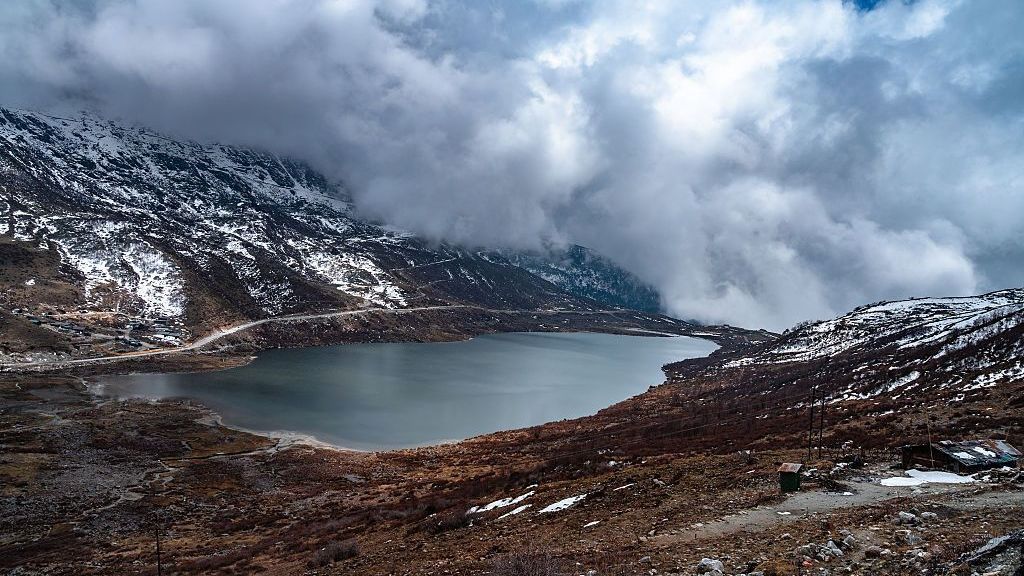
The Himalayas are melting faster – and India’s economy is ‘at risk’
As climate change reshapes high-altitude ecosystems across the globe, the Hindu Kush Himalayan region – often called the world’s Third Pole – is edging closer to a dangerous ecological threshold, with accelerating glacial melt, growing glacial lake instability, and a critical gap in long-term monitoring creating cascading risks for hundreds of millions of people across South Asia, according to a landmark new report from global sustainability consultancy Systemiq.
The analysis, developed in partnership with the Integrated Mountain Initiative, and with technical input from the International Centre for Integrated Mountain Development (ICIMOD) and India’s GB Pant National Institute of Himalayan Environment, comes on the heels of catastrophic glacial outburst floods in Nepal and the Tibetan Plateau that claimed more than 1,300 lives and leveled communities and infrastructure – a stark reminder of the mounting threat posed by rapid environmental change in the world’s highest mountain range.
Researchers found that Himalayan glaciers are currently losing mass 65% faster than they did just a decade ago, a rate of decline far outpacing most scientific projections from the early 2010s. Despite this accelerating change, the report reveals a staggering gap in systematic observation: of the roughly 40,000 glaciers spread across the Himalaya-Karakoram region, only 21 are monitored in detail on a consistent, long-term basis.
This lack of data comes at a moment when the region’s physical landscape is shifting at an unprecedented pace. As glaciers retreat, they leave behind large, expanding glacial lakes contained by unstable natural dams made of rock and glacial debris. At the same time, rising global temperatures are thawing long-frozen permafrost and destabilizing steep high-mountain slopes, creating conditions that amplify the risk of connected, catastrophic hazards including outburst floods, landslides, and mudflows.
India, which holds a large portion of the Himalayan range within its borders, already bears direct witness to the scale of the threat. The report notes that while just 18% of India’s total land area falls within the Himalayan region, this zone accounts for 35% of the country’s total disaster events. In a July update to India’s parliament, the government confirmed that a 2025 scientific assessment of 189 high-priority glacial lakes in the Indian Himalayas has classified 56 of these water bodies as “very high risk” for catastrophic outburst. Currently, India’s Central Water Commission monitors 2,485 glacial lakes larger than 10 hectares across the country’s Himalayan river basins, a monitoring network that researchers say still falls far short of what is needed to mitigate risk.
The region has already seen deadly consequences of unmitigated glacial risk. In 2023, a glacial lake outburst flood in India’s northeastern state of Sikkim killed at least 70 people and destroyed critical infrastructure including roads, bridges, and major hydropower projects. Two years prior, a similar disaster in Uttarakhand claimed more than 200 lives when a massive flood swept through the Rishiganga and Dhauliganga river valleys, wiping out entire communities and hydropower facilities.
But the threat extends far beyond sudden, catastrophic flood events. The Himalayan region forms the headwaters for 10 major South Asian river systems that sustain more than 1.9 billion people across the subcontinent. ICIMOD projects that most river basins in the Hindu Kush Himalayan region will reach “peak water” – the point when glacial melt runoff hits its maximum, before declining steadily as glaciers shrink – by the middle of the 21st century, threatening long-term water and food security for hundreds of millions.
The new report puts an unprecedented economic value on the region’s natural water systems, estimating that Himalayan water underpins roughly 20% of India’s total gross domestic product, supporting major sectors including rice and wheat agriculture, tea production, hydropower generation, and religious pilgrimage tourism. What is more, the report finds that the Himalayan mountain states that bear the full risk of environmental change only capture around 5% of the total economic value generated by the region’s water resources, creating a misalignment of risk and reward that slows investment in resilience.
“The Himalayas are the Third Pole,” explained economist Lord Nicholas Stern, chair of the Grantham Research Institute on Climate Change and the Environment at the London School of Economics. “Unlike the Arctic or Antarctic, this pole has hundreds of millions of people living directly downstream of it, depending on its resources for their lives and livelihoods. This is national and international critical infrastructure, and the ecological system that underpins it is approaching a tipping point.”
Not all drivers of glacial melt are outside the control of regional governments, the report emphasizes. Researchers estimate that roughly one-third of total Himalayan glacial melt is driven by black carbon pollution, most of which originates from brick kilns, biomass burning, and fossil fuel combustion in the densely populated Indo-Gangetic plains. Black carbon soot deposits on glacial ice and snow absorb more solar radiation, drastically accelerating melting rates. Unlike global greenhouse gas emissions that require coordinated global action, black carbon is a local and regional pollutant that can be targeted for immediate reduction by India and its neighboring countries.
“The Himalayas are approaching a tipping point, with millions of lives and livelihoods hanging in the balance,” said Arushi Chopra, Systemiq’s senior director and lead author of the report. “Glaciers are melting faster than they were a decade ago, and our ability to track these changes and prepare for hazards has not kept pace.”
To address the growing threat, the report outlines 10 priority action areas for regional governments and international partners. These range from cutting black carbon emissions and vastly expanding the network of sustained glacial monitoring to upgrading cross-border early warning systems for glacial hazards and overhauling tourism development models in the Himalayas.
One key priority is strengthening coordinated disaster preparedness, with governments pre-agreeing on response protocols – from emergency evacuation routes to infrastructure protection measures – before hazards develop. Another core recommendation is a fundamental rethink of Himalayan tourism: the report notes that the Indian Himalayan region already attracts roughly 400 million tourist visits annually, and argues that the sector should shift its focus from maximizing visitor numbers to generating economic value that stays and is reinvested in local mountain communities, rather than being exported to outside entities.
Pema Gyamtsho, director general of ICIMOD, noted that the region’s hazard profile is growing increasingly complex as the climate warms. “Glaciers are retreating, permafrost and high-mountain slopes are becoming increasingly unstable, and communities and infrastructure downstream face growing risks from complex and cascading hazards,” he explained.
Crucially, these transboundary risks do not recognize national borders, meaning no single country in the region can address the threat alone. That makes cross-border monitoring, open shared risk data, integrated early warning systems, and joint investment in climate resilience increasingly urgent – not only to save lives during catastrophic events, but to protect the long-term livelihoods and trillions of dollars in economic activity that depend on the Himalayan region’s fragile natural ecosystems.
-

Tucker Carlson says Israel sought regional hegemony by weakening Gulf states through Iran war
In a revealing interview with *Going Underground*, prominent conservative American political commentator Tucker Carlson has laid out a controversial claim about the underlying drivers of the ongoing war between Israel and Iran, arguing the conflict is a calculated gambit by Israel to secure unchallenged regional dominance at the expense of Gulf nations and long-standing American military presence in the region.
Carlson, who says he shared his analysis of Israel’s strategic goals directly with former US President Donald Trump in the Oval Office just weeks after the war began, outlined the multi-layered ambition he attributes to Israeli leadership. According to Carlson, Israel’s core end goal is uncontested hegemony across the Middle East, a objective that requires eliminating regional counterpoints including Iran and its allied militant groups Hezbollah and Hamas, while also removing potential economic and political competition from the Gulf Cooperation Council (GCC).
“The point here is Israeli regional hegemony. That’s why they’re pushing for this war on Iran. They want to control their region,” Carlson stated in the interview. He added that beyond neutralizing Iran and its proxies, Israel seeks to expand its sovereign borders, framing Iran and its allied groups as the primary barriers to that territorial expansion.
Unlike many conventional analyses that frame growing Gulf economic development as a shared regional opportunity, Carlson argues Israel views the progress of the six-nation GCC — which counts Bahrain, Kuwait, Oman, Qatar, Saudi Arabia, and the United Arab Emirates among its members — as a direct strategic threat. “It doesn’t want the GCC because they’re building these kind of amazing societies,” he said. “That’s a massive threat to Israel.”
The final, most provocative plank of Carlson’s thesis is that the war’s overarching goal is to destabilize the Gulf region, weaken both Iran and the GCC, and ultimately force the United States to completely withdraw its military forces from Gulf Cooperation Council countries. He emphasized that this objective runs counter to stated American interests in the region, noting “this is actually aimed at us.”
Carlson said he presented this analysis to Trump during a meeting in mid-February, shortly after the war commenced. The commentator, who noted he has traveled and worked extensively across the Gulf for 25 years, pointed to Trump’s well-documented personal rapport with Gulf leaders to underscore the puzzle of the former president’s policy choices. “Trump likes the GCC leaders, they’re incredible, they’re incredibly gracious people,” Carlson said. “Trump had no motive and no desire to hurt [GCC countries]. And yet he unleashed a sequence of events knowing that this could happen that badly damaged those countries. Why did he do that?”
Carlson criticized mainstream American media for largely ignoring this critical question, adding that he hopes future historical research will uncover a clear answer. He also pushed back on the widespread assumption that a large permanent American military presence in the Gulf naturally benefits Israel, arguing that US forces act as a check on Israeli expansionist ambitions. “From an Israeli perspective, those are control mechanisms. Those are leashes that we use to constrain Israeli behaviour,” he explained. “And they don’t want to be constrained because they have a greater vision of their future.”
Carlson’s claims emerge against a backdrop of escalating regional instability that has already put intense pressure on Gulf states and exposed vulnerabilities in both local infrastructure and American military installations across the Persian Gulf. The International Institute for Strategic Studies documented in a March report that Iran has launched thousands of missiles and drones targeting all six GCC member states since the start of the US-Israeli air campaign, with the goal of spreading the cost of the conflict to Gulf nations and demonstrating the limits of Israeli military power.
Independent reporting has also confirmed widespread damage to American military assets in the region. A May Washington Post analysis of satellite imagery found that at least 228 buildings and pieces of military equipment at US sites have been damaged or destroyed since the war began. By August, US defense officials confirmed the Pentagon was actively evaluating a drawdown of American military forces in the Persian Gulf following months of persistent Iranian attacks on bases in the region.
Gulf energy infrastructure has also been targeted repeatedly: Saudi Arabia recently shut down its critical East-West oil pipeline following a drone attack that Riyadh blames on Iraq-based militants, while stepped-up Houthi attacks have put consistent pressure on Saudi Arabia’s energy and national security networks.
-
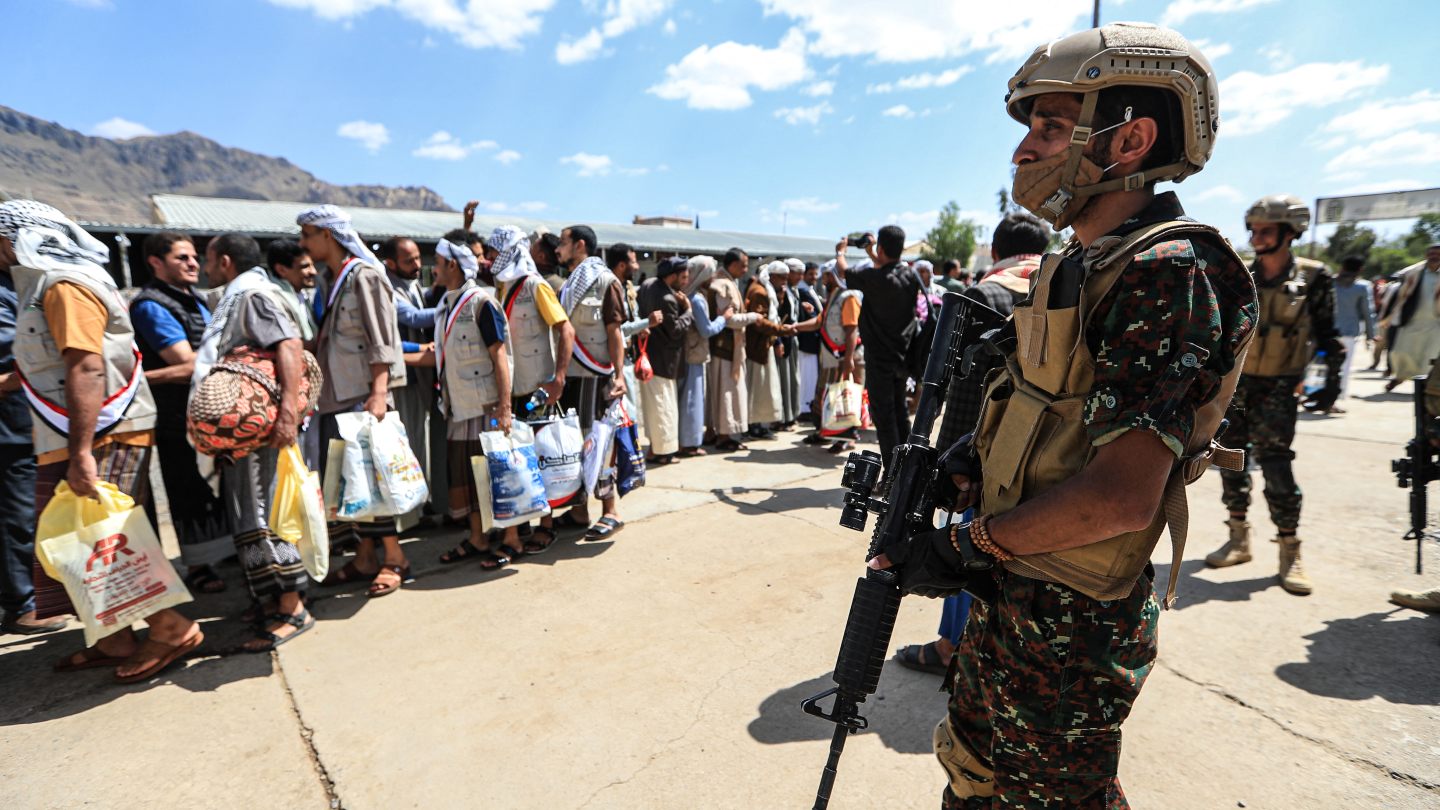
Houthi missiles target military base in Saudi Arabia as Iraq probes drone attack on oil pipeline
A sharp new wave of escalation has swept across the Middle East this week, driven by cross-border attacks from Yemen’s Houthi movement against Saudi military infrastructure and a separate long-range drone strike on a critical Saudi oil pipeline that has sparked a cross-border investigation involving Iraq and Iran.
On Sunday, the Houthi group formally claimed responsibility for a combined coordinated assault that mixed ballistic missiles and unmanned aerial drones against a major Saudi military installation located in the kingdom’s southern region. Houthi military spokesperson Yahya Saree confirmed in an official statement that the target of the operation was the Sharurah military base, where the group says key weapons stockpiles and command centers directing Saudi-led military operations against Houthi-controlled areas of Yemen are based. Saree added that all projectiles struck their intended targets, and issued a stark warning that future attacks would reach deeper into Saudi territory if cross-border military campaigns against Yemeni targets do not end.
Sunday’s attack comes amid a dramatic intensification of ground and air clashes between Houthi fighters and troops loyal to Yemen’s internationally recognized government, which receives extensive military backing from Riyadh. On the same day as the Houthi cross-border strike, Yemen’s official military announced it had carried out three separate air raids against Houthi outposts and troop barracks in the contested Taiz region. Local media aligned with the recognized Yemeni government, September Net, later confirmed that the air strikes resulted in multiple Houthi combatant casualties.
This latest round of violence builds on days of shifting territorial gains across Yemen: the Houthis have seized large swathes of territory in western Yemen in recent operations, while government-aligned forces have reported incremental advances in the northern al-Jawf province that lies along the Saudi-Yemeni border. Clashes have also intensified in and around the Red Sea coastal city of Mocha, a key strategic hub in southwestern Yemen.
Parallel to the violence in Yemen, a separate attack earlier this week has raised broader regional security concerns. On Thursday, Saudi officials confirmed that drones launched from Iraqi territory struck the kingdom’s critical East-West oil pipeline, an energy artery that carries crude from eastern oil fields to the western Red Sea coast, bypassing the Strait of Hormuz. As a precautionary safety measure, Saudi authorities immediately shut down the pipeline following the attack.
Qatari broadcaster Al Jazeera reported that Saudi investigators have traced the drone launch site to Iraq’s southeastern Maysan province, located along the Iran-Iraq border, approximately 800 kilometers from Riyadh and 1,100 kilometers from Medina. The distance of the strike from the target, Al Jazeera noted, indicates the drones used were not short-range tactical models, but advanced long-range systems. In the wake of the attack, Iraqi officials have publicly requested that Saudi Arabia refrain from any retaliatory action against Iraqi territory.
Iraqi security forces have since moved to secure the area, announcing that they have located and seized the drone launch platform suspected of being used in the pipeline attack. Lieutenant General Saad Maan, head of Iraq’s Security Media Cell, told state media that a joint task force of security and intelligence personnel successfully tracked down the launch equipment. Forensic and technical investigative teams are still working to process evidence from the site and identify the individuals and groups responsible for the strike.
In a notable development, General Maan confirmed that Iraq’s top commander has approved an official request from Iran to allow Iranian investigators to participate in the probe and review all collected evidence. Baghdad has also maintained direct real-time communication with Saudi security officials to share intelligence updates as the investigation progresses.
“Iraq adopts the principle of ‘preventive sovereignty’, which means not only preventing attacks on our territory, but also not allowing our land to be a launching pad against any other country, or for Iraq to be part of a proxy war,” Maan told Iraq’s state-run Iraqi News Agency. In the immediate aftermath of the attack, Iraqi authorities temporarily closed three key border crossings with Iran — Shalamcheh, Chazabeh and Mandali — to carry out mandatory security inspections, before partially reopening the crossings to allow limited humanitarian traffic to resume.
The overlapping outbreaks of violence come as international and regional pressure mounts on Baghdad to prevent its territory from being used as a staging ground for attacks connected to the broader, long-running confrontations roiling the Middle East.