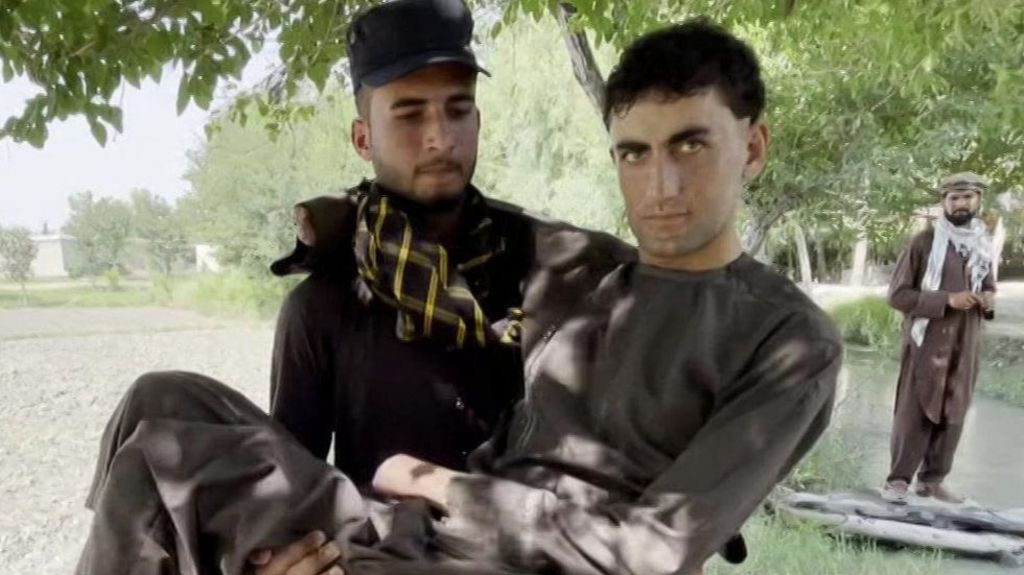
In mid-January, a group of 50 young Afghan migrants, all aged 25 or younger, set out on a deadly journey toward Europe, facilitated by people smugglers who guided them across the Iranian border into Turkey’s eastern Van Province. What followed was a harrowing ordeal of abuse, exposure, and preventable tragedy that has left at least 20 dead and 11 survivors with permanent disabilities, according to testimony from 12 survivors who spoke exclusively to the BBC.
Temperatures in the mountainous border region had plummeted to -15°C as the group was detained almost immediately after entering Turkey by Turkish border guards. The survivors detail systematic abuse that began in detention: held for several nights in an unheated, open warehouse where snow fell directly on them, the migrants were given only one meager ration of dry bread and water per day and forced to carry out hard labor including clearing snow and hauling wood. Twenty-three-year-old Alwaldin, one of the survivors, says he was cut off from all contact with both his family and the smuggler who had promised him safe passage to the continent.
The violence escalated dramatically on January 25, the survivors recall. Guards lined the group up again, this time beating them with iron bars. After stripping them of all clothing except a single pair of trousers, binding their hands, and forcing them to crawl stomach-down up a snow-covered hill, multiple migrants suffered severe head wounds that left blood running down their bodies, according to Alwaldin. Some survivors could not move their hands at all after the beating, 21-year-old Shahsawar, one of the most severely injured survivors, told reporters.
The group was then split into eight-person parties and pushed through barbed wire onto the Iranian side of the border, stranded in the middle of a heavy snowstorm with near-zero visibility and no supplies or footwear. All their warm clothes, shoes, and socks had been confiscated by guards, leaving them exposed to the brutal cold. “The paths were covered in snow. And we didn’t know which direction to go or whether we would survive,” Shahsawar said.
The death toll mounted quickly in the frozen landscape. A 13-year-old boy named Danial was separated from the group within minutes, and his body was later recovered from the snow. Exhausted and unable to walk farther, Shahsawar took shelter behind a large boulder alongside 13-year-old Asim and another migrant named Ahmed, whose hands had already frozen solid. When Asim left to seek help at dawn, Ahmed died in Shahsawar’s arms, too frozen to even speak in his final hours.
Days later, Asim was found alive by search parties looking for stranded migrants. Too cold to speak when rescued, the teen pointed searchers toward the rock where Shahsawar remained trapped—a small, deliberate gesture that ultimately saved Shahsawar’s life. By the time the survivors were located, however, extreme frostbite had already caused irreversible damage to their extremities.
After being stranded, the group says Iranian authorities refused to provide them with urgent hospital care. It was not until four days after the Afghan embassy in Tehran announced it would take urgent action to locate and assist the stranded migrants that the Red Crescent Society transferred the survivors overland to Afghanistan’s Herat Province, and eventually to Kabul for advanced medical care. By that point, the frostbite on 11 survivors had turned tissue black and necrotic, making amputation unavoidable.
Shahsawar woke up in a Kabul operating room to discover all four of his limbs had been removed. “I raised my hands – they felt light. Both had been cut off,” he told the BBC. “My throat closed up and I couldn’t speak.” Other survivors like Alwaldin lost most of their toes to the same preventable tissue damage. Medical experts note that frostbite is fully treatable if caught early—for these migrants, weeks of delayed care turned a survivable exposure into a lifelong disability.
Regional human rights activists say this incident is far from an anomaly. Şafak Bozkurt, chair of the Van Bar Association Human Rights Centre Migration and Asylum Commission, told the BBC he has documented dozens of similar push-back operations in the border region, many resulting in hypothermia and death. Zakira Hikmat, a Turkey-based migration rights advocate, says that since the Taliban seized control of Afghanistan in 2021, thousands of Afghans have attempted to cross this border to reach Europe, and increased Turkish border surveillance has pushed migrants onto far more dangerous, high-altitude routes that cross mountain passes prone to extreme winter weather. Mahmout Keçen, another Van-based migrant rights activist, has documented hundreds of cases of alleged abuse, push-backs, denial of asylum access, and forced returns of irregular migrants in the Iran-Turkey border region.
When contacted by the BBC for comment on the survivors’ allegations, Turkish authorities did not address the specific claims of abuse, beatings, or forced stranding. In a statement, the Turkish foreign ministry said that its border forces operate in full compliance with national and international law, and provide all detained undocumented migrants with necessary support including food, water, and medical care. The ministry added that the allegations are unfounded and unfairly undermine Turkey’s successful efforts to curb irregular migration, noting that Turkey’s policy has effectively halted almost all irregular migration flows toward the European Union. The statement added that Turkey, which hosts one of the world’s largest refugee and migrant populations, maintains a human-centered, sustainable migration management system aligned with international standards that balances security and humanitarian access. Iranian authorities have also been contacted for comment and have not yet issued a response.
All 12 survivors who spoke to the BBC have now been returned to Afghanistan, where they continue to recover from their injuries, many facing permanent disability from the amputations they suffered.