标签: Asia

亚洲

  • Senior CPPCC official charged for bribery

    Senior CPPCC official charged for bribery

    In a formal announcement released on Tuesday, China’s top prosecuting body confirmed that Bi Jingquan, a former senior official of the country’s top political advisory body, has been officially indicted on bribery charges by prosecutors from Shandong Province. The case against Bi was first investigated and concluded by the National Commission of Supervision, China’s top anti-corruption watchdog, before being handed over to prosecuting organs for mandatory review and the filing of formal legal charges. Jurisdiction over the case was assigned to prosecutors based in Jinan, the capital city of Shandong Province, who have now submitted their official indictment to the Jinan Intermediate People’s Court to move the legal process forward. According to the indictment details, Bi is alleged to have abused authority across multiple senior positions he held throughout his decades-long career. These roles include former head of the National Medical Products Administration, former deputy head of the State Administration for Market Regulation, and former deputy head of the Committee on Economic Affairs of the National Committee of the Chinese People’s Political Consultative Conference (CPPCC), China’s top political advisory body. Prosecutors claim Bi exploited these positions to secure improper benefits for third parties in exchange for accepting large sums of money and high-value valuables, which meets the legal criteria for criminal bribery. Prosecutors emphasized that throughout the entire review and prosecution procedure, Bi was fully informed of all his legal rights as a defendant, and the legal arguments and defense positions submitted by Bi’s legal representation were formally reviewed and considered ahead of the indictment being filed. Bi, now 70 years old, is a native of Heilongjiang Province in northeast China. He joined the Communist Party of China in March 1978 and entered official public service in February 1982. Over his four-decade career, he held senior leadership roles across multiple key national regulatory and economic bodies, including the former national price bureau, the National Development and Reform Commission, the National Medical Products Administration, and the State Administration for Market Regulation. In August 2020, Bi took up his post at the Committee on Economic Affairs under the CPPCC National Committee, and later also held key positions at the China Center for International Economic Exchanges, a leading national economic think tank. The indictment marks a key step forward in the country’s ongoing anti-corruption campaign, which targets misconduct by public officials at all levels across government and political advisory bodies.

  • Xi puts forward four-point proposal on promoting Middle East peace, stability

    Xi puts forward four-point proposal on promoting Middle East peace, stability

    BEIJING — In a high-profile bilateral meeting held in the Chinese capital on Tuesday, President Xi Jinping laid out a structured four-point proposal designed to advance lasting peace and long-term stability across the Middle East. The talks took place during a working visit by Sheikh Khaled bin Mohamed bin Zayed Al Nahyan, Crown Prince of Abu Dhabi of the United Arab Emirates.
    Against a backdrop of ongoing regional tensions and unresolved conflicts that have rippled across the globe, President Xi’s proposal outlines four core guiding principles to steer future peace efforts. First, it calls for universal adherence to the fundamental principle of peaceful coexistence between all regional states, regardless of differing political systems, religious traditions or strategic outlooks. Second, it emphasizes unwavering respect for the inviolable principle of national sovereignty, a cornerstone of modern international relations that underpins the territorial integrity of every nation in the region. Third, it prioritizes consistent commitment to the rule of law in international affairs, establishing clear, shared norms to govern interactions between states and resolve disputes through peaceful, rule-based channels. Finally, the proposal calls for coordinated, integrated advancement of development initiatives and security frameworks, recognizing that sustained economic progress and collective security are mutually reinforcing pillars of stable societies.
    The proposal comes as China expands its diplomatic engagement in the Middle East, positioning itself as a neutral broker committed to de-escalation and inclusive dialogue between regional actors. The meeting between President Xi and the Abu Dhabi Crown Prince also underscores the deepening bilateral ties between China and the United Arab Emirates, spanning trade, energy, security and cultural cooperation.

  • Xi calls for full respect for sovereignty, security, territorial integrity of countries in Middle East, Gulf region

    Xi calls for full respect for sovereignty, security, territorial integrity of countries in Middle East, Gulf region

    BEIJING – In a high-profile bilateral meeting held in Beijing on Tuesday, Chinese President Xi Jinping held talks with Sheikh Khaled bin Mohamed bin Zayed Al Nahyan, Crown Prince of Abu Dhabi of the United Arab Emirates, and laid out China’s core stance on regional stability in the Middle East and Gulf region. During the discussion, President Xi emphasized that the fundamental principles of international relations must be upheld in the region, starting with the full and unwavering respect for the sovereignty, national security, and territorial integrity of all countries in the Middle East and Gulf. Beyond core state interests, Xi also called for effective protection of the safety of foreign personnel, infrastructure, and official institutions of all nations operating within the region. This meeting comes amid ongoing geopolitical tensions that have shaken confidence in regional security, and China’s stance reflects its long-standing commitment to a balanced, rules-based approach to Middle East affairs. As a major global power with extensive economic and diplomatic ties to the Gulf region, China has consistently pushed for a collective security framework that centers the interests and agency of regional countries, rather than external interference. The discussion between Xi and the Abu Dhabi Crown Prince also aligns with China’s broader call for building a common, comprehensive, cooperative, and sustainable security architecture for the Middle East and Gulf region, a position the country has promoted in multiple multilateral forums. This diplomatic engagement underscores the deepening bilateral relations between China and the United Arab Emirates, while reaffirming China’s role as a responsible stakeholder in global peace and security efforts.

  • Asia-Pacific reels from soaring energy prices

    Asia-Pacific reels from soaring energy prices

    The Asia-Pacific region is facing unprecedented economic pressure from skyrocketing energy costs, triggered by a sudden disruption to global oil shipping that pushed the international benchmark Brent crude past $101 per barrel on Monday. The crisis escalated rapidly after the United States implemented a naval blockade of the Strait of Hormuz, one of the world’s most critical energy chokepoints, on Sunday. Within 24 hours, commercial shipping through the strategic waterway came to a complete standstill, according to global maritime industry outlet Lloyd’s List. More than 20% of the world’s daily oil trade passes through the strait, making the shutdown an immediate shock to global energy markets.

  • Renowned Chinese missile expert passes away at 63

    Renowned Chinese missile expert passes away at 63

    One of China’s most decorated ballistic missile experts, Major General Feng Yufang of the People’s Liberation Army Rocket Force, has passed away at the age of 63 following an illness, with his death announced on Monday, April 14, 2026.

    Born in January 1963 in Yuyao, a city in China’s eastern Zhejiang Province, Feng spent his early years completing primary and secondary education in his hometown before earning admission to the National University of Defense Technology in Changsha, Hunan in September 1983. There, he specialized in the study of nuclear radiation and corresponding protective technologies, laying the academic foundation for his decades-long career in national defense research. He graduated with a bachelor’s degree in July 1987 and was immediately assigned to a research institute under the PLA Second Artillery Corps, the organizational predecessor of today’s PLA Rocket Force.

    Over the course of his tenure at the institute, Feng rose steadily through the professional ranks, focusing his research and development work on core technologies and operational tactics for both conventional and nuclear ballistic missile warheads. In late 2003, he was reassigned to a second institute under the then-PLA Second Artillery Corps Equipment Research Academy, where he remained through the end of 2014. That year, he was appointed senior engineer at the academy’s experimentation center, a role that allowed him to expand his work on cutting-edge warhead testing and validation.

    Feng received his promotion to the rank of Major General in the summer of 2006, and not long after, he was tapped to lead a high-level national expert group focused on advancing missile warhead technology. He continued to pursue advanced academic work alongside his military research, earning a doctorate in 2008 from the China Academy of Launch Vehicle Technology — a leading national institution responsible for the development of both carrier rockets and ballistic missile systems. In 2017, Feng earned one of his field’s highest honors when he was elected as an academician of the Chinese Academy of Engineering, a distinction reserved for the nation’s top engineering and technology innovators.

    Throughout his four-decade career in national defense, Feng’s groundbreaking contributions to the development and deployment of next-generation conventional and nuclear warheads earned him numerous prestigious national awards, multiple honorary professional titles, and widespread recognition from both military and academic circles. Beyond his core research work, Feng also played a key role in national strategic policy: he served as a member of a top-tier national advisory council focused on nuclear arms control issues, and held seats on the 13th and 14th National Committees of the Chinese People’s Political Consultative Conference, contributing his expertise to broader national governance and policy deliberation.

  • People fly Kongming lanterns in Jinghong, China’s Yunnan

    People fly Kongming lanterns in Jinghong, China’s Yunnan

    Since 1994, all intellectual property rights to content distributed across China Daily’s official digital platform are held exclusively by China Daily Information Co (CDIC). This copyright protection extends to every form of content hosted on the site, including but not limited to written articles, photographic material, and multimedia productions. Any form of republication or uncredited use of this content is strictly prohibited unless the user has obtained explicit, written authorization from CDIC in advance. For optimal user experience, CDIC recommends that visitors access the site using a web browser configured to a display resolution of 1024*768 or higher. Beyond the core copyright regulations, the site also publicly lists key operational and regulatory details: its license for online multimedia publication is numbered 0108263, and its official business registration number is 130349. To improve public engagement and accessibility, the platform also maintains dedicated sections covering general information about the China Daily organization, opportunities for advertising partnerships, contact channels for inquiries, open recruitment listings for domestic roles, and specific employment opportunities for foreign expats. Users can also follow China Daily’s updated content across multiple social media platforms via the follow links provided on the site.

  • US forces to join combat drills in Philippines to show commitment to Asia while fighting Iran

    US forces to join combat drills in Philippines to show commitment to Asia while fighting Iran

    MANILA, Philippines — One of the largest annual joint military exercises between the United States and the Philippines is set to kick off this spring, bringing over 17,000 personnel from the two treaty allies together for combat training. The drills, organizers say, send a clear signal that Washington remains deeply committed to regional security in the Indo-Pacific even as it navigates ongoing security crises in the Middle East, a senior U.S. military spokesperson confirmed Tuesday.

    Running from April 20 to May 8, this year’s iteration of the annual Balikatan – Tagalog for “shoulder-to-shoulder” – drills will mark a major expansion from 2024, when roughly 9,000 U.S. troops took part. Unlike previous years, the 2025 exercise will open participation to additional partner nations that have formal visiting forces agreements with Manila, including Japan, France and Canada.

    A centerpiece of the drills will be a live-fire ship-sinking exercise hosted in Philippine waters off the northwest coast, directly facing the disputed South China Sea. Philippine military officials confirmed that Japanese forces will conduct the live missile launch for the drill, and Japan’s top defense official has been extended an invitation to observe the operation in person.

    When asked about the strategic purpose of deploying such a large contingent amid ongoing conflict in the Middle East, U.S. forces spokesperson Colonel Robert Bunn emphasized the exercise’s core message. “Our message is our dedication and commitment to our alliance and regional security,” Bunn told reporters during a news briefing. He also noted that counter-drone defense tactics, a critical capability for modern regional security challenges, will be a key focus of the mock combat training scenarios.

    The exercises come amid rising long-running tensions over territorial claims in the South China Sea, a strategically vital global shipping waterway. Beijing claims nearly the entirety of the sea as its sovereign territory, overlapping with claims from Manila, Hanoi, Kuala Lumpur, Bandar Seri Begawan and Taipei. Territorial confrontations between Chinese and Philippine forces have intensified sharply in recent years.

    China has repeatedly voiced opposition to large-scale military drills led by the U.S. in the disputed region. Philippine defense officials have stressed that the drills are not intended to target any specific nation, but have openly acknowledged that the joint training with Washington and other security partners strengthens the Philippines’ ability to defend its sovereign interests in the contested waters.

    The exercise aligns with the Trump administration’s recent regional security posture. During a visit to Manila last year, U.S. Defense Secretary Pete Hegseth reaffirmed to Philippine President Ferdinand Marcos Jr. that Washington would work closely with regional allies to boost deterrence against global threats, specifically naming China’s assertive actions in the South China Sea. “Friends need to stand shoulder to shoulder to deter conflict, to ensure that there is free navigation whether you call it the South China Sea or the West Philippine Sea,” Hegseth said.

  • Stokes shuts down talk of a rift with McCullum after Ashes tensions

    Stokes shuts down talk of a rift with McCullum after Ashes tensions

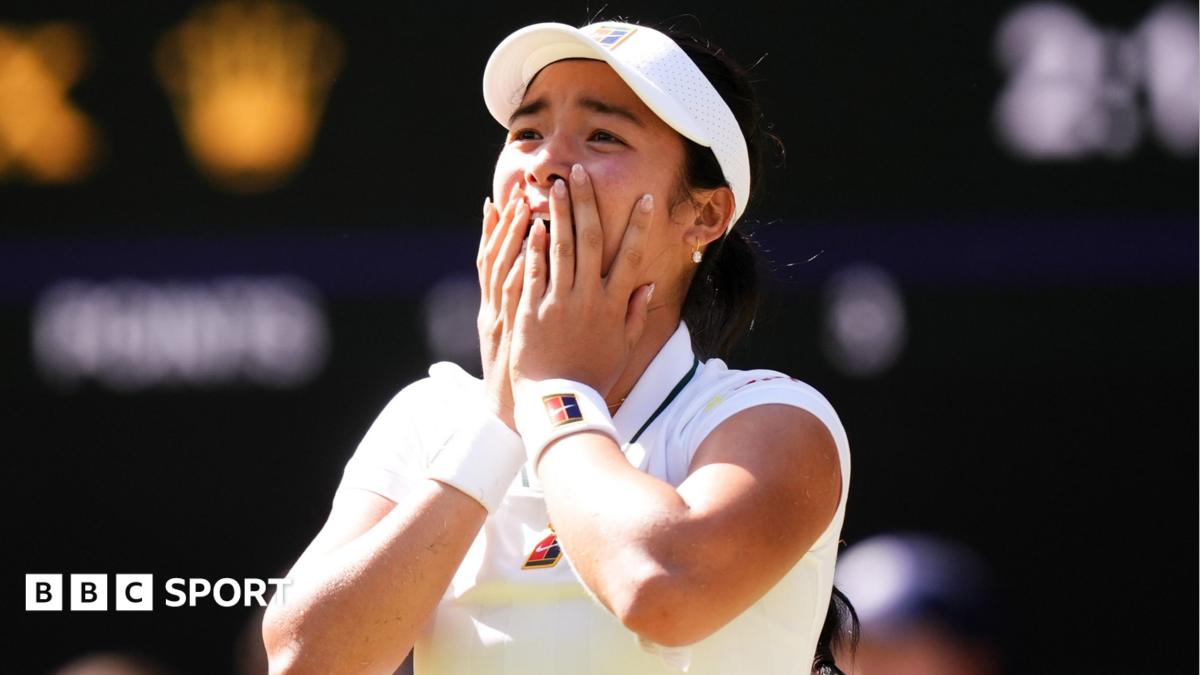
    LONDON – Months after England’s crushing 4-1 Ashes defeat on Australian soil left the cricket world questioning unity between the side’s star captain and revolutionary head coach, Ben Stokes has pushed back hard against reports of a deep split between himself and Brendon McCullum, calling claims that the pair are out of alignment “a massive overstatement.”

    When Stokes and McCullum took charge of the England men’s Test team in 2022, they upended decades of cricket orthodoxy with their “Bazball” philosophy: an unapologetic, all-out attacking approach to batting that produced a string of memorable home wins, but crumbled spectacularly in Australia’s hostile conditions during the 2023-2024 winter series. A post-series review published earlier this year publicly hinted at underlying tension between the two leaders, with leaks indicating Stokes favored a more conservative tactical shift in response to Australia’s dominance, while McCullum insisted on doubling down on their signature aggressive style.

    After the review concluded that both men would retain their positions last month, Stokes broke his months-long public silence in an official interview with the England and Wales Cricket Board to address the speculation head-on. The captain acknowledged that the pair do disagree on occasion, but argued that healthy debate is not a sign of a broken partnership – it is a necessary part of building a winning team.

    “If anyone thinks that you’re always going to agree on everything when you share leadership, that’s just impossible,” Stokes said. “To me, that isn’t a healthy environment for sport, in particular. You need debate. You need discussions. Then you end up getting to the place you both want to end up getting to.”

    Stokes emphasized that the pair’s shared commitment to England’s success far outweighs their rare differences, noting they agree on 95% of all team matters. “As similar as me and Brendon are, we’re also dissimilar in other areas as well,” he explained. “The 5% things that we might have different views on, we talk about it between each other and then we end up getting to the place where we want to get to.”

    The captain admitted the period following the Ashes defeat has been the most challenging stretch of his leadership tenure, but confirmed he is thrilled to continue working alongside McCullum, a message he previously shared publicly on social media after the review’s outcome was announced.

    Following the review’s recommendations, the pair will make minor adjustments to how they operate as a leadership team – a change Stokes says he fully supports. The captain added that their core alignment has never shifted: both men are focused on making England the best Test side in the world, a goal that has anchored their partnership from the start.

    “I’m very confident in mine and Brendon’s ability to be able to work together, because we’ve done it for such a long period of time now, but work together in a slightly different way,” Stokes said. “The main point of me and Brendon is our alignment towards winning things and making this team as good as they can be. That’s always been the thing since we started. It might just look a little bit different now to how that operates — on the back of four years working together.”

    Stokes has been sidelined since a freak preseason training accident with his county side Durham left him with a broken cheekbone, and he has not appeared in the 2024 County Championship. He is on track to return to competitive play in May, in preparation for England’s home Test series against New Zealand kicking off in June. Pakistan will visit England for another Test series later this summer, and Australia is scheduled to tour the country for the 2027 Ashes series. Stokes says he hopes he and McCullum will still be leading the side together when that series arrives, chasing the goals they set out when they first took the job.

    “Hopefully we’ll still be together at the end of 2027, winning what we want to win,” he said.

  • Youth from Vietnam explore Red ties

    Youth from Vietnam explore Red ties

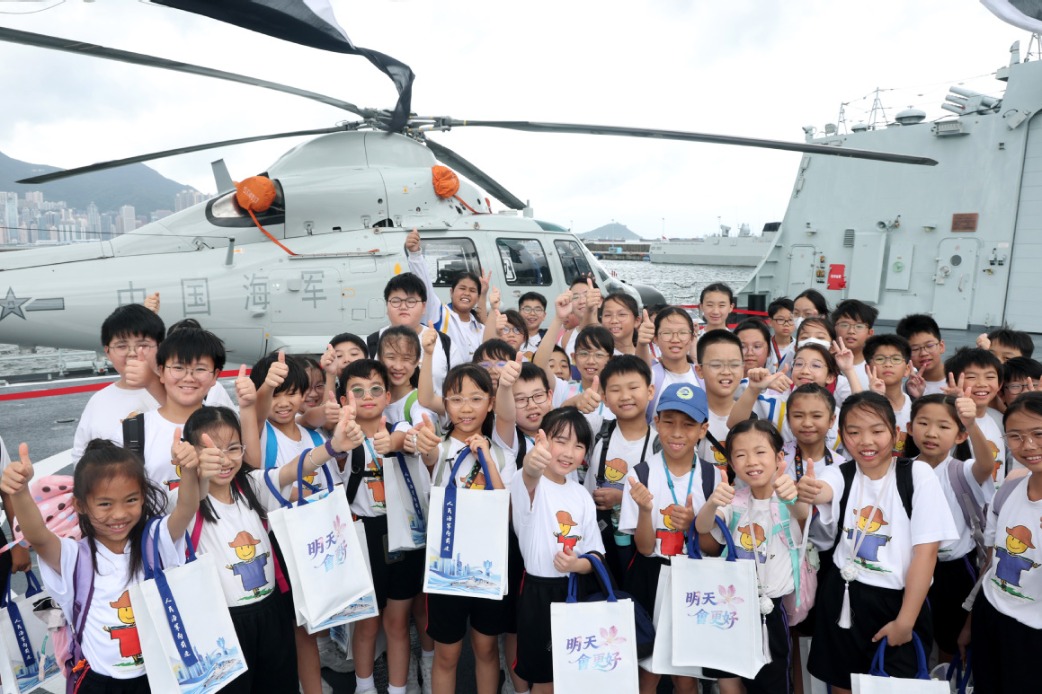
    In a landmark cross-border youth exchange initiative hosted in Guangzhou, the capital of China’s southern Guangdong province, 200 young Vietnamese delegates from diverse professional backgrounds gathered in mid-April 2026 for a three-day “Red Study Tour” designed to deepen understanding of the shared revolutionary history and dynamic cultural connections between China and Vietnam.

    Organized by the Central Committee of the Communist Youth League of China, the delegation brought together young participants spanning civil servants, youth league cadres, working journalists, university students, youth advocates, and digital content creators — reflecting the broad cross-section of contemporary Vietnamese youth society.

    Over the three-day program from Saturday to Monday, delegates toured a curated lineup of historically significant, cultural, and innovation-focused sites across Guangzhou. These included the former headquarters of the Vietnamese Youth Revolutionary Comrades Association, the resting place of Vietnamese revolutionary martyr Pham Hong Thai, the Memorial Hall of the First National Congress of the Socialist Youth League of China, and the Whampoa Military Academy Memorial Hall — sites that anchor the shared revolutionary legacy of the two nations. The tour also extended to cultural landmarks such as the historic Yongqing Fang old alley district, modern infrastructure at Guangzhou Metro Group, the advanced Fushan Circular Economy Industrial Park, leading Chinese technology enterprises, and popular scenic destinations.

    Throughout their visits, participants explored the deep revolutionary camaraderie forged between early Chinese and Vietnamese pioneers who fought side-by-side for national independence and liberation. The experience allowed delegates to gain a more nuanced, personal understanding of the sacrifices that laid the foundation for modern national development in both countries, and to reaffirm the enduring value of bilateral friendship and cooperative partnership.

    To strengthen people-to-people connections, the tour included three themed symposiums and a collaborative joint painting project that brought Vietnamese delegates together with local Chinese young people, creating space for open dialogue and relationship-building beyond guided visits.

    Huynh Thi Thanh Thuy, the 2022 Miss Vietnam and 2024 Miss International titleholder, who was among the delegates, praised the rich artistic expression and inclusive cultural fusion that defines Lingnan culture, the regional culture of southern China’s Guangdong area. She proposed a new vision for youth-led cross-border cultural collaboration that leverages digital platforms.

    “I hope young people from both countries can work together to breathe new life into cultural heritage through digital platforms,” she said. “For example, we could create joint music projects that blend traditional Lingnan and Vietnamese musical instruments with modern harmony and orchestration, or integrate the iconic imagery of Vietnamese ao dai into the traditional architectural spaces of Guangzhou’s Xiguan old mansions. This is how heritage can truly come alive in the hearts of Generation Z.”

    Tran Tuan Hiep, a performer of Tuong, Vietnam’s centuries-old traditional theatrical art form, highlighted that both China and Vietnam boast deep-rooted, distinct cultural heritages — noting that Peking Opera holds a similar place as a iconic national cultural treasure in China, mirroring Tuong’s role in Vietnam.

    “Having had the opportunity to visit China in person, I am deeply impressed by your country’s outstanding efforts in preserving traditional culture,” he said. “I hope there will be more opportunities for exchanges in the future so that we can learn from each other and jointly protect and develop the traditional arts and cultures of our two countries.”

    Vietnamese children’s book author Bui Thi Thu Ha emphasized that cultural and artistic exchange acts as a durable bridge between the two peoples, helping build greater mutual understanding of shared and distinct values, traditions, and national identities.

    “Through artistic performances, exhibitions, music, food and other events, we can not only appreciate beauty but also feel the soul, history and way of thinking of each nation,” she said.

    The Guangzhou leg of the tour concluded on Monday afternoon, with the delegation set to travel to Beijing to continue their study tour and explore more of China’s cultural and historical heritage, extending what organizers frame as a growing people-to-people partnership between the next generations of the two neighboring nations.

  • Lunar soil bears proof of organic matter

    Lunar soil bears proof of organic matter

    A groundbreaking international research collaboration has made a historic discovery: the first confirmed identification of nitrogen-bearing organic compounds in lunar soil, a finding that opens critical new avenues for understanding how life’s chemical precursors spread across the early solar system.

    The team, comprising scientists from the Chinese Academy of Sciences, the University of New Mexico, and the Changsha University of Science and Technology, analyzed pristine soil samples collected by China’s Chang’e 5 and Chang’e 6 lunar exploration missions to map out the likely pathway that delivered organic materials to the inner solar system via asteroid and comet impacts. Their peer-reviewed results, published April 10, 2026 in the journal *Science Advances*, fills a long-standing gap in scientific knowledge about how the fundamental building blocks of life arrived on early Earth.

    Unlike Earth, where constant geological activity and pervasive biological processes have erased most evidence of the planet’s first billion years, the moon has functioned as a well-preserved planetary time capsule. With almost no tectonic or atmospheric activity, the lunar surface retains intact traces of space debris impacts that occurred billions of years ago. While earlier analyses of samples retrieved by NASA’s Apollo missions detected carbon- and hydrogen-based organic compounds on the moon, nitrogen-bearing organics — chemical structures commonly found in asteroids sampled by NASA’s OSIRIS-REx and Japan’s Hayabusa2 missions — had never been confirmed in lunar material before this study.

    This new research does more than just confirm the presence of these missing organic compounds: it also reveals how asteroid impacts both deliver and reshape these materials on the lunar surface. Using cutting-edge high-resolution microscopy and specialized light-based analytical tools, the research team verified that the detected organics are composed of carbon, nitrogen, and oxygen, and show signs of complex chemical reorganization that sets them apart from inert, simple graphitized carbon.

    Dong Mingtan, lead author of the study and a doctoral candidate at the Chinese Academy of Sciences’ Institute of Geology and Geophysics, explained that the team identified amide functional groups in a subset of the samples — chemical structures that are a fundamental component of key biological molecules such as proteins. This discovery, Dong noted, confirms that the organic materials have undergone complex chemical restructuring that brings them closer to the type of organic molecules that can be used as building blocks for life.

    To trace the origin of the organics, the team analyzed isotopic ratios — unique elemental “fingerprints” that reveal a material’s geological and cosmic history. They found that the lunar organics had a lighter isotopic signature than organics found in intact asteroids, a pattern consistent with a process of vaporization and redeposition. When an asteroid collides with the moon, the extreme heat generated by the impact vaporizes organic molecules, which then cool and settle back into the cold lunar surface, leaving this distinct isotopic trace.

    To eliminate any doubt that the organic compounds could have come from contamination after the samples were brought to Earth, the team tested for evidence of solar wind implantation, a process where charged particles from the sun bombard the lunar surface over millions of years, leaving a unique chemical marker that can only form off-Earth.

    Hao Jialong, senior engineer at the Institute of Geology and Geophysics and the study’s corresponding author, confirmed that the presence of this marker confirms the organics were exposed on the lunar surface for an extended period, definitively ruling out terrestrial contamination.

    Overall, the study outlines a complete lifecycle for organic materials on the moon: delivery via impacts from small solar system bodies, structural reshaping by the heat and force of those impacts, and final modification by long-term exposure to solar radiation. The research team announced that the same analytical framework developed for this project will be applied to samples collected by China’s upcoming Tianwen 2 mission, which is scheduled to return asteroid samples to Earth by the end of 2027.