标签: Asia

亚洲

  • Contrary to US policy, ambassador Huckabee says West Bank’s Area C ‘is Israel’

    Contrary to US policy, ambassador Huckabee says West Bank’s Area C ‘is Israel’

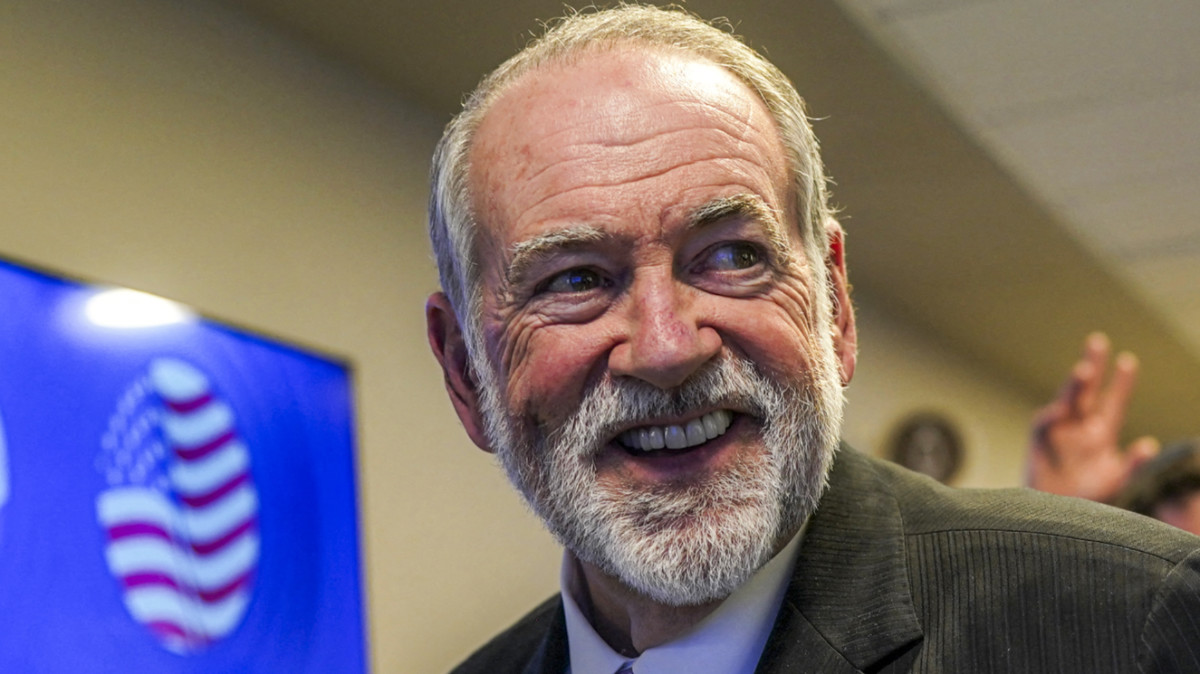
    In a striking departure from established US foreign policy, American Ambassador to Israel Mike Huckabee declared during a Friday interview with commentator Tucker Carlson that Area C of the occupied West Bank constitutes sovereign Israeli territory. The ambassador further escalated controversy by expressing openness to Israeli expansion across multiple Middle Eastern nations, including Syria, Jordan, Saudi Arabia, Iraq, and Egypt.

    These remarks triggered immediate condemnation from Arab and Muslim allies, who characterized Huckabee’s statements as “dangerous and inflammatory” rhetoric that undermines regional stability. The ambassador’s position directly contradicts longstanding US policy, which refuses recognition of Israeli sovereignty over any portion of the occupied West Bank.

    The West Bank’s division into Areas A, B, and C originated from the 1990s Oslo Peace Accords, which established the Palestinian Authority. While Areas A and B were designated for varying degrees of Palestinian control, Area C—representing approximately 60% of the West Bank—was intended to remain under Israeli military jurisdiction pending final status negotiations.

    Over the past two decades, Israeli settlement expansion within Area C has dramatically accelerated, with nearly 400,000 settlers now residing in the territory. Palestinian communities face systematic restrictions, including home demolitions, resource confiscation, and limited water access. UN data indicates over 70% of Area C Palestinian communities lack connection to water networks, relying on costly tankered deliveries.

    Khaled Elgindy of the Quincy Institute for Responsible Statecraft noted that Huckabee’s comments merely vocalize existing realities, stating that Israel has effectively achieved de facto annexation without formal declaration. This assessment gained further credibility when Israel’s cabinet recently assumed control over Area C’s land registry, invalidating Palestinian Authority documentation efforts.

    Simultaneously, Israel has intensified administrative control over Palestinian-governed Areas A and B, approving measures that undermine Palestinian Authority jurisdiction. Recent settlement expansions near Jerusalem further demonstrate Israel’s consolidation of control across the occupied territories, despite international condemnation of these actions as violations of international law.


  • Medical charter flight from Ranchi to Delhi crashes with 7 onboard: Indian media

    Medical charter flight from Ranchi to Delhi crashes with 7 onboard: Indian media

    A specialized medical transport aircraft operating between Ranchi and New Delhi has crashed under tragic circumstances in India’s eastern Jharkhand state. The Beechcraft King Air B90L aircraft, operated by Redbird Airways, vanished from radar surveillance shortly after departure on Monday evening with seven individuals aboard.

    According to aviation authorities cited by India’s ANI news agency, the ill-fated flight was conducting a dedicated medical evacuation mission. The passenger manifest included a patient requiring urgent medical transfer accompanied by a specialized medical team consisting of a doctor and paramedic, in addition to flight attendants and crew members.

    Emergency response teams have been dispatched to the suspected crash site in Chatra district, approximately 110 kilometers from Ranchi. Search and rescue operations are currently underway amid challenging terrain conditions, though officials have not yet confirmed any survivor accounts from the remote crash location.

    The aviation incident marks another concerning episode in India’s regional air safety record, coming amidst increased scrutiny of medical evacuation protocols and charter flight operations. The Directorate General of Civil Aviation has initiated a formal investigation to determine the precise cause of the tragedy, examining factors ranging from technical failure to weather conditions prevalent during the evening departure.

    This medical evacuation tragedy echoes similar incidents globally, including a recent private jet accident in Maine, United States, that claimed eight lives, highlighting the inherent risks associated with specialized air transport operations even with advanced safety protocols in place.

  • Indian, British, Chinese citizens among 19 killed in Nepal bus crash

    Indian, British, Chinese citizens among 19 killed in Nepal bus crash

    A catastrophic bus accident in Nepal’s mountainous Dhading district has resulted in 19 fatalities and 25 injuries, with citizens from multiple nations among the victims. The tragedy occurred in the pre-dawn hours of Monday when the vehicle veered off a treacherous mountain road near Behighat, plummeting approximately 200 meters (650 feet).

    The ill-fated bus was transporting 44 passengers from the popular tourist destination of Pokhara to the capital city of Kathmandu when the accident transpired approximately 80 kilometers west of the capital. According to official police statements, the deceased included citizens from the United Kingdom, China, and India. Among the injured, who are currently receiving medical treatment at Kathmandu hospitals, were a New Zealander and another Chinese national.

    This devastating incident highlights the persistent road safety challenges in Nepal’s difficult mountainous terrain, where inadequate infrastructure and hazardous conditions contribute to frequent accidents. The Nepalese government has promptly responded by initiating a formal investigation into the circumstances surrounding the crash.

    Road transportation accidents remain a critical public safety concern throughout Nepal, with hundreds of fatalities recorded annually. The country’s rugged geography and underdeveloped road network present ongoing challenges for both local commuters and international visitors alike. This particular tragedy underscores the vulnerabilities of road travel in developing nations with complex topographies.

  • India blocks Middle East Eye journalist’s X account

    India blocks Middle East Eye journalist’s X account

    The Indian government has formally blocked the X (formerly Twitter) account of Azad Essa, a US-based South African journalist serving as a senior reporter for Middle East Eye (MEE). The action was communicated via an official email from X Support on February 20th, citing a legal directive from India’s Ministry of Information and Broadcasting under Section 69A of the Information Technology Act, 2000.

    The notification stated that while X is legally compelled to restrict access to Essa’s content within India, his account remains accessible internationally. The platform advised the journalist to seek legal recourse through Indian courts to challenge the blocking order, though it emphasized it could not provide legal counsel.

    Essa, whose reporting extensively covers India-Israel relations, stated he received no specific explanation for the ban. He characterized the move as emblematic of deteriorating press freedoms in India and accused X of complicity in suppressing journalism while publicly championing free speech.

    This incident occurs against a backdrop of escalating tensions between X and the Indian government. Six months prior, the platform expressed concerns about censorship after temporarily blocking Reuters accounts following government requests—a move later denied by Indian authorities. In March 2025, X initiated legal proceedings against the Indian government over proposed policies that would expand officials’ authority to issue content removal requests. By May, these tensions culminated in approximately 8,000 takedown requests from Indian authorities during heightened India-Pakistan tensions.

    The journalist’s blocking coincides with deepening India-Israel relations. Prime Minister Narendra Modi is reportedly planning an upcoming visit to Israel to strengthen bilateral ties, with Israeli Prime Minister Benjamin Netanyahu describing the cooperation as part of a strategic “hexagon of alliances” countering radical elements in the Middle East.

    Essa, author of “Hostile Homelands: The New Alliance Between India and Israel,” reported experiencing sustained harassment from India’s right-wing factions over his coverage of India-Israel relations and Kashmir. He documented coordinated disinformation campaigns and personal threats aimed at discrediting his work.

  • Prime Minister Carney to travel to India, Australia and Japan to diversify Canada trade away from US

    Prime Minister Carney to travel to India, Australia and Japan to diversify Canada trade away from US

    Canadian Prime Minister Mark Carney has embarked on a significant diplomatic tour across India, Australia, and Japan, signaling a strategic pivot toward trade diversification beyond the United States. The Prime Minister’s Office confirmed the itinerary on Monday, highlighting this as Canada’s latest effort to strengthen economic partnerships with key Indo-Pacific nations.

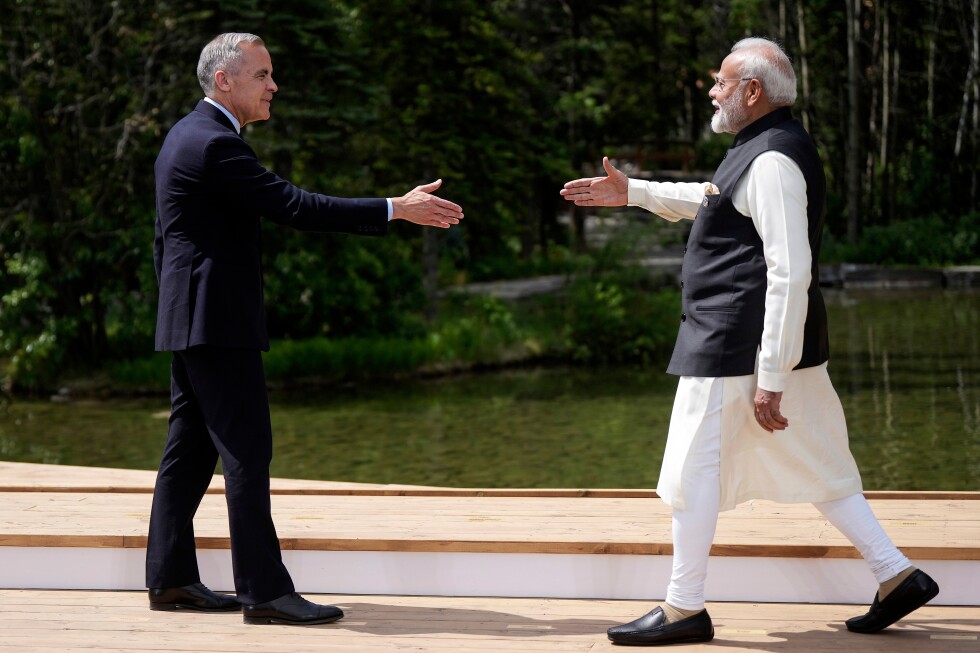
    Carney’s journey begins in Mumbai on Thursday, where he will engage in high-level discussions with Indian Prime Minister Narendra Modi and convene with prominent business leaders. This visit marks a crucial step in revitalizing bilateral relations following two years of diplomatic strain.

    The Australian leg of the tour features a historic address to both houses of Parliament in Canberra—an honor not extended to a Canadian leader in two decades. Carney will also meet with Australian Prime Minister Anthony Albanese to explore collaborative opportunities in defense modernization and artificial intelligence development.

    In Tokyo, the Prime Minister will confer with Japanese counterpart Takaichi Sanae on pressing global issues including clean energy transition, critical mineral security, and sustainable food supply chains.

    ‘Within an increasingly volatile global landscape, Canada remains focused on controllable factors—specifically trade diversification and substantial investment attraction,’ Carney stated regarding the mission.

    This diplomatic offensive responds directly to escalating trade tensions with the United States, where President Donald Trump has repeatedly threatened imposing punitive tariffs—including a potential 100% levy—on Canadian goods. Trump’s recent characterization of Canada as potentially becoming ‘the 51st state’ has further strained relations.

    Carney’s trade diversification strategy aims to double Canada’s non-U.S. exports within the next decade. The Prime Minister recently gained international recognition at the World Economic Forum in Davos for his condemnation of economic coercion by major powers against smaller nations.

    The India visit occurs despite ongoing diplomatic challenges, including Canadian allegations of Indian official involvement in the June 2023 assassination of a Sikh activist near Vancouver. Similar accusations have emerged from United States authorities regarding alleged Indian plots against Sikh separatists on American soil.

  • Australia to tour South Africa for 3 test matches and 3 one-day internationals

    Australia to tour South Africa for 3 test matches and 3 one-day internationals

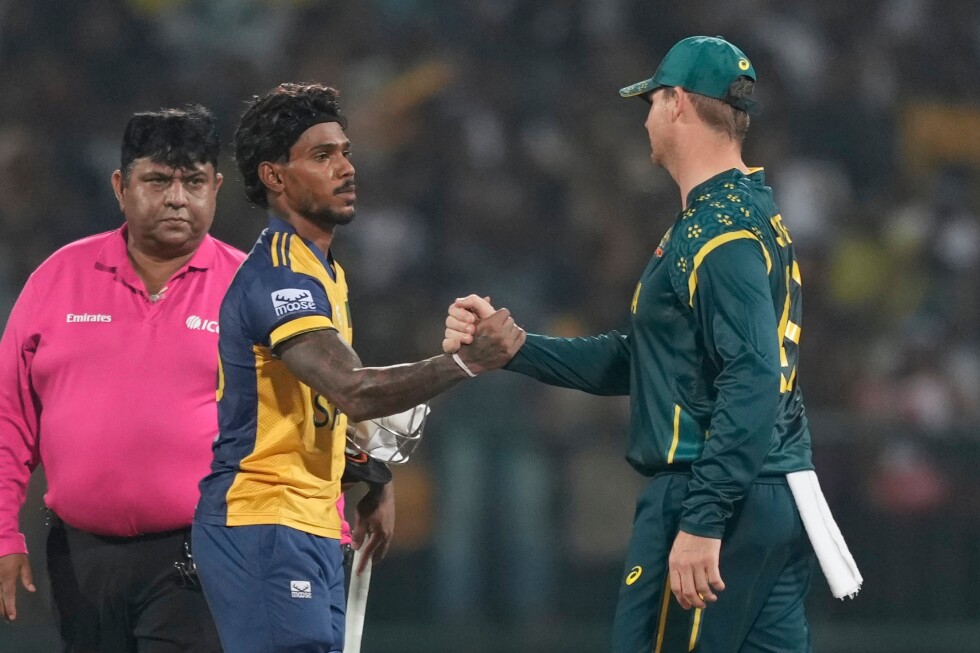
    Cricket Australia has officially unveiled the schedule for a highly anticipated tour of South Africa, marking a significant return to bilateral competition between the two cricketing powerhouses. The tour, set for September and October, will feature a compelling series of three One-Day Internationals (ODIs) followed by a three-match Test series, reigniting a historic rivalry.

    The engagement commences with the ODI leg, opening at Kingsmead in Durban on September 24. The teams will then clash at the Wanderers Stadium in Johannesburg on September 27, concluding the limited-overs segment with a day-night encounter in Potcheffstroom on September 30.

    Following a two-day warm-up match on October 3-4, the focus will shift to the pinnacle of the sport: the Test series. The first Test is scheduled to begin on October 9 at Durban’s iconic venue. The action then moves to Gqeberha (formerly Port Elizabeth) for the second Test starting October 18. The grand finale of the tour will be held at the revered Newlands Cricket Ground in Cape Town from October 27 to 31.

    This Test series carries profound significance, representing the first meeting between the two nations since their epic clash in the World Test Championship (WTC) final at Lord’s in June. On that occasion, South Africa secured a monumental victory to claim their first major international cricket trophy in 37 years, a result that undoubtedly adds a layer of intense competitive spirit and a quest for redemption to the upcoming contests.

  • India’s HAL denies reports of latest Tejas aircraft crash, says was ‘minor incident’

    India’s HAL denies reports of latest Tejas aircraft crash, says was ‘minor incident’

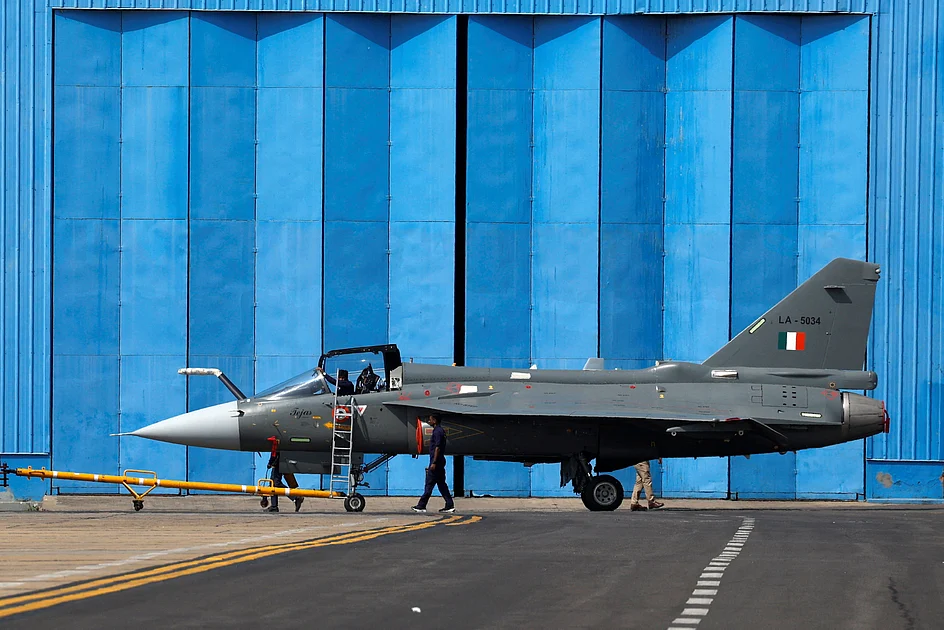
    India’s state-owned aerospace manufacturer Hindustan Aeronautics Ltd (HAL) has formally refuted circulating media reports characterizing a recent incident involving its Tejas Light Combat Aircraft as a crash. The company issued an official statement clarifying that the event constituted merely “a minor technical incident on the ground” rather than an aerial mishap.

    Addressing speculation that emerged on Monday, February 23, 2026, HAL utilized social media platform X to provide factual corrections regarding the aircraft’s condition. Contrary to earlier reports suggesting substantial airframe damage from suspected brake failure, the aerospace firm emphasized the Tejas platform’s exceptional safety credentials, noting it maintains “one of the world’s best safety records among contemporary fighter aircraft.”

    The manufacturer revealed that following standard operational protocols, a comprehensive analysis of the technical issue is underway. HAL confirmed it is collaborating closely with the Indian Air Force (IAF) to implement resolutions promptly. This cooperative investigation aims to determine the root cause of the ground incident while ensuring continued operational reliability.

    Initial media accounts had described a scenario where the combat aircraft reportedly experienced system malfunctions during return to base following a training sortie, allegedly necessitating pilot ejection. These reports suggested the incident represented the latest in a series of technical challenges for the platform, with some outlets indicating the IAF had temporarily grounded the fleet—a claim not addressed in HAL’s current statement.

    The clarification comes amid heightened scrutiny of India’s domestic defense manufacturing capabilities and follows recent aviation safety discussions within the region regarding various aircraft platforms.

  • Landmark royal commission into antisemitism prompted by Bondi shooting begins

    Landmark royal commission into antisemitism prompted by Bondi shooting begins

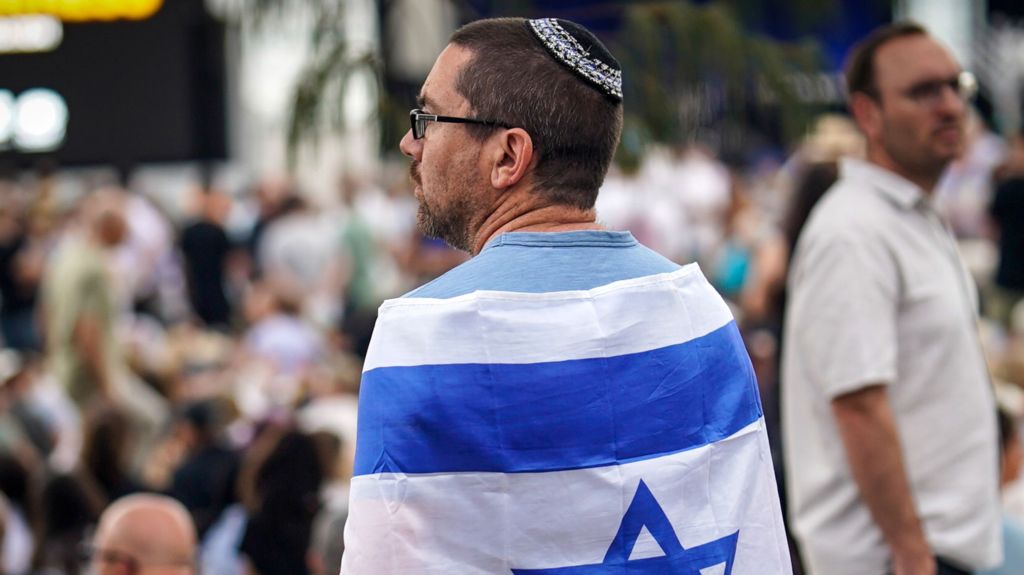
    Australia has initiated a comprehensive federal royal commission to investigate antisemitism and its underlying causes, a direct response to the devastating Bondi Beach mass shooting in December that resulted in 15 fatalities and 40 injuries. This powerful public inquiry, the nation’s most authoritative investigative mechanism, commenced its public hearings this week under the leadership of former High Court Justice Virginia Bell.

    The commission’s mandate extends beyond examining the immediate circumstances of Australia’s deadliest mass shooting in decades. It will conduct a thorough analysis of antisemitism’s prevalence throughout Australian society, identify its primary drivers, and formulate concrete policy recommendations for the government. Justice Bell has committed to expediting the inquiry process while maintaining rigorous investigative standards.

    Prime Minister Anthony Albanese initially resisted establishing a federal commission, expressing concerns about potentially undermining social cohesion and providing a platform for hate speech. However, mounting pressure from prominent Jewish community leaders, victims’ families, and political opposition compelled the government to reverse its position. Consequently, the federal inquiry has absorbed a previously announced review of law enforcement agencies, while a separate New South Wales state inquiry was canceled.

    The commission is expected to deliver an interim report by April’s end, with a comprehensive final report due before the first anniversary of the December 14 attack. While public hearings will feature testimony from intelligence agencies, security experts, and attack survivors, some proceedings may occur privately to avoid prejudicing ongoing criminal cases against the alleged perpetrators.

    In the tragedy’s aftermath, authorities have implemented stricter gun control measures and enhanced powers to restrict protests and combat hate speech. The commission’s work represents Australia’s most significant examination of antisemitism to date, with profound implications for national security policy, social cohesion, and counter-extremism efforts.

  • Iraq’s Maliki defends PM candidacy, seeks to reassure US

    Iraq’s Maliki defends PM candidacy, seeks to reassure US

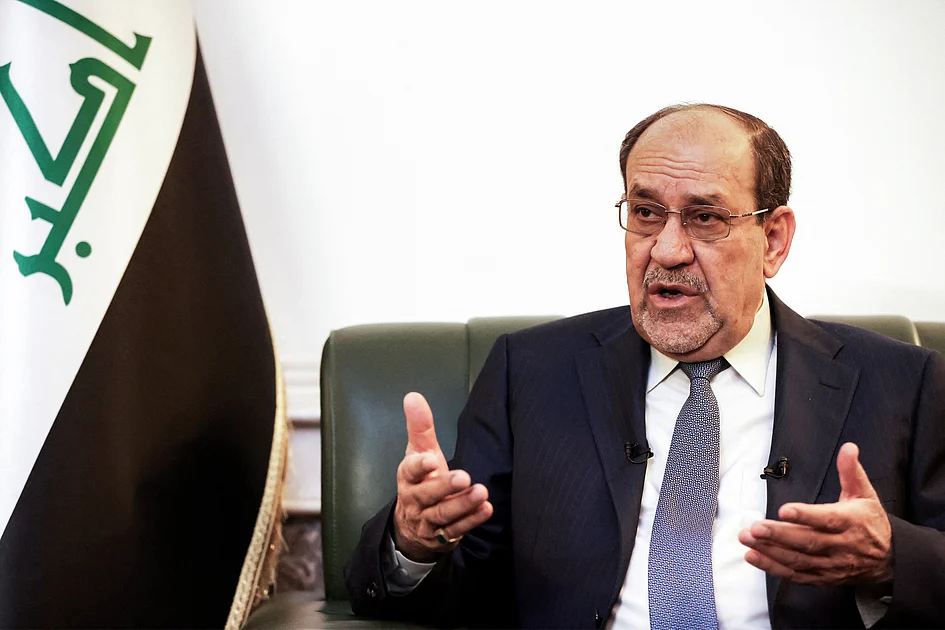
    In a defiant stance against American diplomatic pressure, former Iraqi Prime Minister Nouri Al Maliki has publicly reaffirmed his commitment to pursuing the nation’s top political office. During an exclusive interview with AFP on Monday, the political veteran declared his unwavering determination to remain in the nomination process despite explicit warnings from the United States administration.

    The political landscape in Iraq continues to be shaped by the complex interplay between global powers, particularly the ongoing rivalry between neighboring Iran and the United States. This geopolitical tension has persisted since the 2003 US-led invasion that deposed Saddam Hussein, creating a delicate balancing act for Iraqi leadership.

    The current confrontation escalated last month when President Donald Trump issued an ultimatum stating that US support for Iraq would cease if Maliki—who maintains close ties with Iran—assumes the prime minister role again. This declaration has placed Iraqi leaders, particularly within the Coordination Framework (a ruling coalition of Shia groups with varying connections to Iran that nominated Maliki), in a challenging diplomatic position.

    Maliki, who previously served two terms as prime minister from 2006 to 2014, responded to the American pressure with nationalistic rhetoric. ‘I have absolutely no intention of withdrawing out of respect for my country, its sovereignty, and its will,’ he stated emphatically. ‘No one has the right to say whom we can or cannot vote for.’

    Addressing Washington’s concerns regarding Iran’s influence, Maliki presented a conciliatory tone while maintaining his position. He acknowledged that ‘countries have the right to set conditions in their dealings with Iraq,’ but emphasized that any alteration to his nomination would require action from the Coordination Framework, which continues to endorse his candidacy.

    The former leader sought to reassure international observers by outlining his vision for military consolidation. ‘What America wants is not new. These are our demands,’ Maliki asserted. ‘We want weapons in the hands of the state. We want a centralized military force. We have said it repeatedly: we want one army under one command, directly under state authority.’

    Maliki expressed optimism about reaching agreements with pro-Iran armed factions, noting that ‘there is a good basis for understanding’ that could be achieved without ‘force, war or confrontations.’ He believes these groups ‘do not want to expose Iraq to any danger.’

    Regarding Washington’s demand to exclude Iran-backed armed groups from government participation, Maliki indicated this remains under discussion. He outlined a potential compromise: ‘We want those who participate in the political process and the government to lay down their arms. Those who lay down their arms are welcome to be part of the next government.’

    With regional tensions escalating due to ongoing nuclear negotiations between the US and Iran, Maliki pledged to protect diplomatic missions in Iraq. ‘All countries can be assured that we will prevent any violation against their embassies or officially recognized interests in Iraq,’ he committed, referencing previous attacks on US facilities by Iran-backed groups.

    Maliki defended Iraq’s relationship with Iran as based on mutual respect for sovereignty and shared interests, highlighting practical considerations including their 1,300-kilometer border and Iraq’s dependence on Iranian natural gas imports. He warned that cutting this supply ‘would be a major catastrophe’ for Iraq’s energy infrastructure.

    Despite beginning to enjoy relative stability after decades of conflict, Iraq’s political future remains uncertain, caught between competing international interests and internal divisions that will challenge whoever ultimately assumes leadership.

  • Beijing urges US to rescind tariff measures

    Beijing urges US to rescind tariff measures

    In the wake of a landmark U.S. Supreme Court decision, China has formally called upon the United States to revoke all unilateral tariff measures imposed on its trading partners. The Chinese Ministry of Commerce announced on Monday that it is conducting a comprehensive evaluation of the ruling’s implications and will vigilantly monitor any subsequent ‘alternative measures’ Washington might deploy to sustain high import duties.

    The judicial upheaval occurred on February 20th, 2026, when the Supreme Court struck down a broad swath of tariffs instituted by former President Donald Trump, deeming them an overreach of executive authority. This decision nullified specific tariffs, including those related to fentanyl and so-called ‘reciprocal’ levies on China. Consequently, the composite tariff rate on Chinese goods was poised to drop from 37% to approximately 21.9%, according to analyses by Guosheng Securities.

    However, the trade landscape was swiftly scrambled once more when President Trump responded by invoking Section 122 of the Trade Act of 1974, proclaiming a new 15% ‘global tariff.’ This maneuver effectively pushes the aggregate duty rate on Chinese imports back up to an estimated 28.6%.

    A spokesperson for China’s Commerce Ministry condemned the U.S.’s unilateral actions, stating they breach both international trade norms and U.S. domestic law, ultimately serving no nation’s interests. While reaffirming China’s commitment to cooperative and stable global economic relations, the official underscored Beijing’s readiness to enact firm countermeasures should its legitimate interests be infringed.

    Economic analysts highlight that the core leverage in the protracted Sino-U.S. trade negotiations hinges on each nation’s economic resilience and technological prowess. Luo Zhiheng, Chief Economist at Yuekai Securities, emphasized that fortifying China’s economic fundamentals and bolstering its capacity for independent innovation are paramount to navigating external uncertainties and securing long-term strategic initiative.

    Furthermore, experts like Xiong Yuan from Guosheng Securities point to statutory limitations, noting that Section 122 imposes a strict 150-day time limit, making it an unlikely long-term solution and suggesting a future pivot back to more enduring legal mechanisms like Sections 301 and 232.
    Amid these developments, voices from the business community, such as Sean Stein of the U.S.-China Business Council, advocate for a shift in dialogue beyond tariffs and toward fostering effective economic cooperation, enabling companies from both powerhouse economies to thrive in each other’s markets.