标签: Asia

亚洲

  • Higher proportion of pro-Palestine than Labour candidates won at local elections

    Higher proportion of pro-Palestine than Labour candidates won at local elections

    Exclusive new data obtained by Middle East Eye (MEE) has uncovered a striking electoral trend from England’s 7 May local elections: candidates who publicly backed Palestinian rights outperformed nominees from most major established parties, only trailing the right-wing Reform Party in win rates for contested seats.

    The data confirms that public opposition to ongoing British policy cooperation with Israel remains a deeply resonant political issue across England, and that running on a clear pro-Palestine platform has emerged as a measurable predictor of electoral success in dozens of local races.

    All candidates who signed the Palestine Solidarity Campaign (PSC)’s widely supported “Pledge for Palestine” secured victory in 27% of the seats they contested. By comparison, Reform candidates posted a 30% win rate, while the Labour Party — the current national governing party — won just 22% of its contested seats, and the Liberal Democrats followed closely behind at 21%.

    More than 1,600 candidates across the political spectrum signed the pledge, which commits elected officials to use their local office to advance Palestinian human rights. Signatories vow to take all appropriate steps to uphold the inalienable rights of the Palestinian people, and to support efforts to secure accountability for what the pledge frames as Israel’s crimes of genocide, military occupation, ethnic cleansing and apartheid.

    The pledge also requires candidates to prevent their local councils from complicity in or normalization of Israel’s alleged violations of international law. Key commitments include divesting council pension funds and other publicly administered assets from companies that enable these violations, and aligning local procurement policies with these goals.

    Signatures came from a broad cross-section of political groups: more than 1,000 Green Party candidates, over 200 Labour candidates, more than 200 independent and small local party nominees, as well as a number of Liberal Democrat and Conservative candidates. Pro-Palestine candidates were particularly likely to run and win in seats with large youth, student, ethnic minority and Muslim populations.

    One of the most high-profile successes came in Hackney, east London, where 31 Green candidates signed the pledge, including mayoral candidate Zoe Garbett, who won her race. The Greens secured a dominant majority on Hackney Council, taking 42 of the body’s 57 total seats. In neighboring Haringey, north London, the Greens surged to 28 council seats, overtaking Labour and coming just short of a full majority, with 26 of the party’s successful candidates having signed the pledge. Across the Midlands, in Bradford and Birmingham, dozens of independent and Green signatories won their local council contests.

    Jeanine Hourani, a representative of Palestinian Youth Movement Britain — a partner in the Vote Palestine grassroots coalition that backed the pledge campaign — emphasized that the results confirm Palestine is a critical local issue for voters across England. “In the months leading up to election day, 16 local campaigns were launched, spending thousands of hours canvassing and organising dozens of local action days,” Hourani said. She added that the outcome highlights how essential grassroots community organizing is to the pro-Palestine movement, while sending a clear warning to mainstream elected officials: “Pledge signatories collectively outperformed almost every political party, and their successes will only grow as we look towards the 2029 general election.”

    Asma Alam, a newly elected Green councillor for Manchester’s Burnage ward, who won her seat after signing the pledge, framed Palestinian rights as an inherent local government responsibility. “If councils have power over pensions, procurement and public money, then Palestine is absolutely a local government issue,” she said. Alam pointed to Greater Manchester’s pension fund, the largest local government pension pool in England, valued at more than £31 billion. Campaigners have identified nearly £905 million in fund investments tied to companies that they say are complicit in Israel’s oppression of Palestinians. “We cannot pass motions, say the right things, and then carry on as normal,” Alam said. “For me, this is simple: I will not take a council pension while that pension is tied to Palestinian suffering. Divestment is not symbolic. It is about refusing to let public money bankroll injustice.”

    The electoral success of pro-Palestine candidates comes against a backdrop of growing tension between the national Labour government and pro-Palestine activists within and outside the party. In January, Communities Secretary Steve Reed issued a warning to all Labour-run local councils that they could face legal action if they move to boycott Israeli businesses, directing councils to a 2016 national government ban on procurement boycotts targeting Israeli firms and companies that trade with Israel.

    Over the past two years, dozens of local authorities have passed votes to boycott companies linked to Israeli war crimes, arms supplies to Israel, or economic activity in the occupied Palestinian territories. Multiple local council pension funds — including those in Islington, Lewisham, Wandsworth and Caerphilly — have already removed companies listed by the United Nations as operating in occupied Palestinian territories from their investment portfolios.

    Prominent veteran pollster Sir John Curtis noted after the elections that the Green Party, which drew the largest share of pro-Palestine candidates, inflicted far more damage to Labour’s vote share across England than the Reform Party, a shift that experts attribute in part to the Green Party’s clear embrace of pro-Palestine policy.

    MEE, which publishes independent, in-depth coverage of the Middle East, North Africa and global affairs, obtained the exclusive data for this report.

  • First of five men found alive in flooded Laos cave rescued

    First of five men found alive in flooded Laos cave rescued

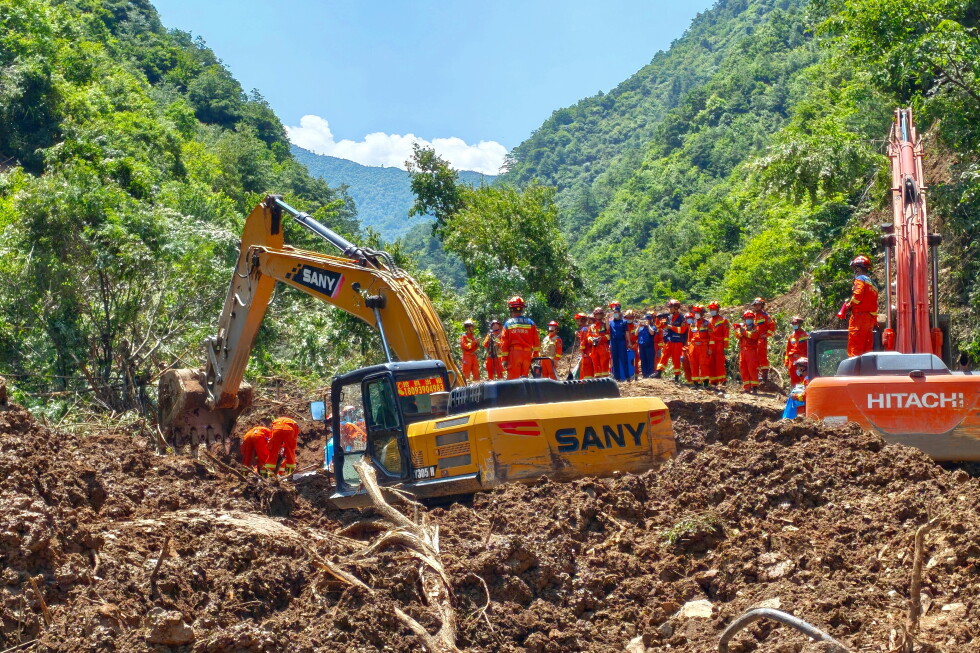
    In a high-stakes international rescue operation unfolding in the remote mountainous terrain of central Laos’ Xaysomboun province, the first of five men trapped for more than a week by sudden flash floods inside an isolated cave has been pulled to safety. The group had ventured into the cavern on May 20 to search for artisanal gold when unanticipated flash floods sealed off their exit, cutting them off from the outside world entirely. Two additional members of their original party remain unaccounted for as of Friday. Rescue divers located the five surviving men on Wednesday, huddled together on a small dry ledge roughly 300 meters (984 feet) from the cave’s entrance, after days of difficult searching. On Friday, a member of the Thai rescue contingent shared a photo on Facebook documenting the moment the first man was pulled out, confirming in a subsequent update that “the first victim has been successfully rescued out of the cave.”

    This mission has been defined by a relentless race against time, with forecasters warning of incoming thunderstorms and a 60% chance of heavy rain across the region by Friday evening, conditions that would push cave water levels higher and further narrow the window for a safe extraction. The men, who are weak and malnourished after more than 10 days trapped with very limited resources, were recorded in video footage shot by rescuers on Wednesday covered head to toe in mud, reporting severe chest pains and extreme hunger.

    Rescuers initially pursued a plan to pump floodwaters out of the cave to open an exit route, but that strategy failed to produce results, forcing teams to consider a last-ditch alternative: teaching the trapped men basic scuba diving skills so they could swim out with guide support. It remains unclear exactly how rescuers managed to extract the first man, with operation leaders saying full details will be released after the entire mission concludes. Kengkard Bonggawong, a member of the Thai rescue team, wrote on social media Friday that after confirming the first man’s safe extraction, teams would conduct assessments of the remaining four survivors overnight before resuming the search for the two missing men on Saturday.

    The urgent plight of the trapped men has drawn international support from the global cave diving community, with specialist rescue teams from Thailand, Indonesia, France, and Australia arriving in Laos on Friday to contribute their specialized skills and experience to the operation. The operation bears striking similarities to the 2018 Tham Luang cave rescue, where a youth football team and their coach were extracted after 18 days trapped deep in flooded northern Thailand cave system. Mikko Paasi, a Finnish diver who participated in both the 2018 mission and the current Laos rescue, told CBS News Friday that the conditions in the cave remain extremely dangerous. “The environment is so hostile that anything can happen,” Paasi said.

    Photos released to the media show rescue teams from the Metta Tham Kalasin unit working tirelessly to redirect floodwaters out of the cave system, pumping water to higher ground to create safe passage for extraction teams.

  • Moscow-led economic grouping threatens to suspend Armenia over its EU bid

    Moscow-led economic grouping threatens to suspend Armenia over its EU bid

    ASTANA, KAZAKHSTAN — At a high-stakes summit of the Russia-led Eurasian Economic Union (EAEU) held Friday in Central Asia’s capital, top leaders from the bloc have issued a stark warning to member state Armenia: move forward with plans to seek European Union membership, and face immediate suspension from the Moscow-dominated economic alliance. The public rebuke amplifies already simmering tensions between the Kremlin and Armenia’s pro-Western government, just days ahead of a critical national parliamentary election that will shape the small Caucasus nation’s future geopolitical alignment.

    Russian President Vladimir Putin was joined by the heads of state of Belarus, Kazakhstan, and Kyrgyzstan — the four full voting members of the 2015-founded single market bloc — in issuing the demand. The group emphasized that Armenia’s formal bid for EU membership creates “significant systemic risks” to the collective economic security of all EAEU members, who enjoy tariff-free movement of goods, capital, and labor across their shared market. They instructed top regional officials to prepare a comprehensive policy report by December detailing the procedural and economic implications of suspending Armenia’s EAEU membership.

    In an unusual step that goes beyond standard bloc diplomacy, the four leaders also called on Armenian authorities to put the geopolitical choice to a national public vote: let Armenian voters decide between pursuing integration with the EU or retaining full membership in the Eurasian Economic Union. That call has already been rejected by Armenian Prime Minister Nikol Pashinyan, who has led the country since the 2018 Velvet Revolution and is currently campaigning to retain his office in the June 7 parliamentary election.

    The escalation from EAEU leaders is no coincidence: it comes just over a week before Armenians head to the polls, with Pashinyan’s government having spent the past two years steadily shifting Armenia’s foreign policy away from Moscow and toward Western institutions. Last year, Yerevan signed a US-brokered peace deal with neighboring Azerbaijan, ending decades of armed conflict over the Nagorno-Karabakh region. Since then, Pashinyan has openly declared his government’s intention to pursue full EU membership, and already suspended Armenia’s participation in the Collective Security Treaty Organization (CSTO), the Moscow-dominated regional security bloc.

    This deliberate westward pivot has enraged the Kremlin, which has long viewed Armenia as a key ally in the South Caucasus. Putin has repeatedly warned Pashinyan that moving closer to the EU would bring severe economic consequences for Armenia. In recent weeks, Moscow has already taken preliminary punitive steps: it has threatened to cut off supplies of heavily subsidized natural gas — a critical energy input for Armenia’s economy — and imposed a full ban on imports of Armenia’s signature brandy, as well as fresh fruit and vegetable products. Analysts widely view these measures as direct interference in the upcoming election, designed to turn voters against Pashinyan and his pro-Western agenda.

    Putin doubled down on that position Friday, stressing that Armenia cannot maintain membership in both blocs simultaneously. He warned that if Armenia withdraws from the EAEU, the country could see its total gross domestic product drop by as much as 14% as it loses access to the large, tariff-free Eurasian market. In comments that carried clear historical weight, Putin also drew a direct parallel between the current standoff with Armenia and the 2014 crisis in Ukraine. At that time, Ukraine’s decision to move forward with an association agreement with the EU led to the ouster of Moscow’s allied president, Russia’s annexation of Ukraine’s Crimean Peninsula, the outbreak of a separatist insurgency in eastern Ukraine, and ultimately the full-scale Russian invasion of Ukraine in 2022 — the largest European military conflict since World War II.

    Pashinyan has pushed back against the Kremlin’s warnings, arguing that for the immediate future, Armenia can balance its existing EAEU membership with deepening political and economic cooperation with the European Union. As campaigning enters its final stretch, the election is set to deliver a clear verdict on whether Armenians will back their government’s push westward, or pivot back to closer alignment with Russia.

  • Suspensions, arrests, dissolutions: Tunisia intensifies its crackdown on NGOs

    Suspensions, arrests, dissolutions: Tunisia intensifies its crackdown on NGOs

    Across the sidewalks outside Tunis’s Court of First Instance, small, steady gatherings have become a routine sight in recent weeks. demonstrators from varying walks of life gather here: some demand safeguards for the democratic freedoms Tunisians have long fought for, while others push back against what they label arbitrary administrative suspensions that target their work. What unites all these protesters is a shared concern: the steady erosion of civic space in Tunisia, a shift that many activists and regional observers warn is growing into a permanent new reality.

    Over the past 24 months, dozens of non-governmental organizations across this North African Maghreb nation have been hit with 30-day administrative suspensions and court-ordered threats of full dissolution. The crackdown has accelerated in recent months, with some of the country’s most prominent and respected civil society groups landing in authorities’ crosshairs.

    Among the targeted organizations is the Tunisian League for Human Rights (LTDH), Africa’s oldest human rights group and a core member of the Tunisian National Dialogue Quartet. That quartet was awarded the 2015 Nobel Peace Prize for its foundational work steering Tunisia through its post-uprising democratic transition. Also targeted is Belgium-based Lawyers Without Borders (ASF). The Al Khatt foundation, owner of award-winning independent investigative media outlet Inkyfada, has also faced the same punitive measures. Inkyfada was initially suspended for 30 days and is now facing full dissolution, with a critical court hearing scheduled for Monday.

    “It all started in October 2025 with a sudden, one-month suspension designed to silence our publications,” Manel Lassoued, Inkyfada’s editorial director, told Middle East Eye. “But we didn’t stop. We kept working and appealed the decision, trusting in our fundamental right to a defense and an impartial justice system.”

    Lassoued’s outlet is far from alone. The Tunisian Association of Democratic Women, Aswat Nissa, Nawaat, the International Commission of Jurists and the World Organisation Against Torture are just a handful of the additional groups that have received court-ordered suspensions. The crackdown comes against a backdrop of steady erosion of the political and civil liberties gained after the 2011 Tunisian uprising, a shift that began five years ago when President Kais Saied seized sweeping executive power.

    On 25 July 2021, Saied dissolved the sitting government, froze parliamentary activity, and began ruling by decree—a move that rights organizations have characterized as a steady slide toward authoritarian rule. He later pushed through a new constitution that vastly expanded presidential authority, while increasing pressure on independent institutional checkpoints including the Supreme Judicial Council, which has been effectively stripped of all regulatory and oversight powers.

    This sweeping institutional overhaul has been paired with a wide-ranging campaign of arrests and administrative harassment targeting civil society groups working across nearly every sector, from human rights documentation and migration policy to anti-corruption investigation and social justice advocacy. Current reports indicate that roughly 600 organizations are now under formal government investigation.

    Tunisian authorities justify the crackdown by framing the measures as a crackdown on suspicious foreign funding and a defense of national interests. But international rights groups including Amnesty International dismiss this framing as a transparent excuse to intimidate independent NGOs and further narrow space for civic action.

    Amnesty’s analysis finds that what began as low-level intimidation, arbitrary regulatory restrictions, asset freezes and politically motivated prosecutions of NGO staff has now escalated into a coordinated effort to use the country’s judiciary to shutter independent civil society organizations entirely. Under current Tunisian law—specifically Decree-Law No 88, which regulates association activity—groups face a three-step punitive process: an initial administrative warning, followed by temporary suspension, and ultimately full dissolution. Multiple prominent organizations have already reached the final, permanent dissolution stage, including Inkyfada and Mnemty, a Tunis-based anti-racism association. Mnemty’s founder, Saadia Mosbah, has been in detention for two years and was recently sentenced to eight years in prison on financial misconduct charges that supporters call politically motivated.

    Lamine Benghazi, head of advocacy for the Euro-Mediterranean region at ASF, told Middle East Eye that the crackdown extends far beyond individual organizations. “The entire institutional framework inherited from the democratic transition has been targeted,” he explained. “But it is not only about institutions: these authorities want to erase the entire political system. They are trying to erase an entire political ecosystem – one that includes the media, associations and trade unions.”

    The April 2026 suspension of LTDH sparked widespread public outrage, with hundreds of demonstrators gathering on Tunis’s central Avenue Bourguiba to protest the decision. LTDH was one of the last independent organizations still granted access to Tunisian prisons, where dozens of dissidents, journalists and political opponents are currently detained.

    “We consider the suspension to be a political decision disguised as a judicial one as it comes within a context of restricting civic space and targeting independent organisations that are fighting for human rights in Tunisia,” LTDH president Bassem Trifi told Amnesty International. “Beyond targeting human rights organisations, human rights and freedoms are being severely undermined, especially the rights to freedom of expression, association and assembly.”

    Sihem Bensedrine, one of Tunisia’s most prominent veteran civil society leaders and a journalist who previously led the post-2011 Truth and Dignity Commission (IVD), was among the protesters who turned out to support LTDH. The IVD was the independent body tasked with investigating systemic human rights abuses committed under former presidents Habib Bourguiba and Zine el-Abidine Ben Ali, as well as crimes committed during the 2011 uprising that ousted Ben Ali. Bensedrine was arrested in August 2024 on charges of falsifying the IVD’s final public report. She was released only in February 2025, after a months-long hunger strike that severely damaged her health. She still carries the physical and psychological scars of what she calls unjust detention, and currently faces multiple additional trials linked to her work with the IVD.

    “They are using new repressive techniques: they do not directly shut down associations, they suspend them,” she told Middle East Eye. “And this is even more insidious than simply banning activities, because it aims to spread fear and create a reflex of self-censorship.”
    Bensedrine, who has been politically active since the Bourguiba era and has survived multiple periods of detention under past authoritarian regimes, says authoritarian control has reached unprecedented levels under Saied. “I had the feeling that, for the current regime, imprisoning people who are considered troublesome has become a kind of royal lettre de cachet: they lock you up and you never get out,” she said. “I felt that I could remain there for a very long time. At a certain point I told myself: ‘No, I cannot accept this any more.’ There was absolutely no reason for me to be in prison.”

    As Bensedrine faced prosecution, a wider wave of arrests swept up other leading civil society and media figures, including prominent lawyer and television commentator Sonia Dahmani, and veteran columnist and radio commentator Mourad Zeghidi. In both cases, authorities relied on Decree-Law 54 of 2022, a controversial law the government has repeatedly used to prosecute people accused of spreading “false information” deemed harmful to public security. Their arrests have become emblematic of the government’s growing reliance on the judiciary to silence critical public voices.

    Dahmani was released in November 2025 after 18 months in detention, but was again sentenced to two years in prison earlier this week; she has filed an appeal against the new ruling. Zeghidi remains behind bars, facing additional charges including money laundering and corruption that his legal team describe as baseless and politically motivated.

    The steady erosion of press freedom in Tunisia is reflected in the 2026 World Press Freedom Index published by Reporters Without Borders (RSF), which ranks Tunisia 137th out of 180 countries, down seven spots from its 2025 ranking of 129th. “This decline reflects a deeper trend that RSF has been systematically documenting,” Oussama Bouagila, RSF’s regional advocacy officer and deputy bureau chief for North Africa, told Middle East Eye. “RSF recorded 39 prosecutions against journalists based on laws unrelated to journalism. President Saied has repeatedly called on public media to align themselves with what he describes as a war of national liberation.”
    Bouagila noted that the 2011 revolution opened an unprecedented era of media freedom in Tunisia, but that progress was abruptly halted after the July 2021 power grab and the subsequent concentration of all political authority in Saied’s hands.

    The case of Inkyfada stands as one of the most visible examples of this ongoing crackdown. Widely recognized across Tunisia and the international community for its hard-hitting investigations into Tunisian politics and society—including groundbreaking reporting on abuses targeting the sub-Saharan migrant community after Saied labeled migrants a “demographic threat”—the outlet remains a rare independent space for thousands of Tunisian readers.

    Ahead of Inkyfada’s 1 June dissolution hearing, Lassoued emphasized that the outlet has complied fully with all Tunisian regulatory requirements. “Looking ahead to 1 June, let us be clear: we have by no means broken the law or the norms of civil society work in Tunisia. We have done everything by the book, including the consistent declaration of all foreign funding. We expect nothing less than justice,” she said. Lassoued added that the crackdown represents a fundamental shift in the country’s political trajectory: “What we are witnessing in Tunisia is no longer just a shift in attitude; it is a systematic, structural crackdown on independent media and civil society.”

  • Israel’s Netanyahu orders army to seize 70 percent of Gaza

    Israel’s Netanyahu orders army to seize 70 percent of Gaza

    In a move that openly flouts the October ceasefire agreement brokered to end years of conflict in Gaza, Israeli Prime Minister Benjamin Netanyahu announced Thursday he has instructed the Israeli military to expand its territorial control in the strip to 70 percent. Speaking at a leadership conference hosted by the pre-military Ein Prat academy, Netanyahu confirmed that Israeli forces currently hold sway over 60 percent of Gaza’s total territory, and that his official order is to push that figure to 70 percent in the coming phase of operations. When audience members called for full Israeli control over the entire enclave, Netanyahu responded that the expansion would proceed in stages, with the 70 percent target as the immediate next step.

    Netanyahu’s announcement came just 24 hours after Israeli Defense Minister Israel Katz reaffirmed the country’s controversial plan to encourage what he framed as “voluntary emigration” of Palestinians from Gaza, a policy widely condemned as a push for ethnic cleansing. “Everything at the right time and in the right manner,” Katz stated of the plan.

    The ceasefire agreement, signed by Israel and Hamas with U.S. backing in October, was intended to end the two-year armed conflict in Gaza. The text of the deal includes explicit provisions banning any Israeli occupation or annexation of Gaza, and guarantees that no Palestinian resident will be forced to leave the territory. It also froze the military positions held by both parties at the time the agreement went into effect, with planned later phases that would require incremental Israeli withdrawal from captured areas.

    When the ceasefire first took effect, Israeli forces controlled approximately 53 percent of Gaza, including large swathes of the enclave’s northern, southern, and eastern regions. Since that time, Israel has already expanded its hold to reach the current 60 percent. A further expansion to 70 percent would leave Gaza’s 2.2 million Palestinian residents crowded into just 109 square kilometers of remaining land.

    This latest announcement of territorial expansion is far from the only violation of the ceasefire that Israel has been accused of committing over the seven months the agreement has been in place. Gaza’s Government Media Office reports that total Israeli breaches of the deal have surpassed 3,000. The Palestinian Ministry of Health records that Israeli forces have carried out near-daily air strikes and ground shootings targeting Palestinian civilians, killing more than 922 people since the ceasefire began. The United Nations Children’s Fund (Unicef) confirms that at least 229 of those killed are children.

    Since the start of the latest conflict in October 2023, overall Palestinian deaths from Israeli attacks in Gaza have reached at least 72,800, with thousands more still trapped under rubble and presumed dead. The pace of attacks has accelerated this week, coinciding with the major Muslim holiday of Eid al-Adha: the Palestinian health ministry recorded 16 Palestinian deaths at the hands of Israeli forces between Tuesday and Wednesday of this week alone.

    Israel has also failed to uphold key ceasefire provisions related to humanitarian aid access. The agreement required Israel to allow up to 600 aid trucks carrying food, fuel, medical equipment, shelter materials, and commercial goods into Gaza every day. But Gaza’s Government Media Office data shows the daily average over the life of the ceasefire has been just over 200 trucks. International aid organizations warn that this restricted flow of assistance has left Gaza’s catastrophic humanitarian crisis largely unaddressed, with severe, ongoing shortages of life-sustaining supplies across the entire enclave.

    In response to Netanyahu’s announcement and the ongoing pattern of Israeli violations, Hamas issued a formal warning Thursday that the entire ceasefire agreement is now at imminent risk of total collapse. The report was produced by Middle East Eye, an outlet that provides independent, in-depth coverage of the Middle East, North Africa and global regions affected by the conflict.

  • New Zealand steamrolls Ireland by an innings and 79 runs in England tour tune-up

    New Zealand steamrolls Ireland by an innings and 79 runs in England tour tune-up

    Northern Ireland’s Stormont cricket ground played host to a lopsided one-off Test match Friday, where New Zealand wrapped up a dominant innings-and-79-run victory over Ireland to cap off ideal preparations for their upcoming three-Test series against England. The result marked a polished final tune-up for the Black Caps, who are set to open their England campaign next Thursday at London’s iconic Lord’s Cricket Ground.

    Ireland’s second innings collapse came just before the tea break on day three of the scheduled four-day contest, with the hosts bowled out for 232 after being forced to follow on. New Zealand had earlier declared their first innings at 490 for 8, leaving Ireland with a massive uphill battle after the home side was dismissed for just 179 on day two.

    The standout performance of the match came from New Zealand seamer Blair Tickner, who notched the first five-wicket haul of his Test career, finishing with 5 wickets for 76 runs in just his fifth international Test appearance. Fellow pace bowler Nathan Smith was equally influential, starting the third day with five consecutive maiden overs to pile pressure on Ireland’s batting lineup. Smith ended the innings with figures of 2 for 53, bringing his total match tally to eight wickets across two innings.

    Ireland’s squad, already depleted by the absence of star batsman Paul Stirling and featuring three Test debutants, was playing its first home Test match in nearly two years. The underdog side fought hard against New Zealand’s relentless pace attack, but key injuries and inconsistent batting ultimately derailed their resistance. Entering day three at 65 for 2 still trailing by 247 runs, Ireland lost nightwatchman Thomas Mayes inside the opening five overs, before Tickner claimed the wicket of Harry Tector, who edged a delivery to second slip.

    Overnight batsman Stephen Doheny, who was unbeaten on 36 at the close of day two, notched the first half-century of his Test career off 96 balls, reaching 57 before falling to another sharp delivery from Tickner. A major setback came when all-rounder Curtis Campher was forced to retire hurt after being struck on the left hand by a Ben Sears delivery, with medics suspecting a fracture. By the time lunch was called early due to light drizzle, Ireland had slumped to 131 for 5, with Campher’s injury leaving them effectively six wickets down. The Irish side managed just 66 runs for the loss of four wickets across the entire 29.1-over morning session, as New Zealand’s bowlers maintained relentless pressure.

    Wicket-keeper Lorcan Tucker provided a brief spark of resistance with a counterattacking fourth Test half-century, reaching the mark off just 69 balls, but he fell to a Smith bouncer the very next delivery. That wicket triggered a rapid collapse that brought the match to an early end, wrapping up Ireland’s only home Test of the summer in disappointing fashion for the hosts.

    Speaking after the victory, Black Caps captain Tom Latham expressed confidence ahead of the high-stakes series against England, noting that the team has enjoyed competing in the region. “We have a good opportunity to put our best foot forward, play our brand of cricket, and if we do that we know we will give ourselves a good chance,” Latham said.

  • Ex-head monk of China’s ‘kung fu temple’ jailed for embezzlement

    Ex-head monk of China’s ‘kung fu temple’ jailed for embezzlement

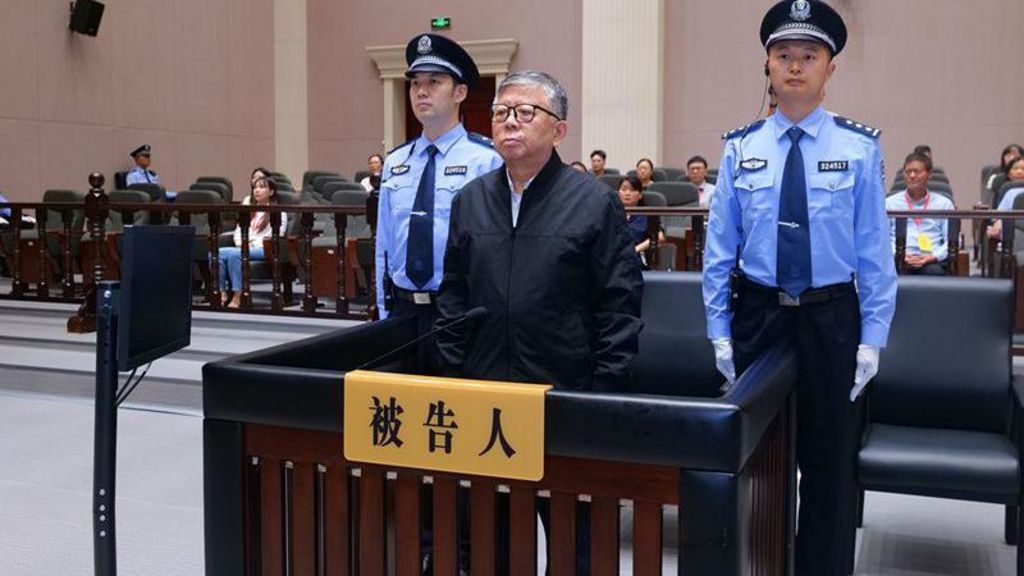
    One of the most iconic religious institutions in China, the 1,500-year-old Shaolin Temple — globally renowned as the birthplace of Shaolin kung fu — has been rocked by a high-profile corruption case that concluded with a lengthy prison sentence for its former top leader. Shi Yongxin, who served as the temple’s abbot for more than two decades before his ousting, has been handed a 24-year jail term after being convicted of multiple serious crimes including embezzlement and bribery, according to official court announcements from China’s Henan Province.

    The Dengfeng People’s Court, based in the central Chinese province where the mountain-side Shaolin Temple is located, detailed that over a 22-year period spanning from 2003 to 2025, Shi misappropriated approximately 282 million yuan ($42 million) in assets belonging to the temple. Beyond the large-scale embezzlement, the court found that Shi exploited his influential position as abbot to secure unlawful profits worth millions of yuan from temple construction and development projects. The verdict also confirmed that he engaged in bribery, offering substantial illegal payments to government officials to advance his personal interests.

    As reported by China’s official state news agency Xinhua, Shi, whose legal birth name is Liu Yingcheng, had already pleaded guilty to the charges against him prior to the court’s final ruling. Following the announcement of the 24-year sentence on Friday, Shi confirmed that he would not challenge the verdict through an appeal, closing the legal chapter of one of the most high-profile religious corruption cases in recent Chinese history.

    Shi took control of the Shaolin Temple as abbot in 1999, and quickly gained international attention for his unconventional approach to expanding the temple’s global footprint. Often nicknamed the “CEO monk” for his corporate-style branding strategy, Shi transformed the little-known mountain temple into a globally recognized cultural brand. Under his management, Shaolin Temple opened dozens of martial arts schools across multiple continents, launched a world-famous touring kung fu performance troupe, and turned the temple into one of China’s top cultural tourist attractions, drawing hundreds of thousands of pilgrims and visitors from China and abroad every year.

    This case is not the first time Shi has faced public scrutiny. Back in 2015, he faced initial allegations of embezzlement and violating family planning regulations by fathering multiple children. At the time, he was cleared of all charges, and he dismissed the claims in a 2015 interview with BBC Chinese, stating, “If there were a problem, it would have surfaced long ago.” It was not until recent years that a renewed investigation uncovered the extensive corruption that led to his conviction. In 2025, the China Buddhist Association officially defrocked Shi, stripping him of his religious status months before the court handed down its guilty verdict.

    Beyond its religious and martial heritage, Shaolin Temple holds a unique place in global pop culture. The temple gained widespread Western attention after the release of the 1982 hit film *Shaolin Temple* starring martial arts legend Jet Li. It has since been referenced in tracks by iconic American hip-hop group Wu-Tang Clan and even inspired a spin-off of the popular fighting video game franchise Mortal Kombat, cementing its status as a globally recognized cultural icon.

  • ‘Controversial’ North Korean invasion setting for next Call of Duty game

    ‘Controversial’ North Korean invasion setting for next Call of Duty game

    One of the gaming industry’s most anticipated annual releases has officially been unveiled, and the upcoming mainline entry in Activision and Infinity Ward’s blockbuster Call of Duty franchise is already drawing global attention – and heated discussion – over its core narrative premise. Slated for a worldwide launch on October 23, *Modern Warfare 4* centers its single-player campaign around a fictional resumption of full-scale armed conflict on the Korean Peninsula, following South Korean service members as they defend against a large-scale invasion from the North.

    The game’s reveal trailer, which racked up nearly 22 million views in just 24 hours after its debut, opens on a group of young South Korean conscripts conducting what looks to be a routine border patrol. The calm is quickly shattered by an incoming missile strike from North Korea, plunging the characters into all-out war. Alongside the Korean Peninsula-focused campaign, the title will also bring back one of the franchise’s most beloved characters, Captain Price, who will appear in multiple missions set across major global cities.

    Notably, this release marks a historic milestone for the Call of Duty franchise: it will be the first core mainline entry to skip last-generation consoles, the PlayStation 4 and Xbox One, launching exclusively on current-generation consoles, PC, and the newly released Nintendo Switch 2.

    As one would expect for a new Call of Duty drop, the announcement has already become a global viral cultural moment. Posts across major social platforms including Instagram, TikTok, X (formerly Twitter), and Facebook have generated more than 3 million user interactions in the first full day after the reveal. Reaction to the conflict setting has been deeply divided, particularly among Korean audiences.

    Many South Korean players have welcomed the choice to center the narrative on ordinary South Korean conscripts rather than framing the conflict through a foreign, Western perspective. Online reactions from Korean fans have leaned enthusiastic in many cases. One commenter noted that the character designs and in-game locations captured an authentic Korean atmosphere, saying “I’m genuinely excited.” Another shared that they initially expected South Korean troops would only be background extras, writing: “Then I heard they’re not just present but one of the playable protagonists? And not even special forces, handled from the perspective of an ordinary conscripted soldier, that’s what gets me.” Some even described the inclusion of Korea as a core setting for one of the world’s biggest gaming franchises as a landmark “symbolic moment.”

    However, academic experts and industry analysts warn the narrative choice could spark significant controversy, arguing that the franchise is turning a still-ongoing unresolved conflict into mass-market entertainment. The Korean War ended in 1953 with only an armistice agreement, not a formal peace treaty, meaning North and South Korea remain technically at war.

    Dr. Sarah Son, Senior Lecturer in Korean Studies at the University of Sheffield, explained that while fictional renewed inter-Korean conflict is not an unheard-of premise in South Korean popular culture, a global blockbuster franchise will face different standards of scrutiny. “It could be controversial, because it turns still-unresolved war into entertainment,” she said. “A global gaming franchise might be judged differently” than domestic Korean productions that explore similar themes.

    George Osborn, author of *Power Play: Video Games, Politics and the Battle for Global Influence*, told media the setting is almost certain to draw close examination in South Korea, pointing to previous video games that faced official pushback for their portrayals of the Korean Peninsula. The 2011 title *Homefront*, which depicted a unified Korea under Northern rule, was banned entirely in South Korea. Osborn warned that the development team will need to demonstrate extreme care in how it handles the conflict to avoid backlash. “The studio will have to show that it has handled possible conflict in the country with great care, or face significant backlash – and possible challenges selling the game – in South Korea specifically,” he noted.

    This is not the first time the *Modern Warfare* subseries has courted controversy for its portrayal of real-world inspired conflict. Past entries have sparked widespread public debate over the boundaries of realistic depictions of war in gaming, including the infamous 2009 “No Russian” mission that allowed players to participate in a civilian mass shooting at a Moscow airport, alongside later depictions of war crimes and terrorism.

    Beyond the controversial narrative setting, Infinity Ward has also announced a slate of major gameplay updates for the new entry. These include completely revamped movement mechanics, more destructible and interactive in-game environments, an overhaul of the fan-favorite extraction-style multiplayer mode DMZ, and a brand-new “Frontlines” system designed to make large-scale battles feel more dynamic and responsive to player actions than ever before.

  • China’s Shenzhou 21 astronauts returns to Earth after nearly 7 months in space

    China’s Shenzhou 21 astronauts returns to Earth after nearly 7 months in space

    BEIJING – Three Chinese taikonauts from the Shenzhou 21 mission touched down safely on Friday evening at the Dongfeng landing site in northern China’s Inner Mongolia Autonomous Region, wrapping up a nearly seven-month stay aboard the country’s Tiangong Space Station and completing a formal handover to the newly arrived Shenzhou 23 crew earlier this week.

    The successful return of crew members Zhang Lu, Wu Fei and Zhang Hongzhang marks another key milestone for China’s expanding human spaceflight program, which is currently accelerating development work ahead of the country’s planned first crewed lunar landing by the end of the 2020s. According to official statements from the China Manned Space Agency (CMSA) carried by China’s national news agency Xinhua, the Shenzhou 21 team checked off a full roster of technical and scientific objectives during their orbital mission.

    Beyond maintaining the space station’s operational systems, the crew processed and transmitted a large volume of data from ongoing on-orbit experiments, coordinated the transfer of leftover supplies to the incoming crew, and conducted in-depth experience sharing sessions with the three Shenzhou 23 astronauts, who arrived at Tiangong on Monday. Prior to their departure, the crew also completed three extravehicular activities (EVAs), more commonly known as spacewalks.

    CMSA spokesperson Zhang Jingbo noted that mission commander Zhang Lu, who previously flew on the Shenzhou 15 mission to Tiangong, has now completed seven spacewalks across his career — a new record for the most spacewalks by any Chinese astronaut. This achievement underscores the growing experience and expertise of China’s astronaut corps as the program takes on more ambitious deep-space objectives.

    The handover to Shenzhou 23 opens a new chapter for Tiangong operations: one of the incoming crew, Lai Ka-ying (also transliterated as Li Jiaying from Mandarin), a native Hong Konger, made history as the first astronaut from Hong Kong to participate in a Chinese space station mission. Additionally, one Shenzhou 23 crew member is scheduled to remain on orbit for a full 12-month stay, a first for China’s human spaceflight program that will generate critical data on long-duration human exposure to microgravity.

    China’s Tiangong Space Station was developed and constructed independently after the country was barred from participating in the International Space Station (ISS) over national security concerns raised by the United States, which has since emerged as China’s primary competitor in the 21st-century space race. Currently, NASA is pursuing its own Artemis program objectives, targeting a crewed lunar landing for 2028, two years ahead of China’s planned touchdown.

  • A credible and safe path to Chinese financial liberalization

    A credible and safe path to Chinese financial liberalization

    China’s top financial policymakers are currently grappling with a uniquely challenging policy dilemma that sits at the heart of the country’s long-term financial development goals. On one hand, Beijing has made clear its ambition to secure deeper, more integrated access to global capital markets, advance the internationalization of the renminbi, and build a world-class, transparent financial market infrastructure that can earn lasting trust and confidence from international investors across the globe. On the other, history offers a stark warning: decades of financial liberalization across other major emerging economies have repeatedly sparked devastating bouts of financial instability, from catastrophic currency crises to mass capital flight and the permanent erosion of domestic monetary policy independence.

    For decades, China has approached this challenge with a deliberate strategy of controlled caution, observing past crises from the sidelines while opening its financial system at a gradual, self-determined pace. This approach proved critical to shielding China’s rapidly growing economy from external volatility during its foundational decades of economic expansion, helping it avoid the meltdowns that derailed growth in many peer emerging markets.

    Conventional policy discourse on this issue typically frames the choice as an binary one: either accelerate full capital account opening and accept the accompanying systemic risks, or maintain tight controls and accept the long-term constraints that closed systems place on market development. However, both of these dominant frameworks miss the more critical question at hand: the debate should not focus on how open China’s capital account should be, but rather on how the overall system governing cross-border capital flows should be structured to balance openness and stability.

    Brazil offers a particularly instructive case study of the risks of poorly structured capital account opening. Brazil maintains one of the most open capital account regimes in the world, a policy framework that in economic theory should deliver efficient capital allocation and deep, seamless integration with global financial markets. In practice, however, this unstructured openness leaves the country permanently vulnerable to external shocks: every time the U.S. Federal Reserve adjusts its monetary policy stance or global risk sentiment shifts to risk-off mode, massive volumes of capital flood out of Brazil, regardless of the strength of the country’s domestic economic fundamentals. This outflow triggers sharp currency depreciation, sudden domestic financial tightening, and painful economic contractions that hit at the exact moment when the domestic economy is already weakening. Brazil has been trapped in this volatile cycle repeatedly, and the root cause is not the openness of its capital account itself, but its one-size-fits-all structure that does not adapt to changing market conditions. The country lacks a graduated, pre-planned response mechanism, a clear set of adaptive buffers that can soften the blow of sudden shifts in global capital flows.

    China has avoided this harmful cycle to date through the extensive use of capital controls, but this approach carries its own significant costs. A dynamic, attractive investment environment depends on consistent, stable rules and broad-based trust among market participants. Uncertainty around future policy automatically generates a risk premium on Chinese assets, making the country’s financial markets less attractive to global investors than its strong economic fundamentals would otherwise warrant. It also acts as a major barrier to the long-term institutional capital commitments that China actively seeks to attract for its long-term growth.

    Against this backdrop, a new alternative framework has been proposed that reframes the entire debate: the Adaptive Capital Flow Framework (ACFF), developed by Wall Street veteran Sidney Shauy. The core concept of the ACFF is simple and intuitive: it allows for fully free capital movement during normal market conditions, but introduces gradual, proportional, pre-specified adjustments to capital flows as systemic risk levels rise. Rather than halting capital movements entirely or imposing arbitrary restrictions, the framework slows volatile flows in a predictable manner that avoids market panic.

    The framework operates through a composite, data-driven risk measurement tool called the Capital Flow Risk Score (CFRS), which aggregates key indicators including exchange rate volatility, cross-border capital flow velocity, changes in foreign exchange reserves, and broad market stress metrics to classify the current level of systemic risk in real time. As the CFRS crosses pre-defined risk thresholds, pre-planned policy responses are triggered automatically: modest, temporary levies on the most volatile short-term capital flows at the first risk threshold, followed by stronger but still targeted measures at higher risk thresholds. All thresholds, response measures, and scoring rules are published publicly in advance, making the entire system rules-based rather than subject to discretionary policy changes.

    Predictability is the cornerstone of this framework, because investor behavior is shaped not just by the existence of capital controls themselves, but by deep uncertainty about when and how controls will be deployed. In a discretionary control regime, investors cannot anticipate policy shifts, which often triggers panic-driven mass exits and preemptive capital withdrawals – creating the exact sort of capital flow instability that controls are intended to prevent. A transparent, rules-based system reverses this dynamic entirely: when global investors know exactly what policies will be deployed under what conditions, they can adjust their investment planning accordingly, and the transparency of the system itself acts as a stabilizing force for markets.

    The good news for Chinese policymakers is that much of the infrastructure needed to implement the ACFF is already in place across China’s network of financial pilot zones. These existing testing grounds – including the Hainan Free Trade Port, Shanghai Free Trade Zone, Shenzhen’s Qianhai cooperation zone, and the array of cross-border Connect programs in the Guangdong-Hong Kong-Macao Greater Bay Area – create a ready-made, real-world laboratory to test and refine the adaptive framework under live market conditions. The Hainan Free Trade Port already operates with near-full capital account openness, while the Greater Bay Area’s Stock Connect, Bond Connect, and Wealth Management Connect programs already provide structured, closely monitored cross-border capital access for global and domestic investors. The digital monitoring infrastructure needed to track capital flow dynamics and calculate the CFRS is also already operational. What is missing is not the physical or institutional infrastructure, but the overarching framework: a set of explicit, publicly disclosed rules that outline how capital flow conditions will be assessed and how policy will respond as those conditions evolve.

    China has a long, proven track record of managing complex financial transitions through its tested approach of gradualism, targeted experimentation, and structured scaling of successful policies. The Adaptive Capital Flow Framework aligns perfectly with this long-standing policy tradition. It builds directly on the work China is already doing in its open pilot zones, and adds the single element that has held back deeper engagement with global capital: clear, credible predictability for investors, all while allowing China to retain the ability to adjust controls on its own terms when market conditions require intervention.

    For the global investment community, this model offers a clear, compelling path forward. It lets China articulate a clear, transparent vision for its financial opening: here is how our system works, here is our current risk assessment, here is how we will respond if conditions change, and here is the evidence from our pilot programs that the system delivers on its promise of balanced stability and openness.