标签: Asia

亚洲

  • Roblox to require facial scans for children under 16 in Indonesia due to new social media rules

    Roblox to require facial scans for children under 16 in Indonesia due to new social media rules

    JAKARTA, Indonesia – In a move that marks one of the strictest youth safety policies the global gaming platform has ever enacted, Roblox confirmed Thursday it will require mandatory facial scanning for all Indonesian users under the age of 16 to verify their age, a change implemented to comply with Indonesia’s sweeping new regulatory framework governing minor access to social media and digital services.

    Roblox Vice President and Global Head of Public Policy Nicky Jackson Colaco unveiled the new requirements during a Jakarta press conference, noting that the tailored rules for the Indonesian market outpace most other age-verification policies the platform has rolled out across its global operations. To align with national regulations, the company has restructured its Indonesian user accounts into two age-specific tiers: Roblox Kids, designed for children aged 5 to 12, which removes all in-platform chat functionality entirely; and Roblox Select, for teens aged 13 to 15, which restricts chat interactions exclusively to connections pre-approved by parents or family members.

    The rollout will automatically reclassify the platform’s 23 million existing Indonesian accounts that were self-identified as belonging to users under 16, requiring all of these accounts to complete facial scanning-based age verification to retain their current access settings. Any under-16 user that fails to complete the facial scan process will be automatically downgraded to a restricted Roblox Kids account, with all chat functionality permanently disabled until verification is completed.

    The age verification process requires users to capture a short video selfie to generate an estimated age assessment. Jackson Colaco emphasized that all biometric data collected during the process is deleted immediately after verification is complete, with no user data stored on Roblox servers long-term. According to Indonesian Communication and Digital Affairs Minister Meutya Hafid, Roblox has a total user base of roughly 45 million people in Indonesia, with just over half – around 23 million users – falling under the 16-year age threshold.

    Notably, Roblox is the only gaming platform classified as a “high-risk” service by the Indonesian government, requiring it to implement more stringent youth access restrictions than most other major social media platforms operating in the country. Beyond account classification and restricted interaction limits, Roblox will also sort its game library by age appropriateness and enforce mandatory screen time limits to address widespread public concerns over youth gaming addiction. Parents will also be able to set custom daily usage caps aligned with their household rules, Hafid added.

    Indonesia’s new national regulation on minor digital access took effect in late March, banning all users under 16 from accessing high-risk digital platforms that may expose young people to harms including gaming addiction, explicit content, online fraud, and cyberbullying. Out of eight major high-risk platforms operating in the country – which include YouTube, TikTok, Facebook, Instagram, Threads, X, and Bigo Live – seven have already committed to rolling out compliant age-based access restrictions. Alongside access limits, Indonesian regulators are pushing all digital platforms to publish regular disclosures of how many under-16 accounts have been restricted or suspended as part of the new policy’s implementation.

  • Pakistan commissions first Hangor-class submarine in China

    Pakistan commissions first Hangor-class submarine in China

    In a landmark moment for Pakistan’s military modernization and its deepening defense partnership with Beijing, the South Asian nation formally commissioned its first of eight planned Hangor-class submarines at a ceremony hosted in China on Thursday, Pakistan’s military confirmed in an official statement.

    The high-profile commissioning event took place in Sanya, the major southern Chinese port city, with Pakistani President Asif Ali Zardari serving as the chief guest. The gathering also brought together Pakistan’s Naval Chief Admiral Naveed Ashraf and senior military delegations from both countries, marking another high-level diplomatic engagement between the two long-time allies—Zardari and other top Pakistani officials have undertaken multiple visits to China in recent years amid growing bilateral cooperation.

    Speaking during his official visit to China, Zardari framed the induction of this cutting-edge submarine as a transformative “historic milestone” for Pakistan’s Navy. He emphasized that the new addition strengthens Islamabad’s commitment to upholding a credible, balanced defense posture, and underlined that Pakistan now holds enhanced capability to defend its territorial sovereignty, safeguard its critical maritime interests, and secure its core economic lifelines that run through regional sea lanes.

    Widely reported to be developed based on China’s advanced Type 039B submarine design, the Hangor-class platform is engineered to accommodate a core crew of 38, with additional space allocated for special operations personnel. It is outfitted with a modern arsenal including heavyweight torpedoes and anti-ship missiles, granting it multi-mission strike capability. Under Pakistan’s original agreement for the eight-vessel fleet, the first four are being constructed in China, while the remaining four will be built domestically at the Karachi Shipyard & Engineering Works, located in Pakistan’s southern coastal hub.

    For decades, Pakistan has positioned its submarine fleet as a core component of its strategic deterrence posture against neighboring India, a rival with whom it has fought three full-scale wars since achieving independence in 1947. Tensions between the two nuclear-armed neighbors remain high, particularly over the disputed Kashmir region; during a 2024 border standoff, Pakistan deployed Chinese-built J-10C fighter jets and claimed to have downed multiple Indian aircraft, including French-made Rafale jets, a claim that India has never corroborated.

    Addressing attendees at the commissioning, Admiral Ashraf highlighted growing global security risks stemming from disruptions to critical maritime choke points, which increasingly threaten the stability of global trade flows and international energy security. This shifting security landscape, he noted, makes the development of advanced, capable naval forces more urgent than ever. The new Hangor-class submarines, fitted with state-of-the-art sensors, advanced weapon systems, and air-independent propulsion technology that allows for extended underwater endurance, will play a key role in preserving regional stability and securing critical shipping routes across the Arabian Sea and the broader Indian Ocean, Ashraf added.

    The admiral also drew attention to the historical significance of the “Hangor” class name, which honors a Pakistani submarine that sank an Indian warship during the 1971 Indo-Pakistani War—marking the first successful submarine sinking of an enemy warship since the end of World War II. Beyond military advancements, Ashraf emphasized that the commissioning opens a new chapter in the decades-long defense collaboration between Pakistan and China. This deepening defense partnership runs parallel to growing economic ties: just last year, Islamabad and Beijing reaffirmed their commitment to expanding bilateral economic cooperation and investment under the China-Pakistan Economic Corridor, the flagship infrastructure project of China’s global Belt and Road Initiative.

  • Why is China banning drone sales in Beijing?

    Why is China banning drone sales in Beijing?

    In recent weeks, new regulations restricting unauthorised drone operations and sales in Beijing have drawn international attention, with observers seeking clarity on the drivers behind the policy shift. Veteran BBC correspondent Laura Bicker has conducted on-the-ground reporting to unpack the motivations behind China’s decision to tighten drone oversight across the capital. According to Chinese authorities, the core impetus for the new rules is rooted in escalating public safety risks that have emerged as consumer and commercial drone ownership has skyrocketed across the country in recent years. Over the past decade, drones have moved from niche hobbyist equipment to widely accessible tools for photography, logistics, and industrial work, with millions of units now in operation nationwide. This rapid proliferation has brought growing safety challenges: unregulated drone flights have disrupted commercial air traffic at major airports, posed collision risks to manned aircraft, and enabled unauthorised surveillance that infringes on personal privacy. In densely populated urban areas like Beijing, the stakes of unsafe drone operation are even higher, with rogue units creating hazards for pedestrians and critical infrastructure. Bicker’s reporting notes that while the new restrictions have sparked some discussion among domestic drone hobby groups, the policy aligns with a broader global trend of governments updating aviation and technology regulations to address the risks posed by the fast-growing drone industry. Chinese regulatory bodies have emphasised that the restrictions are not a blanket ban on all drone activity in Beijing – rather, they are targeted at unregistered sales and unauthorised flights, with provisions for legitimate commercial and recreational operators who complete required registration and safety certification. As drone technology continues to advance and become more accessible, policymakers across the globe are grappling with how to balance innovation and public access with the need to protect communities and critical assets, and Beijing’s new regulatory framework represents one major government’s approach to that balancing act.

  • Myanmar reduces ousted leader Suu Kyi’s prison term in new amnesty

    Myanmar reduces ousted leader Suu Kyi’s prison term in new amnesty

    BANGKOK – In a move tied to a major Buddhist religious observance, Myanmar’s military-installed administration has slashed the prison term of ousted democratically elected leader Aung San Suu Kyi, marking the second mass prisoner pardon issued by the regime in just two weeks, according to anonymous legal sources and official state media reports.

    The latest commutation, announced Thursday to mark the full moon day of Kason – the holiday that commemorates the birth, enlightenment, and passing of the Buddha – applies a one-sixth sentence reduction to all remaining convicted prisoners across the country, in addition to the full amnesty granted to 1,519 incarcerated people, 11 of whom hold foreign citizenship. It remains unclear how many of the thousands of people detained for opposing military rule are included in the most recent round of clemency.

    Two legal officials, speaking on condition of anonymity out of fear of retaliation from state authorities, confirmed that the 80-year-old Nobel Peace Prize recipient would see her sentence reduced by an additional one-sixth under the new order. No official confirmation of her remaining term has been released, but calculations based on prior sentence cuts show she is still expected to serve more than 13 years behind bars.

    This latest amnesty follows a broader pardon issued on April 17 that released more than 4,500 prisoners and cut sentences for inmates serving terms under 40 years, which already shaved more than four years off Suu Kyi’s sentence. The sequence of clemency measures comes three weeks after Senior General Min Aung Hlaing, the head of Myanmar’s military, was sworn in as the country’s president. His appointment followed a 2025 election widely dismissed by international observers and critics as neither free nor fair, widely seen as a carefully orchestrated move to cement the military’s authoritarian grip on national power. In his inauguration address, Min Aung Hlaing stated the amnesty program was designed to advance national reconciliation, social justice, and peace across the country.

    Suu Kyi’s current detention stretches back to February 1, 2021, when the military seized power in a coup that ousted her democratically elected civilian government. By the end of 2022, she was convicted on a slate of politically charged charges and handed a 33-year prison sentence. Supporters and global human rights organizations have consistently characterized these convictions as a manufactured effort to discredit Suu Kyi, legitimize the 2021 coup, and permanently remove her from Myanmar’s political landscape. Her sentence was first reduced to 27 years in August 2023, before the additional cuts announced in April 2025.

    Today, Suu Kyi is being held at an undisclosed location in Myanmar’s capital Naypyitaw. Unconfirmed reports circulated last week suggesting the regime planned to transfer her to house arrest as part of the latest clemency, but no official confirmation of this move has emerged. Information about her current health and well-being remains tightly controlled by state authorities. Unverified reports published in 2024 and early 2025 have documented declining health, including recurring low blood pressure, dizziness, and heart complications. Notably, Suu Kyi’s legal team has not been allowed to meet with her in person since December 2022.

    The 2021 military coup sparked widespread popular resistance across Myanmar, which the regime responded to with brutal violent repression. The conflict has escalated into an ongoing bloody civil war that has killed thousands of civilians and displaced millions. As of the latest data from the Assistance Association for Political Prisoners, a Thailand-based human rights monitoring group, more than 22,000 people remain in detention for their opposition to military rule since the coup.

    For decades, Suu Kyi has stood as the global face of Myanmar’s pro-democracy movement. The daughter of Aung San, Myanmar’s assassinated founding independence leader, she spent nearly 15 years under house arrest as a political prisoner between 1989 and 2010. Her unwavering nonviolent resistance to military authoritarianism earned her international acclaim and the 1991 Nobel Peace Prize, cementing her status as a global symbol of democratic struggle.

  • Cambodian court upholds opposition leader’s treason conviction

    Cambodian court upholds opposition leader’s treason conviction

    In a ruling that has reignited international scrutiny of Cambodia’s political landscape, the Phnom Penh Appeals Court confirmed Thursday a longstanding treason conviction and 27-year prison sentence for prominent opposition figure Kem Sokha, a decision that comes six years after his arrest triggered a sweeping nationwide crackdown on government critics.

    In addition to upholding the original sentence, which the 72-year-old leader has been serving under house arrest, the court added a new restriction: a five-year ban on international travel that will take effect once he completes his prison term.

    Kem Sokha’s legal saga stretches back to 2017, when his arrest cleared the way for the government to target all organized political opposition. At the time, his Cambodia National Rescue Party (CNRP) stood as the only major viable challenger to the long-ruling Cambodian People’s Party (CPP). Within months of the arrest, the country’s Supreme Court ordered the CNRP dissolved, barring the party from competing in the 2018 general election. The CPP, led by then-prime minister Hun Sen, subsequently won every seat in the National Assembly, consolidating its absolute control over national governance. Hun Sen handed power to his son, Hun Manet, in 2023, but the new administration has not moved to open up the country’s political system or roll back restrictions on opposition activity.

    Kem Sokha was ultimately convicted of treason in 2023 following years of extended pretrial detention. The charges against him center on allegations that he conspired with the United States to overthrow the Cambodian government, with the prosecution’s core evidence consisting of a leaked video of him speaking about receiving political guidance from U.S.-based pro-democracy organizations.

    During his most recent appearance before the appeals court earlier this month, Kem Sokha issued a firm denial of all accusations. He stated he never had collaborated with any foreign power at the expense of Cambodian citizens or national sovereignty, emphasizing that all his political work had been rooted in principles of nonviolence and national unity.

    Following Thursday’s ruling, Kem Sokha’s defense attorney Pheng Heng told reporters he was disappointed by the court’s decision. The legal team will now deliberate whether to take the case to Cambodia’s Supreme Court in a final appeal, and Pheng Heng called on the ruling government to prioritize national reconciliation as a path forward for the country.

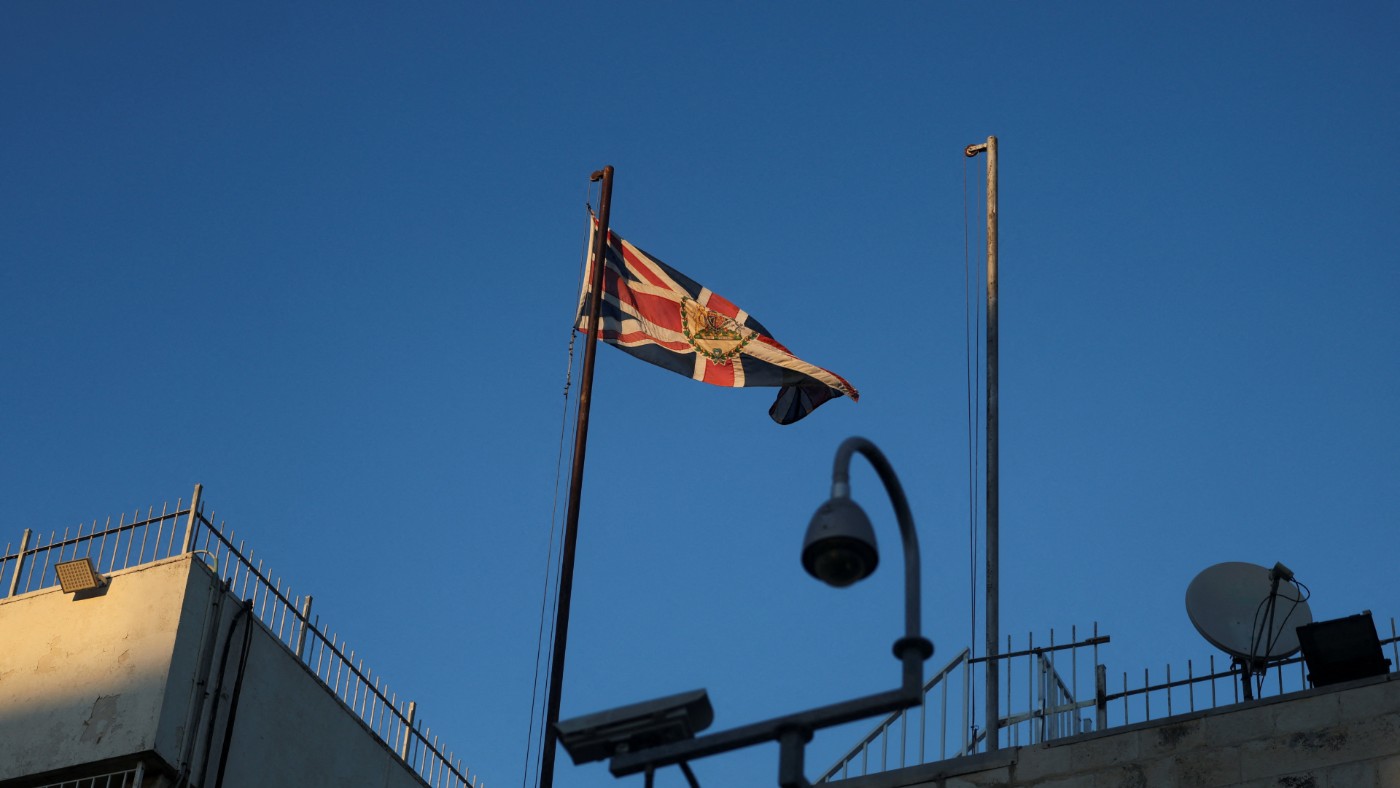
    The ruling has already drawn formal concern from Western diplomatic missions based in Phnom Penh. The British Embassy released an official statement calling for Kem Sokha’s immediate release and the restoration of his full political rights, noting that such a move would support the strengthening of democratic institutions in Cambodia.

    For years, international observers have repeatedly accused the Cambodian government of weaponizing the country’s judicial system to target political opponents and dissenting voices. Government officials have consistently pushed back against these claims, asserting that the state upholds the rule of law within a framework of electoral democracy. Despite this assertion, all major opposition groups have faced systematic legal action: parties perceived as electoral threats have been dissolved by courts, their leaders imprisoned or subjected to ongoing harassment.

  • Singapore court fines women for pro-Palestinian walk

    Singapore court fines women for pro-Palestinian walk

    In a high-profile legal reversal that spotlights longstanding tensions between protest regulation and freedom of expression in Singapore, the city-state’s High Court has overturned a previous acquittal and imposed fines of S$3,000 (equivalent to roughly US$2,300 or £1,700) on three women activists who organized a public march in support of Palestinian people. The case traces back to February 2024, when activists Mossammad Sobikun Nahar, Siti Amirah Mohamed Asrori, and Kokila Annamalai led a group of approximately 70 participants on a walk from a nearby shopping mall to Singapore’s Istana presidential compound, located adjacent to the mall. The march was organized to deliver a petition letter to the prime minister calling for the Singaporean government to sever diplomatic and economic ties with Israel, amid the ongoing military conflict in Gaza.

    Photographs from the event show demonstrators holding umbrellas emblazoned with watermelons, a symbol that has become a globally recognized motif for pro-Palestinian advocacy. Singapore maintains extremely strict regulations on public assemblies, and all public demonstrations require government approval. In the wake of the outbreak of the Israel-Gaza war, authorities have enacted a blanket ban on all public gatherings related to the conflict, making any unapproved pro-Palestinian protest a criminal offense.

    The three organizers were formally charged in June 2024 for violating regulations by organizing an unpermitted procession in a restricted zone near the Istana. During their initial trial held in late 2024, the defense team argued that the women had merely walked along public roadways, and had no prior knowledge that the stretch of route passing the presidential compound fell within a prohibited area for unapproved gatherings. The trial judge ultimately ruled to acquit all three defendants in October 2024, concluding that evidence presented in court proved the women had made good-faith efforts to comply with Singapore’s laws, and were “trying their level best not to run afoul of the law.” Following the acquittal, Annamalai told the BBC that the ruling had given “a new sense of energy and hope” to Singaporean civil rights activists.

    Prosecutors challenged the acquittal in an appeal to Singapore’s High Court, which issued its final ruling Thursday. The High Court judge rejected the original acquittal, stating that the three activists bore responsibility for failing to conduct more thorough inquiries to confirm whether their planned procession would be legally permitted under local regulations. After the ruling was issued, Annamalai reaffirmed the activists’ commitment to their cause in comments to the BBC, noting “There is a long fight ahead towards democratisation in Singapore, and acts of civil disobedience have an important part to play. We should have every right to walk to the Prime Minister’s Office at the Istana to deliver letters from ordinary Singaporeans.”

    The Singaporean government has long defended its strict demonstration regulations as a necessary policy to preserve public peace, social stability, and intercommunal harmony across the country’s multi-ethnic population. However, civil society and human rights critics argue that these sweeping regulations effectively stifle freedom of expression and discourage grassroots civil activism, particularly on contentious geopolitical issues such as the Israel-Gaza conflict.

  • ‘Piracy’: Israel raids Gaza-bound aid flotilla off Greek coast

    ‘Piracy’: Israel raids Gaza-bound aid flotilla off Greek coast

    In an operation that has ignited international condemnation over its scope and location, Israeli naval commandos carried out a raid late Wednesday on a fleet of Gaza-bound humanitarian aid vessels, intercepting the craft hundreds of nautical miles from the blockaded Palestinian enclave in international waters off the Greek island of Crete.

    The mission, organized by the Global Sumud Flotilla — a coalition of humanitarian and activist groups that describes this year’s expedition as the largest coordinated civilian maritime effort to break Israel’s 16-year siege of Gaza — confirms that at least 15 small vessels were boarded and seized during the operation. The organization says all people on board are currently held by Israeli forces, with communication cut off to multiple boats, and has described the detainees as “abducted.”

    Israeli officials have pushed back on this framing, confirming via the Foreign Ministry that approximately 175 activists from more than 20 intercepted vessels are now in Israeli custody. According to the Global Sumud Flotilla’s official account, after Israeli forces boarded the vessels, they systematically disabled critical on-board systems before withdrawing, leaving dozens of activists stranded on dead-in-the-water craft directly in the path of an oncoming major storm. The group detailed that raiding forces destroyed vessel engines and navigation equipment, jammed all communications to prevent coordinated distress calls or requests for emergency assistance, and abandoned the civilians in dangerous open ocean conditions.

    Witness accounts from activists on the flotilla note that the confrontation began shortly before the raid, when unmarked military speedboats approached the civilian vessels, identified themselves as Israeli units, and trained laser targeting devices and semi-automatic firearms on the people on board, ordering all activists to get on their hands and knees while communications equipment was disabled.

    In a formal statement released after the raid, Global Sumud Flotilla organizers denounced the operation as an act of open piracy committed far beyond any recognized Israeli territorial boundary. “This is the unlawful seizure of human beings on the open sea near Crete, an assertion that Israel can operate with total impunity, far beyond its own borders, with no consequences,” the statement read. “No state has the right to claim, police, or occupy international waters. Yet, that is exactly what Israel has done, extending its regime of control outward, occupying the Mediterranean Sea off the coast of Europe.”

    The expedition set sail from southern Europe earlier this month, with an estimated 58 vessels carrying roughly 1,000 international activists and hundreds of tons of desperately needed humanitarian aid bound for Gaza. The goal of the mission is to challenge the Israeli blockade that has turned the 365-square-kilometer enclave into what the United Nations has called the world’s largest open-air prison, and deliver life-saving aid that has been blocked from entering via land crossings.

    Israeli officials have celebrated the raid as a successful enforcement of its blockade policy. Danny Danon, Israel’s ambassador to the United Nations, posted on social media platform X praising the operation: “Another provocative flotilla was stopped before reaching our area. Our brave IDF soldiers are acting with professionalism and determination dealing with a group of delusional attention-seeking agitators.” In an audio communication to the flotilla documented by activists, an Israeli soldier claimed the blockade of Gaza qualifies as a “lawful maritime security blockade” and that any attempt to breach it constitutes a violation of international law.

    This raid marks the farthest distance from Gaza’s shore that Israeli forces have ever intercepted a Gaza-bound aid flotilla, with the operation taking place roughly 600 nautical miles from the enclave’s coast. Previous interceptions of similar activist missions have been carried out much closer to Gaza’s territorial waters. The operation comes amid a catastrophic ongoing humanitarian crisis in Gaza that has followed Israel’s 2023 military campaign, which has killed at least 72,500 Palestinians, left an additional 8,000 people missing and presumed dead under rubble, and has destroyed most of the enclave’s housing, hospitals, and educational infrastructure. Famine has already been declared in multiple northern Gaza governorates by global food security agencies, and even after a temporary ceasefire agreement, Israel has maintained sweeping restrictions on aid entry that have left the crisis largely unresolved.

  • French teen charged in Singapore over a vending machine straw-licking video

    French teen charged in Singapore over a vending machine straw-licking video

    A high-stakes public nuisance case centered on a reckless social media prank has drawn widespread attention in Singapore, where strict rules governing public hygiene and behavior are put to the test. The 18-year-old French national, Didier Gaspard Owen Maximilien, who is currently enrolled in a French business program based in the city-state, stands accused of two offenses – mischief and public nuisance – stemming from a March 12 incident at a local shopping mall.

    According to local leading English-language daily *The Straits Times*, the teenager posted a widely shared video to social media showing him licking a straw taken from an orange juice vending machine before placing the contaminated straw back into the dispenser for other customers. The clip spread rapidly across online platforms once it was made public, triggering widespread public outcry over its unsanitary and irresponsible nature. Maximilien was formally charged on April 24, and has not yet entered a plea in the case.

    In a recent court development, the judge granted the defendant permission to leave Singapore for a mandatory graduation school trip to Manila, with his travel scheduled from May 2 to May 25. He is required to return to the city-state to attend his next court hearing scheduled for May 29. Legal representatives for the teen declined to provide any comment on the details of the case when reached by reporters.

    Under Singaporean law, the mischief charge carries a maximum penalty of up to two years of imprisonment, a fine, or both. The lesser public nuisance charge can result in up to three months in jail, a fine, or both. Following the incident, IJooz, the company that operates the juice vending machine, took immediate action: it filed an official police report, fully sanitized the entire dispenser unit, and replaced all 500 straws held in the machine to eliminate any potential public health risk. In response to the incident, the company has also announced plans to upgrade all of its vending machines with new safety measures, including individually wrapped straws and locked storage compartments that only unlock once a customer completes their purchase.

    The incident highlights the strict approach Singapore takes to maintaining public order and cleanliness, a long-standing policy in the small, densely populated city-state. Singapore has long enforced tough regulations on public behavior, ranging from partial restrictions on the sale of chewing gum to harsh fines and penalties for littering, graffiti, and vandalism, all designed to preserve the country’s high standards of public hygiene and public space upkeep.

  • China to ban drone sales in Beijing citing security concerns

    China to ban drone sales in Beijing citing security concerns

    Starting this Friday, May 1, sweeping new drone regulations will go into effect across Beijing, introducing some of the strictest controls on unmanned aerial vehicles (UAVs) in the world, even as China positions the broader low-altitude economy as a key national strategic growth sector.

    Under the newly implemented rules, the sale, rental, and unauthorised transport of drones and their core components into Beijing will be fully prohibited. All private and commercial drone owners operating within the capital are required to register their devices with local law enforcement before taking any outdoor flight. Additional requirements mandate that all outdoor drone operations across Beijing secure prior official approval, and operators must complete a government-designed online training course and pass an assessment on UAV regulatory policies to qualify for flight permits.

    Cross-city movement of drones also faces new scrutiny: any drone brought into or out of Beijing must go through formal registration, and owners sending drones outside the capital for repair are required to collect the device in person after servicing, rather than accepting courier delivery. A narrow set of exceptions applies to officially approved public utility operations, including counter-terrorism missions and disaster relief response, where drone ownership and operation remain permitted following government authorisation.

    This latest round of restrictions builds on years of incremental tightening of UAV rules across China, a trend driven by consistent official concerns over public safety and low-altitude airspace security. Beijing first designated its entire airspace a controlled no-drone zone last year, requiring advance air traffic management approval for all drone flights, and the local People’s Congress approved the updated regulatory framework in March 2026.

    “Our goal is to strike the best balance between safeguarding public and airspace safety and supporting sustainable technological and economic progress,” explained Xiong Jinghua, a senior official with the Beijing Municipal People’s Congress, when the regulations were approved.

    The new policy comes at a paradoxical moment for China’s drone sector: Chinese manufacturers, led by global industry leader DJI, currently dominate the worldwide consumer and commercial drone market, and the country’s growing low-altitude economy – which encompasses both commercial drones and emerging flying taxi technology – has been marked as a national strategic priority, with official projections valuing the sector at more than 2 trillion yuan ($290 billion) by 2035. Across many urban and rural regions of China, drones have already entered widespread daily use, supporting applications from commercial food delivery and agricultural crop monitoring to high-rise building exterior cleaning.

    Even with this rapid growth, China has emerged as one of the most tightly regulated markets for drone operation globally. With the new rules set to take effect, reports from Beijing indicate that authorized retail outlets for DJI, the country’s largest drone manufacturer, have already begun removing all consumer drones and related components from store shelves ahead of the sales ban.

    Official data puts the total number of registered drones across China at more than 3 million, and industry analysts note that the sweeping new restrictions in the capital are expected to reshape the country’s massive domestic drone market, forcing operators and manufacturers to adapt to the new layered regulatory regime.

  • ‘Next Iran’?: Turkey accelerates 60,000 tonnes aircraft carrier amid Israel tensions

    ‘Next Iran’?: Turkey accelerates 60,000 tonnes aircraft carrier amid Israel tensions

    While global headlines have focused heavily on U.S. military activity in the Strait of Hormuz, a quieter but strategically significant development is unfolding at Turkish shipyards: the accelerated construction of MUGEM, Turkey’s first fully domestically built aircraft carrier. The project, which only formally launched in August 2025 with Turkish President Recep Tayyip Erdoğan in attendance, is already outpacing initial timelines, surprising regional and international defense observers.

    Last week, Turkish Naval Forces Commander Admiral Ercüment Tatlıoğlu confirmed that the vessel’s hull will be completed nearly a year ahead of the original schedule, with the entire carrier projected to be finished by the end of 2026 and fully operational by 2030. When complete, MUGEM will be the largest warship ever constructed in Turkey, boasting a 60,000-ton displacement and a total length of 285 meters. These specifications put it ahead of France’s Charles de Gaulle, the Mediterranean’s current largest flagship, which measures 261 meters and displaces 42,500 tons. Designed with a short take-off system, the carrier will be capable of hosting up to 60 aircraft, a mix of domestically produced platforms following Turkey’s 2019 expulsion from the U.S.-led F-35 stealth fighter program.

    The push to speed up MUGEM’s construction comes against a backdrop of rising geopolitical friction in the Eastern Mediterranean, with Ankara facing increasing alignment among regional rivals Israel, Greece, and Greek-administered Cyprus. Tensions between Turkey and Israel have escalated sharply in recent months, with senior Israeli political figures, including popular opposition leader Naftali Bennett – a likely candidate for future prime minister – publicly framing Turkey as “the next Iran” in recent international appearances. Following two rounds of direct conflict between Israel, Iran, and the U.S., Ankara has already accelerated a slate of domestic defense projects, including air defense systems, unmanned military platforms, and the domestic KAAN fifth-generation fighter jet program.

    Defense analysts widely frame the carrier’s accelerated development as a direct response to shifting regional security dynamics. “The warming relations between Greek Cyprus and Israel have turned their alignment into an increasingly effective and aggressive posture,” explained Meysune Yasar, an academic specializing in Turkish naval power, in an interview with Middle East Eye. “Turkey is becoming increasingly isolated in the Eastern Mediterranean, making this aircraft carrier both an additional military capability and a core strategic necessity.” Unlike previous Turkish naval projects focused on coastal defense, Yasar notes that Ankara views MUGEM as a strategic deterrent against potential hostile state actors in the region, even as the vessel is designed for open-sea operations.

    Plans for a Turkish domestic aircraft carrier are not a new development, with early conceptual work stretching back to the 1990s. Former Turkish navy admiral Yankı Bağcıoğlu told MEE that the Turkish navy first developed a blue-water deployment concept in 1993, which included plans for light aircraft carriers, amphibious assault ships, and transatlantic power projection capabilities. The project only moved from concept to formal development around 2017, following a comprehensive strategic study on the future of Turkey’s naval forces, when the need for a full-sized carrier moved to the top of Ankara’s defense priorities.

    The expulsion from the F-35 program forced Turkey to restructure its air wing plans for MUGEM, turning entirely to domestic alternatives. Today, the Turkish military plans to deploy a mixed air group consisting of the domestically built stealth-capable Kızılelma unmanned fighter, the Hürjet light combat aircraft, a future naval variant of the KAAN fifth-generation fighter, and the Bayraktar TB3 drone – which already has proven AI-assisted short take-off capability operational on Turkey’s existing drone carrier TCG Anadolu.

    The rapid progress on MUGEM also carries broader implications for Turkey’s role within NATO and European security architecture, according to former Turkish ambassador Alper Coşkun, now a senior fellow at the Carnegie Endowment for International Peace in Washington. As the U.S. pressures NATO allies to increase defense spending and signals a potential reduction of its security commitment to Europe, Coşkun argues that the carrier will strengthen Turkey’s geopolitical standing and bargaining power within the alliance. “But these capabilities come at a cost,” he noted. “It could also fuel existing regional tensions and trigger new threat perceptions among neighboring states.” Following the 2020 Eastern Mediterranean tensions between Turkey and Greece, France signed a mutual defense pact with Athens, a shift Coşkun says Ankara must manage to avoid unintended escalation with regional and European powers.

    While Israel’s current naval capabilities are largely limited to enforcing the blockade on Gaza and conducting small-scale special operations, defense experts have also raised questions about the survivability of large surface vessels like MUGEM amid modern asymmetric warfare. The 2022 war in Ukraine and recent conflicts involving Iran have exposed critical vulnerabilities of large aircraft carriers to small attack drones and ballistic missiles, most notably demonstrated when an F/A-18E Super Hornet was swept overboard from the USS Harry S. Truman after the carrier executed a high-speed evasive maneuver to avoid Houthi missile fire in the Red Sea last April. American carriers have largely stayed outside the range of Iranian missiles during recent conflicts, a precaution that underscores the risks facing large capital ships in contested waters. To counter these threats, Turkey has designed MUGEM with a layered defense suite including a vertical launching system, close-in weapons systems, and remote weapons systems tailored to asymmetric threats.

    Construction progress has been driven by Turkey’s ability to leverage multiple domestic shipyards to simultaneously manufacture large modular mega-blocks of the vessel, cutting months off the original timeline. In March, Istanbul Shipyard Commander Rear Admiral Recep Erdinç Yetkin told Turkish state television that the prefabricated flight ramp for the carrier has already been completed, and will undergo testing at a domestic airport later this year.

    Beyond the Eastern Mediterranean, Ankara also views MUGEM as a tool to protect Turkey’s expanding overseas interests. Turkey has built a growing military and economic footprint across North Africa – most notably in Libya – and has expanded investments in the Horn of Africa, including energy drilling off Somalia’s coast and plans for a new space launch facility in the country. A fully operational aircraft carrier would provide a flexible power projection capability to safeguard these expanding overseas commercial and strategic interests.

    Despite the broad strategic consensus behind the project, not all Turkish defense experts support prioritizing MUGEM at this stage, even those who support the long-term goal of a domestic carrier. Bağcıoğlu, now deputy chair of Turkey’s main opposition Republican People’s Party (CHP), argues that the timing is ill-advised given Turkey’s current constrained economic resources. He notes that Turkey already operates an airbase in Northern Cyprus that functions as an “unsinkable aircraft carrier” in the heart of the Eastern Mediterranean, and that pressing defense needs should take priority.

    “We should prioritize urgent needs such as the KAAN fighter jet project, since we currently lack sufficient advanced combat jets, as well as expanding air defense systems to protect critical infrastructure and building modern destroyers,” Bağcıoğlu explained. He added that MUGEM will require a full carrier strike group to operate effectively – including accompanying submarines, early warning aircraft, logistics ships, and escort helicopters – capabilities that Turkey does not currently possess. Instead, Bağcıoğlu argues Ankara should first complete construction of eight planned Istanbul-class frigates (only one of which is currently in service) and eight planned Tepe-class anti-air warfare destroyers (only one of which is under construction), while modernizing Turkey’s existing four Barbaros-class frigates. “Once those priorities are addressed, we wouldn’t even need an aircraft carrier,” he said.

    Yasar pushes back on this criticism, arguing that Turkey can phase in funding for all required defense capabilities over time, and that MUGEM will deliver long-term strategic benefits. “I absolutely believe an aircraft carrier will create significant strategic impact in our neighborhood, and it will act as a critical force multiplier for Turkey’s overseas interests in the long run,” she said.