Starting this Friday, May 1, sweeping new drone regulations will go into effect across Beijing, introducing some of the strictest controls on unmanned aerial vehicles (UAVs) in the world, even as China positions the broader low-altitude economy as a key national strategic growth sector.
Under the newly implemented rules, the sale, rental, and unauthorised transport of drones and their core components into Beijing will be fully prohibited. All private and commercial drone owners operating within the capital are required to register their devices with local law enforcement before taking any outdoor flight. Additional requirements mandate that all outdoor drone operations across Beijing secure prior official approval, and operators must complete a government-designed online training course and pass an assessment on UAV regulatory policies to qualify for flight permits.
Cross-city movement of drones also faces new scrutiny: any drone brought into or out of Beijing must go through formal registration, and owners sending drones outside the capital for repair are required to collect the device in person after servicing, rather than accepting courier delivery. A narrow set of exceptions applies to officially approved public utility operations, including counter-terrorism missions and disaster relief response, where drone ownership and operation remain permitted following government authorisation.
This latest round of restrictions builds on years of incremental tightening of UAV rules across China, a trend driven by consistent official concerns over public safety and low-altitude airspace security. Beijing first designated its entire airspace a controlled no-drone zone last year, requiring advance air traffic management approval for all drone flights, and the local People’s Congress approved the updated regulatory framework in March 2026.
“Our goal is to strike the best balance between safeguarding public and airspace safety and supporting sustainable technological and economic progress,” explained Xiong Jinghua, a senior official with the Beijing Municipal People’s Congress, when the regulations were approved.
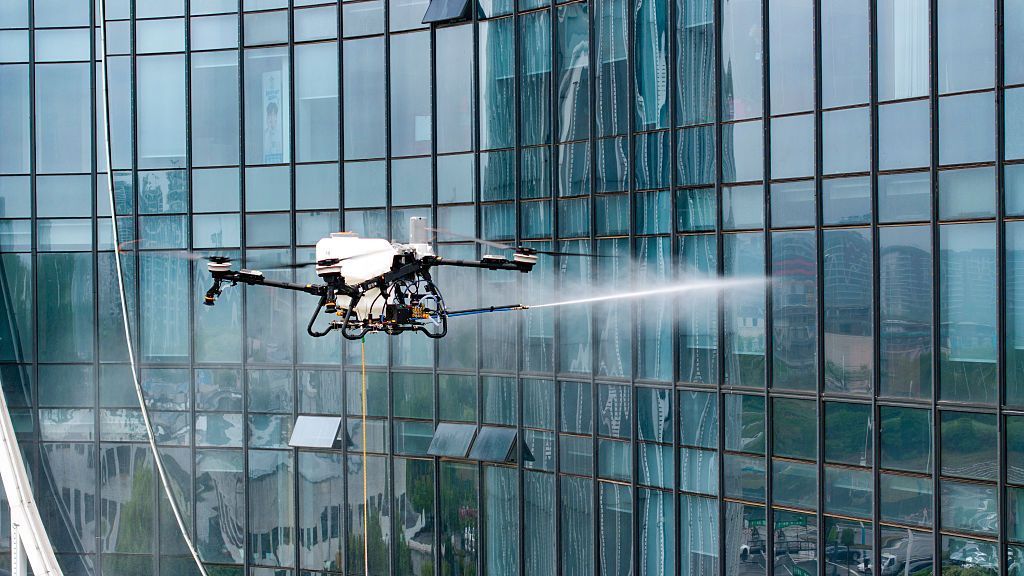
The new policy comes at a paradoxical moment for China’s drone sector: Chinese manufacturers, led by global industry leader DJI, currently dominate the worldwide consumer and commercial drone market, and the country’s growing low-altitude economy – which encompasses both commercial drones and emerging flying taxi technology – has been marked as a national strategic priority, with official projections valuing the sector at more than 2 trillion yuan ($290 billion) by 2035. Across many urban and rural regions of China, drones have already entered widespread daily use, supporting applications from commercial food delivery and agricultural crop monitoring to high-rise building exterior cleaning.
Even with this rapid growth, China has emerged as one of the most tightly regulated markets for drone operation globally. With the new rules set to take effect, reports from Beijing indicate that authorized retail outlets for DJI, the country’s largest drone manufacturer, have already begun removing all consumer drones and related components from store shelves ahead of the sales ban.
Official data puts the total number of registered drones across China at more than 3 million, and industry analysts note that the sweeping new restrictions in the capital are expected to reshape the country’s massive domestic drone market, forcing operators and manufacturers to adapt to the new layered regulatory regime.