标签: Asia

亚洲

  • Sudanese victims ask ICC to investigate Emiratis over RSF atrocities in el-Fasher

    Sudanese victims ask ICC to investigate Emiratis over RSF atrocities in el-Fasher

    Seven Sudanese survivors of the devastating atrocities in Darfur have taken a landmark step toward accountability, filing a formal communication with the International Criminal Court (ICC) asking prosecutors to open an investigation into senior United Arab Emirates (UAE) government officials and business leaders for their alleged role in enabling war crimes and genocide committed by the Rapid Support Forces (RSF).

    Submitted to the ICC Office of the Prosecutor on Tuesday under Article 15 of the Rome Statute — the legal mechanism that allows any individual or group to submit evidence to prompt a formal inquiry — the filing names UAE Vice President Mansour bin Zayed Al Nahyan among those accused of maintaining close ties to the RSF, and facilitating the group’s operations through critical financing and logistical backing. The submission specifically requests prosecutors examine the potential criminal liability of third-party actors under Articles 25(3)(c) and 25(3)(d) of the Rome Statute, which cover individuals who aid, abet, or knowingly contribute to crimes carried out by a group acting with a shared criminal purpose.

    The UAE has repeatedly and publicly denied allegations that it has provided weapons, funding, or any other form of support to the RSF. However, a growing body of independent investigations published since mid-2023 has consistently linked the UAE to sustained arms and materiel flows to the RSF. Multiple inquiries have confirmed that weapons have reached the RSF via a secret airbridge operating out of Amdjarass, Chad, with the UAE named as the primary suspected supplier. In January 2024, Middle East Eye (MEE) exposed a sprawling cross-border network through which the UAE funnelled weapons to the RSF, with supply routes stretching across Libya, Chad, Uganda, and breakaway regions of Somalia. More recently, an April 2024 MEE investigation uncovered covert RSF support operations operating out of an Ethiopian military base in Asosa, Benishangul-Gumuz region, with identical military vehicles documented at the Port of Berbera in Somaliland — where the UAE maintains a permanent military base. A 2024 New York Times investigation, which is cited in the new ICC filing, further found that the UAE smuggled weapons to the RSF concealed within shipments labelled as humanitarian aid. In May 2024, Human Rights Watch reported that Colombian mercenaries hired by a UAE-based company transited through Emirati military bases before deploying to Sudan to support the RSF.

    The survivors — all now sheltering in a 26,000-person displacement camp in Sudan’s Northern State, many of whom walked more than 745 miles to escape violence — are not only seeking accountability for the RSF fighters who directly carried out atrocities. They are calling for the court to trace responsibility up the entire chain of support, investigating every individual and entity that funded, armed, or facilitated the RSF’s campaign of violence.

    The ICC already holds clear jurisdiction over crimes committed in Darfur, stemming from a 2005 United Nations Security Council referral that grants the court authority to prosecute individuals of any nationality for crimes committed in the region. Legal scholars consulted by MEE note that this jurisdiction could theoretically extend to Emirati nationals accused of aiding RSF crimes, though significant practical barriers remain. The UAE has not ratified the Rome Statute, and gathering admissible evidence and securing state cooperation would present major challenges for ICC investigators.

    The communication was brought to the court by Elise Le Gall, a Paris-based ICC counsel acting on behalf of the seven survivors. “International crimes cannot be committed without support networks,” Le Gall said in a statement accompanying the filing. She called on ICC prosecutors to closely examine private and public sector actors who may have enabled the RSF’s atrocities “through the provision of funding, logistical support, equipment, or personnel.”

    The filing centers on the catastrophic fall of El-Fasher, the capital of North Darfur, which was captured by the RSF on October 26, 2025, after a 500-day siege that trapped more than 250,000 civilians without access to food, clean water, or life-saving medicine. The United Nations Human Rights Office has confirmed that more than 6,000 civilians were killed in the first three days of the RSF’s final assault on the city. Prior to the fall of El-Fasher, satellite analysis from Yale University’s Humanitarian Research Lab identified a ring of earthen fortifications built by the RSF around the city as a deliberate “kill box” designed to block civilian escape and enable mass killing.

    The submission details systematic allegations of mass murder, torture, sexual violence, forced displacement, and deliberate attacks on hospitals and medical infrastructure. It documents a repeated pattern of violence in which RSF fighters pursued fleeing civilian populations and deliberately ran them over with armed vehicles. Mohamed Ismail Abdelrahman Hassan, a doctor from El-Fasher who treated injured civilians throughout the entire siege, stated in the filing that heavy weapons supplied to the RSF “devastated infrastructure, besieged civilian populations, and killed civilians indiscriminately.”

    The survivors’ filing draws substantial support from the findings of the UN Independent International Fact-Finding Mission for Sudan, which concluded in February 2025 that the RSF’s conduct in El-Fasher bears all the legal hallmarks of genocide, in addition to widespread crimes against humanity and war crimes. Mona Rishmawi, a member of the fact-finding mission, told MEE earlier this year that the targeted killing of El-Fasher’s Zaghawa and Fur communities left “only one reasonable inference”: that the RSF acted with explicit genocidal intent. Rishmawi called on all governments to immediately halt arms flows to the RSF, warning that any state providing backing to either side in the Sudan conflict risked being held legally complicit in acts that meet the legal threshold of genocide. The mission has already shared confidential evidentiary materials with the ICC, Rishmawi confirmed, though the court’s constrained operational capacity, weakened by long-standing United States sanctions, makes swift investigative action far more difficult.

    Earlier this year, ICC Deputy Prosecutor confirmed that the court’s office is already conducting an active investigation into the atrocities committed in El-Fasher. While the ICC has been probing alleged RSF atrocities since 2023, prosecutors have not yet requested arrest warrants for any Sudanese nationals linked to the violence.

  • Trump has nothing but praise for Modi at G7 after tensions over US military strike, trade

    Trump has nothing but praise for Modi at G7 after tensions over US military strike, trade

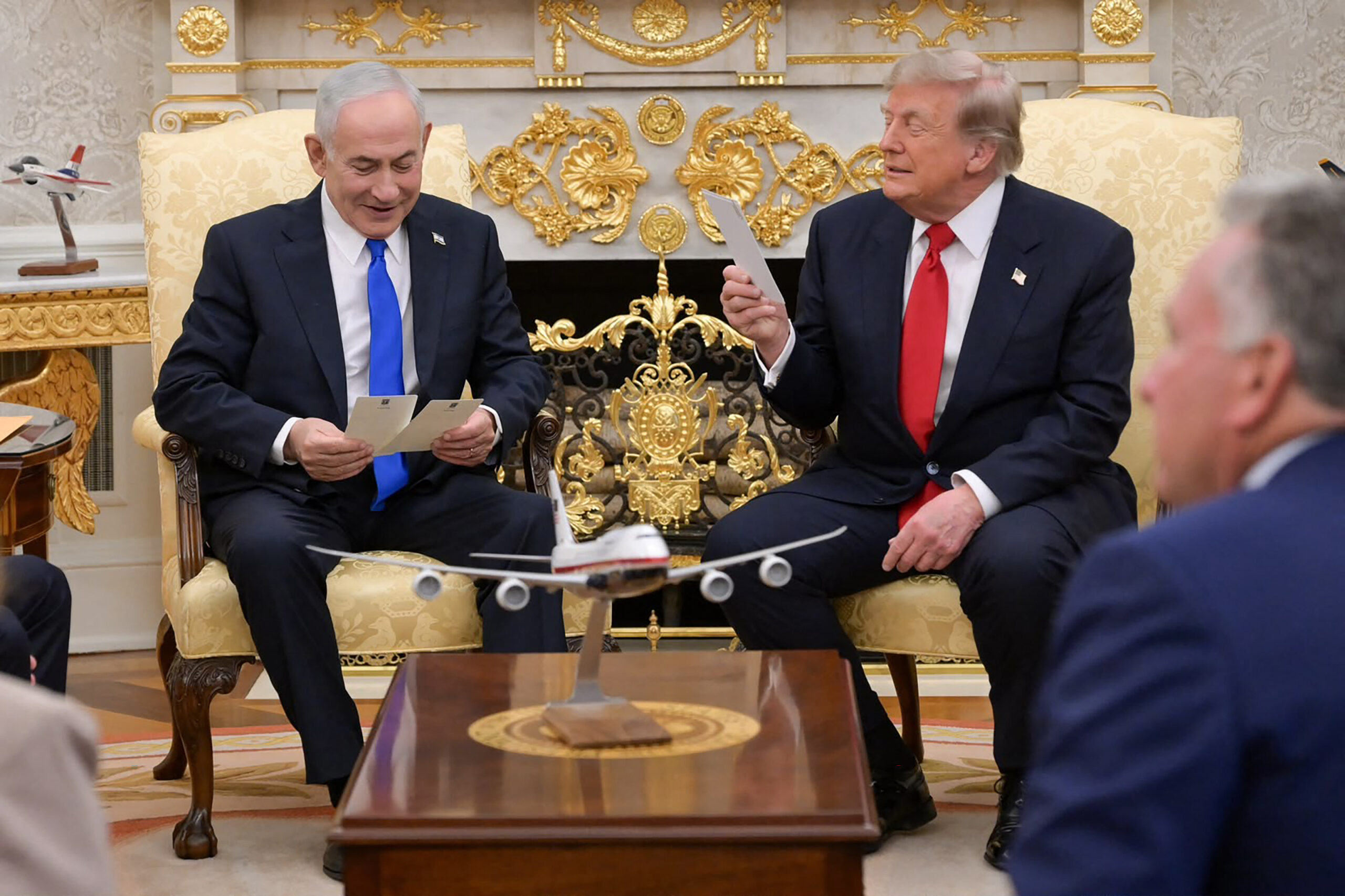
    EVIAN-LES-BAINS, France — On the sidelines of the 2025 G7 Summit hosted by French President Emmanuel Macron, U.S. President Donald Trump moved swiftly Wednesday to project unbroken unity with Indian Prime Minister Narendra Modi, lavishing public praise on the Indian leader as a “loyal friend” even as a cascade of thorny disputes — from trade frictions to oil sanctions, and most recently, the tragic death of three Indian mariners in a U.S. military strike — have put their long-warm bilateral relationship to the test.

    The high-stakes meeting came exactly one week after three Indian sailors lost their lives in a strike targeting a tanker in the Gulf of Oman, carried out amid a U.S. blockade intended to disrupt unauthorized oil shipments moving through the strategic Strait of Hormuz. India’s Foreign Ministry had already registered a formal diplomatic protest over the deadly incident ahead of the leaders’ sit-down, putting the fatal strike front and center on the bilateral agenda.

    Modi joined the G7 gathering as one of several guest invitees extended by Macron, marking a key opportunity for behind-the-scenes talks between the two leaders amid growing global geopolitical shifts. From the opening moments of the meeting, Trump pushed back firmly against any speculation of a rift between Washington and New Delhi, launching into a sustained series of compliments for Modi that acknowledged his shrewd negotiating style while framing their personal rapport as the foundation of a rock-solid bilateral relationship.

    “We have the best relationship. We cannot be closer than we are. Would you say that, sir? I don’t think we can be any closer,” Trump stated as he clasped Modi’s hand in a public show of unity. “Both him and I, and our nations. But it really starts with the two of us.”

    For his part, Modi did not shy away from addressing the deadly strike directly, raising the critical issue of maritime safety for the hundreds of thousands of Indian seafarers working on commercial vessels across the globe, including regular transits through the always tense Strait of Hormuz. “Their safety is of utmost importance to us,” Modi affirmed, before thanking Trump for his recent diplomatic efforts to broker a ceasefire agreement ending the war with Iran.

    “You made tremendous efforts towards reaching this understanding and this agreement, and I’m confident that the issue of seafarers will receive the highest priority during the implementation of this agreement,” he added.

    When pressed by reporters to offer words of condolence to the families of the deceased Indian mariners, Trump acknowledged the danger of the maritime profession and reaffirmed shared commitment to supporting global seafarers. “It’s a tough profession. There’s no question about it. And we work together on it,” he said. “We love all of those people. They’re great people.”

    The personal bond between Trump and Modi has been a defining feature of U.S.-India relations throughout Trump’s first term in office, marked by high-profile public displays of camaraderie. During a 2020 state visit to India, Modi drew global attention by organizing a massive welcoming rally for Trump at a packed cricket stadium, an event that left a lasting positive impression on the U.S. president. Just months before that trip, the two leaders shared the stage at the “Howdy Modi” rally in Houston, Texas, which drew a crowd of tens of thousands of Indian diaspora members to show their support for the Indian prime minister.

    But in recent months, that once smooth relationship has grown increasingly complicated by new geopolitical frictions. Russia’s full-scale invasion of Ukraine has created a difficult diplomatic balancing act for New Delhi, which has maintained longstanding defense and energy ties with Moscow even as the U.S. has pressed allies to cut ties with the Kremlin. That rift spilled over into trade policy last year, when the Trump administration imposed steep new tariffs on a wide range of Indian exports, with the move explicitly tied to New Delhi’s decision to continue purchasing discounted crude oil from Russia.

    While the two economic powers eventually negotiated a limited interim trade agreement to de-escalate tensions, talks on a far more comprehensive broader trade pact remain ongoing, with no final deal yet reached. Speaking on Wednesday, Trump struck an optimistic note about the state of those negotiations, saying a new full agreement was “very close” even as he joked about Modi’s formidable negotiating skills.

    “He’s the most beautiful looking man. He looks so nice. He’s like an angel. But actually, he’s as tough as — he’s a killer,” Trump said of Modi.

  • In Belfast, ancient grudges and new furies leave a city burned

    In Belfast, ancient grudges and new furies leave a city burned

    In the residential streets branching off east Belfast’s Newtownards Road, the aftermath of last week’s brutal sectarian-tinged riots hangs heavy. Charred, boarded-up house facades line the road, burned-out car shells sit abandoned at curbsides, and the acrid scent of ash still lingers in the air. What began with the stabbing of local man Stephen Ogilvie quickly exploded into coordinated violence targeting migrant and immigrant communities, leaving dozens of families displaced and a city already grappling with historic divisions confronting a fresh wave of racial hatred.

    The violence unfolded almost exclusively in loyalist Protestant working-class areas, where pro-British paramilitary groups that first formed during Northern Ireland’s 30-year Troubles have maintained a persistent, though altered, presence decades after the 1998 Good Friday Agreement ended large-scale conflict. Investigations and local testimonies reveal the riot was not a spontaneous outburst, but a coordinated action: rioters were instructed to wear black, cover their faces, disable doorbell surveillance, and avoid carrying personal phones that could identify them. Migrants’ home addresses were circulated across social media platforms and encrypted WhatsApp groups, forcing many minority families to send their children to stay with white neighbors for safety.

    Among those who lost their homes to arson were a Ukrainian woman who fled Russia’s full-scale invasion of her country, a Polish family, and a Romanian family. The Sudanese man charged with the attempted murder of Ogilvie has been identified as Hadi Alodid, but a subsequent Belfast Telegraph investigation has exposed a stark hypocrisy at the heart of the rioters’ justification: Ogilvie himself was a longtime target of loyalist paramilitaries linked to the Ulster Volunteer Force (UVF) and the notorious Shankill Butchers unit, who had tortured him repeatedly and forced him out of Northern Ireland years before the stabbing. Ogilvie’s family has publicly expressed disgust that his attack was exploited to justify racist violence.

    While the stabbing served as the immediate trigger, campaigners, academics and local residents who spoke to Middle East Eye say this wave of violence was the predictable outcome of years of growing far-right extremism, anti-immigrant disinformation, and the merging of historic paramilitary networks with modern far-right ideology. Unlike the Troubles, when intercommunal violence targeted Catholic communities, this new wave of violence has reoriented old sectarian hatred toward foreign-born residents.

    Multiple actors have been linked to enabling and emboldening the unrest, mirroring a pattern seen in recent racist riots across mainland Britain from Southampton to Southport. Far-right agitator Tommy Robinson, whose legal bills are currently covered by X owner Elon Musk, shared details of planned demonstrations within days of the stabbing, framing the incident as “yet another invader attack on our people.” Musk, the world’s first trillionaire, reposted the call to action on his own platform with the caption: “Only by protesting REPEATEDLY and LOUDLY will there be any change!” The post came just weeks after Robinson met Musk’s father in a luxury Moscow hotel.

    Mainstream far-right political figures have also amplified rhetoric that local activists say laid the groundwork for violence. Traditional Unionist Voice MP Jim Allister decried what he called “an importation of an alien culture that thinks it is appropriate to behead someone within the United Kingdom,” while Reform UK leader Nigel Farage warned that “if there is no urgent action taken to remove discriminatory and dangerous anti-White policies, we will see another Belfast.” Critics point out that this rhetoric of collective blame stands in stark contrast to the silence from these same figures when 30 women were violently killed across Northern Ireland over four years ending in 2024 – a case where the vast majority of attackers were white.

    Data underscores how unfounded many of the anti-immigrant claims circulating in Belfast are. Northern Ireland is over 96 percent white, a higher proportion than England, Wales or Scotland, and hosts just one percent of all asylum seekers housed in UK hotels. Still, systemic failures have created a vacuum that disinformation has rushed to fill. Luqman Saeed, a Pakistan-born lecturer at Ulster University, notes that most working-class loyalist residents have little daily interaction with immigrants, so their perceptions are shaped almost entirely by skewed media coverage that only highlights immigrants in the context of crime or asylum claims. Few are aware that temporary migrants pay a mandatory health surcharge to access the NHS, or that many work in critical frontline health and social care roles across the region.

    For Saeed, who has lived in Belfast since 2022 and raises children born there who attend local schools, the rise in racism has been tangible and worrying. “Things are definitely worse now,” he says. “That sense of security has faded away. It’s hard to know how to re-establish it. There is a co-ordinated, systematic campaign in the media to demonise immigrants.”

    Official bodies have previously warned of the link between persistent paramilitary structures and rising racist violence. In December 2025, the Independent Reporting Commission – a joint UK-Irish body created to monitor post-Good Friday Agreement disarmament – found that “the intimidation, coercive control, and threats linked to paramilitary groups persist, and the structures of paramilitary groups that continue intact can be used to facilitate organised crime and other forms of violence.” The commission specifically noted that “a particularly serious manifestation of that reality over the last two years has been the link between paramilitarism and racist violence connected to the issue of immigration.”

    Amnesty UK’s head of nations and regions Patrick Corrigan says paramilitary involvement is the unique factor that distinguishes Belfast’s current unrest from far-right violence elsewhere in the UK. “Paramilitaries are the element that exists here but nowhere else. It is clear they have been involved in racist violence,” Corrigan says. Local residents also note that paramilitary-linked organised crime groups stand to profit from the unrest, exploiting social division for their own gain.

    Not all local loyalist leaders agree that paramilitary groups centrally controlled the riots. Mervyn Gibson, grand secretary of the Protestant Orange Order and a Presbyterian minister who has negotiated with paramilitaries for decades, acknowledges that individual members took part, but argues the violence was not formally directed by paramilitary leadership. He describes much of the unrest as “recreational rioting” where teenagers and young men were drawn to the chaos for an adrenaline rush, directed by older men with ties to fringe fascist groups as much as traditional paramilitarism.

    Gibson also points to long-simmering grievances in working-class loyalist communities that have created fertile ground for division. He notes that the UK government often places migrant and asylum-seeking families in working-class neighbourhoods without any advance consultation or explanation to existing residents, leaving a information gap that disinformation fills. Systemic housing failures also exacerbate tension: Northern Ireland has more than 20,000 vacant homes, but more than 50,000 people remain on social housing waiting lists. Local residents report that private landlords routinely rent properties to migrant families because the government pays a premium rate, feeding a perception that existing residents’ housing needs are being sidelined.

    Community organiser Conol Matthews says these economic and social grievances are deliberately diverted toward immigrants instead of the political leadership that created the housing crisis. His approach when working with local residents is to redirect anger toward “the boys in suits” in government who have failed working-class communities on all sides of the historic divide. Still, he acknowledges the weight of Belfast’s violent history, noting: “Realistically, what this place is always teetering on the edge of is war.”

    Kashif Akram, an executive committee member at the Belfast Islamic Centre, echoes calls for systemic change to reverse rising hatred. “The government needs to educate them. The importance of migrants needs to be understood. Why are people not being educated about this?” he asks. He notes that for paramilitaries, little has changed except the target of their violence: “it looks like the same individuals and same leaders. The target has changed but the ideology is the same. The violence is directed not at Catholics but people of colour.”

    Despite the wave of violence, many Belfast residents remain optimistic that unity can push back against hatred. Over the weekend following the riots, thousands of people from across all communities took to the streets of central Belfast for an anti-racism march. Akram, a lifelong Belfast resident, puts it simply: “There’s more decent people than racists. We can stop it, but all communities need to come together.”

  • Israeli official says Iran war may not have been worth launching

    Israeli official says Iran war may not have been worth launching

    Israeli Prime Minister Benjamin Netanyahu is facing unprecedented domestic and strategic pressure after the recent US-Iran peace deal, with a senior Israeli government official openly casting doubt on the decision to launch the 12-day military operation against Iran last June. The official, speaking to Israeli broadcaster i24News amid surging public anger across the country, stated that if Israeli leadership had foreseen the eventual political outcomes of the campaign, it is extremely unlikely the operation would have ever been initiated. This public questioning from within the establishment underscores the deep rifts that have opened up in Israel’s political and security circles following the deal, which leaves Netanyahu confronting pushback from both the Iranian side and his own inner circles. The emerging agreement has sparked fierce criticism of the Netanyahu administration’s handling of tensions with Iran, prompting the prime minister to defend his long-standing stance in a press conference held Tuesday. Reaffirming his commitment to countering Iran’s nuclear ambitions, Netanyahu framed the issue as his lifelong mission. “For decades, I have been fighting against Iran’s efforts to arm itself with nuclear weapons. I can define it as my life’s mission. I have met this challenge to this day, and I will continue to meet it in the future,” he told reporters. Netanyahu doubled down on his justification for Operation Rising Lion, the 12-day campaign launched against Iran last June, claiming that Israeli strikes destroyed Iranian military and nuclear infrastructure worth billions, even trillions of dollars. He argued that the damage set back decades of Iranian development and delivered a crippling blow to Tehran’s strategic ambitions. Most critically, he asserted, the operation prevented what would have been an existential threat to Israel. “But here is the most important thing: we saved the State of Israel from the threat of nuclear annihilation,” he added. “Because, it is crucial to understand, Iran was racing toward a nuclear weapon just before Operation Rising Lion; it was racing toward a nuclear weapon and racing to bury its missile and nuclear industry deep underground.” Public discontent boiled over after Pakistan announced the US-Iran peace agreement late Sunday, with widespread anger across Israeli society directed at Netanyahu and his cabinet. Beyond public backlash, security and regional experts have issued stark warnings about the long-term implications of the deal, arguing that it will allow Iran to consolidate its position as a dominant regional power. Alon Ben David, a veteran military correspondent for Israel’s Channel 13 News, warned that the new agreement could undermine Israel’s strategic standing across the Middle East, with consequences that will stretch across generations. “This is a dramatic day for Israel and for generations to come,” he said, noting that the agreement “marks a turning point in the Middle East.” Other military analysts and economic commentators have echoed these concerns, arguing that the costly, inconclusive war has ultimately left Tehran more emboldened than before, amounting to a clear strategic defeat for Netanyahu and his government.

  • Iran team blames US for ‘disastrous’ restrictions at World Cup

    Iran team blames US for ‘disastrous’ restrictions at World Cup

    As one of the qualified teams competing in football’s biggest global tournament, Iran’s national squad, commonly known as Team Melli, has emerged as one of the unlikeliest stories of this World Cup — not for on-pitch performance, but for a cascade of off-field obstacles that players and coaching staff blame on politically motivated restrictions imposed by United States authorities. The roster and support personnel have faced repeated logistical disruptions and entry barriers since the tournament launched last week, with the team’s leadership saying these hurdles have directly undermined their ability to prepare properly for matches.

    The most recent disruption followed the team’s opening intercontinental playoff against New Zealand in Los Angeles this Monday. Immediately after the final whistle, the squad was ordered to depart the city the same day to return to their pre-tournament base camp in Mexico, a mandatory move that upended the team’s planned recovery schedule. Speaking to reporters after the match, striker Mehdi Taremi and goalscorer Mohammad Mohebi confirmed the last-minute travel order was not the team’s choice; the squad had arranged to stay an extra day in Los Angeles to hold a low-intensity recovery session to help players recover from match fatigue. “They have said we have to leave immediately,” Iranian head coach Amir Ghalenoei confirmed in his remarks to the press.

    The rushed post-match travel is far from the only logistical issue the team has encountered. Ahead of the New Zealand match, the squad was also forced to adjust their travel plans, only arriving in Los Angeles 24 hours before kickoff — a day later than the team had originally scheduled. The tight timeline left players with almost no time to acclimate to the time change and venue before taking the pitch. Ghalenoei described the cumulative disruption as deeply disorienting for the squad, noting “We are really troubled by that. We don’t know why they are returning us, to be honest. It seems very strange. It seems others are doing the planning for us. Our team is the most oppressed one in the whole World Cup.” Taremi echoed that frustration, adding that “Everything is like a disaster, actually, for us.”

    When the squad finally arrived in Los Angeles for the match, they were also met by a small protest organized by members of the Iranian diaspora, who displayed American, Israeli, and pre-1979 revolution Iranian flags. According to Taremi, the visa and travel restrictions facing the team were put in place months before the tournament even began, and the squad has grown exhausted of navigating the constant barriers. An anonymous official from the Iranian Football Federation confirmed that 11 members of the team’s official delegation have been denied entry to the United States, a gap that has left the squad short of key off-field support. “Our president isn’t here, our media isn’t here, many of our management team aren’t here,” Ghalenoei explained.

    According to reporting from The Athletic, even the team’s post-match press conference addressing these issues was interrupted, with FIFA officials attempting to cut the interview short as players and the head coach outlined their frustrations to assembled journalists. After the match, FIFA president Gianni Infantino visited the Iranian team in their locker room to acknowledge their struggles. Taremi told reporters that while Infantino has expressed a willingness to assist, the core issues stem from outside of FIFA’s control, hinting that US political pressure is the root cause of the restrictions. “For sure, he wants to try to help us, but it’s about other things too. You know, everyone knows. (I don’t) need to mention that, because you know where we are,” Taremi said. Iranian state news agency Tasnim reported that Infantino told the squad “I know what you go through, I understand. But you are stronger than everything, and you send a strong message to the entire world.” In response, Ghalenoei pushed for FIFA to take a stronger stance to protect the team from non-sporting political interference.

    The disruptions to the Iranian squad extend beyond travel and visa issues. Just days before the tournament kicked off, FIFA revoked the Iranian Football Federation’s allocated ticket allotment — equal to 8% of the relevant stadium capacity — at the last minute, barring most Iranian supporters from attending the team’s matches in person. The Iranian federation directly blamed US pressure for FIFA’s decision, saying in a statement that “The United States has now taken steps to obstruct the presence of Iranian supporters at the stadiums. The incident raises serious questions about the influence of non-sporting and political considerations on the organisation of the world’s biggest football event.”

    Despite the string of obstacles, the Iranian team has stressed that the unfair treatment will not stop them from putting forward their best performance in the tournament. Taremi emphasized that the situation is not just bad for his squad, but for the integrity of global football itself. “It’s not good for us, you know? It’s not good for football, because in a World Cup, you have to prepare well for the next game, because it is a lot of stress for the players, staff, and everyone. But we don’t have that support, and I think Fifa has to help us more than this,” he told reporters.

  • Karst peaks, warm lakes glow under Puzhehei summer sunsets

    Karst peaks, warm lakes glow under Puzhehei summer sunsets

    As summer settles across Southwest China’s Yunnan province, one of the region’s most beloved natural destinations is drawing crowds of travelers seeking tranquility and stunning visual beauty: the Puzhehei scenic area, located in Wenshan Zhuang and Miao Autonomous Prefecture, is gaining acclaim for its dreamlike, golden-hued summer sunsets that transform its iconic karst landscape.

    Unlike crowded peak-season tourist hotspots that prioritize man-made attractions, Puzhehei’s main draw lies in its untouched natural charm this time of year. As the daytime heat fades and the sun begins its slow descent toward the horizon, it glides gently over the area’s signature jagged karst peaks, spilling a soft, warm amber glow across the region’s network of calm, clear lakes. Visitors often gather along the lake shores to soak in the moment, feeling the gentle summer breeze brush their skin as they watch the sky shift through a sweeping gradient of colors.

    The sky’s transformation unfolds gradually: starting as a soft pale yellow that hugs the outline of the karst formations, it deepens into vivid, striking oranges and blushing pinks that reflect off the still lake water, before fading into muted, calming shades of lavender and deep indigo as dusk approaches. The combination of distant mist-shrouded mountains, glassy nearby waters, and a sky streaked with sunset tones creates a immersive, soothing atmosphere that helps travelers shake off the stress and fatigue of daily urban life.

    For tourists looking to escape the hustle of city living and reconnect with nature, this seasonal natural spectacle has cemented Puzhehei’s status as a must-visit summer getaway, with visitors returning year after year to experience the quiet romantic allure of its sunsets.

  • London real estate event admits promoting Israeli settlement property ‘by mistake’

    London real estate event admits promoting Israeli settlement property ‘by mistake’

    A controversy has erupted over a recent Israeli real estate gathering hosted at a London synagogue, after the event’s organizers acknowledged that promotional materials for properties in illegally constructed Israeli settlements in the Occupied Palestinian Territories were accidentally included in event materials. The incident has triggered official probes from UK regulators and drawn sharp condemnation from Palestinian advocacy groups.

    The incident first came to public light on Monday, when independent media outlet Middle East Eye published an expose detailing how multiple Israeli real estate vendors had advertised residential developments in settlements that violate international law at the Great Israeli Real Estate Event, held the previous Sunday at Edgware United Synagogue in north London. Documented evidence shared by the outlet confirmed that several participating firms promoted developments across a range of illegal settlements: Harey Zahav developers advertised projects in Kfar Eldad, a settlement south of Bethlehem, and Teneh Omarim near Hebron; leading Israeli agency Tivuch Shelly promoted a new residential project in the large West Bank settlement of Ma’ale Adumim, marketing it as just 10 minutes from Jerusalem; and Jerusalem Real Estate advertised developments in French Hill and Ramat Eshkol, both illegal settlements in occupied East Jerusalem. Another firm, Africa Israel, which has a long history of involvement in settlement construction across the West Bank and East Jerusalem, promoted a West Jerusalem project at the event.

    Within 24 hours of the expose, UK Foreign Secretary Yvette Cooper announced that government ministers had formally requested the UK Advertising Standards Authority launch a full investigation into the event’s promotional activities. On the same day, the International Centre of Justice for Palestinians (ICJP), a UK-based legal advocacy organization, submitted a formal complaint to the Charity Commission regarding the synagogue that hosted the gathering, saying it held concrete documented evidence that exhibitors marketed illegal settlement properties in the Occupied Palestinian Territories.

    In an official statement released on Tuesday, the event’s organizers sought to downplay the incident, framing the inclusion of settlement properties as an accidental oversight. The spokesperson noted: “We would like to re-emphasise that the venue made it clear to us that we were not in any way to promote the sale of Israeli real estate over the Green Line, and all participating vendors agreed to abide by that requirement. Their mention in the event brochure was made in error for which we apologise.”

    Despite the apology, the organizers pushed back against international and UK government legal consensus on the status of the occupied territories, rejecting accusations that they were promoting stolen Palestinian land and instead characterizing the land as disputed. They also defended their broader event in strongly worded terms, saying: “it is outrageous that in this day and age, anyone would seek to deny British Jews the right to purchase property anywhere in the world, whether in Paris, New York, or Israel.” The organization also rejected criticism of settlements in East Jerusalem, adding: “we firmly reject the attempt to delegitimise established neighbourhoods in Jerusalem, Israel’s capital city, which are home to diverse communities and have long been part of the city’s urban fabric.” This stance directly contradicts the long-held position of international law and the UK government, which both classify East Jerusalem as occupied Palestinian territory, and all Israeli settlements constructed on occupied land as illegal.

    As of Wednesday morning, the Charity Commission confirmed it is reviewing the complaint submitted by the ICJP. In a statement to Middle East Eye, a Commission spokesperson said: “We are assessing concerns raised with us about an event held at a synagogue affiliated with United Synagogue. Our assessment will determine what regulatory role there is, if any, for the Commission. In line with our guidance, the charity has submitted a serious incident report relating to concerns raised about the event.”

    The controversy comes amid longstanding international disagreement over Israel’s settlement expansion in the West Bank and East Jerusalem, with most of the global community uniformly agreeing that all settlements constructed on occupied Palestinian territory violate the Fourth Geneva Convention and undermine any path to a viable two-state solution to the Israeli-Palestinian conflict.

  • Trump says he will visit India as frosty relationship with Modi thaws

    Trump says he will visit India as frosty relationship with Modi thaws

    At a bilateral meeting on the sidelines of the G7 summit in France, U.S. President Donald Trump has pledged a future visit to India, marking a notable softening of strained bilateral ties that have been roiled by trade disputes, a deadly recent naval incident, and geopolitical disagreements over the past year. Trump told reporters the trip would occur “sometime in the future”, adding that the two nations are now nearing a final agreement on a comprehensive bilateral trade deal after months of stop-start negotiations.

    Bilateral relations hit a low point last year when Trump first announced sweeping new tariffs on Indian imports, and tensions escalated sharply just one week before the G7 meeting, when three Indian sailors were killed in a U.S. military strike in the Gulf of Oman. The strike targeted a tanker Washington accused of violating its blockade on Iranian ports, and the incident triggered immediate diplomatic pushback from New Delhi, which summoned a senior U.S. envoy twice to protest the killing and the risk to Indian crew members working on vessels transiting the region. During their G7 talks, Indian Prime Minister Narendra Modi raised the urgent issue of maritime safety for Indian seafarers operating in the Strait of Hormuz, a critical global energy chokepoint that has been disrupted by ongoing regional conflict.

    The trade negotiations, which have dragged on for more than a year, hit another recent snag after the U.S. announced plans for new import tariffs targeting nations deemed insufficiently active in combating forced labor, a list that includes India. Despite the setback, Trump praised Modi as a “tough negotiator” during his post-meeting press remarks and reaffirmed his commitment to travel to India, a request New Delhi has pressed for several months. The visit could potentially include a multilateral gathering with leaders from Japan and Australia, according to prior Indian diplomatic outreach.

    On the topic of defense cooperation, Trump made an unusual, conditional pledge of U.S. military support: “If anybody attacks that man [Modi], we’re going to be there… Now, if there’s a new leader, I’m not sure about it.” The comment drew note for its informal framing, marking a departure from standard official alliance commitments.

    Domestically, Modi has faced growing criticism from Indian opposition parties, who have accused the prime minister of failing to issue a direct condemnation of the U.S. strike that killed the three sailors and pressed him to raise the incident forcefully with Trump during their summit meeting. In his public address to G7 leaders on Tuesday, Modi referenced the deaths of “several Indian civilians” amid Middle East tensions and called for urgent global action to guarantee the safety of commercial seafarers. “Today the world does not suffer from a shortage of resources; it suffers from a shortage of trust. And the future of our partnerships depends on building this trust,” Modi said, a comment many Indian political commentators have linked directly to the ongoing friction in bilateral ties with Washington.

    For India, regional instability in the Gulf carries steep economic stakes: the country imports roughly 90% of its crude oil, and the ongoing disruption to shipping through the Strait of Hormuz — which normally carries around 20% of global oil and gas supplies — has already put significant upward pressure on Indian energy costs. Even if the strait returns to full normal operations quickly, industry analysts warn global energy supplies could take months to rebalance and stabilize after prolonged disruption.

    The G7 meeting marks a clear tonal shift from the pair’s last formal bilateral encounter, when Modi traveled to Washington for a notably frosty White House meeting in February of last year. Looking ahead, senior trade officials from both nations are set to convene in New Delhi next week to wrap up what India’s commerce secretary has called the “final touches” of a new trade agreement.

    Trade talks between the two nations have been fraught from the start. India was among the first countries to open trade negotiations with the Trump administration after it took office, but repeated disagreements over tariff levels and market access have slowed progress. At the height of trade tensions, the U.S. imposed tariffs as high as 50% on select Indian goods, before rolling rates back to 18% after the two sides reached an interim trade deal in February. Most recently, the U.S. Supreme Court ruled many of Trump’s unilateral tariffs illegal, cutting the current rate to 10%. It remains unclear whether the proposed new forced labor-related tariffs will ever be implemented, with no formal timeline for enforcement released to date.

    Beyond trade and the Gulf incident, multiple other sources of friction have lingered over the past year. New Delhi took strong offense last year after Trump claimed he had brokered a ceasefire between India and Pakistan during a border conflict, and repeated his offer to mediate the long-running Kashmir dispute — a territory claimed by both India and Pakistan, and a core Indian national priority that New Delhi has long insisted is an exclusively internal matter, with no room for third-party mediation. Modi communicated this position “strongly” to Trump during their 2025 meeting, but in the months since, Pakistan has cultivated closer ties with the Trump administration, even stepping into a role as an intermediary between Washington, Tehran, and Arab capitals. Additional tensions have stemmed from the Trump administration’s broader crackdown on immigration, including new restrictions on the H-1B visa program that has long served as a primary pathway for skilled Indian workers to live and work in the United States.

  • UK minister accused of ‘baiting’ Zack Polanski into committing terror offence

    UK minister accused of ‘baiting’ Zack Polanski into committing terror offence

    A political firestorm has erupted across British politics this week after a senior Labour government minister was accused of deliberately attempting to entrap Green Party leader Zack Polanski into committing a terrorism offense, over the recently upheld ban on pro-Palestinian direct action group Palestine Action.

    The controversy comes just days after the UK Court of Appeal overturned a earlier High Court ruling, reaffirming the legality of the Labour administration’s 2025 decision to proscribe Palestine Action as a designated terrorist organization. Under current British law, any public expression of support for a proscribed terrorist group carries a maximum penalty of 14 years imprisonment, a legislation that has become the center of fierce debate over civil liberties amid the ongoing Gaza conflict.

    Days after the Court of Appeal’s ruling upheld the ban, Polanski took to social platform X to slam the government’s approach to pro-Palestinian protest. He argued that labeling peaceful advocacy as terrorism had already led to the unjust arrest and prosecution of ordinary demonstrators, including elderly protestors who faced legal action simply for holding pro-Palestine signs. “It’s deeply authoritarian when people are speaking out against a genocide and for a free Palestine,” Polanski wrote.

    Minutes after the Green leader’s post, Mike Tapp — Labour MP and Parliamentary Under-Secretary of State for Migration and Citizenship — publicly replied with a repeated two-line question: “Do you support the Palestine Action group? Do you support the Palestine Action group?”

    Polanski’s response avoided directly answering the question, instead turning the exchange into a broader critique of the government’s restrictive protest laws. “The fact that your government has made it illegal for me to answer yes is a damning testament to your flagrant disregard for civil liberties,” he said. “This may be targeted at those taking action against the genocide, but it sets a very dangerous precedent that puts everyone at risk.”

    The exchange quickly went viral online, drawing widespread condemnation from civil liberties advocates, journalists, and ordinary social media users, with nearly all critics accusing Tapp of intentional entrapment. Prominent left-wing commentator Owen Jones called the interaction deeply shocking, noting that the minister deliberately asked the question knowing a positive answer would open Polanski to arrest and years of prison time. “That’s thanks to his government’s unhinged law,” Jones added.

    Alonso Gurmendi Dunkelberg, a legal researcher at the London School of Economics, echoed the concern, highlighting the extraordinary severity of the penalty attached to a simple public statement of opinion. “Whether you agree or disagree [with the group], think about that for a second,” he wrote.

    Many social media users echoed the criticism, with one commenting that “A government minister publicly baiting an opposition leader about having him arrested is crazy stuff.”

    The legal battle over Palestine Action’s ban stretches back months. In February 2026, the High Court ruled that then Home Secretary Yvette Cooper’s original proscription order was unlawful and discriminatory, following a legal challenge brought by the group’s co-founder Huda Ammori. After the ruling, the government immediately launched an appeal to the higher court, which ruled in the government’s favor on Monday.

    In their ruling, Court of Appeal judges said the ban “struck a fair balance” between individual rights to freedom of speech and assembly and the UK government’s stated interests in national security. Even so, the court explicitly acknowledged the ban would likely create a “chilling effect” that would deter ordinary people from speaking out against Israeli military operations in Gaza.

    The human cost of the ban has been substantial even before the latest ruling. Since proscription was first introduced, thousands of UK civilians have been arrested on terrorism charges for attending silent pro-Palestinian vigils and holding signs expressing support for the group. Campaign organization Defend Our Juries reports that between the High Court’s February ruling and the recent Court of Appeal decision, around 700 additional people were arrested for holding signs reading “I opposed genocide, I support Palestine Action.” By the time the High Court issued its original ruling, that number had already climbed to 3,400.

  • ‘A fantasy’: How the Palestine Action ruling whitewashed the history of civil disobedience

    ‘A fantasy’: How the Palestine Action ruling whitewashed the history of civil disobedience

    In a high-stakes legal ruling delivered on Monday, five senior judges at the UK Court of Appeal overturned a prior High Court decision that had deemed the UK government’s ban on direct action group Palestine Action unlawful. The appeal judgment, led by Lady Chief Justice Sue Carr, drew sharp lines to distinguish Palestine Action from historic movements that deployed civil disobedience, claiming the organization operates not as an open civil disobedience network aligned with the legacy of suffragettes, but rather as a covert entity organized into secret cells. This structure, the court argued, is intentionally designed to shield members who use violence to damage third-party property, with the group’s activities having already resulted in both physical injury and widespread property destruction, per the ruling.

    The court’s comparison between Palestine Action and the early 20th century suffragette movement, however, has sparked fierce pushback from legal experts and historians, who accuse judges of deliberately whitewashing suffragette history to fit their narrative. Critics note the Court of Appeal’s characterization of the suffragettes as exclusively non-violent, transparent activists is a widely debunked myth that erases the movement’s well-documented turn to militancy.

    Former government lawyer Tim Crosland, who has advised multiple climate direct action groups, described the court’s framing as a propagated historical fantasy. “The whitewashing of that history, making out that they broke at half time to have cucumber sandwiches with the police is quite alarming,” he told independent outlet Middle East Eye.

    Historical records confirm this critique: the Women’s Social and Political Union (WSPU), the militant core of the British suffrage movement, began as an open campaign but escalated its tactics after 1912 following repeated government repression. The movement shifted to covert operations, organized into secret cells to carry out arson and bombing attacks targeting public infrastructure, political venues, and the homes of anti-suffrage politicians. One specialized cell, the Young Hot Bloods, was explicitly formed to conduct high-risk militant actions, with members pledging to accept “danger duty.” While the majority of attacks targeted property, they still left a trail of harm: crude homemade bombs were placed in occupied train carriages, and phosphorus parcels mailed to officials left multiple postmen with severe burns. Contemporary authorities at the time labeled the campaign a “reign of terror,” with national headlines branding the actions “Suffragette Terrorism.” Emmeline Pankhurst, the movement’s iconic leader, defended the shift to militancy in her pamphlet *Why We Are Militant*, arguing that violence and property damage are only justified when all peaceful avenues to secure justice have already been exhausted.

    Palestine Action co-founder Huda Ammori has outright rejected the Court of Appeal’s description of her group as a covert, secretive organization. She emphasized that the vast majority of the group’s actions are open and accountable, with activists deliberately accepting arrest as part of their protest strategy. Actions such as factory blockades, roof occupations, and site takeovers are all carried out with the full knowledge that participants will face legal consequences, she explained.

    Addressing the court’s reference to an “underground manual” that the ruling claims advocates for property destruction and evasion of detection, Ammori pushed back on the sinister framing. She described the document as simply a compiled collection of public resources for volunteers across different regions, most of which are already freely available on other activist group websites. Even open, accountable direct action requires basic digital security planning to protect participants, she added, noting that such precautions are a necessary requirement for any sustained social movement.

    Crosland echoed this point, arguing that covert operational planning is a universal feature of all direct action groups, not a unique mark of extremism. “Otherwise, you’ll be stopped when you leave the house,” he explained, arguing that it is deliberately disingenuous to use this standard to isolate Palestine Action from other historic and contemporary protest movements. He added that the distorted historical framing is a deliberate tactic to justify authoritarian action against the group, by erasing the precedent of militancy in past accepted movements.

    The Court of Appeal’s ruling also went further, claiming that Palestine Action has little to no common ground with other historic protest movements, including anti-apartheid campaigners and groups opposing the 2003 Iraq War. This claim has also been debunked by historical context: the African National Congress (ANC), the group that led the fight against apartheid in South Africa, initially relied on peaceful civil disobedience before shifting to armed sabotage of state infrastructure after the 1960 Sharpeville Massacre, when police killed 69 unarmed protesters. Outlawed by the apartheid government, the ANC was forced to operate entirely underground, with its leader Nelson Mandela defending the turn to militancy during his 1964 sabotage trial. Mandela argued that violence became inevitable only after all peaceful channels of protest were closed off by the state, a position mirroring Pankhurst’s justification a half century earlier.

    The Court of Appeal explicitly referenced a landmark 2006 ruling in *R v Jones*, a case involving anti-war activists who broke into a UK Royal Air Force base to damage fuel tanks and bomb trailers, in a bid to stop US aircraft from participating in the 2003 invasion of Iraq. In that ruling, Lord Hoffmann affirmed the long, honorable tradition of civil disobedience in democratic societies, noting that activists who break the law to protest unjust government policy are often vindicated by history – and he explicitly named the suffragettes as a core example of this legacy. Hoffmann established what became known as “Hoffmann’s bargain,” which held that protesters who act with a sense of proportionality can reasonably expect the state to respond with proportionate restraint. The activists in that case received only conditional discharges and curfew orders, rather than harsh prison sentences or blanket bans.

    In the current ruling, however, the Court of Appeal argued that Palestine Action is the complete antithesis of the honorable civil disobedience movement outlined by Hoffmann. Crosland rejects this framing, arguing it amounts to deliberate historical misrepresentation designed to justify a harsh, disproportionate crackdown on Palestine Action.

    The original reporting was published by Middle East Eye, an independent outlet covering the Middle East, North Africa and global affairs.