标签: Asia

亚洲

  • China offers 2,613 national standards in foreign languages for free online

    China offers 2,613 national standards in foreign languages for free online

    BEIJING – In a landmark step to enhance regulatory transparency and facilitate global cross-border commerce, China has launched a new public online platform that grants full, free access to more than 2,600 national standards translated into major foreign languages, the State Administration for Market Regulation announced on Tuesday, April 15, 2026.

    This new digital service allows users from around the world to freely browse, read, and download 2,613 national standards that have been translated into multiple languages including English, Russian, and French. According to Wei Hong, a senior official with the State Administration for Market Regulation, this initiative marks the first time that a full collection of China’s translated national standards has been made available to the public free of charge via online channels.

    “Users can access the newly released foreign-language versions of national standards anytime, anywhere, which guarantees the timeliness, convenience, and authoritative credibility of the resources,” Wei explained.

    As of the end of March 2026, China had completed translation and official publication of all 2,613 standards covered in the release. The collection spans more than 20 key economic and industrial sectors, ranging from advanced equipment manufacturing to international contracted infrastructure projects, covering areas critical to global trade and cross-border investment.

    Administration officials emphasized that opening free access to these translated standards delivers tangible benefits for global businesses and trade partners. By making clear, publicly accessible regulatory and technical specifications available, the initiative will help eliminate unnecessary technical trade barriers, cut institutional transaction costs for enterprises operating across borders, and further strengthen China’s appeal as an attractive destination for global investment and business cooperation.

  • Hong Kong tech expos spotlight cutting-edge innovation, forge partnerships

    Hong Kong tech expos spotlight cutting-edge innovation, forge partnerships

    HONG KONG – Two of Hong Kong’s most high-profile annual technology industry events, InnoEX and the Spring Edition of the Hong Kong Electronics Fair, launched their 2026 iterations on April 14, bringing together thousands of innovators, industry leaders and investors from across the globe to showcase cutting-edge advances and build new collaborative ties. Centered on breakthroughs in artificial intelligence and next-generation electronic products, the dual expos will run over four days, packing more than 100 industry-focused events across their exhibition floors.

    Across both shows, a total of 2,800 exhibitors hailing from 27 different countries and regions have set up displays, marking one of the largest gatherings of global tech stakeholders in the Asia-Pacific region this year. In remarks delivered at the official opening ceremony on April 15, Sun Dong, Secretary for Innovation, Technology and Industry of the Hong Kong Special Administrative Region Government, framed the twin expos as far more than a product showcase. He emphasized that InnoEX, in particular, fulfills three critical connecting roles: it bridges early-stage startups with global venture capital, links academic research outputs to commercial industrial applications, and connects homegrown Hong Kong enterprises to both mainland Chinese and international markets, while cementing Hong Kong’s position as a leading international innovation and technology hub.

    Sophia Chong, Executive Director of the Hong Kong Trade Development Council, which organizes the events, noted that InnoEX has matured into one of Asia’s most iconic flagship tech platforms. The event has consistently drawn a growing roster of participants, bringing together world-leading research institutions, global R&D centers and pioneering tech entrepreneurs to unveil game-changing innovations and lock in long-term strategic partnerships that drive industry progress, she added.

    Gerd Müller, Director General of the United Nations Industrial Development Organization, also voiced strong support for the collaboration, saying he is eager to deepen partnership with Hong Kong to turn cutting-edge laboratory innovations into usable industrial productivity. This work, he noted, will ensure that more transformative technological breakthroughs deliver tangible benefits to industries and communities across the world.

    This year’s InnoEX operates under the core theme “Innovate, Automate and Elevate,” with curated displays focused on five high-growth priority sectors: AI+, advanced robotics, the emerging low-altitude economy, and two additional fast-developing tech fields. The Hong Kong Electronics Fair, meanwhile, has long been recognized as a leading global hub for electronics trade. The 2026 spring iteration welcomes exhibitors from 15 countries and regions, with four new markets – Australia, France, Macao and Thailand – making their debut participation this year.

    The electronics fair showcases a wide range of consumer and commercial tech innovations, spanning connected smart home ecosystems, portable health monitoring devices, and even smart products designed for pet care. Around 60 newly developed products will make their first global public appearance at the event, giving attendees an early look at the next generation of consumer and industrial electronics hitting global markets.

  • Conflict takes toll on historic sites

    Conflict takes toll on historic sites

    As armed clashes between US-Israeli forces and regional opponents intensify across the Middle East, a growing global outcry has emerged over the widespread destruction of irreplaceable historic and cultural sites that form part of humanity’s collective shared memory. Leading cultural experts warn that the scale of damage goes far beyond what can be dismissed as unavoidable collateral damage of war, marking a deliberate, systematic erasure of centuries of civilizational history.

    According to Iran’s Minister of Cultural Heritage, Tourism, and Handicrafts Seyed Reza Salehi-Amiri, at least 131 historical and cultural monuments spanning 20 of Iran’s provinces have sustained damage from US-Israeli airstrikes. The capital Tehran has borne the brunt of the destruction: 63 sites in the city have been impacted, including the Golestan Palace, a world-renowned architectural masterpiece combining Safavid and Qajar era design, and the 100-hectare Sa’dabad Palace complex, which houses 20 separate museums. In central Isfahan province, 23 sites have been damaged, among them Chehel Sotoun Palace, a UNESCO World Heritage Site. Western Kurdistan province has recorded 12 damaged historical monuments.

    Neda Zoghi, an Iranian artist and civilization scholar with a doctorate in Islamic art based at Kuala Lumpur’s Asia West East Centre, emphasized that the destruction is not merely damage to empty structures. “Every tile-work panel, every inscribed archway, every manuscript cabinet represents a node in a living network of human knowledge that took centuries to construct and cannot be reconstructed in any lifetime,” she explained. Zoghi added that the layered artistic traditions of Iranian heritage mean that a single damaged site can erase multiple irreplaceable strands of human history at once, noting that these sites predate modern political conflicts by centuries and millennia. The targeting of these spaces, she argued, violates explicit international prohibitions on cultural violence during armed conflict.

    UNESCO has repeatedly called for the protection of cultural heritage across the region, reminding all parties that cultural property is protected under the 1954 Hague Convention for the Protection of Cultural Property in the Event of Armed Conflict and the 1972 World Heritage Convention. As of late March, the organization confirmed that multiple UNESCO-listed sites across Iran, Israel, and Lebanon have already sustained damage, and it has warned of growing risks to cultural sites in more than a dozen neighboring countries across the Middle East and West Asia.

    The threat extends far beyond Iran, most acutely to Gaza and Lebanon. In Gaza, which has faced three years of intense Israeli bombardment, remote satellite monitoring led by UNESCO has confirmed verified damage to 164 cultural sites between October 2023 and March 2026. This toll includes 14 religious sites, 128 buildings of historic or artistic importance, two museums, and eight archaeological sites. In Lebanon, where Israeli bombardment has escalated in recent months, growing fears center on damage to iconic sites including the Roman temple ruins of Baalbek and the ancient coastal city of Tyre, both UNESCO World Heritage Sites. Even when sites are not directly hit, experts note that shockwaves from nearby airstrikes can destabilize ancient foundations and stone structures, causing irreversible long-term damage.

    Following a formal request from the Beirut government, UNESCO held an extraordinary meeting in early April to coordinate emergency protection for Lebanese cultural heritage. The body approved provisional enhanced protection for 39 key cultural properties and allocated more than $100,000 in emergency funding for on-the-ground protection efforts. Nabil Najjar, a member of the executive committee for the world-famous Baalbeck International Festival, held annually at the archaeological site, said that while the festival has not yet been canceled, a postponement or full cancellation for 2026 looks increasingly likely. He noted that in 2024, a strike on the site’s perimeter wall prompted immediate protective measures from UNESCO, which has since rolled out similar protective marking for other at-risk sites across the country.

    Legal experts note that while UNESCO’s enhanced protection framework carries important legal weight, its on-the-ground impact is limited. Arie Afriansyah, a law professor at the University of Indonesia, explained that the 1999 Second Protocol to the Hague Convention grants the highest level of international legal protection to listed sites, banning attacks and military use of these properties and requiring criminalization of violations. “Its real value is deterrence, clearer no-strike identification, documentation, and stronger accountability later. But it is not a physical shield,” Afriansyah said, adding that protection is weakened in Lebanon because Israel is not a party to the 1999 Second Protocol, even though the broader 1954 Hague Convention remains binding.

    Zoghi highlighted a deeper systemic flaw in global enforcement of cultural heritage protection: selective application of international law. She noted that when Iran retaliates militarily, the international community moves quickly to condemn the action, but the initial US-Israeli strikes that damaged sites ranging from mosques and synagogues to ancient Zoroastrian landmarks have not faced equivalent international censure. “This asymmetry is not merely politically inconvenient. It is legally corrosive. It teaches every future aggressor that the Convention is a shield available only to the powerful,” she said. Zoghi stressed that this critique is not a justification for any particular military action, but a defense of the principle that international humanitarian law only works if it applies universally. “The moment it becomes a tool selectively deployed against one party, it ceases to function as law and becomes instead a form of geopolitical rhetoric dressed in legal language. That is dangerous for every civilization on Earth, not only for Iran.

    She also pushed back against widespread framing of the current conflict as a religious war, noting that Iranian and broader Persianate civilization has always been a pluralistic space shared by Muslim, Christian, Jewish, Zoroastrian, and secular communities. “To reduce this heritage and this conflict to a simple religious binary is to commit violence against history itself,” Zoghi said. “You may wage war against a government, but history will never forgive you for waging war against civilization.”

  • Chinese scientists decipher centuries-old puzzle of human handedness

    Chinese scientists decipher centuries-old puzzle of human handedness

    For hundreds of years, one of the most persistent unanswered questions in human biology has confounded researchers across the globe: why do approximately 90% of people worldwide naturally favor their right hand? This long-elusive puzzle has finally been cracked by a team of Chinese scientists from the Chinese Academy of Sciences (CAS), whose groundbreaking findings were recently published online in the *Journal of Genetics and Genomics*.

    To unpack the origins of hand preference, the research team designed a series of controlled animal experiments that challenged existing assumptions about handedness being an innate human trait. Their work led to the proposal of a new framework: the Hypothesis of Acquired Conservation of Right-Hand Preference, which redefines how we understand the development of limb preference.

    In initial observations, the team confirmed that untrained laboratory mice show no inherent bias toward using one paw over the other when feeding, demonstrating equal usage of both limbs. To test how preference develops, scientists engineered a specialized experimental cage with a food access hole positioned in a way that forced mice to reach for food using only a single designated paw — either the left or the right.

    Within just five to seven forced feeding trials, the mice developed a lasting preference for the trained paw. Mice trained to use their right paw retained this “right-pawed” bias for more than a month even after all movement restrictions were lifted, and the same pattern held for mice trained on the left. This experiment provided clear evidence that limb preference can be formed rapidly through repeated practice rather than being present from birth.

    A subsequent follow-up experiment uncovered a critical asymmetry that mirrors real-world human handedness distribution. After mice had established a solid paw preference, researchers attempted to force them to switch their habits. What they found was striking: right-paw preferences were far more persistent and resistant to change, while left-paw preferences could be readily redirected to right-paw use.

    Even when mice were forced to alternate between paws repeatedly over the course of the experiment, the vast majority ultimately settled into a stable right-paw preference, leaving only a small minority of consistent left-paw users. This outcome almost exactly replicates the 9-to-1 split of right- to left-handedness seen in human populations worldwide.

    Drawing on these consistent experimental results, the research team concluded that human handedness is not a genetically predetermined innate trait, but instead is established quickly during early childhood through repeated, consistent use of one hand for daily tasks. “A right-hand preference, once formed, is more stable and easier to sustain than a left-hand one, granting it a cumulative advantage in individual development,” explained Sun Zhongsheng, a lead researcher from the CAS Institute of Zoology. “Reinforced by a right-hand-dominant social environment, where tools, infrastructure, and social norms are built around right-handed use, this cumulative tendency ultimately creates the predominantly ‘right-handed world’ we see today.”

    Beyond resolving a centuries-old behavioral mystery, the study opens new avenues of research into broader questions of human brain asymmetry and the plasticity of human behavioral traits, offering a new foundational perspective for future work in developmental biology and neuroscience.

  • Vietnam’s new leader meets China’s Xi on his first overseas trip

    Vietnam’s new leader meets China’s Xi on his first overseas trip

    BEIJING – In a high-profile diplomatic meeting that underscores the deepening strategic alignment between the two neighboring socialist nations, Chinese President Xi Jinping laid out a clear roadmap for expanded China-Vietnam collaboration during talks with Vietnam’s newly inaugurated President To Lam on Wednesday, Chinese state broadcaster CCTV reported.

    To Lam’s four-day visit to China, which launched on Tuesday, marks his first international travel since winning the presidential election just one week prior. This milestone trip sends a strong signal of Vietnam’s foreign policy priorities, highlighting the Communist Party-led government’s commitment to forging closer bilateral ties with its northern neighbor.

    During the closed-door discussions, President Xi emphasized that protecting the socialist system and upholding the ruling status of the Communist Party in both nations stands as the two parties’ most significant shared strategic interest. He added that the two sides should maintain unwavering confidence in their respective development paths and governing systems, and stay committed to advancing reform without deviating from core strategic direction.

    Looking ahead to practical cooperation, Xi called for Beijing and Hanoi to place top priority on advancing cross-border infrastructure connectivity projects. Beyond traditional areas of collaboration, he pushed for deeper joint work in high-growth emerging sectors, including artificial intelligence and semiconductor development.

    For his part, To Lam reaffirmed Vietnam’s commitment to the bilateral relationship, noting that expanding ties with China meets Vietnam’s development objectives and represents a clear strategic priority for Hanoi. The Vietnamese president added that his country stands ready to elevate cooperation across a broad range of key areas, spanning cross-border trade, direct investment, railway development and other core infrastructure projects, according to CCTV’s official coverage.

  • Two ships transit Hormuz for Iranian ports despite US blockade: media

    Two ships transit Hormuz for Iranian ports despite US blockade: media

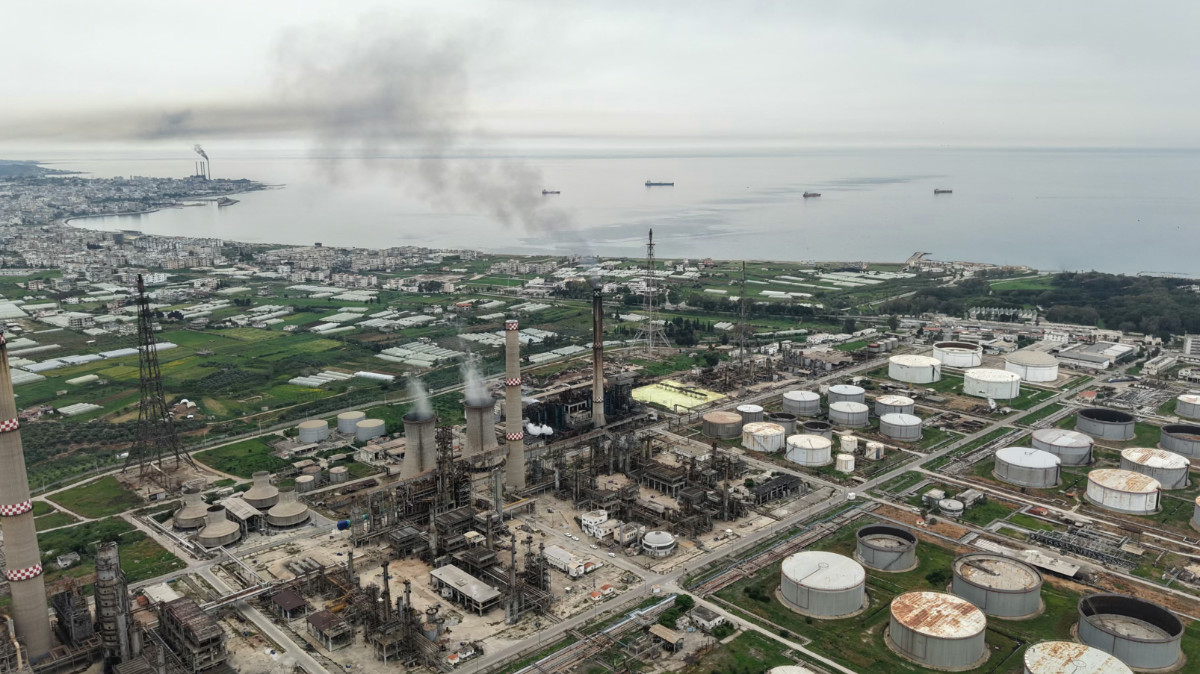
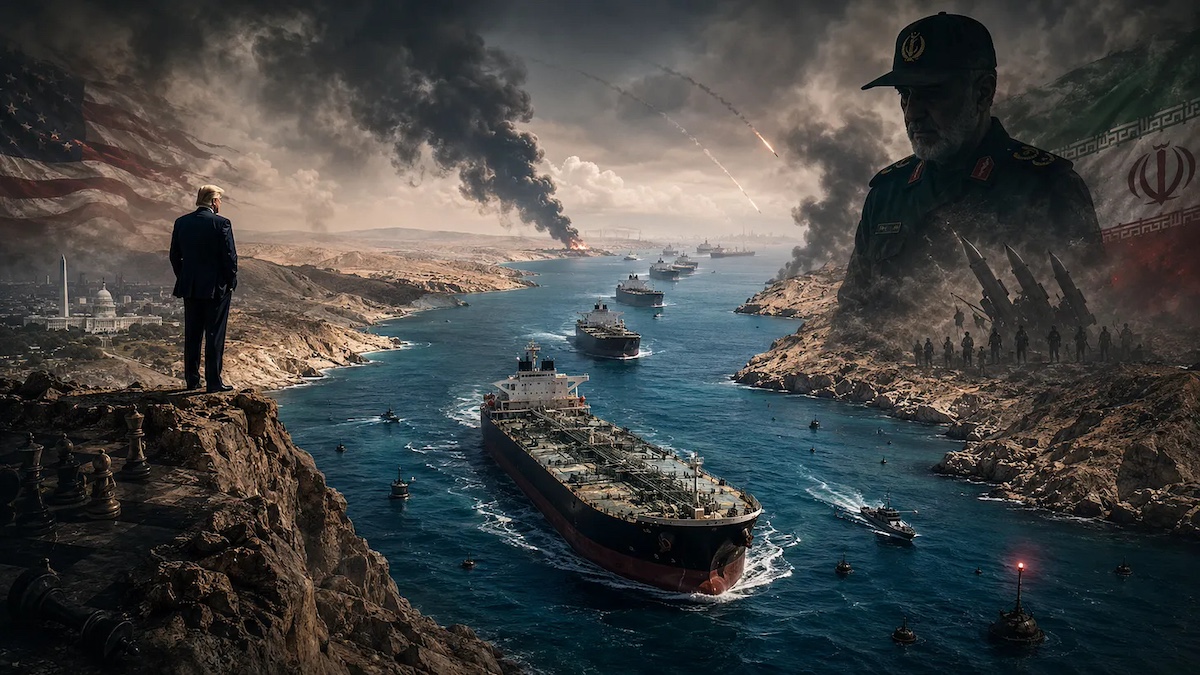
    The long-running maritime standoff in one of the world’s busiest strategic waterways took a new turn this week, as two commercial vessels bound for Iranian ports successfully completed a transit through the Strait of Hormuz despite a sweeping U.S. blockade designed to cut off seaborne traffic to and from the Islamic Republic, according to a new report from leading British shipping industry outlet Lloyd’s List.

    The U.S. military confirmed just this Tuesday that it has deployed over 10,000 troops to carry out the blockade order, which applies to all vessels seeking to enter or depart Iranian ports regardless of their flag or country of origin. In response to this enforcement, shipping observers have documented a growing pattern among vessels targeting Iranian ports: altering their publicly broadcast Automatic Identification System (AIS) destination data to obscure their final intended stop before moving through the strait.

    Per Lloyd’s List’s on-the-ground industry tracking, the two Iran-flagged container ships in question originally set their AIS transponders to indicate a final destination of Bandar Abbas, Iran’s key southern commercial and military port on the Persian Gulf. Shortly after the U.S. blockade entered into force, the vessels updated their AIS destination to the far broader, less specific label “PG Ports” — short for Persian Gulf ports — hiding their specific intended endpoint from general tracking systems. After the ships cleared the Strait of Hormuz without incident, they reoriented their course directly toward Bandar Abbas and continued their journey on Tuesday, the report confirmed.

    Maritime analysts cited in the report note that this common adaptive tactic creates new, unplanned complications for the U.S. blockade’s implementation. By obfuscating their final destinations via AIS adjustments, vessels force U.S. intelligence and surveillance operations to expend far more resources to track and confirm the actual destinations of Persian Gulf-bound traffic, extending the intelligence gathering phase of the blockade and slowing interdiction efforts.

    The Strait of Hormuz remains one of the most critical chokepoints for global energy trade, with roughly a fifth of the world’s total oil consumption passing through the waterway each day. The new development highlights growing frictions between U.S. sanctions and blockade enforcement and commercial shipping operators seeking to maintain trade links with Iran, raising new questions about the long-term effectiveness of the U.S. measure.

  • China activates its largest scientific intelligent computing cluster

    China activates its largest scientific intelligent computing cluster

    ZHENGZHOU, April 15 — China has officially brought its largest-scale scientific intelligent computing cluster into full operation this Tuesday, hosted at the core node of the country’s national supercomputing network in the central Chinese province of Henan, state broadcaster China Media Group (CMG) has announced.

    The launch of this infrastructure marks a landmark breakthrough in China’s development of computing power systems tailored for artificial intelligence-powered scientific research, and is set to cement the country’s leading position in the fast-growing field of industrial AI applications.

    The core node first entered trial operation back on February 5, initially equipped with more than 30,000 domestically manufactured AI accelerator chips. By the time of its official launch on Tuesday, that number has doubled to 60,000 units of locally produced chips, according to CMG’s report.

    Unlike many existing computing facilities that rely on imported core components, this new core node has built a fully integrated, accessible, and entirely domestically developed technological ecosystem that unifies data storage, computing power, algorithm models, and real-world applications. It aggregates a wide range of standardized datasets, development tools, and over thousands of open-source large models, creating an environment that supports rapid deployment of new research projects and accelerates iterative development.

    One of the most user-centric innovations of the new supercomputing platform is its simplified workflow design. Instead of requiring researchers to handle complex software configuration and cumbersome IT management processes, the platform allows users to input their research requirements directly in natural language. An automated super scientific computing agent then takes over: it breaks down large-scale tasks into manageable sub-tasks, calls matching pre-trained models, dynamically schedules available computing resources, and delivers complete end-to-end research results. This streamlined process drastically cuts down the time required to complete complex research projects, removing major technical barriers for smaller research teams and industry users.

    Officials and developers behind the project note that the infrastructure will maintain an open development model moving forward, designed to cover all application scenarios across both basic scientific research and commercial industrial sectors, while providing low-threshold, user-friendly services for researchers and enterprises across the country. Experts quoted in the CMG report project that this new computing cluster will help China unlock more groundbreaking advancements in general and scientific AI, and secure an early competitive edge in the global race for next-generation artificial intelligence technology.

  • War with the United States draws attention to Iran in Group G

    War with the United States draws attention to Iran in Group G

    As the 2026 FIFA World Cup hosted in North America approaches, Group G has emerged as one of the tournament’s most talked-about sections, melding on-pitch athletic competition with off-field political, social and cultural tensions. The four-team group brings together Iran, Belgium, Egypt and New Zealand, each carrying distinct narratives, challenges and aspirations ahead of their opening fixtures.

    Iran, which has qualified for its fourth consecutive World Cup and seventh overall appearance, has never progressed past the group stage in the tournament’s history. Currently sitting 21st in the global FIFA rankings under head coach Amir Ghalenoei — a former Iranian international player — the side lost just one match during its Asian qualifying campaign, marking it as a competitive dark horse in the group. Led by star captain and striker Mehdi Taremi, who has notched an impressive 57 goals across 102 senior national team caps and currently plies his trade at Greek club Olympiacos after successful stints at Porto and Inter Milan, Iran also boasts experienced midfielder Alireza Jahanbakhsh, who plays his club football in Belgium’s top flight.

    However, Iran’s participation has been marked by controversy from the outset, exacerbated by long-running geopolitical tensions between Iran and the United States, one of the World Cup host nations. Back in March, Iran’s embassy in Mexico City confirmed the country was in negotiations with FIFA to relocate its three group-stage matches to Mexican venues, though the global governing body has repeatedly stated all fixtures will proceed as originally planned on U.S. soil. Iran has also faced international backlash over its stance on LGBTQ+ rights: the team’s June 26 fixture against Egypt in Seattle is scheduled for the same weekend as the city’s annual Pride celebration, which honors the LGBTQ+ community. Both Iran and Egypt have formally complained to FIFA over the “Pride Match” label applied to the fixture, citing religious and cultural objections. Human rights organizations have also highlighted that same-sex relations carry harsh penalties in Iran, including capital punishment.

    Earlier this year, Iranian players made a political gesture of their own ahead of a March friendly against Nigeria: during the playing of the national anthem, squad members carried small pink and purple backpacks to pay tribute to victims of a February missile strike on an Iranian elementary school, which multiple lines of evidence indicate was carried out by a U.S. missile. In a logistical quirk, Iran is set to host its pre-tournament training camp in Tucson, Arizona, and will kick off its World Cup campaign against New Zealand in Inglewood, California, just outside Los Angeles.

    Group G’s clear favorite is Belgium, which is making its 15th World Cup appearance. The Red Devils earned their best-ever tournament finish with a third-place showing at the 2018 World Cup in Russia, but suffered a shock early exit in 2022, failing to advance from their group. Currently guided by head coach Rudi Garcia, Belgium demonstrated their strength earlier this year with a dominant 5-2 win over the United States on American soil in March, cementing their status as the top-ranked side in Group G.

    Belgium’s squad blends breakout young talent and veteran experience: 2024 Champions League winner Jeremy Doku of Manchester City is one of the team’s most exciting rising stars, while veteran playmaker Kevin De Bruyne — recently traded to Napoli — returns for his fourth World Cup after recovering from a thigh injury. De Bruyne has scored 36 goals across 117 caps for the Belgian national side. A major question mark hangs over star striker Romelu Lukaku, however, who has been sidelined for months with a hamstring injury, and his availability for the tournament remains unconfirmed. Belgium opens its World Cup campaign against Egypt in Seattle on June 15.

    For Egypt, this year’s tournament marks their fourth World Cup appearance overall, and the North African side is still chasing its first-ever win at the global tournament. Their last showing in 2018 was defined by a crushing injury blow to their star captain Mohamed Salah, who missed the opening fixture after picking up a shoulder injury in the UEFA Champions League final. This year, Salah is once again the center of attention: after nine trophy-laden seasons with Liverpool, the winger has confirmed he will leave the Premier League side at the end of the current season, leading to widespread speculation about his next club move in the lead-up to the World Cup. The side is managed by Egyptian legend Hossam Hassan, the country’s all-time leading scorer with 69 international goals. Egypt’s preparations have not been smooth: a March friendly against Spain that ended in a credible 0-0 draw was marred by anti-Muslim chants from a section of the crowd, while Salah missed the fixture with a minor muscle injury sustained in a Champions League match against Galatasaray.

    Rounding out Group G is New Zealand, ranked 85th in the world — the lowest ranking of any team in the group. The All Whites, led by head coach Darren Bazeley who has held his role since 2022, are making just their third World Cup appearance after qualifying for the tournament in 1982 and 2010. Like Iran, New Zealand has never advanced past the group stage of a World Cup. The side is captained by striker Chris Wood, who has scored 45 goals for his country, but the Nottingham Forest forward missed five months of club action in the English Premier League with a long-term injury and is still working to regain full match fitness ahead of the tournament. As the tournament draws near, all eyes will be on Group G to see how off-field tensions intersect with on-pitch competition, and which side can claim one of the two knockout stage spots up for grabs.

  • Japan’s record budget raises fiscal concerns

    Japan’s record budget raises fiscal concerns

    In early 2026, Japan’s Sanae Takaichi administration passed a historic record-breaking national budget that has quickly become a flashpoint of controversy, drawing sharp criticism from economic experts, public protesters and policy analysts over its dramatic ramp-up in defense outlays and growing reliance on debt financing.

    The controversial budget, which lifts Japanese defense spending from its long-held cap of roughly 1% of gross domestic product to the 2% threshold the ruling party pledged years earlier, has sparked fears of cascading risks for both the country’s already strained public finances and regional geopolitical stability. Compounding these concerns is the global energy volatility triggered by ongoing Middle Eastern conflict, which has pushed Japan — a nation almost entirely dependent on fossil fuel imports — into a doubly vulnerable position, raising the stakes for fiscal management.

    Shinjiro Hagiwara, emeritus professor of economics at Yokohama National University, warned that the Takaichi administration is already confronting severe gaps in available fiscal resources. Beyond long-running structural pressures, including Japan’s aging population and decades of stagnant growth, the sharp spike in defense spending has forced the government to turn increasingly to large-scale government bond issuances to cover its new expenses. This growing debt dependency has already moved financial markets, Hagiwara noted, with bond prices sliding and long-term interest rates climbing — trends that will put additional downward pressure on Japan’s fragile economic expansion. Most alarmingly, he argued, the government has fallen into a dangerous cycle of issuing new debt to cover payments on existing older obligations, a trajectory that is unsustainable long-term.

    Hagiwara also pointed to a deeply concerning parallel with Japan’s pre-World War II history: in that era, the Bank of Japan similarly absorbed large volumes of government bonds to fund military expansion, a policy path that ultimately ended in catastrophic war, national defeat and crippling hyperinflation. “This history cannot be repeated,” he emphasized, warning that allowing the administration’s hawkish policy agenda to advance without checks would carry catastrophic consequences for Japan and the broader region.

    Hiroshi Onishi, emeritus professor at Tokyo’s Keio University and vice-chairman of the World Association for Political Economy, echoed these warnings, noting that the risks of loosening long-standing constraints on government bond issuance are widely recognized by both economists and the Japanese public. Yet those guardrails have been steadily eroded in recent years, he said, pointing to the current Takaichi administration as a clear example of this trend. Onishi warned that if defense spending continues to climb to a projected 3.5% of GDP in coming years, the reallocation of public resources will sharply erode household disposable income and weaken Japan’s overall long-term economic strength, a shift he opposes outright.

    The expansion of defense spending has also been enabled by a long-standing policy where the Bank of Japan, the country’s central bank, holds a large share of newly issued government bonds, with a growing portion of the proceeds channeled directly to the domestic defense industry. Hagiwara stressed that this policy framework carries extraordinary risks that demand far more public scrutiny and caution.

    Public pushback against the budget and the administration’s hawkish agenda has grown rapidly across Japan. On the evening of April 8, an estimated 30,000 demonstrators gathered outside the national parliament building in central Tokyo to protest the Takaichi administration and the ruling Liberal Democratic Party’s plans to expand military capacity and revise Japan’s post-war pacifist constitution. According to Kyodo News, simultaneous protest actions were held at more than 160 locations across all of Japan’s prefectures, signaling broad grassroots opposition to the government’s current policy direction.

    Beyond fiscal and military risks, the ongoing energy crisis tied to Middle East tensions has added a new layer of urgency to Japan’s challenges. Over the past two to three years, prices across Japan have risen steadily, driven primarily by climbing energy and raw material costs, explained Jusen Asuka, emeritus professor at Tohoku University. Asuka noted that broad-based commodity price hikes could see additional increases of several percentage points in the coming months, fueled by persistent supply chain disruptions.

    He also warned that the current energy volatility could mirror the chaos of the 1970s oil crisis, when panic buying led to widespread shortages of essential consumer goods. This time around, Asuka said, critical medical supplies face the greatest risk: disruptions to naphtha imports could lead to severe shortages of single-use medical goods, including disposable gloves used in routine clinical care. As of the end of 2024, Japan is home to roughly 340,000 patients dependent on regular dialysis treatment, and Japanese media reported earlier this month that dozens of medical institutions have raised alarms that shortages of dialysis-related consumables could directly put thousands of patients’ lives at risk.

    In response to growing public pressure over energy costs and supply security, Prime Minister Takaichi announced on April 10 that the government will release a second batch of national oil reserves in early May to ease supply pressures. The upcoming release is projected to cover roughly 20 days of domestic oil demand. It follows a much larger release that began on March 16, which totaled approximately 80 million barrels — equal to 45 days of domestic consumption, and the largest strategic reserve release in Japan’s modern history. Since March 19, the government has also implemented subsidies for domestic oil wholesalers to cap rising retail gasoline prices, but independent analysts warn that the cost of these ongoing subsidies will add even more strain to the country’s already stretched national budget, worsening the core fiscal risks experts have flagged.

  • Excess supply lowers prices of blueberries

    Excess supply lowers prices of blueberries

    Once considered a premium luxury item reserved for special occasions, blueberries have quickly become an accessible everyday snack for Chinese consumers, driven by a massive expansion in domestic cultivation that has flooded the market and pushed prices sharply downward. This price shift has not only reshaped consumer access to the popular fruit but also underscored China’s rapid ascent to become the world’s top blueberry producer, while creating new conversations about future industry innovation and growth.