BANGKOK, Associated Press – As diplomatic tensions simmer between the world’s two largest economies ahead of a planned high-level summit, China unveiled a suite of targeted countermeasures against the United States on Wednesday, responding directly to a series of recent restrictive actions rolled out by the Biden administration. The retaliatory package includes new export controls on drone technology and a formal trade ban targeting six U.S.-based entities, marking a sharp escalation in the ongoing bilateral economic and geopolitical standoff.
The rising friction comes even after earlier signs of detente: during Chinese President Xi Jinping’s May meeting with U.S. President Donald Trump in Beijing, the two leaders reached tentative consensus that was meant to ease strained ties, ahead of Xi’s expected official visit to the U.S. this September. Even so, recent unilateral actions from Washington have pushed Beijing to respond in kind, Chinese officials confirmed.
According to a statement released by China’s Ministry of Commerce, the latest countermeasures are a direct response to two recent U.S. actions: first, a ban on imports of Chinese drones issued by the U.S. Federal Communications Commission, and second, the addition of 43 Chinese firms to the Uyghur Forced Labor Prevention Act Entity List by the U.S. Department of Homeland Security, a move that blocks imports of goods produced by those companies into the U.S.
The Commerce Ministry emphasized in its statement that Washington’s recent steps “seriously violate the important consensus reached by the two heads of state and severely damage China’s legitimate rights and interests.” The statement added that “China has no choice but to take necessary countermeasures in response,” while noting that Beijing has exercised deliberate restraint throughout the escalation. Beijing has called on Washington to immediately reverse its restrictive measures against Chinese entities and abandon what it calls its “erroneous practices.” The ministry also issued a clear warning: further retaliatory steps will be implemented if the U.S. rolls out any new restrictive policies targeting China.
Under the new drone export rules, Beijing now requires case-by-case security reviews for all exports of unmanned aerial vehicles, their core components, and related dual-use technologies that can be adapted for both civilian and military applications.
Six U.S. entities are barred from all trade and commercial dealings with Chinese entities, including New York-based biotechnology firm Applied DNA Sciences, Inc. and the non-governmental organization Human Rights in China. A seventh U.S.-based firm, Compliance Testing LLC, was also banned from operating in China; the Commerce Ministry stated that the company collaborated with the FCC on actions that “harm China’s sovereignty and security.”
In a separate regulatory move, China’s State Administration for Market Regulation announced that U.S.-based firms that conduct on-site factory inspections for China’s mandatory CCC (China Compulsory Certificate) safety certification will no longer be authorized to provide these services. CCC certification is required for all electronic products sold in the Chinese market to confirm they meet national safety standards, meaning U.S. electronics manufacturers seeking access to the Chinese market will now be required to hire third-party auditors based outside the U.S., or work with non-U.S. designated certification bodies.
The Commerce Ministry also revealed it has launched a national security probe into imported printing software and office equipment, though it declined to name specific companies affected by the investigation.
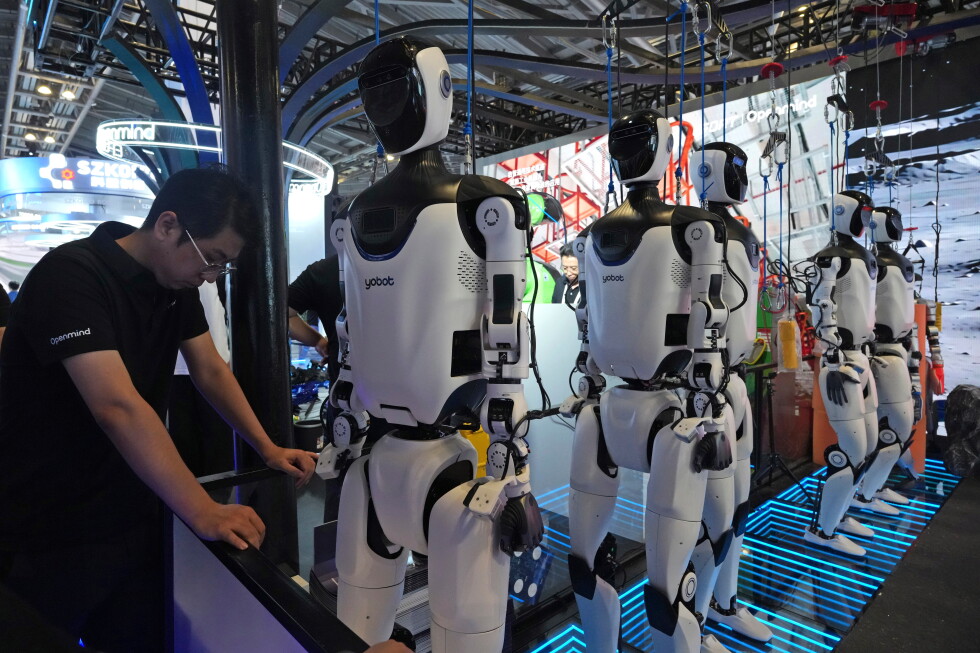
The latest escalation follows a series of recent U.S. restrictions targeting Chinese tech imports: In December 2024, the U.S. FCC implemented a ban on new Chinese drone imports, later revising the rule to allow a small number of specific models to enter the country. Just last week, the FCC also issued new import bans on foreign-made humanoid robots and power inverters, citing unaddressed national security risks – a policy that is widely understood to primarily target Chinese manufacturing exports.
The report was contributed by Leung from Hong Kong.