标签: Asia

亚洲

  • How Iranian monarchists have targeted anti-war activists

    How Iranian monarchists have targeted anti-war activists

    Across Western diaspora communities, Iranian dissidents who speak out against foreign military intervention in Iran and express solidarity with Palestine are facing an escalating, coordinated campaign of violence and harassment, perpetrated by pro-monarchist Iranian opposition groups with ties to far-right and pro-Israel actors. The pattern of abuse, enabled by inadequate law enforcement responses, has already resulted in a fatal stabbing in Canada and a non-fatal attack in the UK, leaving dozens of activists living in constant fear for their safety.

    Arjang Alidai, an Iranian-British engineer based in Greater Manchester, is one of dozens of activists who have been targeted in recent months. Alidai became a marked figure after he participated in the 2024 Iranian presidential election – a vote that many anti-government Iranian exiles boycotted, and which they frame as complicity with the current Islamic Republic government. His activism at anti-war rallies in support of Gaza and against a US-Israeli military strike on Iran has only intensified the abuse. He has received hundreds of grotesque threats, including the chilling line: “We’re going to find you, we’re going to rape you, we’re going to kill you.”

    Alidai told Middle East Eye that the intimidation campaign became relentless after large-scale protests erupted inside Iran this past January. Pro-monarchist counter-protesters regularly harass him at public demonstrations, hurling accusations of treason and personal, sexualized abuse. Monarchist-linked social media accounts have published his personal information, forcing him to shut down all his public online profiles. He has even received death threats via phone calls from untraceable international numbers. After reporting the full scope of abuse to Greater Manchester Police, the only guidance officers offered was to close his social media and change his phone number – a response Alidai calls deeply disappointing. “I’ve had to keep looking over my shoulder,” he said.

    Alidai’s experience is far from an isolated case. Ghazal Diani, an Iranian tech startup founder and anti-war activist, says she has received online threats to track her down and stab her, wiping her out entirely. At one recent anti-war demonstration, she said a monarchist counter-protestor directly threatened to stab her in person. Many of the insults targeting Diani are explicitly misogynistic, she added, and she no longer dismisses the threats as empty words. “At the beginning you think these are just words and don’t take it seriously, but these things can escalate. I genuinely feel scared,” Diani said. She reported the threats to London’s Metropolitan Police, but was told investigators would only open a case if a violent attack actually occurred.

    That “something more serious” Diani and police warned about has already happened. On April 22, Mohammed Reza, an Iranian father of two who was demonstrating against war on Iran outside London’s Downing Street, was stabbed multiple times by an Iranian-origin counter-protestor. Reza, who had previously faced repeated verbal and physical abuse in public, survived the attack, but the incident underscored the lethal danger the harassment campaign has created.

    To understand the ideological roots of this violence, experts point to the core ideology of the Iranian monarchist movement, which positions itself as the ideological opposite of the Islamic Republic that ousted the Pahlavi dynasty in the 1979 Islamic Revolution. Monarchists identify as secular nationalist, drawing heavily on imagery and language from Iran’s pre-Islamic history, often referring to themselves as “Children of Cyrus” after the ancient Achaemenid Empire founder. At rallies, they fly the historic lion and sun flag that served as Iran’s national standard under the shah.

    The movement is led by Reza Pahlavi, son of the last shah of Iran, whose dynasty built an ideology rooted in de-Islamicization and alignment with Western powers. Reza Shah, who founded the Pahlavi dynasty in 1925, launched a widespread campaign to remold Iranian national identity around pre-Islamic heritage, banning traditional Muslim practices, forcing women to abandon hijabs, and spreading state propaganda that blamed Arab conquests for Iran’s national decline. Reza Zia-Ebrahimi, a reader in the history of nationalism and race at King’s College London, describes this ideology as “dislocative nationalism.”

    “It is derived from European colonial ideas and aims to dislodge Iran from its objective reality as a Muslim country in the Middle East, and rather reimagines it as some kind of lost European nation where people who speak Indo-European languages become connected via the Aryan race theory,” Zia-Ebrahimi explained. “It is fundamentally Islamophobic and embraces colonialism and western hegemony.”

    This ideological framework explains why many monarchists actively support Western military intervention and sanctions against Iran, and back Israel’s military campaign in Gaza. “It stems from the fact that Palestinians are Arabs, and monarchists view Arabs as responsible for their downfall because they brought Islam to Iran,” Zia-Ebrahimi said.

    In recent months, the movement has increasingly targeted Iranian Muslim community spaces across the UK. Clashes have broken out outside the Islamic Centre of England, a London-based Shia institution linked to Tehran, and outside Birmingham’s Imam Reza Cultural Centre, where monarchists gathered for successive nights to hold loud, disruptive counter-protests during a public mourning ceremony following the death of Ayatollah Khamenei in February.

    A defining feature of the modern Iranian monarchist movement in diaspora is its formal, institutional alliance with pro-Israel groups and Western far-right actors, whose ideologies reinforce one another. At monarchist rallies, the lion and sun flag is often displayed alongside Israeli flags and British far-right St George’s Cross banners, with protesters chanting openly anti-Muslim slogans. High-profile Western far-right and pro-Zionist figures, including pro-Israel campaigner Mark Birbek, Campaign Against Antisemitism director Gideon Falter, and British far-right activist Tommy Robinson, have all appeared at monarchist events.

    Zia-Ebrahimi confirmed that this alliance has become fully formalized and institutionalized, and that the campaign targeting anti-war Iranians is part of a broader coordinated effort. “There has been a lot of Israeli investment in amplifying monarchist messaging on diaspora news channels and on social media, where they create an army of bots that attack, insult and intimidate alternative Iranian voices,” he said.

    In recent weeks, footage has emerged of monarchist activists marching through British cities clad in black, flying flags associated with the Savak – the brutal, notorious secret police force of the Pahlavi era that imprisoned and tortured thousands of political dissidents. Zia-Ebrahimi warned that what once seemed like a fringe movement is growing into a far more dangerous threat, emboldened by open backing from mainstream Western political figures. “Before we were dealing with a bunch of clowns, but now it is turning into something far more dangerous,” he said.

    The lethal potential of this rising extremism was demonstrated earlier this year in Canada, where Masood Masjoodi, an Iranian-Canadian university professor and public critic of both the Islamic Republic and Reza Pahlavi, was murdered. Two individuals with known ties to the monarchist movement, who had previously targeted Masjoodi with harassment, have been charged with his killing. Samira Mohyeddin, an Iranian-Canadian journalist and founder of On The Line Media, said Masjoodi repeatedly warned authorities he was under threat for months before his death – a failure that underscores how seriously the movement is being overlooked.

    “There are a lot of us being threatened on a daily basis, and unfortunately our police don’t do anything until something happens to someone,” Mohyeddin said. She added that community organizers have heard rumors of monarchist groups drawing up target lists of people they deem acceptable to attack. Mohyeddin warned that without urgent intervention to rein in the movement, violence will only escalate. She drew a parallel between the group’s authoritarian rhetoric and 20th-century fascist movements, noting that chants of “One flag, one leader one country” mirror slogans used by the Nazi regime.

    “Going down this path has nothing to do with liberty, justice, freedom, equality – we’re heading towards another kind of fascism that is very dangerous, and I think we’ll see a very hardcore group of people escalate even further,” she said.

  • Fifa Congress: Infantino tried to stage an Israel-Palestine handshake. He failed

    Fifa Congress: Infantino tried to stage an Israel-Palestine handshake. He failed

    At FIFA’s annual global congress held in Vancouver on Thursday, a staged gesture of reconciliation orchestrated by FIFA President Gianni Infantino devolved into a high-profile public standoff, drawing fierce backlash across global sports and human rights circles. Infantino had invited both Jibril Rajoub, president of the Palestinian Football Association, and Basim Sheikh Suliman, vice president of the Israel Football Association, onto the main stage, gesturing for Rajoub to approach his Israeli counterpart for a public handshake and photo opportunity. What followed exposed the deep, unresolved political tensions that have long plagued regional soccer governance, and renewed scrutiny of Infantino’s controversial approach to Middle East politics. After a brief, heated exchange with the FIFA leader, Rajoub declared, “We are suffering,” before stepping off the stage, stopping only to share an amicable hug with Infantino before exiting. In an immediate explanation of Rajoub’s refusal, Palestinian FA Vice President Susan Shalabi told Reuters that Rajoub told Infantino he cannot “shake the hand of someone the Israelis have brought to whitewash their fascism and genocide.” The incident came directly after Rajoub used his allotted speaking time at the congress to deliver a blistering rebuke of FIFA’s recent decision to reject sanctions against Israel over Israeli football clubs operating in illegal Israeli settlements in the occupied West Bank. Shalabi emphasized that forcing a handshake immediately after Rajoub’s speech completely undermined the core message of his address. “He spent 15 minutes trying to explain to everyone how the rules matter, how this could easily become a precedent where the rights of member associations are violated with impudence, and then we’ll just wrap this under the carpet. It was absurd,” Shalabi said. Speaking publicly after the incident, Rajoub – a long-time Fatah politician who has been repeatedly detained by Israeli authorities – acknowledged the value of sportsmanship, but drew a clear line at engaging with a representative of what he called a criminal Israeli administration. “If the other side is representing a criminal like Bibi [Israeli Prime Minister Benjamin Netanyahu] and speaking on behalf of Bibi as if Bibi is Mother Teresa, how can I shake hands or have a photo with such a man?” Rajoub asked. Infantino, who used the Vancouver congress to officially announce his candidacy for a third term as FIFA President next year, attempted to frame the failed gesture as a step toward progress. “We will work together, President Rajoub, Vice President Suliman. Let’s work together to give hope to the children. These are complex matters,” he told delegates after Rajoub’s exit. Reactions to Infantino’s move online were overwhelmingly critical, with many observers labeling the attempt tone-deaf, cynical, and a dangerous trivialization of ongoing human suffering in Gaza. Amnesty UK’s Kristyan Benedict posted a sarcastic rebuke on social media platform X, writing, “Why can’t they just get along…..with genocide, apartheid, and an ever expanding occupation?” Sports journalist Leyla Hamed echoed that criticism, noting, “Gianni Infantino treating genocide like it can be solved with a handshake and a camera. There’s something deeply unsettling about seeing such horror reduced to nothing more than optics.” Other commentators slammed the moment as a failed act of performative soccer diplomacy, accusing Infantino of staging the moment to boost his own public image and cast himself as a global peacemaker ahead of his re-election bid. “Dreaming of the Nobel Peace Prize himself, Infantino sought to stage a handshake between the Israeli and Palestinian federations at the Fifa annual Congress. Complete failure of his ‘soccer diplomacy’ and irritation from the Palestinian president, Jibril Rajoub,” French sports journalist Romain Molina posted on social media. This incident is far from the first time Infantino has faced widespread criticism over his handling of Israel’s military campaign in Gaza. UN experts and Palestinian and global human rights activists have repeatedly called for FIFA to suspend Israel from the international governing body, pointing to the same precedent FIFA set when it suspended Russia from all international competition following its 2022 full-scale invasion of Ukraine. Infantino has also drawn condemnation for other controversial political moves in recent months, including awarding the first-ever FIFA Peace Prize to former U.S. President Donald Trump during the 2026 World Cup draw in December. FIFA has repeatedly defended the award as an apolitical gesture, but human rights groups across the globe uniformly condemned the decision. In the days leading up to the Vancouver congress, the Norwegian Football Association called on FIFA to abolish the new prize entirely to avoid dragging the governing body into partisan political disputes. Australian men’s national team player Jackson Irvine argued that decisions like the Trump Peace Prize award have severely eroded FIFA’s claimed credibility as a force for global good. “As an organisation, you would have to say decisions like the one that we saw awarding this peace prize make a mockery of what they’re trying to do with the human rights charter,” Irvine told Reuters.

  • Starmer accused of ‘weaponising’ Golders Green attack to target pro-Palestine protests

    Starmer accused of ‘weaponising’ Golders Green attack to target pro-Palestine protests

    A violent stabbing incident targeting two Jewish men in a majority-Jewish northwest London neighborhood has ignited a fierce national debate in the United Kingdom over the intersection of pro-Palestine protest rights, rising antisemitism, and political opportunism. The attack, which left a 34-year-old and a 76-year-old injured, prompted Prime Minister Keir Starmer to deliver a nationally televised address that immediately drew sharp criticism from civil liberties campaigners, opposition politicians, and pro-Palestine organizers.

    Following the attack, a 45-year-old Somali-born British national named Essa Suleiman was taken into custody just hours after the stabbing. Channel 4 News later confirmed that Suleiman had been discharged from a psychiatric facility only days before the incident. On Friday, London’s Metropolitan Police formalized charges against him: two counts of attempted murder and one count of illegal public possession of a bladed weapon. Notably, no terrorism-related charges have been filed, despite widespread early speculation. Additional court documents seen by the BBC also reveal Suleiman is accused of attempting to murder a third man, Ishmail Hussein, an acquaintance of 20 years, on the same morning as the Golders Green attack. Records also show Suleiman was referred to the UK’s controversial Prevent counter-extremism programme back in 2020.

    An obscure little-known online faction calling itself Harakat Ashab al-Yamin al-Islamia (Hayi) quickly issued a statement claiming responsibility for the attack. The unsubstantiated claim has not been verified by any British law enforcement body, and no evidence has emerged to connect Suleiman to the group, or to explain how a mentally ill man recently discharged from hospital could have received operational direction from the faction. Hayi has issued a string of similar uncorroborated claims for attacks across Europe over the past two months. While the Israeli government has alleged the group has ties to Iran, British investigators have not confirmed any such link, though they confirm the connection is being probed.

    In his national address, Starmer drew direct connections between widespread pro-Palestine marches across the UK and the recent surge in antisemitic violence, arguing that any protester who participates in a march where the slogan “globalise the intifada” is used is effectively endorsing terrorism against Jewish people, and that anyone using the phrase should face prosecution. He doubled down on the claim, adding that protesters who march alongside people displaying paraglider images—an reference to the October 7, 2023, Hamas attack on Israel—without speaking out are glorifying the murder of Jewish people. Three women were convicted of a terror offense earlier this year for displaying paraglider images at an early October protest, though officials confirm such displays are extremely rare at pro-Palestine gatherings. To date, there are no recorded instances of an antisemitic attack in the UK linked to the “globalise the intifada” slogan. Even so, UK police forces moved in December to authorize arrests for anyone chanting or displaying the phrase, and three pro-Palestine protesters were charged on counts related to the slogan in January.

    As of this week, the Metropolitan Police confirmed it is reviewing a proposed full ban on upcoming pro-Palestine demonstrations, including a major rally planned in London for May 16, organized by the Stop the War Coalition to mark Nakba Day—the annual commemoration of the 1948 displacement of over 750,000 Palestinians from their ancestral lands. Jonathan Hall, the UK’s independent reviewer of terrorism legislation, further escalated the conversation this week by calling for a full moratorium on all ongoing pro-Palestine marches, arguing that such events inevitably incubate antisemitic and anti-Jewish rhetoric.

    Political and activist leaders have pushed back fiercely against these moves, condemning what they describe as the cynical weaponization of a violent attack to erode fundamental civil liberties and target the pro-Palestine movement. Zack Polanski, leader of the Green Party of England and Wales and the only Jewish leader of a major UK political party, accused Starmer’s government of exploiting the pain of the Jewish community for political gain. “I suffer antisemitic abuse every single day. For other politicians to use antisemitism as a political football, especially after these appalling attacks, is utterly appalling and should be beneath them,” Polanski said, adding that any response to the stabbings that cuts away at civil rights is inherently wrong.

    Pro-Palestine organizers have repeatedly rejected claims that the slogan “globalise the intifada” is antisemitic or a call for violence, noting that the Arabic term “intifada” translates directly to “uprising” or “shaking off occupation,” not a targeted campaign against Jewish people. They also point out that British Jews have been among the most visible and consistent participants in pro-Palestine marches across the country. The Stop the War Coalition, which is organizing the upcoming Nakba Day rally, issued a statement unequivocally condemning the Golders Green stabbing and all forms of antisemitism, but rejected any attempt to tie the attack to peaceful pro-Palestine protest. “These marches are supported by many Jewish people who attend. They are not the ‘hate marches’ described by right-wing politicians but expressions of solidarity and support for those under attack,” the coalition said. Jeremy Corbyn’s left-wing group Your Party echoed the criticism, saying politicians are “weaponising the abhorrent stabbings to take away our civil liberties and baselessly attack the Palestine movement.”

    UK officials confirm there has been a major, documented surge in antisemitic hate crimes across the country in recent months, including multiple arson attacks and dozens of antisemitic incidents investigated by the Metropolitan Police in just the past 30 days. The ongoing controversy comes as the UK government struggles to balance growing concerns over antisemitic violence with long-standing protections for freedom of speech and peaceful protest, a balance that has become increasingly fraught amid the Israel-Gaza war.

  • US criticises allies over failure to stop Gaza aid flotilla

    US criticises allies over failure to stop Gaza aid flotilla

    Tensions between the United States and its European allies have escalated sharply in recent days, after Washington publicly blamed its partners for failing to block a Gaza-bound humanitarian aid flotilla that Israeli naval forces intercepted and seized in international waters earlier this week.

    On Wednesday, Israeli commandos seized at least 21 vessels participating in the aid mission, detaining 175 activists on board. Organizers with the Global Sumud Flotilla, the coalition behind the effort, have labeled the interception an outright act of piracy carried out in neutral international waters.

    One day after the raid, State Department spokesperson Tommy Pigott released a formal statement dismissing the flotilla as a “baseless, counterproductive stunt”. Pigott argued that the mission bypassed existing official channels designed to deliver humanitarian support to Palestinian civilians in Gaza, and said the Biden administration expects allied nations to take “decisive action” against vessels involved in the effort. That action, he specified, includes blocking access to ports, denying docking privileges, prohibiting departures from allied territories, and refusing refueling services to participating ships.

    “The United States will explore using available tools to impose consequences on those who provide support to this pro-Hamas flotilla and supports our allies’ legal actions against [it],” Pigott added.

    The U.S. rebuke comes as growing rifts have emerged between Washington and its European partners over U.S. and Israeli policy in the Middle East, particularly amid escalating tensions with Iran. According to a recently leaked internal Pentagon email, the U.S. government threatened last week to punish NATO member states that refuse to back the U.S.-led campaign against Iran, and even considered expelling Spain from the alliance over Madrid’s public opposition to the conflict. The same email also revealed U.S. officials have floated recognizing Argentina’s territorial claims over the Falkland Islands, a move that would directly target the United Kingdom for what Washington claims is insufficient support for its Iran policy.

    The U.S.-led “Board of Peace”, a body created by the Trump administration to oversee a new governing framework for Gaza, also issued a public statement on the social platform X condemning the aid flotilla. The organization dismissed the effort as “performative love-boat activism”, and called on critics of Israeli policy to instead redirect pressure toward Hamas. In the same statement, the Board claimed it has drastically expanded humanitarian support for Gaza’s civilian population, asserting that three times as many Gaza residents are now receiving food aid compared to previous periods.

    These claims, however, stand in stark contrast to on-the-ground data and reporting from the region. Back in April, the Gaza Government Media Office reported that an average of just 227 aid trucks enter the blockaded strip each day, which amounts to only 37 percent of the daily delivery volume agreed to under the October 2024 ceasefire deal. Despite a U.S.-mediated truce agreement, Israel has continued to tighten entry restrictions on humanitarian aid, leading to a steady decline in food deliveries to Gaza’s 2 million residents. Independent reporting from Middle East Eye has documented widespread fears of imminent famine across the strip, as Palestinians grapple with acute shortages of basic food ingredients, cooking gas, and fuel needed to power homes and medical facilities.

    In response to the Israeli raid and the U.S. criticism of allied inaction, officials from Germany and Italy issued a joint statement expressing “deep concern” over the interception and calling for “full respect of international law” in the incident. The Italian government additionally demanded that Israel immediately release the Italian nationals who were unlawfully detained during the seizure of the flotilla.

  • How Turkey’s new ‘kamikaze’ drones may outclass Iran’s Shahed

    How Turkey’s new ‘kamikaze’ drones may outclass Iran’s Shahed

    Against the backdrop of two consecutive 2025 U.S.-Israeli conflicts with Iran, battlefield performance of Tehran’s Shahed suicide drones has triggered a major shift in Turkish military drone development. With regional tensions rising sharply between Ankara and Tel Aviv — two competing powers vying for Middle Eastern dominance since 2024 — Turkish defense analysts and industry leaders have closely studied Iranian drone tactics, spurring homegrown innovation that aims to outperform Tehran’s existing designs.

    Iran’s Shahed drones have already seen widespread combat use, from Russian operations in Ukraine to Iranian retaliatory strikes against U.S. regional partners and Israeli targets during 2025 conflicts. These deployments have proven the platform’s effectiveness against long-range targets, cementing kamikaze drones as a transformative force reshaping the landscape of modern warfare. In response, multiple Turkish defense contractors, including Skydagger and Turkish Aerospace Industries, launched programs to develop locally produced equivalents. Leading Turkish aerospace firm Baykar has beaten all competitors to market, rolling out three distinct purpose-built kamikaze drone models designed to operate as a coordinated layered attack force.

    Each of Baykar’s new platforms fills a unique niche in the coordinated attack strategy, starting with the largest model, the K2. Capable of carrying a 200-kilogram munition payload, the K2 boasts a 13-hour flight endurance and a 2,000-kilometer operational range, even without reliance on Global Navigation Satellite Systems (GNSS). The drone maps terrain visually to autonomously calculate its position, uses a satellite datalink for precision targeting, and offers a rare flexible design: it can either complete a suicide attack on its target or return to base for future reuse.

    The second platform, the Sivrisinek (meaning “mosquito” in Turkish), made its official public debut just last week. Comparable in payload to Iran’s Shahed-131 — which carries a similar warhead and has a 700 to 900-kilometer range — the Sivrisinek offers a 1,000-kilometer range and carries a warhead weighing just over 20 kilograms. With an extremely low per-unit cost estimated between $25,000 and $30,000, the drone is designed for mass deployment as an expendable battlefield asset. Defense industry sources confirm the Sivrisinek is an updated variant of the YIHA-3, a platform co-developed with Pakistan in 2023 that has already amassed real-world combat experience across Syria, Ukraine, Sudan, and the 2025 Pakistan-India border clashes, giving the new model invaluable battlefield-tested technical refinements.

    Baykar’s newest addition, the Mizrak, unveiled just this Thursday, shares functional similarities with Iran’s widely deployed Shahed-136. Where the Shahed-136 reached a 2,000-kilometer range and 50-kilogram warhead capacity after years of iterative development, the Mizrak enters the field with a 1,000-kilometer range and 40-kilogram payload. Industry analysts note the Mizrak leverages existing technology from Roketsan, Turkey’s leading missile developer, drawing design elements from the company’s proven UMTAS air-to-surface anti-tank missile system.

    All three platforms share key advanced capabilities: they are hardened against electronic warfare interference, can visually identify and lock onto targets without GNSS connectivity, and execute strikes using a combination of on-board artificial intelligence (AI) autonomy and satellite communications. Turkish defense experts argue this sets Baykar’s new fleet apart from Iran’s existing Shahed program, which suffers from key technological limitations.

    “The Iranian UAV programme lacks proven capabilities in AI-based autonomous and network-centric swarm attack skills,” explained Hursit Dingil, an expert on Iranian military capabilities at the Ankara-based Centre for Area Studies. “Furthermore, the Iranian platforms have problems and limitations regarding communication ranges and satellite communication.”

    Dingil noted that Turkey has spent a decade refining its domestic drone industry, building well-established expertise in the very areas where Iran lags behind. “Similarly, the Iranian UAV programme has disadvantages and limitations in terms of precision strike capabilities, advanced electro-optical imaging, and self-location and navigation capabilities,” he added, confirming Turkish defense firms have already mastered these core technologies.

    Baykar’s core innovation does not lie in the individual drones themselves, but in the integrated layered combat strategy the company has designed for the fleet. Early joint flight demonstrations already showed the K2 flying lead patrol missions while Sivrisinek drones operated in coordinated swarms beneath the larger platform. Independent defense industry expert Yusuf Akbaba confirmed all three Baykar kamikaze platforms are designed to share data and coordinate attacks seamlessly, and can even be commanded remotely by Baykar’s already well-known Bayraktar TB2 armed drone.

    A defense source familiar with the program outlined the step-by-step layered tactic for MEE: low-cost Sivrisinek drones would first be deployed in large numbers to saturate enemy airspace and overwhelm critical air defense systems, softening enemy defenses ahead of follow-on strikes. Next, Mizrak drones would eliminate any remaining anti-drone and air defense infrastructure. Finally, the K2, with its large payload capacity, would destroy high-value critical targets left undefended, completing the mission. All phases of the attack can be commanded by a Bayraktar TB2 or other aerial command platform operating well outside the range of enemy defenses.

    Dingil argues that with this new integrated system, Turkey has emerged as a far more competitive actor in the global kamikaze drone market than Iran, noting that the existing Shahed-136 cannot match the capabilities of Turkey’s new hybrid class of autonomous networked drones. Even so, he cautioned that the platform still faces an unproven hurdle: “An important challenge for Turkey is whether the fusion of AI-based autonomous solutions with simple missile-based drones would provide a functional and efficient output in combat conditions or not.”

  • Israel ‘sent advanced laser defence system to UAE’ during Iran war

    Israel ‘sent advanced laser defence system to UAE’ during Iran war

    Against the backdrop of open conflict between the US-Israeli bloc and Iran that has roiled the Persian Gulf since February, new details have emerged of deepening military cooperation between Israel and the United Arab Emirates, the Financial Times revealed in a report published Thursday. Two anonymous sources familiar with the deployment confirmed to the outlet that Israel has transferred a modified variant of its domestically developed Iron Beam laser defense system to Abu Dhabi, as the UAE braces for continued drone and missile attacks from Iranian forces.

    Iron Beam, which entered operational service with the Israeli military only in December 2025, is engineered to intercept low-altitude, short-range threats including rockets and unmanned aerial vehicles — exactly the type of projectiles that have formed the bulk of Iran’s cross-region retaliatory attacks. Alongside the high-powered laser system, the FT report adds that Israel also supplied the UAE with Spectro, a compact advanced surveillance platform capable of detecting incoming unmanned aerial threats from distances of up to 20 kilometers.

    This latest weapons transfer builds on a previous deployment reported last month by Axios, which revealed that Israel had already sent a complete Iron Dome air defense battery to the Gulf nation, accompanied by dozens of trained Israeli personnel to operate the system. Israeli Prime Minister Benjamin Netanyahu personally authorized the deployment of the battery, which includes both interceptor missiles and specialized support staff. One insider told the FT that the number of Israeli troops deployed on the ground in the UAE is “not small”, confirming a substantial and ongoing Israeli military presence in the country. Beyond weapons systems, the report notes that Israel has also maintained continuous real-time intelligence sharing with Emirati authorities for the full duration of the conflict, helping the UAE anticipate and respond to incoming attacks.

    Iranian officials have previously stated to Middle East Eye that they view the UAE as an active participant in the US-Israeli war campaign against Tehran, a claim that aligns with the scope of military cooperation now coming to light. The two countries first normalized diplomatic relations in 2020 under the US-brokered Abraham Accords, and have steadily expanded their strategic, economic and defense ties in the years since that agreement. That partnership has grown exponentially since the United States and Israel launched a major bombing campaign against Iranian targets in February. In response, Tehran launched a wave of retaliatory strikes targeting US, Israeli and allied assets across the Middle East, with the UAE emerging as one of the most heavily targeted nations in the region.

    Emirati officials confirm Iran has fired approximately 550 ballistic and cruise missiles, plus more than 2,200 drones at targets across the UAE. While the vast majority of these incoming projectiles have been intercepted, falling debris from failed attacks has caused significant damage across major population and economic centers including Abu Dhabi, Dubai, the Burj Al Arab luxury hotel, the Palm Jumeirah development, Dubai International Airport and the Fujairah oil industrial hub.

    Israeli and Emirati officials have publicly acknowledged that the two countries have coordinated closely on both military and political strategy since the outbreak of hostilities. Beyond supplying defense systems, the Israeli Air Force has also conducted pre-emptive strikes against short-range missile launch sites in southern Iran to prevent projectiles from being fired at the UAE and other neighboring Gulf states. Tensions escalated further in mid-March when Iran’s critical South Pars gas field, a cornerstone of the country’s energy infrastructure, was hit by airstrikes. Tehran responded with another wave of strikes across the Gulf, targeting hotels, airports, data centers, ports and US diplomatic missions across the region.

    A temporary ceasefire between the United States and Iran went into effect last month, halting large-scale offensive hostilities and reopening diplomatic negotiations. As of the latest reports, those talks have not yet yielded any major breakthrough toward a lasting peace deal, leaving the region in a fragile state of heightened alert.

  • What alternatives do Gulf states have to the Strait of Hormuz?

    What alternatives do Gulf states have to the Strait of Hormuz?

    Two months have passed since the outbreak of conflict between Iran and other regional actors, and the Strait of Hormuz, the world’s most critical energy trade chokepoint, remains largely closed to commercial vessel traffic. Shipping volumes have plummeted to a tiny fraction of pre-war levels, and a chaotic sequence of temporary ceasefires, shifting blockades and repeated re-closures since February 28 have done nothing to restore confidence among commercial tanker crews and shipping operators.

    For decades, global energy analysts and policymakers have recognized the strait as a linchpin of international commodity trade. On a typical day before the conflict, it accommodated around 20 million barrels of crude oil and refined petroleum products, alongside roughly 20% of the world’s total liquefied natural gas (LNG) exports. It also carries one-third of global helium supplies and a comparable share of urea, the key input for global agricultural fertilizer production.

    Plans to diversify trade routes away from the strait have been in development for decades, but the ongoing conflict has put these alternative bypass systems under unprecedented stress. Currently, the existing alternative infrastructure is delivering between 3.5 million and 5.5 million barrels of crude oil per day, matching the rough performance projections that planners outlined decades ago. Even so, this output falls drastically short of compensating for the lost capacity from the closed strait.

    The single most critical bypass pipeline in operation today is Saudi Arabia’s East-West Pipeline, also widely known as Petroline. Originally constructed in the 1980s during the original Tanker War, when Iran and Iraq targeted commercial shipping across the Persian Gulf amid their broader armed conflict, the pipeline was upgraded in 2019 to an emergency maximum capacity of 7 million barrels per day. However, the oil loading terminals at Yanbu, Saudi Arabia’s Red Sea coastal hub, were never engineered to handle such high volumes at speed, and independent analysts tracking tanker movements report that current throughput is far below the theoretical maximum capacity.

    From Yanbu, most crude bound for European markets must then pass through Egypt’s Sumed Pipeline, which has a total capacity of just 2.5 million barrels per day. While flows through Sumed have surged 150% since the conflict began, its limited size remains a hard cap on additional energy supplies reaching Europe.

    Iran has been acutely aware of Petroline’s geostrategic importance to global energy markets, and has targeted the infrastructure accordingly. In April, an Iranian drone strike on one of the pipeline’s key pumping stations took 700,000 barrels per day of capacity offline. State-owned operator Saudi Aramco managed to restore full operations within three days, a timeline that has reassured markets, but the attack itself underscores the persistent vulnerability of even the most robust bypass infrastructure.

    The second major component of the Gulf’s bypass network runs through the United Arab Emirates: the Abu Dhabi Crude Oil Pipeline (Adcop), which connects the Habshan oil fields to Fujairah on the UAE’s Gulf of Oman coast, making it the only major bypass route that exits the Persian Gulf directly into the Indian Ocean. Adcop has a maximum capacity of just under 2 million barrels per day, but it has faced the same security threats as Petroline. Iranian drone strikes targeting Fujairah on March 3, 14 and 16 ignited storage tank fires and forced a full suspension of loading operations. While Adcop does offer limited route diversification for UAE oil exports, it does not resolve the core vulnerability of bypass infrastructure to targeted attacks.

    For other major Gulf energy producers, the situation is far more bleak. Before the conflict, Iraq exported 3.4 million barrels of crude per day, almost all of which moved through the southern port of Basra and across the Strait of Hormuz. Iraq’s only alternative route is a northern pipeline connecting the Kirkuk oil fields to the Turkish Mediterranean port of Ceyhan. The pipeline was only reopened in September 2025 following a two-and-a-half-year shutdown, and flows were only ramped up to 250,000 barrels per day this March – a volume that is negligible compared to the export capacity Iraq has lost since the strait closed.

    Kuwait faces an even more critical crisis. Pre-war crude exports hit roughly 2 million barrels per day, and every barrel transited the Strait of Hormuz. The country has no operational pipeline alternative. State-owned Kuwait Petroleum Corporation declared force majeure in March, a legal move that allows it to suspend contractual delivery obligations, and extended that declaration on April 20. The company has confirmed it cannot meet delivery commitments even if the strait reopens immediately, noting that restoring damaged production infrastructure and ramping output back up will take months of work.

    Qatar’s vulnerability follows a different pattern. The country’s pre-war crude exports were far smaller than its Gulf neighbors, at around 600,000 barrels per day, all of which transited the strait. But Qatar’s global importance lies in natural gas: its 77 million tonne per year LNG export complex at Ras Laffan is the largest in the world, accounting for roughly 19% of global LNG trade. There is no alternative route for this LNG, which must all pass through the Strait of Hormuz to reach global markets.

    Even Iran itself has been unable to effectively use its own purpose-built Hormuz bypass. The country completed a 1,000-kilometer pipeline from Goreh at the top of the Persian Gulf to a new export terminal at Jask on the Gulf of Oman, designed to carry 1 million barrels per day. But years of international sanctions and unfinished terminal construction have left actual throughput at a tiny fraction of design capacity. The U.S. Energy Information Administration estimated that in summer 2024, less than 70,000 barrels per day were flowing through the pipeline, and all loadings stopped that September. Data from global shipping analytics firm Kpler shows only one tanker has loaded crude at Jask since the conflict began, carrying roughly 2 million barrels of oil total.

    Calls for new pipeline construction to bypass Hormuz, which have grown louder since the conflict began, are understandable on their face. But building new infrastructure is not a viable near-term solution. Replacing the strait’s capacity with a new network of pipelines would cost hundreds of billions of dollars and require at least a decade of construction. Even once complete, any new pipelines and terminals built at Yanbu, Fujairah or other locations would face the exact same vulnerability to drone strikes that existing bypass infrastructure faces today.

  • Israel to pour $730m into propaganda as Gaza genocide, Iran war turns it into pariah

    Israel to pour $730m into propaganda as Gaza genocide, Iran war turns it into pariah

    Against a backdrop of mounting international fury over its military campaign in Gaza and expanding hostilities across Western Asia, Israel has greenlit a near three-quarters-of-a-billion-dollar surge in state-funded propaganda spending, a dramatic bid to reverse its rapidly collapsing global standing. The allocation, approved by Israeli lawmakers as part of the 2026 national budget in March, sets aside $730 million for hasbara – the official term for Israel’s state-directed public diplomacy and influence operations. This marks an extraordinary five-fold jump from the previous year’s $150 million allocation, which itself was already 20 times higher than pre-2023 spending levels.

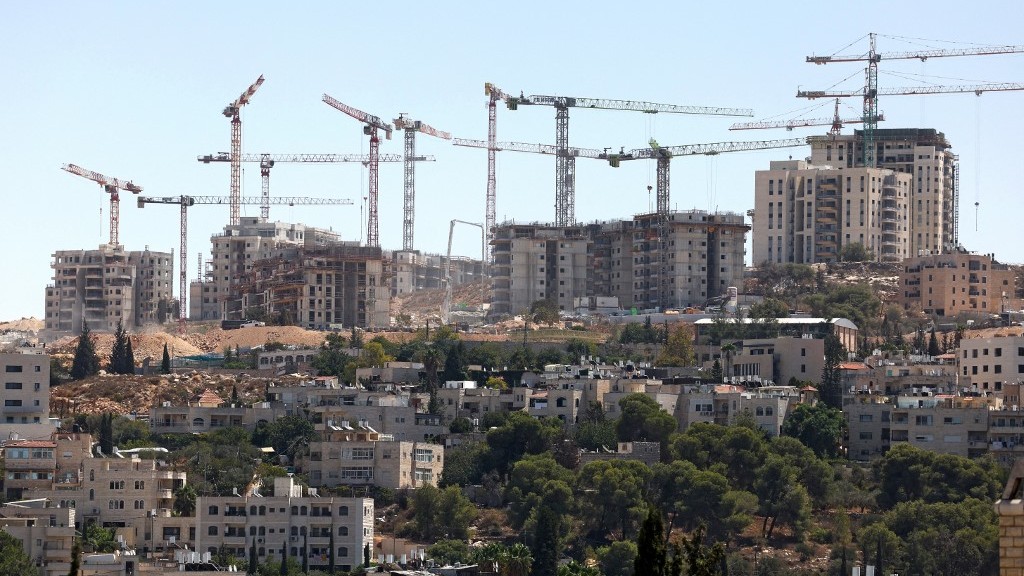
    The scale of the budget increase, first revealed by the *Jerusalem Post* earlier this week, lays bare the urgency of Israel’s push to contain growing global condemnation and its rapid slide toward pariah status in international affairs. The PR overhaul comes as Israel grapples with a cascading series of crises that extend far beyond the Gaza conflict: rising global recognition of its apartheid regime in the occupied West Bank, intensifying scrutiny over long-rumored links between Israeli intelligence agency Mossad and convicted sex offender Jeffrey Epstein, and widespread anger over allegations that Israel pushed the United States into a confrontation with Iran that has triggered global economic instability and humanitarian ripple effects far beyond the Middle East.

    Israel currently faces diplomatic and public opinion isolation at depths unmatched since the country’s founding, according to a recent analysis from Tel Aviv’s Institute for National Security Studies (INSS). This worsening isolation comes as Israeli Prime Minister Benjamin Netanyahu is the subject of an arrest warrant from the International Criminal Court, charged with war crimes and crimes against humanity stemming from operations in Gaza, while the state of Israel is defending itself against formal genocide accusations at the International Court of Justice.

    A core target of the new propaganda push is shifting public sentiment in the United States, Israel’s most critical long-standing ally, where polling shows support for the country is eroding rapidly across demographic and political lines. A Pew Research Center survey released in April found that 60 percent of Americans now hold unfavorable views of Israel – a sharp uptick over just 12 months – while positive approval has dropped to 37 percent. This shift cuts across every major demographic: a majority of Republicans under 50 now view Israel negatively, while support has fallen among Black Protestants, Catholics, religiously unaffiliated Americans, and even among American Jewish communities, where backing has slipped below two-thirds.

    To implement the expanded influence campaign, Israel’s Foreign Ministry has dramatically expanded its messaging infrastructure. Under Foreign Minister Gideon Sa’ar, a new dedicated unit has been created specifically to shape global narratives about Israel’s actions. The government has earmarked tens of millions of dollars for targeted digital outreach, including a $50 million push for social media advertising across major global platforms, and roughly $40 million to host hundreds of foreign delegations ranging from sitting politicians and religious leaders to social media influencers and university presidents. A centralized “media war room” now monitors coverage from hundreds of international news outlets and tracks thousands of daily mentions of Israel across global media and social platforms.

    The campaign also extends to political consulting and AI-driven targeted outreach: the Foreign Ministry signed a $1.5 million per month contract with a firm linked to former Donald Trump campaign strategist Brad Parscale to deploy artificial intelligence tools to shape online discourse. Additional funds have been directed to evangelical Christian networks and influencer campaigns managed through private public relations firms.

    The surge in hasbara spending aligns with growing alarm within Israel’s national security and policy establishment over the country’s deepening international isolation. The recent INSS paper warns that Israel is facing diplomatic and public opinion isolation “not seen since its establishment”, highlighting the emergence of a “creeping economic boycott” as businesses and academic institutions around the world increasingly cut formal ties with Israeli partners. To counter this trend, INSS researchers have called on the Israeli government to ramp up engagement with diaspora Jewish communities and Christian Zionist networks. Proposals put forward include expanding youth travel programs to bring tens of thousands of young Jews and Christians to Israel annually, and a renewed push to build influence within global higher education. The report also recommends creating a $100 million fund to support Israeli research and launching a program to invite leaders of top global universities to visit Israel, with the goal of shoring up institutional partnerships.

  • Florida sheriff identifies body found in Tampa Bay as 2nd missing student from Bangladesh

    Florida sheriff identifies body found in Tampa Bay as 2nd missing student from Bangladesh

    TAMPA BAY, Fla. — Law enforcement officials have confirmed that a badly decomposed body pulled from Tampa Bay earlier this month is that of the second missing University of South Florida international graduate student from Bangladesh, in what a top sheriff calls an unspeakable, cold-blooded double killing.

    Hillsborough County Sheriff Chad Chronister announced the identification Friday, more than a month after the two students were first reported missing. The remains of Nahida Bristy, a doctoral candidate in chemical engineering, were discovered Sunday by a recreational kayaker whose fishing line caught on a discarded garbage bag bobbing in the bay’s waters. Due to the advanced state of decomposition of the corpse, investigators relied on DNA testing and dental records to confirm Bristy’s identity, Chronister explained during a press briefing.

    Just two days before Bristy’s remains were located, the body of her friend and fellow USF doctoral student Zamil Limon was found in a separate garbage bag dumped on a bridge spanning the bay. Limon, who studied geography, environmental science and policy, shared an off-campus apartment with 26-year-old Hisham Saleh Abugharbieh, who has been in custody since the day Limon’s body was recovered. Abugharbieh, a former USF student who dropped out of the institution, faces two counts of first-degree murder in connection with the students’ deaths.

    In chilling comments to reporters, Chronister said the suspect displayed absolutely no remorse or reaction when confronted with evidence of the brutal killings. “He was nonreactive. He was callous and showed no emotion when we showed him the information we had,” the sheriff said. While preliminary evidence indicates both students were killed at the same location and around the same time, Chronister noted detectives are still working to confirm a definitive timeline of the crime.

    To date, investigators have not uncovered a clear motive for the slayings, a detail Chronister says his team remains determined to uncover. “I hope we find that out,” he added.

    The case began on April 16, when Bristy and Limon were separately reported missing to campus police and the Hillsborough County Sheriff’s Office. Colleagues and contacts told investigators that failing to show up for scheduled appointments was completely out of character for both students, and law enforcement quickly connected the two disappearances.

    Initial interviews at the apartment shared by Limon, Abugharbieh, and a third roommate immediately raised red flags for investigators. While the third roommate cooperated fully with questions, Abugharbieh gave vague, shifting answers about his interactions with Limon. Investigators also noted he had an unstitched cut on one arm and a bandaged finger, leading them to label him a person of interest, though they did not have sufficient evidence to arrest him at that stage.

    A follow-up interview with the third roommate yielded a critical break: the roommate told investigators he had seen Abugharbieh using a large cart to move items out of his room and to a nearby trash compactor in the overnight hours between April 16 and 17. When investigators searched the compactor, they found Limon’s glasses, student ID, wallet, and blood-soaked clothing. That evidence was enough to secure search warrants for the entire apartment and Abugharbieh’s electronic devices.

    A forensic sweep of the apartment uncovered damning physical evidence: large visible blood traces in the kitchen that extended down the hallway and into Abugharbieh’s bedroom. When investigators used blood-detecting luminal spray, they even found a faint outline of blood matching the shape of a human body curled in the fetal position, pressed against the wall right next to Abugharbieh’s bed. Additional blood traces were later found on the floorboards of Abugharbieh’s car, and genetic testing confirmed those traces belonged to Bristy.

    Investigators have reconstructed what they believe is the sequence of events: after the killings, Abugharbieh loaded the bodies into a cart under cover of darkness and transported them to his car to be dumped. Tracking data from the suspect’s car GPS, paired with surveillance footage from a nearby fire station, allowed investigators to map his route from the apartment to the Tampa Bay area, prompting the extensive search that eventually led to the recovery of both victims’ remains.

    While most of the content on Abugharbieh’s phone had been manually erased, forensic analysts were able to recover disturbing search history from the days leading up to the students’ disappearance. The search queries included deeply troubling questions: “Can a knife penetrate a skull?” and “Can a neighbor hear a gunshot?” Investigators also confirmed that Abugharbieh purchased large quantities of Lysol disinfecting wipes, heavy-duty contractor-grade trash bags, and other suspicious supplies in the days before April 16.

    “This was calculating. That’s what makes this so premeditated,” Chronister said of the suspect’s alleged actions.

    Relatives of both victims have been notified of the identification and ongoing developments in the case, the sheriff confirmed. Jennifer Spradley, an attorney with the Tampa public defender’s office representing Abugharbieh, declined to comment on the case when reached by email earlier this week.

  • An angry crowd riots outside Australian hospital treating suspect in 5-year-old girl’s death

    An angry crowd riots outside Australian hospital treating suspect in 5-year-old girl’s death

    In the remote Australian Outback, a shocking wave of public anger has boiled over into violent unrest outside a major regional hospital, triggered by the brutal murder of a young Indigenous child. The incident unfolded over four days starting on a weekend in the area surrounding Alice Springs, a remote hub in central Australia’s Northern Territory.

    Authorities allege that Jefferson Lewis, the 55-year-old primary suspect, abducted the 5-year-old child from her home in a nearby Indigenous community. Per cultural customs of the local First Nations people, a strict ban prohibits publicly naming deceased community members, so the young victim has been identified publicly only as Kumanjayi Little Baby. Her body was discovered by search teams on Thursday, four days after she was reported missing, sparking immediate, raw outrage across the local Indigenous community.

    Before law enforcement could take Lewis into custody, a large group of community members tracked the suspect down and beat him until he lost consciousness, in an act of vigilante justice. When police arrived at the scene to intervene, they extracted the unconscious suspect and rushed him to Alice Springs Hospital for emergency medical treatment.

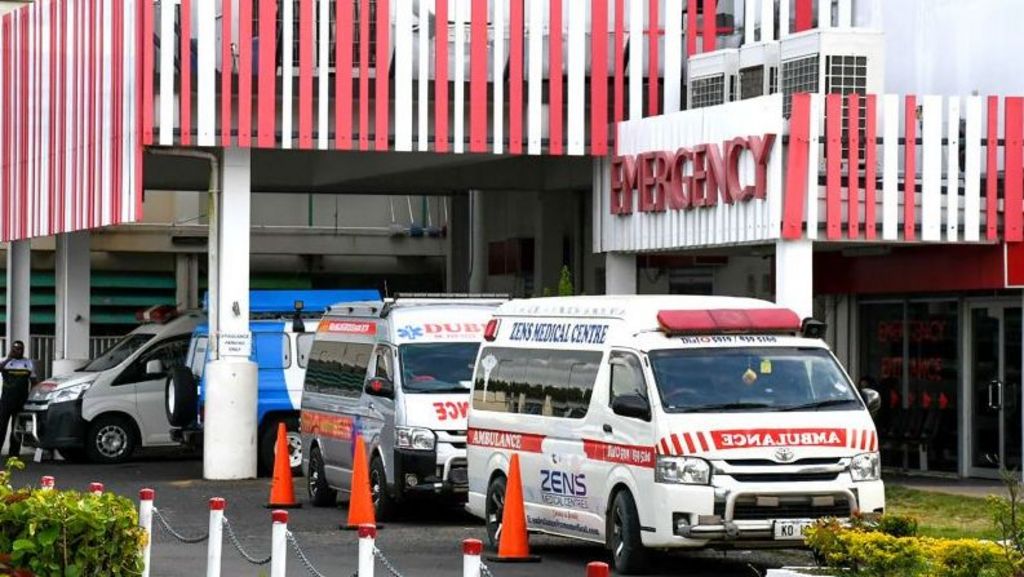
    That evening, hundreds of angry local residents gathered outside the hospital’s entrance to protest his presence there. Many in the crowd pushed for Lewis to be subjected to “payback,” a traditional form of customary Indigenous justice that can include corporal punishment such as beating or spearing. As the crowd refused to disperse and tensions escalated into rioting, law enforcement deployed less-lethal crowd control measures: officers fired rubber bullets and released tear gas to push the crowd back. In the chaos of the unrest, multiple police vehicles were damaged by members of the crowd.

    To de-escalate the situation and protect Lewis from further harm, hospital staff cleared him for transport into police custody shortly after the riot broke out. Authorities immediately arranged an air transfer 1,500 kilometers (more than 900 miles) north to Darwin, the capital of the Northern Territory, where Lewis will remain in pre-charge detention. Prosecutors confirm that formal charges against the suspect are expected to be filed on Friday.

    The incident has thrown a harsh spotlight on the deep tensions between formal Australian state law and traditional Indigenous customary justice in remote central Australian communities, where many First Nations residents continue to prioritize traditional governance systems for addressing serious harm.