标签: Asia

亚洲

  • Wuhan receives first snow of year, images go viral

    Wuhan receives first snow of year, images go viral

    The central Chinese metropolis of Wuhan underwent a dramatic winter transformation as the year’s first substantial snowfall blanketed the city from Monday night through Tuesday. The picturesque scenes of urban landscapes draped in white quickly captivated social media users, with countless images and videos circulating widely across digital platforms.

    Authorities implemented comprehensive safety measures in response to the wintry conditions. Police vehicles maintained vigilant patrols along elevated expressways and major interchanges, assisting motorists navigating the newly slippery road surfaces. Law enforcement personnel extended their duties beyond traffic management, providing direct assistance to pedestrians by clearing walkways and offering aid to those who encountered difficulties on icy surfaces.

    Transportation infrastructure operators activated specialized protocols to maintain service reliability. China Railway Wuhan Group deployed multiple cold-weather countermeasures, including anti-freeze applications and specialized rail heating equipment, to ensure continuous operation amid dropping temperatures.

    The meteorological event coincided with the beginning of Major Cold (Da Han), the traditional Chinese calendar’s final solar term that commenced on Tuesday and continues through February 2nd. This period typically represents winter’s coldest phase according to China’s traditional agricultural calendar, marking the conclusive seasonal transition before the lunar new year cycle begins.

    Despite the operational challenges posed by the sudden winter weather, the phenomenon generated widespread public fascination as residents documented the unusual spectacle of their cityscape transformed by the seasonal snowfall.

  • Iran gives protesters who joined ‘riots’ three days to surrender or face full force of law

    Iran gives protesters who joined ‘riots’ three days to surrender or face full force of law

    Iranian authorities have delivered a stark three-day ultimatum to participants of nationwide demonstrations, demanding their surrender or facing severe legal consequences. National police chief Ahmad-Reza Radan characterized young protesters as “deceived individuals” rather than enemy combatants, offering leniency for those who voluntarily submit to authorities.

    The unrest represents the most significant challenge to Iran’s leadership in recent years, though the full extent of casualties remains obscured by an ongoing internet blackout now entering its eleventh day. According to Iran Human Rights NGO, verified fatalities have reached 3,428 protesters killed by security forces, though director Mahmood Amiry-Moghaddam warns the actual death toll could be “higher by many thousands,” potentially constituting one of the largest mass killings of protesters in contemporary history.

    In a coordinated response, Iran’s executive, legislative, and judicial branches issued a joint statement acknowledging the need to address economic hardships that initially sparked demonstrations while simultaneously vowing to “decisively punish” what they describe as instigators of “terrorist incidents.” The government maintains that peaceful protests were hijacked by foreign adversaries, specifically naming the United States and Israel as orchestrators of destabilization efforts.

    Material damage has been substantial, with Mashhad officials reporting over $15 million in public infrastructure destruction alone. Limited internet restoration began briefly on Sunday, with officials promising gradual normalization throughout the week.

    International reaction has emerged with Turkish President Recep Tayyip Erdogan characterizing the situation as a “new test” for Tehran, expressing confidence that Iranian leadership would navigate this “trap-filled period” through dialogue and diplomacy while pledging Turkey’s opposition to regional destabilization.

  • Dubai aims for Guinness World Records with world’s largest virtual sign lesson

    Dubai aims for Guinness World Records with world’s largest virtual sign lesson

    Dubai is poised to make history on January 21st by orchestrating the world’s largest unified virtual sign language lesson, a groundbreaking initiative that simultaneously pursues Guinness World Records recognition while advancing the emirate’s commitment to inclusivity and empowerment for People of Determination.

    The monumental event, scheduled from 10:00 AM to 11:00 AM, will introduce global participants to the fundamentals of Emirati Sign Language through an immersive digital platform. This ambitious undertaking forms a crucial component of the ‘Dubai Communicates in Sign Language’ initiative, originally launched in October by Sheikh Mansoor bin Mohammed bin Rashid Al Maktoum, Chairman of the Higher Committee for the Protection of the Rights of People of Determination.

    Maitha Al Shamsi, Executive Director of the Community Empowerment Sector at Dubai’s Community Development Authority (CDA), emphasized the transformative purpose behind this endeavor. “This represents Dubai’s message to the global community—that we function as one cohesive family, taking pride in every member while celebrating our diversity,” she stated. The event specifically aims to raise awareness and provide substantive support for deaf individuals and those experiencing hearing challenges.

    The initiative aligns strategically with both the Dubai Social Agenda 33 and the emirate’s comprehensive social empowerment framework, reinforcing Dubai’s emerging status as an international leader in developing innovative solutions for community inclusion. Registration remains accessible to all interested participants through the official portal at dcsl.cda.gov.ae, with confirmed registrants receiving direct access links to contribute to this historic world record attempt.

  • Pakistan: Rescue workers clear Karachi mall fire ruins, 63 missing feared dead

    Pakistan: Rescue workers clear Karachi mall fire ruins, 63 missing feared dead

    Rescue teams in Karachi continue sifting through the smoldering wreckage of Gul Plaza shopping complex three days after Pakistan’s most devastating fire in over a decade erupted, with 21 confirmed fatalities and 63 individuals still unaccounted for amid fears of a catastrophic death toll.

    The inferno ignited late Saturday evening near closing time and rapidly consumed the massive commercial structure spanning larger than a football field. The shopping center, renowned for housing approximately 1,200 family-operated stores specializing in wedding attire, household goods, and toys, became an uncontrollable blaze that required nearly 48 hours to fully contain.

    Emergency response units from Rescue 1122 confirmed the recovery of 21 victims while continuing their grim search through unstable debris. The operation has transitioned to forensic recovery, with workers collecting human remains in sacks for DNA identification. Authorities have gathered 15 genetic samples to facilitate victim identification amid the severely compromised remains.

    Disturbing revelations have emerged regarding safety violations, with police confirming that 13 of the mall’s 16 emergency exits were secured when the fire broke out. This critical failure likely prevented occupants from escaping the rapidly spreading flames.

    Anguished families gathered at the disaster site expressed both desperation and outrage. Kosar Bano, whose six family members vanished while shopping for wedding supplies, articulated the horrifying reality: ‘The only hope we have is how many hands we will find, how many fingers we will find, and how many legs we will find.’

    Public frustration mounted as Karachi’s mayor faced jeering crowds who condemned the delayed emergency response. The government has pledged a comprehensive investigation into both the fire’s origin and the adequacy of rescue efforts. This tragedy represents Karachi’s most severe fire incident since the 2012 industrial inferno that claimed 260 lives, which courts later determined to be arson.

    Gul Plaza management has not responded to requests for comment regarding the locked emergency exits or overall safety protocols.

  • Australian Open: Defending champion Keys gets off to shaky start

    Australian Open: Defending champion Keys gets off to shaky start

    Defending champion Madison Keys navigated a perilous opening match at the Australian Open on Tuesday, securing a hard-fought 7-6(6), 6-1 victory against Ukrainian qualifier Oleksandra Oliynykova. The American’s title defense commenced under significant duress at Rod Laver Arena, where she found herself trailing 0-4 in the first set due to uncharacteristic double faults and early nerves.

    Facing a Grand Slam debutante whose deep, looping shots created considerable chaos, Keys was forced to erase two set points in a tense tiebreak before clinching the opener. The relief was palpable as she unleashed a triumphant roar, subsequently dominating the second set with composed authority. The win sets up an all-American second-round clash against Ashlyn Krueger.

    In post-match comments, Keys acknowledged the emotional weight of returning as defending champion. ‘I spoke to Lindsay Davenport the other day, and she reminded me that not many people get to go out there and defend a Grand Slam,’ Keys revealed. ‘So I’m just trying to embrace it and enjoy it.’

    Other American contenders enjoyed smoother progress. Eighth seed Ben Shelton, last year’s semifinalist, dispatched France’s Ugo Humbert 6-3, 7-6(2), 7-6(5) in a battle of left-handers. Ethan Quinn also advanced comfortably, defeating 23rd seed Tallon Griekspoor in straight sets.

    The day featured notable milestones and upsets. Australian wildcard Taylah Preston secured her maiden Grand Slam victory against China’s Zhang Shuai, while 22nd seed Leylah Fernandez suffered a surprise exit against Indonesia’s Janice Tjen, who recorded her nation’s first Australian Open match win in 28 years.

    Evening session highlights featured world number two Jannik Sinner’s opening match against Hugo Gaston, followed by two-time champion Naomi Osaka’s highly anticipated return to Rod Laver Arena against Antonia Ruzic.

  • Australia’s lower house passes tougher gun control laws in response to Bondi mass shooting

    Australia’s lower house passes tougher gun control laws in response to Bondi mass shooting

    In a decisive legislative response to the nation’s deadliest mass shooting in decades, Australia’s House of Representatives has approved sweeping gun control measures. The legislation, passed on Tuesday with a 96-45 vote, establishes a national firearm buyback program and enhances background verification processes for gun licenses.

    The bipartisan effort faced opposition from conservative lawmakers who criticized the government’s approach to addressing rising antisemitism. The new framework empowers federal authorities to utilize intelligence data from the Australian Security Intelligence Organisation during license screenings and creates mechanisms for purchasing surplus and newly restricted weapons.

    Home Affairs Minister Tony Burke emphasized the urgency of these measures following the December 14 Bondi Beach attack that claimed 15 lives. “The tragic events at Bondi demand a comprehensive response from government,” Burke stated during parliamentary proceedings. “We must counter both the motivation and the method.”

    The legislative action coincides with concerning statistics revealing a record 4.1 million firearms currently in circulation across Australia, with New South Wales—the site of the recent tragedy—accounting for over 1.1 million weapons. This development follows New South Wales’ own recent reforms limiting individual gun ownership to four firearms (ten for agricultural purposes) and shortening license renewal cycles from five to two years.

    The proposed legislation now advances to the Senate for consideration, while Parliament concurrently debates additional measures that would lower prosecution thresholds for hate speech offenses.

  • China steps up emergency response as temperatures drop sharply

    China steps up emergency response as temperatures drop sharply

    Chinese authorities have initiated a nationwide emergency protocol as a severe cold front originating from Siberia engulfs vast regions, bringing unprecedented subzero temperatures, heavy snowfall, and disruptive freezing rain. The meteorological phenomenon has triggered coordinated responses across multiple provinces to safeguard civilian welfare, critical infrastructure, and energy security.

    In Inner Mongolia Autonomous Region, temperatures plummeted to extreme lows of -44.5°C (-48.1°F), prompting municipal governments to activate 24-hour public warming stations for outdoor workers and emergency heating hotlines. The city of Ordos implemented coal supply assurance measures for both residential and centralized heating systems amid the prolonged freeze.

    The agricultural sector faces significant challenges, particularly in facility farming hubs like Chifeng. Specialized technical teams have been deployed to reinforce greenhouse structures, repair damaged coverings, and implement auxiliary heating solutions to protect winter vegetable supplies from the crippling cold.

    Transportation networks have been severely compromised, with Inner Mongolia’s transportation departments identifying over 700 vulnerable road segments. More than 200 maintenance crews have been mobilized to clear accumulated snow across approximately 28,000 kilometers of highways. In Hunan Province, freezing rain and sleet have disrupted rail operations, forcing China Railway Guangzhou Group to suspend or reroute numerous passenger services through Wednesday.

    The energy sector is experiencing unprecedented strain as electricity demand surges. Shandong Province recorded a historic winter load peak of 116 million kilowatts, prompting State Grid Shandong to implement enhanced monitoring of critical power lines and position emergency repair teams on high alert. Maintenance workers like Yang Xu from Linyi City continue hazardous inspections despite blizzard conditions, emphasizing that “equipment reliability becomes exponentially more critical during extreme weather events.”

    At China’s largest natural gas storage facility in Hutubi, Xinjiang, personnel conducted essential inspections in -30°C conditions to ensure uninterrupted gas supply for both residential needs and the West-East Gas Transmission Project. Inspector Zhou Weidong emphasized their role in seasonal peak shaving and emergency supply maintenance.

    The National Meteorological Center maintains active alerts for strong gales and hazardous road icing conditions, with Chief Forecaster Ma Xuekuan confirming the Siberian-originating air mass as the primary driver of this exceptional weather event. The comprehensive response demonstrates China’s multilayered approach to mitigating the impacts of extreme winter weather on population centers and critical infrastructure.

  • Shenzhen leads China’s megacities in commuting efficiency

    Shenzhen leads China’s megacities in commuting efficiency

    Shenzhen has established itself as China’s premier megacity for commuting efficiency, according to the 2025 Urban Commuting Report released by the China Academy of Urban Planning and Design. The southern technology hub achieved a groundbreaking milestone with 81% of residents completing their one-way commutes within 45 minutes—the first Chinese megacity to surpass the 80% benchmark.

    The comprehensive study highlights Shenzhen’s exceptional performance across multiple commuting metrics, including transit duration, travel distance, and public transportation reliability. The city maintains an average one-way commute of just 33 minutes covering approximately 7.9 kilometers, indicating increasingly compact urban development and optimized spatial planning.

    Notably, only 11% of Shenzhen commuters endure journeys exceeding 60 minutes—the lowest proportion among China’s megacities. This efficiency is largely attributed to the city’s extensive rail network, with 39% of residents living within 800 meters of metro stations, leading all comparable cities.

    By the end of 2025, Shenzhen’s metro system had expanded to 18 lines spanning over 600 kilometers and serving more than 400 stations. The city’s bus network similarly excels, with approximately 60% of bus commuters completing their trips within 45 minutes. This multimodal transportation success demonstrates Shenzhen’s comprehensive approach to urban mobility challenges.

  • India, UAE sign $3 billion LNG deal, agree to boost trade, defence ties

    India, UAE sign $3 billion LNG deal, agree to boost trade, defence ties

    India and the United Arab Emirates have solidified a landmark $3 billion liquefied natural gas agreement while committing to significantly expand their bilateral trade and defense cooperation. The deal was finalized during UAE President Sheikh Mohamed bin Zayed Al Nahyan’s brief but impactful two-hour visit to India for discussions with Prime Minister Narendra Modi.

    Abu Dhabi’s state energy giant Adnoc Gas will supply approximately 0.5 million metric tons of LNG annually to India’s Hindustan Petroleum Corporation Limited under a decade-long contract. This arrangement elevates India to the position of the UAE’s premier LNG customer and represents a substantial expansion of the energy partnership between the two nations. Adnoc Gas confirmed that this agreement brings their total contractual value with Indian partners to exceed $20 billion.

    The leadership summit yielded ambitious economic targets, with both countries pledging to double their bilateral trade volume to $200 billion within the next six years. The UAE currently stands as India’s third-largest trading partner, highlighting the significance of this enhanced economic commitment.

    Accompanied by a high-level delegation including defense and foreign ministers, the UAE leadership engaged in comprehensive talks that extended beyond energy cooperation. The two nations signed a letter of intent to establish a strategic defense partnership, though Indian Foreign Secretary Vikram Misri clarified that this enhanced security cooperation does not imply India’s involvement in regional conflicts.

    The brief but productive visit underscores the accelerating pace of Indo-Emirati relations, combining energy security with broader economic and strategic objectives that will shape the regional economic landscape for years to come.

  • Syria accuses SDF of ‘political blackmail’ after Islamic State inmates freed

    Syria accuses SDF of ‘political blackmail’ after Islamic State inmates freed

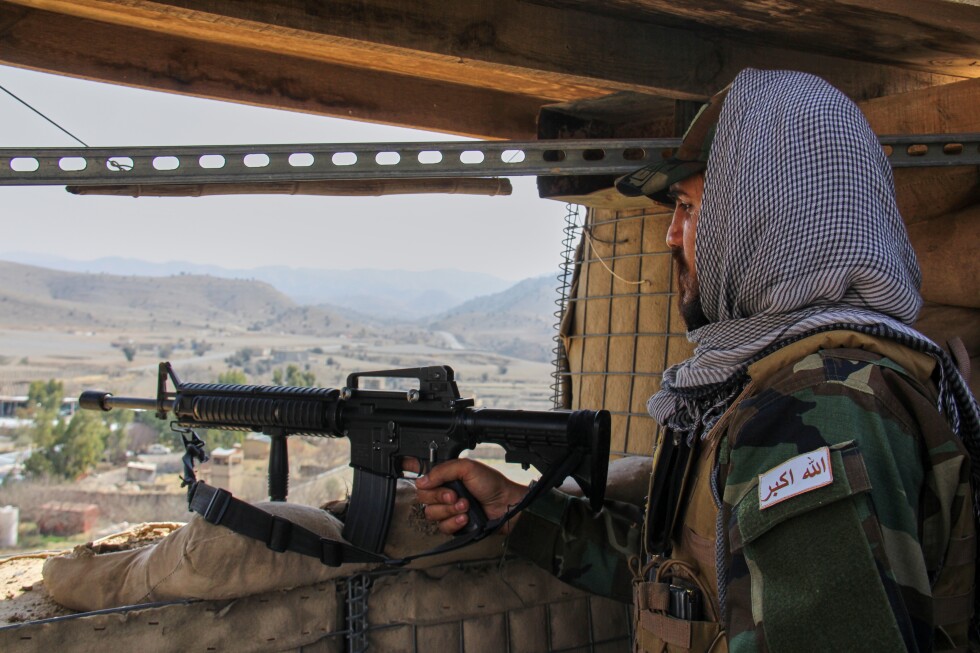
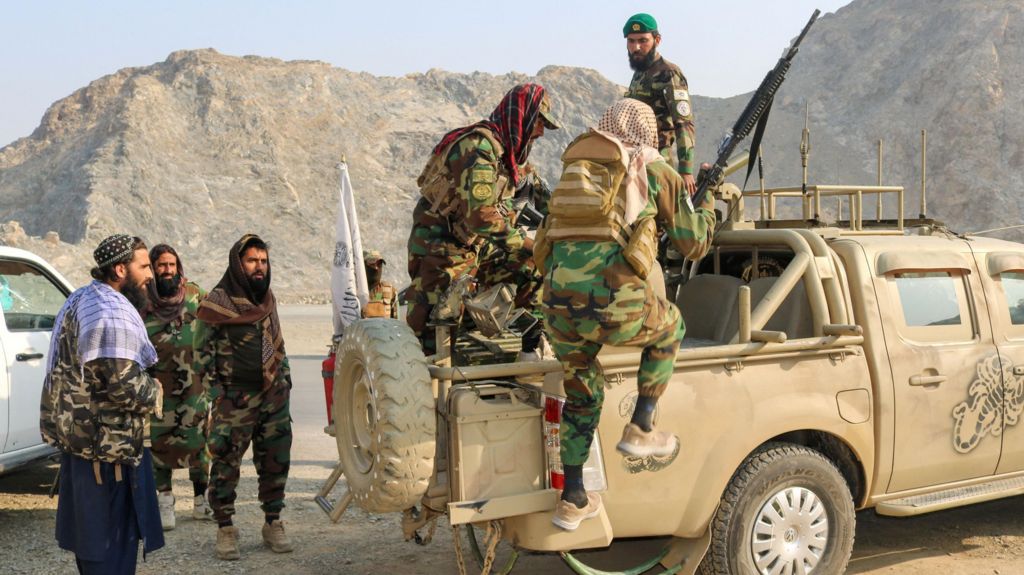
    The Syrian Interior Ministry has leveled serious allegations against the Syrian Democratic Forces (SDF), accusing them of orchestrating the intentional release of Islamic State fighters from al-Shaddadi prison in northeast Syria. Damascus characterized this action as an act of ‘political and security blackmail’ in an official statement released Tuesday.

    According to ministry reports, Syrian government forces successfully recaptured 81 of approximately 120 detainees who escaped during the incident. The ministry revealed that Syrian army units had previously avoided entering the al-Shaddadi facility during recent military operations based on an understanding that the SDF would subsequently transfer control of the prison to Damascus.

    Official accounts indicate that Syrian military commanders engaged mediators and SDF leadership to coordinate the transfer of the detention facility to state internal security forces. The ministry claims the SDF ultimately rejected this request and subsequently issued statements that allegedly ‘sought to mislead international opinion.’

    The Syrian government’s statement contained a stark warning: ‘The Syrian government warns the SDF leadership against taking any reckless steps that would facilitate the escape of ISIS detainees or open prisons for them as a retaliatory measure or as a political pressure tactic.’

    The SDF, which maintains control over numerous sensitive detention sites despite previous agreements, has vehemently disputed the government’s narrative. The Kurdish-led forces contend that the prison break occurred following an attack by tribal fighters affiliated with the Syrian army, asserting that government forces lost operational control of the facility.

    This escalating dispute emerges amid heightened tensions following recent ceasefire negotiations that included provisions for SDF withdrawal from areas west of the Euphrates River. On Tuesday, SDF commander Fawza Youssef accused President Ahmed al-Sharaa’s government of failing to uphold the terms of the agreement.

    The ongoing conflict highlights the complex security situation in northeastern Syria, where the SDF controls more than a dozen prisons holding approximately 9,000 IS suspects who have remained detained for years without formal judicial proceedings.

    Recent diplomatic efforts, including Monday’s talks between President al-Sharaa and SDF leader Mazloum Abdi, concluded without agreement. Damascus proposed deploying internal security forces to Hasakah, offering Abdi the position of deputy defense minister, appointing a governor, and removing Kurdistan Workers’ Party members from the region.

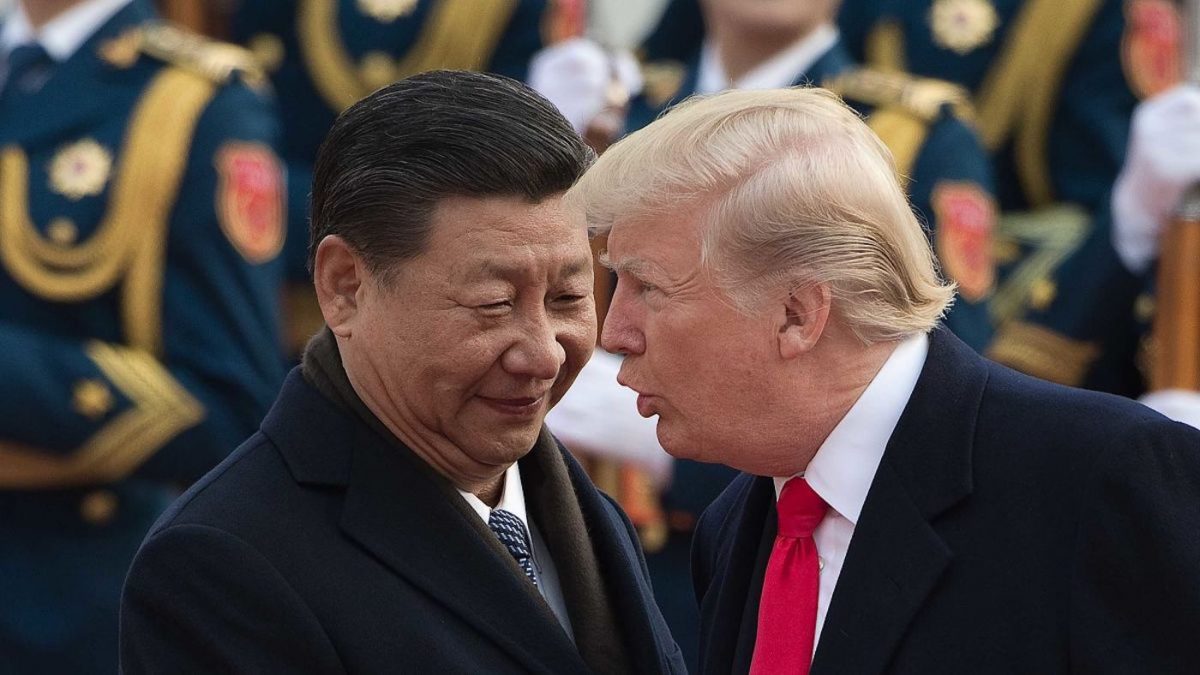
    In a significant diplomatic development, President al-Sharaa subsequently communicated with former U.S. President Donald Trump, with both leaders emphasizing the importance of Syria’s territorial integrity and the protection of Kurdish rights within the country.