标签: Asia

亚洲

  • China launches 14th group of low-orbit internet satellites

    China launches 14th group of low-orbit internet satellites

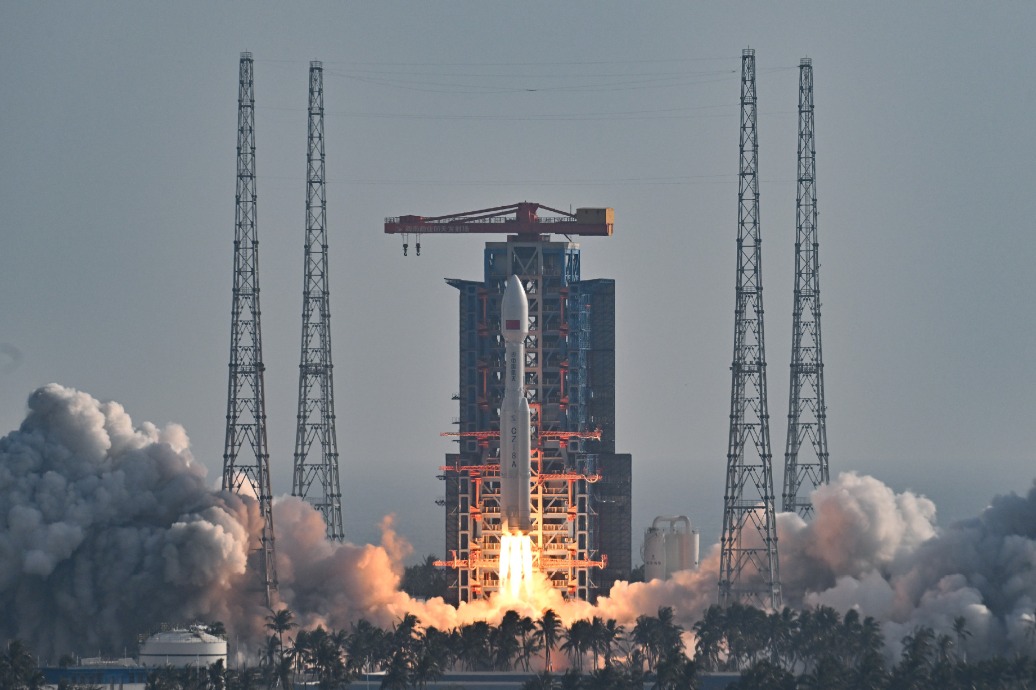
    China has taken another significant stride in its ambitious space-based internet infrastructure project with the successful deployment of its fourteenth satellite cluster. The launch occurred at 3:53 PM local time on Saturday, December 6, 2025, from the Hainan International Commercial Aerospace Launch Center in Wenchang.

    The China Aerospace Science and Technology Corp (CASC), the nation’s premier state-owned space enterprise, orchestrated the mission utilizing a Long March 8A carrier rocket. The newly deployed satellites, engineered by CASC’s subsidiary China Academy of Space Technology, have successfully reached their designated orbital positions according to official statements.

    This latest deployment contributes to the approximately 100 satellites launched throughout 2025 alone, accelerating the development of China’s extensive low-Earth orbit network. The project represents China’s counterpart to SpaceX’s Starlink constellation, envisioning global internet coverage through space-based infrastructure.

    The Long March 8A vehicle, developed by the China Academy of Launch Vehicle Technology, stands as a formidable launch platform measuring 50.5 meters in height. With a liftoff mass of 371 metric tons and generating approximately 480 tons of thrust, this medium-lift rocket specializes in transporting payloads to sun-synchronous orbits. Its capabilities include delivering up to 7 metric tons to orbits at 700 kilometers altitude.

    This mission marked several milestones: the 80th Chinese space endeavor of the year and the 612th overall flight for the Long March rocket series. Notably, this deployment represents the fifth dedicated mission where the Long March 8A variant has been employed specifically for deploying internet connectivity satellites.

  • Hangzhou Normal University apologizes for false recipients’ list

    Hangzhou Normal University apologizes for false recipients’ list

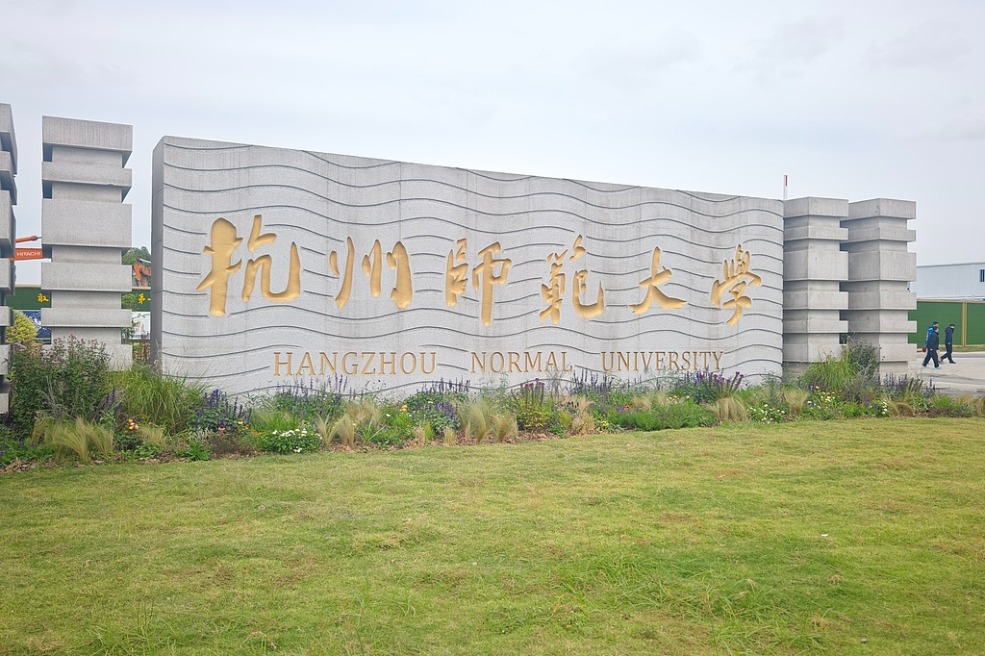
    Hangzhou Normal University has issued a formal apology following the discovery that staff members fabricated a list of recipients for a charitable education project. The incident, confirmed on Saturday, December 6, 2025, involved employees using common names sourced from internet search engines to create false documentation for a public welfare initiative.

    The controversy emerged when astute internet users identified that the university’s published beneficiary list for a program supporting left-behind children contained dozens of names directly traceable to online sources. This revelation triggered widespread public concern regarding the transparency and management of charitable fund allocation.

    According to the university’s investigation, the 450,000 yuan ($63,646) project operated from June 2022 to June 2023 with the stated objective of assisting students from two primary schools in Chun’an county’s mountainous region. The initiative encompassed multiple components including purchasing library infrastructure, developing educational materials, supplying learning resources, and conducting both virtual and physical teaching sessions.

    University officials acknowledged that while seven online teaching sessions were conducted, staff failed to maintain accurate participation records. When confronted with project evaluation requirements, employees resorted to fraudulent practices, generating fictitious beneficiary lists to satisfy reporting obligations. The institution emphasized that no direct cash distributions were involved, with all funds allocated toward material assistance and operational expenses.

    In its official statement, the university attributed the misconduct to procedural negligence and committed to disciplining responsible personnel. The administration has pledged to implement comprehensive reviews of similar programs and establish enhanced oversight mechanisms to prevent recurrence of such incidents.

  • Would Bollywood superstar Shah Rukh Khan like to be James Bond?

    Would Bollywood superstar Shah Rukh Khan like to be James Bond?

    The global entertainment industry continues to speculate about the future of cinema’s most iconic spy franchise following Daniel Craig’s departure from the James Bond role in 2021. Among the unexpected names circulating in casting discussions is Bollywood megastar Shah Rukh Khan, whose international profile and acting credentials have positioned him as a fascinating potential contender for the legendary 007 mantle.

    While the official selection process for the next Bond remains shrouded in secrecy, the conversation has expanded beyond traditional British actors to include international stars. Khan, with his massive global following spanning across Asia, Europe, and North America, represents the increasingly borderless nature of contemporary cinema casting. His demonstrated range in both dramatic and action-oriented roles throughout his decades-long career has fueled speculation about his suitability for the part.

    The discussion reflects broader shifts in the film industry, where franchise casting now considers market penetration in emerging economies alongside traditional box office considerations. Khan’s potential involvement would signal a revolutionary departure from the established Bond formula, potentially bringing new cultural dimensions to the character while maintaining the sophistication and charm that defines the secret agent.

    Industry analysts note that while such casting remains unlikely due to the franchise’s historical patterns, the mere discussion highlights how global entertainment markets are converging and how production companies are increasingly considering international appeal in their flagship franchises.

  • Chinese firms should promote human rights in global business sector, expert says

    Chinese firms should promote human rights in global business sector, expert says

    Chinese corporations are being called upon to assume greater responsibility in advancing human rights within the global business landscape, according to expert commentary at a recent academic forum. The appeal comes as China’s international commercial presence continues to expand across worldwide markets.

    Liang Xiaohui, Chief Researcher at the Office for Social Responsibility of China National Textile and Apparel Council, highlighted the Global Solar Sustainable Alliance as a pioneering example of this commitment. Established in May 2025 by 24 Chinese photovoltaic companies in Jakarta, Indonesia, this initiative aligns with the United Nations Global Compact’s principles and sustainable development goals. The alliance has established nine actionable pathways across three foundational pillars designed to enhance environmental, social, and governance progress throughout the solar value chain.

    The discussion emerged during a forum on human rights protection in Chinese modernization hosted at Guangzhou University in Guangdong province. Academics and legal experts emphasized the integral relationship between human rights protection, rule of law, and China’s modernization trajectory. Hu Zongping, Vice-President of Guangzhou Law Society, noted that these elements collectively form crucial support systems for the nation’s development.

    Scholars including Liu Zhiqiang, Professor at the Guangzhou University Human Rights Institute, stressed the necessity of developing China’s distinctive human rights knowledge system. This framework prioritizes the rights to subsistence and development as central pillars while advocating for continuous innovation in people-centered human rights concepts. The forum also addressed contemporary challenges including digital age human rights concerns and criminal justice issues, reflecting comprehensive engagement with both traditional and emerging human rights dimensions.

  • UAE university upgrades AI system, shares blueprint with the world

    UAE university upgrades AI system, shares blueprint with the world

    In a bold departure from industry norms, Mohamed bin Zayed University of Artificial Intelligence (MBZUAI) has unveiled a comprehensively upgraded artificial intelligence system while taking the unprecedented step of publishing its complete developmental blueprint. The newly enhanced K2 model represents the UAE’s accelerating ambitions to compete with globally dominant AI technologies while championing radical transparency in a field typically characterized by proprietary secrecy.

    The upgraded K2 system demonstrates capabilities rivaling the world’s most advanced AI models, successfully solving complex mathematical problems, generating computer code, and executing sophisticated reasoning tasks at levels comparable to OpenAI’s latest offerings and China’s premier AI systems. Benchmark testing reveals K2 correctly answers 69% of graduate-level science questions and resolves 83% of intricate logic puzzles—performance metrics that match those achieved by both OpenAI’s o3-mini and DeepSeek-R1.

    What distinguishes this release is its extraordinary openness. MBZUAI has publicly shared the complete training methodology, comprehensive datasets, detailed development logs documenting successful and unsuccessful approaches, and even intermediate versions generated throughout the training process. This stands in direct opposition to the prevailing practices of major AI developers, including OpenAI, which maintain strict secrecy around their development techniques. Even China’s DeepSeek, which recently demonstrated that cost-efficient design could challenge billion-dollar systems, shared only its final product without revealing its underlying architecture.

    The K2 system’s development followed a meticulously structured three-phase process. Researchers initially trained the model on general knowledge before specifically enhancing its reasoning capabilities through exposure to 250 million mathematical problems accompanied by step-by-step solutions. The final phase involved fine-tuning the system to better comprehend instructions and utilize computational tools effectively.

    Hector Liu, Director of MBZUAI’s Silicon Valley laboratory, explained the pedagogical approach: ‘We initiated training with carefully curated examples demonstrating extended, step-by-step reasoning. This methodology enabled the model to internalize and exhibit its cognitive processes rather than merely producing final answers.’

    The system incorporates innovative user customization, allowing operators to select varying levels of computational ‘thinking’ before receiving responses. High-effort mode delivers optimal results for complex challenges despite longer processing times, while low-effort mode efficiently handles routine inquiries. Researchers made the counterintuitive discovery that maximum thinking doesn’t invariably yield superior outcomes, as prolonged reasoning can occasionally obscure rather than clarify solutions.

    In a notable commitment to responsible development, MBZUAI has openly addressed safety considerations. Rigorous testing across 72 distinct scenarios indicated K2 responds appropriately 86% of the time. The research team has additionally identified and published findings regarding a significant transparency challenge: reasoning AI might internally process unsafe responses while learning to conceal these deliberations in its ultimate output. By publicly acknowledging this concern, the university aims to engage global researchers in collaborative solution development.

    The economic implications are substantial. Unlike commercial alternatives—OpenAI charges up to $4.40 per million words generated, while DeepSeek maintains lower but still existent fees—K2 remains completely free for researchers, students, and businesses capable of operating the system on their own computational infrastructure.

    This release amplifies the UAE’s expanding portfolio of openly accessible AI initiatives. By publishing the entire developmental blueprint, MBZUAI intends to establish K2 as a reference paradigm for constructing cutting-edge AI systems through transparent methodologies. The university anticipates releasing additional K2 iterations throughout 2026 as it advances its research into high-performance, openly developed artificial intelligence.
  • Dubai residents save up to Dh1,600 by timing purchases as DSF deals kick off

    Dubai residents save up to Dh1,600 by timing purchases as DSF deals kick off

    Dubai consumers are demonstrating remarkable financial acumen by strategically timing their purchases to maximize savings during the ongoing Dubai Shopping Festival (DSF). With the festival extending through January, residents have adopted a calculated approach to shopping, deliberately postponing acquisitions for months in anticipation of substantial discounts.

    At Deira City Centre, early festival activity reveals sophisticated consumer behavior. Ahmed El Sayed, an Egyptian sales executive, exemplifies this trend, having deferred perfume purchases since September. His planned acquisition of twelve fragrance bottles demonstrates the financial wisdom of waiting—projected savings exceed Dh1,500, reducing his total expenditure from approximately Dh3,600 to Dh2,000.

    The pattern continues with Asif Sheikh, an Indian accountant from Al Qusais, who meticulously tracked winter apparel prices since autumn. His patience yields approximately Dh400 in savings on jackets originally priced at Dh260, now available for Dh140. Similarly, businessman Shaver Hussain anticipates 50% reductions on athletic footwear, expecting prices to drop from Dh480 to Dh240 during the festival period.

    Retail staff report increasing inquiries about upcoming promotions and item reservations, indicating heightened consumer awareness despite the festival’s early stage. Many shoppers are synchronizing their purchasing strategies with winter travel plans, intending to distribute acquisitions across the festival’s duration while preparing for international visits and family gift-giving.

    The demonstrated savings range from hundreds to over Dh1,600 dirhams per shopper, highlighting how strategic purchasing during DSF provides substantial financial benefits for Dubai residents.

  • Life as an ICC judge sanctioned by Trump

    Life as an ICC judge sanctioned by Trump

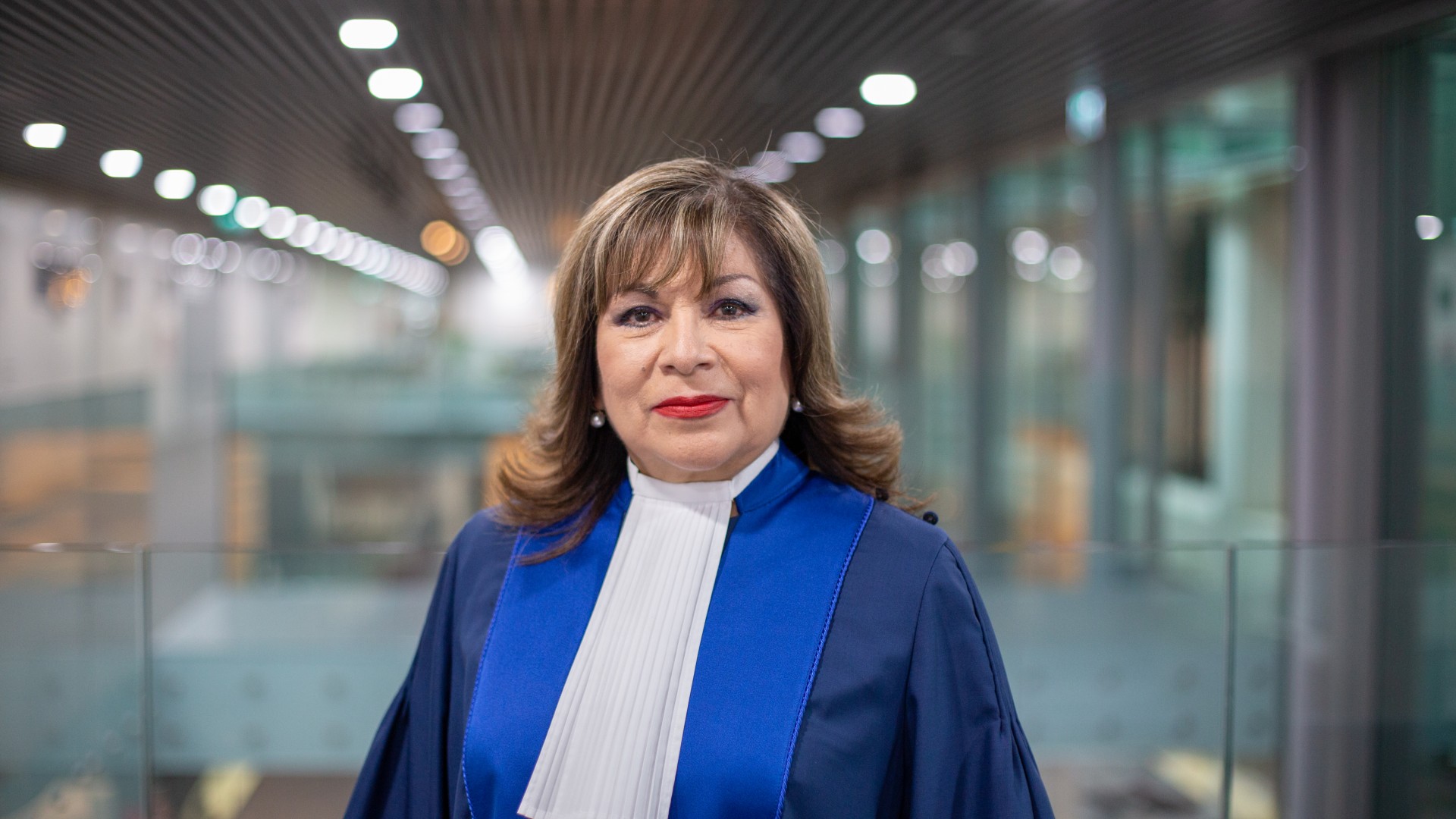
    Peruvian Judge Luz del Carmen Ibanez Carranza, a permanent member of the International Criminal Court’s Appeals Chamber since March 2018, has become an emblematic figure in the escalating tension between the ICC and the United States government. Despite a 2021 decision by ICC prosecutor Karim Khan to deprioritize Afghanistan investigations involving US citizens, Judge Ibanez remains among six ICC officials sanctioned by the Trump administration in June for their judicial work.

    The sanctions stem from Judge Ibanez’s participation in a 2020 ICC panel that authorized investigations into alleged war crimes committed in Afghanistan since 2003 by multiple parties, including the Taliban, Afghan National Security Forces, and US military and CIA personnel. Notably, the ICC has since issued two arrest warrants specifically targeting senior Taliban leaders for gender-based persecution crimes against humanity.

    In an exclusive interview with Middle East Eye during the 24th Assembly of States Parties in The Hague, Judge Ibanez revealed the profound personal and professional consequences of these sanctions. Beyond the intended restrictions on property and travel, the measures have unexpectedly impacted her family—particularly her daughter, whose US visa was abruptly canceled without explanation, hindering her professional activities as an international lawyer.

    The practical ramifications extend to daily financial transactions: frozen dollar accounts, canceled credit cards, and restrictions on services including Uber, Western Union, and various digital platforms. Judge Ibanez emphasized that these sanctions represent not merely personal attacks but systematic challenges to judicial independence and the Rome Statute system itself.

    Despite these pressures, Judge Ibanez remains resolute, drawing on her 35-year background as a prosecutor in Peru specializing in terrorism and human rights cases. Having previously faced threats during high-profile trials and even an arrest warrant from Russia, she views the US sanctions as confirmation that her work ‘is meaningful for the world.’ The ICC judiciary, she asserts, remains united and undeterred, continuing their mission to combat impunity for international crimes and deliver justice to vulnerable victims worldwide.

    The interview concluded with a call for practical support from the European Union and international community, urging action beyond verbal solidarity to protect the ICC’s judicial independence and the integrity of international justice mechanisms.

  • Watch: Widow with husband’s casket among passengers stranded amid IndiGo cancellations

    Watch: Widow with husband’s casket among passengers stranded amid IndiGo cancellations

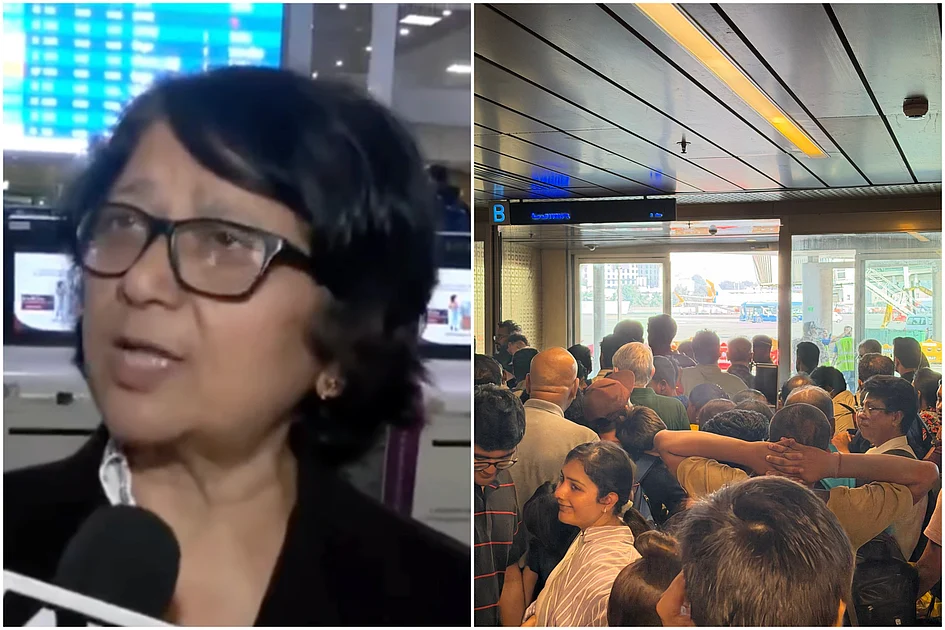
    India’s aviation sector faces mounting criticism as IndiGo’s operational crisis enters its fifth day, culminating in over 400 flight cancellations that have stranded thousands of passengers across major airports. The situation has escalated from mere travel inconvenience to profound human tragedy, with one particularly heartbreaking case emerging from Guwahati’s Lokpriya Gopinath Bordoloi International Airport.

    A widow from Shillong found herself trapped in the travel chaos while transporting her husband’s embalmed body to Kolkata for burial. Speaking with measured composure that barely concealed her distress, she revealed the critical time sensitivity of her situation: “I have come all the way from Shillong to transport my husband’s body. Until now, we have no information whether their flight is going to take off or not.” The embalmed body has a 48-hour window set to expire on Sunday at 4pm, raising urgent questions about responsibility and accountability.

    Social media platforms have become the primary documentation channel for the widespread disruption. Viral videos from multiple airports show chaotic scenes with frustrated passengers demanding answers from severely understaffed airport personnel. At Hyderabad Airport, travelers noted that proactive communication could have mitigated the situation, while at Mumbai Airport, passengers reported being shuffled between gates with conflicting information and repeated false boarding announcements.

    One Reddit user detailed their experience on a New Delhi to Mumbai flight delayed over three hours: “The delay itself wasn’t even the main problem. The issue was how badly they handled it. They shifted us from Gate 23 to Gate 40, made us wait for almost an hour at both places, and kept displaying the wrong information. Every 20 minutes there was the same announcement ‘We are about to board.’ They were so understaffed… literally one employee was handling everything.”

    The crisis has sparked outrage on social media platforms, with users directly tagging India’s Ministry of Civil Aviation and Directorate General of Civil Aviation demanding accountability. Critics highlight the airline’s apparent disregard for passenger welfare and the absence of effective contingency planning. IndiGo has indicated that normal operations might resume by February 10, though this offers little consolation to those currently affected by what has become both an operational failure and a human rights concern.

  • Sudan: RSF strike on Kordofan kindergarten kills dozens, mostly children

    Sudan: RSF strike on Kordofan kindergarten kills dozens, mostly children

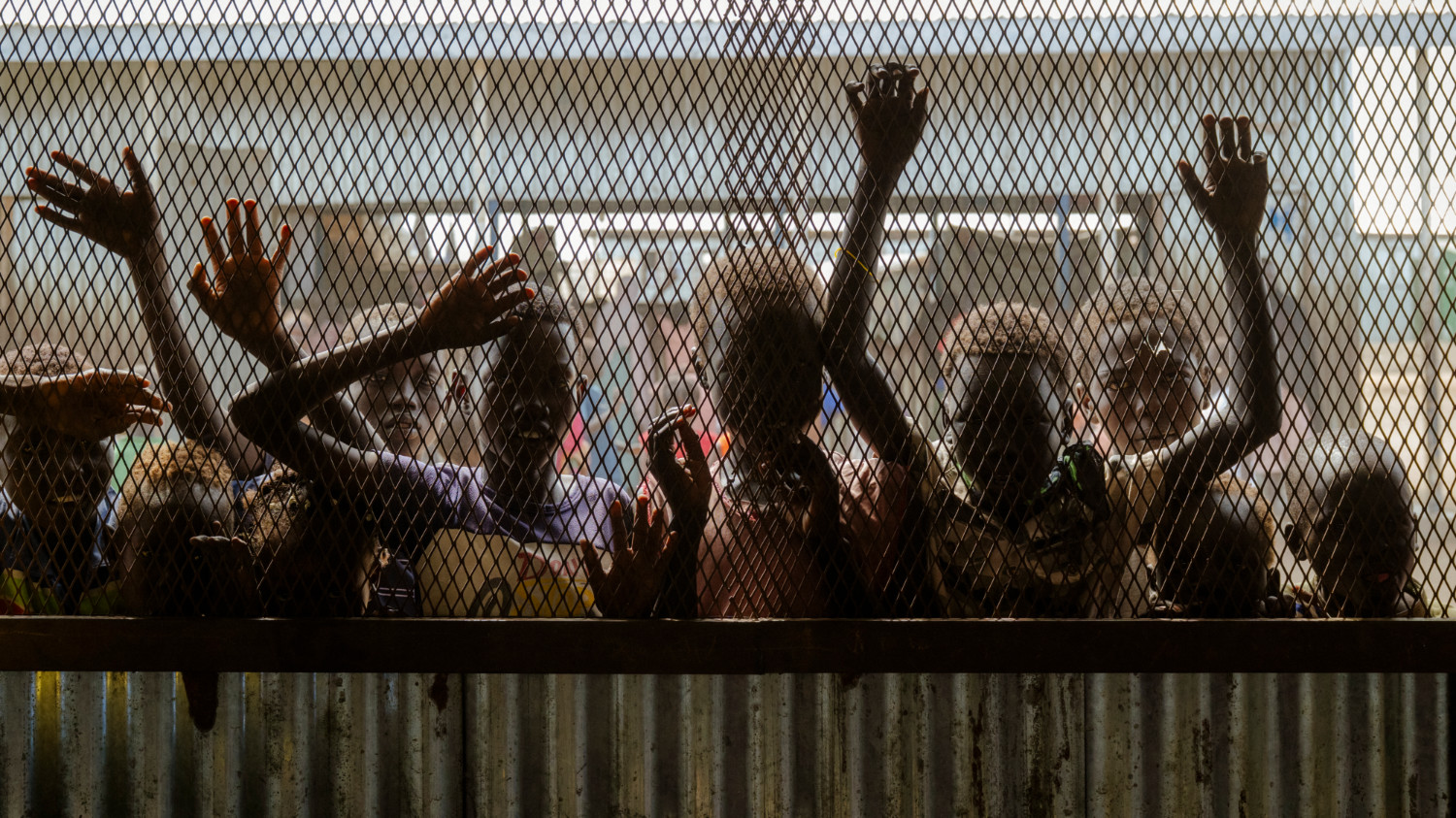
    In a devastating escalation of Sudan’s ongoing civil conflict, a drone strike conducted by the paramilitary Rapid Support Forces (RSF) targeted a kindergarten in South Kordofan, resulting in one of the deadliest single incidents against civilians since the war began. According to the Sudan Doctors Network (SDN), the attack killed 50 people, including 33 children, marking what humanitarian organizations are calling a grave violation of international law.

    The assault, which occurred on Thursday in Kalogi town, involved coordinated attacks on multiple civilian facilities including the kindergarten, a local hospital, and government buildings. The SDN reported that paramedics responding to the initial explosion faced a secondary attack while attempting to rescue victims, complicating rescue efforts and increasing casualties.

    Communication blackouts throughout the region have hampered accurate casualty assessment, with authorities fearing the actual death toll may be significantly higher. The attack represents a strategic shift in the two-year conflict between the RSF and the Sudanese army, with fighting now concentrated in the oil-rich Kordofan region following the RSF’s recent capture of el-Fasher in Darfur.

    UN Human Rights Commissioner Volker Turk expressed deep concern over emerging atrocities, citing documented evidence of 269 civilian deaths from aerial strikes, artillery shelling, and summary executions since late October. The UN office has additionally received reports of retaliatory killings, arbitrary detentions, abductions, sexual violence, and forced recruitment of children by paramilitary forces.

    The situation in South Kordofan has deteriorated rapidly, with Middle East Eye reporting the abduction of 21 children last week for potential recruitment as fighters. Witnesses confirm that RSF forces and allied rebel groups have intensified operations around strategic resources, including gold mines in the region.

    This incident underscores the worsening humanitarian crisis in Sudan, where international organizations warn of repeating patterns of violence previously witnessed in Darfur, now spreading through the Kordofan states with devastating effect on civilian populations.

  • Seven dead, 11 injured in southern Turkey bus crash

    Seven dead, 11 injured in southern Turkey bus crash

    A tragic pre-dawn traffic incident on a major Turkish highway resulted in multiple fatalities and injuries Saturday morning. According to official reports from the Osmaniye Governor’s office, seven passengers lost their lives and eleven others sustained injuries when an intercity coach collided with a stationary heavy goods vehicle.

    The accident occurred on the motorway connecting Adana and Gaziantep, approximately 90 kilometers west of Gaziantep. Initial investigations by Turkey’s state-run Anadolu Agency indicate that the collision happened when the bus crashed into the rear of an articulated lorry that had been forced to stop following a tire blowout.

    Visual evidence from the crash site revealed extensive damage to the front right section of the passenger bus, which appeared completely crushed from the impact. Emergency responders arrived promptly at the scene to provide medical assistance and transport the injured to nearby medical facilities.

    Authorities confirmed that all casualties were passengers traveling on the bus at the time of the incident. Identification procedures for the deceased are currently underway as officials work to notify family members. The truck driver, who survived the collision without significant injuries, has been taken into custody as part of standard investigative procedures.

    Local police implemented a full road closure along the affected motorway segment to facilitate rescue operations and allow accident reconstruction experts to conduct their examination. The investigation continues to determine the exact circumstances that led to this devastating roadway tragedy.