标签: Asia

亚洲

  • China builds 5,500+ green mines, advances sustainable mining

    China builds 5,500+ green mines, advances sustainable mining

    Ahead of the 2026 World Earth Day, Chinese natural resources authorities announced a major milestone in the nation’s push for ecologically responsible mineral extraction: more than 5,500 green mines at the provincial level or higher have been completed across the country. The announcement, delivered at a Beijing press conference on Tuesday, underscores how far China has advanced in reorienting its mining sector toward long-term sustainability, moving away from traditional production models that prioritized output over ecological protection.

    Dong Qingji, deputy director general of the Department of Mineral Resources Protection and Supervision under the Ministry of Natural Resources, noted that the shift to green mining has evolved from a policy initiative to a shared priority across all key stakeholders. Local government bodies, regulatory agencies, mining operators, and the general public now uniformly recognize the value of integrating environmental stewardship into mineral resource development, Dong said.

    A key pillar of this progress is the formal institutional and legal foundation that has been established to embed green mining standards into national governance. Requirements for environmentally responsible mining operations have been formally codified into China’s Mineral Resources Law and Ecological Environment Code, creating clear, enforceable legal obligations for industry players. Beyond legislative backing, a comprehensive cross-sector working framework has also taken shape, combining top-down government guidance, inter-departmental coordination, core responsibility resting with operating enterprises, and public accountability through external oversight. This multi-layered structure is designed to ensure green mining standards are implemented consistently across all regions and project types, laying the groundwork for further expansion of sustainable practices across the entire mining sector.

  • Sexual violence by Israeli settlers and soldiers driving Palestinian displacement, report says

    Sexual violence by Israeli settlers and soldiers driving Palestinian displacement, report says

    A groundbreaking new investigation has exposed a coordinated pattern of gender-based and sexual violence perpetrated by Israeli military personnel and settlers that is intentionally pushing Palestinian communities to leave their land in the occupied West Bank. The 38-page report, published Monday by the West Bank Protection Consortium and titled *Sexual violence and forcible transfer in the West Bank: How the exploitation of gender dynamics drives displacement*, documents at least 16 verified incidents of sexual assault and abuse linked to forced displacement, and reveals that the tactic has grown sharply in intensity amid the ongoing conflict in Gaza.

    The research, which draws on interviews with dozens of forcibly displaced Palestinian households, finds that more than 70% of displaced families cited sexual threats and violence targeting women and children as the decisive factor that pushed them to abandon their homes. Widespread social stigma around sexual violence means the actual number of cases is almost certainly far higher than the documented total, researchers warn, as survivors are often discouraged from coming forward to report abuse.

    To cope with the constant threat of gender-based harm, many families have been forced to adopt extreme protective measures that upend traditional community life. These include relocating women and children to other areas separately from male family members, and pushing underage girls into early marriage to reduce their exposure to violence, the report notes.

    Researchers cataloged a escalating spectrum of abusive tactics used against Palestinians, ranging from verbal sexual harassment and offensive gestures, to indecent exposure, explicit threats of rape, and intrusive surveillance of private domestic spaces including family bedrooms. The investigation focused heavily on Area C, the 60% portion of the West Bank that remains under full Israeli military and administrative control following the 1990s Oslo Accords, which split the territory into three administrative zones and established the Palestinian Authority. The report confirms that sexual violence here functions as one piece of a broader coercive campaign to push Palestinian communities off their land, alongside restricted access to water and farmland, attacks on homes and infrastructure, and public rhetoric calling for the expulsion of Palestinian residents.

    Survivors and witnesses detailed harrowing accounts of abuse that have left deep psychological scars across the community. In one documented incident, three Palestinian men were abducted by settlers, who blindfolded them, stripped them, beat and burned them, urinated on them, and attempted to rape one of the men with a broomstick before circulating images of the assault publicly. Men and boys across the region report being targeted with sexualized humiliation, forced nudity, and rape threats, mirroring patterns of abuse against women and girls. The report also documents the growing use of technology-facilitated gender-based violence: images captured from forced strip searches by Israeli forces are regularly used for digital blackmail and coercion against both male and female Palestinians.

    The report confirms that perpetrators frequently exploit gaps in protection to target vulnerable people. Settlers, often accompanied and supported by Israeli soldiers, deliberately target women and children during periods when male family members are away from home for work or other reasons. A humanitarian worker based in Hebron described one verified incident where an adult Palestinian woman was sexually assaulted by Israeli settlers in a restricted area, with Israeli soldiers present and controlling access to the site throughout the attack.

    Children and adolescent boys guarding family homes also face regular violence, including weapon threats and stun grenade attacks, the research adds. Women who step outside to use shared latrines or access basic facilities report being routinely stalked by settlers.

    In the months following the outbreak of full-scale conflict and genocide in Gaza, the report finds that sexual intimidation in the West Bank has intensified dramatically, driving a surge in psychological harm across Palestinian communities. Ninety percent of women surveyed reported increased trauma and distress linked to the growing threat of gender-based violence, while 63% of children documented heightened anxiety and chronic fear.

    For families already forced to flee their homes, the hardship only deepens after displacement. The study found that 87% of displaced women lost all sources of income after leaving their land, and 40% of displaced children lost access to formal primary education.

    Beyond the immediate physical danger of abuse, participants in the study emphasized that sexual violence and the invasion of domestic private space strikes at the core of Palestinian social and family life. “Many described the invasion of domestic space as a profound violation of dignity and family integrity within local social norms,” the report states.

    One displaced resident from Ras Ein al-Auja in the southern Jordan Valley described how persistent harassment targeting the women in his family left him with no choice but to abandon his home. “What pushed me to relocate was the harassment my wife, daughters and daughter-in-law were experiencing. Settlers began approaching the shelters when my son and I left for work,” he explained. “They were watching the women closely, whistling when women went out of the shelters in broad daylight and throwing stones at us at night. I was terrified that something bad might happen to my family because of this constant settlers’ violence when I was away.”

  • Expats spellbound by Huangshan’s cultural heritage

    Expats spellbound by Huangshan’s cultural heritage

    On April 20, a diverse delegation of international social media influencers hailing from nations across North America, Europe, Latin America, and Africa – including the United States, the United Kingdom, Russia, Mexico, and Nigeria – kicked off a curated cultural tour of East China’s Anhui Province, centering their exploration on the culturally rich city of Huangshan.

    The group launched their journey at Tunxi Old Street, a centuries-old pedestrian thoroughfare that stands as one of the most well-preserved hubs of traditional Huizhou culture, the historic regional civilization that gives Huangshan its deep cultural roots. Walking past wooden storefronts that have stood for hundreds of years, the influencers wove through bustling lanes to unpack the layered, vibrant cultural tapestry that has defined the region for millennia.

    Two participants, UK-based creator Joe Burns and Nigerian influencer Oluwabunmi Jimoh, dove deeper into hands-on cultural experiences during the tour. The pair first sampled a full spread of authentic Huizhou cuisine, sampling iconic local dishes that reflect the region’s emphasis on fresh, seasonal ingredients and meticulous cooking techniques passed down through generations. They also gained exclusive, first-hand insight into the ancient craftsmanship behind Huangshan’s most famous cultural treasures, from intricately carved hand-made lacquerware to the sought-after traditional Huizhou writing brushes and highly prized She inkstones – core tools of Chinese calligraphy with centuries of history rooted in this region.

    Beyond handicrafts and cuisine, the two influencers also explored the distinct practices of Xin’an medicine, a specialized branch of traditional Chinese medicine that developed indigenously in the region, shaped by Huangshan’s unique geography and centuries of local medical knowledge. This on-the-ground visit gave the international creators an opportunity to connect with living cultural traditions that remain vibrant in Huangshan today, far beyond the better-known fame of the region’s iconic mountain scenery.

    As the delegation continues their tour, their firsthand experiences and social media content are set to share the lesser-known cultural depth of Huangshan and Huizhou with global audiences, building new people-to-people connections between China and communities around the world.

  • Chinese team pioneers scar-free, single-operation breast cancer removal

    Chinese team pioneers scar-free, single-operation breast cancer removal

    Breast cancer patients globally may soon access a revolutionary new treatment option, developed by a surgical team based in southern China, that eliminates the need for secondary follow-up operations and leaves no visible scarring on the breast — addressing two of the most distressing drawbacks of conventional breast cancer care.

    The innovative procedure was created by Liao Ning, lead of the breast surgery department at Guangdong Provincial People’s Hospital, and integrates three cutting-edge medical tools into one streamlined workflow: real-time ultrasound imaging, a fluorescent contrast dye that clearly demarcates tumor tissue from healthy breast cells, and a high-precision robotic surgical system. Peer-reviewed findings from the team’s clinical trials were recently published online in the *European Journal of Surgical Oncology*, marking international recognition of the technique’s safety and efficacy.

    In standard breast-conserving surgery, between 10% and 15% of patients require a second procedure to remove residual cancerous tissue that is not detected or excised during the initial operation. Early clinical results for the new Chinese method show a 98.4% rate of complete tumor removal with clear, cancer-free margins, and no patients in the trial cohort required a follow-up surgery to address leftover malignant tissue.

    The procedure demands close coordination among the surgical team: after the fluorescent dye is injected directly into the tumor under ultrasound guidance, the team has just five minutes to excise the highlighted tissue before the dye loses its visibility. The robotic system’s high-definition camera translates the invisible tumor boundary into a clear green visualization on the operating screen, while the device’s articulated mechanical arms perform excisions with precision between one and two millimeters — an accuracy that far outperforms manual surgical techniques.

    Artificial intelligence also contributes to the procedure’s success before the first incision is made. AI algorithms process pre-operative scans and patient clinical data to construct a detailed 3D model of the tumor, map exact safe cutting margins, and generate a prediction of the breast’s final appearance after resection. This allows surgeons to plan both tumor removal and breast reshaping well in advance, reducing the risk of intra-operative error and suboptimal cosmetic outcomes.

    Unlike conventional procedures that require incisions on the breast surface, all tumor removal work for the new method is done through a single small incision hidden in the armpit, leaving the outer breast completely free of visible scarring. For patients who previously faced an agonizing trade-off between cancer survival and preserving their body image and personal dignity, this breakthrough addresses both physical and psychological harms associated with traditional breast cancer treatment.

  • Hubei adds international routes as foreign arrivals surge

    Hubei adds international routes as foreign arrivals surge

    Central China’s Hubei Province is experiencing a notable surge in international inbound travelers this year, driven by expanded air connectivity and streamlined cross-border entry processes that have attracted a new wave of overseas visitors, local border inspection authorities confirmed.

    According to official data released by the Hubei General Station of Exit and Entry Frontier Inspection, the province has rolled out major upgrades to its international aviation network since March 29. Airports across the province have added 13 new international and regional routes over this period, pushing the total number of active international and regional routes to 96. These routes now connect Hubei with 28 countries and regions across the globe, marking a significant expansion of the province’s global reach.

    Among the expanding regional airports, Yichang Sanxia International Airport has emerged as a key contributor to this growth, launching four new international routes since the end of March. The new connections link Yichang directly to major destinations across Asia: Hanoi (Vietnam), Vientiane (Laos), Incheon (South Korea), and Kuching (Malaysia).

    The growth in new routes comes as airports across Hubei have recorded consistent increases in international passenger volumes through the early months of 2026. Industry analysts note that the expansion of Hubei’s international air network is designed to match growing demand for cross-border travel, trade, tourism and cultural exchange, as the province continues to strengthen its ties with global markets. Streamlined border inspection processes have also cut wait times for incoming international travelers, further boosting the province’s appeal as a destination for overseas visitors.

  • Chinese PLA Navy opens barracks to public to mark 77th anniversary

    Chinese PLA Navy opens barracks to public to mark 77th anniversary

    To mark the 77th founding anniversary of the Chinese People’s Liberation Army (PLA) Navy, the service opened its military barracks and active-duty naval vessels to members of the general public in Shanghai on Tuesday, April 21, 2026. The public open day event, reported by China’s official news agency Xinhua in an update published April 22, offered ordinary citizens a rare, up-close opportunity to tour operating naval platforms, including the PLA Navy frigate Fuyang. Photographs from the event captured members of the public exploring the vessel, as the Navy sought to bridge the gap between military personnel and civilian communities and build public understanding of its mission. This anniversary event forms part of a broader regular initiative by the PLA to increase transparency around its work and foster national pride among the Chinese public by opening military facilities to civilian visitors. The 77th anniversary commemoration comes as the PLA Navy continues to evolve as a modern, blue-water naval force, and the open house event creates an accessible space for citizens to connect with the service’s 77-year history and contemporary operations.

  • Yutu’s space adventure: China’s 70-year journey beyond the stars

    Yutu’s space adventure: China’s 70-year journey beyond the stars

    In 2026, the global space community marks a historic milestone: the 70th anniversary of China’s ambitious space program, a decades-long venture that has transformed the country from a latecomer in space exploration to a leading global player in the final frontier.

    Across these 70 years, China has steadfastly pursued a trajectory of development rooted in independent innovation, turning early limitations in infrastructure and technical knowledge into world-leading expertise through consistent investment, domestic research, and a long-term vision for cosmic discovery. Unlike many space-faring nations that relied on international collaboration in their formative stages, China chose to build its space ecosystem from the ground up, nurturing homegrown talent, developing proprietary launch and exploration technologies, and setting incremental, achievable goals that built a strong foundation for more ambitious missions later.

    The journey began in 1970 with the breakthrough launch of Dongfanghong 1, China’s first indigenously developed and built satellite. That successful orbital insertion marked China’s formal entry into the space age, proving that the country could design, build, and launch a functional satellite entirely on its own. In the decades that followed, each new achievement built on the last: the nation mastered human spaceflight, becoming only the third country in the world to independently launch crewed missions to orbit, and established a permanent space station that now hosts regular scientific research from international partners. More recently, landmark lunar exploration missions, including the Yutu rover that gave the anniversary celebration its namesake, have delivered unprecedented data about the far side of the Moon, a region of the lunar surface that had remained unstudied for the entire history of space exploration before China’s Chang’e 4 mission.

    Today, as the nation reflects on 70 years of progress, China’s space program stands as a testament to the power of sustained commitment to scientific innovation, opening new avenues for international collaboration while continuing to push the boundaries of human knowledge about our solar system and beyond.

  • Japanese police arrest a South Korean for allegedly obstructing Yasukuni Shrine festival

    Japanese police arrest a South Korean for allegedly obstructing Yasukuni Shrine festival

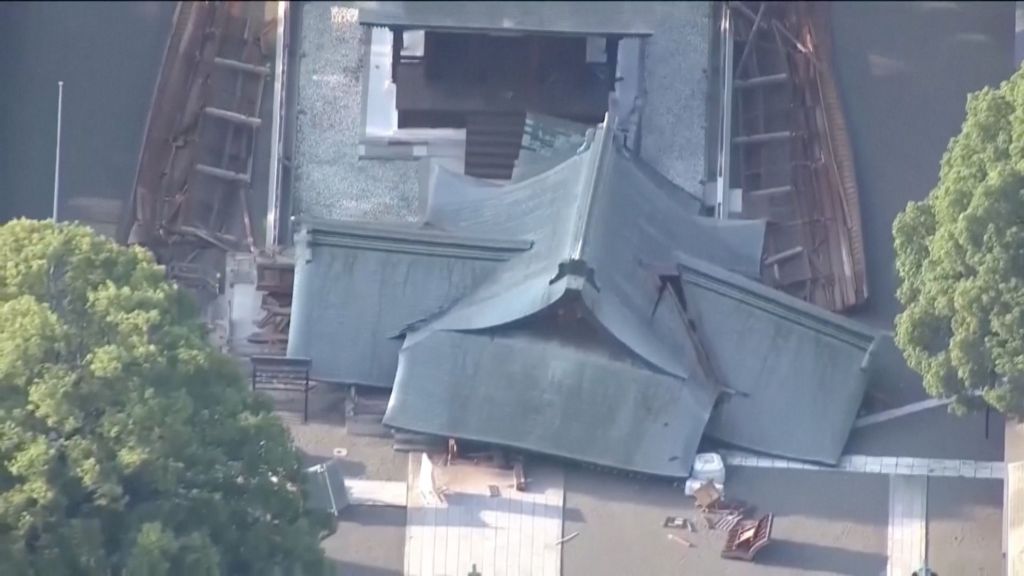
    Diplomatic friction over Japan’s remembrance of its wartime past has flared again, following the arrest of a South Korean national at Tokyo’s controversial Yasukuni Shrine during the site’s annual spring festival this Wednesday. Japanese law enforcement officials confirmed the suspect was taken into custody on accusations of disrupting public event proceedings at the shrine.

    Yasukuni Shrine holds a deeply divisive place in modern East Asian politics. The Shinto site honors 2.5 million Japanese individuals who died in conflicts over the past centuries, including 14 Class-A convicted World War II war criminals. For countries that suffered brutal Japanese imperial aggression before and during WWII — most notably China and the two Korean states — official and high-profile political visits to the shrine are widely interpreted as a deliberate refusal to acknowledge and apologize for Japan’s wartime atrocities.

    According to details released by Japan’s Kyodo News agency, the 64-year-old South Korean suspect positioned himself at the shrine’s main entrance gate, directly in the path of vehicles transporting imperial messengers. The shrine confirmed on its official website that the messengers were tasked with bringing ritual offerings from Japan’s emperor to the shrine for the annual spring festival. The suspect unfurled a banner bearing two provocative political messages: one calling for the removal of convicted war criminals from the shrine’s roll of honor and an end to commemorative prayers for them at the site, and another asserting South Korea’s territorial claim to the island contested by Seoul and Tokyo, known as Dokdo in South Korea and Takeshima in Japan.

    The arrest comes one day after a separate development that reignited regional criticism. Japanese Prime Minister Sanae Takaichi, who has a long history of regular personal visits to Yasukuni Shrine, opted to send a ritual ornament to the shrine for the second consecutive term as prime minister, rather than visiting in person. The move still drew sharp condemnation from both China and South Korea.

    Hours after the arrest, a group of more than 100 Japanese right-wing lawmakers — including one sitting cabinet minister — carried out a planned group visit to pray at the shrine, a move that will likely escalate regional discontent over Japan’s approach to its wartime history further.

  • New study helps deepen understanding of Qinghai-Tibet Plateau carbon cycling mechanisms

    New study helps deepen understanding of Qinghai-Tibet Plateau carbon cycling mechanisms

    Situated on the Qinghai-Tibet Plateau, the source region of China’s Yellow River holds outsized ecological importance as a core component of the “Asian Water Tower,” a vast high-altitude system that feeds water to billions across Asia. Dense with glaciers and permafrost, this fragile cryospheric landscape is disproportionately sensitive to global climate shifts, with rising temperatures steadily accelerating glacial retreat and permafrost thaw. As this thaw progresses, massive volumes of organic carbon that have been locked away as solid sequestration for centuries are being released into surrounding watersheds, creating ripple effects that alter regional carbon and nitrogen cycles and threaten downstream ecological stability.

    Against this backdrop, a team of Chinese researchers from the Northwest Institute of Eco-Environment and Resources (NIEER) under the Chinese Academy of Sciences has completed a groundbreaking new study focused on untangling the dynamics of dissolved organic matter in this critical high-altitude basin, filling long-standing gaps in global biogeochemical data for cold mountain regions.

    Led by NIEER researcher Niu Hewen, the project carried out three years of continuous in-situ observations between 2019 and 2022, compiling one of the most comprehensive datasets to date on dissolved organic carbon, dissolved organic nitrogen, and total dissolved nitrogen across rainfall, river, and groundwater systems in the Yellow River’s source zone.

    The team’s analysis yielded several key findings that challenge previous broad assumptions about alpine river carbon dynamics on the Qinghai-Tibet Plateau. The study confirmed that dissolved organic carbon concentrations in the Yellow River’s alpine headwaters are significantly lower than the regional average for other alpine rivers across the plateau, with clear and pronounced seasonal fluctuations tied to temperature patterns. Concentrations reach their annual peak during the summer glacial and permafrost ablation period, when 72% of dissolved organic matter in river waters consists of terrestrial humic-like substances eroded from thawed permafrost and glacial deposits. By contrast, groundwater in the region is dominated by microbial protein-like substances, which make up 82% of its dissolved organic matter profile.

    Further calculations from the research show that the Yellow River source region transports more than 100,000 metric tonnes of dissolved organic carbon downstream to lower basin areas every year, with 56% of this annual export occurring between May and October, aligned with warmer summer temperatures and peak ablation.

    According to Niu, the study confirms that ongoing climate warming is driving a fundamental shift in the region’s carbon cycle, transforming cryospheric organic carbon from long-term solid sequestration to active, dynamic output that increases the volume of carbon and nitrogen exported through the river system dramatically.

    The research team notes that these new findings do more than just advance scientific understanding of carbon cycling mechanisms on the Qinghai-Tibet Plateau, one of the world’s most important high-altitude carbon sinks. The compiled dataset and observed dynamics also provide a robust, evidence-based foundation to guide ecological conservation, sustainable water resource management, and climate change adaptation planning across the entire Yellow River basin, supporting long-term ecological and water security for communities that depend on the river system.

  • Why US, Israel and Iran are headed for a frozen conflict

    Why US, Israel and Iran are headed for a frozen conflict

    A fragile ceasefire currently holds between the United States, Israel and Iran, but diplomatic efforts to resolve the deep-rooted disputes fueling the conflict have stalled, leaving the international community grappling with a critical question: where will this confrontation go from here? According to analysis from two international relations scholars, the most probable trajectory is not a comprehensive, lasting peace deal, but a frozen conflict — a state of unresolved, low-scale hostility that falls far short of full-scale open war but never reaches a formal political resolution.

    Frozen conflicts are far from static; they linger for years or even decades with persistent underlying tensions that can erupt into renewed violence at any time. This pattern typically emerges when no overarching political agreement can be reached between warring parties. One well-documented example is the conflict in eastern Ukraine that persisted from 2014 until Russia’s full-scale invasion in 2022. Despite an estimated 14,000 deaths among military personnel and civilians, and constant covert cyber and information operations between the two sides, the conflict was widely categorized as frozen for eight years.

    Even if new negotiations, scheduled to resume in Pakistan, eventually produce a tentative agreement, three core factors point strongly toward a frozen conflict rather than durable peace, the analysts argue.

    First, U.S. President Donald Trump’s foreign policy approach frames ceasefires as an end to conflict in themselves, rather than a temporary pause to negotiate substantive political solutions. Trump has publicly claimed credit for ending ten separate conflicts, including the current US-Iran confrontation and Israel’s war in Lebanon. Closer examination of his track record reveals that most of these claimed successes amount to nothing more than fragile ceasefires, with core disputes still completely unresolved. This pattern has already left multiple frozen conflict hotspots around the globe with persistent high tensions: for example, a 2025 brief armed clash between India and Pakistan remains unresolved, with repeated risk of renewed fighting, while a lasting peace agreement to resolve 2025 border disputes between Thailand and Cambodia remains out of reach. In every case, Trump has declared victory and shifted focus to other global priorities as soon as major open fighting stops, leaving core issues unaddressed.

    Second, the inherent dynamics of asymmetric conflicts make lasting political settlements far less likely than frozen outcomes. This current confrontation is distinctly asymmetric: the US and Israel hold overwhelming military superiority over Iran, pushing Iran to rely on unconventional tactics to counterbalance US power. These tactics have included targeting critical infrastructure in non-belligerent Persian Gulf states and closing the Strait of Hormuz to global commercial shipping, a move that disrupts international energy markets and the broader global economy. Academic research consistently shows asymmetric conflicts are inherently protracted and often open-ended, making frozen conflict far more likely than a lasting negotiated resolution. The dynamic is simple: the weaker side cannot win a conventional military victory against a much stronger opponent, so it instead relies on political, economic and psychological pressure to wear down the stronger power, forcing a withdrawal and ceasefire rather than surrender. This is exactly the dynamic playing out in the current conflict: Trump is facing mounting domestic and international pressure to end open hostilities, pushing him to pursue a ceasefire that he can frame as a US victory, while Iran has accepted the ceasefire as a survival tactic as the weaker party, not as a commitment to long-term conflict resolution. This echoes the decades-long frozen conflict between the US and the Taliban in Afghanistan, where the militant group survived 20 years of low-intensity conflict before retaking full control of the country after US withdrawal.

    Third, neither party has shown any meaningful commitment to addressing the complex, core disputes that triggered the conflict in the first place, most notably the long-standing standoff over Iran’s nuclear program. The first round of peace talks held in Pakistan on April 11–12 collapsed entirely after Iran refused to make concessions on its nuclear activities, which Iran has repeatedly described as an inalienable right for civilian energy and medical purposes. It is worth noting that the 2015 multilateral Joint Comprehensive Plan of Action (JCPOA), the landmark nuclear deal with Iran, took 20 months of intensive negotiation to finalize. Just three years after the agreement was reached, Trump withdrew the US from the JCPOA, calling it a “horrible one-sided deal” that favored Iran. Given this troubled history, a quick resolution to this deeply complex dispute is effectively impossible. Some analysts have floated the possibility of a partial, surface-level agreement that delays negotiations on the most technical and contentious details to a later date, but Iran has shown no willingness to back down from its long-stated claims to sovereign nuclear rights, and has already demonstrated its geostrategic resolve by following through on threats to close the Strait of Hormuz and disrupt global commerce.

    What would a frozen conflict mean for the Middle East? Even if the current ceasefire holds and a partial agreement is reached, unresolved underlying tensions will leave the region in a permanent state of instability, with regular threats exchanged over Iran’s nuclear program and periodic violent flare-ups between Iran and Israel, Iran and the US, or both. This mirrors the current frozen conflict in Gaza: in October 2025, Israel and Hamas agreed to a ceasefire under Trump’s 20-point peace plan, and the first phase was largely implemented, leading to a hostage and prisoner exchange, a reduction in heavy Israeli bombardment, and a resumption of humanitarian aid into the strip. But no progress has been made on the core complex questions of post-war Gaza governance, large-scale reconstruction of the enclave, and the critical issue of Hamas disarmament. As a result, Israeli troops have refused to fully withdraw from Gaza, and low-level violence continues to this day.

    Historical precedent further underscores the risks of this outcome. The 1953 armistice that ended the Korean War was never followed by a formal peace treaty, leaving North and South Korea technically at war for more than 70 years. This decades-long frozen conflict directly pushed North Korea to pursue an underground nuclear weapons program that remains a major global threat decades later. Similarly, the 75-year frozen conflict between India and Pakistan has spurred a regional nuclear arms race, constant instability across South Asia, and repeated outbreaks of deadly violence.

    Following this historical pattern, a frozen conflict between the US, Israel and Iran will almost certainly generate similar long-term instability across the Middle East. It would likely fuel a new regional arms race, increase the risk of irregular and cyber conflict, and create repeated disruptions to global energy supplies through periodic flare-ups over control of the critical Strait of Hormuz.

    This analysis comes from Jessica Genauer, Academic Director at the Public Policy Institute of UNSW Sydney, and Benedict Moleta, a PhD candidate in the Department of International Relations at the Australian National University, originally published in *The Conversation* under a Creative Commons license.