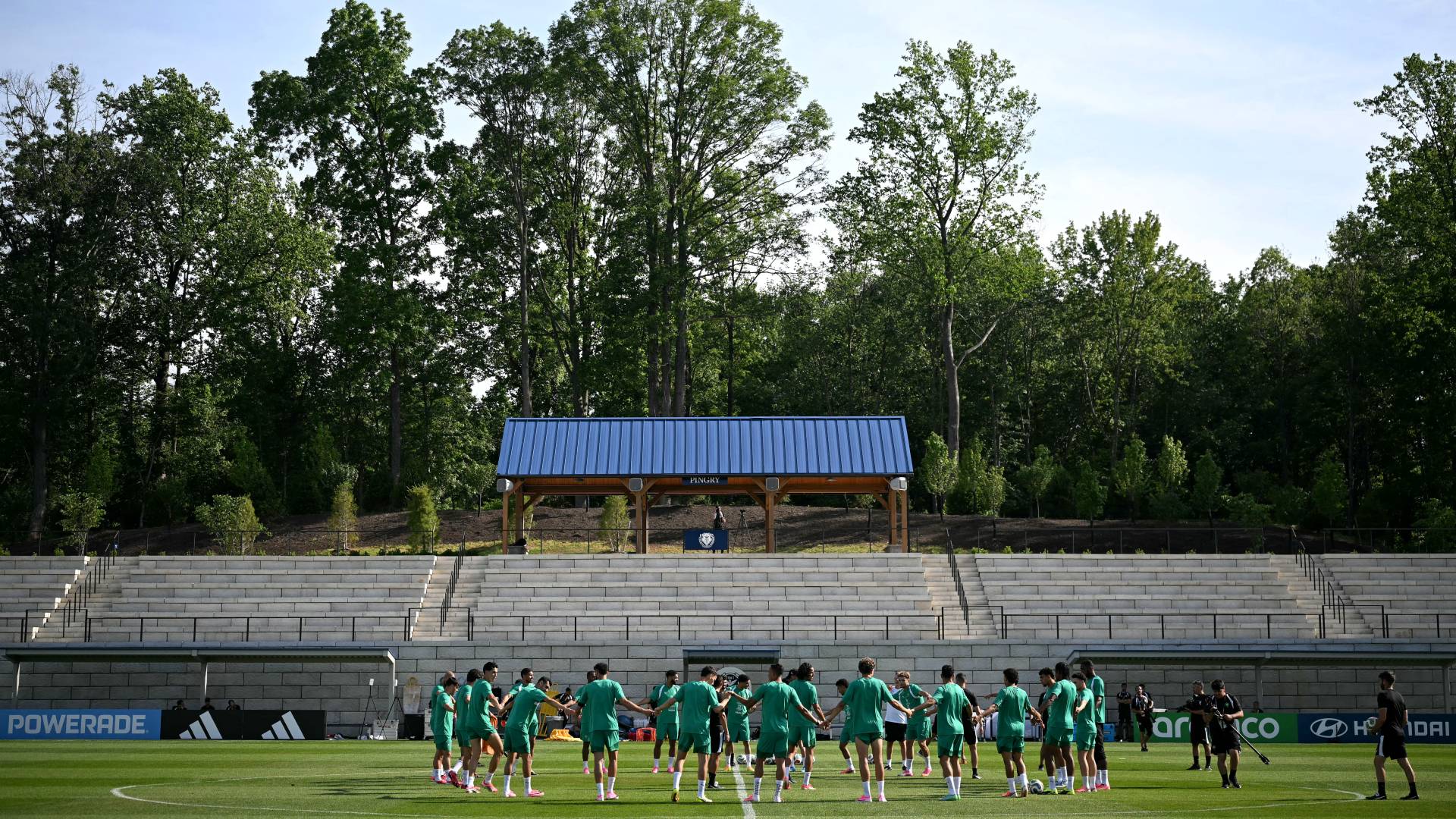
The 2026 FIFA World Cup, hosted in part across the United States, has brought two of global football’s most dynamic teams to an unexpected corner of the country: the quiet, affluent suburban town of Basking Ridge, New Jersey. For lifelong residents like 22-year-old Rutgers graduate Caroline Corley, the arrival of Brazil and Morocco changed everything – including her longstanding disinterest in the beautiful game.
Corley never watched a full football match before the tournament kicked off in mid-June, but her curiosity sparked when she learned the two squads had selected her small hometown as their first-round base camp. Located just under an hour outside New York City, the community – population roughly 10,000 – was an intentional pick for its strategic location: it offers easy travel to regional tournament stadiums, and sits within reach of large Brazilian and Moroccan diaspora communities across the New York-New Jersey-Connecticut tri-state area. The sixth-ranked Moroccan national team, known as the Atlas Lions and the top-ranked side in Africa, has taken up residence at the Somerset Hotel and trains daily at the local Pingree School. Five-time World Cup champions Brazil are staying at The Ridge Hotel and using the Columbia Park Training Facility in nearby Morristown for practices.
For many young local residents, the presence of the two global powerhouses has been a thrilling once-in-a-lifetime experience. Corley, along with Basking Ridge natives Anya and Fiona Cebulski, say watching the Moroccan team parade through town with a police escort, and spotting fans lingering near training grounds or local restaurants hoping for a glimpse of star players, has injected unexpected energy into their normally quiet daily routines. “Growing up in what you think of as just a small town, having something this huge come to your home is really shocking,” Corley told Middle East Eye. After attending the USA-Paraguay friendly and the Brazil-Morocco group stage match, she’s now a full football convert.
But beneath the quiet excitement of local fans, a sharp divide has emerged over how the town has welcomed its high-profile guests. During a visit ahead of Morocco’s group stage match against Scotland, Middle East Eye found little visible fanfare across Basking Ridge: only one cafe displayed tiny national flags in outdoor potted plants, a single aging banner hung over a main street to mark the earlier Brazil-Morocco fixture, and just one welcome sign stood outside the Moroccan team’s hotel. The overall atmosphere was far more subdued than many residents expected, especially after seeing how other host communities like the Algerian team’s base in Missouri rolled out a warm public welcome.
Young local activists and residents say the muted welcome is no accident – it reflects deep-seated divisions within Basking Ridge, rooted in local politics, demographics and a long history of exclusion that locals refer to as the “Basking Ridge bubble.” Largely white, affluent and known for its tree-lined historic streets, corporate headquarters for giants like Verizon and Barnes & Noble, and sprawling country estates, Basking Ridge sits within Bernards Township, a long-conservative area that only flipped to Democratic control in 2025 for the first time in 90 years. Even after the leadership change, the 2024 presidential election saw former President Donald Trump carry 47 percent of the local vote, leaving the town deeply politically split. Older, more conservative residents tend to lean away from open engagement with diverse communities, young residents say, creating a culture that avoids discussion of contentious social and political issues.
Anya Cebulski notes that this culture of silence extends to some of the most divisive issues splitting modern America, from debates over racial justice to the ongoing war in Gaza. Local history backs up this claim: in 2023, the town’s Board of Education made national headlines when it rejected two proposed sociology textbooks for Ridge High School over claims they were too ideologically extreme on topics of race and police brutality. The fight to build Basking Ridge’s first and only mosque was met with years of virulent opposition, marked by anti-Muslim rhetoric that invoked 9/11 and terrorism; the town ultimately paid a $3.25 million legal settlement to the Islamic Society of Basking Ridge after the group filed a discrimination lawsuit.
“When you grow up here, you see that conversations about race or difference are just shoved under the rug,” Anya explained. “People here haven’t had to think about what it feels like to be an outsider, so they don’t know how to reach out and welcome outsiders.”
Bernards Township Mayor Ana Duarte McCarthy pushes back against this characterization, arguing the town has embraced the opportunity to host the two teams with open arms. She told Middle East Eye the local government organized a range of public events during the tournament’s opening week, including a community watch party for the Brazil-Morocco match and a youth soccer tournament that drew 2,500 players and their family members to the area. “Our local community has many soccer enthusiasts,” McCarthy said. “It has been a once-in-a-lifetime opportunity to play host to Morocco. Personally my husband and I saw Morocco vs Saudi Arabia in 1994, so it’s extraordinary to be in our community, at this time, 30-plus years later, as mayor, and being part of the efforts made to welcome the team to Basking Ridge.” Hundreds of local fans have also attended open training sessions for the Moroccan team at Pingree School, she added.
Beyond debates over inclusion, the economic promise of hosting two World Cup teams has yet to materialize for many local businesses, with outcomes split across the town. A cafe employee on main street reported a clear uptick in footfall from visiting fans, while another small business owner nearby said he had seen no significant increase in customers. Near the Somerset Hotel, a restaurant hostess said young fans have frequently stopped by asking if the Moroccan team plans to dine at the restaurant, creating a quiet buzz that hasn’t translated to major revenue gains. Even so, many young residents say the mere presence of the teams is a historic moment for their small town. Two local high school students told Middle East Eye it felt “cool” to host a global event, even if football is not their sport of choice.
As Morocco stands on the cusp of qualifying for the knockout stage – with a chance to top the group if they outperform Brazil in their final group match – young local residents say the moment represented a missed opportunity to break Basking Ridge out of its longstanding bubble. Corley argues that hosting the two teams could have been a rare chance to build cross-community dialogue at a time of deep national division, especially for fans who faced prohibitive travel costs and visa hurdles to attend the tournament in person. Anya agrees that the team’s arrival could have served as a catalyst for greater openness, but worries that the town’s history of closed-mindedness will keep that potential from being realized.
“I hope it does turn into that, but I feel like there might just be too much closed-mindedness for it to take full form,” Anya said.