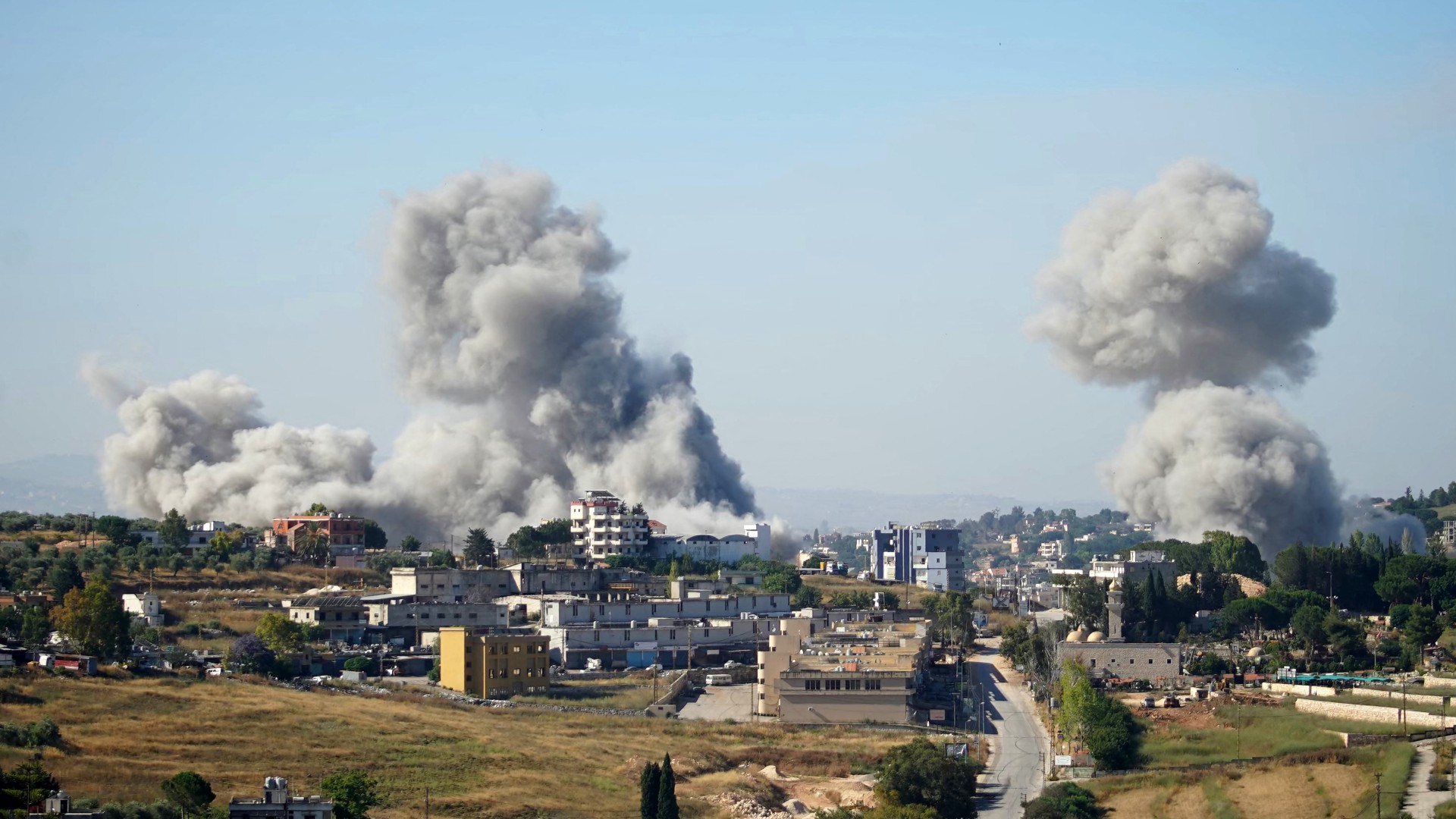
Just 24 hours after a ceasefire deal between Israel and Hezbollah was announced to de-escalate cross-border tensions, a fresh wave of Israeli air and ground strikes across southern Lebanon and the western Beqaa Valley has left at least 29 people dead, shattering fragile hopes for regional stability.
Lebanon’s civil defence agency confirmed Saturday that 16 civilians lost their lives and 12 more were wounded in a string of attacks targeting the Nabatieh district in southern Lebanon, with rescue crews working nonstop from dawn to pull survivors from rubble and respond to ongoing bombardment. Lebanon’s state-run National News Agency (NNA) labeled an Israeli strike on the village of Barish, near the coastal city of Tyre, a “massacre,” after it killed four members of a single family. Additional strikes left seven dead and 13 injured near the southern city of Sidon, one dead in the Shahour municipality of Tyre district, and one more dead in Sohmor, a town in Lebanon’s western Bekaa region. The Lebanese army announced in a post on X that one of its officers was killed in an Israeli airstrike on the Kfar Rumman-Nabatieh road.
In its statement, the Lebanese army condemned the ongoing brutal assault, noting that the attacks clearly aim to block any diplomatic path to restoring stability across the country. The Israeli military, for its part, claims the strikes are a retaliatory measure against Hezbollah, responding to projectile attacks targeting Israeli troops deployed in southern Lebanon that took place overnight.
Hezbollah confirmed the overnight confrontation, saying its fighters ambushed Israeli forces that attempted to infiltrate the strategic Ali Taher hills overlooking Nabatieh, under the cover of the newly announced ceasefire. “Our fighters confronted the enemy with appropriate weapons after the infiltration attempt last night,” the group said in its official statement.
Hassan Fadlallah, a Lebanese parliamentarian aligned with Hezbollah, emphasized Saturday that the group retains the full right to retaliate for the Israeli attacks. He argued that any ceasefire is meaningless as long as Israel continues to occupy Lebanese territory, adding that Israel must fully honor the ceasefire terms by halting all attacks on Lebanese soil and withdrawing from occupied positions. “The resistance has the full right to confront this enemy when it attacks us, as it is the aggressor and the occupier,” Fadlallah said.
The fresh escalation comes as the United States and Iran worked to implement a broader memorandum of understanding (MoU) designed to end hostilities across the entire region. The tentative U.S.-Iran deal has sparked fierce anger among hardline Israeli officials, who have publicly denounced the agreement across social media. Israeli Finance Minister Bezalel Smotrich called the deal “bad for Israel” and claimed Israel would be forced to continue its campaign against Iran independently. National Security Minister Itamar Ben-Gvir added that “Trump’s agreement does not bind us.”
U.S. President Donald Trump has openly criticized Israeli actions in the wake of the new strikes, saying that “too many people have been killed in Lebanon” and arguing that Israeli military tactics have been disproportionate and indiscriminate. Earlier this week, Trump and Iranian President Masoud Pezeshkian signed a preliminary agreement to halt hostilities on all regional fronts, including the Israel-Lebanon border. However, follow-up negotiations scheduled for Friday in Switzerland were indefinitely postponed after an earlier Israeli strike killed 18 people in Lebanon.
The Israel-Hezbollah ceasefire announced Friday afternoon was mediated by both Qatar and the United States. Just hours before the deal was signed, Ben-Gvir posted on X that “all of Lebanon must burn,” responding to the deaths of four Israeli soldiers in southern Lebanon. Iranian Foreign Minister Abbas Araghchi condemned the post, saying it reflects the official position of the Israeli government and constitutes “a threat to all of humanity.”
“This is not a rant by a random genocidal lunatic. It is a public post by the national security minister of the Israeli regime,” Araghchi wrote on X. Iranian Deputy Foreign Minister Saeed Khatibzadeh reaffirmed Tehran’s stance in an interview with Al Jazeera Arabic Friday, saying Iran’s willingness to continue negotiations with Washington depends on the U.S. demonstrating the seriousness required to force Israel to comply with the MoU’s terms. Khatibzadeh warned that Israel’s “continued war-making” would bring “serious and immediate” consequences. “There will be no peace or stability in Lebanon and the region without ending the occupation and Israel’s commitment to international law,” he added.