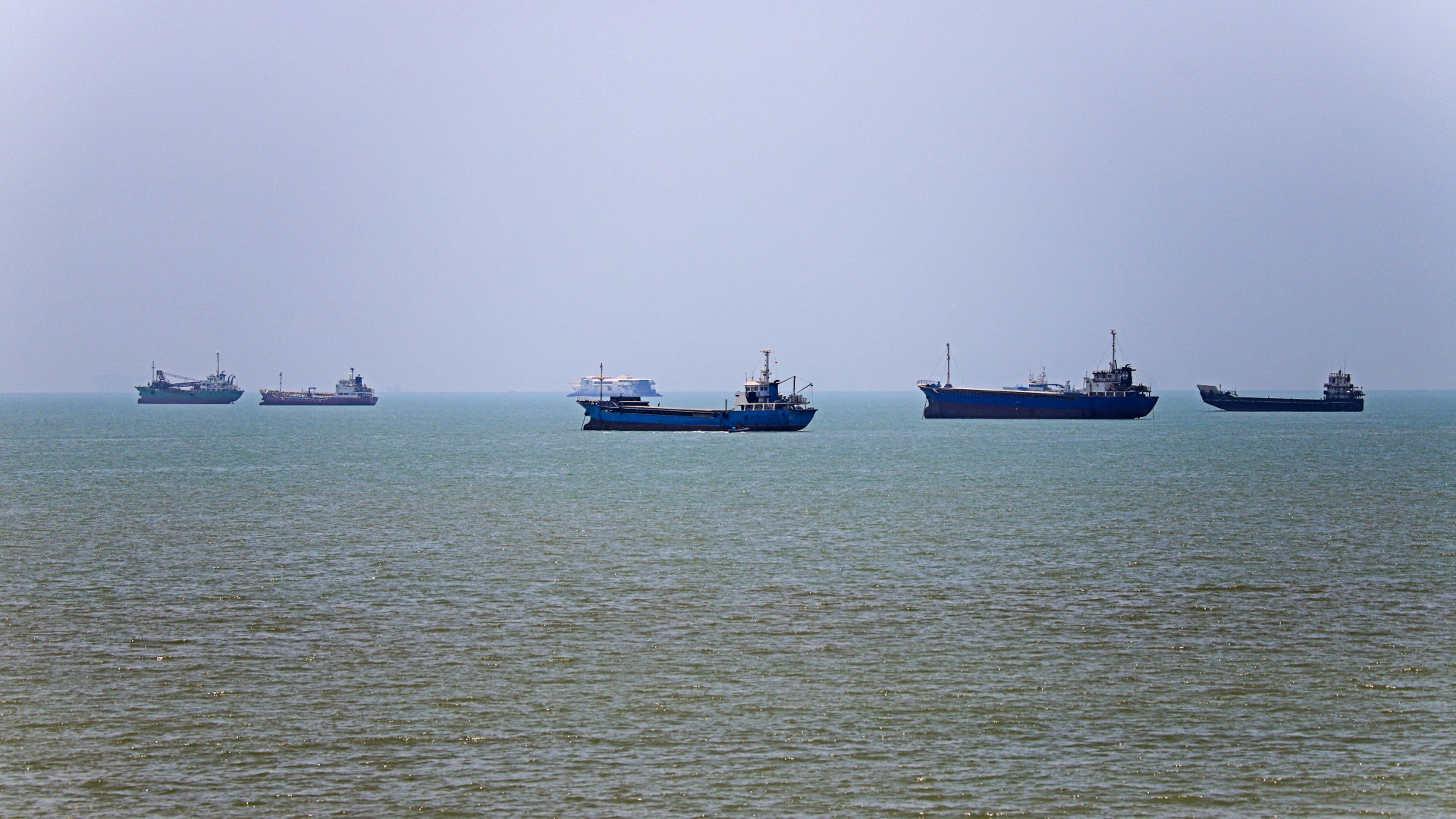
Tensions in the Middle East have escalated sharply once again after Iran ordered a full closure of the strategically critical Strait of Hormuz, a retaliatory move triggered by Israeli military attacks on southern Lebanon that violated a newly brokered ceasefire. The closure order was first issued by Iran’s Khatam-al Anbiya Central Headquarters in an official statement carried by the country’s state-run Mehr News Agency, with confirmation and a formal security warning later issued by the Islamic Revolutionary Guard Corps (IRGC).
In its official announcement, the Khatam-al Anbiya headquarters confirmed that all commercial vessel traffic through the key waterway has been suspended, framing this measure as an initial, proportional response to what it described as the enemy’s breach of signed ceasefire commitments. The statement warned that if Israeli aggression continues, Iran will implement additional, more far-reaching countermeasures to force adversaries to uphold their international agreements. The IRGC echoed this warning, advising all civilian and commercial vessels to avoid approaching the strait for their own safety, noting that any unauthorized entry would put vessels and crews at severe security risk. In its justification for the closure, the IRGC explicitly named two triggering factors: ongoing Israeli strikes against Lebanese territory and repeated violations of the ceasefire framework by the United States.
The Strait of Hormuz is one of the world’s most vital energy chokepoints, carrying roughly 20 percent of the global supply of crude oil and liquefied natural gas every day. This is not the first closure of the waterway in 2025: Iran effectively shut down the strait for nearly four months starting in late February, when Israel and the United States launched large-scale military operations across the region. The strait was only reopened earlier this week, after U.S. President Donald Trump and Iranian President Masoud Pezeshkian signed a preliminary truce agreement to end hostilities across all fronts, including the Lebanese-Israeli border.
The latest closure followed a deadly wave of Israeli air and ground strikes across southern Lebanon launched on Saturday, just one day after Israel and the Lebanese armed group Hezbollah reached a Qatari- and U.S.-mediated ceasefire deal. The civilian death toll from Saturday’s attacks has risen to at least 29, according to multiple Lebanese official sources.
Lebanon’s civil defense agency confirmed that 16 people were killed and 12 more wounded in a series of targeted strikes on the southern city of Nabatieh. Lebanon’s National News Agency (NNA) reported that an Israeli strike on the village of Barish, located near the coastal city of Tyre, killed four members of a single civilian family. Near the major southern city of Sidon, another Israeli attack on a local village left at least seven people dead and 13 others injured. Additional strikes claimed one life in the Shehour municipality of Tyre, another in the town of Sohmor in Lebanon’s western Beqaa Valley, and one Lebanese army officer was killed in an air strike targeting the Kfar Rumman-Nabatieh road, according to an official statement from the Lebanese military.
In its official statement following the officer’s death, the Lebanese army condemned the unprovoked attacks, noting that the continued brutal Israeli assaults have the clear goal of derailing any diplomatic effort to restore lasting stability to Lebanese territory.
The breaches of the ceasefire come at a critical diplomatic moment, as Iran and the U.S. move forward with efforts to implement a broader memorandum of understanding (MoU) designed to end cross-regional hostilities. The Friday ceasefire between Israel and Hezbollah was secured after weeks of mediation by Qatari and U.S. diplomatic teams, with follow-up implementation talks scheduled to take place over the weekend at a secure venue in Switzerland. Iran’s foreign ministry confirmed that its official negotiating delegation planned to travel to Switzerland to follow up on the agreement and demand that all counterparties meet their signed commitments, according to comments from ministry spokesperson Esmail Baghaei carried by the official Islamic Republic News Agency.
Switzerland’s foreign ministry confirmed Saturday that it had prepared a discreet, secure venue at Burgenstock to host the implementation talks, describing the location as a neutral, reliable setting for the sensitive negotiations. Citing the confidentiality of the discussions, the ministry declined to release further details on participating delegations or the specific content of the talks under way.
The closure of the strait is expected to send immediate shockwaves through global energy markets, given the waterway’s outsize role in global fossil fuel trade, and raises fears of a further widening of hostilities across the Middle East that could disrupt global energy supplies for an extended period.