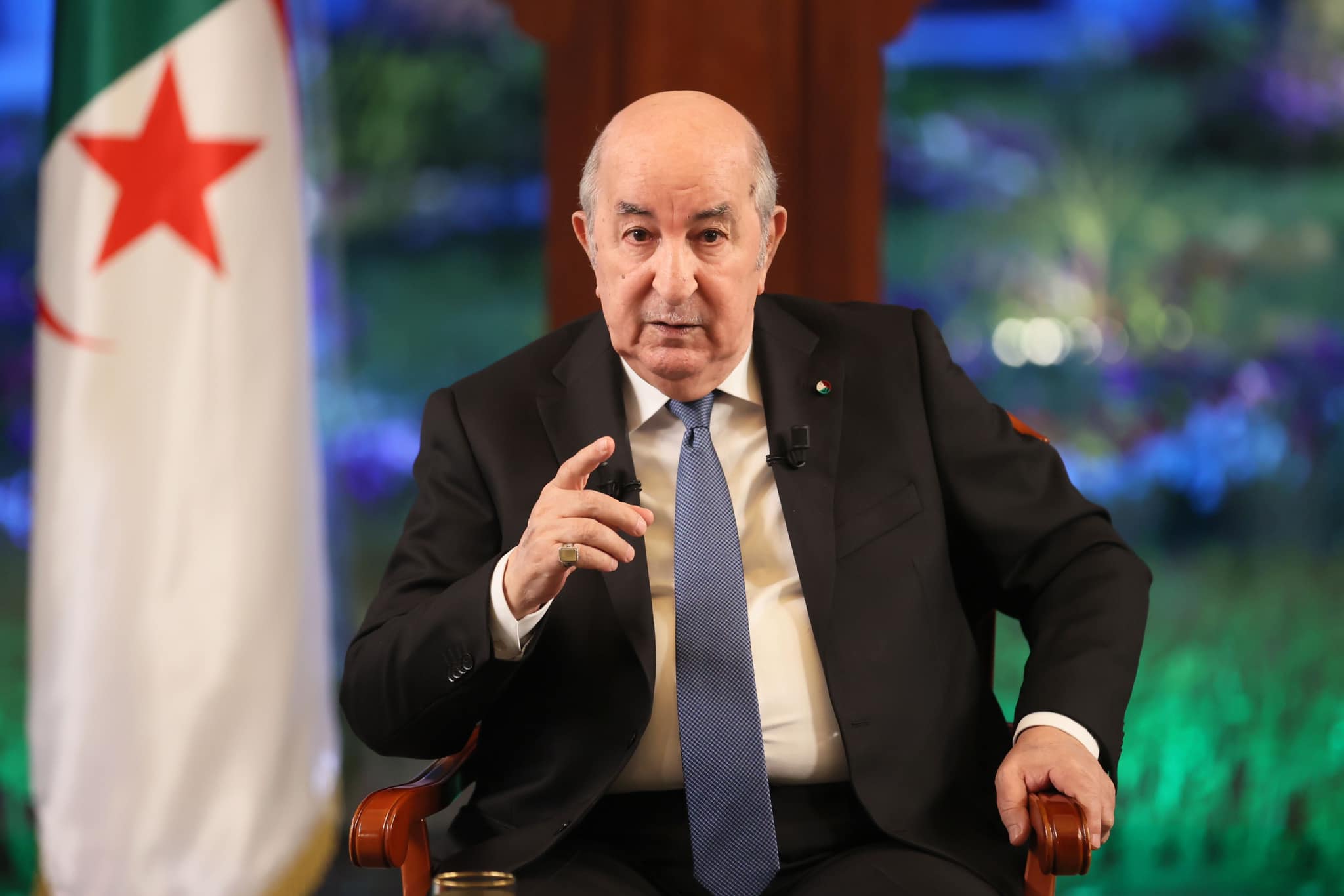
In a fiery televised address this week, Algerian President Abdelmadjid Tebboune has issued a stark pledge to protect neighboring Tunisia from what he frames as coordinated external threats, warning that any aggression against Tunis would be treated as an attack on Algeria itself. During the Monday interview, the Algerian leader emphasized that his nation has no hostile intentions toward any regional state, but will not stay idle when the security and stability of its close ally is put at risk. Using a vivid colloquial Algerian Arabic turn of phrase, Tebboune warned that any actor that brings terrorism to Tunisia or its border regions would face overwhelming, decisive retaliation. Tebboune went on to claim that unnamed parties are pursuing a deliberate strategy to first cut diplomatic and economic ties between Tunis and Algiers, before moving to undermine the Tunisian government itself. Though he stopped short of naming all the actors he accused of plotting against the bilateral alliance, he renewed existing allegations that the United Arab Emirates has actively worked to destabilize Algeria in recent months. Tebboune’s remarks arrive at a moment of profound crisis for Tunisia, both domestically and internationally. The North African nation is currently grappling with one of the most severe electricity shortages it has seen in a decade, with extended rolling blackouts cutting power to residential neighborhoods, commercial operations and public services across the country amid record summer high temperatures. The crippling outages have sparked widespread public anger, forcing renewed scrutiny of the government’s management of national infrastructure five years after President Kais Saied’s 25 July 2021 power consolidation, when he suspended the elected parliament, dismissed the sitting government and began ruling by executive decree. Since Saied seized full executive authority, dozens of politicians, legal professionals, judges, journalists and grassroots activists have been detained or prosecuted in a crackdown that international human rights organizations have labeled an unprecedented attack on political pluralism and civil liberties in the country. Saied has consistently rejected claims of political persecution, maintaining that Tunisia retains an independent judicial system and that all defendants facing charges are being tried for standard criminal violations, not their political beliefs. When Saied first moved to consolidate power in 2021, Algeria initially called for an immediate return to constitutional governance. However, Algiers has since evolved into Saied’s most critical regional backer, providing consistent political support as Tunisia has become increasingly isolated from Western governments over its documented democratic backsliding. Over the past several years, the relationship between the two North African leaders and their respective administrations has deepened dramatically, with both framing their partnership as a strategic alliance rooted in overlapping regional security priorities. Last year, the two governments signed a landmark new defense cooperation accord covering areas including joint military training, cross-border intelligence sharing, border security coordination and combined military exercises. Only limited details of the agreement have been released to the public, a lack of transparency that sparked sharp criticism from Tunisian opposition groups, who accuse the Saied administration of hiding the treaty’s terms from the public. Speculation around an unauthorized leaked draft of the agreement also fueled claims that Tunis is surrendering key elements of national sovereignty to its larger neighbor. The growing bilateral alliance has also reignited long-running domestic debate in Tunisia over the country’s increasing economic and political dependence on Algeria. The two neighbors already maintain close collaboration on counterterrorism operations, border management and energy trade, and Algeria has emerged as one of Tunisia’s most important economic partners in recent years. But critics argue that the power imbalance in the relationship has grown sharply since Saied consolidated authority, with the Tunisian president aligning Tunisian foreign policy almost entirely with Algeria’s regional positions. In a notable break from decades of Tunisian neutrality on the Western Sahara dispute, Saied hosted Brahim Ghali, leader of the Polisario Front, in Tunis in 2022, a move that triggered a major diplomatic dispute with Morocco. Human rights groups have also raised concerns about expanding judicial cooperation between the two governments, pointing to the extradition of Tunisian opposition figure Seif Eddine Makhlouf from Algeria earlier this year, which took place despite formal objections from multiple international rights organizations.
标签: Asia
亚洲
-
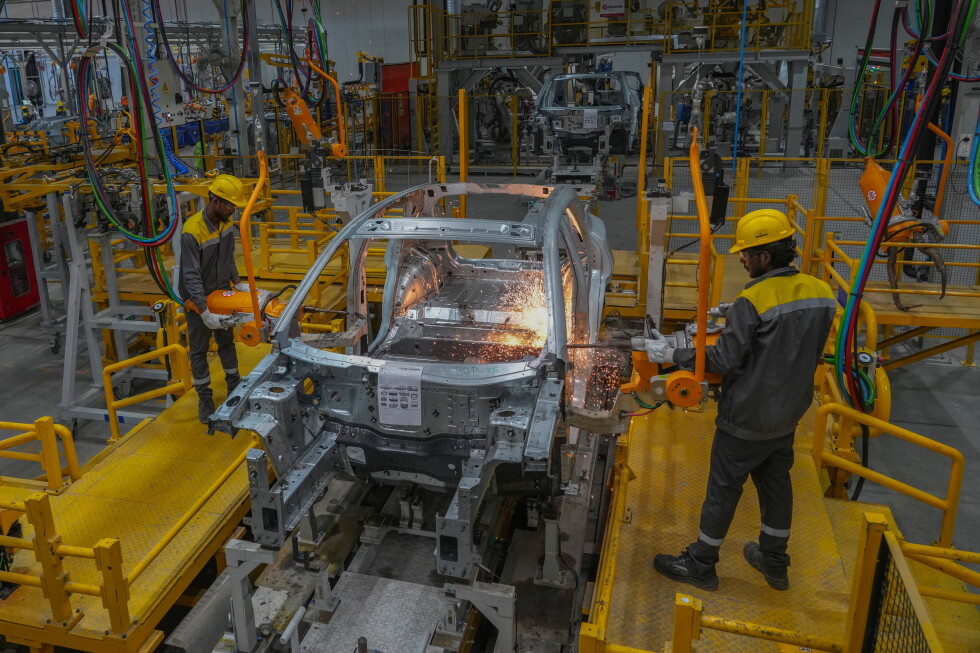
Vietnam’s biggest company, Vingroup, expands overseas as its home market slows
Against a backdrop of cooling domestic growth and shifting national economic priorities, Vietnam’s largest private conglomerate Vingroup has launched an ambitious global expansion push, with nearly 24 planned projects across at least 15 countries spanning Central Asia, South Asia, Africa and Europe. This overseas pivot comes as the company’s core domestic profit driver — its flagship real estate division — faces mounting headwinds, and it seeks new revenue streams to fund its high-stakes ambitions in electric vehicles, artificial intelligence and advanced robotics, sectors that sit at the heart of Vietnam’s broader goal to emerge as Asia’s next high-growth tiger economy.
For decades, Vingroup fueled its diversification from real estate into new manufacturing and technology sectors with profits from its booming domestic property market. But that model has broken down in recent years: Vietnam’s once red-hot property sector has cooled sharply, with unaffordable home prices in major urban centers and a glut of unsold units in secondary markets pushing the company’s Vinhomes division to halt domestic land bank expansion to focus on completing existing projects. At the same time, Vingroup’s loss-making electric vehicle subsidiary VinFast, which has struggled to gain traction in saturated Western markets after its 2023 U.S. launch and Nasdaq listing, posted a $3.87 billion net loss in 2025 and recently shifted its core growth focus to emerging markets.
The expansion pushes Vingroup into a diverse range of projects tailored to local market needs. In Central Asia, where Uzbekistan has actively courted extra-regional foreign investment since loosening Soviet-era state controls in 2017, Vingroup signed a December agreement to build a mixed-use “Vietnam Town” in Tashkent, the country’s capital. Modeled after the conglomerate’s successful domestic developments, the project will integrate residential housing, retail centers, healthcare facilities, schools and electric vehicle charging infrastructure. This focus on Central Asia aligns with Vietnam’s own growing regional trade ties: bilateral trade between Vietnam and Uzbekistan grew 26.5% to $202 million in 2024, and Vietnam upgraded its partnership with Kazakhstan to a strategic partnership in 2025. Regional analysts note Central Asian nations are actively diversifying trade partners beyond Russia following its 2022 invasion of Ukraine, and are eager to balance growing Chinese investment with deeper ties to other dynamic Asian economies.
In South Asia, Vingroup is building on rapidly growing bilateral ties between Vietnam and India, where total trade tripled from $5.4 billion in 2016 to a record $16.4 billion in 2025. The conglomerate’s Indian portfolio already includes a VinFast EV factory in Tamil Nadu, an electric taxi service launched in New Delhi in June, and signed agreements for smart city developments, hospitals, schools, a theme park and a zoo across multiple states. It has also expanded into Southeast Asia, with an EV factory under construction in Indonesia and an electric taxi service already operating in the Philippines.
Across Africa, Vingroup is pursuing large-scale infrastructure and e-mobility projects to tap into fast-growing demand for zero-emission transport and urban development. In the Democratic Republic of Congo, the company has agreed to develop a 6,300-hectare riverfront smart city between the Congo River and Kinshasa’s international airport, while VinFast plans to supply hundreds of thousands of EVs and electric buses to support the DRC’s national plan to replace its fossil fuel vehicle fleet. In West Africa, Vingroup has partnered with Ghana’s Jospong Group to distribute VinFast’s electric cars, scooters, bicycles and buses across the region. Analysts point to Ghana as a particularly strategic market for VinFast, thanks to its eight-year EV tax incentive guarantee, 35-million-plus population, established car market and limited competition from Chinese EV manufacturers.
In Europe, Vingroup’s plans include a facility to develop motors and moving components for industrial robotics in Germany, rounding out its global footprint across emerging and developed markets.
Vingroup’s global push aligns with a broader shift in Vietnam’s national economic strategy. For decades, the country lifted millions out of poverty through an export-led growth model heavily dependent on a small number of key foreign markets, with the U.S. accounting for more than 30% of total Vietnamese exports. But that model came under severe strain after former U.S. President Donald Trump imposed sweeping tariffs on Chinese and Vietnamese goods, exposing the risks of over-reliance on a handful of export destinations. In a recent speech at the Shangri-La Dialogue, Communist Party General Secretary To Lam acknowledged the shift, noting that “growth is slowing. Public debt and the cost of capital are rising. Climate change is threatening the livelihoods of hundreds of millions. Disruptive technologies create immense opportunities, but also new divides.” Like China before it, Vietnam now aims to build homegrown globally competitive corporations that can drive the next phase of national economic growth.
Vingroup’s leadership is betting that its tested domestic business model — starting with large-scale real estate development, then adding complementary community infrastructure such as hospitals, schools and retail before expanding into consumer goods like EVs — can be replicated in other developing economies at similar stages of growth. The company’s founder Pham Nhat Vuong first built his fortune manufacturing instant noodles in 1990s Ukraine before pivoting to large-scale housing development in Vietnam, growing the conglomerate into the country’s largest private sector player through this iterative integrated development strategy.
Despite its ambitious plans, the expansion faces significant potential obstacles. Analysts note that many large megaprojects in the DRC never move beyond the initial agreement stage, and the country’s weak infrastructure, limited widespread smartphone penetration and lower average incomes may limit demand for the type of integrated urban development Vingroup plans to build. Even as VinFast has shifted to emerging markets, it will also face growing competition from established global and regional players as it scales up its operations across multiple continents.
-
Man killed in landslide at Solomon Islands gold mine, police say
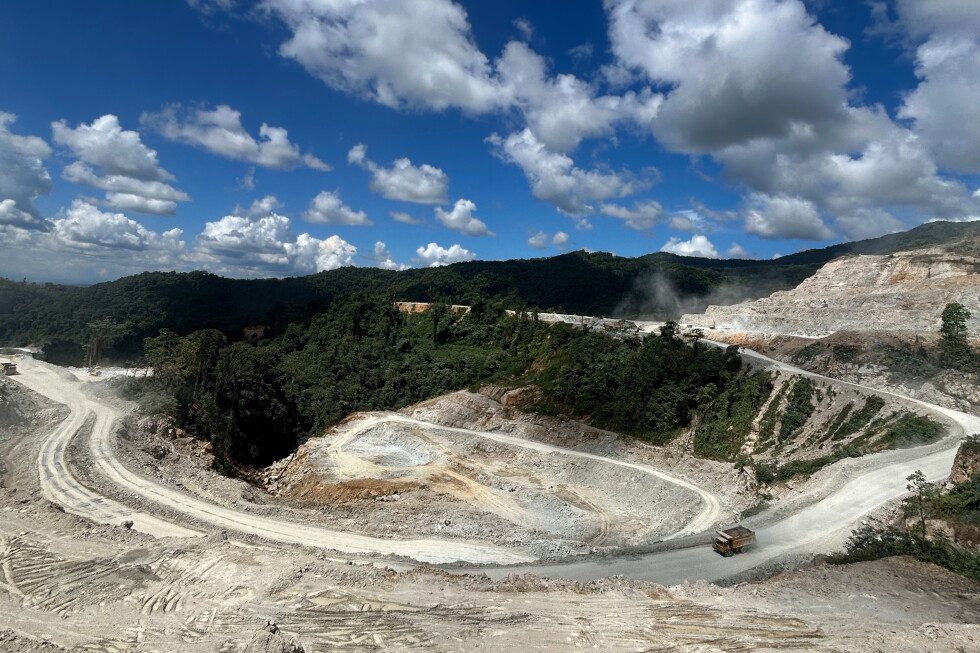
In a tragic update on a landslide at a key Solomon Islands gold mine, authorities have confirmed the recovery of one person’s body, with search operations set to continue amid unconfirmed reports of additional unaccounted-for people at the site. The disaster struck Monday at the open-pit Gold Ridge mine, located on Guadalcanal island, just a short distance from the Solomon Islands’ capital Honiara, in the South Pacific.
Police confirmed Tuesday that the recovered victim is Ashley Olo, though officials have not publicly confirmed whether Olo was an official employee of the mining operation. Acting Police Commissioner James Aitorea added that Olo’s remains have already been returned to his family for burial. The landslide left a 100-meter stretch of the mine’s main access road destroyed, according to official police statements.
When the landslide first occurred, Prime Minister Matthew Wale told reporters that the government’s top priority would be determining the root cause of the disaster, particularly whether poor industry practices contributed to the tragedy. “Of interest to the government, of course, is to find out whether this was a result of poor mining practices and perhaps the need to strengthen regulations,” Wale said Monday, when no casualties or missing persons had yet been confirmed.
In an initial statement released the day of the slide, the mine’s majority owner, China-headquartered and Hong Kong-listed Wanguo Gold Group Ltd, claimed that none of its official employees were injured or missing, and that no mining infrastructure had sustained damage. The company added that commercial mining operations had already resumed shortly after the incident.
However, local media reports have raised questions about the presence of unregistered informal miners at the site, with multiple families reporting that their relatives who were working the mine illegally have not been contacted since the landslide. The Gold Ridge mine has a long history of controversy, dating back more than a decade. It was originally owned by an Australian mining firm, which sold off the asset in 2015 after public warnings that the site was at high risk of flooding and other geohazards. Since 2019, Wanguo Gold Group has held a majority stake in the operation, with local Solomon Islands landowners holding a small minority share. It remains the only large-scale commercial gold mine in the Solomon Islands. Past conflicts have already broken out at the site between local landowners, unregulated informal miners, and national law enforcement, long before Monday’s deadly landslide.
Authorities have stressed that search and rescue efforts will continue at the site until all potential missing persons are accounted for, even after the recovery of Olo’s body. The cause of the landslide remains unconfirmed as of the latest updates, with the government set to launch a formal investigation into industry practices at the mine.
-
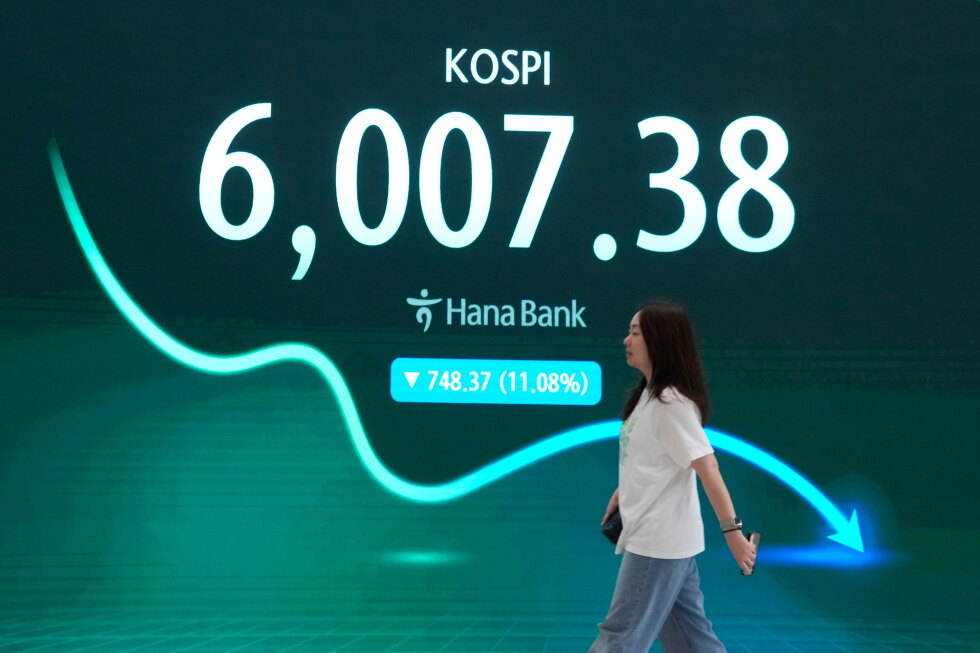
South Korea’s Kospi share index falls 8%, other Asian shares are also mostly lower
A widespread sell-off of semiconductor stocks sparked a sharp single-day drop across South Korean equities on Wednesday, dragging most other major Asian benchmark indexes into negative territory as investor sentiment turned bearish for the region’s tech manufacturing sector.
The downward spiral began at South Korea’s leading memory chipmaker SK Hynix, which saw its share price plummet 12.6% by midday trading in Seoul. The steep decline came despite the firm reporting that its full-year operating profit had surged sixfold year-over-year to a new all-time high of 60.5 trillion won, equal to roughly $41.2 billion. Market participants reacted negatively to the results after the company’s fourth-quarter earnings fell short of the consensus forecasts compiled by Wall Street analysts, triggering a wave of panic selling that spread across the entire chipmaking sector.
South Korea’s benchmark Kospi Composite Index absorbed the full brunt of the selling pressure, sinking 8% to 5,547.77 by the midpoint of the daily trading session. Industry peer Samsung Electronics, the world’s largest memory chip manufacturer, could not escape the rout, with its share price falling 8% to add more downward momentum to the broader index.
The negative sentiment spilled over across regional markets, leaving most major Asian benchmarks in the red by the middle of the trading day. Japan’s Nikkei 225, one of the region’s most closely watched large-cap indexes, declined by 1.1% from its previous close. Taiwan’s Taiex, which is heavily weighted toward the global semiconductor industry, fell an even steeper 3.6%. In mainland China, the Shanghai Composite Index also posted a modest loss of 0.5%, extending the broad-based downturn across Asian equity markets.
-
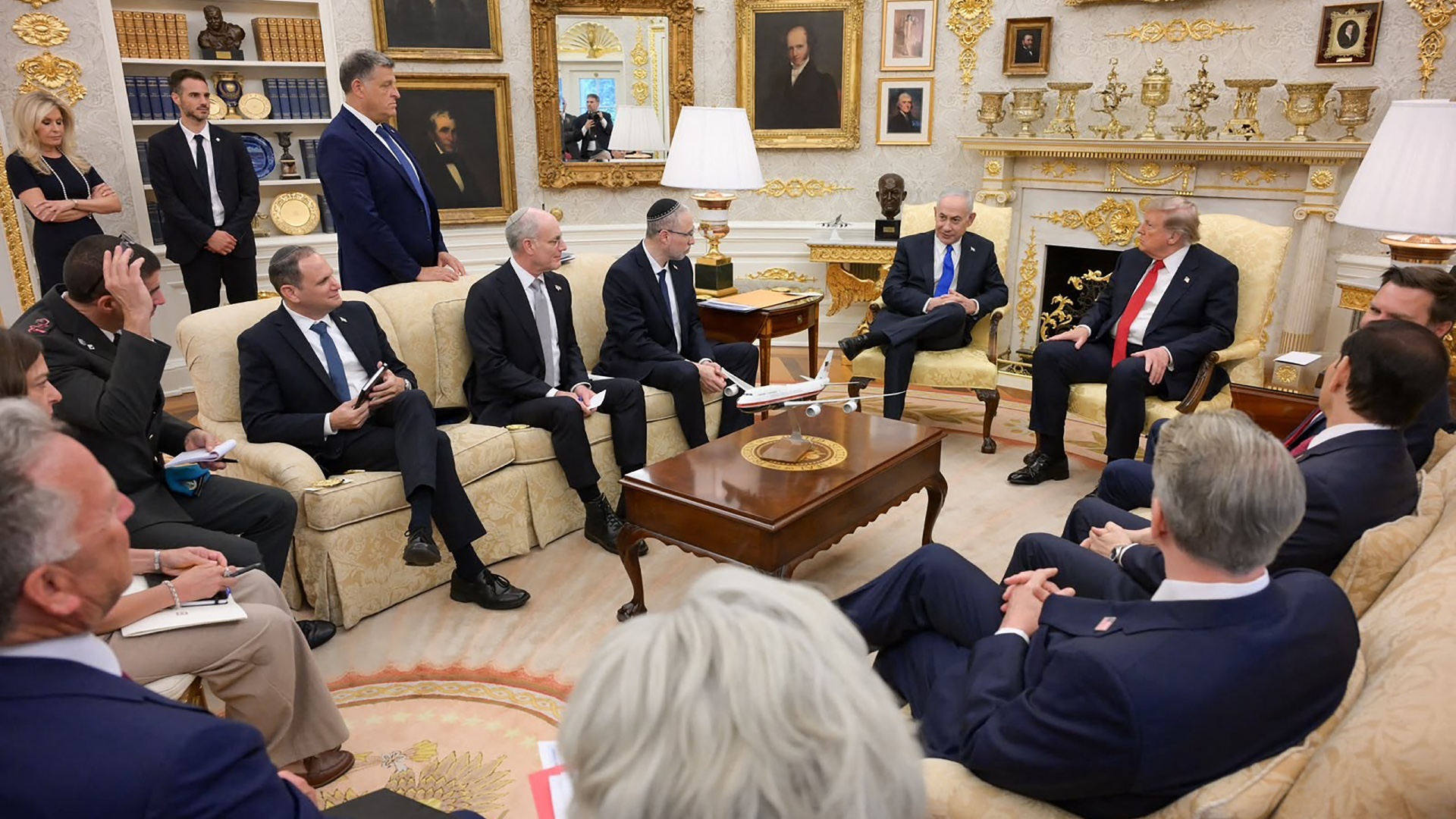
Netanyahu’s quiet visit to Washington highlights Trump’s frustration with the leader
With just three months remaining until Israel’s most consequential election of his decades-long political career, Israeli Prime Minister Benjamin Netanyahu traveled to Washington D.C. for a urgent closed-door meeting with U.S. President Donald Trump — a trip analysts say was only made possible by a sudden, unexpected death that opened a rare window for the Israeli leader to court Trump’s endorsement ahead of the vote.
The core of Netanyahu’s re-election strategy hinges on cementing his reputation as the only Israeli politician who can command unwavering backing from the U.S. president, and safeguard the critical strategic and security alliance that forms a lifeline for Israeli leadership. The opportunity for this White House meeting arose after prominent pro-Israel advocate and Trump confidant Lindsey Graham passed away suddenly earlier this month, according to Aaron David Miller, a former U.S. State Department senior advisor on Palestinian-Israeli negotiations and current senior fellow at the Carnegie Endowment for International Peace. “The visit would not be taking place, had Lindsey Graham not passed,” Miller told Middle East Eye.
Since Trump’s return to the presidency in January 2025, no other foreign leader has secured more one-on-one time with the U.S. commander-in-chief than Netanyahu. But this 90-minute closed-door meeting carried far greater urgency than previous encounters: it came on the heels of a series of high-profile meetings Trump held with other regional leaders, including Turkish President Recep Tayyip Erdogan, Syrian President Ahmed al-Sharaa, Iraqi Prime Minister Ali al-Zaidi and Lebanese President Joseph Aoun.
Disagreements between the two leaders have bubbled into public view in recent weeks, centered on Netanyahu’s push for continued U.S. military involvement targeting Iranian nuclear-linked facilities, a position Trump has openly pushed back against. When asked by Fox News about Netanyahu’s public warnings about activity at Iran’s Pickaxe Mountain nuclear-related site, Trump made his frustration clear. “I don’t need Bibi to tell me that. Bibi is telling me that because he wants me to stay involved. I mean, I don’t necessarily [want to],” Trump said in a Tuesday phone interview. He added, “I heard Bibi announce that [and] I said, ‘Why don’t you just tell it to me? Why do you have to announce it to the world?’ I know exactly what’s going on at Pickaxe. It’s not a big problem. We took out their nuclear sites, and we’ll have to take out Pickaxe if we don’t make a deal.”
Nizar Farzakh, a former advisor to Palestinian leadership in Ramallah and current lecturer at George Washington University, argues Netanyahu’s renewed focus on the Iranian threat stems from a lack of tangible progress on Israel’s campaigns in Gaza and Lebanon. “Only Netanyahu wants the war [in Iran]. Everybody – literally everybody else – does not want escalation. So I guess he’s coming to fix what all the others have ruined,” Farzakh explained to Middle East Eye.
Tensions also emerged over Trump’s open consideration of resuming F-35 fighter jet sales to Turkey, a move Netanyahu has publicly opposed. When asked about Netanyahu’s disapproval aboard Air Force One, Trump reaffirmed his close ties to Erdogan and pushed back on any Israeli interference in U.S. foreign policy. “Nobody tells me what we should be selling. And now Turkey has been a tremendous ally for me… Turkey’s not a big fan of Israel. You know that, right?” Trump said.
While both the White House and Netanyahu attempted to frame the meeting as positive and productive — with Netanyahu calling it “one of the best conversations I’ve ever had with a president of the United States, our friend Donald Trump” — analysts say the closed-door format signals far more underlying disagreement than public statements acknowledge. Miller noted that Trump has broken with decades of U.S. presidential precedent by openly criticizing and challenging Netanyahu, leaving him with unprecedented leverage over the Israeli leader just as he faces a make-or-break election that could determine not just his political future, but his personal freedom.
“[Trump] has said things about an Israeli prime minister that no American – none of his predecessors – has ever said… He has mocked the prime minister. He has allowed his profanity-laced phone conversations to be leaked. He opened a dialogue with Hamas without Israel’s knowledge. He did a deal with the Houthis over and above the objections of the government of Israel,” Miller recounted. “And right now, 90 days before the most consequential election in Benjamin Netanyahu’s political life, which could involve his personal freedom, [Trump] has more leverage over this Israeli prime minister than any of his predecessors have ever had at any given moment.”
Netanyahu has faced ongoing corruption investigations in Israel since 2019, and could face up to 10 years in prison if convicted on current charges, which he denies. Compounding his vulnerability is the fact that the U.S. remains one of the only major world powers where he can travel without risk of arrest, after the International Criminal Court issued an arrest warrant for him on war crimes and crimes against humanity charges linked to Israel’s military campaign in Gaza nearly two years ago.
Netanyahu’s motorcade through Washington D.C. was met by large crowds of anti-Israel protesters, who waved Palestinian flags and chanted calls labeling the prime minister a war criminal. New polling released this week underscores deep public division in the U.S. over Netanyahu’s visit: a joint Economist/YouGov poll of 1,559 U.S. adults released Tuesday found 49% of respondents believe Netanyahu should be arrested if he stays on U.S. soil, compared to just 27% who oppose arrest and 23% who are undecided. Support for arrest is strongest among respondents under 50 and non-white Americans.
Separate polling from YouGov and CBS News, released last week, further highlights broad public opposition to continued conflict. The poll found 67% of Americans want the U.S.-Israeli military campaign against Iran to end immediately, with overwhelming support for a ceasefire among adults under 30. Broken down by party affiliation, 92% of Democratic voters, 73% of independent voters, and 30% of Republican voters support an immediate end to the war.
Farzakh argues Trump is actively seeking an exit strategy from the Iran conflict, a goal that directly clashes with Netanyahu’s domestic political calculus. “Nothing is working with Iran. Iran keeps getting stronger,” Farzakh said. “[Trump is] way in over his head with this, and he’s trying to find an exit strategy.” That exit strategy, he added, is impossible if Netanyahu’s re-election depends on branding himself as Israel’s “Mister Security” by pushing for ongoing escalation. Netanyahu is next scheduled to return to the U.S. for the United Nations General Assembly in September.
-
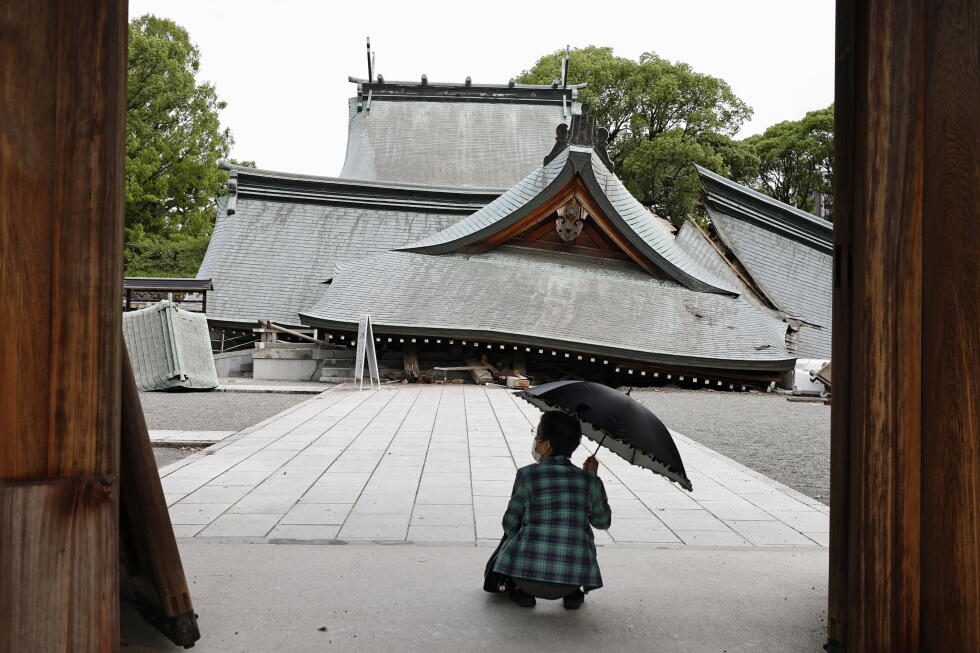
Death toll rises to 13 as rescuers search for the missing after Japan earthquake
A powerful magnitude 7.1 earthquake that hit the Kumamoto region of Japan’s southern Kyushu island has left at least 13 people dead, with emergency teams scrambling on Wednesday to locate and rescue dozens more trapped in collapsed structures across the disaster zone. The seismic event struck shortly after 4 p.m. local time on Tuesday, roughly 540 miles southwest of Tokyo, leaving a trail of collapsed buildings, damaged infrastructure and displaced residents in its wake.
Japanese Prime Minister Sanae Takaichi confirmed the death toll early Wednesday, stressing that the operation to reach missing survivors remains a critical race against time. “There are people who are still waiting to be rescued, and it is a race against time,” Takaichi told reporters. “We will go all out to find and rescue as many people as we can.” The prime minister extended official condolences to the families of those killed, and urged quake survivors to take extra precautions amid ongoing high temperatures in the region.
Local emergency officials confirmed multiple sites of major structural collapse that have trapped civilians. In Kashima Town, the second floor of a busy Aeon Mall caved in during the shaking, leaving an undisclosed number of people trapped inside the rubble. At the Yatsushiro production facility operated by Nippon Paper Industries Co., a tall factory chimney collapsed, also trapping workers under fallen debris.
Japan’s Self-Defense Forces have mobilized alongside local rescue crews to conduct search operations at damaged sites, and are already distributing life-sustaining supplies including clean water, food and other basic necessities to communities cut off or heavily impacted by the quake.
Ongoing assessments of infrastructure and public safety have so far delivered some reassuring updates: Japan’s Fire and Disaster Management Agency confirmed no critical damage to major public facilities or key national infrastructure, while the Nuclear Regulation Authority reported no abnormalities detected at three nuclear power plants located near the quake’s epicenter.
Medical teams have mobilized to treat the injured: Kyodo News reports that one hospital in Yatsushiro city has admitted around 40 people with quake-related injuries, while another 50 injured residents have been transported to medical facilities in Kumamoto’s prefectural capital.
The quake also disrupted transport and industrial activity across the region. Most major manufacturers based in Kyushu suspended operations immediately after the seismic event on Tuesday, though early inspections found no major structural damage to production facilities, and most firms intend to restart normal operations on Wednesday. Aso Kumamoto Airport’s main runway was closed immediately after the quake, with no official timeline for reopening released as of Wednesday morning. At Yatsushiro Station, one passenger train derailed and tipped onto its side during the shaking.
One iconic cultural site also suffered new damage: Kumamoto Castle, a top regional tourist attraction that was heavily damaged in a deadly 2016 Kumamoto quake and remains under ongoing restoration, saw multiple stone walls damaged in this latest seismic event. For many long-term residents, the intensity of Tuesday’s shaking brought back traumatic memories of the 2016 disaster, which killed at least 50 people. “The shaking reminded me of the Kumamoto quake 10 years ago and I was frightened,” said Hiroki Shimoda, an official at Mifune town hall, who witnessed roof tiles fall from nearby homes during the quake.
Officials are warning local residents to remain on high alert in the coming days. Shinji Kiyomoto, a representative of the Japan Meteorological Agency, urged people in the affected region to stay cautious over the next 48 to 72 hours, as strong aftershocks remain highly likely.
-
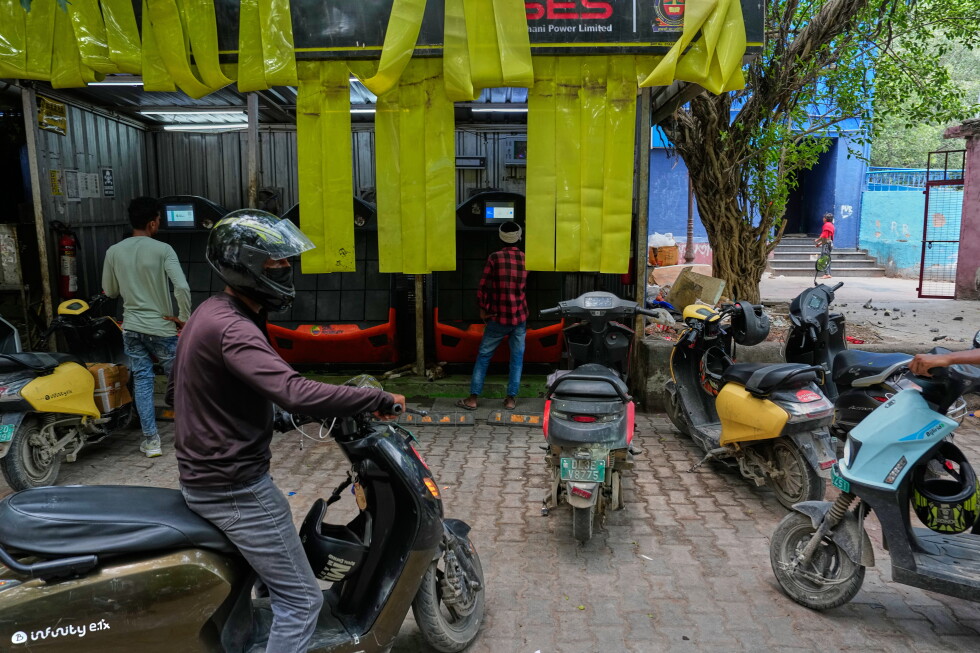
India’s capital part of aggressive electric vehicle targets in bid to curb air pollution
NEW DELHI, July 2026 – On a typical weekday in one of New Delhi’s wealthiest residential districts, electric vehicle charging hubs adjacent to a busy shopping center hum with activity. Drivers of electric two-wheelers, passenger cars and small commercial trucks queue up to top up their batteries, a small but growing daily routine that reflects a landmark shift underway in India’s pollution-choked capital. On July 1, the Delhi government rolled out one of the most aggressive electric vehicle transition policies in India, setting binding deadlines to phase out new registrations of gasoline and diesel-powered vehicles in a bid to tackle the city’s chronic toxic air pollution.
Under the new policy, Delhi aims to make the vast majority of newly registered vehicles fully electric by 2027. While no existing gas-powered vehicles will be removed from roads immediately, policymakers project their numbers will decline steadily in the coming years as the transition takes hold. The policy maps out clear, sequential deadlines for high-priority vehicle segments: starting in 2027, all newly registered three-wheelers and small cargo trucks must be electric, with two-wheelers following suit in 2028. These two vehicle categories make up nearly 70% of all registered vehicles in Delhi and account for almost half of the city’s total vehicular air pollution.
To encourage adoption, the policy offers robust financial incentives. Buyers of new electric vehicles can qualify for subsidies of up to 50,000 rupees ($522), while residents who scrap their old gas-powered vehicles can receive payouts of up to 100,000 rupees ($1,044). It also includes waivers on registration fees and select road taxes, and allocates funding for a massive expansion of public charging and battery swapping infrastructure across the city. The entire 10-year transition plan is projected to cost the Delhi government 150 billion rupees ($1.5 billion).
Energy and environmental experts across India have hailed the policy as a groundbreaking step for clean mobility in the country. “Delhi’s EV policy is one of the most ambitious policies that I have seen in India,” said Jaideep Saraswat, who leads clean power and electric mobility work at the non-profit Vasudha Foundation. “The binding deadlines send a clear signal to automakers and consumers alike that this transition is inevitable.” Delhi has a long history of pioneering clean transport policies in India: it was the first major city to shift public transit to compressed natural gas decades ago to cut pollution, a move that set a national precedent.
Ruchita Shah, an energy analyst at global climate think tank Ember, notes that Delhi is already outpacing the rest of the country in EV adoption. In the 2026 financial year, electric vehicles made up 12.7% of new vehicle sales in Delhi, compared to just 8.3% nationwide. So far, only around 5% of Delhi’s 8.7 million total registered vehicles are electric, but registrations have surged over the past 12 months, with more than 100,000 new EVs added – most of them two and three-wheelers.
Shah added that the policy’s most innovative feature is its pairing of consumer subsidies with firm regulatory deadlines that will block new registrations of gas-powered vehicles in high-emission segments, creating clear certainty for the market. For a city that regularly faces winter smog so severe it forces school closures, construction halts and emergency public health orders, the transition is expected to deliver major public health gains. Vehicles contribute roughly 25% of all air pollution in Delhi’s National Capital Region, and cutting vehicular emissions is expected to dramatically reduce public exposure to toxic roadside pollutants that cause respiratory and cardiovascular disease.
Still, analysts and drivers agree that major hurdles remain before the policy can deliver on its promises. The most pressing challenge is expanding EV charging infrastructure fast enough to meet growing demand. Current charging networks remain insufficient to serve the expanding fleet of EVs, drivers say. “Charging facilities are not up to the mark yet,” said Shyam Singh, a marketing executive who owns an electric two-wheeler. For drivers traveling longer distances, limited battery range and a lack of widespread charging points make switching to EVs impractical for many right now.
Many potential buyers remain hesitant to make the switch. Siddhant Jha, a 22-year-old software engineer who lives in North Delhi, says he plans to wait several years before replacing his gasoline two-wheeler. He has concerns about EV battery lifespan, damage to electrical components from Delhi’s annual monsoon street flooding, and the current high upfront cost of new electric models. “I’d like to wait for a few years for better models, then the 150,000 rupees I’ll spend will make more sense,” he explained.
Beyond charging access, experts warn that Delhi must also upgrade its electricity grid to handle the surge in demand from EV charging, particularly the high-capacity fast chargers needed for buses, passenger cars and cargo trucks. Most EV charging currently happens overnight, when solar power generation is offline, meaning most charging relies on electricity from fossil fuel-powered thermal plants. To maximize the climate and air quality benefits of the EV transition, analysts say Delhi will need to expand renewable energy capacity, add battery storage at charging stations, and implement time-of-use electricity pricing to encourage drivers to charge when renewable output is higher.
Sunil Dahiya, founder of environmental research organization Envirocatalyst, cautioned that even with the policy in place, air quality improvements will take time to materialize. Existing gas, diesel and CNG vehicles will remain on roads for years after the new policy takes effect, so emissions will not drop overnight.
Other Indian states, including Maharashtra, Karnataka, Telangana and Tamil Nadu, have already introduced EV incentives, tax breaks and investments in charging infrastructure, but Delhi is the first to set formal deadlines to phase out new registrations of gas-powered vehicles. Looking ahead, Saraswat says Delhi’s next big challenges will be coordinating with neighboring states to decarbonize the regional electricity grid and expand electrification across public transport networks. For residents hopeful of an end to Delhi’s crippling winter smog, the policy marks a long-awaited turning point. “As a resident of Delhi, I’m sure each and every one will be extremely thrilled to have this policy, to see a winter where there is no smog, no pollution,” Saraswat said.
-
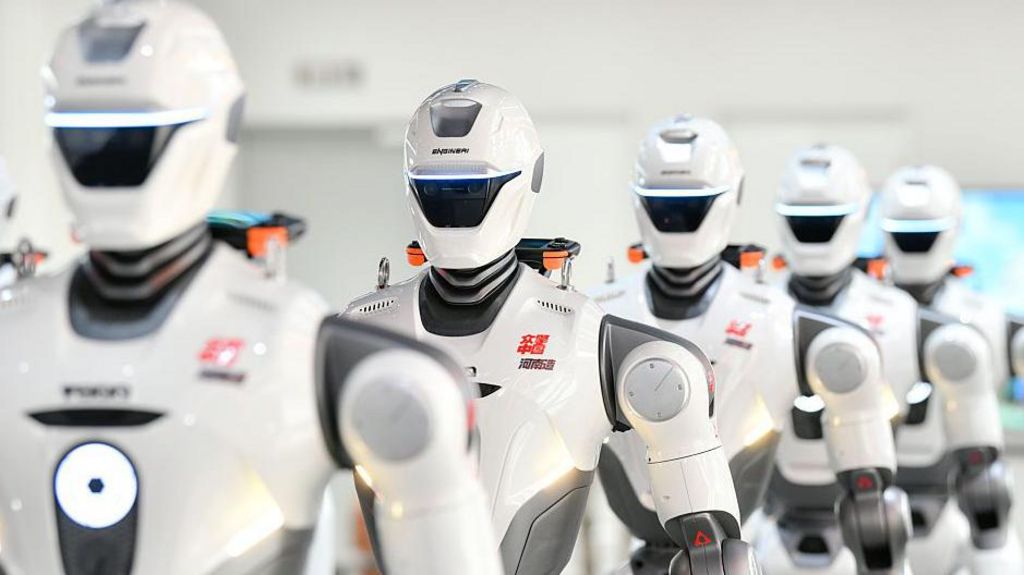
Trump administration bans new Chinese humanoid robots
In a policy announcement delivered Tuesday, the Trump administration formally enacted a ban on new imports of foreign-produced advanced humanoid robots into the United States, citing what it called “unacceptable risks” to American national security. The restriction does not only target humanoid machines—it also extends to four-legged advanced robotic systems, a category of next-generation robotics where Chinese manufacturers hold the lion’s share of global production.
This trade action comes amid a intensifying global technology race between the United States and China, the world’s largest producer of humanoid robots, focused on advancing cutting-edge innovation in both robotics and artificial intelligence.
Alongside the robotics ban, the U.S. Federal Communications Commission (FCC) added another trade restriction: a ban on imports of specific foreign-manufactured power inverters. These components are critical to the operation of data centers and solar energy infrastructure, and the FCC asserted that they carry similar risks that could harm the U.S. economy. FCC Chair Brendan Carr framed the dual actions as part of the agency’s broader mandate to protect critical U.S. supply chains from potential threats.
Chinese technology firms have moved aggressively in recent years to scale development of humanoid robots, designing models that can be deployed across a wide range of use cases, from industrial manufacturing lines to domestic residential settings. Unlike many U.S. competitors—including high-profile developers such as Elon Musk’s Tesla robotics division and Boston Dynamics—Chinese companies have accelerated their go-to-market strategies, rolling out commercial products for both business clients and general consumers earlier than many of their American rivals.
As of Wednesday, the BBC has confirmed it has reached out to the Chinese Embassy in Washington, D.C. to request comment on the new restrictions, and no official response has been published yet.
-

Why Wimbledon is serving Indian ice cream and Bollywood beats
For more than a century, Wimbledon has guarded its iconic, time-honored traditions fiercely: from the mandatory all-white player dress code to understated court advertising and the cult classic pairing of strawberries and cream. But this year, the world’s oldest Grand Slam made a deliberate break from its signature reserved brand identity to crack one of the world’s most cricket-dominated sports markets: India.
With tennis still holding niche status among Indian sports fans, Wimbledon’s organizers rolled out a hyper-localized engagement strategy designed to bridge cultural gaps rather than lean into its distant, exclusive global brand. The tournament partnered with KUReMAL’S, a century-old Delhi kulfi (traditional Indian ice cream) maker, to reimagine its signature strawberries and cream treat with an Indian twist. Its official Instagram channel began sharing short-form reels of tennis legends like Roger Federer set to chart-topping 1990s Bollywood hits, and hosted top Indian cricketers and local social media influencers in the prestigious Royal Box to leverage their widespread domestic appeal. Content was also tailored and distributed across multiple regional Indian languages to reach audiences beyond the country’s English-speaking urban elite.
Early data suggests the strategic gamble has paid off. Early reports indicate that Jannik Sinner’s men’s singles final victory over Alexander Zverev drew roughly 2.7 million concurrent livestream viewers in India, despite the match kicking off after midnight local time. Average viewership across the entire tournament climbed 18% year-over-year to 853,000, according to local Indian media. JioStar, the domestic streaming platform that holds exclusive Indian broadcast rights for Wimbledon, declined to release official viewership figures to the BBC.
Industry analysts emphasize that Wimbledon’s push into India is no random marketing experiment, but a calculated long-term strategic move. India is already Wimbledon’s largest international market by total reach, and 2026 brought a landmark milestone for Indian tennis: Arnav Paparkar became the first Indian player in 36 years to reach the under-18 boys’ singles quarterfinals at the tournament.
“India now has its strongest pipeline of young tennis talent competing on ATP and ITF circuits in nearly a decade, and premium urban sports consumption is rapidly expanding beyond cricket, thanks to streaming platforms’ ability to target niche audiences at scale,” explained Darshana Bhalla, a New Delhi-based sports branding expert, in an interview with the BBC.
Sally Bolton, chief executive of the All England Lawn Tennis Club, confirmed earlier to the *Financial Times* that India now ranks alongside the United States as a core focus for growing the Grand Slam’s global audience. This shift comes as India projects to become the world’s fastest-growing sports market over the next decade: KPMG estimates the Indian sports sector will grow at a compound annual rate of 12-14% through 2030, nearly double the projected global average. To tap into this growth, global sports properties must adopt culturally specific engagement strategies, rather than relying on one-size-fits-all global content.
Bhalla notes that Wimbledon’s approach upends decades of premium global branding logic: “For generations, premium brands believed exclusivity came from distance and inaccessibility. Today, they’ve learned that true exclusivity for new audiences comes from belonging. What Wimbledon changed was the entry point: instead of asking young Indians to adapt to Wimbledon’s world, they meet fans where they are, using familiar cultural cues to draw them in – the kulfi collaboration, Bollywood soundtracks, regional language content, partnerships with local creators.”
Upasna Dash, founder of Jajabor Brand Consultancy, adds that this approach addresses a key barrier for new fans: for many younger Indians, Wimbledon feels aspirational but culturally distant, so reducing that gap is critical to growing lasting fandom. The tournament’s social media-first strategy also aligns with how younger audiences discover new content today: “Young fans often encounter global events on social media long before they engage with the event itself. Instead of asking consumers to enter Wimbledon’s world, this campaign steps into theirs.”
The pivot also makes strong strategic sense for JioStar, which holds exclusive broadcast rights. The platform has faced public financial pressure recently, with widespread reports that it sought to renegotiate its $3 billion 2024-2027 broadcast deal with the International Cricket Council amid sustained losses. While the original deal remains in place, diversifying its sports content portfolio reduces overreliance on cricket and opens up new audience segments.
“For JioStar, tennis expands the annual sports engagement calendar, attracts affluent urban audiences, and diversifies its advertiser base beyond cricket-focused brands,” Bhalla explained. “In India, cricket delivers mass scale, but tennis delivers premium audiences. Wimbledon brings a demographic that cricket cannot consistently attract: a premium, affluent, English-speaking urban audience that luxury, automotive, banking, fintech, travel, and premium consumer goods brands actively target.”
Despite the strong early viewership results, industry experts warn that converting casual curiosity from this campaign into long-term sustained fandom will require ongoing investment. “If these engagement efforts are treated as one-off campaign tactics tied to the annual tournament, their impact will be short-lived,” noted Aryan Anurag, co-founder of Delhi-based social media agency Binge Labs. Dash added that sustained growth will require deeper grassroots engagement with Indian tennis and consistent market investment beyond the two-week tournament every summer.
Even so, the global sports industry is closely watching Wimbledon’s experiment. If culturally contextualized storytelling can deliver meaningful, lasting engagement growth in India, Bhalla says other major global sports properties will quickly follow suit: “Expect F1, the NBA, the NFL, the UFC, La Liga, and the Premier League all to deepen their India-first content strategies if Wimbledon’s model proves successful.”
-
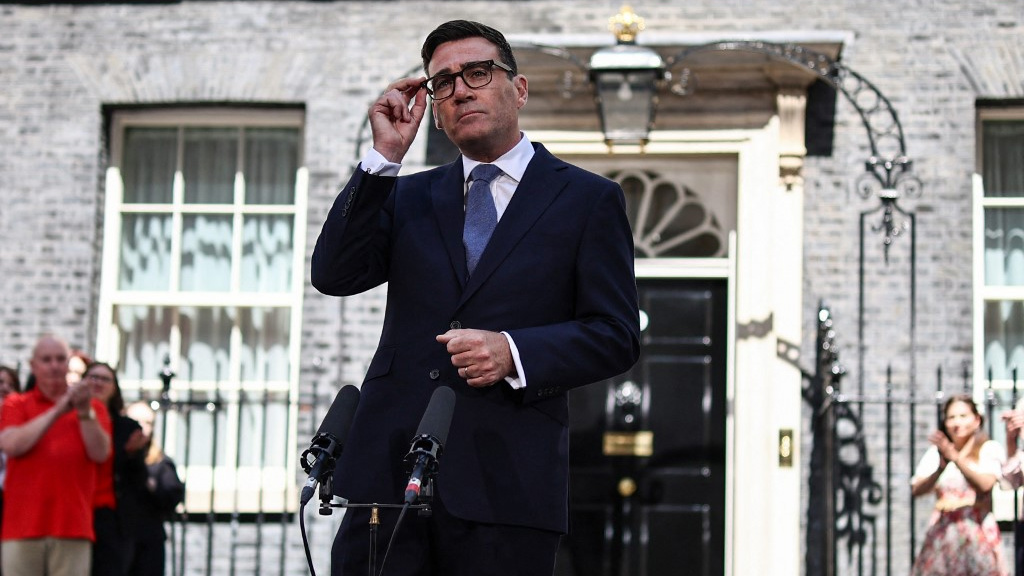
Exclusive: Does the UK’s ‘don’t talk to the Muslim Council of Britain’ policy actually exist?
Andy Burnham’s new UK administration has publicly pledged to uphold a long-stated policy of refusing formal engagement with the Muslim Council of Britain (MCB), the nation’s largest umbrella body representing British Muslim communities. But an in-depth investigation by Middle East Eye (MEE) has upended official claims, revealing the so-called non-engagement policy is effectively a phantom: no written government records confirm its existence as an official, codified measure.
Multiple government departments and agencies have disclaimed any ownership of the policy when responding to Freedom of Information (FOI) requests filed by MEE. In responses dated mid-June, the Ministry of Housing, Communities and Local Government and the Home Office both confirmed they hold no documents that outline or reference a formal non-engagement policy with the MCB. A May response from the Cabinet Office echoed this conclusion, stating searches of both physical and digital archives turned up no matching records. To date, no government body has stepped forward to claim responsibility for the policy, nor has any official justification for the ongoing boycott been made public.
These questions around the policy’s shadowy origins come on the heels of a recent revelation that one UK mosque is targeted in an attack every five days, highlighting growing tensions around anti-Muslim hate across the country. The MCB, which remains the most expansive representative body for British Muslim groups, counts more than 500 affiliated organizations across the nation.
Contradictions in the government’s stance have already emerged publicly. The Telegraph reported this month that new equalities minister Sir Stephen Timms appeared on a discussion panel alongside an MCB representative last December, months before Burnham’s government took office. Despite this, an official government spokesperson reaffirmed the line that “there has been no change to our non-engagement policy regarding the Muslim Council of Britain, and there are no plans for ministers to meet with the group.”
When MEE reached out to the UK Office for Equality and Opportunity and its parent ministry for clarification on the policy’s basis and rationale, officials only repeated the standard non-engagement statement, adding that “the government recognises the importance of engaging meaningfully with faith and belief groups.”
MCB spokespeople have dismissed the policy as a relic of anti-Muslim politics. “This so-called policy of non-engagement is a historic relic. It was built to appease those who trade in Islamophobia, and it survives only by recycling decades-old allegations that have never withstood scrutiny,” the organization said in a statement.
Public records further unravel the official narrative of a long-standing policy dating back to 2009, a claim that circulates widely in UK political discourse. That year, Gordon Brown’s Labour government briefly boycotted the MCB after its then-deputy secretary general Daud Abdullah signed the Istanbul Declaration. The government at the time claimed the document endorsed attacks on Royal Navy vessels intercepting weapons shipments bound for Hamas in Gaza. Abdullah denied ever condoning attacks on British troops, and the MCB clarified he had signed the statement in a strictly personal capacity. After Abdullah stepped down from his role, the Brown government resumed formal engagement with the body.
Coalition government ministers held regular meetings with MCB leadership between 2010 and 2015, and civil servants continued routine engagement with the organization until 2020. That year, the MCB published a detailed dossier documenting alleged Islamophobia linked to more than 300 people, including Conservative MPs, party councillors, members and Downing Street special advisers. Shortly after the dossier’s release, civil servants cut off formal contact for reasons that were never publicly explained.
Even after 2020, low-key cooperation continued: the MCB served as a reference for imams applying to serve as military chaplains in partnership with the Ministry of Defence. This collaboration only became public in late 2023 via a Telegraph report, prompting ministers to order the MoD to immediately cut all ties with the organization.
In 2024, the Inter Faith Network, a major UK interfaith charity, was forced to shut down after the previous Conservative government pulled its public funding, solely because one of the charity’s trustees was an MCB member. Keir Starmer’s Labour government retained the non-engagement approach after taking office earlier in 2024. MEE reporting from July 2024 revealed that the Starmer administration ignored all communications from the MCB during the far-right riots that swept the UK that summer, and blocked a government working group tasked with developing an official Islamophobia definition from consulting the organization.
Multiple sources close to Burnham’s administration say the new prime minister is eager to repair ties with British Muslim voters, a large voting bloc that largely abandoned Labour during Starmer’s tenure. Burnham himself has a history of direct engagement with the MCB, including delivering a keynote speech at the organization’s 2015 Muslim Leadership Dinner, years after the policy was supposedly codified.
Today, the MCB retains substantial influence across British Muslim civil society, with a democratically elected leadership and a broad network of affiliates. Whether Burnham will choose to formalize a shift away from the shadowy non-engagement policy that no government department can claim or document remains an open question.