标签: Asia

亚洲

  • China places highest-ranking general under investigation

    China places highest-ranking general under investigation

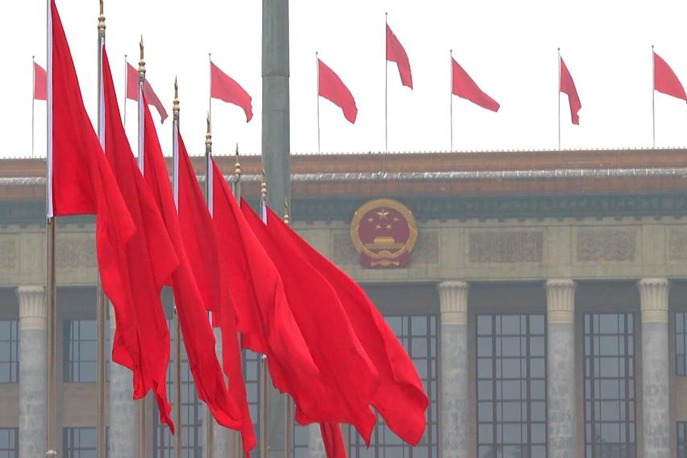
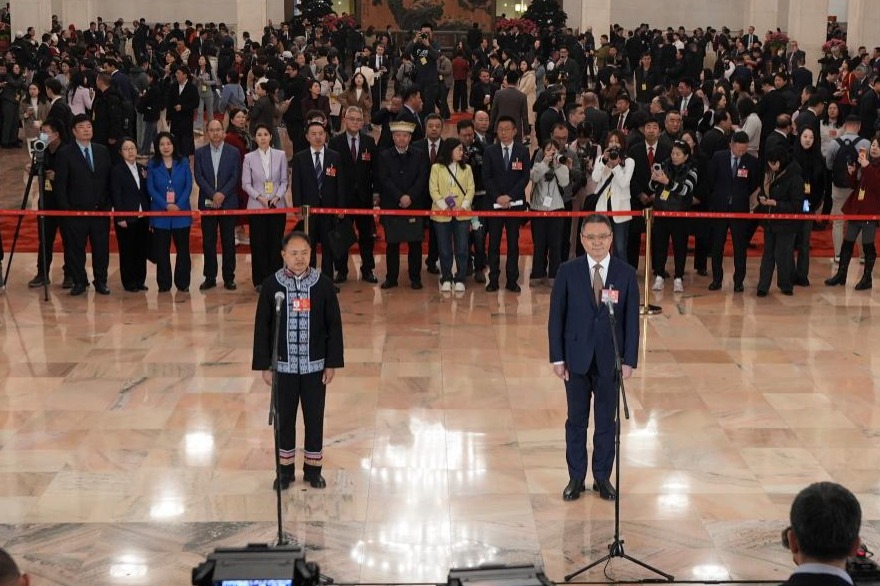
    In a significant development within China’s military leadership, the Ministry of National Defense has announced formal investigations against two of the nation’s highest-ranking generals for serious legal and disciplinary violations. The probe targets General Zhang Youxia, Vice-Chairman of the Central Military Commission and long considered President Xi Jinping’s closest military ally, alongside General Liu Zhenli, another senior military officer.

    The defense ministry’s statement provided no specific details regarding the allegations, though the phrase ‘violations of discipline and law’ typically serves as official terminology for corruption cases within China’s political context. The investigation marks a dramatic fall from grace for General Zhang, a 75-year-old veteran with combat experience who had remained in service beyond standard retirement age—previously interpreted as a sign of particular trust from President Xi.

    This development continues President Xi’s extensive anti-corruption campaign that has swept through multiple government sectors since he assumed power, with recent focus intensifying on military leadership. Just three months earlier, nine senior generals were removed in one of the largest military purges in decades.

    The timing of the announcement follows weeks of speculation after both generals were conspicuously absent from a major Party event in December. With these investigations, the Central Military Commission’s membership has now been reduced from seven to just two officials: President Xi himself and Zhang Shengmin, who oversees military disciplinary matters.

    Analysts note that while anti-corruption efforts receive public support for promoting governance integrity, critics argue these campaigns frequently serve as tools for political consolidation. President Xi has consistently described corruption as the ‘biggest threat’ to Communist Party rule and maintains that the anti-graft battle remains ‘grave and complex.’

    The investigation of General Zhang carries particular symbolism given his status as the son of one of China’s revolutionary founding generals and his position on the 24-member Politburo, the Party’s elite decision-making body.

  • Agarwood exhibition steeps Shanghai museum in fragrance

    Agarwood exhibition steeps Shanghai museum in fragrance

    The Shanghai History Museum has transformed into an olfactory wonderland with the inauguration of an extraordinary agarwood exhibition, opening its doors to the public on January 24, 2026. This immersive cultural presentation represents a significant collaboration between the Shanghai History Museum and Hainan Museum, showcasing one of the world’s most precious natural commodities through February 22, 2026.

    The exhibition presents a comprehensive exploration of agarwood’s cultural significance, historical applications, and artistic representations. Visitors are treated to an array of rare artifacts, including intricately carved artworks, traditional medicinal preparations, and historical documentation that traces the aromatic resin’s journey through Chinese civilization. The curation emphasizes both the scientific properties and cultural heritage surrounding this prized material, known as ‘liquid gold’ in traditional Chinese circles for its exceptional value and versatile uses.

    Museum directors from both institutions highlighted the exhibition’s role in promoting interprovincial cultural exchange, particularly between coastal Shanghai and tropical Hainan, where agarwood cultivation has flourished for centuries. The collaboration marks a milestone in cultural preservation efforts, bringing together expertise from both regions to present a holistic narrative of this unique natural treasure.

    The sensory experience extends beyond visual displays, with specially designed zones allowing visitors to engage with agarwood’s distinctive fragrance through controlled olfactory demonstrations. Educational workshops accompanying the exhibition provide deeper insights into authentication techniques, conservation challenges, and the sustainable future of agarwood production in contemporary society.

  • How the old and new U.S. defense strategies differ on traditional priorities

    How the old and new U.S. defense strategies differ on traditional priorities

    The Trump administration has unveiled a fundamentally reconfigured National Defense Strategy that marks a dramatic departure from the 2022 framework established under President Biden. This comprehensive analysis examines the strategic recalibration across key global regions.

    In the Western Hemisphere, the 2026 doctrine adopts an assertive stance, vowing to ‘actively and fearlessly defend America’s interests’ while guaranteeing military and commercial access to critical territories including the Panama Canal, Gulf of America, and Greenland. The strategy explicitly commits to providing ‘credible military options against narco-terrorists’ while emphasizing conditional cooperation with neighbors from Canada through Central and South America.

    Regarding European security, the document characterizes Russia as a ‘persistent but manageable threat’ while noting NATO’s overwhelming economic and demographic advantages. The strategy contends that European NATO members, having committed to raising defense spending to 5% of GDP under Trump’s leadership, are now positioned to assume ‘primary responsibility for Europe’s conventional defense’ with more limited U.S. support. This includes taking the lead in supporting Ukraine’s defense efforts.

    The Indo-Pacific region receives heightened priority, with the strategy framing Chinese dominance as an existential economic threat that could ‘effectively veto Americans’ access to the world’s economic center of gravity.’ The document outlines a more focused objective than previous strategies: simply to prevent Chinese regional domination rather than pursuing regime change or existential struggle, aiming for a ‘decent peace’ acceptable to both nations.

    On the Korean Peninsula, the strategy designates South Korea as capable of taking ‘primary responsibility for deterring North Korea’ given its powerful military, robust defense industry, and mandatory conscription, requiring only ‘critical but more limited U.S. support.’

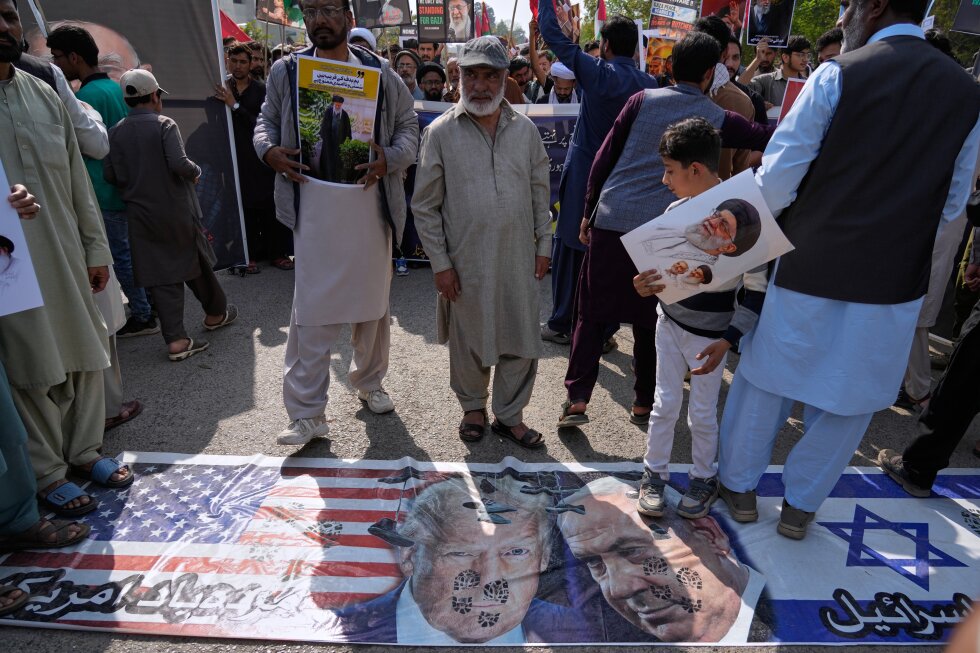
    In the Middle East, the Department of War will empower regional allies to counter Iran and its proxies, emphasizing strong support for Israel’s self-defense, deepened cooperation with Gulf partners, and enhanced integration between Israel and Gulf states through the Abraham Accords framework. The strategy maintains America’s right to take ‘focused, decisive action’ to defend U.S. interests when necessary.

  • Future of travel: GCC’s mega airports to handle 500 million passengers annually

    Future of travel: GCC’s mega airports to handle 500 million passengers annually

    The Gulf Cooperation Council (GCC) is poised to revolutionize global aviation infrastructure with unprecedented investments exceeding $100 billion in airport development projects. These strategic initiatives will enable the region’s airports to accommodate over 500 million passengers annually within the next decade, fundamentally reshaping international travel patterns and economic dynamics.

    According to aviation experts and industry analysts, this transformation is driven by massive fleet expansions and cutting-edge technological implementations that will enhance route networks, operational efficiency, and passenger experiences. The development includes mega-hubs in Dubai and Riyadh alongside significant expansions of secondary airports in Abu Dhabi, Sharjah, Jeddah, Doha, and Muscat.

    Recent data reveals remarkable growth trajectories, with the top ten Gulf airports recording an 11% year-on-year increase in passenger traffic, handling 327 million travelers in 2024 compared to 293 million in 2023. The aviation sector has evolved from merely supporting economic growth to becoming a primary engine of economic transformation across GCC nations, deeply integrated into national diversification strategies and labor markets.

    Saudi Arabia has committed approximately $50 billion to aviation infrastructure, including the ambitious King Salman International Airport in Riyadh. Meanwhile, Dubai is developing the $35 billion Al Maktoum International Airport, which upon completion will be five times larger than Dubai International Airport (DXB) with capacity for 260 million passengers annually. DXB itself is projected to exceed 96 million passengers this year, approaching its maximum capacity.

    Smaller GCC states are pursuing specialized niches in cargo, multimodal logistics, and tourism connectivity. Oman has announced plans for six new airports by 2028-29, Kuwait’s Terminal 2 expansion will increase capacity to 25 million passengers, and Bahrain is planning a greenfield facility on a reclaimed island as current infrastructure reaches its limits.

    Technological innovation represents a cornerstone of this transformation. GCC airports are implementing facial recognition systems, AI-driven solutions, advanced biometric processing, and streamlined security protocols that will eliminate the need for removing liquids and laptops during screening. These developments promise to reduce processing times dramatically, potentially enabling passengers to move from airport entry to departure gates within minutes.

    Despite these advancements, significant challenges remain. The concentration of passenger demand within compressed timeframes intensifies competition for skilled professionals across multiple markets. The logistical complexity of transitioning operations from DXB to Al Maktoum International Airport presents substantial operational hurdles. Additionally, regional geopolitical tensions and infrastructure constraints at expanding airports pose ongoing concerns.

    The competitive landscape extends beyond the GCC, with developments in Turkey’s Istanbul airport and India’s new facilities in Delhi and Mumbai representing additional market pressures. Nevertheless, the GCC’s strategic investments in aviation infrastructure position the region to maintain its leadership in global aviation connectivity and economic diversification for decades to come.

  • Bangladesh’s fugitive ex-PM alleges elections will not be free

    Bangladesh’s fugitive ex-PM alleges elections will not be free

    In a dramatic audio address broadcast from undisclosed locations in India, Bangladesh’s deposed Prime Minister Sheikh Hasina has launched scathing criticisms against the upcoming February elections, declaring them fundamentally compromised. The 78-year-old leader, now living in exile since her August 2024 ousting following massive student-led protests, broke her prolonged public silence to challenge the legitimacy of the electoral process.

    Hasina’s forceful condemnation came during a panel discussion titled ‘Bangladesh at the Crossroads’ hosted in New Delhi, where she asserted that genuine democracy remains elusive under the current transitional government. Her message reached over 100,000 online viewers simultaneously, creating immediate political reverberations across South Asia.

    The former leader, who previously governed Bangladesh for fifteen consecutive years, faces a death sentence imposed in absentia by a Dhaka court last November. The conviction centered on charges of crimes against humanity, including incitement to violence and systematic failure to prevent atrocities during her administration.

    Current interim leader Muhammad Yunus, the Nobel Peace Prize laureate recalled from exile to helm the caretaker government, maintains that the February 12 vote will establish new benchmarks for electoral integrity. Official statements from Yunus’ office emphasize the administration’s commitment to transparent and credible elections.

    However, Hasina specifically targeted Yunus in her address, describing his influence as an oppressive shadow over Bangladeshi democracy. Her Awami League party, once the nation’s dominant political force, now operates under official prohibition with its activities criminalized.

    The escalating tension between these rival visions for Bangladesh’s future complicates already delicate diplomatic relations between India and Bangladesh. New Delhi’s decision to provide sanctuary to the deposed leader has generated sustained friction since the transfer of power.

  • Djokovic secures 400th Grand Slam match win to extend record, ties Federer’s Australian Open mark

    Djokovic secures 400th Grand Slam match win to extend record, ties Federer’s Australian Open mark

    MELBOURNE, Australia — Novak Djokovic continues to redefine tennis excellence, achieving yet another unprecedented milestone during Saturday night’s third-round match at the Australian Open. The 24-time Grand Slam champion secured his 400th victory in major tournaments with a commanding 6-3, 6-4, 7-6(4) performance against Dutch contender Botic van de Zandschulp.

    This triumph elevates Djokovic’s Australian Open record to 102-10, matching Roger Federer’s all-time match win tally at the season’s opening major. The 38-year-old Serbian icon, pursuing an unprecedented 11th Australian Open title and record-breaking 25th Grand Slam championship, demonstrated near-total dominance throughout the evening session.

    The match encountered minimal disruption until the third set when Djokovic experienced an on-court stumble during the third game, followed by facing two set points in the twelfth game. A strategic medical timeout allowed for taping of his right foot, while a precisely executed forehand winner down the line neutralized the immediate threat. Chair umpire John Blom repeatedly intervened to quiet the crowd during critical serving moments.

    An animated Djokovic captivated spectators by theatrically heading an imaginary soccer ball after saving the second set point, sparking enthusiastic “Nole, Nole, Nole” chants throughout Rod Laver Arena. He subsequently closed the match in a tiebreaker.

    Reflecting on his physical condition, Djokovic noted: “I managed to have a ‘good’ fall if you can say so. Things could have been pretty ugly.” He expressed satisfaction with his tournament progression while acknowledging lessons from last season: “I got too excited too early in some of the Grand Slams… getting injured three out of four.”

    The victory adds to Djokovic’s extraordinary record collection, having previously equaled two all-time marks by commencing his 21st Australian Open and 81st Grand Slam event. He now stands as the first male player to achieve 100+ wins on three different Grand Slam surfaces—102 at Wimbledon (grass), 101 at Roland Garros (clay), and 102 at Melbourne Park (hard court).

  • Air France suspends service to Dubai; KLM halts Middle East flights

    Air France suspends service to Dubai; KLM halts Middle East flights

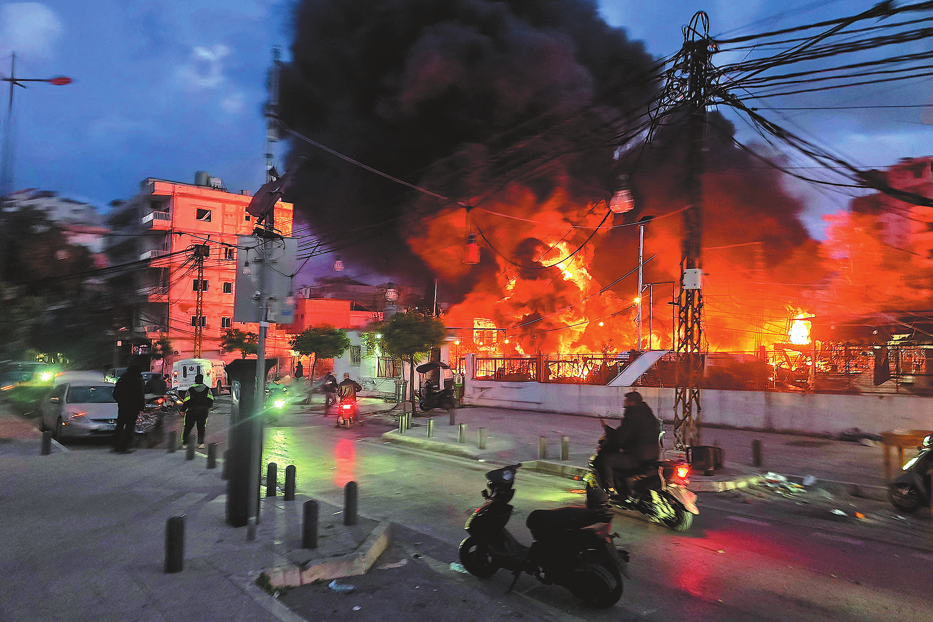
    Two major European carriers have announced significant flight suspensions to Middle Eastern destinations as geopolitical tensions escalate in the region. Air France has temporarily halted all services to Dubai, while KLM Royal Dutch Airlines has suspended flights to multiple Middle Eastern cities and restricted airspace transit through several countries.

    Air France confirmed the suspension in an official statement, citing the ‘current situation in the Middle East’ as the primary reason for the decision. The French national carrier emphasized its continuous monitoring of geopolitical developments across its service routes and overflight territories to maintain the highest safety standards for its operations. The airline has committed to providing regular updates regarding schedule adjustments as the situation evolves.

    Meanwhile, KLM has implemented a broader suspension affecting services to Tel Aviv, Dubai, Dammam, and Riyadh until further notice. The Dutch carrier has additionally prohibited flights through the airspace of Iraq, Iran, Israel, and several Gulf nations. According to reports from Netherlands’ public broadcaster NOS, KLM is maintaining close coordination with Dutch authorities regarding these operational changes, though the airline has not explicitly detailed the specific reasons behind each route suspension.

    The flight disruptions coincide with heightened military posturing from the United States. President Donald Trump confirmed on Thursday that substantial naval forces are advancing toward the Gulf region, stating ‘We have a big force going toward Iran’ while simultaneously suggesting that Tehran appears interested in diplomatic discussions. This development follows weeks of tension regarding potential U.S. military action against Iran, which had appeared to diminish after reports that Iran halted planned executions of demonstrators involved in recent protests.

    The aviation industry’s response reflects growing concerns about regional stability and flight safety, with carriers taking precautionary measures despite the absence of immediate threats to civilian aircraft. The situation remains fluid, with airlines monitoring developments closely to determine when normal operations might resume.

  • The Fujian Coast Guard conducts regular law enforcement patrol in the waters near Jinmen

    The Fujian Coast Guard conducts regular law enforcement patrol in the waters near Jinmen

    The Fujian Coast Guard has executed routine law enforcement operations in maritime territories adjacent to Jinmen, demonstrating China’s ongoing commitment to maintaining maritime security and sovereignty. These patrols, conducted as part of standardized procedures, represent the consistent implementation of China’s maritime governance policies.

    The operations follow established protocols for monitoring and regulating activities within China’s jurisdictional waters. The patrols serve multiple purposes including maritime safety oversight, illegal activity prevention, and border security maintenance. Such exercises reflect the continuous efforts by Chinese authorities to ensure stability and lawful order in regional waters.

    These maneuvers occur within the framework of China’s domestic laws and international maritime regulations. The Coast Guard’s presence in these waters constitutes normal practice for sovereign states exercising their legitimate rights to patrol territorial waters and exclusive economic zones. The operations align with China’s broader strategy of maintaining peaceful and regulated maritime environments through professional law enforcement capabilities.

    The timing of these patrols corresponds with increased regional attention to maritime security matters, though officials emphasize their routine nature. China maintains that such activities represent standard procedure rather than exceptional measures, consistent with how coastal nations worldwide administer their maritime territories.

  • Survey finds bipartisan support for Sino-US cooperation

    Survey finds bipartisan support for Sino-US cooperation

    A comprehensive national survey has uncovered significant bipartisan support among American citizens for enhanced cooperation between the United States and China, even as concerns mount regarding how escalating geopolitical tensions are adversely affecting Chinese American communities.

    The landmark study, conducted through collaboration between the Committee of 100 and the University of Chicago’s National Opinion Research Center (NORC), represents one of the most extensive independent social research initiatives in the United States. According to Alex Chew, NORC AmeriSpeak director and head of Amplify AAPI, this third iteration of the State of Chinese Americans research provides unprecedented breadth in examining public perceptions regarding issues impacting Chinese American communities.

    The findings reveal that 59% of US citizens advocate for their government to strengthen collaborative efforts with China on diplomatic matters and policies of mutual concern. This perspective transcends political affiliations, with 65% of Democrats and 63% of Republicans expressing support for closer Sino-American cooperation.

    The collaborative sentiment extends significantly into scientific and technological domains. Merely 23% of respondents endorsed prohibiting Chinese researchers from working within US institutions, revealing a substantial partisan divide—with only 16% of Democrats but 34% of Republicans supporting such restrictions.

    Sam Collitt, research lead at the Committee of 100, emphasized that these findings demonstrate minimal public support for policies that would undoubtedly strain international relations and produce negative outcomes. The survey questions regarding researcher restrictions were formulated in response to numerous federal and state efforts to prosecute, restrict, and ban Chinese researchers from American institutions.

    Collitt noted that these results align with recent surveys by Pew Research Center and the Chicago Council on Global Affairs, suggesting that negative attitudes toward China among the American public may have peaked. However, researchers caution that it remains uncertain whether this represents a temporary fluctuation or the beginning of a sustained trend toward improved perceptions.

    The research also highlighted how initiatives like the “China Initiative” program—which resulted in numerous Chinese American scientists facing false espionage allegations—exemplify how bilateral tensions directly harm Chinese American communities. As China narrows the economic gap with the United States, resulting in many Americans perceiving China as a threat, University of Maryland history professor Madeline Hsu suggests Americans need historical context, noting China’s pre-1800 status as an extremely wealthy civilization before its decline under Western imperial exploitation.

  • Meet Emirati photographer turning Sharjah roundabout into ‘fashion car’ runway

    Meet Emirati photographer turning Sharjah roundabout into ‘fashion car’ runway

    What originated as an impromptu family photography session has evolved into a distinctive cultural phenomenon in Sharjah, thanks to the creative vision of 35-year-old Emirati photographer Muhammad Al Mazmi. The Al Jada roundabout, once merely a traffic intersection, has transformed into an unofficial gathering point for automotive enthusiasts seeking distinctive photographic portraits of their vehicles against the urban landscape.

    Al Mazmi’s journey into photography began during childhood, sparked by his fascination with preserving memories through imagery. His father introduced him to camera operation at age seven, planting the seeds of what would become a lifelong passion. In 2008, he acquired his first professional camera and subsequently developed a diverse portfolio encompassing portraits, nature, street photography, and cultural events.

    The automotive photography movement emerged unexpectedly approximately one year ago when Al Mazmi visited the roundabout to photograph his brothers’ cars. The spontaneous interest from other motorists prompted him to share his work on TikTok, generating immediate and substantial public response. Followers began identifying him as ‘the photographer of Al Jada,’ establishing his reputation within the community.

    Despite the public nature of his photography sessions, Al Mazmi maintains rigorous ethical standards regarding privacy protection. He explicitly avoids random photography, instead coordinating with subjects through social media platforms or accepting direct requests. This approach enables him to capture not only the aesthetic qualities of vehicles but also the personal narratives and human connections within automotive culture.

    One particularly memorable photograph depicts two individuals exchanging a traditional Emirati nose touch inside their vehicle, illustrating Al Mazmi’s ability to document cultural moments alongside automotive subjects. His scheduling now operates through community requests via Snapchat, where enthusiasts track his appearance dates.

    Looking forward, Al Mazmi intends to continue his roundabout photography sessions, viewing them as a natural extension of his fundamental photographic philosophy: documenting emotions and memories for future reflection. The phenomenon demonstrates how organic community initiatives can redefine public spaces and create unexpected cultural gatherings.