标签: Asia

亚洲

  • Super Rugby set for a longer 17-week regular season and revamped playoffs in 2027

    Super Rugby set for a longer 17-week regular season and revamped playoffs in 2027

    Organizers of the iconic Southern Hemisphere rugby competition Super Rugby have announced sweeping changes to the tournament structure set to take effect in 2027, introducing a longer regular season and a revamped playoff system under a new 10-team framework.

    The reconfigured competition will distribute teams across three Pacific nations: five elite franchises from New Zealand, four from Australia, and one representative side from Fiji, marking an important expansion of the tournament’s footprint in the Oceania region. According to the official timeline revealed Wednesday, the 2027 season will open its doors on February 12, with the championship final scheduled to wrap up the 17-week regular season on June 26. This marks a notable extension from previous season structures, giving fans more consistent top-tier rugby action throughout the early months of the year.

    The playoff round has also been redesigned to create more high-stakes matches while rewarding top-performing regular season teams. Under the new six-team finals format, the sides that finish first and second in the regular season standings will earn a direct bye into the semifinal round, avoiding an extra knockout match. Meanwhile, teams ranked third through sixth will compete in sudden-death quarterfinals to secure the two remaining semifinal spots, creating more exciting knockout drama for rugby audiences.

    The announcement comes fresh off the conclusion of the 2026 Super Rugby season, which saw the Wellington-based Hurricanes claim the championship title in dominant fashion. Last month, the Hurricanes delivered a crushing 60-5 victory over the Hamilton-based Chiefs in the 2026 final, capping off a record-breaking campaign for the franchise. Over the course of their 17-match 2026 season, the Hurricanes crossed the try line 113 times, making them the first side in the competition’s entire 30-year history to hit the milestone of more than 100 tries in a single season.

    In related rugby news coming out of New Zealand this week, the country’s national men’s squad has finalized its roster for the opening match of the World Rugby Nations Championship, scheduled to take place this Saturday against France. The team announcement came just days after the conclusion of the 2026 Super Rugby final, giving top club players a tight turnaround to transition from domestic competition to international test rugby.

  • US Supreme Court rejects Trump’s effort to limit birthright citizenship

    US Supreme Court rejects Trump’s effort to limit birthright citizenship

    On Tuesday, the conservative-leaning U.S. Supreme Court — shaped by three appointments from former President Donald Trump — delivered a long-awaited ruling that preserved birthright citizenship as the nation’s binding law, in a narrow 5-4 decision that split the bench. Even dissenting Justice Brett Kavanaugh acknowledged that longstanding federal statute would have sustained the principle of birthright citizenship regardless of the court’s ruling on the constitutional question.

    Writing for the five-justice majority, Chief Justice John Roberts emphasized the foundational role of citizenship in American democratic life. “Citizenship, then and now, was the right to have rights — to freely participate in our political community. The Framers of the Fourteenth Amendment extended that promise to ‘every free-born person in this land’,” Roberts wrote. “We keep that promise today.”

    Rooted in the 1868 post-Civil War ratification of the Fourteenth Amendment to the U.S. Constitution, birthright citizenship mandates that nearly all children born within U.S. territory automatically gain American citizenship, with only narrow exceptions for children of foreign diplomats on official duty and active-duty foreign military personnel. The principle was adopted to redress the nation’s legacy of chattel slavery, which previously classified enslaved people as just three-fifths of a person for legal and political purposes and denied them full citizenship rights.

    The case reached the Supreme Court after the Trump administration took the unprecedented step last year of moving to eliminate birthright citizenship, targeting children born to undocumented immigrants and people engaging in what the administration calls “birth tourism.”

    Current demographic data puts the estimated undocumented population in the U.S. between 12 and 14 million, according to the Immigration Research Initiative. While no official federal data tracks birth tourism, 2020 estimates from the Center for Immigration Studies put the annual number of children born to birth tourists in the U.S. between 20,000 and 26,000, a small fraction of the 3.6 million annual births in a nation of 349 million people.

    The Trump administration has positioned itself as the most hardline anti-immigrant administration in modern U.S. history. Over its current term, it has revoked more than 100,000 visas, deported roughly half a million immigrants, and detained roughly 70,000 more in overcrowded immigration facilities that have faced widespread condemnation for poor hygiene, insufficient access to food, and unsafe living conditions. It has effectively ended the national asylum program and canceled temporary protected status (TPS) — which allows people from unsafe countries to remain in the U.S. — for Afghans, Syrians, and Haitians.

    Immigrant and human rights advocacy groups celebrated the Supreme Court’s ruling, but warned that the decision does not end the threat to immigrant protections for the remainder of Trump’s three-year term.

    “While we welcome this decision, our work is far from over. We will continue to stand with our communities to ensure that every person’s constitutional rights are respected and that no administration can undermine the protections guaranteed by the Fourteenth Amendment,” Fernando Garcia, executive director of the Border Network for Human Rights, said in a public statement. “Today’s ruling reminds us that the Constitution belongs to all of us, and it is strongest when it protects everyone equally.”

    Shawn VanDiver, president of #AfghanEvac, an organization supporting Afghan evacuees, noted that the question of whether birthright citizenship should stand should never have been in doubt. “For thousands of Afghan families rebuilding their lives in America, this ruling provides important certainty. Whether their parents are Special Immigrant Visa holders or applicants, refugees, asylees, humanitarian parolees, Temporary Protected Status holders, or navigating other immigration pathways, children born in the United States remain protected by the Constitution,” he said.

    Jenin Younes, president of the American Arab Anti-Discrimination Committee, reaffirmed that birthright citizenship is a binding constitutional guarantee, not a discretionary privilege that can be revoked by executive order.

    Shortly after the ruling was announced, with his executive effort to end birthright citizenship blocked, Trump took to his social media platform Truth Social to announce he would now push Congress to pass legislation eliminating birthright citizenship, arguing a full constitutional amendment is unnecessary.

    “No long and unwieldy Constitutional Amendment is necessary! Congress should start TODAY to work on ending expensive and unfair to our Country, Birthright Citizenship. They will have my Complete and Total Support!” Trump wrote on the platform.

    The White House has repeatedly framed birthright citizenship as a rule intended only for the children of enslaved people, not for people it claims are “trying to scam the system and come into the country.”

    Hassan M Ahmed, managing partner of The HMA Law Firm based outside Washington, D.C., called the ruling a clear rebuke of the administration’s position. “The most conservative and, frankly, anti-immigrant Supreme Court just told Trump ‘don’t mess with birthright citizenship’. I think it’s safe for now,” Ahmed told Middle East Eye. He added that he does not expect the push for legislation to gain meaningful support among most members of Congress.

    Unlike most of the world, which grants citizenship primarily by descent rather than birthplace, birthright citizenship remains deeply intertwined with American national identity and historical reckoning with slavery. Across the Americas, the principle of birthright citizenship is a widely established norm, and Ahmed called the U.S. version “sacrosanct” for its role in closing a dark chapter of the nation’s legal history.

  • Japan’s Eiko Kadono, author of ‘Kiki’s Delivery Service,’ still believes in the magic of books at 91

    Japan’s Eiko Kadono, author of ‘Kiki’s Delivery Service,’ still believes in the magic of books at 91

    Nestled in the scenic coastal Japanese city of Kamakura, just south of Tokyo, 91-year-old beloved Japanese author Eiko Kadono welcomes visitors to a cozy home marked by a soft pink gate. The space brims with towering stacks of books, pink upholstered chairs, and a whimsical collection of animal figurines — a perfect reflection of the childlike wonder that has defined Kadono’s decades-long career crafting stories.

    Widely known as the creator of Kiki, Japan’s most cherished literary witch, Kadono shows no signs of stepping away from her craft. Even as mobility challenges like climbing stairs have slowed her daily routine, she shows up to her writing desk every single day. “I never tire of writing,” she shared in an exclusive interview with the Associated Press from her home, a soft laugh escaping as she describes herself as still young at heart.

    Dressed in a brightly colored smock custom-designed by her daughter — with elastic cuffs that pull up easily for writing, a feature she points out with quiet pride — and sporting her signature thick-framed glasses, Kadono embraces authenticity openly. Quick with a witty retort and a ready laugh, she shrugs off any need to hide that she wears a wig, still wears bold red lipstick, and only feels a little shy about her wrinkles. While her writing style has tightened over the decades (she notes her early work was far wordier than her current crisp prose), her passion for storytelling has stayed constant.

    Kadono’s career as a writer began by happy accident, not deliberate design. For years, she was a full-time housewife raising her daughter and married to a designer, and never set out to become a published author. It was only after living in Brazil for two years in her 30s that she was asked to write about her experience there, and she quickly discovered writing was a joyful hobby, not a chore to force herself through.

    The character that would make her a global household name came from an unlikely source: a childhood drawing by her 12-year-old daughter. The sketch depicted a cute young witch flying on a broomstick toward the moon, and it inspired Kadono to craft a coming-of-age fantasy following the sprightly, no-nonsense young witch Kiki and her black cat sidekick Jiji on their adventures. First published in 1985, *Kiki’s Delivery Service* was adapted into the iconic 1989 Studio Ghibli animated film by Hayao Miyazaki, cementing the story’s place in global pop culture.

    Today, the original Kiki series spans six core novels and three spin-offs, and the first book was translated into English in 2020 by Delacorte Press. Its reach now extends to 25 languages worldwide, with the second installment of the series, *Kiki and the New Magic*, set to hit English bookshelves this August, translated by Emily Balistrieri and illustrated by Yuta Onoda. The work is just one of more than 200 books Kadono has published over her career, which earned her the prestigious Hans Christian Andersen Award — the top global honor for children’s literature — in 2018.

    Kadono’s creative process remains rooted in analog tradition, even as she’s adapted to modern tools. While she now types finished drafts on a keyboard, tapping out one slow key at a time, every new story still starts with handwritten notes, and she sketches small illustrations to help her visualize the worlds she builds. “I want to write so that the reader can visualize what I am writing,” she explained. “I love to write.”

    Last year, Tokyo opened Kiki’s Museum of Literature, a dedicated space celebrating Kadono’s work that displays hundreds of books by her and other authors, and sells branded merchandise from Kadono’s signature smocks to pink mugs and character-printed T-shirts. A statement on the museum’s wall sums up her cross-cultural impact: “The other-worldly fantasy that Kadono creates has overcome the boundaries of language, to become appreciated by a wide global audience, including children and adults, and won international accolades.” For 5-year-old visitor Tsukiko Fukuda, who toured the museum with her family, the appeal is simple: the books are fun, and pink is her favorite color too.

    Looking ahead, Kadono has expressed a passionate hope that more young talent will emerge in children’s literature, to help future generations develop a lifelong love of reading. She warns that modern childhood has shifted dramatically from the era she grew up in: unstructured outdoor activities that once stoked young people’s imaginations have been replaced by digital distractions, making books more important than ever. “People must think on their own to be able to create. That’s what being human means,” she said with fervor. “Books are the only thing now that can bring about creation and imagination.”

  • Iran, Oman to jointly charge fees along Strait of Hormuz: Report

    Iran, Oman to jointly charge fees along Strait of Hormuz: Report

    Tensions around the strategically critical Strait of Hormuz have escalated sharply, after multiple sources confirmed that Iran and Oman are advancing a proposal to collect joint service fees for commercial vessels transiting the waterway — a move that directly contradicts the United States’ public opposition and threatens to upend centuries of precedent for free passage through one of the world’s busiest maritime chokepoints. The New York Times first reported the ongoing discussions on Tuesday, citing an anonymous Iranian official and four diplomatic insiders with direct knowledge of the negotiations.

    The push for a joint fee framework emerges from a 14-point preliminary agreement between Washington and Tehran reached earlier this month, which enshrines a commitment to free, uncharged commercial passage through the strait for the 60-day window set aside for wider permanent negotiations. As a mandated component of that ceasefire-era deal, Iran and Oman have been tasked with developing a long-term regulatory plan for the waterway, opening the door to a paradigm shift that would end hundreds of years of toll-free transit as part of a post-war regional economic framework.

    Inside the bilateral talks, key divides remain between the two Gulf nations over how the fee would operate, according to the unnamed sources who spoke to the NYT. Oman has pushed for a voluntary payment model, where contributions would go toward covering the costs of maintaining navigation safety infrastructure — a structure modeled on the existing system used for the Straits of Malacca and Singapore. Iran, by contrast, has taken a harder line, demanding that the fee be mandatory for all transiting vessels. Last week, Iranian Deputy Foreign Minister made clear Tehran’s position: if no mutually acceptable agreement is reached with Muscat, Iran will unilaterally implement its own transit fees.

    The proposal has already triggered extreme pushback from the United States, which has been waging a widespread war against Iran alongside Israel. Last month, former President Donald Trump issued an extraordinary public threat against Oman, a longstanding U.S. Gulf ally, saying Washington would “blow up” the country if it moved forward with the joint toll plan with Iran. In his remarks, Trump asserted the Strait of Hormuz constituted international open waters, claiming no nation had the right to impose controls or charges on passage, and warned Oman that it must align with U.S. demands or face devastating consequences.

    Multiple Arab and U.S. officials previously told Middle East Eye that Trump’s unprompted outburst forced U.S. diplomatic teams to launch urgent damage control to preserve bilateral ties with Muscat, while pressing Omani officials to issue a public statement rejecting Iran’s toll proposal — a demand that went unfulfilled. Oman, which has held the role of neutral mediator in multiple regional conflicts over decades, has not issued any public response to Trump’s threat. However, in a closed-door meeting between a senior Omani diplomat and U.S. Treasury Secretary Scott Bessent, Muscat privately gave assurances that it currently held “no plans” to implement tolling for the strait, according to reports.

    Oman’s position on the current conflict has long set it apart from other Gulf Cooperation Council states. When the U.S.-Israeli war on Iran launched, most neighboring Gulf states opened their military facilities to U.S. forces and joined the offensive against Tehran, but Oman openly criticized the war and refused to participate, earning a reputation as a regional outlier at the time. That decision has since been validated by the current ceasefire, which is broadly seen across the region as a strategic victory for Iran.

    As the oldest U.S. treaty partner in the Gulf, with diplomatic and commercial ties dating back to 1833, Oman’s ongoing negotiations with Iran over the Strait of Hormuz toll plan underscores the deep rift between Washington and its longstanding ally over the future of the post-war Gulf. With the 60-day negotiation window still ongoing, the standoff over transit fees has emerged as one of the first major flashpoints in efforts to solidify a lasting ceasefire and new regional order.

  • Afghan Taliban launch strikes on border with Pakistan as tensions escalate

    Afghan Taliban launch strikes on border with Pakistan as tensions escalate

    Tensions that had simmered for months along the shared border of Pakistan and Afghanistan have boiled over once again, after Afghanistan’s ruling Taliban regime announced it had launched cross-border strikes targeting positions inside Pakistan. The assault, which the Taliban confirmed Wednesday, left multiple people injured in Pakistan’s restive southwestern Balochistan province, according to initial reports.

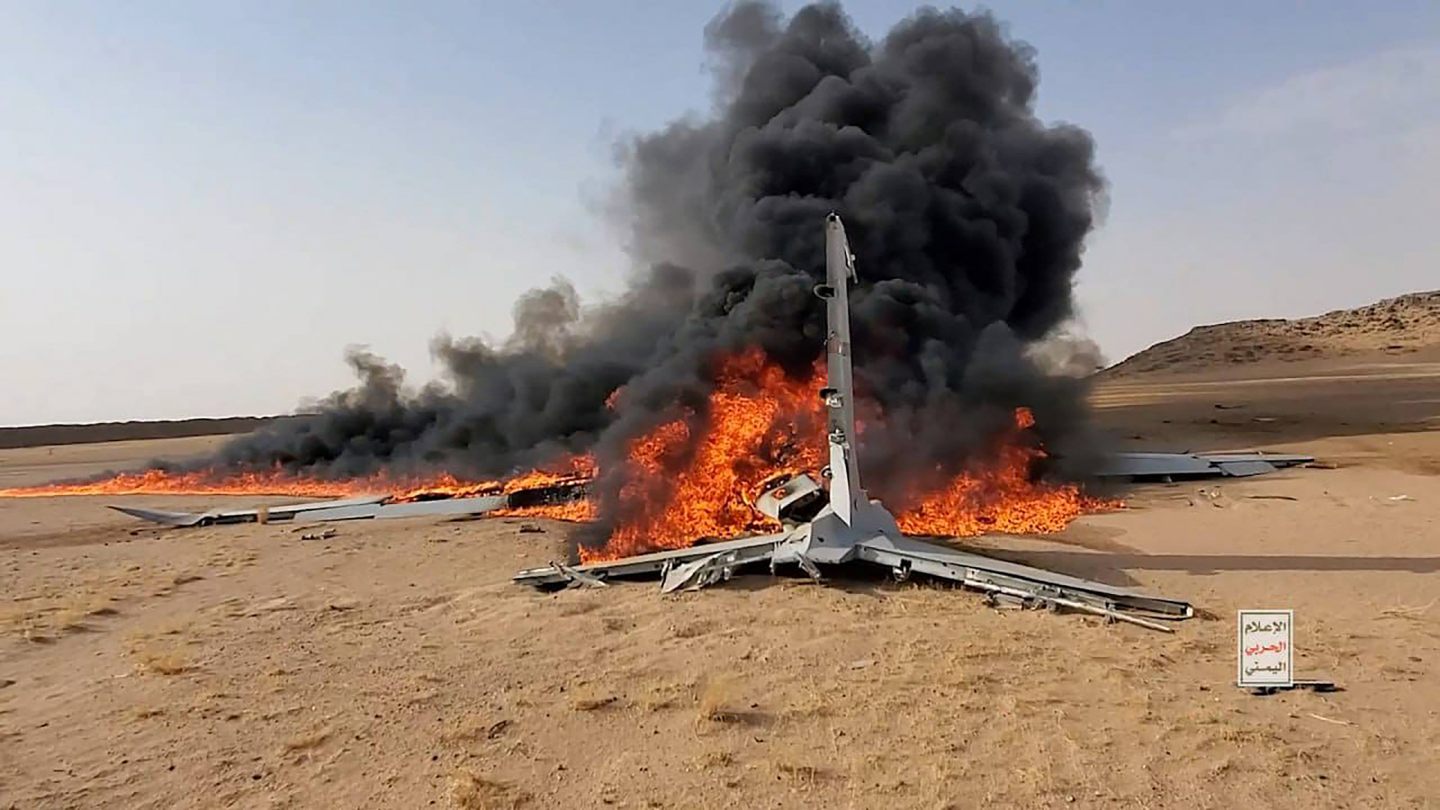
    In response to the incursion, Pakistan’s military issued a statement confirming it had intercepted and downed four crude unmanned aerial vehicles launched from the Afghan side of the border. The statement carried a sharp warning, noting that any additional acts of provocation from Afghan territory would be met with a firm and appropriate response. To date, the BBC has not been able to deploy independent observers to verify the details of the Taliban’s strike on Pakistani soil.

    This latest exchange of hostilities comes just days after Pakistan launched its own large-scale air operations inside Afghan territory on Sunday, a strike that the United Nations says killed 28 civilians. The Taliban administration in Kabul has put the civilian death toll from Sunday’s Pakistani strikes far higher, at 36, with more than 160 people injured, labeling the operation a “cowardly act” and an “atrocity” that targeted residential civilian homes.

    Pakistan has pushed back on the criticism, saying its Sunday operations only targeted militant hideouts in the eastern Afghan provinces of Paktia, Paktika and Kunar. Information Minister Attaullah Tarar confirmed the operation killed 29 militants, framing the strike as a necessary response to recent deadly terrorist attacks targeting Pakistani civilians. Like the Taliban’s claims, Pakistani casualty figures have not been independently verified by third-party media.

    The renewed clashes break a period of tentative calm that followed a bilateral ceasefire agreed by both sides in October, which ended weeks of violent back-and-forth hostilities. Cross-border violence has plagued the region for much of this year, with intermittent clashes and air strikes leaving dozens, and in some cases hundreds, of people dead. In February alone, border skirmishes killed dozens of people on both sides. A March Pakistani strike on a Kabul drug rehabilitation centre left hundreds dead, according to local reports. As recently as early June, another round of Pakistani air strikes killed 26 militants; the Taliban government confirmed at the time that 13 additional civilians, most of them children, also died in the operation.

    At the core of the long-running dispute between the two neighbors is Pakistan’s consistent accusation that the Taliban administration harbors militant groups that carry out fatal attacks inside Pakistan. The Taliban has repeatedly rejected these claims, and in turn accuses Islamabad of launching unprovoked strikes that intentionally kill innocent Afghan civilians, a charge Pakistan denies, maintaining it only targets militant infrastructure and personnel along the shared border.

  • A plane crashed into a tower in Beijing but China is not saying what happened

    A plane crashed into a tower in Beijing but China is not saying what happened

    Four days after a small, single-engine aircraft crashed into Beijing’s tallest skyscraper, CITIC Tower, fundamental questions about the incident remain unanswered. The crash, which occurred just a few kilometers from Zhongnanhai — the compound housing China’s top Communist Party leadership — killed the sole person on board, the pilot, and left 13 other people injured. To date, the only official public statement from Chinese authorities has been a 60-word brief factual report published by state-run Beijing Daily.

    Friday’s collision tore visible holes in the side of the 109-story landmark building, which have since been covered with boarding to block public view. Dramatic user-shared footage of the aftermath and impact has been systematically removed from domestic Chinese internet platforms, part of a broader crackdown on discussion of the incident. Multiple aviation companies across China confirmed to the BBC that they have received official orders to suspend all light aircraft operations, but all declined to provide further details, citing instructions not to speak publicly about the order. A receptionist at a Beijing-based flight training institute summed up the widespread silence: “We were told to not speak about it. Please ask others.” A light aviation firm in Chengdu similarly cut off conversation after refusing to name which authority issued the grounding order.

    This information vacuum has fueled growing speculation, particularly over how a small aircraft managed to penetrate Beijing’s airspace, which is governed by some of the world’s strictest airspace control and security regulations. Beijing maintains a permanent 100-square-kilometer no-fly zone covering its core political district, including Tiananmen Square and the heavily guarded Zhongnanhai compound. Authorities recently tightened drone regulations as well, requiring all drones to be registered before entering or exiting the capital, over stated security concerns.

    China has long practiced strict online censorship, particularly for content that touches on political sensitivity or criticism of the government or ruling party. But the scope of censorship in the wake of this crash has extended far beyond discussion of the incident itself: even unrelated photos, memes, and casual social media posts featuring CITIC Tower have been deleted from Chinese platforms. The skyscraper, shaped like a traditional Chinese wine vessel, is a popular local landmark, and many young Beijing residents visit or share photos of it online to pray for good fortune on exams, job searches, and other life events.

    Manya Koetse, editor of the *Eye on Digital China* newsletter, argues that the unusually rapid and broad censorship likely stems from uncertainty among top leadership about what actually caused the crash. “This is a highly unusual incident,” she noted, adding that the crash undermines public confidence in government competence and threatens key narratives the Communist Party promotes around its governance and national security.

    China analyst Bill Bishop described the incident as a “massive security breach” in a post on X, warning that the aircraft only missed striking Zhongnanhai itself by seconds. “Not many more seconds of flying and [the crash] could have been at Zhongnanhai… [That would have been] an earthquake in Beijing’s security system,” Bishop wrote.

    Raymond Kuo, vice president of research at the Chicago Council on Global Affairs, echoed that assessment, calling the incident “both politically embarrassing and a major security lapse.” “The fact that a small plane, considerably larger than most drones, was able to fly across much of the city and get quite close to Zhongnanhai” cannot be overlooked, Kuo said. While the crash could be the result of mechanical failure or simple pilot error, Kuo also acknowledged that it “could also potentially have been intentional.”

    Flight tracking service Flightradar24 has identified the aircraft as an Aurora SA60L, a two-seat, single-engine light plane built by Chinese manufacturer Sunward Aircraft. Designed for recreational flying, aerial photography, and tourist flights, the plane measures just 6.9 meters long with an 8.6-meter wingspan.

    International observers have drawn comparisons to historic aviation security breaches to frame the incident. Some social media users outside of China drew immediate parallels to the September 11, 2001 terrorist attacks, when hijacked passenger planes crashed into New York’s World Trade Center. “This was exactly the same news alert I received when a plane hit the first tower during 9/11,” one Reddit user wrote.

    Chong Ja Ian, a non-resident scholar at Carnegie China, argues that a closer historical parallel is the 1987 Mathias Rust incident, when a West German amateur pilot flew a small plane through Soviet air defenses and landed directly in Moscow’s Red Square near the heart of Soviet power. That incident exposed gaping flaws in Soviet air security and ultimately led to the firing of dozens of senior defense and security officials. Chong says a similar shake-up could follow the Beijing crash.

    “His flight and landing highlighted serious gaps in the Soviet air defence system. That incident led to the removal of several high-ranking officers responsible for air defence and security,” Chong explained. “Similarly… some officials may be removed from their posts over the Beijing crash. A small plane hitting CITIC Tower means that a drone or missile might be able to as well. This is a bit of an embarrassment to the security services responsible for Beijing.”

  • Great-grandson of Wong Kim Ark praises Supreme Court ruling affirming birthright citizenship

    Great-grandson of Wong Kim Ark praises Supreme Court ruling affirming birthright citizenship

    In a landmark, ideologically divided decision Tuesday, the U.S. Supreme Court has reaffirmed the century-old constitutional guarantee of birthright citizenship, striking down a sweeping executive order from second-term President Donald Trump that sought to deny citizenship to children born in the United States to non-citizen parents residing in the country illegally or on a temporary basis. The 6-3 ruling upholds a foundational 1898 high court decision rooted in the Fourteenth Amendment, drawing praise from civil rights advocates and sharp backlash from the former president, while placing a 76-year-old great-grandson of the 1898 case’s plaintiff at the center of the national fight over core American constitutional principles.

    Norman Wong, whose great-grandfather Wong Kim Ark was the Chinese American plaintiff at the heart of the 1898 case that first established birthright citizenship as a constitutional right, framed the ruling as a win not just for immigrant communities, but for every person living in the United States. Speaking to The Associated Press shortly after the decision was released, Wong emphasized that the battle over this precedent was never about protecting the rights of a single ethnic group. “It’s an obligation and a duty for every American to care about this because ultimately we’re not fighting for the rights of Chinese or Japanese or whatever. We’re fighting for rights for all Americans because these are fundamental rights,” he said, rejecting the idea that the victory was personal to him or his family.

    Wong’s unlikely turn as a public face of the movement to protect birthright citizenship began in early 2025, just days after Trump signed the executive order on his first day back in office. That order sought to unilaterally redefine citizenship to exclude children born to people without permanent legal status in the U.S. A lifelong social justice advocate who cut his teeth as a student activist with the multiracial Third World Liberation Front at the University of California, Berkeley in the 1970s, Wong did not even learn of his family’s connection to the historic Supreme Court case until his 50s, when his father was tracked down by Chinese-language journalists digging through old court records. When the Chinese Consolidated Benevolent Association — the same group that funded his great-grandfather’s 1890s legal battle — asked him to speak at a press conference last year, he stepped into the role, eventually traveling to Washington D.C. in April to hear the Supreme Court’s oral arguments in person.

    Writing for the court’s majority, Chief Justice John Roberts reaffirmed the longstanding interpretation of the Fourteenth Amendment, which was ratified in the years following the U.S. Civil War. The court held that the amendment’s text makes clear that nearly every person born on U.S. soil is automatically an American citizen, with only a handful of extremely narrow exceptions established by decades of legal precedent. The ruling directly rejected Trump’s legal argument that the Fourteenth Amendment was never intended to grant birthright citizenship to children of non-citizens.

    The three dissenting justices — Samuel Alito, Neil Gorsuch, and Clarence Thomas — aligned with Trump’s position, arguing that the amendment’s original purpose was limited to securing equal rights for formerly enslaved Black people after the Civil War, and that it had been improperly expanded to cover a policy goal never envisioned by the Reconstruction Congress that passed the amendment.

    In response to the ruling, Trump released a statement calling the outcome “too bad for our Country,” and incorrectly claimed that Congress could reverse the decision through ordinary legislation. Because the court’s decision rested on constitutional interpretation, overturning it would require a full constitutional amendment, a high bar that requires approval from two-thirds of Congress and three-quarters of U.S. states. Wong called Trump’s executive order an unconstitutional “decree,” noting that its contradiction of existing constitutional text led directly to the high court’s rejection. “That’s unfortunate that we have a leader that wants the United States to be in his image, but that’s not what we’re supposed to be. He’s supposed to conform to what we the people believe in,” Wong said.

    For Wong, protecting the precedent of his great-grandfather’s case is both a constitutional cause and a family legacy. Born in 1873 in San Francisco to Chinese immigrant parents, Wong Kim Ark was denied re-entry to the U.S. when he returned from a trip to China in 1895, based on the U.S. government’s argument that he could not be a citizen because his parents were not citizens. His 1898 Supreme Court victory first established that citizenship is determined by place of birth, regardless of a parent’s immigration status.

    In a statement after the ruling, the U.S. Department of Justice pushed back against what it called “illegal birth tourism schemes,” saying it remained committed to cracking down on actors who exploit legal loopholes to secure citizenship for children born in the U.S., claiming such activity poses a national security risk.

    Cecillia Wang, national director of the American Civil Liberties Union, who argued the case in favor of upholding birthright citizenship before the Supreme Court, celebrated the ruling as a reaffirmation of a core American promise. “The court reaffirms a fundamental American promise — if you are born here, you are a citizen,” she said, adding that “a president cannot change the Constitution by executive fiat.” Wang, a U.S.-born child of Taiwanese immigrants who came to the country legally as graduate students, called the outcome a victory for all who cherish equal rights under the law.

    Norman Wong noted that Wang’s role as lead counsel in the case, coming nearly 130 years after his great-grandfather won his original legal battle, made the victory even more meaningful, especially amid a recent rise in anti-Asian hate across the country. “It’s kind of sweet because — especially for Chinese Americans — they were at the forefront of all this anti-Asian hate,” Wong said. “There are certain aspects of my life where I think what happened actually prepared me for what’s happening now.”

    Wong said he sees his role in the fight as an honor aligned with the core promises of American citizenship. “I consider myself lucky enough to actually have a meaningful role. All that citizenship grants is the stuff that was the promise of America, which is life, liberty and the pursuit of happiness,” he said.

  • Why India’s cockroach protesters are still on the streets in over 40C heat

    Why India’s cockroach protesters are still on the streets in over 40C heat

    Beneath the relentless 40-plus-degree Celsius heat of Delhi’s summer, hundreds of young protesters have occupied Jantar Mantar, the Indian capital’s historic 18th-century astronomical observatory and most iconic protest ground, for 10 consecutive days and nights. Surrounded by heavy yellow metal police barricades and watched over by uniformed officers and paramilitary troops, students, young professionals and activists gather in clusters: some chant, some sit against the scorching pavement, and even sleep on the sun-baked asphalt as protest leaders cycle through speeches and the crowd belts out rebellious Bollywood hits. What makes this demonstration stand out, however, is the protesters’ chosen identity: they call themselves “cockroaches”, the core of a viral satirical-turned-grassroots movement named the Cockroach Janta Party (CJP).

    The movement traces its unexpected origins to mid-May, when India’s Chief Justice Surya Kant sparked widespread public fury by comparing unemployed young people entering journalism and activism to “cockroaches” and “parasites”. Though the judge later clarified his remarks were targeted only at people holding fake degrees, not young people as a whole, the damage was done — and the backlash birthed a movement.

    It started with a throwaway social media post from Abhijeet Dipke, a 30-year-old public policy postgraduate at Boston University who was back in India at the time. “I had just come back from the gym and was playing FIFA on my PS5 when I saw the chief justice’s comment,” Dipke recalled to reporters at the protest site. Disappointed and confused by the remark, he posted a single question to X: “What if all cockroaches come together?”

    The post went viral, racking up hundreds of thousands of views and responses, particularly from Generation Z. Flooded with comments suggesting a collective platform, Dipke leaned into the absurdity: an AI tool generated a logo featuring a cockroach in a formal suit, and the Cockroach Janta Party — a name that parodies Prime Minister Narendra Modi’s ruling Bharatiya Janata Party (BJP) — was officially launched. What began as a space for memes and jokes quickly evolved into a outlet for young Indians to air long-simmering frustrations over scarce job opportunities and a persistent pattern of exam paper leaks that have derailed countless young lives, demanding accountability from ruling officials.

    “None of this was intended or planned. It was just meant to be satire, but as millions began signing up, people started saying we also want to turn this into a serious movement because no other political party is talking about our needs or hopes and aspirations. I was kind of forced into it by our supporters,” Dipke explained. As a youth-led movement, the group centered its first demands on the NEET-UG, the national entrance exam for aspiring medical students, which was canceled in early May after a major paper leak. Protesters are calling for Education Minister Dharmendra Pradhan to step down, claiming he bears moral responsibility for the scandal and systemic failures in India’s education assessment system.

    Unlike traditional political groups, the CJP has no ambitions to register as an official political party, even as it boasts 22 million followers on Instagram. After Dipke returned to India from Boston, the CJP held its first major protest at Jantar Mantar on June 6. Dipke said he expected to be arrested upon exiting the plane at the airport, but police allowed him to leave, and he led the demonstration hours later. The movement has since rallied in half a dozen Indian cities before returning to Delhi’s Jantar Mantar last week to escalate its demands, with protesters vowing they will not disband until Pradhan resigns.

    The protest gained new momentum on Sunday when prominent Himalayan climate and education activist Sonam Wangchuk — whose life story inspired a hit Bollywood film — joined the camp and launched an indefinite hunger strike in support of the movement. Speaking from the protest ground in sweltering heat, Wangchuk said he was standing with young people to demand accountability for India’s failing education system, criticizing the government for being unresponsive and insensitive to young people’s struggles. When asked how long he could sustain the hunger strike in extreme temperatures, he said: “It’s the early days, so no issues. But I don’t think much about health. It’s either death or this series of indefinite hunger strikes, whichever comes first.”

    Top government and ruling party officials have pushed back hard against the movement. Pradhan has rejected calls to resign, dismissing the CJP and its supporters as “the B-team of disruptive elements” who “do not have faith in the country’s progress”. BJP president Nitin Nabin went further, framing the group as a “new virus” of “cockroach-like parties” seeking to destroy and divide India. The government’s June 21 retest of the NEET-UG did nothing to ease protester anger.

    At the protest site, a haunting memorial wall stands under a yellow tarpaulin, honoring nearly 20 students who, according to their families, died by suicide after the initial NEET-UG cancellation derailed their academic plans. Many of these students came from low-income, marginalized backgrounds that had taken on debt to fund their exam preparation, said schoolteacher Sheetal Choudhary, who works with similar students. “These are the sort of students that I teach in my class,” she explained.

    Hundreds of messages of solidarity are scrawled beneath the students’ photos, one reading in Hindi: “If we don’t fight, who will? If we don’t speak, who will?” For young participants like Tamannah Kumari, an undergraduate preparing for police recruitment exams, the movement is the first time anyone has elevated the concerns of young Indians. “I’m preparing for the police recruitment exam, but I worry about a paper leak which would spoil my future,” she said, holding both a CJP flag and the Indian national flag. “The education minister must resign.”

    As evening falls each day, the crowd at Jantar Mantar grows larger. CJP chief spokesperson Saurav Das says the movement gains new supporters daily, with backing from student unions, civil society groups, and ordinary citizens who drop off food and water and reach out to volunteer. For the CJP, Pradhan’s resignation is only the first step in a longer fight. “Pradhan’s resignation is just one battle and battles can be won in days, weeks or months,” Das said. “But everyone here who’s on the ground and who’s supporting us online knows that this is a war. And wars cannot be won in a short time. That goal is to get a transparent, accountable, answerable system — and that’s a fight for the long run.”

  • Gaza emerges as a defining issue for Gen Z voters in New York Democratic primaries

    Gaza emerges as a defining issue for Gen Z voters in New York Democratic primaries

    For a large share of young New York City voters, the 2026 Democratic primary elections were not defined by the usual bread-and-butter local issues of housing affordability, public safety, or neighborhood services. Instead, a single, urgent moral and political question overshadowed all other policy debates: candidates’ public stances on Israel’s ongoing military campaign in Gaza, which progressive contenders openly labeled a genocide. Driven by this anger and moral conviction, Generation Z voters rallied behind left-wing challengers, delivering shock primary upsets to three establishment-backed incumbents, all of whom were endorsed by New York Mayor Zohran Mamdani.\n\nNew York City Comptroller Brad Lander defeated centrist incumbent Dan Goldman, community organizer Darializa Avila Chevalier (widely known as DAC) ousted five-term Congressman Adriano Espaillat, and New York State Assemblymember Claire Valdez beat an opponent backed by nearly the entire city Democratic Party infrastructure. All three winning candidates are members of the Democratic Socialists of America (DSA), a left-wing faction whose policy and foreign policy platforms would have been considered far outside the Democratic Party’s mainstream just 10 years ago.\n\nMultiple young Democratic voters told Middle East Eye that the ongoing humanitarian catastrophe in Gaza made it impossible to support any candidate who refused to take a clear, uncompromising stance against Israel’s military action. Voters specifically rejected candidates who avoided labeling Israel’s actions as genocide, continued to support U.S. military funding for Israel, or hid behind the cautious, equivocal language that has characterized the national Democratic Party’s official response to the war.\n\n“The genocide in Gaza is the biggest moral issue of my lifetime,” said Eleanor Babaev, a 28-year-old event planner from Sunnyside, Queens. “I have attended protests against the genocide in Gaza with Claire Valdez, so I knew I could trust her. That was the single central reason I voted for her.” Babaev, whose mother is an Ashkenazi Jew from the former Soviet Union, added that her own family background reinforced her commitment to opposing the violence in Gaza.\n\nAdnan Bukhari, a veteran political organizer with more than a decade of experience working for Democratic candidates and a DSA member who campaigned for both Chevalier and Valdez, said the unifying thread across all three winning campaigns was not just a broad progressive platform, but a willingness to openly and consistently call Israel’s actions in Gaza genocide. “If you dissect the entire campaign, from day one, all these candidates stood fast and called it a genocide,” Bukhari explained. “They never backed away from that statement, from campaign rallies to phone banking to one-on-one voter conversations. I would say Gaza was 100 percent the main deciding factor in this election.” Bukhari added that this conclusion came directly from thousands of conversations with voters: “If we made 10,000 calls, this was the main discussion point in 7,000 of them.”\n\nProgressive organizers say the Gaza war has become a political tipping point for younger Democratic voters, because it ties opposition to U.S. military intervention abroad directly to domestic concerns over economic inequality and strained public spending at home. “I think the left has done a very good job of connecting what’s happening in our own neighborhoods to foreign policy,” said Bilal Tahir, field director for Chevalier’s campaign and a senior Democratic Party organizer. “If we attack Iran at Israel’s urging, that’s connected to Gaza: we’re pouring billions of dollars, weapons and resources into destroying societies overseas, while we still don’t have affordable universal healthcare, fully funded public education, or accessible housing for working people here at home.”\n\nTahir noted that many younger voters frame the war in Gaza through the lens of the U.S.’s decades-long costly wars in Afghanistan and Iraq, building on a long-simmering generational backlash against endless U.S. military intervention. “This is a broad, cross-constituency anti-war movement, and that’s how the left has positioned itself to voters,” he said.\n\nThese anti-war, pro-justice themes were not unique to the congressional primaries: they were also a core pillar of Mayor Zohran Mamdani’s own 2025 mayoral campaign, where opposition to Israel’s war in Gaza was woven into a broader critique of corporate power, economic inequality, and the unaccountable Democratic Party establishment. Gabriel Tennen, an assistant professor of history at Baruch College, noted that Mamdani has retained remarkable political popularity even halfway through his first term in office, and his endorsement carried significant weight with young progressive voters.\n\nTennen added that the primary results upend two long-held assumptions about U.S. politics. First, they show that “socialism” is no longer a toxic label in U.S. electoral politics, especially among younger Democratic voters. Second, the iconic political adage that “all politics is local” is no longer entirely true: a global foreign policy issue can overshadow all local concerns to drive election results. Most importantly, Tennen argued, the upsets reflect a broad generational political realignment, not a divide along ethnic or religious lines. Brad Lander, for example, won his primary in one of New York’s largest Jewish-majority districts, despite his outspoken criticism of Israel’s actions in Gaza.\n\nTuesday’s results highlight shifting attitudes among New York’s Jewish voters, a constituency long considered a core pillar of pro-Israel politics in one of the most politically influential pro-Israel centers in the United States. New York is home to roughly 1.3 million Jewish residents, the largest Jewish population of any city outside of Israel. Yet both Valdez and Lander won their races in districts with large Jewish electorates, despite their unapologetic criticism of Israel’s war in Gaza.\n\n“The genocide is the most important issue of our time,” said Sam Leviton, a 23-year-old recent Columbia University public health graduate and Harlem resident who voted for Chevalier. “I’ve been a Jewish New Yorker my whole life, and the core lesson I was raised with is that every person, no matter their race, religion, creed, or color, deserves a life of dignity. The idea that my tax dollars are going to destroy homes and lives overseas is absolutely contrary to everything I was taught and everything I believe.”\n\nRecent polling confirms that these shifting attitudes are part of a broader trend across the electorate. A March 2026 survey conducted by The Mellman Group found that while most Jewish voters still identify as Democrats, a majority opposed recent U.S. military strikes on Iran and said the president should have obtained formal congressional approval before launching military action. The poll also found that just 39 percent of respondents held a favorable view of the American Israel Public Affairs Committee (Aipac), the powerful pro-Israel lobbying group, indicating that the organization no longer commands overwhelming support among Jewish voters.\n\nAipac emerged as a major flashpoint during the primary campaigns, with Mayor Mamdani repeatedly accusing the group of spending millions of dollars in unregulated “dark money” to defend establishment Democratic incumbents. The issue resonated deeply with progressive supporters on election night: at Valdez’s election watch party, supporters chanted against Aipac as Dan Goldman delivered his concession speech on live television.\n\n“Aipac is clearly on the side of whoever holds existing power, and it uses big money and front groups to manipulate election outcomes, which takes away a fair shot from voters trying to elect representatives who actually represent their views,” said Michael Kranz, an Ashkenazi Jewish software engineer from Park Slope, Brooklyn. Kranz pointed to Goldman’s vote alongside far-right Republicans to censure the International Criminal Court as a clear example of Aipac’s undue influence on elected officials. “An interest group that acts on behalf of a foreign government has no place shaping the politics of New York’s 10th Congressional District,” he added.\n\nGoldman himself later acknowledged that the war in Gaza played an “outsized role” in his election defeat.\n\nFor many young progressive activists, the primary results are more than just a handful of local election wins. They represent concrete evidence that the mass anti-war movement, which has mobilized hundreds of thousands of protesters across the U.S. over the Gaza war, is beginning to translate street protest into lasting, institutional political change through the electoral process.\n\n“America has needed a serious anti-war movement my entire life,” said Joe Whitcomb, a 24-year-old law student who voted for Valdez, referencing the decades-long U.S. war on terror. “You can get millions of people out in the streets, and nothing changes. So we’ve started building strategies to make political interventions that actually deliver tangible results.”’

  • Lebanon’s Israel framework deal draws broad opposition but little appetite for confrontation

    Lebanon’s Israel framework deal draws broad opposition but little appetite for confrontation

    On June 26, a US-mediated framework agreement between Lebanon and Israel signed in Washington has ignited a firestorm of political pushback across Lebanon, with critics raising urgent questions over national sovereignty, governmental accountability, and the lopsided distribution of obligations between the two neighboring states. The backlash grew sharper after Israeli Prime Minister Benjamin Netanyahu framed the deal as a clear victory for Israel, reinforcing critics’ claims that Beirut made sweeping concessions without securing either an immediate ceasefire or a binding timeline for a full Israeli military withdrawal from Lebanese territory.

    Under the terms of the agreed framework, the Lebanese military will take control of specially designated “pilot zones” along the border, dismantle military infrastructure belonging to non-state armed groups, and verify their disarmament before Israeli forces carry out a gradual redeployment from occupied areas. Lebanese President Joseph Aoun and Prime Minister Nawaf Salam have publicly defended the agreement, positioning it as the opening step of a process that will ultimately restore full Lebanese state sovereignty and compel a complete Israeli exit.

    Despite this official framing, the political reaction has laid bare a stark divide between the government’s narrative and the interpretations held by most of Lebanon’s major political factions. Hezbollah Secretary-General Naim Qassem denounced the deal as “a humiliation, a disgrace and a surrender of sovereignty,” declaring it effectively invalid from Lebanon’s perspective. The Higher Islamic Shia Council labeled it an “agreement of submission” forced through under American pressure, drawing parallels to the failed 1983 May 17 agreement with Israel and warning it would deepen intractable internal divisions.

    Parliament Speaker Nabih Berri, who also leads the Amal movement, described the framework as fundamentally unbalanced, saying it cementes status quos that benefit Israel at Lebanon’s expense. He warned the deal carries severe risks to Lebanese politics and national sovereignty, and cannot serve as a foundation for a just agreement that upholds Lebanese rights and state institutions.

    Former Progressive Socialist Party leader Walid Jumblatt criticized the negotiating team for sidelining Lebanon’s 1949 armistice agreement with Israel, a document that has been referenced in the 1989 Taif Agreement, President Aoun’s inaugural address, and the current government’s ministerial statement. The Free Patriotic Movement, Lebanon’s largest Christian political party, said it supports a comprehensive, lasting peace but argued such an outcome cannot be achieved by surrendering to Israeli demands or sacrificing Lebanese national rights. The party reaffirmed its support for placing all weapons and authority over war and peace exclusively in the hands of the Lebanese state, while warning against pursuing this goal through internal conflict. The left-wing pan-Arab Popular Nasserist Organisation also rejected the agreement, saying it threatens Lebanese sovereignty and imposes unfair conditions that undermine what the party calls the right of resistance.

    What makes this opposition particularly politically significant is its breadth: it stretches far beyond Hezbollah and its traditional ally Amal to include Jumblatt, the Free Patriotic Movement, and other factions that do not regularly align with Hezbollah. To date, support for the agreement remains limited to a small bloc of parties largely within the Christian right, including the Lebanese Forces, Kataeb Party, National Liberal Party, and a handful of independent members of parliament.

    This widespread dissent makes it impossible for the Lebanese presidency and government to dismiss all criticism as simply an Iranian-backed campaign against the Lebanese state, a framing the presidency has previously leaned on. The deal also faces a major hurdle in domestic ratification, as it will eventually require approval from either parliament or the sitting government.

    Despite the intensity of the opposition, the dispute has so far remained limited to public statements and political positioning, with no escalation into open conflict. A Lebanese presidential source told Middle East Eye that communication has been ongoing with deal opponents to prevent the crisis from escalating into internal confrontation. Even with the sharp rejectionist stances from many factions, “there is an understanding with all the objecting parties not to blow up the situation internally,” the source confirmed.

    According to the source, an influential Arab regional actor has intervened to de-escalate tensions, and received a positive response from all major parties, particularly Amal, Hezbollah’s closest political partner. “There is work under way to control the post-agreement phase internally,” the source added.

    This deliberate restraint reflects a cross-faction understanding that any open confrontation over the status of Hezbollah’s weapons would worsen Lebanon’s existing sectarian and political fragmentation, creating conditions that work solely to Israel’s benefit. The Lebanese presidency has framed the Washington negotiations as an assertion of Lebanese independence from Iranian influence, a core strategic goal for the new administration.

    As the presidential source explained, one of the central objectives of the agreement was to demonstrate that Lebanon is not merely a bargaining chip in Tehran’s negotiations with Washington. “The Lebanese state wanted to say that it is not a card in Iran’s hands, that it has a different path, and that we are the decision-makers, not Iran,” the source said. The source added that this outcome was also sought by friendly Arab states and the United States. Even so, the framework creates a core contradiction in the sovereignty narrative advanced by the presidency: Lebanon’s obligations around disarmament, security control, and dismantling non-state military infrastructure are explicit and measurable, while Israel’s withdrawal remains vague, gradual, and conditional on Lebanese compliance.

    The presidential source noted that Lebanon received American guarantees that implementation in the pilot zones will be supervised directly by Washington, eliminating the need for direct coordination between the Lebanese and Israeli militaries. They added that the recent visit of the head of US Central Command to Beirut was intended to strengthen this oversight mechanism, and the pilot zone model could be expanded to more areas if the initial rollout succeeds.

    According to the source, Lebanon requested that the security annex of the agreement remain confidential; after the US State Department asked both sides to weigh in on secrecy, both Lebanon and Israel agreed to keep the document out of public view. Another controversial provision requires both Lebanon and Israel to halt all hostile or adverse activity against one another in international political and legal forums.

    Critics argue this clause could strip Lebanon of its ability to pursue accountability for alleged Israeli violations of international law, and prevent the state from supporting Lebanese civilian victims of Israeli strikes seeking justice through global institutions. Thousands of Lebanese civilians have been killed in Israeli strikes since March, as well as in earlier phases of the ongoing conflict between Israel and Hezbollah. The presidential source defended the negotiating team’s position on this point, arguing that Israel would actually benefit more from international litigation because Hezbollah initiated the current conflict by firing the first rockets. The clause would not block private individuals, non-governmental organizations, or unofficial associations from pursuing independent legal action against Israel, the source added.

    Opponents push back on this justification, arguing that civilian victims and independent NGOs cannot replace the legal authority, access to evidence, and diplomatic weight that only the Lebanese state can bring to these claims.

    For the moment, Lebanon has entered a period of contained political confrontation: widespread rejection of the agreement is paired with a shared cross-faction reluctance to allow the dispute to escalate into violence. Part of this restraint stems from de-escalation efforts by Arab and American mediators, but it also reflects a widespread belief that the Washington framework will never be implemented in its current form. The ultimate fate of the deal may depend far less on the text signed in Washington than on parallel negotiations between Iran and the United States happening in Switzerland, where the Lebanese war, a permanent ceasefire, and an Israeli withdrawal are all tied to a broader regional settlement.

    Lebanon is now navigating an deeply sensitive political crisis, but major political factions appear unified in their commitment to containing tensions while they wait to see whether the agreement will be implemented, renegotiated, or overtaken by developments on the US-Iran negotiation track.