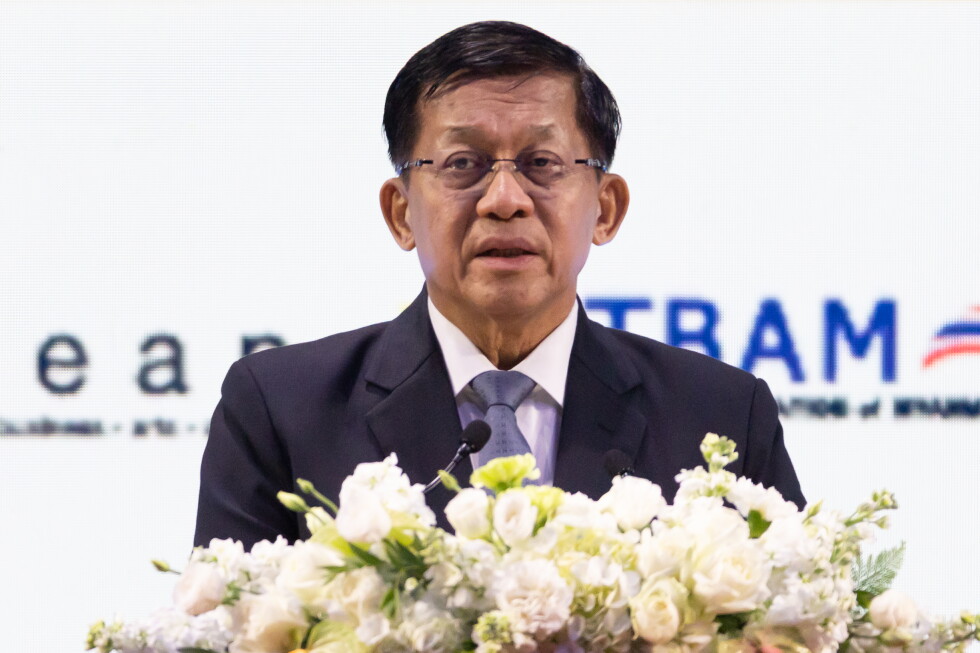
BANGKOK – In a public statement released over the weekend, Myanmar’s military-installed government has pushed back against renewed demands from the Association of Southeast Asian Nations (ASEAN) to free detained former civilian leader Aung San Suu Kyi unconditionally, and has ruled out retaining the bloc’s special envoy role for Myanmar after Singapore assumes the ASEAN chairmanship in 2027. The rebuke marks the latest strain in already frayed ties between the junta-led administration and the regional bloc, more than three years after the military seized power from Suu Kyi’s elected government in 2021.
Min Aung Hlaing, the former army commander who led the 2021 coup and was recently sworn in as president after elections held by the junta late last year, has spent years seeking to cement international legitimacy for his rule and normalize Myanmar’s position within ASEAN. In response to the 2021 coup and the widespread armed conflict that erupted across Myanmar in its wake, ASEAN drafted a five-point peace plan just months after the takeover, which called for an immediate end to hostilities, inclusive dialogue between all competing factions, and the deployment of a special envoy to mediate the talks. For failing to make tangible progress on implementing the agreement, Min Aung Hlaing has been barred from participating in ASEAN’s top-level leadership summits since 2021.
Last week, the junta administration took a small, symbolic step to defuse international criticism: it allowed an official from the International Committee of the Red Cross to meet with the 81-year-old Suu Kyi. The visit marked the first time the detained leader has had any confirmed contact with an independent international humanitarian organization since her detention immediately after the 2021 coup. Suu Kyi, who was convicted on a series of corruption and public order charges widely described as politically motivated by her supporters and global human rights groups, is currently serving a multi-year sentence under closed house arrest at an unconfirmed location in Myanmar’s capital Naypyidaw. The junta has previously commuted portions of her sentence on humanitarian grounds, but has repeatedly rejected calls for her full release from foreign governments and regional blocs.
In its official statement Saturday, the Myanmar foreign ministry made clear it would not bow to external pressure on the issue. “Although the government has commuted her sentences based on humanitarian considerations, the matter of a full and unconditional release shall only be carried out in accordance with the law,” the statement read.
On the topic of ASEAN’s special envoy mechanism, the administration said it would continue to cooperate with current special envoy Maria Theresa Lazaro, a Philippine foreign affairs official appointed by the current 2025 ASEAN chair the Philippines. But the statement added that the government sees no need to extend the arrangement when Singapore takes over the rotating ASEAN chair on January 1, 2027. “At present, the government, which emerged from the multiparty democratic elections reflecting the genuine will of the people, has assumed state responsibility,” the statement added.
The Philippines, current chair of ASEAN, responded Friday by welcoming last week’s Red Cross visit as a small but positive step toward broader dialogue and national reconciliation in Myanmar. But it also reiterated the bloc’s core demand, repeating its call for Suu Kyi’s “complete and unconditional release” and pushing for expanded access for independent groups to all political detainees held across the country.
In a recent public address delivered more than three months after his inauguration as president, Min Aung Hlaing openly criticized ASEAN’s long-standing peace plan, accusing some member states of unfair discrimination against Myanmar and stating that his administration would handle engagements with ASEAN members on a case-by-case basis going forward. The December 2024-January 2025 elections that brought Min Aung Hlaing to the presidency have been widely dismissed by international observers and opponents of the junta as a fraudulent vote designed to cement permanent military control over Myanmar under the veneer of a restored civilian government.