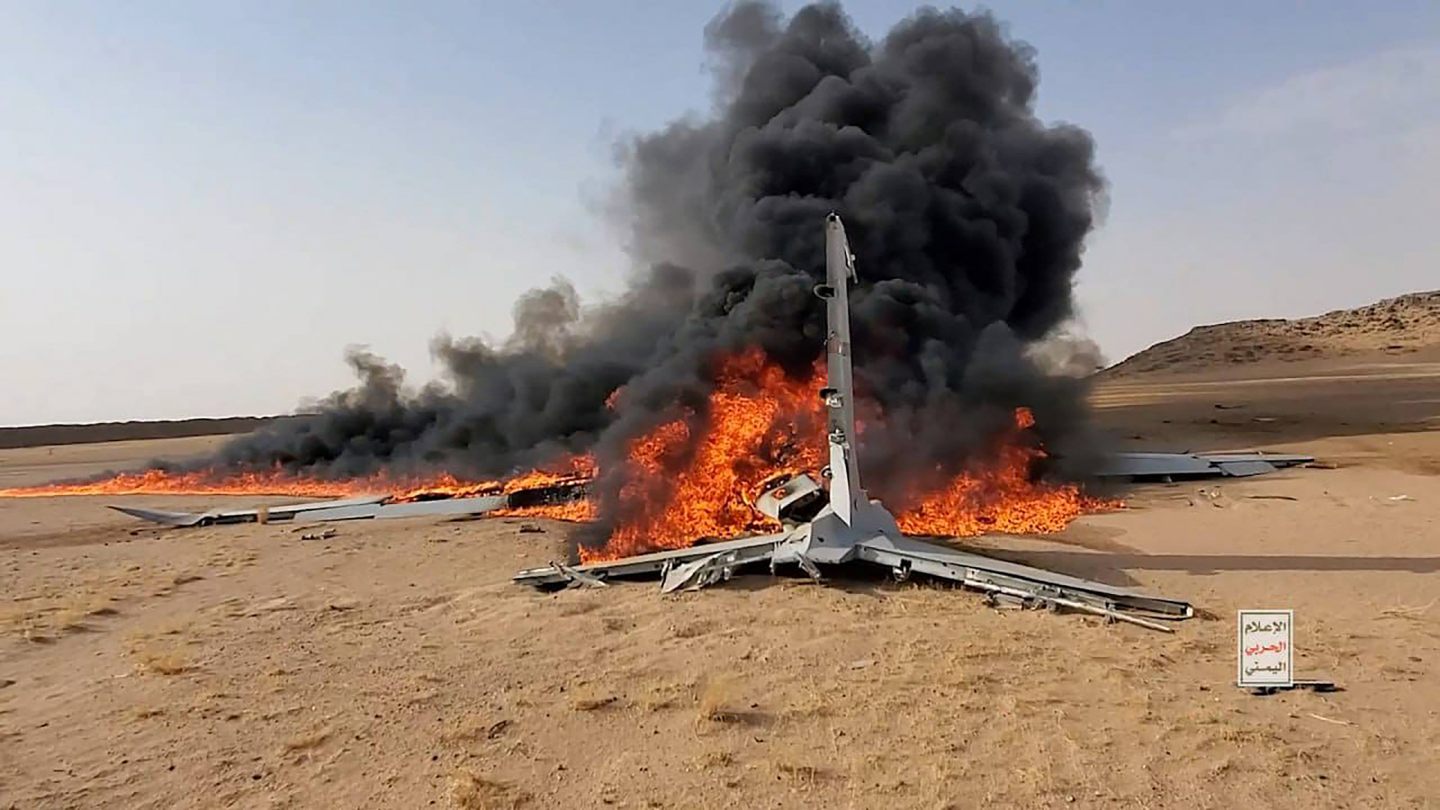
Early on Sunday, a blaze erupted at a facility operated by Saudi Arabian state energy giant Aramco in the Red Sea coastal city of Jizan, located near Saudi Arabia’s southern border with Yemen. Saudi emergency services quickly responded to the incident, and authorities confirmed the fire was fully extinguished with no injuries or fatalities reported in the attack.
In an official statement posted to the social platform X, Saudi Arabia’s Ministry of Energy confirmed the fire struck an Aramco refinery site in Jizan, adding that competent agencies had finalized initial response protocols. The ministry declined to comment on the potential origin or cause of the blaze when releasing the statement.
Shortly after the fire was reported, however, Yahya Saree, military spokesperson for Yemen’s Houthi movement, claimed responsibility for the incident via X. Saree said the Houthi group had launched a precision drone strike against the Jizan Aramco refinery, noting the attack was launched in retaliation for what he described as Saudi Arabia’s violation of Yemeni airspace over the northern provinces of Saada and Hajjah.
Jizan has been a repeated target of Houthi attacks targeting Saudi energy infrastructure for years, as the border region has remained a flashpoint in the long-running Yemen conflict. Just one month prior, the Houthi movement claimed credit for separate strikes against Aramco facilities in Jizan, as well as attacks on oil infrastructure in Yanbu, another key Saudi Red Sea export terminal. Just last week, Aramco CEO Amin Nasser acknowledged that previous strikes on company assets had caused minor temporary production disruptions, but emphasized that operations were restored rapidly and that the attacks had not resulted in any material operational or financial damage to the firm.
In addition to the Jizan refinery strike, the Houthis also announced they had launched a large-scale attack using dozens of ballistic missiles and drones against Saudi-backed Yemeni government troops and military equipment positioned in the Yemeni Red Sea port city of Mokha.
This latest wave of attacks comes as armed conflict has reignited between the Houthi movement and Yemen’s internationally recognized government, which receives extensive military backing from Saudi Arabia. The resumption of fighting ends a two-year period of relative calm that followed a widely observed 2022 ceasefire. Since 2014, the Houthis have controlled Yemen’s capital Sanaa and most of northern Yemen, while the Saudi-backed government holds sway over much of the country’s southern territory. Last month, the Houthi movement also announced a naval blockade targeting Saudi shipping in the Red Sea and issued threats to commercial vessels transiting the strategic Bab el-Mandeb Strait, a critical global chokepoint for maritime energy trade.
The Jizan fire is being investigated separately from a separate incident reported in the eastern Saudi industrial city of Jubail. Turkey’s state-owned Anadolu Agency reported hearing a massive explosion in the Jubail region, with local Saudi media claiming the blast targeted gas processing facilities at Jubail Industrial City and sparked subsequent fires, though no official confirmation of that attack has been released as of yet.
These concurrent security incidents coincide with a major diplomatic shift in the region, as Saudi Arabia moves to deepen collective security cooperation with regional partners amid rising cross-border threat risks. Just two days before the Jizan attack, on Friday, Saudi Arabia signed a landmark trilateral defense agreement with Turkey and Pakistan in the holy city of Mecca. The pact includes a mutual defense clause, stating that an armed attack against any one of the three signatories will be considered an attack against all three parties.
On Saturday, Turkish Foreign Minister Hakan Fidan clarified the terms of the new agreement, stressing that the pact was not targeted at Iran and that the three partners had not formally named any shared adversary. “There is no common threat that we have put in writing,” Fidan told Anadolu Agency. He noted that the agreement’s mutual defense clause is technically comparable to NATO’s Article 5 collective defense framework, but added that any collective response to an attack would be tailored to the specific circumstances of the incident.
Beyond the mutual defense commitment, the pact is set to cover a wide range of security cooperation, including joint military training exercises, cross-border intelligence sharing, coordinated logistics support, joint threat assessment, and expanded collaboration between the three countries’ defense industries. Fidan also added that Ankara hopes to expand the bloc beyond its three founding members, suggesting that Egypt could be invited to join the partnership in the future.
This flurry of diplomatic and security activity comes as broader regional uncertainty has spiked sharply in recent months, following escalating tensions across the Middle East tied to the ongoing conflict between Israel and Hamas, with renewed clashes involving armed factions across Iraq, Lebanon, and Yemen disrupting years of relative de-escalation.