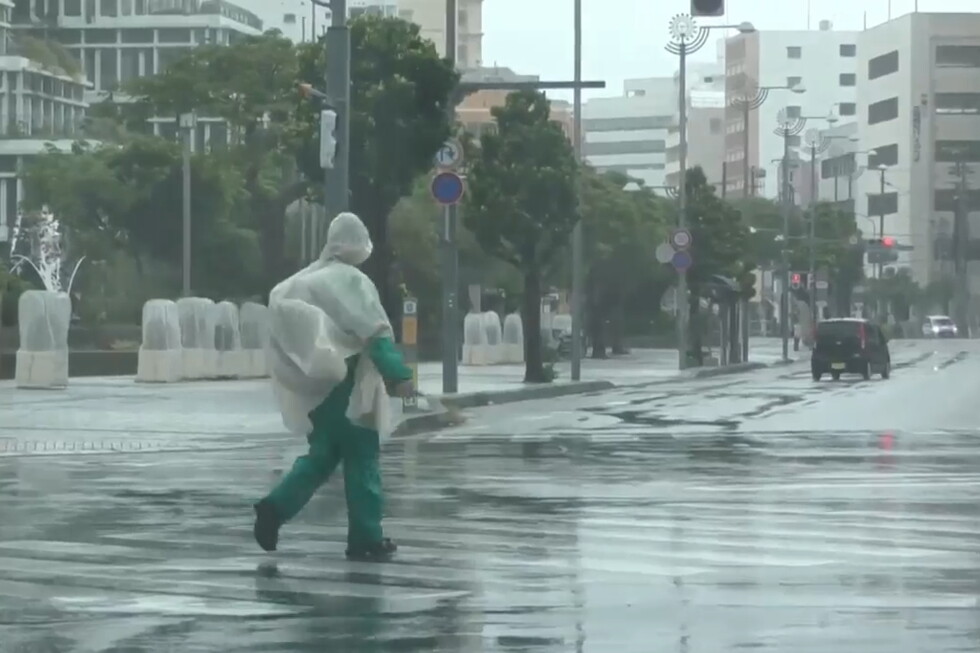
BEIJING – As powerful Typhoon Dolphin barrels toward the eastern coastline of China, local government agencies have enacted sweeping precautionary measures, closing educational institutions and popular tourist attractions ahead of the storm’s expected landfall this weekend. The tropical cyclone, which is packing maximum sustained winds of 162 kilometers per hour (101 miles per hour), is forecast to make landfall late Sunday along the coasts of Zhejiang Province and the northern section of neighboring Fujian Province. Major Chinese metropolis Shanghai also lies directly in the storm’s projected path. Meteorological and disaster management officials warn that the system will dump extremely heavy rainfall across the region, elevating the risk of catastrophic flash flooding and dangerous landslides that threaten both life and infrastructure. In response to the approaching threat, China’s central emergency management authorities activated a Level III emergency response, the second-lowest tier of the country’s four-tier national emergency classification system. Preparations to mitigate risk have been carried out across multiple regions: all coastal and inland tourist destinations across Zhejiang will remain closed through Saturday and Sunday, with all water-based recreational and commercial activities — including inter-island ferries and passenger cruise operations — suspended for the duration of the storm. In Ningbo, one of Zhejiang’s largest and most economically important port cities, municipal education officials have ordered all public and private schools and other educational facilities to close for the entire weekend to keep students and staff out of harm’s way. Local disaster response teams have been deployed to conduct pre-storm inspections of flood control infrastructure, evacuate at-risk communities in low-lying and mountainous zones, and stockpile emergency supplies including food, water, and temporary shelter materials ahead of the storm’s arrival.
标签: Asia
亚洲
-
He’s been frozen on Everest for 30 years, now ‘Green Boots’ may finally be coming home
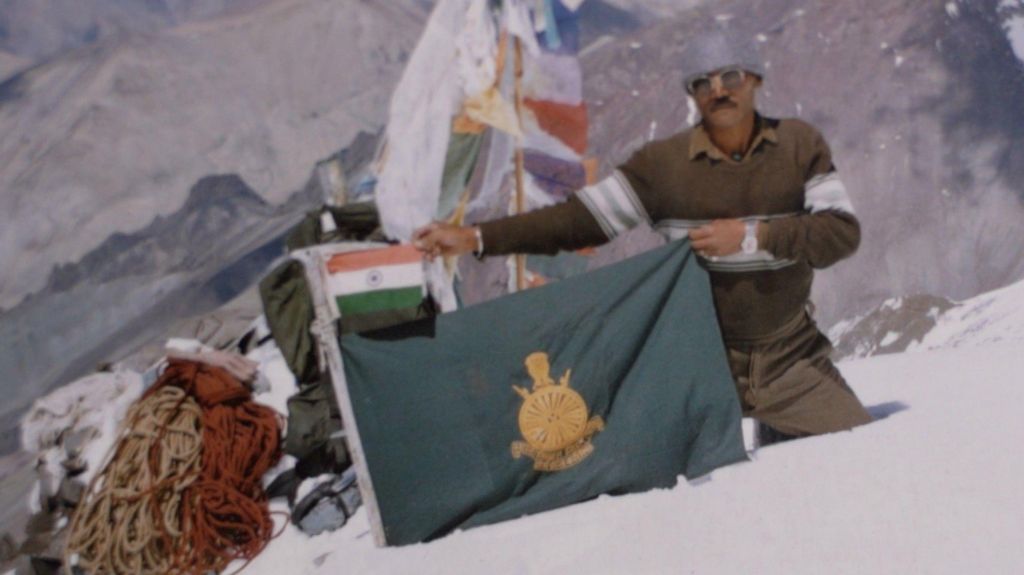
For nearly 30 years, a frozen body tucked into a rock overhang just 350 vertical meters below Mount Everest’s summit has served as one of the mountain’s most haunting and recognizable landmarks. Known universally by the distinctive lime-green mountaineering boots it has worn since the 1996 blizzard that killed its owner, “Green Boots” has guided countless climbers toward the peak of the world’s highest mountain, a grim reminder of the cost of conquering Everest. Now, three decades after the tragedy that claimed his life, Indian authorities are preparing to launch an unprecedented high-risk recovery mission to bring the remains — now confirmed to belong to Indian climber Dorje Morup — home to his waiting family.
Morup, a 48-year-old lance corporal with the Indo-Tibetan Border Police (ITBP), was an experienced Himalayan mountaineer who had already summited Stok Kangri, the highest peak in India’s Ladakh range, when he joined a historic 1996 ITBP expedition. The team aimed to become the first Indian expedition to summit Everest from the treacherous northern slope, located on the Chinese-administered Tibetan side of the mountain, a far less popular and more dangerous route than the southern approach from Nepal.
The night before he departed his Ladakh home for the expedition, Morup made a promise to his wife, Konchak Yangskit: he would return a hero, and make India proud. He asked her to care for their children and wait for him at the airport on his return. But Yangskit carried a quiet premonition that night: she wondered if she would ever see him again.
When the expedition hit a brutal snowstorm mid-ascent, three of the six team members turned back early. Morup and two other climbers, Tsewang Smanla and Tsewang Paljor, pushed on, successfully reaching the 8,849-meter summit. Disaster struck as they began their descent, however, when a full blizzard engulfed the upper slopes, killing all three men. Like more than 300 other climbers who have died on Everest since record-keeping began, their bodies were left trapped in the mountain’s extreme altitude, where recovery was deemed impossible at the time. While the bodies of Smanla and Paljor were never located, Morup’s remains, identifiable by his bright green boots, settled into a stable snow cave at 8,500 meters — just inside what climbers call the “death zone,” where oxygen levels are one-third of those at sea level and temperatures can plummet to -40°C.
For decades, mountaineers assumed Green Boots was the remains of Tsewang Paljor. But new testimony from surviving 1996 expedition members, combined with analysis of the location of Morup’s final radio transmission, led Indian authorities to conclude the body is in fact Morup. A recent review of his climbing gear and clothing confirmed the preliminary identification, and ITBP has now spent years planning a mission to retrieve their former comrade. Officials say the goal is to confirm the identity via DNA testing and finally give Morup’s family the closure they have waited 30 years to receive.
“On some days, before I went to sleep, I would think that there’d be a knock on the door tonight and that when I opened, he would be there,” Yangskit, now in her mid-70s, told the BBC. “When he comes home, I will ask him: ‘Where were you all these years?’” For decades, Yangskit has refused to fully accept Morup’s death, because she never saw his body. “Even though we organised cremation prayers at home, my heart refused to believe he had died,” she said, through tears. “I didn’t see his dead body, so it was difficult for me to believe it.”
The recovery mission that will attempt to bring Morup home is one of the most complex and dangerous high-altitude recovery operations ever attempted on Everest. The body lies on the steep, underdeveloped northern slope, which lacks the helicopter evacuation infrastructure and support systems that exist on Nepal’s more popular southern side. Unlike the south, there is no option for emergency evacuation if the recovery team runs into trouble. Even in the mild spring climbing season, reaching 8,500 meters to retrieve a frozen body is a monumental challenge. Autumn, when ITBP hopes to complete the mission before September, brings far more unpredictable and dangerous weather.
Veteran mountaineers who have led prior recovery efforts say the operation will require a team of 10 to 12 experienced summit climbers just to fix support ropes to the recovery site. Frozen into the snow and encased in layers of ice, the body will weigh several times its original mass, and must be carried by hand down 1,000 meters of extremely steep, rocky terrain before it can be transferred to a helicopter or yak train for transport to India. The first 1,000 meters of descent, experienced Indian climber Kuntal Joisher noted, will be the most treacherous part of the entire mission, with logistical challenges that put the entire team at severe risk.
“The main thing is to not put Sherpa lives at risk for a dead body,” Joisher said. Most recovery operations on Everest cost between $40,000 and $80,000, a sum out of reach for most families of fallen climbers. This mission will be far more expensive, and is being fully funded by ITBP, which has never forgotten its fallen comrade. “We never forgot him. It was only a matter of time,” an anonymous ITBP official told BBC News Hindi.
For most fallen climbers left on Everest, authorities and local teams typically only move bodies out of sight of climbing routes, rather than undertaking the dangerous work of full recovery. For example, American climber Francys Arsentiev, known as the “Sleeping Beauty of Everest,” was only moved to a more private location on the mountain a decade after her death, rather than being brought down. But for Morup’s family, full recovery is the only way to finally close 30 years of uncertainty.
If the mission is successful, Morup’s eldest son Punchok Dorjai says the family will hold a public funeral near the Martyrs Park in Leh, the capital of Ladakh. “My father gave his life for the country and he should be remembered as a martyr,” Dorjai said, noting that his two fallen teammates deserve the same recognition. The family plans to display Morup’s famous green boots alongside his Chinese-issued Everest summit certificate in their home, as a permanent reminder of his legacy.
For the thousands of climbers who have passed Green Boots on their way to the summit over the past 30 years, the landmark has been a permanent part of Everest’s landscape. If the recovery mission succeeds, it will bring an end to one of the mountain’s most famous stories, and finally give a fallen hero the homecoming he promised 30 years ago.
-
Anti-Muslim lawmaker Andy Ogles loses Republican primary
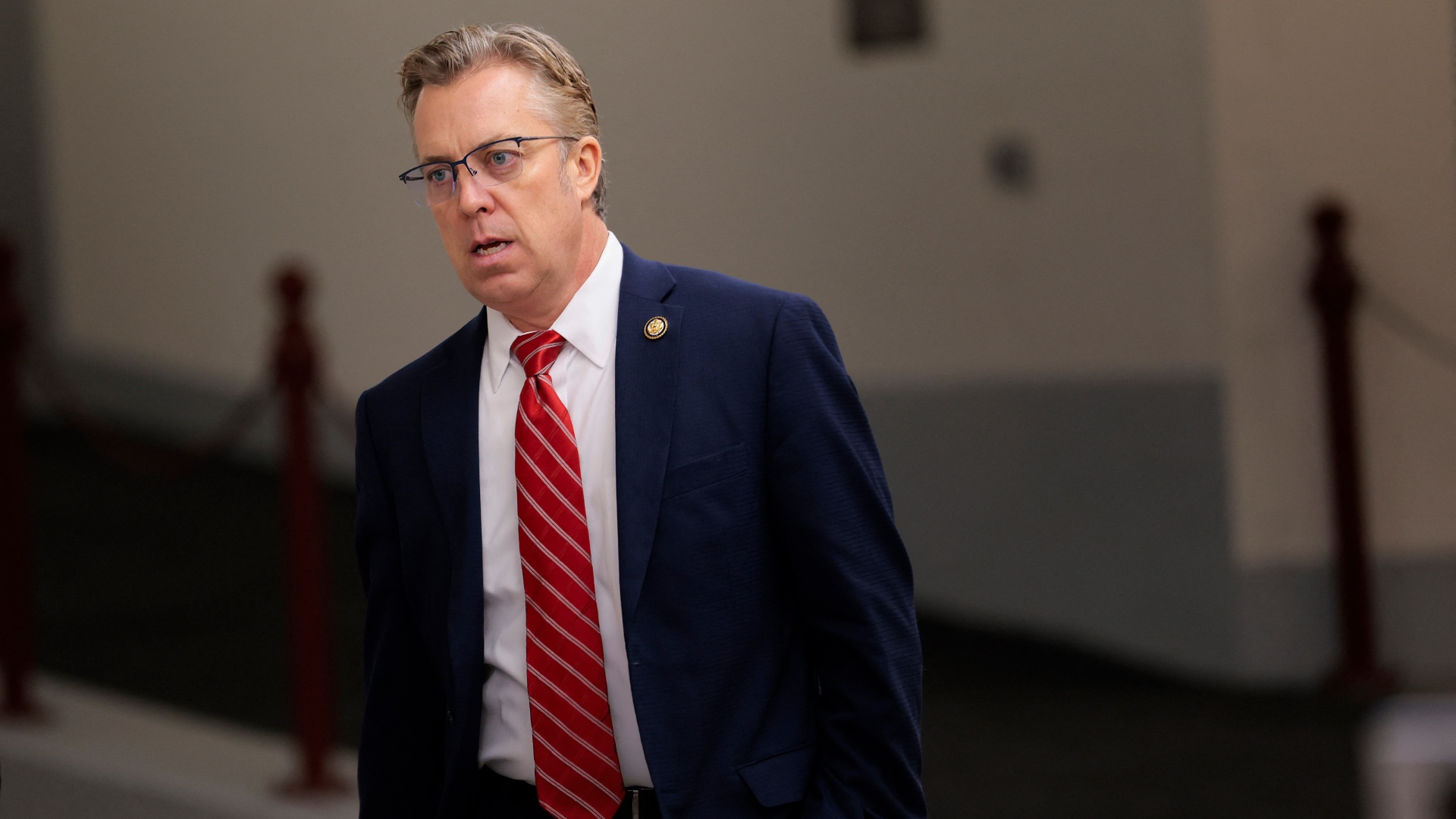
In a stunning political upset that has sent ripples across American conservative circles, two-term Tennessee Congressman Andy Ogles — a hard-right lawmaker infamous for his repeated anti-Muslim rhetoric — was defeated in a Republican primary election Thursday, even with a formal endorsement from former U.S. President Donald Trump. For most GOP candidates, Trump’s public backing is widely viewed as an almost unbeatable advantage in intraparty contests, but Ogles fell to Charlie Hatcher, a dairy farmer and sitting state agriculture official who also ran on an explicitly pro-Trump platform.
Hatcher built his campaign around the slogan “hire a farmer”, framing himself as a pragmatic conservative aligned with core Trump-era Republican priorities. His campaign website lists him as staunchly “pro-gun, pro-life, pro-Trump”, and he out-fundraised and outspent Ogles thanks to a major influx of financial support from outside interest groups that backed his policy focus on expanding domestic renewable energy production.
Political analysts point to multiple factors that led to Ogles’ defeat. First, the congressional district Ogles was running in underwent significant boundary redrawing, a process that opened the door to shifts in the electorate after a recent U.S. Supreme Court ruling weakened key protections of the Voting Rights Act. But beyond structural changes to the district, Ogles’ long history of inflammatory targeting of marginalized groups also played a major role in his loss.
Ogles, a member of the hardline House Freedom Caucus and a vocal supporter of Israel, has spent months pushing extreme policy proposals targeting Muslim Americans. Just this year, he announced plans to introduce legislation that would ban immigration from multiple Muslim-majority countries. He went further in public posts on social media platform X, writing that “diversity is our weakness” and openly calling for the denaturalization and deportation of naturalized Muslim American citizens, including New York City Mayor Zohran Mamdani. In a June post that drew national outrage, Ogles wrote, “Zohran ‘little muhammad’ Mamdani is an antisemitic, socialist, communist who will destroy the great City of New York. He needs to be DEPORTED. Which is why I am calling for him to be subject to denaturalization proceedings.”
His most controversial remarks came earlier this year, when he wrote on X that “Pluralism is a lie” and “Muslims have no place in American society” — claims that sparked widespread national condemnation from civil rights groups and lawmakers across the political spectrum. The comments came amid a documented nationwide surge in anti-Muslim rhetoric online, which tracked closely with rising geopolitical tensions between the U.S., Israel and Iran. A report from the Washington D.C.-based Center for the Study of Organized Hate found that between January 1 and March 5, as Trump repeatedly threatened military action against Iran, the volume of social media posts that explicitly dehumanized, excluded, or incited violence against Muslims skyrocketed. On the day the U.S.-Israel joint military campaign against Iran launched February 28, daily anti-Muslim posts jumped from fewer than 2,000 to more than 6,000, the report found.
The Council on American–Islamic Relations (CAIR), the nation’s largest Muslim civil rights organization, labeled Ogles “an anti-Muslim extremist” in a formal statement following his comments. The organization noted that Ogles is a member of the so-called “Sharia-Free America Caucus”, a congressional coalition that backs legislation that would effectively outlaw the practice of Islam in the U.S. “Islam is an American faith that has been present since the colonial-era when large numbers of Muslims were imported as slave labor, without any individual liberty or freedom of religion,” CAIR said.
Democratic lawmakers across the chamber united to condemn Ogles’ rhetoric, calling it openly Islamophobic. Representative Judy Chu described his comments as “abhorrent”, while Representative Lisa Blunt Rochester called on Republican House leadership to publicly disavow the Tennessee lawmaker. House Minority Whip Katherine Clark wrote on X, “This disgusting shit doesn’t belong in American society. And Republicans who support it don’t belong in Congress.”
Notably, Ogles faced no formal disciplinary consequences from the Republican-controlled House of Representatives, even after his most inflammatory remarks. This absence of action drew sharp criticism, particularly when contrasted with the 2023 censure of Palestinian-American Representative Rashida Tlaib over her comments supporting Palestinian statehood.
Ogles’ current term in office is set to expire in January 2027, and he will leave office at that time following his primary defeat, ending the political career of one of the most openly anti-Muslim members of Congress in recent decades.
-
From autonomy to ‘settler colonialism’: How India redrew Kashmir’s demographic and political landscape
It has now been seven years since India revoked the special constitutional autonomy long granted to Indian-administered Jammu and Kashmir. The rollback of these historic constitutional protections, followed by sweeping changes to residency rules, land ownership laws and regional governance, has systematically remade the region’s social, political and economic landscape. Critics across academic, political and local circles frame these changes as a deliberate multi-pronged strategy to alter Kashmir’s unique demographic character and erode native political power. The debate around the changes remains deeply divided, with competing narratives of integration versus disenfranchisement defining the region’s uncertain future seven years on.
On August 5, 2019, India’s ruling Bharatiya Janata Party (BJP), a right-wing nationalist administration led by Prime Minister Narendra Modi, took the unilateral step of scrapping two core constitutional provisions: Article 370 and Article 35A. For seven decades, these clauses had anchored Kashmir’s relationship to the Indian Union, granting the Muslim-majority region limited self-governance and legal safeguards to protect its native population and resources. Article 370 originated from the 1949 accession agreement following the partition of India, while Article 35A empowered Jammu and Kashmir’s regional assembly to define permanent residents and bar non-locals from permanent settlement in the region. Prior to 2019, existing land laws capped individual land holdings at 12 acres, prohibited construction on agricultural land and barred non-Kashmiris from property ownership, frameworks designed to protect the region’s fragile ecology, preserve local access to resources and guarantee native access to employment.
Following the 2019 repeal, the Indian government unilaterally split the former state into two federally controlled Union Territories: Jammu and Kashmir, and Ladakh, placing the entire region directly under the administrative control of India’s central government in New Delhi. Modi’s administration framed the move as a long-overdue corrective to historical anomaly, arguing that integrating the region more tightly into India would attract new private investment, spur long-delayed development, and curb long-running separatist militancy.
But within months of the repeal, New Delhi introduced sweeping regulatory changes that opened the region to outside settlement and investment. In March 2020, the government implemented new domicile rules that granted resident status to any person who had lived in the region for 15 years, studied within its borders for seven years, or served in select central government posts in the region. A subsequent notification in October 2020 eliminated even the requirement of domicile status for purchasing most non-agricultural land, effectively removing all historic barriers to outside property ownership.
Official government data presented to the Jammu and Kashmir Assembly reveals that within just two years of the new rules going into effect, more than 1.25 million domicile certificates had been issued across the region. Of these, more than 83,000 went to individuals who did not previously qualify as permanent residents. Regional authorities have claimed that domicile certificates are only required to apply for government jobs and do not automatically confer land or voting rights, but concurrent changes to land law mean a domicile status is not required to purchase most property in the region anyway.
For native Kashmiris, these policy shifts have resulted in widespread systemic disenfranchisement, as outsiders gain open access to the region’s limited land and natural resources. Many residents describe growing economic inequality that has reshaped daily life over the past seven years. “I think what has changed in these seven years is the visible presence of inequality,” explained Jan, a 35-year-old resident who requested only her first name be published for safety. “I don’t recall Kashmir being so economically unequal before. When you see the much-hyped city centre of Lal Chowk, for example, you get a small glimpse of a colourful metropolis. But the moment you step into the next-door neighbourhood of Maisuma and walk into the lanes of the old city, you encounter real Kashmir: waterlogged roads, people driving rickshaws for a living, stray dogs outnumbering humans and more.”
Jan pointed to the elimination of historic land regulations as a core driver of displacement. “Before, we had laws that prevented a single person from acquiring land that was more than 12 acres. That kept Kashmir anchored into a socialist character. No one was allowed to build so much as a small hut in agricultural land. Now, it is free for all. Indian construction firms can tear past our rice fields and apple orchards to construct railway lines and expressways that are completely defacing the Kashmir that we knew as children. This infrastructure is meant to serve its military more than it serves us. The poorer lot are especially more defenceless against the onslaught of ‘new Kashmir’ and the sweeping changes it represents. We are simply getting estranged from our own land.”
The opening of land to outside investment has also triggered widespread evictions of long-term residents living near forested areas. Abu Bakr, a 42-year-old Srinagar business owner who closely follows regional politics, noted that new land policies reclassified many long-standing community land holdings as illegal encroachment. “To facilitate investment and improve the ease of doing business, the policy allowed investors greater access to land. Subsequently, the government introduced a series of policy changes affecting land, agriculture, and forest laws. In several cases, land occupied by such residents was classified as encroachment, leading to eviction drives. There are many examples of it.” Bakr added that government initiatives to distribute land to homeless families from outside the region have amplified long-standing native fears of deliberate demographic engineering, a concern that has been central to Kashmiri political discourse for decades.
Beyond land and residency changes, the Indian government also redrew Jammu and Kashmir’s electoral boundaries for the first time since 1995. The federal Delimitation Commission expanded the total number of regional assembly seats from 83 to 90, allocating five of the six new seats to the Hindu-majority Jammu region and only one to the Muslim-majority Kashmir Valley. The commission also merged geographically disconnected areas separated by mountain ranges into single parliamentary constituencies, a restructuring widely criticized as a deliberate maneuver to shift political power toward parties aligned with New Delhi. While regional elections were eventually held and an elected local government formed, the administration remains stripped of full statehood, with core legislative and administrative powers retained by the central government in New Delhi, leaving local leaders severely constrained in their ability to enact policy.
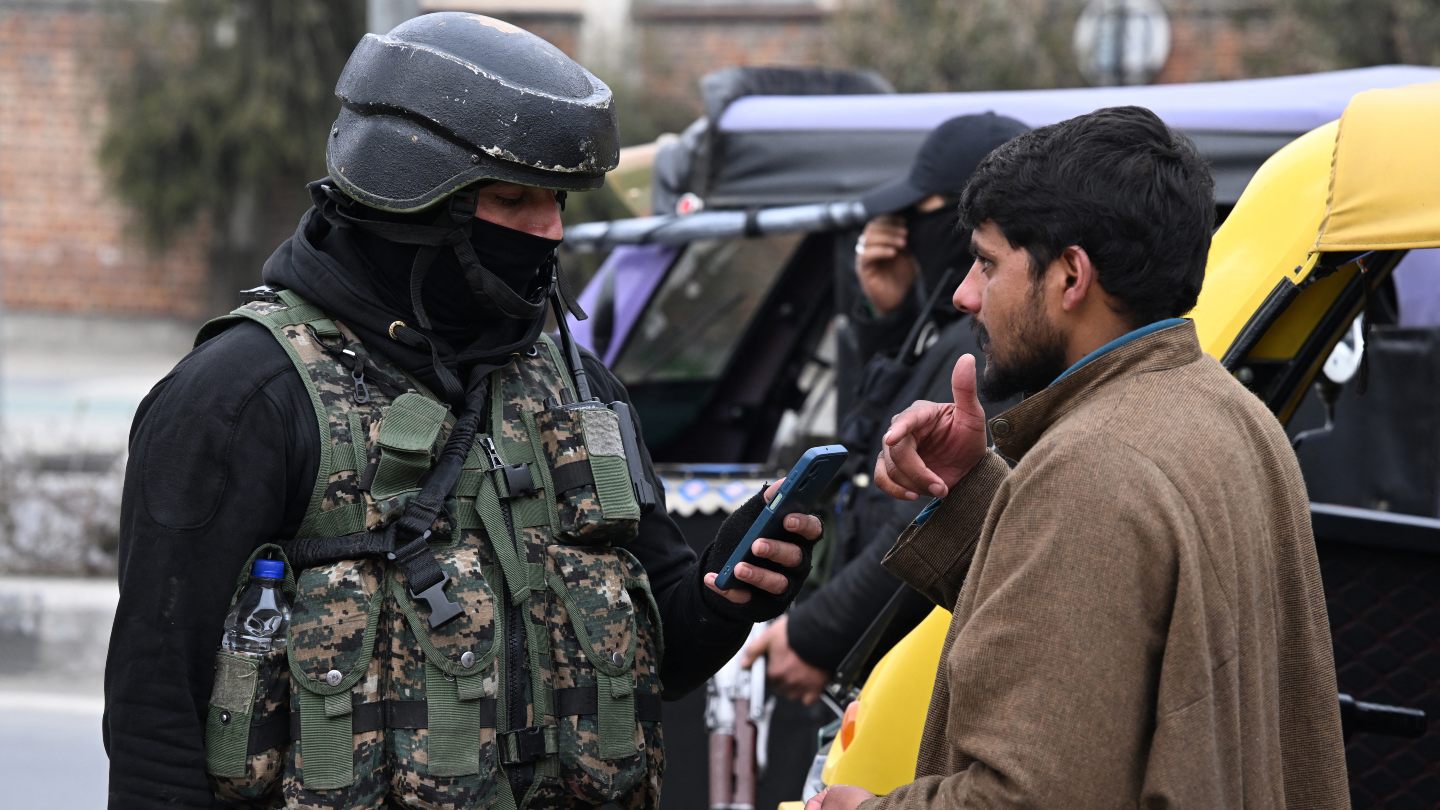
Seven years on, the promised economic boom and end to militancy that the BJP used to justify the 2019 changes have yet to materialize, and the region remains mired in volatility. In May 2025, suspected militants carried out a deadly attack on tourists in Pahalgam’s Baisaran Valley, killing 26 people in one of the deadliest civilian assaults on the region in recent years. Just last month, a police officer on security duty was shot and killed in Anantnag’s Lal Chowk; the killing triggered a massive government crackdown that resulted in the detention of more than 3,500 people across the region.
Local residents also highlight ongoing systemic economic and social crises. Unemployment among Kashmiris currently sits at roughly 6.7 percent, double the national average for India, and youth joblessness has fueled a growing drug crisis in the region. “We are plagued by high rates of unemployment among youth; they are going towards drugs,” said Muhammad Amin, a 55-year-old local resident. Critics also point to widespread government censorship, including revisions to school textbooks to erase dissenting perspectives and suppress native Kashmiri identity.
International and academic observers have echoed these criticisms, framing the 2019 changes and subsequent policy shifts as a deliberate project of political disempowerment. In 2021, a panel of United Nations special rapporteurs raised alarm that the revised residency rules were implemented without any consultation with the local Kashmiri population, warning that fast-tracking domicile status for outsiders risked severely deteriorating the human rights situation for native residents.
Scholars who study the region frame the cumulative changes through the lens of settler colonialism, arguing that incremental policy shifts over time have worked together to restructure control over land, political power and native sovereignty. Ather Zia, a political anthropologist, explained: “In my work, I describe this as the iterative temporal dynamic of settler colonialism, where successive changes over a period of time reinforce one another, and cumulatively they are focused on restructuring control over land, political representation, and Indigenous sovereignty, as we see that is what has unfolded. Settler colonialism as an analytical framework helps explain how changes in legal restructuring, policies of land expropriation, demographic engineering, increasing militarisation, and massive overhaul in how the region is governed illustrate an evolving structure rather than disconnected policies.” Zia added that the cumulative effect of these changes has fundamentally transformed everyday life for native Kashmiris: “There is heightened uncertainty and deep fear over land; political representation has diminished; journalism, activism, and civil society activity are curbed.”
Muhammad Junaid, a professor at the Massachusetts College of Liberal Arts, told reporters that the entire post-2019 restructuring is designed to erase the historical political rights of the Kashmiri people. “The post-2019 changes were designed as a strategy aimed at the total political disempowerment of Kashmiris as a people. To bring Kashmir to a level where people of Kashmir would be compelled to demand (or not even demand at all) things that had already once existed rather than seek their historical political rights as a people. This disempowerment is part of the broader history of imperial control in Kashmir. The history of such a process in other places and times tells us that the situation in Kashmir resembles many aspects of settler colonialism. The impacts of the 2019 events are gradually unfolding… as people are being governed by imperial bureaucrats as imperial wards with no say in their own administration.”
While the Indian government continues to maintain that the 2019 constitutional changes have improved governance, attracted new investment and integrated Kashmir more closely into the Indian Union, critics argue the policies have fundamentally and permanently altered the region’s political, legal and demographic character. Seven years after the repeal of Article 370, these deeply opposing narratives continue to shape the bitter debate over Kashmir’s future.
-

Thai PM vows to introduce stricter gun laws after eight killed in shooting
A devastating mass shooting carried out by a 14-year-old student near the Thai capital Bangkok has killed eight people and wounded 22 others, sparking urgent new calls for tougher gun regulation in a country long grappling with widespread civilian firearm ownership.
The tragedy unfolded on a Friday morning in August, starting at the two-story home the teenager shared with his 73-year-old grandfather and 74-year-old grandmother, whom he shot and killed around 5 a.m. local time. A single shot to the head killed each of his guardians, according to Thai law enforcement officials.
Rather than fleeing the scene, the teen smuggled the legally registered weapon — which belonged to his grandfather, alongside dozens of rounds of ammunition — onto a public school bus bound for his campus, Debsirin School in Nonthaburi, a satellite province bordering Bangkok. He attended his first scheduled class at 8:30 a.m. and joined his second session just under an hour later. Around 30 minutes into that second class, he pulled out the gun and opened fire.
Investigative accounts from police confirm the shooter first targeted teachers on the school’s sixth floor, killing three before moving down the main stairwell. There he encountered the school’s deputy director and the director’s secretary, who were ascending the stairs to respond to reports of gunfire. Both were shot and killed at the scene. By the time armed police officers surrounded the campus and located the attacker around 10:40 a.m., he had already taken his own life. Initial counts put five immediate deaths and 23 injuries, but an additional wounded victim later succumbed to their injuries, bringing the total death toll to eight.
Forensic analysis conducted by national police found the teen’s shots were surprisingly accurate, with many striking vital organs. Prime Minister Anutin Charnvirakul told reporters the attack was well-planned, with deliberate steps and clear premeditated targets. Searches of the teen’s personal electronic devices uncovered multiple videos of school shooting attacks in the United States, local Thai media has reported.
Family members told local outlets the teen, who lived with his grandparents following his parents’ divorce, had long been quiet and socially withdrawn, spending most of his time inside playing violent video games and rarely leaving the home. No family members reported noticing any warning signs that would have indicated he was planning a mass attack.
Founded in 1885, Debsirin School ranks among Thailand’s most prestigious secondary education institutions, with a network of campuses across the country and a alumni roster that includes some of Thailand’s most prominent public figures, from senior diplomats and professional athletes to multiple former prime ministers.
In the immediate aftermath of the tragedy, Prime Minister Anutin Charnvirakul announced plans to push through sweeping new gun control legislation that would drastically restrict public firearms carry. Under the proposed new rules, only on-duty government officials would be legally permitted to carry weapons in public spaces.
This is not Anutin’s first push for tighter gun rules: during his tenure as Thailand’s interior minister, he implemented several key gun control measures, including a temporary freeze on new firearms licenses and new restrictions on gun imports.
Thailand already has one of the highest rates of civilian gun ownership in Southeast Asia, with an estimated 10.3 million firearms held by private citizens. Roughly four million of these weapons are unregistered and held illegally. While the country already has formal laws on the books that impose penalties of up to 10 years imprisonment for illegal gun possession, consistent and effective enforcement of these regulations has long been a persistent gap in national policy.
Speaking publicly after the attack, Anutin expressed shock and sorrow over the unthinkable violence. “This tragedy shouldn’t have happened,” he said. “I don’t just feel sorry for the victims but I feel sorry that this happened. How can this happen in our country?”
Police investigations are still ongoing, with forensic teams continuing to comb the school campus for evidence and interview witnesses and family members to build a full picture of the attack and what motivated the teen’s actions.
-

All Blacks pull away late in flattering 38-21 win over the Stormers
Three decades after New Zealand’s last full-scale tour of South Africa, the iconic All Blacks finally returned to the country’s iconic stadiums this Friday, but their opening tour match fell far short of the high expectations fans and analysts had carried for years. Despite closing out the fixture with a 38-21 victory over the Stormers, the final scoreline offered a misleadingly flattering portrait of a disjointed, ill-disciplined All Blacks side that had been favored to win by a minimum of 30 points.
The All Blacks got off to a promising start, with sharp, well-executed breaks from Peter Lakai and Leroy Carter setting an early tone. Hooker Samisoni Taukei’aho crossed for the tour’s opening try in the fifth minute off a driving lineout, and experienced playmaker Beauden Barrett added the conversion before nearly notching a try of his own, only to knock the ball on under heavy Stormers pressure. That promising opening quickly unraveled, however, as a cascade of All Blacks penalties pinned the side in their own half for 20 consecutive minutes. Three of those early penalties went to All Blacks tighthead Pasilio Tosi, all called for collapsing the scrum, exposing early struggles in New Zealand’s set piece that would plague the team for the full 80 minutes.
The underdog Stormers, a makeshift preseason outfit that had already lost several key starters, put in a gritty, defiant performance that outperformed most pre-match predictions. Twice the underdogs rallied to level the score, and the match remained tied 14-14 with just 13 minutes left to play. The tide shifted only when injury stripped the Stormers of their second scrumhalf, leaving the side with no remaining reserve backs to fill the gap. Forced to reshuffle their backline — with former sevens star Seabelo Senatla moving to scrumhalf and flanker Hacjivah Dayimani shifting out to wing — the patched-up Stormers defense was quickly exposed by the All Blacks, who ran in three tries in the final eight minutes to pull away to their final 17-point margin.
For the All Blacks, the match was marked by uncharacteristic chaos: three yellow cards for foul play, persistent struggles at the scrum and lineout, and a general lack of cohesion across the starting lineup. In front of a crowd of 47,130 that fell short of a sellout, the All Blacks notched six tries to the Stormers’ three, but the win only papered over the obvious gaps in their performance ahead of the highly anticipated test series against South Africa’s Springboks, widely regarded as rugby’s greatest modern rivalry, which kicks off in just two weeks. On the positive side for New Zealand, the side finished the match with no major injury concerns, seven players earned their first caps in the iconic black jersey this year, and two young prospects — prop Siale Lauaki and inside back Josh Jacomb — made their professional debuts off the bench.
It was two Stormers players who stole the show, however: 20-year-old flyhalf Yaqeen Ahmed, who turned in a remarkably composed performance in his first-class debut, and 39-year-old flanker Deon Fourie, a dynamic veteran who will turn 40 next month. Fourie’s second-half try, scored while the All Blacks were down to 13 men following two yellow cards, marked his second score against New Zealand; his first came in the 2023 World Cup final, where he played through a serious shoulder injury just months before tearing his ACL and spending more than a year recovering from ligament damage. Senatla also notched a memorable try for the Stormers after a disrupted start to the second half that saw the home side lose captain and center Ruhan Nel to injury, leaving them without any backline replacements left on their 6-2 bench.
The All Blacks’ inconsistent performance means few players have put forward a compelling case to earn a starting spot in the upcoming test series. New Zealand’s next tour match is set for this Tuesday against the Sharks in Durban, where the side will look to iron out the kinks before the high-stakes test series gets underway.
-
War on Iran: Saudi Arabia warns of imminent attacks by Iraqi groups and Yemen’s Houthis
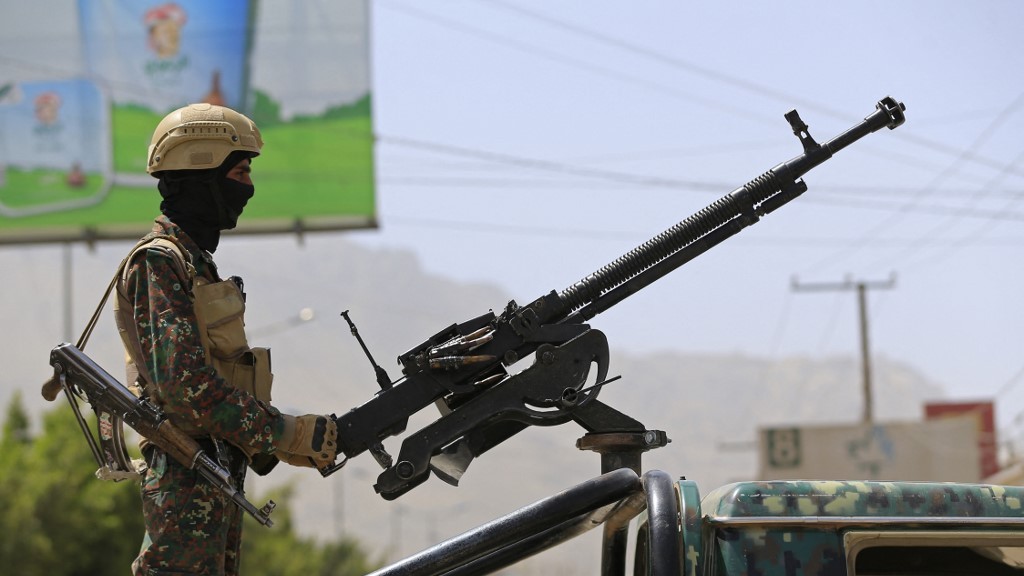
As tensions across the Middle East surge to new heights, Saudi Arabia has issued a stark intelligence-backed warning that Iran’s Islamic Revolutionary Guard Corps (IRGC) is orchestrating coordinated cross-border attacks against the kingdom, carried out jointly by Iraqi armed factions and Yemen’s Houthi movement.
A senior anonymous Saudi official shared details of the intelligence assessment with Reuters Thursday evening, noting that the collaborative threat assessment was compiled by Saudi authorities, U.S. intelligence agencies, and regional partner nations. According to the official, the planned attacks are set to target high-value civilian and economic infrastructure across the kingdom, with critical energy facilities, commercial ports, and major airports listed as the primary potential targets.
Saudi security forces have already detected unusual movements of drone and missile systems consistent with pre-attack preparations, the official confirmed, adding that hostile forces are positioning to launch strikes from two directions: Iraq along the kingdom’s northern border and Yemen to the south. In a firm statement of intent, the official added that Riyadh has completed defensive preparations and is prepared to deploy all necessary measures to repel and respond to any act of aggression against its territory.
This latest warning comes against a backdrop of rapidly escalating regional confrontation tied to the expanding Israeli-U.S. campaign against Iran-aligned groups that launched in late February. Tensions spiked further late last month, on July 29, when joint Saudi-U.S. airstrikes hit positions held by Iran-backed armed groups in Iraq. The strikes targeted command headquarters operated by the Popular Mobilisation Forces, leaving more than 20 fighters dead and at least 30 others injured.
In the wake of the airstrikes, Iraqi aligned factions publicly vowed to carry out retaliatory attacks against Saudi and U.S. targets. However, Hadi al-Amiri, leader of the prominent Iraqi Badr Organisation, has called for a delay in any retaliatory action. In a televised address carried by Iraqi media outlets, Amiri urged fighters to hold off on responses to what he labeled “American-Saudi aggression” and set aside immediate grievances for the sake of Iraq’s national strategic interests.
Beyond the northern threat from Iraqi factions, Saudi Arabia has also faced a sharp uptick in cross-border attacks from Houthi forces based in Yemen. The Houthi movement confirmed it launched an assault on Saudi Arabia’s Najran airport earlier this week on Tuesday, part of its ongoing wider campaign targeting Saudi military positions, civilian infrastructure, and commercial shipping connected to the kingdom.
On Thursday alone, Houthi assaults on Saudi-backed Yemeni government deployments in Yemen’s Marib and Hadramout provinces left at least 17 government soldiers dead, according to Yemen’s internationally recognized government. Multiple independent regional sources have put the confirmed death toll as high as 58. The Houthi movement has also compounded pressure on Saudi Arabia by disrupting the kingdom’s crude oil exports through a de facto blockade of Red Sea shipping lanes, pulling Riyadh deeper into the broad regional confrontation with Iran-aligned groups.
In response to the growing array of threats, regional diplomatic sources familiar with defense planning confirm that Saudi Arabia, Pakistan, and Turkey are set to sign a new trilateral joint defense agreement during a meeting scheduled Friday in Mecca. As of Friday morning, neither the Houthi movement nor the Iranian government has issued an immediate public response to Saudi Arabia’s warning of planned coordinated attacks.
-
Houthi missile and drone attacks kill dozens of Yemeni government troops
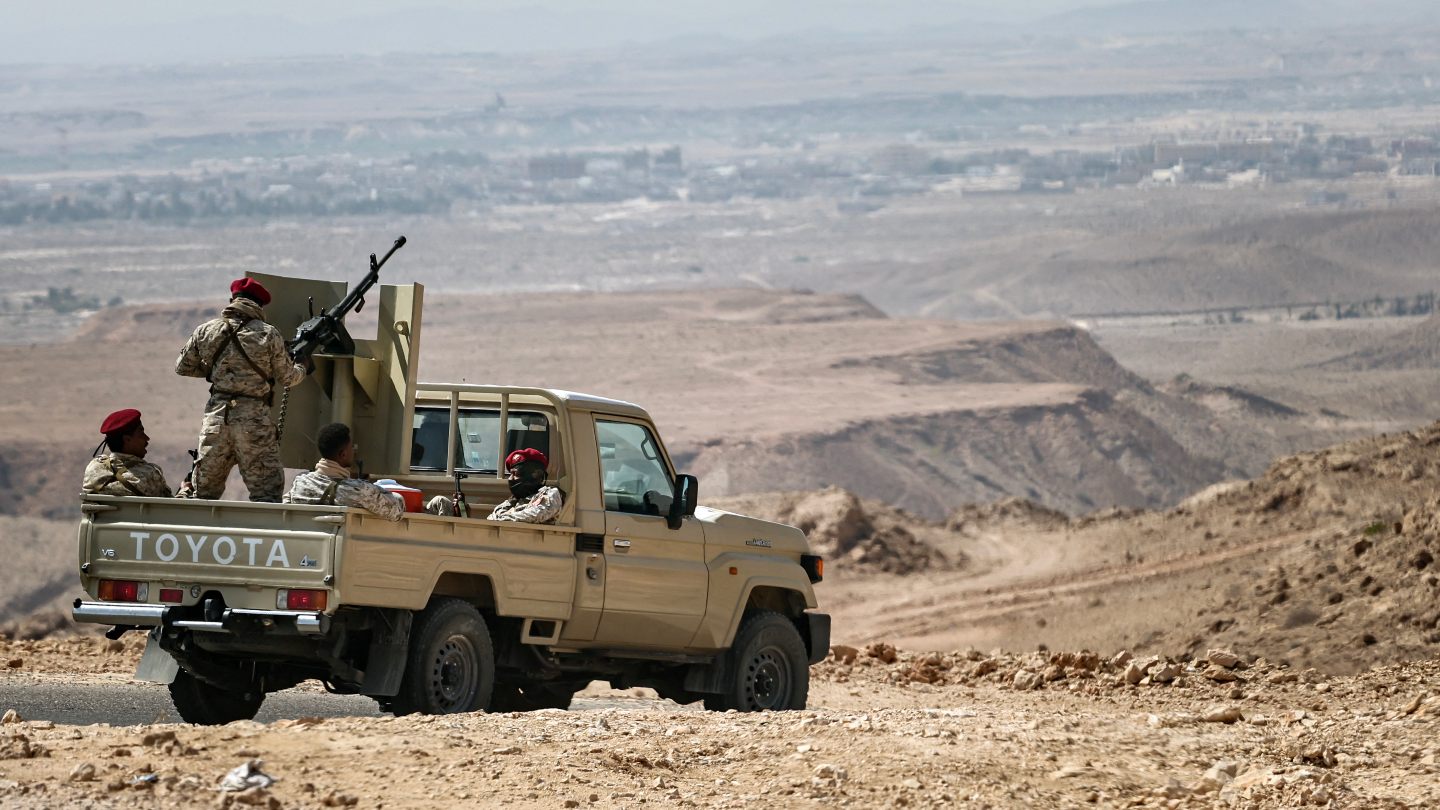
In a dramatic escalation of hostilities that has shattered years of relative calm in Yemen, Houthi missile and drone attacks killed at least 38 Yemeni internationally recognized government forces and wounded 29 others on Thursday, according to multiple sources cited by Agence France-Presse. Military officials confirm this assault is the deadliest strike against government-aligned troops since the United Nations-brokered ceasefire took effect in 2022.
Houthi military spokesperson Yahya Saree confirmed the group carried out the coordinated attacks, saying the operation was launched in direct retaliation for what the group calls a Saudi-backed military buildup in strategic Yemeni regions. Saree added that ballistic missiles and drones targeted multiple government military positions across three key areas: al-Ruwaik in Marib province, al-Thaniyah, and al-Abr in Hadramawt province. “We are fully prepared to confront any further escalation from our opponents,” Saree stated in the official announcement.
Detailed on-the-ground accounts from medical and military sources reveal one of the deadliest strikes hit a government military camp during morning formation in the al-Ruwaik district of Marib, alone leaving 45 personnel dead or injured. Additional simultaneous strikes targeted military outposts in al-Abr and al-Wadiah, Hadramawt province, a region that sits directly along Yemen’s border with Saudi Arabia, a key backer of the Yemeni government.
Yemen’s defense ministry swiftly issued an official statement condemning the attacks, vowing that the country’s armed forces would respond to the drone and missile assault “at the appropriate place and time.”
The Thursday offensive represents the latest spike in a broader resurgence of conflict that has followed rising tensions between the United States and Iran this year. After the 2022 UN truce brought an extended period of relative stability, the Houthi movement formally ended the de-escalation phase on July 12, following what the group claims was an Saudi air strike on Sanaa International Airport while an Iranian aircraft was on the tarmac in the Yemeni capital. Since that announcement, the Houthis have significantly ramped up military operations across the country.
In the weeks following the end of de-escalation, the Houthi group declared a full maritime blockade of all Saudi ports and launched a series of attacks on commercial shipping linked to Saudi interests. This disruption of Red Sea and Gulf of Aden shipping comes as Saudi Arabia has rerouted much of its oil shipments through the Bab el-Mandeb Strait, after Iran blocked the Strait of Hormuz to vessels aligned with the U.S. and its allies in March. The closure of Hormuz followed the February 28 launch of US-Israeli military operations against Iran.
This most recent deadly attack is not an isolated incident: just one month ago, Houthi strikes killed 16 government-aligned troops in an offensive south of the Red Sea port city of Hodeidah, AFP reports.
The current escalation of fighting in Yemen extends a nearly decade-long conflict that began when Houthi forces seized the capital Sanaa in 2014, pushing the internationally recognized government into exile and later into control of southern Yemeni territories. The conflict has killed hundreds of thousands of Yemenis through direct fighting, starvation, and lack of access to medical care, creating what the United Nations has repeatedly called one of the worst humanitarian catastrophes on the planet. Even after the formal expiry of the 2022 truce, front lines remained largely static for more than two years, until the recent regional spillover from the US-Iran confrontation reignited large-scale hostilities.
-
Exclusive: ICC judges order Taliban case split from Afghanistan probe that covers US troops
Exclusive reporting from Middle East Eye (MEE) has uncovered a landmark decision by International Criminal Court (ICC) pre-trial judges, who have ordered prosecutors to launch a fully standalone investigation into accusations of systematic gender persecution at the hands of the Taliban. The order splits this inquiry from the court’s decades-old overarching Afghanistan war crimes probe, which previously included allegations against United States nationals.
Court documents acquired by MEE via independent channels confirm that a three-judge panel from Pre-Trial Chamber II issued the formal directive to the ICC Office of the Prosecutor in mid-July 2025. If prosecutors move forward with the order, the investigation into Taliban conduct will be formally separated from the broader Afghanistan inquiry, which has examined alleged war crimes dating back to 2003 involving multiple parties: the former Afghan National Security Forces, U.S. military and CIA personnel, the Taliban, and the Islamic State-Khorasan Province (IS-K).
Legal observers note the move is almost certain to fuel speculation that the court is seeking to de-escalate tensions with Washington, signaling a potential end to active pursuit of allegations against U.S. forces and their Afghan former allies. The judicial directive comes just days after U.S. Secretary of State Marco Rubio publicly threatened to “dismantle the ICC, brick by brick” in remarks criticizing the court’s 2020 decision to greenlight the full Afghanistan investigation.
Since February 2025, the U.S. has enforced retaliatory financial and visa sanctions against multiple ICC officials linked to the Afghanistan and Palestine investigations, justifying the measures as a response to efforts to prosecute U.S. nationals or U.S. allies. The first high-profile target was Karim Khan, the ICC’s former chief prosecutor, who was controversially removed from office by ICC member states last month following an 18-month misconduct investigation. Eight additional ICC judges have also been sanctioned, including three members of the 2020 Appeals Chamber that authorized the full Afghanistan investigation: Kimberly Prost, Solomy Bossa, and Luz Ibanez.
These U.S. sanctions were imposed even after Karim Khan’s 2021 decision to deprioritize the segment of the Afghanistan probe focused on U.S. military and CIA personnel, as well as forces of the former Afghan government, in order to refocus investigative resources on the Taliban and IS-K. A year ago, the ICC issued high-profile arrest warrants for Taliban Supreme Leader Hibatullah Akhundzada and the group’s Chief Justice Abdul Hakim Haqqani, charging both with the crime against humanity of gender persecution against Afghan women and girls. Those warrant applications were drafted by a legal team led by Deputy Prosecutor Nazhat Shameem Khan, who oversees the overall Afghanistan investigation, and Professor Lisa Davis, the court’s Special Adviser on Gender Crimes and the author of the prosecutor’s office policy on gender-based violence. Both officials have faced U.S. pressure: Nazhat Shameem Khan is among the sanctioned ICC leaders, while Davis successfully won a court case in New York to block potential punitive action from the U.S. administration.
MEE previously reported in December 2024 that diplomats attending the ICC’s annual Assembly of States Parties meeting in The Hague revealed the Trump administration had pressured the court to abandon both the Afghanistan and Palestine investigations as a precondition for lifting U.S. sanctions. The U.S. also demanded ICC member states amend the court’s founding document, the Rome Statute, to block prosecution of nationals from non-member states including the U.S. and Israel. In a rebuke of these demands, the assembly issued a public declaration rejecting calls to amend the Rome Statute, resisting U.S. pressure without explicitly naming the country in the final text.
The ICC’s involvement in the Afghanistan situation traces back to November 2017, when then-Prosecutor Fatou Bensouda first requested authorization to investigate alleged crimes committed after 2003 across all involved parties. The request was initially rejected by a differently composed pre-trial chamber in 2019, but the Appeals Chamber overturned that ruling in March 2020 and authorized the full investigation to move forward. Just months later, Bensouda was sanctioned by the U.S. government for her efforts to bring Americans under the court’s jurisdiction.
The probe was suspended later in 2020 following a deferral request from the then-sitting Afghan government, and only resumed in late 2022, with that decision upheld on appeal in April 2023. In November 2024, six ICC member states—Chile, Costa Rica, Spain, France, Luxembourg, and Mexico—submitted a joint referral detailing allegations of widespread crimes against women and girls committed after the Taliban retook control of Afghanistan in August 2021, asking prosecutors to incorporate these claims into the existing Afghanistan investigation. Weeks later, in January 2025, then-Prosecutor Karim Khan applied for arrest warrants, arguing the gender persecution allegations already fell within the scope of the 2020 investigative authorization. The warrants for Akhundzada and Haqqani were issued shortly after.
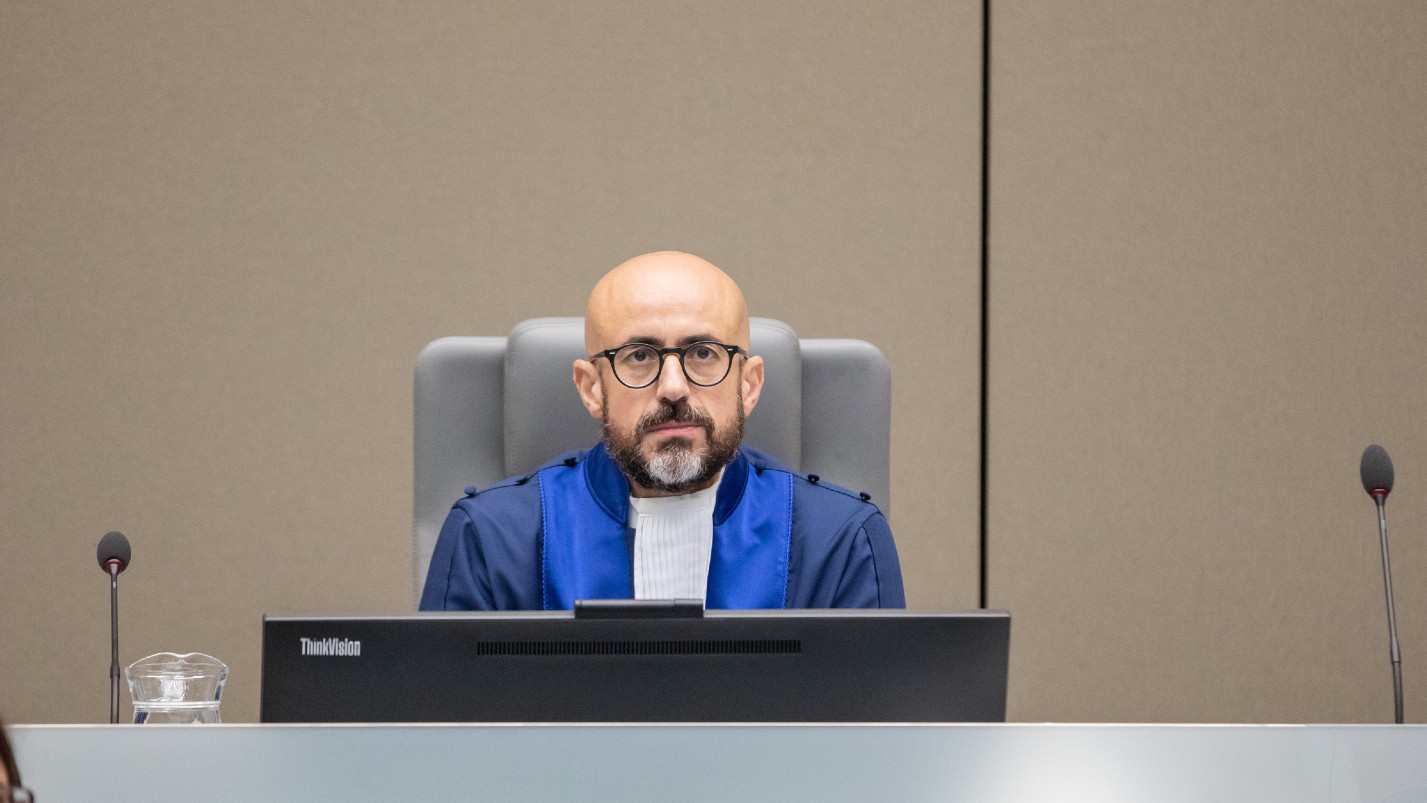
In the latest judgment obtained by MEE, Pre-Trial Chamber II found that the Taliban’s post-2021 conduct is “materially different” from the armed conflict-related violence that formed the core of the original 2020 conflict-linked investigation. The panel, led by presiding judge Rosario Salvatore Aitala alongside members Sergio Gerardo Ugalde Godinez and Haykel Ben Mahfoudh, directed prosecutors that if they determine the legal threshold for an investigation is still met, they must open a fully separate probe rooted in the 2024 state referral, and formally notify the ICC Presidency of the referral—a step that had not yet been taken as of the court’s order.
“The Referral concerns allegations of gender and political persecution through the adoption, implementation and enforcement of discriminatory decrees, policies and restrictions made possible by the Taliban’s exercise of de facto governmental authority, rather than conduct allegedly committed by the Taliban as an insurgent armed group during the armed conflict,” the judges wrote in their ruling. They echoed a prior recognition from the prosecution that after seizing power in August 2021, the Taliban’s actions did not center on armed attacks against civilian populations, but instead on imposing “discriminatory rules and prohibitions on the population directly” and punishing people who “did not conform” to the group’s policies.
“The allegations in the Referral therefore arise in a materially different factual and institutional context, involve distinct alleged modes of commission, do not appear to be related to any armed conflict, and concern conduct occurring after the Taliban’s assumption of governmental de facto authority,” the ruling continued. “In light of the above, the Chamber considers that the conduct identified in the Referral constitutes a sufficiently distinct subset of alleged events that, in the interests of the proper administration of justice and the orderly management of the Court’s proceedings, warrants a separate investigation.”
The judges also drew attention to the fact that the original overarching Afghanistan investigation, which nominally covers alleged crimes by all parties, has remained dormant for years. They directed prosecutors to a newly implemented court procedure that allows for formal closure of inactive situation records. In a footnote, the chamber noted: “Considering that more than three years have elapsed since the Chamber authorised the resumption of the investigation into the Situation in Afghanistan and that no proceedings are presently pending in relation to the conduct covered by that authorisation, the Chamber draws the Prosecution’s attention to the recently implemented regulation 66 ter of the Regulations of the Court, which allows the Prosecution to request the closure of a situation record when it does not anticipate any further investigatory or prosecutorial activities in relation thereto.”
As of the publication of MEE’s reporting, the Office of the Prosecutor has not yet announced a decision on either closing the original Afghanistan investigation or opening the new standalone probe into Taliban gender persecution. When contacted by MEE for comment, a court spokesperson stated the office “does not comment on investigations.”
-

What we know so far about the deadly Thailand shooting
A horrific act of gun violence has shaken Thailand’s capital Bangkok, leaving multiple people dead in an attack that began within a family before spilling over into a local school.
According to initial official accounts, the shooter is a teenage male suspect. Authorities confirm that he first took the lives of his own grandparents in a domestic incident before opening fire at a nearby school in the Bangkok area.
As of the latest update from emergency response teams and law enforcement officials, the confirmed death toll from the combined attacks stands at seven people. First responders were dispatched to the two crime scenes immediately after reports of gunfire first emerged, working to secure the areas and provide urgent medical care to any injured individuals.
Local law enforcement has launched a full investigation into the incident, working to piece together the full sequence of events and determine what led the teen to carry out the violence. Community leaders and public officials have expressed shock and condolences over the tragedy, which has renewed conversations about youth violence and gun access in the country.
At this stage, no further details about potential motives, the identities of the victims, or whether any additional casualties have occurred have been released to the public. Updates are expected as the investigation progresses.