标签: Asia

亚洲

  • Indian solar mission’s new findings throw light on enduring Sun mysteries

    Indian solar mission’s new findings throw light on enduring Sun mysteries

    For decades, astronomers and astrophysicists have grappled with one of the most counterintuitive puzzles in solar science: why does the Sun’s outermost atmospheric layer, the corona, reach temperatures of millions of degrees Celsius—far hotter than the star’s visible surface, the photosphere? This stark temperature gradient across solar layers outright defies established thermodynamic logic, and until now, scientists have never been able to definitively quantify what drives the corona’s extreme heat and ability to replenish energy after massive eruptions.

    New groundbreaking research from India, based on data collected by the country’s landmark Aditya-L1 space solar observatory, has brought the global scientific community closer than ever to solving this enduring mystery. In a new paper published in the peer-reviewed *Astrophysical Journal Letters*, a team led by leading solar astrophysicist Professor R Ramesh of the Indian Institute of Astrophysics (IIA) presents the first quantified breakdown of the two leading energy mechanisms thought to sustain the corona’s heat, revealing that magnetic field reconnection is responsible for nearly all of the layer’s energy replenishment.

    To put the sun’s unusual temperature structure in context: the Sun generates all of its energy via nuclear fusion in its dense, superheated core, which hits roughly 15 million degrees Celsius. Moving outward from the core to the Sun’s visible photosphere, temperatures drop dramatically to around 5,500 degrees Celsius. Intuitively, temperatures should continue to fall as one moves further from the energy-producing core—but the opposite happens in the corona, where temperatures skyrocket back to between 2 million and 40 million degrees Celsius.

    This anomaly becomes even more puzzling when accounting for the extreme energy the corona regularly sheds. The corona is the birthplace of catastrophic solar events including solar flares and coronal mass ejections (CMEs): massive expulsions of magnetized plasma and energy that the Sun launches into interplanetary space. While these ejections create striking auroras near Earth’s polar regions, they also pose serious risks to modern infrastructure, triggering geomagnetic storms that can disrupt satellite communications, interfere with GPS signals, and even bring down entire power grids.

    During quiet periods of solar activity, the Sun produces between two and three CMEs per day. At the peak of its 11-year activity cycle, that number jumps to 10 or more CMEs daily. If the corona could not replenish the energy it loses during these frequent eruptions, the Sun would quickly cool, and Earth would be plunged into an irreversible deep freeze—an outcome that has never occurred, proving a powerful energy replenishment mechanism must be at work.

    For years, scientists have hypothesized two primary processes that could supply the corona with energy. The first suggests that churning, convection-driven motions on the Sun’s surface generate energy-carrying waves that travel outward to the corona, much like ocean waves carry energy toward a shoreline. The second explanation centers on the Sun’s tangled atmospheric magnetic field lines: these lines constantly snap apart and reconnect, a process that releases massive amounts of heat energy.

    Professor Ramesh’s team was the first to quantify the exact contribution of each mechanism, using high-resolution observations of an extremely energetic CME that occurred on August 5, 2024, captured by Aditya-L1’s Visible Emission Line Coronagraph (Velc) instrument. The team tracked the corona’s recovery in the 10 hours following the eruption, observing how tangled magnetic field lines snapped during the CME, then reconnected and reverted to their original configuration to replenish the corona’s lost energy.

    Their calculations revealed a stark divide: just 7% of the corona’s total energy requirement comes from surface-generated waves, while a full 93% is supplied by the repeated snapping and reconnection of solar magnetic field lines.

    While surface motion waves do contribute some energy, the study confirms their input is far too small to sustain the corona’s extreme temperatures on their own. Professor Ramesh emphasized that magnetic reconnection occurring across the entire solar atmosphere is the undisputed primary driver of the corona’s anomalous heat.

    These new quantified findings provide a critical benchmark for future solar research, bringing scientists closer to answering a fundamental physics question that has defied explanation for generations. As India’s first dedicated solar space mission, Aditya-L1 continues to deliver groundbreaking data that advances global understanding of our host star, with implications for space weather forecasting and fundamental astrophysics research.

  • Cook Islands Prime Minister Mark Brown expected to return to power following election

    Cook Islands Prime Minister Mark Brown expected to return to power following election

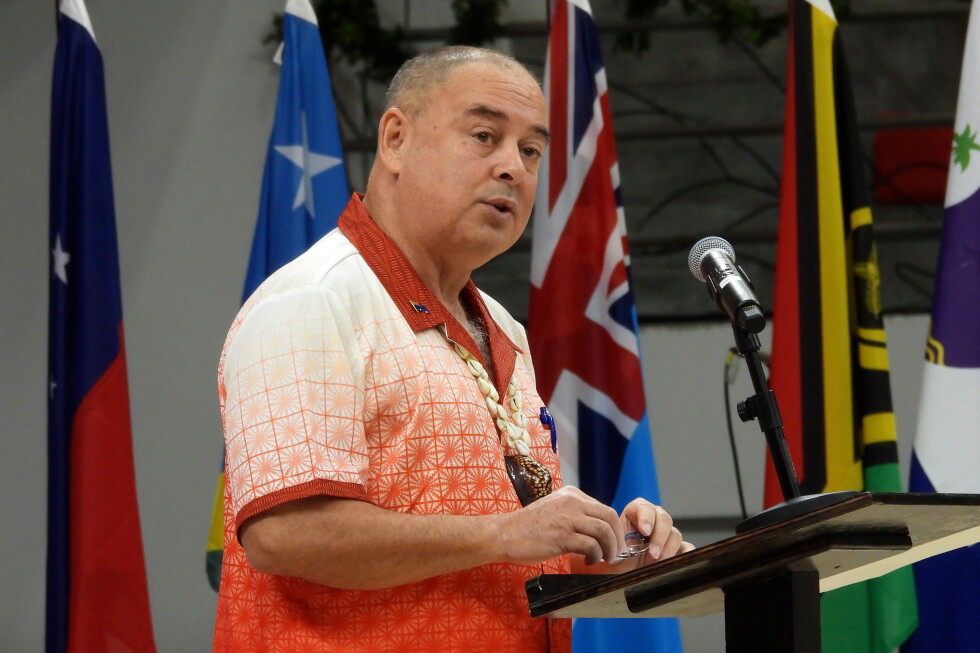
    WELLINGTON, New Zealand – Incumbent Cook Islands Prime Minister Mark Brown is on track to secure a second consecutive term leading the South Pacific archipelago, after his long-governing Cook Islands Party claimed a commanding lead in this week’s general election.

    The 15-island nation, home to roughly 17,000 eligible voters, elects 24 members to its national parliament. One seat on the remote island of Nassau remains unresolved after severe weather delayed electoral officials’ access to the polling site, with final results for the constituency expected late Friday local New Zealand time. Even with the outstanding result, Brown’s nationalist Cook Islands Party – which has held national power since 2010 – has already secured 12 seats, just one short of the 13-seat majority needed to form a full government. The party has a history of governing successfully with support from independent lawmakers, putting the outcome beyond doubt and triggering early victory celebrations among Brown’s supporters.

    In a public post on Facebook following the preliminary count, Brown expressed gratitude to constituents: “Today my heart is full of gratitude. Thank you to everyone who came out and voted, for taking part and making your voice heard. This is what makes our country strong.” The incumbent Cook Islands Party candidate for the outstanding Nassau seat is currently in a tight race with an independent challenger.

    Heading into Wednesday’s ballot, voter surveys and local reporting identified rampant inflation and soaring cost of living as the top issues driving voter decision-making. Like many small, remote South Pacific nations, the Cook Islands relies almost entirely on imported goods – including diesel for national power generation – and global market volatility tied to ongoing regional conflicts has amplified widespread economic anxiety across the country.

    Brown’s opposition had hoped that public frustration over rising prices for basic goods, public utilities, and transport would produce a much tighter election race. But preliminary official results show the main challenger, the Cook Islands United Party – which split from Brown’s party in 2018 – only gained one seat, rising from three seats in the 2022 parliament to just four this cycle. The center-left Democratic Party, which previously held five seats as the largest opposition bloc, was swept out of parliament entirely in a major election upset. Party leader Tina Pupuke-Browne lost her own seat by just three votes, ending her eight-year tenure in national office.

    The 63-year-old Brown, who entered parliament in 2010 after a career in public service and property development, won his own Takuvaine constituency seat by a large, comfortable margin. Analysts say the election outcome also signals that Brown’s high-profile 2025 dispute with New Zealand – the Cook Islands’ closest international partner and largest development funder – had little to no negative impact on his electoral support.

    The Cook Islands is a self-governing state in free association with New Zealand, a 60-year arrangement that gives Cook Islands citizens New Zealand passports and relies on New Zealand’s military for national defense. Under the terms of this relationship, Cook Islands leaders are expected to consult Wellington before entering into international agreements that could impact New Zealand’s strategic interests.

    That agreement was tested in February 2025, when Brown signed a series of bilateral cooperation deals with Beijing without prior consultation with New Zealand. Brown defended his decision to move forward without consultation, but the disagreement escalated, leading Wellington to freeze millions of dollars in development aid to the Cook Islands last June, citing unaddressed security concerns over the scope and content of the China agreements.

    Tensions between the two governments eased earlier this year, when they signed a revised defense pact that clarified their bilateral relationship and formally committed that New Zealand would remain the Cook Islands’ “partner of choice regarding defense and security matters” – a concession that addressed Wellington’s core concern of China gaining strategic influence in the Pacific.

    For decades, China has competed with Western powers to build diplomatic and economic influence across the Pacific Islands, a region of small, aid-dependent nations spread across a strategically critical and resource-rich stretch of ocean. When the dispute with New Zealand broke out last year, Pupuke-Browne and other Cook Islands opposition leaders led public protests against Brown’s China deals, arguing he was putting at risk the long-standing close ties with New Zealand that are critical to the Cook Islands, where thousands of citizens live, work, and study.

    But the resumption of New Zealand aid earlier this year appears to have defused public discontent over the issue, clearing the way for Brown’s strong election showing. Beyond foreign policy, Brown has also been a leading proponent of developing a deep-sea mining industry in the Cook Islands’ extensive exclusive economic zone, which is believed to hold vast mineral reserves. The policy has split political leaders across the Pacific, with environmental activists and critics warning that deep-sea mining could cause irreversible damage to fragile open-ocean ecosystems.

  • ‘Agility vs depth’: How the Mecca pact stacks up against the UAE-Israel alliance

    ‘Agility vs depth’: How the Mecca pact stacks up against the UAE-Israel alliance

    In quiet consultations held with a European US ally this summer, a senior United Arab Emirates diplomat left no room for ambiguity about Abu Dhabi’s partnership with Tel Aviv. According to a senior European official present at the closed-door talks, who spoke to independent outlet Middle East Eye on condition of anonymity, the alignment between the UAE and Israel is absolute, with no boundaries to their deepening cooperation.

    This stark clarity stands in sharp contrast to the widespread uncertainty that has dominated global policy circles from Washington to East Asia surrounding the newly signed Mecca Agreement, a mutual defence pact uniting Saudi Arabia, Turkey, and Pakistan that many regional analysts frame as a counterweight to the UAE-Israel bloc. Western and Arab diplomatic officials alike are still working to unpack the true degree of coordination between the three Mecca signatories, let alone whether they would honor their defence commitments in an active armed conflict.

    The first test of the pact came almost immediately after its signing: when the Iran-aligned Houthi movement in Yemen launched an attack on Saudi Arabia’s critical Jazan refinery, neither Pakistan nor Turkey moved to support Riyadh. This lack of action stands in direct opposition to the response Israel offered the UAE earlier this year, when the Gulf state faced a barrage of Iranian drone and missile strikes. Israel deployed its battle-tested Iron Dome air defence systems to the UAE, and Abu Dhabi subsequently joined Israel in launching hundreds of retaliatory strikes against Iranian targets. A senior anonymous US official told Middle East Eye that Israel’s critical military support solidified the bond between the two nations, a commitment Abu Dhabi will not abandon.

    Beyond their shared battlefield cooperation, the two blocs differ dramatically in their approach to transparency and public presentation. The UAE and Israel’s partnership has long been defined by behind-the-scenes military and intelligence coordination, even after the 2020 US-brokered Abraham Accords normalized ties publicly. This dynamic played out in a high-profile incident earlier this year, when Israeli Prime Minister Benjamin Netanyahu announced an unpublicized official visit to the UAE during the height of conflict with Iran, only for Abu Dhabi to issue a formal denial of the trip. Analysts point to this awkward exchange as evidence of the deep unpopularity of the UAE-Israel alliance across much of the broader Muslim world, a distrust that has only intensified amid Israel’s ongoing military campaign in Gaza that the United Nations and dozens of global human rights organizations have classified as genocide.

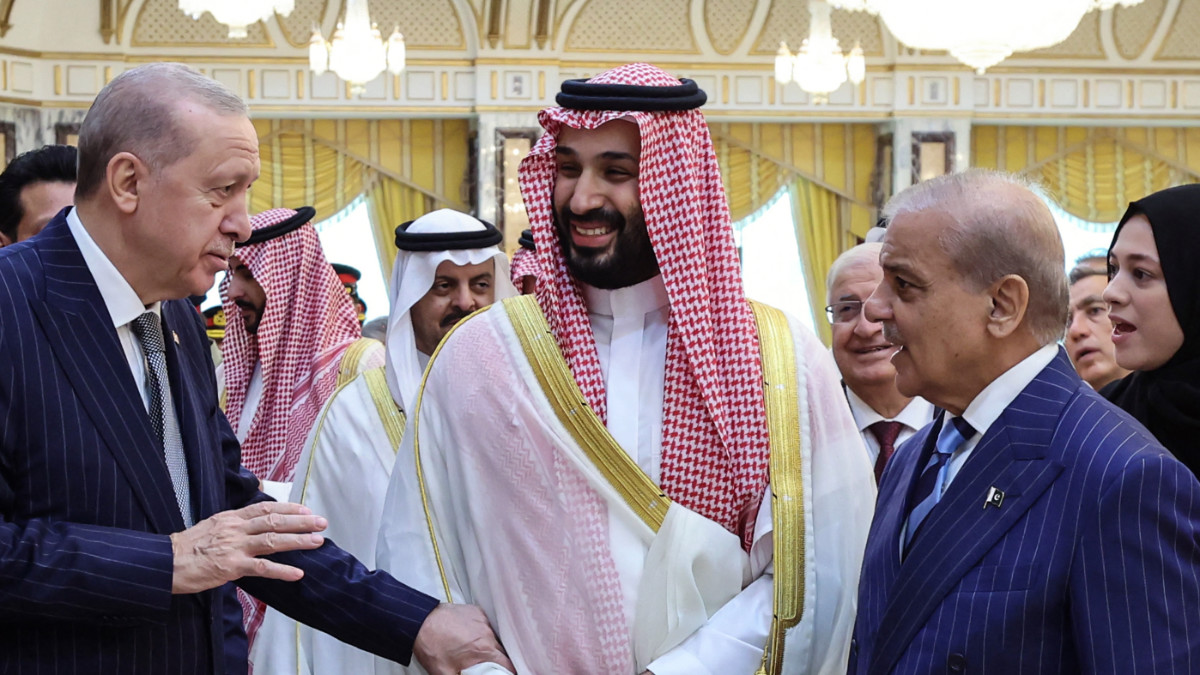
    In stark contrast, the Mecca pact was celebrated with full public fanfare. Saudi Crown Prince Mohammed bin Salman, Pakistani Prime Minister Shehbaz Sharif, and Turkish President Recep Tayyip Erdoğan joined together for Friday prayers at Islam’s holiest site, framing the agreement as a unifying project for the Muslim world.

    The roots of UAE-Israel cooperation stretch back decades, but the 2020 Abraham Accords brought the partnership into the open. The two countries are united by shared opposition to Iran and the Muslim Brotherhood, and Abu Dhabi’s growing regional rivalry with Riyadh – which has refused to normalize ties with Israel – has deepened this shared interest. The accords also cemented the UAE ruling Al-Nahyan family’s enduring support in Washington, even as Abu Dhabi has pursued strategic economic and diplomatic hedging with China in recent years.

    Geopolitical analyst Ayham Kamel, who focuses on Middle East affairs, told Middle East Eye that while the UAE-Israel alliance is framed as a political agreement through the Abraham Accords, its core is defined by military and intelligence collaboration. For the Mecca pact, by contrast, the mutual defence commitment is the foundation, but the agreement carries far broader political and ideological resonance across the region. Former US intelligence officer Theodore Singer notes that while the UAE-Israel bloc has delivered immediate tangible benefits for both partners, the Mecca pact may ultimately gain broader, less transactional support across the region.

    Unlike the small, geographically constrained UAE and Israel, the Mecca bloc brings formidable combined power on paper. Turkey boasts NATO’s second-largest standing military, Saudi Arabia anchors the Arab world’s only G20 economy, and Pakistan remains the Muslim world’s only nuclear-armed state. Saudi Arabia and Pakistan have maintained deep informal alliances for decades: Riyadh provided critical financial backing for Islamabad’s nuclear program, while Pakistani military personnel have long served in senior roles within the Saudi armed forces, and the kingdom has repeatedly provided emergency financial lifelines to Pakistan during periods of economic crisis.

    Yet the new alliance faces significant structural hurdles. The three nations hold differing perspectives on core regional threats: Saudi Arabia views Iran as its primary strategic threat, while Pakistan has maintained far more cordial ties with Tehran and has positioned itself as a neutral mediator between Riyadh and the Islamic Republic. Pakistan also declined to join the 2015 Saudi-led coalition against the Houthis in Yemen, highlighting the gap in threat perceptions. For Turkey and Saudi Arabia, relations only recently normalized after years of open hostility: the two nations clashed for years over support for the Muslim Brotherhood, and ties hit their lowest point in 2019 after Turkey leaked audio recordings exposing the murder of Saudi journalist Jamal Khashoggi inside the Saudi consulate in Istanbul. It has only been in the last two years that the two nations have found common ground in regional hotspots including Syria and Sudan.

    Neil Quilliam, an associate fellow and Gulf expert at London-based think tank Chatham House, explained that the Saudi-Turkey-Pakistan alignment is far more complex than the UAE-Israel bloc, as each nation operates in distinct regional environments and holds vastly different threat perceptions. Building functional interoperability and coordinated action will require sustained political will, significant investment, and years of effort, he noted. By contrast, Quilliam classifies the UAE-Israel bloc as far more actionable, noting that the partnership has matured since the 2020 Abraham Accords and passed multiple real-world tests, with cooperation deepening dramatically since the outbreak of open conflict between Israel and Iran. The outlet also revealed in May that the two nations have established a joint defense procurement fund to formalize their military collaboration.

    Ankara has already announced that the Mecca bloc will hold joint military exercises and expand cooperation in the defence industry, a key priority for Turkey as it markets its domestically produced drones and advanced weapons systems across the Middle East. Pakistan and Turkey already have a history of joint defence production, having co-built small corvette warships and the new Kaan fifth-generation fighter jet, and are currently collaborating on the development of Turkish anti-tank missile systems. Saudi Arabia, meanwhile, is seeking to build out its own domestic defence industry to reduce reliance on foreign arms imports.

    Still, deep military integration poses major challenges for the Mecca bloc. Pakistan’s military is overwhelmingly equipped with Chinese systems, while Turkey has sought to sell its indigenously developed Kaan fighter to Saudi Arabia – even as Riyadh prioritizes acquiring the US-made F-35 stealth fighter. Senior US officials told Middle East Eye that Saudi Arabia is highly unlikely to acquire both platforms, creating a major barrier to unified defence procurement. Unlike the UAE-Israel bloc, which benefits from deep integration with the US defence ecosystem, the three Mecca signatories cannot match the level of US-backed military interoperability that Tel Aviv and Abu Dhabi enjoy. Israel has openly lobbied against Saudi Arabia gaining access to F-35s, protecting its long-held qualitative military edge in the region.

    Elizabeth Dent, a fellow at the Washington Institute for Near East Policy and a former Pentagon Gulf specialist, noted that Israel has a robust domestic defence industry, a battle-proven integrated air and missile defence network, and an extensive global intelligence apparatus all woven into the US-led regional security architecture. The UAE, meanwhile, relies almost entirely on US-made military systems that are fully interoperable with Israeli equipment, backed by substantial financial resources and regional influence.

    Even with these immediate advantages for the UAE-Israel bloc, many analysts argue that the public, formalized nature of the Mecca pact gives it greater room for long-term growth that the discreet, unpopular UAE-Israel alliance cannot match. Dent noted that the Mecca agreement is built around a clear, NATO-style mutual defence commitment that carries far more strategic depth and binding deterrence value than the UAE-Israel alignment. However, she added that the three signatories have not yet built any integrated defence structures, meaning the bloc has a long road ahead to match the operational readiness of its rival.

  • Five years of Taliban rule: A state has survived, but at what cost?

    Five years of Taliban rule: A state has survived, but at what cost?

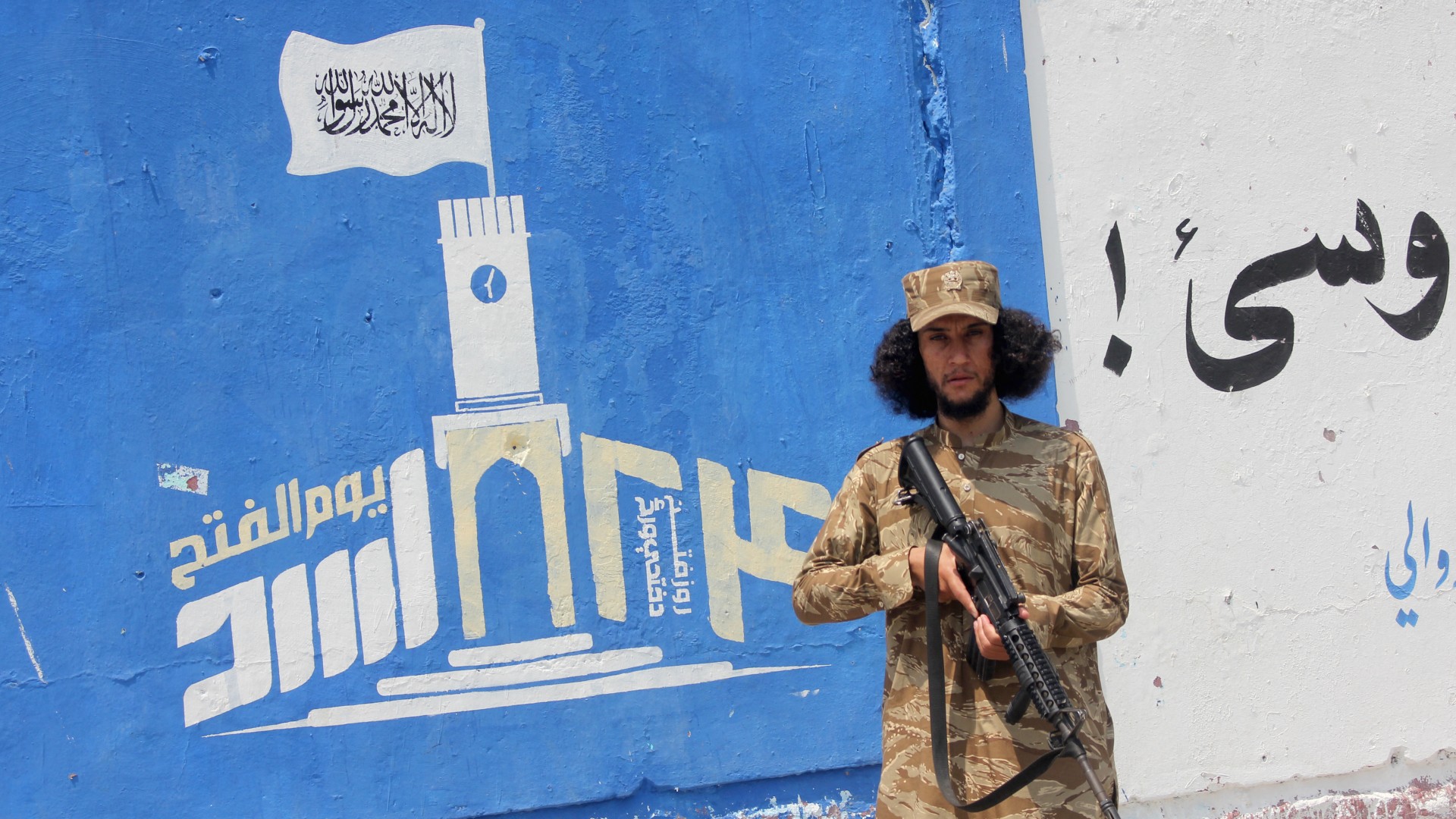
    Half a decade has passed since the Taliban reclaimed full control of Afghanistan on August 15, 2021, and the country has shifted dramatically from a war-torn battleground to a functioning yet harshly authoritarian state. With foreign combat troops withdrawn and fragmented opposition groups unable to mount a meaningful challenge to the Taliban’s centralized rule from Kabul, the movement has achieved a level of domestic security that was unthinkable under the former Western-backed government. This hard-won stability, however, is built on systemic exclusion of marginalized groups – most sharply women and girls – and has left the country economically crippled and diplomatically isolated across the global community. While the Taliban has defied expectations by governing without ongoing Western military or financial support, it remains an international pariah overseeing one of the worst humanitarian catastrophes of the 21st century. Today, Afghanistan is far quieter than it was in the final years of the civil conflict, but it is also poorer, more cut off from the world, and brutally repressive toward half of its population. As the regime enters its sixth year in power, its first five years of territorial consolidation will be followed by a critical test: whether it can withstand growing internal and external pressures to survive.

    At the core of the Taliban’s state-building project over the past five years has been the slow, deliberate consolidation of power in the hands of reclusive Supreme Leader Hibatullah Akhundzada, who governs from his base in Kandahar. Appointed to lead the insurgency in 2016, Akhundzada has overseen the movement’s transformation from a decentralized rebel force to a rigid, centralized governing authority. He has built a tightly knit power network that places all key state institutions – including the prime minister’s office, the central bank, and the chief justice’s seat – in the hands of allies aligned with Kandahar’s leadership. This control is further reinforced by a sprawling patronage system tied to roughly 15,000 registered madrassas across the country, where students receive stipends and teachers are paid graded salaries. This framework has secured the loyalty of provincial clergy, the Taliban’s core political base, by granting religious leaders both social status and consistent, reliable income.

    While high-profile Taliban figures such as Mullah Abdul Ghani Baradar, Sirajuddin Haqqani, Maulvi Yaqoob, and Amir Khan Muttaqi oversee day-to-day governance, economic policy, and diplomatic outreach from Kabul, ultimate authority remains firmly rooted in Kandahar. In early 2026, a 119-article criminal procedure code was quietly approved there to cement absolute loyalty to the regime and criminalize all forms of public criticism of the leadership. “Hibatullah’s influence reaches far beyond religious affairs: major political, judicial, and administrative decisions increasingly reflect the preferences of the Kandahar leadership,” Muhammad Israr Madani, an Islamabad-based analyst and co-author of a book on state-building in Taliban-led Afghanistan, told Middle East Eye. The concentration of power in Kandahar has strengthened the Taliban’s ability to prevent internal fragmentation, but it has also stoked resentment among regional commanders who believe power is becoming overly concentrated in a single faction, according to a mid-level Taliban leader who previously oversaw administration in Khost province, speaking to MEE in early 2024. Even so, he emphasized that internal dissent does not mean the regime is on the brink of collapse: top leaders understand that open infighting would cause their government to crumble, so tensions are kept contained. Ultimately, the Taliban has learned a core lesson of state-building: durable control requires more than military force – it depends on patronage networks, financial leverage, ideological alignment, and institutional systems to systematically reward loyalty.

    Beyond political consolidation, Afghanistan is grappling with a layered, deep-rooted economic crisis shaped by structural dependency and extreme international isolation. When the Taliban seized power in 2021, the country lost international budgetary grants that previously covered 75% of all public spending. This financial gap was widened dramatically when the United States froze $7 billion in Afghan central bank assets and suspended U.S. humanitarian funding in early 2025, cutting off a flow of resources that made up 45% of the country’s total aid lifeline. While the Taliban has managed the national economy better than many outside observers predicted, expanding state revenue through more effective collection of customs duties and mining royalties, these gains have not translated into improved living conditions for ordinary Afghans. Today, an estimated 75% of Afghans cannot afford to meet their basic daily needs.

    Economic growth slowed from 2.3% in the 2023/2024 fiscal year to 1.9% in 2024/2025, according to a May 2026 report from the United Nations Development Programme (UNDP). Minimal economic gains have been entirely outpaced by rapid population growth, driven by the expulsion of more than five million Afghans from Iran and Pakistan since 2023. As a result, real GDP per capita fell by an estimated 2.1% in 2025/2026, putting massive strain on communities already facing acute job shortages and overstretched public infrastructure, the UNDP added. Compounded by frequent natural disasters – most notably destructive earthquakes – diplomatic isolation, and severe restrictions on access to the international banking system, the Taliban regime remains locked out of critical financial support from the World Bank and International Monetary Force, trapping Afghanistan in an unsustainable cycle of forced self-reliance. Even the regime’s most widely touted policy achievement, a national ban on opium cultivation that cut poppy production by 95%, has acted as economic self-harm for the country’s most vulnerable populations. While wealthy landowners profited from skyrocketing prices for existing opium stockpiles, the ban destroyed the livelihoods of low-income rural households that relied on poppy cultivation for their primary income.

    The systemic suppression of women and girls remains the most widely condemned feature of Taliban rule, with leading international human rights organizations including Human Rights Watch describing the regime’s gender policies as “gender apartheid”. A relentless series of decrees from the Ministry for the Propagation of Virtue and the Prevention of Vice has stripped women and girls of almost all fundamental freedoms, imposing harsh restrictions on movement, employment, and participation in public life. Girls remain barred from attending secondary school, and women are banned from enrolling in or teaching at universities. Enforcement of these rules has intensified sharply in recent years, with authorities detaining women for violations including “improper hijab” and travelling without a male guardian. Reflecting global outrage over these policies, the International Criminal Court has issued sealed arrest warrants for Supreme Leader Akhundzada and Chief Justice Abdul Hakim Haqqani, citing gender-based persecution as a crime against humanity.

    Beyond the devastating human toll, these exclusionary policies represent severe self-sabotage for Afghanistan’s already fragile economy. Barring women from formal work deprives the country of critical human capital while accelerating the brain drain of skilled Afghans leaving the country. The United Nations estimates that restricting women’s participation in the labor force costs Afghanistan up to $1 billion annually – equal to nearly 6% of the country’s total GDP. The structural damage caused by these policies, particularly acute shortages of female healthcare workers, teachers, and civil servants, has been crippling basic health and education delivery for an entire generation of Afghans, according to a Kabul-based humanitarian expert working for a UN agency. By sacrificing half the population to enforce ideological purity, the regime is dismantling the country’s prospects for sustainable economic recovery and long-term development, he told MEE.

    The relationship between the Taliban and its long-time historical sponsor Pakistan has collapsed completely over the past five years, shifting from a strategic partnership to open armed conflict by early 2026. When the Taliban retook power in 2021, Islamabad celebrated the takeover as a major geopolitical victory that would secure Pakistan’s western border and eliminate Indian influence in Afghanistan. Then-Prime Minister Imran Khan declared Afghans had “broken the shackles of slavery”, while current Pakistani Defence Minister Khawaja Asif posted a photo of a Taliban leader with former U.S. Secretary of State Mike Pompeo captioned “God is great”. That early optimism unravelled quickly, however. The Taliban administration’s refusal to crack down on the Tehreek-e-Taliban Pakistan (TTP), also known as the Pakistani Taliban, turned the border between the two countries into an active conflict zone. Islamabad accuses the Taliban of granting the TTP safe havens inside Afghanistan and access to abandoned U.S. weaponry, which has driven a sharp surge in cross-border attacks on Pakistani targets. A recent UN Security Council report echoed these concerns, reiterating that the “terrorist threat emanating from Afghanistan remained largely unchanged” and warning that militant sanctuaries pose an ongoing risk to neighboring states and Central Asia as a whole.

    In response to the Taliban’s inaction, Pakistan has deployed aggressive coercive measures, deporting around 2.6 million Afghans since late 2023, repeatedly closing critical border crossings, and launching retaliatory air strikes inside Afghan territory. Publicly, Taliban officials reject allegations that they harbor TTP fighters, dismissing the violence as an internal Pakistani security issue. Privately, however, managing the TTP has exposed deep ideological divides within the Taliban regime. “Hardline elements within Taliban ranks view Pakistani militants as historical comrades-in-arms, making any forcible disarming politically unthinkable,” explained a mid-level Taliban official currently working with the Afghan interior ministry. He added that shielding the TTP deepens Afghanistan’s international isolation, while taking aggressive military action against the group would risk pushing disaffected fighters to join the ranks of the Islamic State Khorasan Province (ISKP), the Taliban’s main jihadist rival.

    The fifth year of Taliban rule has also seen a sharp acceleration in the systemic exclusion of Afghanistan’s religious and ethnic minorities, particularly the Shia and Hazara populations that make up 15% of the country’s total population. Despite early promises of inclusive governance after the 2021 takeover, Shia jurisprudence has been erased from the country’s legal system, universities, and primary and secondary schools, stripping away protections that Shia communities won under the former Afghan republic. Local Shia leaders point to a recent Taliban decree that shut down two critical cultural institutions, the Khatam al-Nabieen Educational Centre and Tamadon TV. Further, Supreme Leader Akhundzada has excluded Shia scholars from all new provincial ulema (religious scholar) councils, even in Shia-majority provinces such as Bamiyan and Daykundi. The Taliban “are systematically working to remove our sect from the country’s legal and educational landscape,” warned a Quetta-based Hazara Shia cleric connected to the Afghan Shia community, who spoke on condition of anonymity over safety fears. Beyond the Shia population, the Taliban has launched a sweeping crackdown on the country’s small Salafi minority under the guise of cutting off ISKP’s ideological support base, severely restricting Salafi access to mosques and religious seminaries. Analysts warn this heavy-handed repression risks alienating local Salafi communities and pushing radicalized youth to join ISKP, worsening national instability.

    Five years after returning to power, the Taliban regime is militarily well-entrenched but structurally fragile. No organized armed opposition currently has the foreign backing, controlled territory, or unified leadership required to threaten Kabul’s control. Groups such as the National Resistance Front remain fragmented and unable to challenge the regime’s centralized security apparatus. Instead, the greatest threat to the Taliban’s rule comes from within its own political architecture. Internal rifts continue to widen, prompting rare public warnings from Akhundzada that internal discord could dismantle the government from within. While these political tensions have not yet triggered a full-blown power crisis, an outright collapse of the regime would likely plunge Afghanistan back into full-scale civil war, devastating civilian populations and destabilizing all of its neighboring states. Demographic change presents an equally existential challenge: with a stagnant economy and a national population projected to double by 2050, long-term survival of the regime depends on delivering basic livelihoods, food security, and employment – a mandate that current policies are completely failing to meet.

    Internationally, limited pragmatic ties with Russia, China, and Central Asian neighbors provide small economic lifelines, but these relationships have not brought the formal Western diplomatic recognition the regime needs to reverse economic isolation. By governing through an extreme ideological police state that systematically represses half the population, the Taliban leadership risks complete alienation from the Afghan public. The coming five years will test whether the Taliban can transition from ruling through coercion to sustainable, inclusive governance that meets the needs of the population. Based on its trajectory over the past five years, this fundamental transformation remains highly unlikely. Instead, persistent economic despair, widespread social repression, and escalating regional friction threaten to reignite systemic instability, leaving Afghanistan as an enduring source of regional crisis for the foreseeable future.

  • North Korea threatens to exercise self-defense as it slams US-South Korea military drills

    North Korea threatens to exercise self-defense as it slams US-South Korea military drills

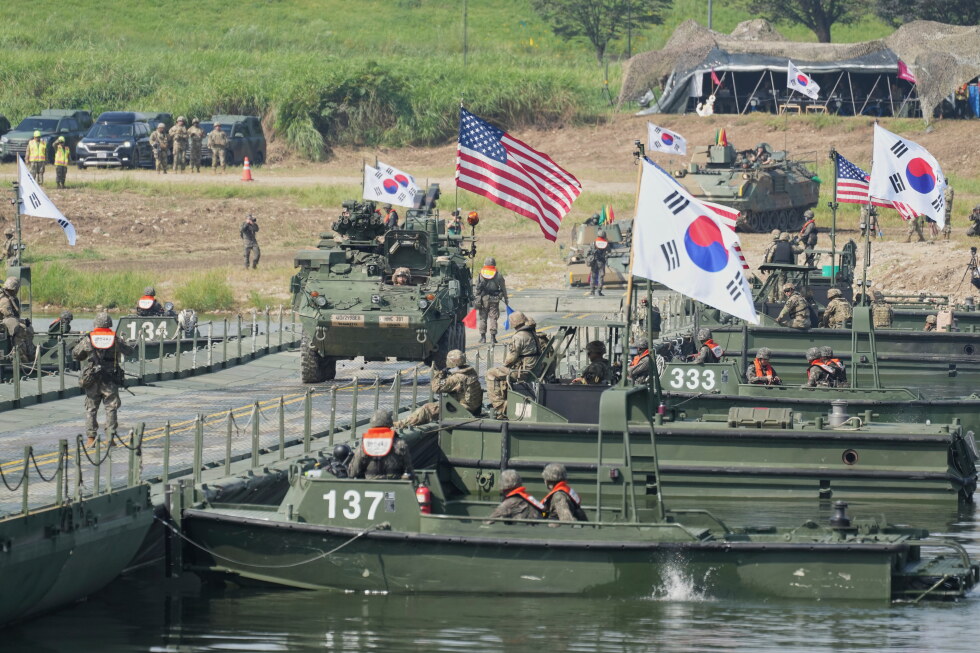
    Diplomatic tensions on the Korean Peninsula are flaring once again, as North Korea has issued a sharp warning ahead of the upcoming Ulchi Freedom Shield military exercises between the United States and South Korea, scheduled to kick off Monday. In a formal statement released Friday through its official state media, North Korea’s Foreign Ministry labeled the joint drills a provocative rehearsal for aggressive war, claiming the 2024 exercises carry greater risk and destabilizing impact than those held in previous years.

    Washington and Seoul have pushed back against this characterization, emphasizing that the annual large-scale drills are strictly defensive in purpose. The allied militaries confirmed the scope of this year’s training aligns with previous iterations, noting the exercises are designed to boost combined combat readiness to counter evolving security threats from North Korea. North Korea’s statement rejects this framing, arguing the drills have pushed regional security to a new, unsteady threshold. In line with Pyongyang’s long-stated security doctrine of responding to heightened threats with strengthened deterrence, the ministry warned the country would exercise its right to legitimate self-defense in a decisive, responsible manner to counter what it calls the enemies’ threats and challenges.

    The latest verbal escalation aligns with a pattern of recent provocative actions from Pyongyang. Over the past week, South Korean defense monitoring systems detected two separate ballistic missile launches off North Korea’s eastern coast. Pyongyang has not officially acknowledged the tests, but independent defense analysts widely assess the launches were either a show of protest against the upcoming drills or part of ongoing efforts to upgrade the country’s missile and weapons systems.

    Many regional security experts point out that North Korea has a long history of using joint U.S.-South Korea military exercises as a justification to expand its weapons testing program. Since the 2019 collapse of the nuclear summitry between North Korean leader Kim Jong Un and then-U.S. President Donald Trump, Kim has rejected repeated offers of diplomatic dialogue from Washington and Seoul, instead prioritizing rapid expansion of the country’s nuclear and ballistic missile arsenals. Analysts widely believe Kim’s end goal is to use his advancing nuclear program to force the U.S. to grant major concessions, most notably significant relief from the strict international economic sanctions imposed on Pyongyang over its weapons programs. Weapons tests also serve a domestic political purpose, helping rally public support for Kim’s authoritarian rule.

    In recent years, Kim has significantly deepened diplomatic and economic ties with key geopolitical allies, most notably Russia and China. Multiple Western intelligence assessments have concluded North Korea has been supplying Moscow with ammunition and troop support to aid Russia’s full-scale invasion of Ukraine, in exchange for much-needed economic aid and military technology assistance. Kim has also made recent high-profile moves to strengthen trade and security cooperation with China, North Korea’s largest single trading partner and longstanding diplomatic backer.

    The current standoff has left regional observers on high alert, with many predicting Pyongyang will carry out additional weapons tests in the coming days to back up its verbal warning. The unfolding situation underscores the persistent fragility of security on the Korean Peninsula, and the ongoing challenge of reviving meaningful diplomatic talks to curb North Korea’s nuclear ambitions.

  • Iran war pushes Middle Eastern airlines towards $4.3bn loss in 2026

    Iran war pushes Middle Eastern airlines towards $4.3bn loss in 2026

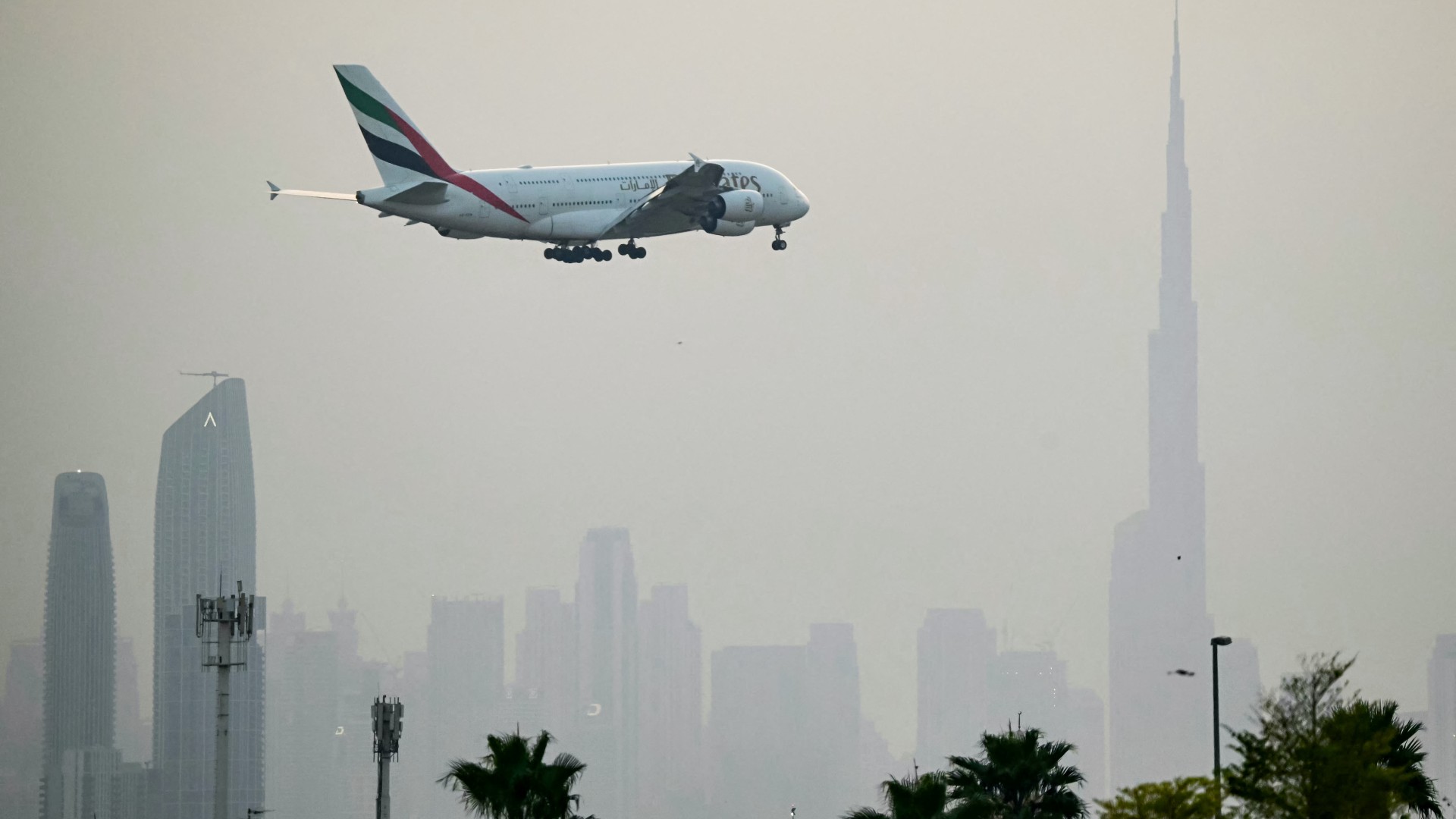
    The February 28, 2026 escalation of military conflict between the US, Israel and Iran triggered a cascading crisis that has reshaped the global aviation industry, with the Gulf region at its epicenter. Following US-Israeli air strikes on Iranian territory, Iran launched retaliatory attacks targeting locations near US military installations across the Gulf, including sites in Qatar and the United Arab Emirates (UAE). Among the hit sites were key international airports: Dubai International, the world’s busiest hub for international passenger traffic, as well as airports serving Abu Dhabi, Kuwait City and Manama, Bahrain. In response to immediate safety risks, the UAE, Qatar, Bahrain and Kuwait moved quickly to close their entire airspaces to commercial traffic. While these airspaces were gradually reopened over the course of a week as hostilities de-escalated, the conflict left long-lasting damage to regional and global aviation that persists months later.

    Industry data from the International Air Transport Association (IATA) illustrates the severity of the financial damage. In its June 2026 outlook, IATA projected that a projected $7.2 billion net profit for Middle Eastern-based airlines in 2026 would reverse to a $4.3 billion net loss, a stunning swing driven entirely by conflict-related disruption.

    While major Gulf flagship carriers including Emirates, Etihad Airways and Qatar Airways have resumed commercial operations, none have returned to pre-conflict capacity. Emirates CEO Tim Clark confirmed in a June interview with the *Financial Times* that the airline is currently operating at only 75 percent of its pre-conflict flight schedule. In contrast, nearly all major European and Asian carriers have kept their flights to the region suspended, with staggered restart timelines stretching into late 2026 and early 2027. Air France plans to resume services in late August, Lufthansa in September, and British Airways, Cathay Pacific and Singapore Airlines have targeted late October for resumptions. Air Canada has gone further, announcing it will not restart regional services before mid-January 2027, and dozens of other global carriers have yet to announce any restart date at all.

    Even after formal reopening, regional airspaces continue to face intermittent closures and unplanned disruptions. The European Union Aviation Safety Agency (EASA) latest public bulletin, published in August, continues to advise all commercial operators to avoid the airspace of Bahrain, Kuwait, Qatar, the UAE and portions of the Gulf of Oman through August 31, 2026. This ongoing caution has drastically limited travel options for passengers. For example, a one-week round-trip ticket between the UAE and London in September currently only has three available options: Emirates to Dubai, Etihad to Abu Dhabi, and Air Arabia to Sharjah. On matching dates between Doha and Tokyo, Qatar Airways is the only operating carrier available to book.

    The conflict poses an existential threat to the core business model that has powered Gulf aviation’s rise over the past three decades: the hub-and-spoke system that leverages the region’s strategic geographic location between Europe and Asia to connect passengers between the two continents via a central Gulf hub. This model has long allowed Gulf carriers to offer connecting routes that are either unavailable via direct flights or cheaper than non-stop alternatives. But the conflict has exposed critical vulnerabilities in this system.

    Naveed Kapadia, an aviation lecturer at Buckinghamshire New University, explained that while temporary reduced competition from suspended international carriers has allowed large Gulf airlines to capture incremental local market share and hold fares steady, their business model remains deeply vulnerable. “Gulf airlines are connecting carriers whose economics depend on moving large volumes of passengers efficiently through Dubai and Doha,” Kapadia told Middle East Eye. IATA data from June bears this out: regional passenger demand is down 13.9 percent year-over-year, while direct traffic between Europe and Asia has jumped 11 percent as carriers reroute to avoid Gulf airspace, creating immediate strain on Gulf hub operations.

    This rerouting creates cascading cost increases across all operations. Flights that are forced to take longer, less efficient routes burn more jet fuel, require longer crew duty periods, and reduce overall aircraft utilization. The extra fuel carriers now carry as a buffer against unexpected airspace closures also directly cuts into the number of passengers or amount of cargo that can be carried on each flight. The hub-and-spoke model’s concentration of traffic through a single central hub also makes the entire network far more susceptible to cascading disruptions: a single grounded aircraft or stranded crew can trigger delays and cancellations across the entire global route network.

    To rebuild passenger confidence and win back pre-conflict traffic, major Gulf carriers have rolled out unprecedented customer incentives. Emirates, the region’s largest carrier, introduced a new travel insurance policy that offers full coverage for flight cancellations related to conflict, a break from standard industry practice that typically excludes war-related disruption from coverage. If flights are canceled due to renewed hostilities, Emirates guarantees it will arrange repatriation for passengers on partner airlines if it cannot operate its own. “We would get you back irrespective [of whether it’s] on Emirates or not,” Clark told the *Financial Times*, framing the policy as a commitment to passenger safety. Beyond airline-specific incentives, Dubai’s tourism authority has launched broader campaigns to revive visitor numbers, offering complimentary travel packages for guests invited by Emirati citizens and free hotel stays for passengers on long connecting layovers.

    The crisis has not been limited to passenger aviation: regional air cargo and private jet operations have also seen steep declines. Kapadia noted that regional air cargo demand grew only 5.6 percent year-over-year, roughly a third slower than the global industry average of 8.5 percent. IATA data shows traffic between Europe and the Middle East remains 41.1 percent below 2025 levels, while traffic between Asia and the Middle East is down 4.1 percent. While disruption to maritime shipping through the Strait of Hormuz has created new demand for air freight for urgent, high-value and time-sensitive shipments, Kapadia said this has not translated to a straightforward gain for Gulf cargo carriers, which collectively handle roughly 13 percent of global air cargo traffic. “The more important question is whether they can convert short-term urgency into sustained and profitable cargo flows,” he added.

    Private jet activity originating in Gulf countries has also collapsed. Data from aviation analysts WINGX shows that as of August 10, total private jet traffic from Gulf nations was down 46.5 percent compared to pre-conflict levels. “The vast majority of flights stayed within the Middle East region, and volumes there are still down considerably,” said WINGX analyst Nick Koscinski. Gulf-to-Europe private flights, the second most popular route category, are down 40 percent year-over-year. Koscinski noted that Qatar Executive, one of the region’s largest private jet operators, has been more resilient than competitors based in the UAE or Saudi Arabia: its total traffic is only down 6.7 percent since the conflict began, compared to a 28.7 percent drop for a comparable UAE-based operator and a 39 percent drop for a leading Saudi operator. While private jet operators can often pass increased fuel costs through to customers via surcharges, Koscinski said lags in repricing and overall softer demand mean all regional private jet operators will still take a significant financial hit.

    Jet fuel prices, a core input for all aviation operations, have remained far above pre-conflict levels despite temporary declines. Kapadia said prices fell 20 percent in June after Gulf oil flows temporarily stabilized, but remained 45.8 percent higher than June 2025. IATA forecasts that the 2026 average jet fuel price will be 70 percent higher than the 2025 average. Kapadia expects airfares in the region will remain elevated and volatile rather than rising uniformly: “Airlines will try to recover higher fuel and disruption costs through fares to some extent, but they cannot pass on every additional cost without weakening demand, particularly among price-sensitive leisure travellers.”

    Low-cost carriers around the world have been hit hardest by the spike in fuel prices. US-based low-cost carrier Spirit Airlines ceased all operations on May 2, 2026, while European low-cost carriers Air Baltic and Wizz Air face growing bankruptcy risk and have been forced to restructure their operations to cut costs. A 2026 McKinsey report on aviation found that roughly 70 percent of jet fuel surcharges are passed directly to consumers, and airline margins only recover briefly when fuel prices fall. The report concluded that ongoing economic pressure will force the global industry to retire older, less fuel-efficient aircraft, cut low-demand routes, and further reduce overhead costs to remain solvent.

    Not all regional carriers have suffered losses, however. Israel’s flag carrier El Al has reported record annual profits, more than double its previous yearly record. The gain comes as most international airlines have suspended service to Israel, leaving El Al as the near-exclusive option for international travel to and from the country, a position that has allowed the airline to raise fares sharply. Many passengers have publicly criticized the “outrageous” pricing that has come with the near-monopoly.

    Industry consultants say the conflict will have long-term impacts on global aviation investment that will outlast the current hostilities. “Airport investment deals, geopolitical risk is increasingly being reflected in downside scenarios, valuation assumptions and risk premiums,” said Harsha Jaison, an aviation consultant at global advisory firm ICF. The changes to how the industry prices geopolitical risk, she added, are likely to become a permanent feature of aviation planning in the Middle East and globally.

  • Palestinians reject Hamas disarmament before full Israeli withdrawal, poll finds

    Palestinians reject Hamas disarmament before full Israeli withdrawal, poll finds

    Against the backdrop of ongoing conflict and occupation in the Palestinian territories, a newly released public opinion survey from the Palestinian Center for Policy and Survey Research has painted a stark portrait of widespread Palestinian public sentiment on security, political leadership, and long-term national aspirations. The most striking finding from the poll, published Wednesday, is that more than seven out of 10 Palestinians reject any demand for Hamas to disarm before Israel completes a full withdrawal from the Gaza Strip. A full 72% of respondents hold the conviction that if Hamas were to surrender its weapons, Israel would refuse to follow through with a full withdrawal and would resume its large-scale military offensive in the enclave, which respondents and many global observers have characterized as genocide.

    The survey comes amid recent diplomatic maneuvering: Hamas has already accepted a ceasefire and governance proposal put forward by Nickolay Mladenov, head of the U.S.-backed Board of Peace. Even with this diplomatic development on the table, however, 40% of Palestinians surveyed expect the current cycle of violence and instability to persist, with ongoing civilian casualties continuing in the months ahead. Israel has already formally rejected the U.S.-backed proposal, dimming immediate hopes for a negotiated end to the conflict. Another 30% of respondents hold a more optimistic outlook, forecasting that a period of calm will take hold, a new interim Gaza administration led by the National Committee for the Administration of Gaza will take power, and long-delayed reconstruction of war-ravaged Gaza can finally begin.

    Notably, widespread opposition to early disarmament does not equate to broad satisfaction with existing Palestinian political institutions. The poll documents deep and persistent public anger at the Palestinian Authority (PA) and its long-serving leader, President Mahmoud Abbas. Nearly 79% of all respondents believe Abbas should step down from his position, a figure that has held between 79% and 89% over the past three years, showing consistent public dissatisfaction with his leadership. Corruption is also a top concern: 83% of Palestinians agree that corrupt practices are widespread within PA institutions, and 65% view the authority itself as more of a burden on the Palestinian people than a historic national achievement.

    When it comes to picking Abbas’ successor, the clear favorite among the public is Marwan Barghouti, a prominent Palestinian political leader who has been imprisoned by Israeli authorities for more than 20 years. Barghouti earned the support of 39% of respondents as the preferred next leader, outpacing all other potential candidates. Hamas leader Khalil al-Hayya came in second with 16% support, followed by former PA official Mohammed Dahlan at 15%, and independent politician Mustafa Barghouti at 6%. In a hypothetical head-to-head presidential election, the gap grows even wider: Barghouti would secure 54% of the vote, compared to 26% for al-Hayya and just 14% for the incumbent Abbas.

    The survey results also underscore the pervasive sense of insecurity that shapes daily life for Palestinians across both Gaza and the occupied West Bank. Three-quarters of respondents – 76% – reported that they and their immediate family members do not feel safe in their current homes, with only 23% saying they feel secure. Public trust in international diplomatic bodies involved in Middle East peace efforts remains extremely low: only 24% of Palestinians express trust in the Board of Peace, which oversees the Trump administration’s Gaza peace plan, while 66% say they distrust the body entirely.

    In the West Bank, fears of Israeli settlement expansion are near-universal: 87% of respondents there worry that growing Israeli settlements and outposts will eventually force them off their land or out of their homes. Palestinians also remain deeply skeptical that any change in Israel’s leadership will bring meaningful improvement to their conditions. Thirty-four percent believe Israeli policy toward Palestinians would remain unchanged even if the opposition took power, 33% expect policy to worsen under a new Israeli government, and just 28% hold out hope that policy would improve if Prime Minister Benjamin Netanyahu were removed from office.

    Even amid the catastrophic destruction of Gaza and accelerating Israeli annexation of West Bank land, the core national aspiration of the Palestinian people remains clear: 43% of respondents identified achieving a full Israeli withdrawal to the 1967 armistice lines and establishing an independent Palestinian state with East Jerusalem as its capital as the highest priority for the Palestinian people moving forward.

  • ‘I lost $14,000 in a month’: Investors hit by Korean stock market’s wild swings

    ‘I lost $14,000 in a month’: Investors hit by Korean stock market’s wild swings

    South Korea’s tech-heavy Kospi stock index, long known as the world’s most volatile major benchmark, is reeling from one of the sharpest downward corrections in its history, triggered by a sudden pullback in AI-fueled tech stock gains that has left millions of retail investors facing devastating losses on life-changing savings. The rout, which unfolded between June and August, has drawn comparisons to the catastrophic market drops seen during the 1997 Asian financial crisis and the 2020 Covid-19 pandemic, shining a bright spotlight on the risks of overconcentrated bets on high-growth artificial intelligence assets among amateur traders.

    The scale of the swing has been staggering: after more than doubling in value in the first half of the year to push past the 9,000-point threshold in mid-June, the index plummeted to 5,500 points in just a matter of weeks. It has since clawed back some losses to stabilize around 6,800 points, but the damage to individual investors’ portfolios has already been done. The root cause of the sell-off, according to Wee Khoon Chong, a strategist at global financial services firm BNY, is growing investor anxiety over the massive amounts of capital being poured into AI development, with many market participants questioning whether the current valuations of leading chipmakers and AI firms are sustainable.

    For many ordinary South Korean savers, the downturn has turned anticipated life milestones into financial uncertainty. Take Yongjoon Kim, a bank worker who had earmarked his investment gains for a down payment on a new home ahead of his wedding later this year. Kim lost roughly 20 million Korean won (equivalent to $14,000 USD) after his concentrated tech portfolio dropped by 25% in July alone. “This loss is going to hurt, and I’ll have to put in extra work for years to make up the gap,” Kim said in an interview. “But I’m luckier than many of my friends who went all in with their entire life savings – they’re in desperate situations right now.”

    Kim’s experience is far from unique. Woongsa Kim, another retail investor, bought shares of leading memory chipmaker SK Hynix at the start of the year using half of his annual work bonus. The stock surged to four times its original value at the index’s peak, only to wipe out almost all those gains in the subsequent correction, cutting the investment’s value to half its peak high. “Just thinking about what I lost brings me to tears,” he told the BBC.

    The crisis has been amplified by the explosive growth of leveraged trading among South Korea’s retail investors, a trend that has also picked up steam in markets including Taiwan and the United States, according to Frank Benzimra, head of Asia equity strategy at Societe Generale. Leverage allows investors to borrow money to control a larger block of shares than their own capital can afford, magnifying gains when prices rise but triggering forced liquidations – called margin calls – when prices fall below a pre-agreed threshold. By the end of July, an estimated 1.2 million South Korean retail investor accounts had received margin calls, a figure equal to roughly one out of every 30 working-age adults in the country.

    Many of the traders caught up in the rout were first-time investors lured into the market by the global AI boom and widespread fear of missing out on fast gains. Marketing professional Chanyong Park saw his holdings in US-based AI chip giant Nvidia surge by more than 1,000%, then reinvested almost all of those profits into SK Hynix – only to see the bet go sour, erasing roughly $10,000 in value. The losses have thrown his plans to quit his job in October and launch his own business into doubt. “I’m now seriously questioning whether I’ll have enough capital to move forward with that plan,” Park said. Like many other affected investors, he is holding onto his shares in hopes of a rebound, but recent wild swings have made him hesitant to add more capital to his position. “It often doesn’t feel like price movements are driven by rational fundamentals – it feels a lot like gambling,” he added.

    Another investor, Youngji Park, went all in on Samsung shares, which peaked at a total value of 45 million Korean won before suffering what he describes as a gut-wrenching downturn. “I feel like a fool for trusting the Korean market,” he said, adding that he has no choice but to hold his position and wait for a recovery over the long term. Even college students have been caught up in the damage: Soomin Yi pooled her money with a friend to buy SK Hynix shares after feeling FOMO (fear of missing out) on the AI boom, but neither had any formal investing experience or access to experienced guidance. They held onto their shares even after they peaked in June, clinging to speculation that prices would rise even higher to five million won per position, and are now sitting on heavy losses.

    The extreme volatility of the Kospi has raised ripple effect concerns for other global markets, with Benzimra noting that other tech-heavy benchmarks like Japan’s Nikkei 225 have moved in lockstep with South Korea’s wild swings. However, he added that most large, diversified global markets are unlikely to see the same level of extreme volatility, as their indexes include a far broader mix of sectors that can cushion against sector-specific sell-offs. “You won’t see this kind of extreme movement in large diversified markets like the Tokyo Stock Price Index or US equity markets,” he explained.

    Investors who followed traditional diversification advice have fared far better in the downturn, with diversified portfolios softening the blow of the tech rout. Yongjoon Kim, who also holds positions in overseas markets, says the entire episode is a critical warning for young and new investors, especially in South Korea. “This is a wake-up call not to put all your eggs in one basket and hope for the best,” he said, adding that he regrets not taking a more cautious approach to his tech stock bets. His fiancée, Gaeon Lee, remains optimistic that the market will eventually recover, but she says the constant stress of monitoring plummeting investments has taken a clear toll on her partner. “Seeing our home savings take a hit was definitely a wake-up call for all of us,” she said.

  • Fireworks light skies over Pakistan’s capital as crowds celebrate Independence Day

    Fireworks light skies over Pakistan’s capital as crowds celebrate Independence Day

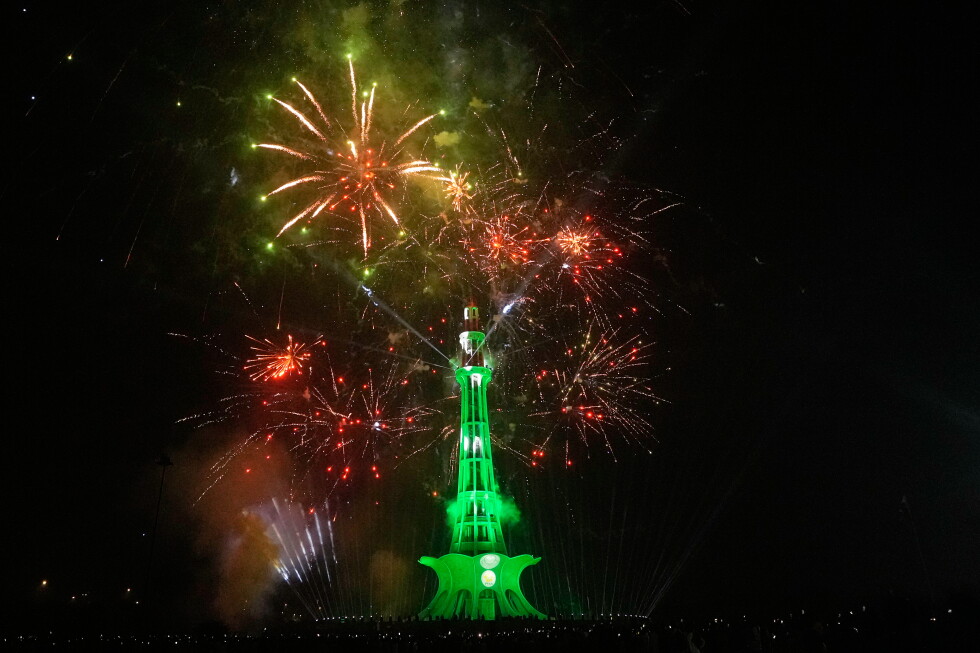
    ISLAMABAD – Jubilant crowds across Pakistan flooded city streets and public plazas at midnight on August 14, launching nationwide celebrations for the country’s 79th anniversary of independence from British colonial rule. As fireworks exploded in vivid arcs over the capital Islamabad, participants from all age groups, including women and children, joined the festivities, dressed in Pakistan’s national green and white, waving hand-held flags and rallying with the resounding chant “Long Live Pakistan.” Major thoroughfares in the capital were packed shoulder-to-shoulder with celebrants, who watched as pyrotechnics lit up the dark night sky.

    Pakistan gained sovereign statehood on August 14, 1947, following the end of British colonial governance and the partition of the Indian subcontinent into two separate independent nations. Official commemorative events were scheduled to continue through Friday, kicking off with formal flag-raising ceremonies hosted at government institutions, public parks, and educational facilities across the country.

    What sets this year’s independence celebrations apart from previous years is the inauguration of a new landmark in Islamabad: the Yadgar-e-Fatah, or Monument of Victory. The memorial was built to honor what Pakistani officials refer to as the “Battle of Truth,” a four-day armed conflict between Pakistan and neighboring India that took place in May 2025.

    In a nationally televised address to the Pakistani people marking the holiday, Prime Minister Shehbaz Sharif stressed that Pakistan seeks peaceful diplomatic relations with India, rather than open conflict. However, he issued a clear warning that the country’s desire for peace should not be misinterpreted as a sign of vulnerability. Any act that threatens Pakistan’s territorial sovereignty, he emphasized, will be met with a forceful, decisive response.

    The 2025 cross-border conflict was triggered by a deadly attack that left 26 people dead in Indian-administered Kashmir. Indian authorities quickly placed blame on militants backed by Pakistan, an accusation that the Pakistani government in Islamabad has repeatedly and categorically denied. As two nuclear-armed rival powers, the nations exchanged missile and drone strikes across the de facto border in Kashmir for four days before a ceasefire agreement halted active hostilities.

    Beyond addressing security tensions, Sharif also criticized New Delhi’s decision to suspend the long-standing Indus Waters Treaty following the 2025 conflict. The agreement, brokered decades ago by the World Bank, governs how the two nations share water from the critical Indus River system, a key source of freshwater for millions of people on both sides of the border. “Every drop of water is our red line,” Sharif stated, adding that Pakistan will not hesitate to respond to any Indian action that endangers the country’s access to its allocated water supplies.

  • UK withholds information on Israeli firm accused of targeting Scottish first minister in elections

    UK withholds information on Israeli firm accused of targeting Scottish first minister in elections

    Allegations of foreign digital meddling in Scotland’s parliamentary elections have sparked a new wave of transparency debate, after the UK government formally declined to release classified records related to an Israeli cybersecurity firm accused of election interference, citing risks to diplomatic relations and national security.

    The controversy first emerged in June this year, when France’s leading disinformation monitoring body Viginum publicly named Israeli cyber company BlackCore as a suspect in coordinated digital interference operations targeting multiple elections across the globe. These include France’s own local elections, New York City’s 2025 municipal elections, and the parliamentary elections in Scotland.

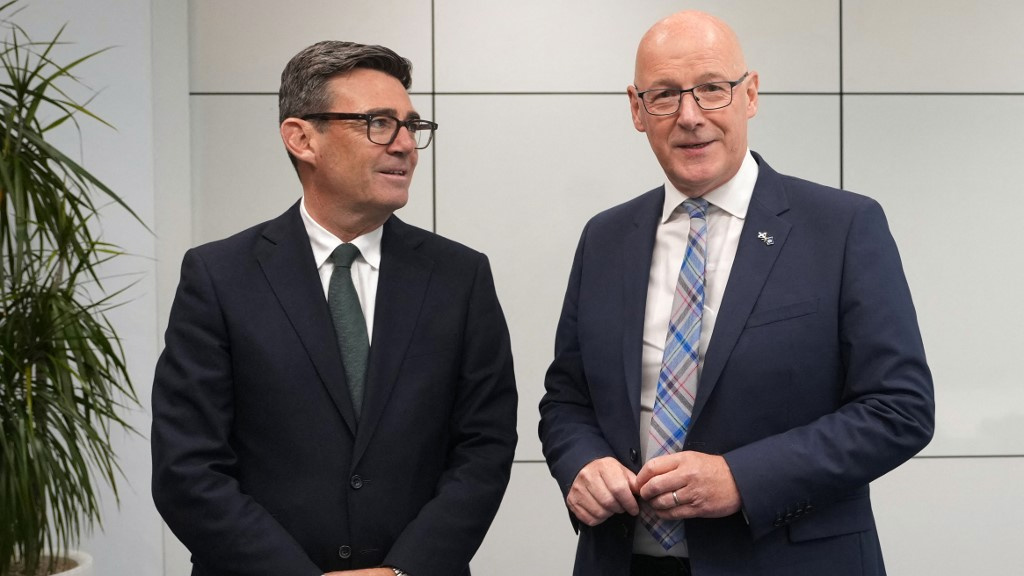
    Viginum head Marc-Antoine Brillant confirmed that ongoing investigations have linked BlackCore to a pattern of foreign digital interference in sovereign elections across regions ranging from West Africa to North America and Europe. However, the watchdog has so far been unable to identify who commissioned the firm to carry out the alleged operations. Investigators also confirmed that social media accounts tied to BlackCore specifically targeted Scotland’s First Minister John Swinney, the leader of the pro-independence Scottish National Party (SNP).

    Swinney has emerged as one of the most prominent Western political critics of Israel’s military campaign in Gaza, publicly stating in August 2025 that he believes Israel is committing genocide in Palestinian territory. “It’s quite clear that there is a genocide in Palestine – it can’t be disputed,” Swinney said at the time. “I have seen reports of terrible atrocities which have the character of being genocide. I’ve expressed that and obviously it’s not reached all those individuals, but that’s my feeling.”

    This week, Scotland-based newspaper The National submitted two separate Freedom of Information (FOI) requests to both the UK national government and the devolved Scottish administration. The requests sought full access to all internal correspondence – including emails and official memos – that referenced Viginum, its findings on BlackCore, and any alleged influence operations targeting Scottish elections.

    In its formal response, the UK Cabinet Office stated that it would not disclose any of the requested information, arguing that publication would threaten UK national security. The department outlined that it had conducted a formal balancing test between public interest in transparency and the need to protect sensitive state security information. “We have weighed these public interests against a very strong public interest in safeguarding national security. It is important that this sensitive information is protected, as disclosure of information would damage national security. This interest could only be overridden in exceptional circumstances,” the Cabinet Office said in its response. “Taking into account all the circumstances of this case, we have determined that the balance of the public interest favours withholding this information.” The UK government also cited an additional legal exemption for disclosure: that releasing the records could “prejudice relations between the United Kingdom and any other state.”

    The devolved Scottish government took a partial approach to the request: it withheld a portion of the requested records on national security grounds, but released a series of unredacted documents that show senior Scottish officials debating how to respond to Viginum’s original report. Among the released materials is a note from the principal private secretary to First Minister Swinney, which reads: “I have shared this with FM – anticipating that he will want to understand more about this report, what we/UKG and security apparatus know/knew about it, and what actions remedial and future / proactive are being taken.”

    The refusal to fully disclose information has renewed questions about the UK government’s handling of foreign interference claims, particularly amid already heightened tensions over Scotland’s political relationship with the UK and ongoing global divisions over the Israel-Gaza conflict. The case also underscores growing global concerns about unregulated private cyber firms engaging in foreign electoral interference, with little transparency over their clients or activities.