标签: Asia

亚洲

  • What to expect from Trump’s meetings with Erdogan and Sharaa in Ankara

    What to expect from Trump’s meetings with Erdogan and Sharaa in Ankara

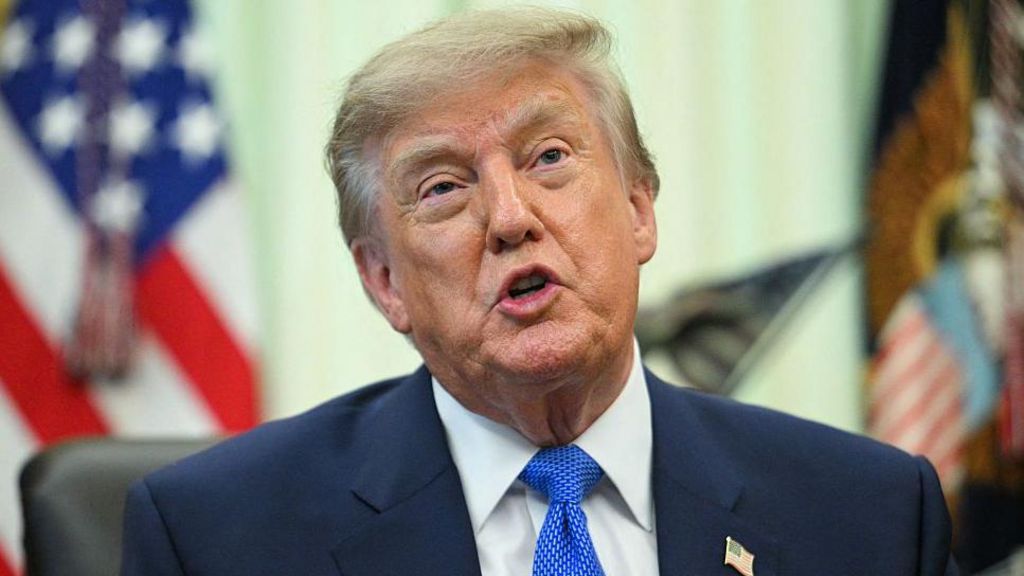
    As U.S. President Donald Trump prepares to depart for Turkey to attend the annual NATO summit this Tuesday, his schedule is already shaping up to be defined by high-stakes bilateral diplomacy that breaks with decades of bipartisan U.S. foreign policy. The trip will open with a one-on-one meeting with Turkish President Recep Tayyip Erdogan, and conclude with a much-anticipated sit-down with new Syrian President Ahmed al-Sharaa on Wednesday — a pair of encounters that highlight Trump’s signature approach to foreign policy, which prioritizes personal rapport over longstanding ideological constraints.

    Trump has openly positioned this personalized diplomacy as a corrective to what he frames as missteps by his predecessor Joe Biden, and has made no secret of his public admiration for both Erdogan and Sharaa. He has described Erdogan as a “strong” leader and Sharaa as “tough”, and has even publicly credited Erdogan with facilitating Sharaa’s rise to the Syrian presidency following former leader Bashar al-Assad’s flight to Moscow in December 2024.

    This warm posture represents a sharp break from longstanding U.S. policy held by both major American political parties. For years, both Republicans and Democrats have raised sharp concerns over Erdogan’s domestic crackdown on political dissent and Turkey’s open support for Palestinian factions in the ongoing Gaza conflict. For Sharaa, the break is even more stark: he was formally designated a terrorist by the U.S. government for decades, a label the current administration has set aside in its push for closer ties.

    In contrast to his friendly overtures to Erdogan and Sharaa, Trump has adopted a sharply critical tone toward most European leaders set to attend this week’s summit, setting a tense tone for the broader alliance gathering.

    Regional analysts broadly view the burgeoning personal rapport between Trump and Erdogan as a potential strategic gain for U.S. interests in the Middle East. Alper Coskun, a former Turkish diplomat now based at the Carnegie Endowment for International Peace, told Middle East Eye that the quiet solidarity between the two leaders is likely to work in Trump’s favor. “He will find an increasingly willing actor on the part of Turkey to pursue a more aligned policy with the United States in the broader Middle East,” Coskun noted, adding that even on the contentious issue of Gaza, Turkish officials have publicly emphasized growing alignment between Ankara and Washington. Turkish Foreign Minister Hakan Fidan already attended the inaugural meeting of Trump’s Gaza Board of Peace, though Israeli pushback blocked Ankara’s bid to deploy Turkish troops as part of a proposed international stabilization force for the enclave.

    That Israeli opposition extends far beyond the question of peacekeeping troops. Israeli Prime Minister Benjamin Netanyahu used a Monday interview with Fox News to double down on his criticism of the U.S.-Turkey rapprochement, particularly any potential move to readmit Turkey to the U.S.-led F-35 stealth fighter program. Netanyahu argued that only Israel should hold the military advantage provided by F-35s, and attacked Erdogan’s ruling AKP as “a regime infected by the Muslim Brotherhood, an extreme movement that hates America and chants death to America from that side of the spectrum.” “I don’t think they should be given F-35 or the engines for their fighter jets, because that’ll upset the power balance in the Middle East, which is ultimately guaranteed by Israeli air superiority,” he added.

    Controversy around the F-35 program extends well beyond regional political tensions. Israel has relied heavily on F-35s for its military operations in Gaza, and manufacturing facilities producing F-35 components across NATO member states have repeatedly been targeted by anti-war protests in recent months.

    Turkey was originally removed from the F-35 program and hit with U.S. sanctions in 2019, after Ankara proceeded with a deal to acquire Russia’s S-400 air defense system. Washington has long argued that coexistence of the S-400 and F-35 puts sensitive U.S. stealth technology at risk of exposure to Russian intelligence. In a confidence-building move that stops short of full readmission to the F-35 program, the Trump administration notified Congress late last month of a planned $700 million military arms sale to Turkey, including General Electric F110 turbofan engines to power Ankara’s domestically developed Kaan fighter jet.

    While Ankara has maintained relatively warm ties with Moscow even as it remains a core NATO member, Turkish officials have sought to ease U.S. concerns by noting that the S-400 system has never been activated, leaving room for negotiated compromise. Even so, analysts caution that an immediate resolution of the sanctions dispute remains unlikely. While there is growing optimism in Ankara that the personal bond between Trump and Erdogan could lead to sanctions relief, Coskun notes that few observers are willing to bet that Trump will expend significant political capital with Congress to advance the issue. “I don’t expect an immediate solution, because of the very difficult obstacle in terms of dispossession of the S-400s, which is a requirement for Turkey,” he explained.

    Gina Abercrombie-Winstanley, a non-resident fellow at The Atlantic Council, emphasized that while Trump prioritizes personal warmth in his diplomatic engagements, U.S. officials still need to push for core strategic priorities from Ankara. “[Trump] puts a great deal of emphasis on… warmth and conviviality, but hopefully somebody at the Department of State is talking about the things that we need from Turkey, which is to help ensure NATO sticks with their increased commitments for defence spending,” she told Middle East Eye.

    One of the most striking foreign policy shifts of Trump’s second term has been his rapid embrace of Sharaa, Syria’s new leader. Previously known as Abu Mohammed al-Jolani, the former head of an al-Qaeda offshoot has rebranded as a secular statesman over the past year, backed by Turkish political support and Gulf Arab financial investment. Saudi Crown Prince Mohammed bin Salman first introduced Trump to Sharaa on the sidelines of the May 2025 Riyadh summit, shortly after Trump made the groundbreaking announcement that the U.S. would lift decades of sweeping economic sanctions on Syria. By November 2025, Sharaa was in the Oval Office exchanging gifts with Trump, and earlier this year he publicly thanked the U.S. president on social media for a delivery of Trump-branded fragrance.

    Analysts say this quick rapprochement has already delivered tangible benefits for Syria’s new government. Will Todman, chief of staff of the Geopolitics and Foreign Policy Department at the Center for Strategic and International Studies, noted that Trump’s personal attention has already elevated Syria’s standing internationally. “That relationship has really delivered remarkable dividends, I think, for Syria, so far as it relates to the level of political attention that Trump has devoted” to the country, Todman said. “The fact that Trump has been so willing to see Syria in a new light, and to see the potential for Syria” is alone a win for the Syrians, he added.

    The next major milestone for the U.S.-Syria rapprochement is expected to be the removal of Syria from the U.S. list of state sponsors of terrorism, a top policy priority for Damascus that is already gaining bipartisan support in Congress. Last week, a bipartisan group of lawmakers wrote to Secretary of State Marco Rubio arguing that the original legal justification for the designation no longer holds, and that the listing remains a major barrier to Syria’s political and economic recovery. “While Syria does need to make more progress in a variety of areas… the grounds for the SST designation in US law no longer apply and the listing remains a significant barrier to achieving the Administration and congressional priority of giving Syria a chance to succeed,” the lawmakers wrote.

    Even as the relationship advances, analysts have pushed back on one of Trump’s most provocative recent proposals: the idea that Sharaa’s government could take on the task of disarming the Lebanese militant group Hezbollah. Abercrombie-Winstanley called the suggestion implausible. “I couldn’t believe it when I heard it,” she said. “I do expect Sharaa to be diplomatic with it, but [it’s] very clear that this is not something that should be welcomed by anyone, Syrian, Lebanese, or otherwise.”

    Todman noted that Sharaa has no incentive to take on such a fraught mission, particularly as he works to consolidate control over a fractured Syria still reeling from decades of civil war. “Sharaa has no interest whatsoever in getting involved in Lebanon militarily — especially when his own country is still so fractured,” Todman explained. “It would immediately echo the past Syrian occupation of Lebanon, which would conjure up very negative feelings among Lebanese. In terms of capacity, he’s still struggling with the security situation in Syria. He’s not in control of all of Syrian territory.”

    Following his meeting with Sharaa, Trump is scheduled to hold a press conference in Ankara Wednesday before returning to Washington. Consistent with his past practice, observers expect the president to share unscripted details of his closed-door discussions with leaders on the summit’s sidelines.

    This report was originally published by Middle East Eye, an independent media outlet focused on coverage of the Middle East, North Africa and global affairs.

  • ‘We were scared to die’: The West Bank workers hiding in bins to reach Israel

    ‘We were scared to die’: The West Bank workers hiding in bins to reach Israel

    It was a sweltering April day when 70 Palestinian laborers squeezed into the back of a garbage truck, crammed between rotting waste and heavy trash bags, all clutching one desperate hope: to slip undetected across the border into Israel for a day of work that could feed their families. Thirty-seven-year-old Majd, a resident of Beit Furik just south of Nablus who asked to protect his identity, was among them. The unmarked crossing did not go undetected — Israeli forces stopped the truck at a West Bank checkpoint within minutes. For more than two hours, the men were left trapped under piles of refuse in the scorching heat, as soldiers processed their case. “At the beginning when they stopped us, we were afraid to go to jail,” Majd told independent outlet Middle East Eye. “Then when it took longer to get out, we were scared to die.” When they were finally pulled out, all were taken into custody. Majd, who had no prior convictions, was released the next morning and forced to walk home past Israeli settlements.

    Majd’s terrifying journey is far from an isolated incident. It is the direct outcome of a cascading economic collapse in the West Bank triggered by Israel’s decision to revoke roughly 150,000 Palestinian work permits in the immediate wake of the October 7, 2023 attacks. As household savings evaporated over months of closures, hundreds of thousands of Palestinian breadwinners have been left with no option but to risk arrest, injury, or death to cross into Israel for informal work.

    This current crisis did not emerge overnight. It is the end result of decades of structured economic control that has left the West Bank uniquely vulnerable to collapse, analysts say. When Israel first occupied the West Bank, initial access to Israeli labor markets pushed wages up temporarily, but the decades that followed brought a deliberate process of “de-development” that stunted the growth of local Palestinian agriculture and industry, leaving the territory almost entirely dependent on Israeli labor and revenue streams.

    A 1984 United Nations report first documented this structural dependence: restrictions on local production, rigid controls on imports and exports, and the absence of a sovereign financial system eliminated most viable employment opportunities within the West Bank, forcing a growing share of the Palestinian workforce to commute to Israel for jobs. By the 1980s, one-third of all Palestinian workers were employed in Israel. To manage this flow of labor, Israel introduced a general exit permit system in 1972 that allowed relatively free movement for workers without case-by-case approval. That system was scrapped entirely in 1991, replaced by an individualized permit regime that shifted the default from free movement to requiring specific, often denied authorization. The completion of Israel’s separation barrier in the early 2000s further tightened control over movement, labor, and trade, according to Walid Habbas, an analyst with the Palestinian Forum for Israeli Studies.

    Israel has long weaponized this permit system as a political tool, freezing thousands of permits after Palestinian attacks and during the 2000–2005 Second Intifada. Economic control was further formalized during the Oslo Accords through the Paris Protocol, which gave Israel the authority to collect tariffs, purchase taxes, and VAT on goods imported to the West Bank on behalf of the Palestinian Authority (PA). These funds, called clearance revenues, make up roughly 70 percent of the PA’s total annual income — and like the permit system, Israel has repeatedly withheld or delayed transfers as political leverage against the Palestinian leadership.

    “Treating the Palestinian economy as separate from Israel’s is misleading,” Habbas explained. “We are talking about a system in which Israel is dominating, and imposing severe restrictions in order to control and manage the Palestinians.”

    In the months before October 7, one-fifth of the West Bank’s entire labor force crossed into Israel for formal work. After the attacks, Israel pulled both of its core economic levers at once: it revoked all work permits and froze all clearance revenue transfers. The dual shock rippled through every corner of the West Bank economy, even hitting Palestinians who never worked in Israel, according to Misyef Misyef, an economist at the Palestine Economic Policy Research Institute. “The private sector is suffering and cannot sell their product because the purchasing power of the family is now very low,” Misyef told Middle East Eye.

    Majd knows this collapse firsthand. For six years before the war, he worked construction in the Tel Aviv area, waking at 3 a.m. every day to cross the border and returning home each night. The work was exhausting, but it came with benefits, and he could save roughly half of his 7,000 to 8,000 shekel monthly wage to support his two children. Those savings kept his family afloat for the first year of the permit ban. When the money ran out, Majd had no local work options to fall back on. “I looked for jobs here [in the West Bank], and I couldn’t find anything,” he said. “When there is a pressure on you to provide, you have to think of a way.”

    He twice crossed the separation wall illegally to work in Israel for weeks at a time, but unpermitted crossings have grown far deadlier since the ban. Even before the war, an estimated 50,000 Palestinians worked in Israel without permits, but current far-right Israeli policies have encouraged deadly force against undocumented laborers. Around 50 Palestinian workers have been shot and killed during attempted crossings, and Israeli National Security Minister Itamar Ben Gvir has publicly stated that the shootings are “starting to bring the numbers down.” For his third attempt to cross, Majd opted for the garbage truck, after being told hiding in the trash would keep him out of sight of snipers. “No one sees you, so at least you don’t get shot,” he explained.

    Nearly three years after the permit ban was implemented, there is little sign of a full reversal. Israel has restored just 7,000 permits for workers in industries it deems critical, leaving more than 140,000 formal laborers unemployed. The unemployment rate in the West Bank has skyrocketed from 15 percent pre-crisis to 30 percent today — a level Misyef says is unprecedented in modern global economies. Widespread joblessness has pushed the poverty rate to more than double its pre-war level, jumping from 12 percent to 28 percent.

    Today, Majd and his family survive on the small income his father earns from a tiny herd of sheep, a far cry from the financially stable life they once had. Unsure if he will risk another crossing, Majd spends his days worrying about his children’s future. “What’s going to happen to them in the future? I am worried I am not able to provide what they need,” he said. “I am depressed from everything that happened. I have become like a dead body.”

  • Hamas decision to dissolve Gaza government is a nod to Trump, expert says

    Hamas decision to dissolve Gaza government is a nod to Trump, expert says

    In a calculated strategic move aimed at positioning itself as a cooperative partner in long-stalled Middle East peace efforts, Hamas has announced the dissolution of the Gaza Strip administration it has led for nearly 20 years, with regional experts framing the step as a deliberate signal to U.S. President Donald Trump that the group does not intend to block his flagging Gaza peace initiative.

    The official announcement came Monday, confirmed by Ismail al-Thawabta, head of Hamas’s government media office, in statements to Agence France-Presse. According to al-Thawabta, Mohammed al-Farra, leader of Hamas’s emergency governing committee, formally submitted his resignation and issued an order to dissolve the entire body to clear the way for an administrative handover to the newly established National Committee for the Administration of Gaza (NCAG).

    Hamas first seized governing control of Gaza in 2006, when the group won a majority of seats in Palestinian legislative elections and formed its own cabinet. The electoral victory quickly sparked open conflict between Hamas and its long-standing secular rival Fatah, leading to a bitter split of Palestinian territories: Hamas consolidated full control over Gaza, while Fatah retained authority through the Palestinian Authority (PA) in the Israeli-occupied West Bank.

    Regional policy experts explain that this latest administrative shakeup is rooted in the terms of the 2025 ceasefire and peace framework brokered for Gaza by the United States, Qatar, and Egypt, which was reached to end Israel’s ongoing military campaign in the enclave that has killed more than 73,000 Palestinians to date. The NCAG was created under that agreement as a body of independent Palestinian technocrats tasked with overseeing day-to-day civilian governance of Gaza in the post-conflict period. To date, the committee has operated out of Cairo, Egypt, having been blocked from entering the territory.

    Khaled Elgindy, a senior research fellow in the Middle East program at the Quincy Institute for Responsible Statecraft, told Middle East Eye that Hamas’s decision is a clear message to the Trump administration that the group is not the barrier to progress on the peace plan — that title, he argues, belongs to Israel, which has continued lethal strikes and expansion in Gaza despite the signed ceasefire.

    “Instead of the Palestinian Authority, which has been far less willing to cede authority, Hamas has actually been more open to stepping away from civilian rule in Gaza to make way for the NCAG,” Elgindy noted, adding that while the move was widely expected among regional analysts, its strategic implications make it a notable development.

    Since the ceasefire agreement was signed, Israel has violated the terms repeatedly: more than 1,000 additional Palestinians have been killed in ongoing Israeli attacks, the Israeli government has severely restricted the entry of life-saving humanitarian aid into the blockaded enclave, and Israeli military forces have expanded their ground presence to occupy nearly 70 percent of Gaza’s total territory. The core agreement requires Israel to withdraw its forces from Gaza in exchange for Hamas decommissioning its armed arsenal, but Israeli Prime Minister Benjamin Netanyahu has publicly stated his intent to maintain permanent Israeli control over large swathes of the territory.

    Elgindo summarized Hamas’s core motivation for dissolving its administration simply: “Hamas wants to remove a pretext for Israel to continue attacking Gaza.”

    Trump’s U.S.-led “Board of Peace,” tasked with overseeing implementation of the peace plan, has so far refused to condemn Israel’s ongoing attacks and territorial seizures in Gaza. Israeli newspaper Israel Hayom has reported that the body is advancing a controversial plan to relocate Palestinians into tightly controlled “Hamas-free humanitarian zones” inside the enclave. Following Hamas’s announcement, the Board said it “took note” of the decision and called for all weapons in Gaza to be consolidated under NCAG control.

    For its part, the NCAG has confirmed it is fully prepared to assume civilian governance responsibilities as soon as the necessary conditions are met. “We affirm that the National Committee for the Administration of Gaza is fully prepared to assume its national responsibilities as soon as the necessary resources and capabilities are available,” Ali Shaath, the committee’s leader, wrote in a post on X. Shaath added that the foundational requirements for the committee to succeed are a single unified governing authority, a single legal framework with a clear mandate, and a single armed force under the control of that unified entity.

    Israeli officials responded to Hamas’s announcement by doubling down on their demand for the “complete demilitarisation of the Gaza Strip” — a demand that goes beyond the terms of the 2025 framework agreed by all parties. Elgindy pointed out that Hamas’s move allows the group to signal good faith participation in the peace process while putting off the most contentious issue of weapons decommissioning for later phases of negotiations. He added that Netanyahu has little incentive to end the conflict, regardless of Hamas’s concessions: “Netanyahu wants a permanent war, and the issue of Hamas’s weapons is the trickiest topic to resolve.”

  • Fatal Typhoon Maysak floods burst dam wall in China

    Fatal Typhoon Maysak floods burst dam wall in China

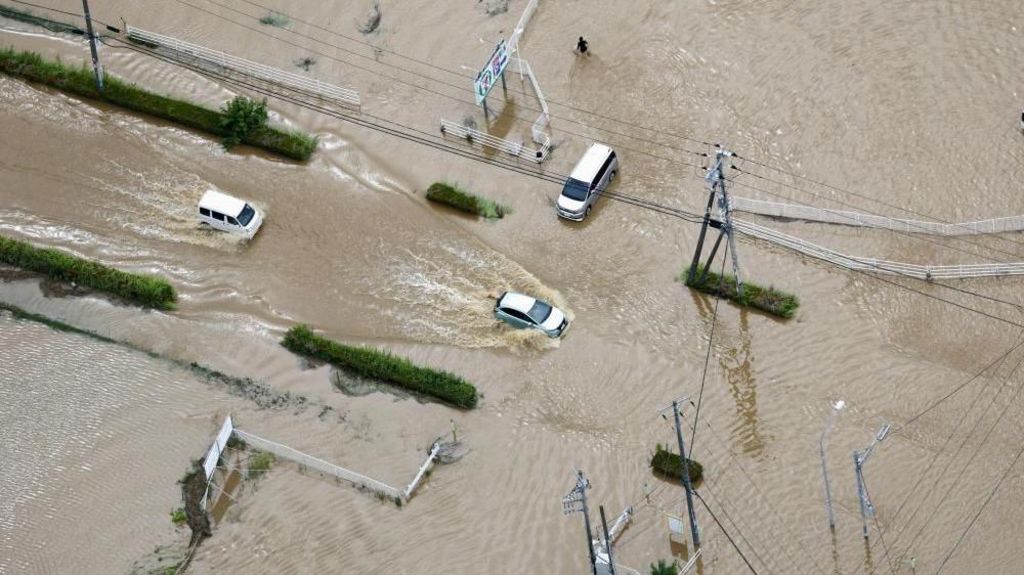
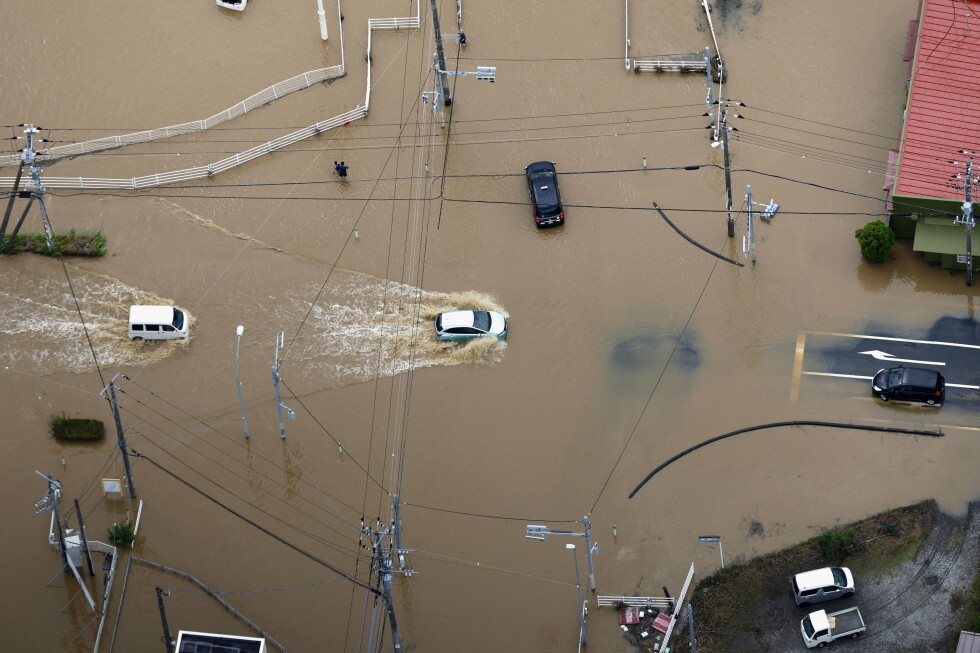
    One of the earliest powerful tropical cyclones of the West Pacific season, Typhoon Maysak, has left a trail of destruction across southern China, triggering catastrophic flooding that breached a reservoir dam in Guangxi Zhuang Autonomous Region and caused fatalities across the affected area. Local authorities confirmed on Tuesday that the dam wall at a reservoir in Heng County, administered by Nanning, the regional capital, collapsed after days of relentless heavy rain pushed by the typhoon sent river and reservoir water levels surging far beyond safe operational thresholds.

    As Maysak made its way inland from the South China Sea early last week, the storm dumped unprecedented volumes of rainfall across Guangxi, with many areas recording 24-hour precipitation totals that exceeded historical averages for the entire month. The sustained downpour quickly overwhelmed natural drainage systems, causing widespread river swelling that put enormous structural pressure on hundreds of small and medium-sized reservoirs across the region. Even though local officials had issued multiple early warnings and ordered pre-emptive inspections of water infrastructure ahead of the storm’s arrival, the scale of the flooding outpaced defensive preparations, leading to the dam breach in Heng County.

    Local emergency management teams have been deployed to the affected area to carry out rescue operations, evacuate at-risk downstream communities, and assess the full extent of the damage. As of the latest update, official reports have confirmed multiple fatalities linked to the flooding, though full casualty and damage figures are still being compiled as access to remote hard-hit areas remains restricted by washed-out roads and continued floodwaters. Provincial and national disaster relief authorities have also allocated emergency supplies and funding to support response efforts, as teams work to restore basic services and prevent secondary disasters such as landslides and waterborne disease outbreaks in the wake of the storm.

    The breach highlights the growing vulnerability of aging water infrastructure in parts of China to extreme weather events, which climate scientists warn are becoming more frequent and more intense due to global climate change. In recent years, southern China has faced an increasing number of severe typhoon-driven flooding events that have tested the country’s disaster preparedness and response systems, prompting calls for increased investment in upgrading outdated infrastructure to better withstand extreme weather shocks.

  • AI chip boom lifts Samsung profits by 1,800%

    AI chip boom lifts Samsung profits by 1,800%

    South Korea’s flagship technology conglomerate Samsung Electronics has projected a staggering 19-fold surge in second-quarter profits, a remarkable gain fueled entirely by the red-hot global demand for artificial intelligence-focused memory chips, the company announced this week.

    The leading global smartphone and semiconductor manufacturer estimates its operating profit for the April-to-June period will hit 89 trillion won, equal to roughly $58 billion and £44 billion. This milestone marks three consecutive quarters of record-breaking operating profits for the firm, a streak unmatched in its recent corporate history.

    Like most major public companies based in South Korea, Samsung releases preliminary earnings guidance weeks ahead of its full, detailed financial report to give investors clear market context ahead of official results. Tuesday’s forecast drop, which comes ahead of the full results set to publish later this July, arrives amid a global semiconductor market defined by strained supply chains that have failed to keep pace with exploding AI-related demand, a mismatch that has driven chip prices steadily upward this year.

    Per Samsung’s guidance, the company pulled in approximately 171 trillion won in total revenue during the second quarter, more than twice the revenue recorded in the same period in 2025. Industry analyst Marc Einstein, who covers global semiconductor markets for Counterpoint Research, called the projected results one of the strongest quarterly performances ever recorded by a large tech firm, noting that it comes close to the all-time sector record set by chip designer Nvidia earlier this year.

    “This has everything to do with the AI boom as memory companies continue to ride a tidal wave driven by limited supply and unprecedented demand,” Einstein explained. In response to persistent tight supply, Samsung has already implemented multiple price hikes for its high-bandwidth memory chips, the core component required to power large language models and generative AI systems.

    As one of the world’s largest semiconductor producers, Samsung manufactures chips for major tech players including Nvidia and Google, in addition to producing its own full line of consumer electronics from smartphones to home appliances. The global AI boom has sent share prices for most leading chip manufacturers soaring in recent months: Samsung’s own market capitalization has more than doubled since the start of 2026, while its South Korean competitor SK Hynix has seen its share price jump more than 200% over the same period.

    Even with the blockbuster profit forecast, Samsung’s shares dipped roughly 4% on the Seoul stock exchange during Tuesday morning trading. Despite this single-day dip, the strong momentum from Samsung and SK Hynix has lifted South Korea’s benchmark Kospi index by more than 80% so far this year.

    The current chip boom follows a similar trend set by Nvidia earlier this year: in May, the AI chip leader reported record quarterly sales and profits that pushed first-quarter revenue past the $80 billion mark. Yet Nvidia’s share price also dropped following that strong report, a movement many analysts attributed to growing investor anxiety over rising competition in the fast-growing AI chip sector.

    To capitalize on this sustained demand, the South Korean government unveiled an $880 billion national investment plan in June led by Samsung and SK Hynix, designed to massively expand the country’s domestic chip manufacturing capacity over the coming decade. The massive South Korean push is part of a broader global trend: rival chip producers across Japan, China and Taiwan have also announced billions in new factory investments to meet the continuing surge in global AI chip demand.

  • World Cup 2026: Trump says he intervened to overturn red card in what has become a historic scandal

    World Cup 2026: Trump says he intervened to overturn red card in what has become a historic scandal

    A firestorm of debate has swept through global football after FIFA’s stunning decision to overturn a red card for United States breakout star Folarin Balogun, a move that came just days after former US President Donald Trump personally pressured FIFA president Gianni Infantino to revisit the call.

    The disciplinary action against Balogun stemmed from a round-of-32 match against Bosnia and Herzegovina, where the American forward was sent off with 30 minutes remaining after VAR upgraded a challenge on opponent Tarik Muharemovic to a straight red. While most observers agree the collision was accidental, the red card carried an automatic one-match suspension that would have forced Balogun to sit out the USMNT’s critical round-of-16 clash against Belgium on Monday. As the host nation for the remainder of the 2026 World Cup, and with Balogun one of the team’s standout talents, the Trump administration moved quickly to challenge the ruling.

    Trump confirmed his intervention to reporters at the White House on Monday, arguing the challenge never rose to the level of a foul, let alone a sending-off. “That wasn’t even an infraction, that was two guys running full speed that happened to crash into each other,” Trump said. He also questioned the integrity of Brazilian referee Rafael Claus, who issued the card, calling his record “very suspect” – remarks that have already sparked intense backlash against Claus on social media. Confirmation of the high-level lobbying campaign emerged earlier from Politico, which reported that Andrew Giuliani, executive director of the White House FIFA World Cup Task Force, Commerce Secretary Howard Lutnick, and senior US Soccer Federation officials spent four days coordinating the appeal.

    In a move that shocked the global sports community, FIFA announced Sunday it was reversing the red card, replacing the suspension with a one-year probation. The governing body used Article 27 of its Disciplinary Code, a rarely used provision colloquially known as the “Cristiano Ronaldo Rule” after it was invoked to clear the Portuguese star for his 2026 World Cup opening matches last November. The decision has reignited longstanding criticism that FIFA has cultivated overly close ties to the US administration to protect the commercial success of the ongoing tournament, which the US is co-hosting.

    Infantino pushed back against accusations of political interference in a statement released hours after Trump’s confirmation. “FIFA’s judicial bodies are independent. They operate autonomously,” he wrote, adding that he always respects the rulings handed down by FIFA’s disciplinary panels, regardless of whether he agrees with them. He also noted that regular conversations with heads of state regarding the World Cup are standard practice.

    For Team USA, the reversal is a welcome outcome. Head coach Tim Ream told *Good Morning America* that Balogun has been overjoyed by the news, and is now eager to contribute on the pitch rather than sit on the sidelines. “He’s been beaming ear to ear since we all found out the news,” Ream said.

    But the precedent set by FIFA’s ruling has triggered an immediate wave of demands for equal treatment from other qualified teams, with high-profile pushback from across global football. France has already appealed a yellow card received by star player Michael Olise during its round-of-16 match against Paraguay. England manager Thomas Tuchel joked at a recent press conference that he may ask Trump to help overturn a red card suspension for Jarell Quansah, adding: “Where does it start, and where does this end now?” Norway head coach Stale Solbakken, whose side knocked out three-time champion Brazil Sunday, called FIFA’s choice a “bad bad bad bad bad decision.”

    Within minutes of FIFA’s Sunday announcement, Belgium – the US’s opponent in Monday’s knockout match – filed a formal challenge to Balogun’s eligibility. In a statement Monday, the Royal Belgian Football Association said it had yet to receive any formal explanation from FIFA, leaving it no option but to contest the ruling. “Regardless of the sporting outcome of this match, the RBFA is deeply saddened by the course of events and will continue to fight in the coming hours, days and months in defence of the fundamental principles of ethics, fair competition, and the interests of football as a whole,” the statement read.

    Criticism has also come from veteran football leadership. Former FIFA president Sepp Blatter, who has been banned from FIFA activities since 2015 amid a corruption scandal, weighed in on social media platform X Monday, writing: “Red cards are not overturned by political phone calls. They are overturned by rules, evidence and independent bodies. If a US President intervenes with the FIFA President – and a player is suddenly cleared before a World Cup knockout match – the question is unavoidable: Quo vadis, FIFA?” European governing body UEFA went even further, saying the reversal “crossed a red line.” The organization noted that automatic one-match suspensions for red cards are non-discretionary: “In this case not,” the statement said. “A minimum automatic suspension of one match following a red card is not a discretionary option and does not require the decision of a competent body to be enacted.”

    The controversy also carries a subtle political subtext: Balogun, a dual US-UK national born in New York and raised in London, qualifies for the US national team via birthright citizenship, a policy Trump has repeatedly tried and failed to overturn during his time in office.

  • Nephew of PA vice president arrested over Gaza smuggling with Israeli soldiers

    Nephew of PA vice president arrested over Gaza smuggling with Israeli soldiers

    In a development that has cast new light on systemic illicit trafficking into the blockaded Gaza Strip, Israel’s internal security service Shin Bet has taken into custody Jamal al-Sheikh, the nephew of newly appointed Palestinian Authority Vice President Hussein al-Sheikh, according to an exclusive report from Israeli outlet i24News published Monday.

    The arrest, which occurred in February of this year, stems from allegations that Jamal al-Sheikh, a West Bank resident, orchestrated a cross-border smuggling ring between February 2025 and February 2026, with direct assistance from active-duty Israeli soldiers, a Egyptian national, and Gaza-based merchant partners. Over the course of 12 months, the network successfully moved five separate shipments of contraband into the Palestinian enclave, before a failed sixth attempt in February led to the operation being unraveled and Jamal’s detention.

    Court documents and security briefings cited in the report outline that the first shipment consisted of 10 pallets of confectionery, but subsequent shipments included items classified by Israel as “dual-use” goods—materials that can serve both civilian and military purposes, which are subject to a total ban on entry into Gaza. Other illicit goods trafficked included solar panels, vehicle batteries, tobacco products, electric bicycles, and mobile phones, all of which command exorbitant black market premiums in Gaza amid the long-standing Israeli blockade that has restricted the flow of most basic and commercial goods.

    The final intercepted shipment, which was seized by Shin Bet before it could cross into Gaza, was the network’s largest to date: a single truck carrying more than 500 pallets of cigarettes and 500 iPhone devices, with a total estimated black market value of 200 million Israeli shekels, or roughly $66 million. The report notes that Jamal al-Sheikh expressed hesitation about moving the high-value final shipment over fears of being caught, but a Gaza-based partner in the ring reassured him that Israeli military connections would guarantee safe passage. The merchant claimed his own son, an active Israeli soldier, would facilitate the smuggling. The identities of all Israeli soldiers implicated in the ring remain sealed under a court gag order, per i24News.

    This arrest is far from an isolated incident. It is the latest in a string of high-profile revelations over recent months exposing widespread complicity by Israeli security and commercial actors in illicit profiteering from Gaza’s restricted economy. Just one month prior to Jamal al-Sheikh’s arrest, Bezalel Zini, brother of current Shin Bet chief David Zini, was formally indicted on charges of aiding unauthorized smuggling after being accused of moving millions of shekels worth of contraband cigarettes and other goods into the enclave.

    Beyond shadowy smuggling rings, official commercial activity has also drawn scrutiny for exploiting Israel’s monopoly on entry into Gaza. In June, Israeli news outlet Ynet reported that one major Israeli supermarket chain saw a more than 25% jump in first-quarter 2026 sales, driven almost entirely by sales of goods to Gaza. The chain recorded 152 million shekels ($50 million) in additional profits over the period, 99 million shekels ($33 million) of which came directly from Gaza sales. Israel currently grants exclusive commercial entry approval to just a small handful of Israeli companies, creating a state-sanctioned monopoly that allows for inflated pricing.

    Israel’s strict control over all goods entering and exiting Gaza forms the core of its decades-long siege campaign, a policy that humanitarian organizations worldwide have repeatedly condemned as using mass starvation as a weapon of war against the enclave’s 2.2 million residents. While a ceasefire agreement reached last October allowed for a temporary increase in humanitarian aid entering the territory, new UN data shows that aid flows have actually declined sharply in recent months. The UN Office for the Coordination of Humanitarian Affairs (OCHA) reported that just 41,800 pallets of aid were delivered across Gaza last month, down from 58,600 pallets delivered in January 2026.

    The ongoing restrictions have pushed Gaza’s population into an unprecedented humanitarian catastrophe. OCHA data confirms that the vast majority of Gaza residents now survive on just two meals per day, with 70% of infants and young children suffering from moderate to severe food insecurity. Projections from UN agencies estimate that roughly 246,000 children under the age of 17 will suffer from acute malnutrition in 2026, with more than 31,000 of those children facing life-threatening severe acute malnutrition.

    For context, Hussein al-Sheikh, Jamal’s uncle and the PA’s recently appointed vice president, has been a leading figure in Palestinian politics for more than 20 years, and is widely tipped as the leading candidate to succeed 90-year-old PA President Mahmoud Abbas when he steps down. For decades, al-Sheikh led the PA’s Civil Affairs Commission, the body tasked with coordinating all civilian administrative matters with COGAT, the Israeli military unit that manages all Israeli government policy in the occupied Palestinian territories.

  • Why a Diljit Dosanjh film vanished from streaming after two days

    Why a Diljit Dosanjh film vanished from streaming after two days

    A sudden and unexpected takedown of a high-profile Indian biopic starring one of the country’s most popular entertainers has ignited widespread controversy over censorship and artistic freedom in India.

    The film, *Satluj*, features Punjabi singer-actor Diljit Dosanjh in the lead role of Jaswant Singh Khalra, a human rights activist who exposed grave allegations of enforced disappearances and extrajudicial killings during the decades-long separatist insurgency in Punjab that lasted from the early 1980s to the mid-1990s. Thousands of people lost their lives in the conflict between Sikh militants fighting for an independent Khalistan state and Indian security forces. Human rights organizations have long accused security forces of systematic arbitrary detentions, secret disappearances and extrajudicial executions during the government’s counterinsurgency crackdown; authorities have repeatedly denied the allegations, arguing harsh tactics were necessary to quell the uprising.

    Khalra dedicated his work to investigating claims that hundreds of victims of the crackdown were secretly cremated by officials without notifying their families or keeping official records. The activist was abducted and murdered in 1995, and multiple Punjab police officers were later convicted of their roles in his killing.

    After a three-year battle to secure a public release, *Satluj* made its surprise debut on Indian streaming platform ZEE5 on June 27, 2026. Just 48 hours later, the platform removed the film from its Indian catalog, announcing it would remain unavailable “until further notice” citing unspecified “current developments” and offering no additional context. The takedown means the film is no longer accessible to viewers through any official channel in India.

    The film’s journey to release has been fraught with obstacles from its completion in 2022. Originally titled *Ghallughara* — a Punjabi term referencing historic massacres of Sikhs in the 18th century — the project first hit roadblocks when India’s Central Board of Film Certification (CBFC), the government body that approves films for theatrical release, demanded the title be changed with no public explanation. It was later renamed *Punjab ’95*, referencing the year of Khalra’s abduction, and was slated to premiere at the 2023 Toronto International Film Festival before producers pulled it amid ongoing certification deadlock in India.

    Director Honey Trehan revealed in previous interviews that CBFC’s objections grew steadily over years of review: what started as 21 requested edits ballooned to 127 proposed cuts, including demands to remove all references to Khalra, cut scenes depicting police violence, and alter core factual content of the biopic. Trehan said the board argued the film could spark public unrest in Punjab and challenged its portrayal of historical events. Filmmakers challenged the CBFC’s demands in Bombay High Court before eventually withdrawing their petition and agreeing to changes in a bid to move forward, only to see the list of requested alterations continue to grow.

    Unable to secure theatrical certification, the producers opted to release the film directly to streaming under a third new title, *Satluj*. Unlike theatrical releases, streaming platforms in India are not required to obtain CBFC approval under the 2021 Information Technology Rules, though the regulations still allow government-ordered takedowns. Trehan confirmed at the time of release that the final version launched on ZEE5 was the film’s original cut, “without any cuts or compromises” to the creative team’s original vision.

    Following the takedown, a spokesperson for production company RSVP Movies told *The Indian Express* the removal was carried out on direct government orders. India’s federal Ministry of Information and Broadcasting has not issued any public comment on the decision, and the BBC has requested a response from the ministry. The CBFC has also not publicly responded to Trehan’s accounts of its demands, and the BBC has also sought comment from the board.

    In a live social media video addressing the takedown, Dosanjh said the outcome was not unexpected, but its speed still caught the team off guard. “What I had already expected is exactly what happened,” he said. “I thought the film might get banned when government offices opened on Monday, but I didn’t know it would happen as early as Sunday evening.” Dosanjh added that the long-running uncertainty about the film’s status led producers to limit promotional activity: “If we had promoted it, the film would definitely not have been released at all.” Despite the takedown, he said he was grateful that audiences finally got the chance to see the film after years of delays.

    Despite being available for just two days, *Satluj* has already drawn widespread critical acclaim. *The Hollywood Reporter* called it “one of the finest Indian films of the year”, and the brief window of availability generated intense public discussion online about censorship and artistic expression in India.

    In the wake of the removal, Trehan told reporters he was stunned by the latest development. “I am at a loss right now. I don’t know how to react to this development,” he said. ZEE5 has said it remains supportive of the film and its creative vision, and that it “hoped to bring it back soon” without offering a timeline for its return.

  • Can China repeat its EV success with robotaxis?

    Can China repeat its EV success with robotaxis?

    Across multiple major Chinese cities, driverless robotaxis are no longer a distant vision of the future — they are already weaving through daily commuter traffic. In Beijing’s high-tech Yizhuang district, these steering-wheel-empty vehicles share asphalt roads with traditional human-driven cars, while autonomous delivery vans cruise dedicated lanes moving packages to pickup hubs across the area. The district has emerged as one of China’s flagship testing and commercialization zones for autonomous driving technology, with domestic industry leaders including Baidu, WeRide, and Pony.ai already offering paid commercial robotaxi rides within clearly demarcated zones. Booking a service takes just a few taps on a mobile app; within minutes, an uncrewed vehicle arrives, and after confirming the destination on an in-car touchscreen, it smoothly merges into Beijing’s dense, chaotic mix of buses, cyclists, electric scooters, and pedestrians, navigating varied hazards with surprising confidence. The underlying technology is still maturing, but one pressing question is already at the forefront of global industry discussion: can Chinese firms replicate the success they achieved in electric vehicles, and turn robotaxis into another globally dominant sector?

    Chinese autonomous vehicle developers already hold a critical structural advantage: the sprawling industrial ecosystem that turned China into the world’s largest EV market, which now overlaps directly with self-driving technology. Unlike Tesla, which develops most of its autonomous driving hardware and software in-house, China’s self-driving sector is built on an interconnected network of specialized suppliers and manufacturers. Established domestic automakers such as BYD, Chery, Geely, and SAIC build the base vehicles, while dedicated technology firms develop and refine the autonomous driving software. Critically, autonomous vehicles rely on most of the same core components as electric cars: batteries, sensors, processing chips, and onboard computing hardware. Since these supply chains already operate at massive, proven scale in China, companies can iterate on technology far faster and at much lower development costs than many global competitors. “What you see is a pace of innovation and adaptation in the Chinese EV industry that I don’t think is matched anywhere else around the world,” explained Kyle Chan, a foreign policy fellow at the Brookings Institution. “China’s EV capacity doesn’t just stop there. It actually spills over into other related industries through something that I call these overlapping tech industrial ecosystems.”

    Supportive government policy has also accelerated the rollout. National and local governments have rolled out pilot programs across dozens of cities that allow companies to test fully driverless vehicles on public roads, creating the space for real-world refinement beyond closed testing tracks. China also offers an unrivaled training ground for autonomous algorithms: extremely diverse and complex real-world driving conditions. A single trip through a major Chinese city can expose a self-driving system to everything from jaywalking pedestrians to illegally parked scooters, mixed-traffic buses, and unpredictable last-minute maneuvers from other road users. “The traffic environment here in China is very complex,” Maeve Zhang, chief marketing officer at WeRide, told the BBC. This variety of road scenarios generates massive volumes of unique driving data that developers use to refine and improve their software at an accelerated rate.

    While China-based driving data is a major asset, companies face significant hurdles when planning rapid expansion into overseas markets, each with their own unique environmental challenges that domestic data cannot fully prepare systems for. “In the Middle East, the temperature is very high. In South East Asia, there is heavy rain… and in Switzerland, winter temperatures can be very, very low,” Zhang notes. Extreme heat and cold can degrade battery performance and reduce component lifespan, while heavy precipitation, fog, and snow interfere with the cameras and lidar sensors that autonomous systems depend on to detect surrounding obstacles.

    Robotaxis are just one pillar of China’s broader autonomous driving ambitions. QCraft, another major domestic player, is adapting its autonomous software for passenger cars, public transit buses, and last-mile delivery vehicles. The company reports its autonomous buses are already operating in more than 20 Chinese cities, and it is actively expanding into international markets. “It’s very promising on the technology side that maybe the next five, seven, at most 10 years, it will get into everybody’s life,” said James Yu, QCraft’s chairman and chief executive.

    Chinese companies are already expanding globally at a rapid pace, and their primary commercial rivals remain based in the United States. Waymo, Alphabet’s standalone robotaxi division, still holds the position of global commercial leader, operating paid fully driverless services in multiple U.S. cities. Amazon-owned Zoox and Tesla are moving forward with development far more cautiously, while Uber abandoned in-house autonomous vehicle development years ago, after a fatal 2018 testing crash derailed the program. Today, both Uber and its U.S. ride-hailing rival Lyft are actively partnering with Chinese autonomous driving firms to bring driverless services to their platforms. This partnership model gives U.S. ride-hailing firms immediate “access to millions of customers that they wouldn’t have if they created their own app,” explained Tu Le, founder of automotive industry consultancy Sino Auto Insights. “Through these partnerships, they’re able to commercialise and broaden their scope.”

    Despite Chinese firms’ advantages in low-cost manufacturing, Waymo has spent years building out mature customer service systems and app infrastructure that many newer competitors have not yet matched. “Having experienced Waymo and the WeRides and the Ponys… I would have to say the user experience for Waymo is much better than all the other competitors. I feel like Waymo is really becoming a standard mode of transportation for California,” Le noted.

    Public and political perceptions of driverless technology also differ sharply across global markets. In the U.S., labor unions have raised widespread alarms that mass deployment of robotaxis could displace hundreds of thousands of workers in taxi, delivery, and freight industries. In China, policymakers frame wide-scale automation as a solution to the country’s shrinking working-age population, but broad public discussion of potential downsides is limited by government censorship of dissenting views, making it difficult to accurately measure broader public opinion. Chinese President Xi Jinping has positioned AI and robotics as core components of the country’s push to develop “new quality productive forces” that will create high-skilled jobs and drive long-term economic growth, giving companies strong policy and financial incentives to invest heavily in autonomous driving development.

    Proponents of the technology argue that widespread robotaxi adoption could deliver major public benefits, particularly for underserved groups. “If we can bring the cost down for a robotaxi ride so that it’s as cheap – or maybe even cheaper – than hailing an Uber with a normal driver, then it really helps broaden mobility,” Le said. “Elderly folks, folks that are disabled – these robotaxis really allow them a lot more ability to travel.”

    Even with these potential benefits, widespread public and regulatory acceptance faces major headwinds, particularly around safety concerns. Earlier this year, a software glitch in Baidu’s Apollo Go robotaxi service left roughly 100 uncrewed vehicles stranded across Wuhan, with some passengers reporting they were trapped inside after doors automatically locked following the malfunction. Baidu suspended services in the city for several weeks, though the company says it remains on track to launch commercial service in the United Kingdom later this year. The incident underscored how high-profile technical failures can quickly erode public trust in the technology, mirroring similar issues that have derailed autonomous driving projects elsewhere. General Motors shuttered its Cruise robotaxi division last year to refocus its autonomous development efforts on personal consumer vehicles, after California regulators suspended Cruise’s operating permit in 2023 following a crash where one of its robotaxis dragged a pedestrian several meters after she was first struck by a human-driven vehicle.

    These challenges have led many analysts to argue that robotaxis will be far harder to export globally than electric vehicles. Deploying a commercial robotaxi network requires far more than building a capable vehicle: developers must navigate complex local regulatory approval processes, build high-resolution local road maps, establish on-the-ground local operation and maintenance teams, and win sustained public trust — all hurdles that even well-established U.S. firms have struggled to overcome. Chinese companies also face growing geopolitical barriers to global expansion. Unlike traditional electric vehicles, robotaxis continuously collect large volumes of mapping, location, and visual road data, which makes them a target for national security concerns in many overseas markets that are wary of Chinese-based technology firms accessing sensitive geographic information.

    Despite these well-documented challenges, industry leaders remain optimistic that regulatory attitudes are shifting in favor of autonomous driving. “We see very positive attitudes and very good policies and regulations coming out from governments both here in China and in some other international markets,” Zhang said.

    For Brookings’ Chan, the global race to commercialize robotaxis represents far more than just the arrival of a new transportation option. “China is trying to create this sort of high-tech economy that’s digitally connected, that’s AI-powered, and that builds on its existing strengths today in batteries, EVs, motors and other related technology,” he explained.

  • Spain may style itself as Israel’s most fervent adversary, but its sanctions are far from comprehensive

    Spain may style itself as Israel’s most fervent adversary, but its sanctions are far from comprehensive

    Amid growing global outcry over Israel’s military campaign in Gaza, widely condemned by critics as genocide, most Western governments in Europe and the Americas have remained conspicuously silent on the issue. Spain has emerged as a rare exception, positioning itself as one of the most outspoken Western critics of Israel’s actions, positioning itself as an outlier among Western nations.

    Spanish Prime Minister Pedro Sanchez has pushed for multilateral action to halt global arms trade with Israel, including a high-profile campaign to suspend the EU-Israel Association Agreement. Spain was also the first and only European Union member state to formally recall its ambassador to Israel, and announced a halt to new arms sales to Israel as early as October 2023.

    However, a 2025 investigation from Barcelona’s Delas Centre for Peace Studies reveals a stark gap between this rhetoric and actual trade data. The report finds that military imports from Israel actually increased dramatically after October 2023, totaling €36.7 million ($41.9 million) by February 2025 alone. This included arms, ammunition, tanks, and armored fighting vehicles categorized under standard international trade codes. The report explicitly notes that Spain never imported more Israeli military equipment than it did in the 16 months following the 7 October 2023 attacks.

    This pattern shifted only in September 2025, when Sanchez signed into law a formal full arms embargo against Israel, alongside a ban on imports of goods from Israeli-occupied Palestinian territories. Unlike the earlier partial pause on new sales licenses, this legislation establishes a formal, blanket legal prohibition on arms trade with Israel.

    Eirene de Prada, an international law professor and member of Juristas por Palestina (Lawyers for Palestine), explained that the new legislation marks a formal shift from administrative restraint to binding legal rule. But she warns that broad loopholes, exceptions for pre-existing contracts, and ambiguous regulatory gaps leave the embargo far weaker than its public framing suggests. In comments to Middle East Eye, De Prada accused the Spanish government of deliberate doublespeak: while the embargo sends a strong symbolic statement condemning Israeli actions, regulatory loopholes embedded in the Royal Decree-Law allow trade with Israeli defense firms to continue largely uninterrupted.

    Under Spanish legislative rules, a Royal Decree-Law is classified as an emergency measure for extraordinary and urgent need, requiring parliamentary approval within 30 days of enactment. Royal Decree-Law 10/2025, passed in October 2025, justifies the embargo by noting that the extreme humanitarian crisis in Gaza creates an urgent need to block the transfer of defense and dual-use materials that Israel uses against civilian populations.

    Alejandro Pozo, an investigator at the Delas Centre, argues that even with its flaws, the legislation represents a meaningful step forward. He notes that the embargo sets a critical global precedent, proving that a full arms embargo on Israel is a politically feasible policy for Western nations. Even so, Pozo confirms that the law leaves all pre-existing military contracts intact and grants Spanish authorities broad discretion to approve exceptions when deemed justified.

    Just three months after the law’s passage, the Spanish government exercised one of these exceptions to authorize transfers of defense and dual-use materials for four Airbus-led aeronautical projects, citing the projects’ significant industrial and export potential. The approved transfer included an anti-missile defense system produced by Elbit Systems, an Israeli defense manufacturer widely documented as complicit in Israel’s military campaign in Gaza.

    Pozo explains that Israel’s core interest in trade with Spain is not selling finished weapons to Spanish buyers, but gaining access to Western markets that lower the cost of Israel’s domestic military production and sustain its long-term occupation of Palestinian territories. He added that Israeli defense firms also exploit loopholes in EU trade rules, which allow Spain to trade defense equipment via other EU member states and purchase Israeli weapons manufactured by EU-based Israeli subsidiaries. These transactions are not covered by the current embargo, and account for a large share of Israeli military-related activity in Spain. Many Israeli-designed weapons are produced in Spain by local subsidiaries of Israeli firms or by domestic Spanish manufacturers operating under Israeli production licenses.

    To close these gaps, Pozo argues that policymakers must target the financial flows that directly or indirectly fund Israel’s war machine, rather than only regulating direct arms transfers. He calls for sanctions modeled after the sweeping comprehensive sanctions the EU imposed on Russia, which target all core Israeli economic and political interests.

    Spain is far from alone in facing this contradiction between anti-Israel rhetoric and continued complicity in what UN Special Rapporteur Francesca Albanese has termed the “economy of genocide.” Colombia, another leading critic of Israel’s actions, implemented a national ban on coal exports to Israel that took effect in August 2025. But after the ban went into effect, South Africa – which brought Israel’s case before the International Court of Justice (ICJ) and co-founded the Hague Group supporting Palestinian legal claims – stepped in to become Israel’s largest coal supplier.

    South African Trade Minister Parks Tau has argued that imposing unilateral sanctions on Israel without formal multilateral UN backing violates World Trade Organization non-discrimination rules and exposes South Africa to costly international legal challenges. But Patrick Bond, director of the Centre for Social Change at the University of Johannesburg, rejects this claim. He points to a July 2024 ICJ ruling, later upheld by the UN General Assembly, that explicitly requires all nations to end any form of complicity with Israel’s illegal occupation of Palestinian territories. Bond argues this ruling creates a binding international legal obligation to restrict trade with Israel, and that South African authorities already have the legal authority to ban such exports under existing “dangerous exports” regulations – no new legislation is required. “The coal export ban could be implemented immediately,” Bond confirmed.

    Even in Colombia, where President Gustavo Petro has spearheaded a regional push for sanctions against Israel, untangling long-standing military ties has proven far more complex than banning coal exports. In February 2024, Petro announced his government would end all new arms purchases from Israel and reduce bilateral military cooperation, but Colombian Defence Minister Ivan Velasquez later confirmed that all existing contracts would be honored, including maintenance for Colombia’s fleet of Israeli-built Kfir fighter jets. The Colombian Armed Forces also still rely heavily on the Israeli-made Galil rifle, which was used extensively by Israeli forces in Palestine and Lebanon, and was deployed to suppress left-wing insurgent groups during Colombia’s decades-long civil war.

    To break these long-standing ties, Colombia signed a €3.1 billion contract with Swedish defense firm Saab in November 2025 to purchase 17 Gripen E/F fighter jets, which will replace the aging Kfir fleet by 2032. In May 2026, Petro also unveiled a domestically produced rifle to gradually replace the Galil, but the transition is expected to take five years to complete.

    A shared vulnerability of both Spain and Colombia’s embargo policies is their vulnerability to reversal by future administrations. In Colombia, President-Elect Abelardo de la Espriella, who takes office in August 2026, has already publicly proposed expanding collaboration with Israeli defense industries. His commitment to expanding extractive mining also threatens to roll back Petro’s coal export ban, which was implemented via presidential decree and has not been enshrined in permanent national legislation.

    In Spain, the embargo has greater formal legal standing as a properly enacted law, but it is still not immune to rollback. De Prada explains that a future administration with a parliamentary majority could substantially amend or fully repeal the embargo. It could also weaken the embargo in practice through broad interpretation of the “general national interests” clause that allows for frequent exceptions, or by simply reducing the rigor of regulatory enforcement.

    Pozo confirms that if the center-right Partido Popular or far-right Vox win the 2027 national elections, they could easily eliminate the embargo entirely. This would likely be a symbolic political act rather than a response to domestic defense needs, as both parties have openly condemned Sanchez’s Gaza policy. Both parties voted against the embargo in October 2025, with Vox reiterating Israel’s claimed right to self-defense and accusing the Sanchez government of using the embargo as a smokescreen to distract from domestic corruption allegations.

    Experts say Colombia’s incoming right-wing administration’s plan to rapidly reset ties with Israel serves as a clear warning to Spain’s current government. De Prada argues that sustained, long-term policy of holding Israel accountable requires far more robust regulatory measures than the current limited embargo. She told Middle East Eye: “Ultimately, the next step must be moving from a limited, reversible embargo to a comprehensive, permanent policy of non-cooperation, non-assistance, and non-recognition, supported by effective parliamentary oversight, administrative transparency, and full supply chain traceability.”

    Until that shift occurs, the gap between symbolic political gestures and concrete action, and between public rhetoric and policy practice, remains unmistakeable.