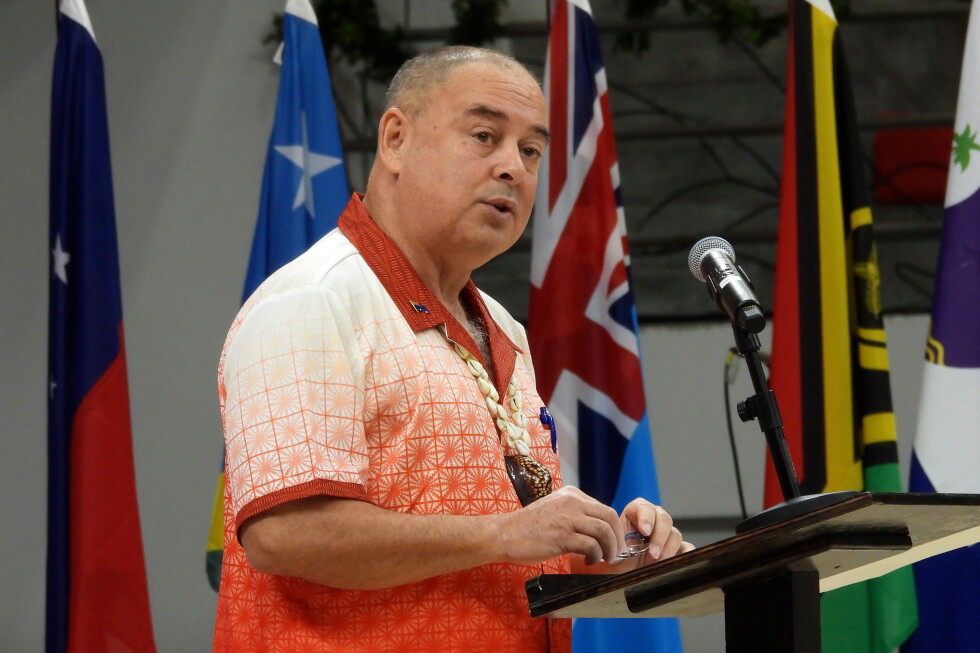
WELLINGTON, New Zealand – Incumbent Cook Islands Prime Minister Mark Brown is on track to secure a second consecutive term leading the South Pacific archipelago, after his long-governing Cook Islands Party claimed a commanding lead in this week’s general election.
The 15-island nation, home to roughly 17,000 eligible voters, elects 24 members to its national parliament. One seat on the remote island of Nassau remains unresolved after severe weather delayed electoral officials’ access to the polling site, with final results for the constituency expected late Friday local New Zealand time. Even with the outstanding result, Brown’s nationalist Cook Islands Party – which has held national power since 2010 – has already secured 12 seats, just one short of the 13-seat majority needed to form a full government. The party has a history of governing successfully with support from independent lawmakers, putting the outcome beyond doubt and triggering early victory celebrations among Brown’s supporters.
In a public post on Facebook following the preliminary count, Brown expressed gratitude to constituents: “Today my heart is full of gratitude. Thank you to everyone who came out and voted, for taking part and making your voice heard. This is what makes our country strong.” The incumbent Cook Islands Party candidate for the outstanding Nassau seat is currently in a tight race with an independent challenger.
Heading into Wednesday’s ballot, voter surveys and local reporting identified rampant inflation and soaring cost of living as the top issues driving voter decision-making. Like many small, remote South Pacific nations, the Cook Islands relies almost entirely on imported goods – including diesel for national power generation – and global market volatility tied to ongoing regional conflicts has amplified widespread economic anxiety across the country.
Brown’s opposition had hoped that public frustration over rising prices for basic goods, public utilities, and transport would produce a much tighter election race. But preliminary official results show the main challenger, the Cook Islands United Party – which split from Brown’s party in 2018 – only gained one seat, rising from three seats in the 2022 parliament to just four this cycle. The center-left Democratic Party, which previously held five seats as the largest opposition bloc, was swept out of parliament entirely in a major election upset. Party leader Tina Pupuke-Browne lost her own seat by just three votes, ending her eight-year tenure in national office.
The 63-year-old Brown, who entered parliament in 2010 after a career in public service and property development, won his own Takuvaine constituency seat by a large, comfortable margin. Analysts say the election outcome also signals that Brown’s high-profile 2025 dispute with New Zealand – the Cook Islands’ closest international partner and largest development funder – had little to no negative impact on his electoral support.
The Cook Islands is a self-governing state in free association with New Zealand, a 60-year arrangement that gives Cook Islands citizens New Zealand passports and relies on New Zealand’s military for national defense. Under the terms of this relationship, Cook Islands leaders are expected to consult Wellington before entering into international agreements that could impact New Zealand’s strategic interests.
That agreement was tested in February 2025, when Brown signed a series of bilateral cooperation deals with Beijing without prior consultation with New Zealand. Brown defended his decision to move forward without consultation, but the disagreement escalated, leading Wellington to freeze millions of dollars in development aid to the Cook Islands last June, citing unaddressed security concerns over the scope and content of the China agreements.
Tensions between the two governments eased earlier this year, when they signed a revised defense pact that clarified their bilateral relationship and formally committed that New Zealand would remain the Cook Islands’ “partner of choice regarding defense and security matters” – a concession that addressed Wellington’s core concern of China gaining strategic influence in the Pacific.
For decades, China has competed with Western powers to build diplomatic and economic influence across the Pacific Islands, a region of small, aid-dependent nations spread across a strategically critical and resource-rich stretch of ocean. When the dispute with New Zealand broke out last year, Pupuke-Browne and other Cook Islands opposition leaders led public protests against Brown’s China deals, arguing he was putting at risk the long-standing close ties with New Zealand that are critical to the Cook Islands, where thousands of citizens live, work, and study.
But the resumption of New Zealand aid earlier this year appears to have defused public discontent over the issue, clearing the way for Brown’s strong election showing. Beyond foreign policy, Brown has also been a leading proponent of developing a deep-sea mining industry in the Cook Islands’ extensive exclusive economic zone, which is believed to hold vast mineral reserves. The policy has split political leaders across the Pacific, with environmental activists and critics warning that deep-sea mining could cause irreversible damage to fragile open-ocean ecosystems.