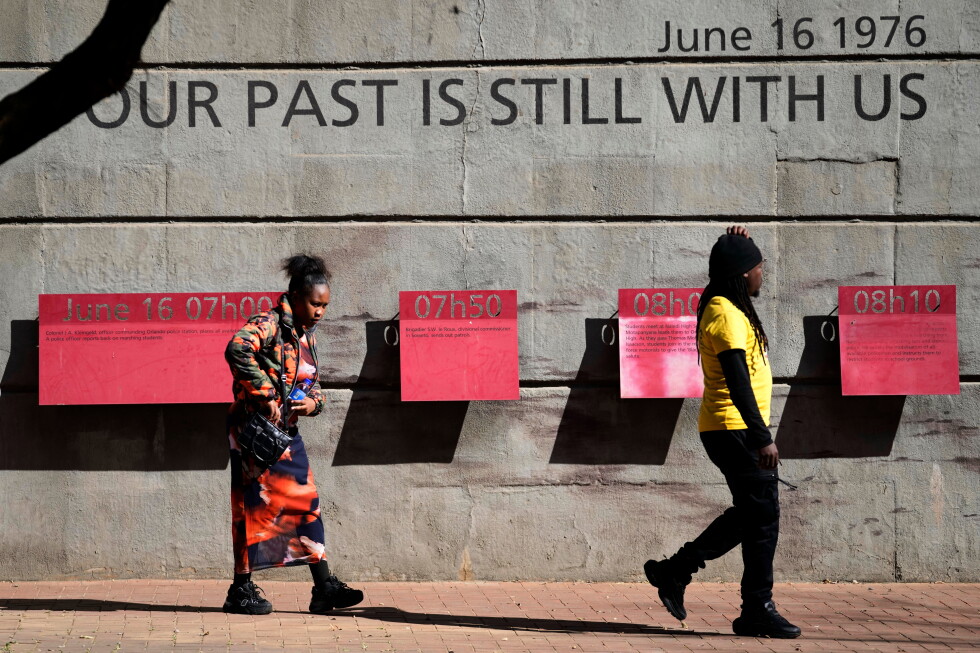
JOHANNESBURG — June 16, 2026 marks 50 years since one of the most pivotal moments in South Africa’s fight against apartheid: the Soweto Uprising, a student-led protest that redefined the trajectory of the nation’s liberation movement against white minority rule. On that fateful day in 1976, hundreds of young demonstrators took to the streets of Soweto to oppose the discriminatory apartheid education system, only to be met with deadly force from state police; official records estimate more than 200 young people were killed in the violence, a massacre that shocked the world.
Today, June 16 is nationally honored as Youth Day, a permanent tribute to the lives lost and the courage of the students who led the uprising. Historians widely recognize the 1976 protest as a critical turning point in the anti-apartheid struggle. What began as a local demonstration quickly sparked mass uprisings across every region of South Africa, galvanizing widespread public resistance to apartheid and forcing the international community to confront the brutal realities of state-enforced racial oppression against Black South Africans.
Half a century later, as the nation gathers to honor the uprising’s legacy, lingering and new challenges facing South Africa’s youth remain a source of deep concern. For survivors, activists, and young people born after the end of apartheid in 1994, the promises of liberation have yet to be fully realized for the country’s younger generation. Systemic racial inequality, crippling youth unemployment, widespread intergenerational poverty, and growing social crises including drug and alcohol abuse continue to block opportunity for millions of young South Africans.
Soweto, South Africa’s oldest and most iconic township, remains dotted with permanent memorials to the 1976 uprising that draw thousands of local and international visitors each year. The most famous of these is the Hector Pieterson Memorial, named for a 13-year-old protester killed on June 16. A Pulitzer Prize-winning photograph of Pieterson’s lifeless body being carried by a fellow student became the global symbol of the uprising, printed on front pages across the world to expose apartheid’s brutality. Murals of protesting youth line the township’s streets, alongside the larger June 16 Memorial Acre that preserves the history of the day.
For survivors like Seth Mazibuko, who took part in the protest as a teen, these landmarks carry more than historical significance — they are painful, vivid reminders of the violence that shaped his life. Mazibuko, now an elder of the liberation movement, recalled the chaos of the day in a recent reflection: when police first fired tear gas to disperse the crowd of thousands of students, shifting winds blew the gas back toward officers, forcing them to release attack dogs on the demonstrators. “We used stones to chase the dogs back to them,” he remembered. Mazibuko was arrested shortly after the uprising, spending 18 months in pre-trial detention before being sentenced to seven years’ imprisonment on Robben Island, the same prison that held Nelson Mandela for nearly three decades, where he served his sentence alongside other anti-apartheid political prisoners.
For South Africa’s “born free” generation — young people born after the formal end of apartheid — the legacy of the uprising is mixed. Many express gratitude for the freedom won by the protesters of 1976, but share deep frustration at the unaddressed crises that shape their daily lives. Nineteen-year-old Sima Poto, who visited the June 16 Memorial to mark the 50th anniversary, pointed to systemic poverty as the root of modern youth struggles. “I would say the issues of poverty and crime are the most pressing ones,” she said. “It is poverty that is leading many of them into crime.” Zola Mguli, 29, who works with the Southern African Alcohol Policy Alliance on campaigns to reduce substance abuse, acknowledged the progress South Africa has made while calling on young people to continue the fight for equality. “I am grateful to belong to a generation that has grown up in freedom, even as significant challenges remain,” Mguli said. “Things are not going as well as our forefathers hoped, there is still racism, alcoholism and other things we are battling with. But if we, the youth, rise up, we can do better.”
Leading South African historian Noor Nieftagodien, who has extensively studied the Soweto Uprising, echoed the urgency of retaining the movement’s original political meaning 50 years on. He described the 1976 student movement as both a traumatic and transformative moment that placed young people at the center of the anti-apartheid struggle, reshaping liberation politics permanently. “This was a generation that was young, gifted, and Black,” Nieftagodien said. “They wanted equal education. The idea of Black power resonated with this new generation of young people. Black consciousness was kind of electrifying; it inspired university students and then increasingly also students in high schools.”
Nieftagodien raised a key critique of how the day is commemorated today: after apartheid ended, the national government declared June 16 a public holiday, but over time, the political meaning of the uprising has been watered down by apolitical celebratory events. “It has lost its meaning,” he argued. “What has happened is that we’ve had the day marked with concerts, etc. I’m all for concerts. But, in fact, in so doing, the kind of celebrations that have been organized have been disinvested from politics, from a critical understanding of what happened.”