标签: Africa

非洲

  • Djibouti president Guelleh claims landslide election win

    Djibouti president Guelleh claims landslide election win

    One day after polling stations closed across the tiny Horn of Africa nation of Djibouti, sitting President Ismael Omar Guelleh has announced a landslide win in the country’s 2026 presidential election, positioning him to begin a sixth consecutive term in office.

    The 78-year-old leader, who first rose to the nation’s top executive post in 1999, made the victory declaration public via a short post on his official X account on Saturday, April 11. The post simply read “Re-elected,” matching early official returns that show Guelleh securing more than 97% of the popular vote. In total, more than 256,000 registered voters were eligible to cast ballots across the country on April 10, when voting got underway at polling centers including the City Hall station in Djibouti City’s Ras-Dika district, where Guelleh cast his own ballot.

    Guelleh ran against just one opponent in the race: Mohamed Farah Samatar, a one-time member of Djibouti’s ruling party. The incumbent candidate’s ability to appear on the ballot came after a significant change to the nation’s constitution last year. Previously, Djibouti’s constitution barred candidates over the age of 75 from running for the presidency, which would have disqualified Guelleh from seeking a sixth term. A constitutional amendment approved in 2025 removed the age limit, clearing the path for Guelleh’s 2026 campaign.

  • Nearly 400 sentenced in Nigeria for links to militant Islamists

    Nearly 400 sentenced in Nigeria for links to militant Islamists

    More than a decade of brutal Islamist insurgency in northeastern Nigeria has pushed the country’s government to take landmark judicial action, convicting nearly 400 suspects on charges tied to banned extremist organizations in mass trials that wrapped up in Abuja this week.

    Of the 505 suspects arraigned at the Federal High Court in Nigeria’s capital, 386 were found guilty of ties to either Boko Haram or its splinter faction, the Islamic State West Africa Province (ISWAP), officials confirmed Friday. Sentences for the convicts run from a five-year prison term to life behind bars, reflecting the varying severity of the charges ranging from direct participation in militant attacks to facilitating extremist activities through funding, weapons smuggling, logistical support, or sharing intelligence. Two defendants were acquitted, eight were released without conviction, and proceedings for 112 additional suspects were adjourned to a later date. Early in the judicial process, five defendants entered guilty pleas, admitting they had supplied food, livestock and insider information to the militant networks.

    The mass convictions come as Nigeria’s federal government faces mounting public and international pressure to rein in a sprawling security crisis that has destabilized large swathes of the country. Africa’s most populous nation is currently confronting overlapping threats from multiple armed factions: alongside the long-running Islamist insurgency in the northeast, security forces are also battling separatist movements in the southeast and rampant kidnapping-for-ransom gangs that operate across many northern and central states.

    The Boko Haram insurgency, which first erupted in 2009, has left a devastating humanitarian toll in its wake. Aid organizations estimate the conflict has killed tens of thousands of people and forced more than 2 million residents to flee their homes, creating one of the world’s largest displaced populations.

    The deteriorating security landscape has prompted international warnings in recent days. On Wednesday, the U.S. State Department updated its travel advisory, urging American citizens to reconsider all trips to Nigeria due to heightened risks of violence, crime and kidnapping. This is not the first time Washington has taken direct action in response to militant activity in the region: on Christmas Day during the Trump administration, U.S. forces carried out an airstrike in northern Sokoto State targeting the lesser-known militant group Lakurawa. The strike followed then-President Trump’s public claim that Christians were being specifically targeted for persecution in Nigeria—a claim Nigerian officials rejected at the time, noting that people of all religious faiths, and those with no religious affiliation, have fallen victim to the country’s ongoing violence.

    As security conditions continue to fluctuate across the Sahel region, Nigeria’s judicial crackdown on militant suspects marks a major step by the government to demonstrate progress in its fight against extremism, even as insurgent attacks and intercommunal violence remain persistent threats across much of the north.

  • Djibouti’s president wins unprecedented sixth term with 97.8% of vote

    Djibouti’s president wins unprecedented sixth term with 97.8% of vote

    In a decisive landslide victory that cements nearly three decades of rule for the Horn of Africa nation, Djibouti’s incumbent President Ismail Omar Guelleh has won a sixth five-year term in office, preliminary official results from the country’s recent presidential election confirm. The 78-year-old leader secured a staggering 97.8% of the popular vote, with his only opponent, small-party candidate Mohamed Farah Samatar, taking just 2.19% of ballots cast.

    The result was widely anticipated after most of Djibouti’s major opposition coalitions announced a boycott of the poll, repeating longstanding claims that the country does not permit free and open political competition. Leading opposition figures including Dahir Ahmed Farah have boycotted every presidential election since 2016, a pattern that held for this 2025 contest.
    Samatar, who ran as the candidate of an unrepresented small opposition faction with no seats in Djibouti’s national parliament, has not issued any public response to the preliminary results as of the latest updates.

    Guelleh’s ability to run for another term came after a controversial constitutional amendment passed last November. The amendment removed a 75-year age cap for presidential candidates that would have disqualified him from running; the age limit was itself introduced in 2010, when Djibouti’s parliament already scrapped the previous two-term limit for the presidency and shortened presidential terms from six to five years to accommodate Guelleh’s extended tenure. The incumbent had previously publicly pledged to step down ahead of this election cycle, reversing that promise after the constitutional change was approved.

    Located on the strategic Bab el-Mandeb Strait, a critical chokepoint connecting the Red Sea to the Gulf of Aden and serving as the primary maritime gateway to the Suez Canal — one of the world’s busiest and most economically vital shipping lanes — Djibouti holds unique geostrategic importance. It hosts military bases for five major global powers: the United States, China, France, Italy, and Japan, making it a key hub for regional security and counter-terrorism operations.

    During his election campaign, Guelleh centered his platform on his track record of maintaining political stability in Djibouti, a rare constant in a region marked by ongoing armed conflict and political upheaval across neighboring states and nearby Middle Eastern nations. The 78-year-old leader is only the second president Djibouti has had since it gained full independence from France in 1977, and he has already held the presidency for 27 years. He won the 2021 election by a similarly overwhelming margin.

    Election officials reported that more than 80% of registered voters turned out to cast ballots in Friday’s vote. While the interior ministry has released the preliminary results, the outcome still requires formal validation by the Constitutional Council’s judiciary before Guelleh can be sworn in for his new five-year term. Celebrating his projected victory at his private residence, Guelleh framed the win as a success for the entire Djiboutian nation.

  • Djibouti President Ismaïl Omar Guelleh is reelected for a sixth term

    Djibouti President Ismaïl Omar Guelleh is reelected for a sixth term

    In the Horn of Africa nation of Djibouti, long-sitting head of state Ismaïl Omar Guelleh has secured another five-year mandate, winning a sixth presidential term with a dominant share of the vote according to official election results released after Friday’s ballot. The 78-year-old incumbent captured 97.81% of the total votes cast, capping off a political career that has already spanned more than 20 years at the country’s helm.

    Guelleh’s path to another term was cleared last year, when Djibouti’s legislative body voted to eliminate presidential age limits, a change that removed the last barrier to his reelection candidacy. The race itself saw only one challenger, Mohamed Farah Samatar, a one-time member of Guelleh’s own ruling party. Political analysts broadly agree that the contest offered voters no meaningful or competitive alternative to the incumbent, a reality that fits a broader pattern of Djibouti’s politics. Major opposition groups have repeatedly boycotted national elections in recent years, pointing to systematic restrictions on political speech and organizing that level the playing field heavily in favor of the ruling establishment.

    Election officials confirmed that voting across the country proceeded peacefully, with no major reports of unrest or disruption. On Saturday, crowds of Guelleh supporters gathered outside the presidential palace in the capital Mogadishu to celebrate the outcome, sharing congratulations and marking the victory.

    Guelleh first rose to the presidency in 1999, taking over from his uncle Hassan Gouled Aptidon, the country’s first post-independence leader. This handover cemented a family-led political system that has guided Djibouti’s trajectory for its entire modern history. Beyond its domestic politics, Djibouti occupies an outsize role in global geopolitics thanks to its strategic location along the critical shipping corridor connecting the Red Sea to the Gulf of Aden. The tiny nation, which counts just over 1 million residents, currently hosts multiple foreign military bases, operated by major global powers including the United States, China, France and Japan. Revenue from these base agreements, combined with income from port services provided to landlocked neighboring Ethiopia, forms the backbone of Djibouti’s small but strategically important economy.

  • Female rickshaw drivers in Sierra Leone rise above stigma to earn a living and empower women

    Female rickshaw drivers in Sierra Leone rise above stigma to earn a living and empower women

    On a late afternoon in Freetown, Sierra Leone’s bustling capital, 27-year-old single mother Hawa Mansaray pulls her motorized three-wheeled auto-rickshaw—locally called a kekeh—into the main transit park, stepping away for a short break and a moment of prayer. Mansaray is part of a small but steadily growing cohort of women entering a sector long dominated exclusively by men: Sierra Leone’s commercial transport industry.

    Decades after Sierra Leone’s devastating 1991–2002 civil war, the West African nation continues to grapple with rebuilding core infrastructure, and its public transport system has been stretched to breaking point. Freetown’s current population has swelled to more than 1.5 million, roughly three times the size the city’s original infrastructure was designed to accommodate. This gap has created surging demand for flexible, accessible private transport options, pushing motorcycles and kekehs to the forefront of urban mobility. Even though these rickshaws are often rickety, operate at low speeds, and carry higher safety risks due to their open-air design, commuters favor them for their widespread availability, ample ventilation, and comparative comfort for short trips across the city.

    For many women in Sierra Leone, this growing demand has opened an unexpected path out of systemic economic disenfranchisement. The country ranks among the lowest in Africa for access to formal financial services, leaving women and rural communities particularly vulnerable to economic shocks. Deeply entrenched patriarchal norms have long confined most women to low-stability petty trading that keeps them financially dependent on male partners, where income control translates to full decision-making power for men, according to women’s rights advocates.

    Marfoh Mariama Samai, a women’s rights advocate with Plan International Sierra Leone, explains that deep-seated cultural biases still frame women as unfit for many types of manual or commercial work. “When a young woman ventures into a certain type of job, they are stigmatized,” she says. But for women who have broken into the kekeh driving trade, the stigma has been outweighed by the promise of stable, independent income.

    Mansaray knows firsthand the costs of financial dependence. Born in Kailahun District at the height of the civil war, she was forced to drop out of primary school amid the conflict. After separating from her husband, she cycled through a series of small informal businesses to support herself and her child, none of which provided the stability kekeh driving has. She initially never planned to become a driver, but after seeing other women succeed in the trade, she paid for training and earned her spot behind the wheel. Today, she works for a local company that requires a 350 leone ($14 USD) daily return, leaving her with an average daily wage of 175 leones ($7 USD)—enough to support her family and well above the typical income for most working people in the country. “I have done different jobs since I came to Freetown but kekeh has done more for me,” Mansaray says. “I will advise my fellow women who aren’t employed to come into the game.”

    Alimatu Kamara, another female kekeh driver, shares Mansaray’s experience. Unemployed for years before entering the sector, she says the work has been life-changing, though challenges remain: most female drivers report frequent harassment from aggressive male colleagues, and many express ongoing safety concerns about working night shifts. “Some women can panic,” Kamara notes. “It takes mind and determination to continue.” Even so, she is already planning to expand her business by purchasing additional kekehs. “We can’t just sit, waiting for office jobs. With jobs like kekeh, you can even make more money,” she says.

    Union leaders in Freetown say while the number of women in the sector is still small, the growth is promising. The Sierra Leone Kekeh Riders Union counts more than 1,000 registered members in western Freetown, and only around 20 are women—but that number is steadily climbing. District chairman Mustapha Thoronka is a vocal supporter of expanding access for women, backing training programs and advocating for microloans to help cover the upfront cost of vehicles, which remains a major barrier for women with limited access to capital. “Whatever men can do, women can do better,” Thoronka says, adding that he hopes the sector will help more women support themselves and their families without relying on male income. He is now urging the Sierra Leonean government to step in with targeted support to make it easier for more women to enter the trade, noting the high upfront capital required puts it out of reach for many.

    Many commuters also favor female drivers, saying they bring a more careful approach to navigating Freetown’s crowded streets. Mariama Barrie, a regular commuter, says the growing presence of women in the sector sends a powerful message to women who rely on outside support. For Barrie, it is a call to action: “If you know how to ride, take kekeh … rather than sitting and waiting for handouts.” What began as a solution to Freetown’s broken public transport system has become a quiet movement, challenging gender norms and opening a new door to economic freedom for women in one of West Africa’s poorest nations.

  • The myrrh tree that’s key to luxury perfumes and African incomes is threatened by drought

    The myrrh tree that’s key to luxury perfumes and African incomes is threatened by drought

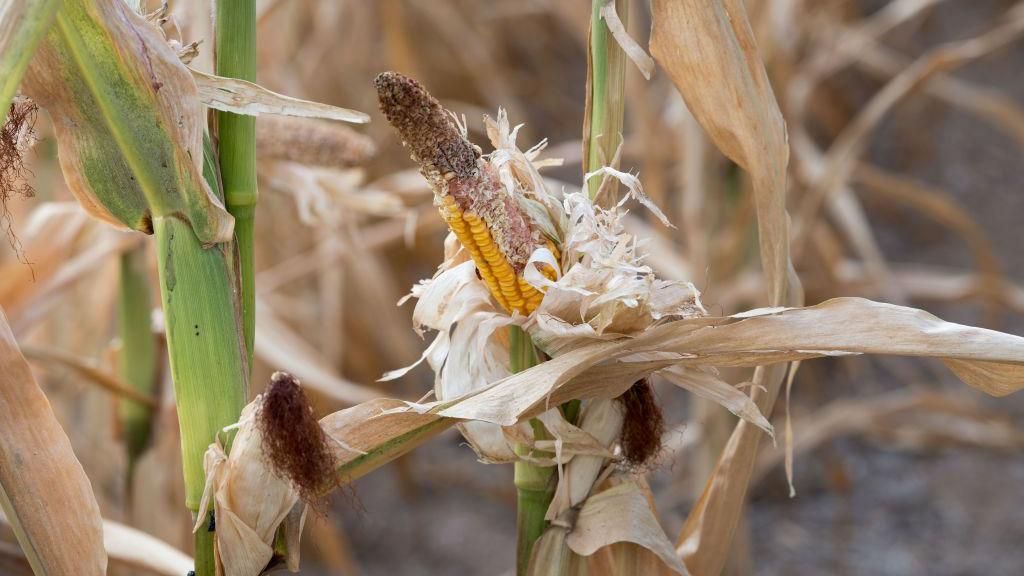
    In the parched, dust-choked lowlands of Ethiopia’s Somali region, a natural resource that has shaped global trade and culture for millennia is facing an unprecedented existential crisis. Myrrh, the aromatic tree resin that serves as a signature base note in hundreds of high-end perfumes from luxury brands including Tom Ford, Comme des Garcons, and Jo Malone, is being pushed to the brink by a climate-fueled historic drought that has ravaged the Horn of Africa for years. Once stretching across dense, sprawling forests across the region, the native Commiphora myrrha trees that produce the resin are now dying off, starved of water and grazed by desperate, hungry livestock struggling to survive in the arid landscape.

    This 2026 on-site research expedition, backed by the American Herbal Products Association and led by supply chain sustainability experts from the University of Vermont and ethical botanical supplier FairSource Botanicals, set out to address two overlapping crises threatening the myrrh trade: the ecological collapse of myrrh forests and the systemic exploitation of local harvesters by exploitative middlemen. For generations, myrrh harvesters in eastern Ethiopia have practiced traditional, low-impact harvesting methods that prioritize long-term forest health: rather than cutting intentional wounds into tree bark to force more resin production—a practice that weakens trees and makes them more vulnerable to pests and disease—local communities collect resin that naturally oozes from existing small wounds on tree trunks. This centuries-old technique produces the highest-quality resin on the global market, but leaves harvesters with just a tiny fraction of the profits generated by the luxury goods myrrh goes into.

    A kilogram of raw myrrh resin earned harvesters between just $3.50 and $10 in 2026, a tiny fraction of the $500 price tag carried by some luxury perfumes that rely on the resin’s distinct earthy fragrance. Currently, most myrrh produced in eastern Ethiopia is sold unregulated to traders from neighboring Somalia, with the Ethiopian government collecting no taxes on the commodity, and harvesters cut off from direct access to global markets that would let them negotiate fairer prices. The research team aims to change that by building transparency into the supply chain, connecting harvesters directly to global buyers to ensure a larger share of profits flow back to the communities that produce the resin.

    Beyond supply chain inequity, the far more urgent threat is the ongoing historic drought, amplified by human-caused climate change. The region’s annual seasonal rains have failed consistently for years, following a devastating extreme flood event in 2023 that devastated crops and grazing land. Today, once-full lakes outside towns like Afcadde sit completely dry, and herders travel as much as 200 kilometers across cracked, parched earth to access the few working wells that still hold water in villages like Sanqotor. Water gathering consumes entire days for local children, who drive donkey carts to deep wells dug into the dry beds of former lakes.

    The drought has hit myrrh populations hard. While mature trees are still largely standing, resin production has dropped sharply as trees conserve what little water they can access. More alarmingly, very few young myrrh seedlings are surviving the harsh conditions. Starving livestock graze on young tree buds, and children pulling goats and sheep through the forest often accidentally uproot small seedlings. Local elder Mohamed Osman Miyir explained that the entire myrrh tree population is declining at an alarming rate, leaving communities deeply worried about the future of a resource that has sustained them for generations. For the poorest residents of the region, who own no livestock and rely entirely on myrrh harvesting for their livelihoods, the collapse of the industry would be catastrophic.

    Myrrh has occupied a central place in global culture, medicine, and trade dating back to ancient Egypt, where it was used in burial rituals, cosmetics, and medicine. Today, growing global interest in natural remedies has sparked new demand for the resin, alongside its steady use in high-end perfumery and traditional local practices—from making ink for Quranic wooden tablets to burning in homes to repel bugs and snakes. Local researchers and harvesters hope that greater global visibility into the challenges facing their industry, paired with the push for direct, fair trade, will help them protect both the myrrh forests and their own traditional way of life. As senior researcher Abdinasir Abdikadir Aweys of the Somali Regional Pastoral and Agro-Pastoral Research Institute noted, local communities are counting on direct market access to deliver stable, sustainable livelihoods that let them continue protecting the forests that the rest of the world depends on for luxury fragrance and natural products.

  • Longtime AP reporter and editor Bill Mann dies at 83

    Longtime AP reporter and editor Bill Mann dies at 83

    RESTON, Va. – Bill Mann, a journalist whose nearly 50-year career with The Associated Press took him across six continents to cover some of the world’s most high-profile and turbulent beats, passed away Thursday at a memory care facility in Reston, Virginia. He was 83 years old.

    A native of Georgia and graduate of the University of Georgia’s journalism program, where he met his wife Mimi of more than 60 years, Mann’s path to global reporting began with military service. After graduating college, he attended officer candidate school, commissioned as a U.S. Navy officer, and served four years of active duty at a Philippine base and the Pentagon. Following his discharge from the Navy, he launched his AP career in 1960 at the agency’s Louisville, Kentucky bureau, later moving to the New York headquarters and other domestic postings before accepting a 10-year appointment as AP’s Cairo bureau chief.

    Over his decades-long tenure, Mann built a reputation for sharp, meticulous reporting from some of the world’s most volatile regions, including the Philippines under authoritarian President Ferdinand Marcos, post-colonial India, Scandinavia, Washington D.C., and the Middle East. Even as a veteran correspondent who had covered conflict and crisis for decades, an early 1990s reporting trip to famine- and war-ravaged Somalia left such a deep emotional mark that Mann never spoke publicly about what he witnessed during the assignment, his daughter Samantha Rudolph recalled.

    Among the hundreds of prominent figures Mann interviewed over his career – including dozens of heads of state and global leaders – he often cited his 1960s encounter with a young Cassius Clay, the amateur boxer who would go on to become global heavyweight champion Muhammad Ali, as his absolute favorite and most memorable conversation. Outside of journalism and his family, Mann’s greatest passion was his alma mater’s athletics program; he was a lifelong, diehard fan of the Georgia Bulldogs, according to his family.

    Mann was diagnosed with Alzheimer’s disease in 2010, and ultimately died from an unspecified virus while receiving care at the memory care facility, his wife confirmed. Even as his condition progressed, he never lost his lifelong love for the craft of journalism, Mimi Mann said.

    Colleagues and loved ones remembered Mann as a consummate newsroom professional whose commitment to precision and detail made his work a benchmark for AP reporting, while his gentle, generous nature set him apart as a mentor and leader. “Billy Mann was a wonderful representative for The Associated Press in global hot spots from the Philippines under President Ferdinand Marcos to the turbulent Middle East,” said Edith M. Lederer, longtime AP United Nations bureau chief. “He was well-liked for his warm personality and admired for his deft reporting.”

    Former AP editor Ken Guggenheim echoed that sentiment, noting that Mann’s legacy extended beyond his reporting to the example he set for younger journalists. “Billy was just the consummate AP man. He was just a stickler for details, determined that the grammar was right, the style was right and that the story would be perfect when it would hit the wire,” Guggenheim said. “Everyone loved Billy. He was someone who showed you could be a great journalist and a great person at the same time.”

    Mann is survived by his wife of 61 years, Mimi, his daughter Samantha, his son, and four grandchildren.

  • Nigerian court convicts more than 300 in mass terrorism trial

    Nigerian court convicts more than 300 in mass terrorism trial

    ABUJA, Nigeria – In a landmark legal action aimed at cracking down on rising violent extremism across the country, a Nigerian court based in the capital Abuja has convicted 386 terrorism suspects following a high-stakes mass trial that concluded Friday after four days of proceedings.

    The mass hearing launched Tuesday, with a large share of the defendants entering guilty pleas to charges filed by federal prosecutors. All convicts were processed by a special panel of 10 judges, with the harshest sentences handed down reaching 20 years of prison time.

    Speaking to reporters immediately after the ruling, Nigeria’s Attorney General outlined the scope of the outcome: out of 508 total terrorism-related cases brought before the panel, the prosecution secured convictions for 386 defendants. “This result delivers long-awaited accountability, and it sends an unambiguous message that we will not tolerate terrorist activity on our soil,” the attorney general told the press.

    The high-profile conviction comes as Nigeria grapples with a protracted, multifaceted security crisis concentrated primarily in its northern regions, where a 13-year insurgency led by radical armed groups has devastated local communities and fueled widespread instability. The northeastern insurgency, first launched in the early 2010s, remains the deadliest center of violence, led by two prominent factions: the original Boko Haram militant network, and its breakaway offshoot, the Islamic State West Africa Province, which aligns ideologically and operationally with the global Islamic State extremist movement.

    Violent extremism has also spread beyond the northeast in recent years. In northwestern Nigeria, bordering the Niger Republic, the IS-affiliated Lakurawa militant group has launched repeated attacks on civilian and government targets. Tensions between pastoral and agricultural communities also remain a persistent flashpoint: recurring disputes over access to land and grazing rights between predominantly Muslim Fulani herders and mostly Christian farming populations often escalate into deadly, large-scale clashes across north-central and northwestern states. Organized criminal gangs specializing in kidnapping for ransom also operate with impunity across much of northern Nigeria, driving further insecurity.

    The United Nations estimates that more than a decade of insurgency in northeastern Nigeria alone has left tens of thousands dead and displaced millions more from their homes, creating one of the world’s worst humanitarian crises that continues to evolve as violence spreads to new regions. Nigerian officials say the mass conviction is a key step in demonstrating the government’s commitment to restoring stability and holding perpetrators of violence accountable.

  • Iran war dampens Easter season for millions in Ethiopia as gas and food prices rise

    Iran war dampens Easter season for millions in Ethiopia as gas and food prices rise

    ADDIS ABABA, Ethiopia – As millions of Ethiopian Orthodox Christian worshippers gathered across the capital to mark Good Friday this week, the quiet solemnity of the annual religious observance gave way to growing economic uncertainty, with cascading global disruptions from conflict in the Middle East triggering crippling fuel scarcity and soaring food prices that have dampened holiday preparations across the country.

    Unlike the majority of Christian communities worldwide, who celebrated Easter on April 5, Ethiopian Orthodox Christians follow a unique ancient calendar that places their Easter observance on the coming Sunday. Good Friday marks the end of Abiy Tsom, a rigorous 55-day period of communal fasting and prayer that culminates in a peaceful vigil, where worshippers don traditional white woven garments to gather, seek forgiveness from one another, and prepare for the joy of Easter. This year, however, economic strain has disrupted decades-old communal holiday traditions.

    The most visible disruption has hit the traditional practice of slaughtering animals for shared Easter feasts, a central part of the holiday’s communal celebration. Multiple residents in Addis Ababa report that prices for sacramental animals have nearly doubled in the lead-up to this year’s observance. Livestock sellers explain the steep price hike stems directly from spiking transportation costs, as fuel shortages have made moving cattle, sheep and poultry from rural grazing areas to urban markets far more expensive than in previous years.

    Samuel Teshome, an Addis Ababa resident, told reporters his family can no longer afford to purchase a sheep for their holiday feast, a tradition his household has kept for generations. Another local resident, Sirawdink Admaus, added that even the cost of a small rooster – a more affordable alternative for many working families – has also nearly doubled, putting even modest holiday meals out of reach for thousands.

    Worshippers and workers alike are also grappling with a widespread national fuel shortage. Fuel stations across Addis Ababa and surrounding regions sit nearly empty, with only a handful able to keep limited supplies in stock. Desperate business operators have turned to unregulated black market suppliers, where fuel costs are marked up far beyond official government prices, worsening the economic strain on households and industries.

    For public transport workers like minibus driver Tefera Aragaw, the fuel crisis has gutted his livelihood in the lead-up to the holiday. Aragaw told reporters he and other drivers have waited three straight days and nights at local fuel stations, with no guarantee they will be able to purchase any fuel at all. The lost work days have already erased critical income, leaving him expecting a quiet, muted celebration with his family.

    In response to the worsening crisis, Ethiopia’s federal government has implemented emergency cost-cutting measures to stretch limited fuel supplies. Most non-essential public servants have been permitted to work from home to cut down on commuting-related fuel use, and authorities have moved to prioritize fuel allocations for critical emergency and essential services, including healthcare and public safety.

    The ongoing economic strain in Ethiopia comes as global commodity markets continue to roil in the wake of escalating conflict between Iran and Israel, with supply chain disruptions driving up energy and food costs across much of the developing world.

  • Prince Harry sued for defamation by charity Sentebale he co-founded

    Prince Harry sued for defamation by charity Sentebale he co-founded

    Court records have revealed a stunning development in the long-running rift at Sentebale, the African youth-focused charity once co-chaired by Britain’s Prince Harry, Duke of Sussex: the organization itself has launched a defamation suit against the royal and a former fellow trustee.

    The case, which was formally filed with UK courts on March 24, names Prince Harry and Mark Dyer, another ex-trustee of the organization, as defendants, with the legal claim categorized as covering defamation through both libel and slander. No additional supporting court documents have been made public as of yet, and neither representatives for Prince Harry nor Sentebale’s current leadership have issued any further comment clarifying the specific details behind the legal action.

    The conflict that led to this lawsuit stretches back months, rooted in a bitter power struggle over the charity’s strategic and operational management. Prince Harry exited Sentebale alongside his co-founder, Prince Seeiso of Lesotho, and a group of aligned trustees in March 2025, following heated disagreements with Sophie Chandauka, the charity’s sitting chair. The acrimony of the split played out largely in public view, prompting a formal regulatory probe by the UK Charity Commission.

    That investigation ultimately concluded that fault for the breakdown lay with all parties involved. The regulator also issued sharp criticism over the decision to air internal disputes openly, noting that the public conflict had caused measurable harm to Sentebale’s mission and reputation.

    Founded in 2006 by Prince Harry and Prince Seeiso, Sentebale operates across Lesotho and Botswana, with a core mission to advance the health, mental wellbeing, and life outcomes for vulnerable young people across southern Africa, particularly those living with HIV and AIDS. The organization has drawn high-profile royal and celebrity support for nearly two decades, making this internal split and subsequent lawsuit an extraordinary turn of events for a charity focused on impactful on-the-ground development work.