标签: Africa

非洲

  • Ethiopian Orthodox Christians in Washington mark Easter with prayer, joyful family celebrations

    Ethiopian Orthodox Christians in Washington mark Easter with prayer, joyful family celebrations

    Against the backdrop of a year marked by lingering uncertainty for thousands of Ethiopian immigrants across the United States, hundreds of Ethiopian Orthodox Christian community members gathered at DSK Mariam Church in Washington, D.C. Clad entirely in crisp white garments, the faithful packed the sacred space to mark Fasika, their community’s most cherished celebration of Christ’s resurrection, which falls one week after Easter observed by Catholic and Protestant denominations.

    For the Ethiopian Orthodox Tewahedo Church, one of Christianity’s oldest continuous branches, Fasika sits as the crown jewel of the liturgical calendar. In the weeks leading up to the holy day, believers complete a rigorous 55-day fast, abstaining from all meat and animal products. Rituals build steadily through Holy Week, reaching their peak in an overnight eight-hour vigil that concludes with the long-awaited breaking of the fast.

    This year’s celebration carried extra weight for the congregation. Just months prior, the Trump administration moved to revoke temporary protected status (TPS) for more than 5,000 Ethiopian immigrants across the country, a decision that would have put thousands of long-term U.S. residents at risk of deportation. The threat hung over the community until a federal judge issued a ruling blocking the administration’s order, granting a temporary reprieve to those affected.

    The D.C. metro area is home to the largest concentration of Ethiopian diaspora members in the United States, a community built over 50 years of successive waves of immigration that now includes first- and second-generation Ethiopian Americans. DSK Mariam, formally named Re’ese Adbarat Debre Selam Kidist Mariam Church, serves roughly 4,000 congregants every week, making it a central hub for cultural and spiritual life. This year, roughly 1,500 people packed the church for the overnight Easter vigil that concluded at 3 a.m. Sunday.

    Archdeacon Getahun Atlaw explained that the all-white dress worn by worshippers carries deep symbolic meaning: “We dress in white so that we are groomed for heaven.” For Atlaw, the diaspora community does not merely gather for worship — it brings long-held Ethiopian values of hard work, discipline and collective care to its new home: “We’re not here merely, we bring values.”

    The overnight vigil itself is rich with centuries-old symbolism. Leading the three-hour Divine Liturgy that ran from midnight to 3 a.m. — a timeline mirroring the three hours the Bible records Christ spent on the cross — priest Abraham Habte-Sellassie emphasized the centrality of the resurrection to the faith: “The climax is the resurrection because if there was no resurrection, there would be no Christianity. It would just be an empty philosophy.”

    Earlier in Holy Week, on Good Friday, priests draped in dark purple and gold vestments chanted pleas for divine mercy, and enacted a ritual where a flame is beaten out to symbolize the defeat of Satan. Throughout the service, clergy and congregants repeated prostrations, an act of reverence for Christ’s sacrifice. “The prostration is a passion to Christ’s love. What he has done for us, the sacrifice,” Atlaw explained. “We’re living Christ-like as much as we can.”

    At the moment of the resurrection vigil, all lights in the sanctuary are dimmed, and long, thin beeswax candles called tuaf are lit by the faithful. The glow of the candles represents the light of Christ breaking through the darkness of death, and when the candles are lit, the entire church erupts in united chant: “Your resurrection is for us who believe. Send your light upon us, send your light upon us.” For 21-year-old Deacon Amanuel Argaw, the joy of the moment overrides any physical fatigue from the long service: “The celebration is so joyful that you don’t even feel that you’re tired.”

    When the final prayer concluded, congregants streamed out into the pre-dawn streets, drawn by the rich aroma of doro wat — a beloved traditional Ethiopian spicy chicken stew — simmering for the post-fast feast. Small groups gathered on the sidewalk to share small bites to end their 55-day fast before heading home to rest, with larger family feasts planned later in the day.

    For the diaspora community, passing down these ancient traditions to younger generations born and raised in the U.S. is a core priority. “This history and value can go wherever Ethiopians go. This is our history. How can we take it lightly? … This is who we are,” Atlaw said. “We have to pass it from generation to generation.”

    In a suburban Virginia home that warm Sunday, extended families gathered around tables piled high with homemade doro wat, traditional honey wine called Tej, and freshly brewed Ethiopian coffee. For Selamawit Tekola, who has kept the faith her whole life, breaking the fast with family is non-negotiable: “I was born Orthodox and I respect it, I love it. So that means a lot for us. That’s what we are teaching our children.”

    Her niece Adey Thomas joked that when the community calls everyone to gather, there is no room to skip: “When Selama says, take off work and show up, it’s not optional. In the States, it’s very, you know, rush to go, go, go especially in the D.C. area. This is the one time to stop and celebrate with family.”

    Amid the feasting and prayer, young deacon Jonathan Melaku, whose generation is carrying the tradition forward, summed up the community’s enduring spirit in the face of past and present hardship: “It takes a grind and courage to get to where they’re at. Our people will always stay resilient.”

  • A trial in a tent draws crowds as Uganda debuts mobile court for man accused of killing 4 kids

    A trial in a tent draws crowds as Uganda debuts mobile court for man accused of killing 4 kids

    KAMPALA, Uganda – The long-awaited trial of a Ugandan man charged with the brutal murder of four young children opened Monday in an unconventional setting: a large canvas tent pitched just kilometers from the scene of the crime, marking the first live test of the East African nation’s new and divisive mobile court system. The public, on-site proceeding was ordered directly by President Yoweri Museveni to allow local community members to follow the high-profile case that shook the country earlier this year.

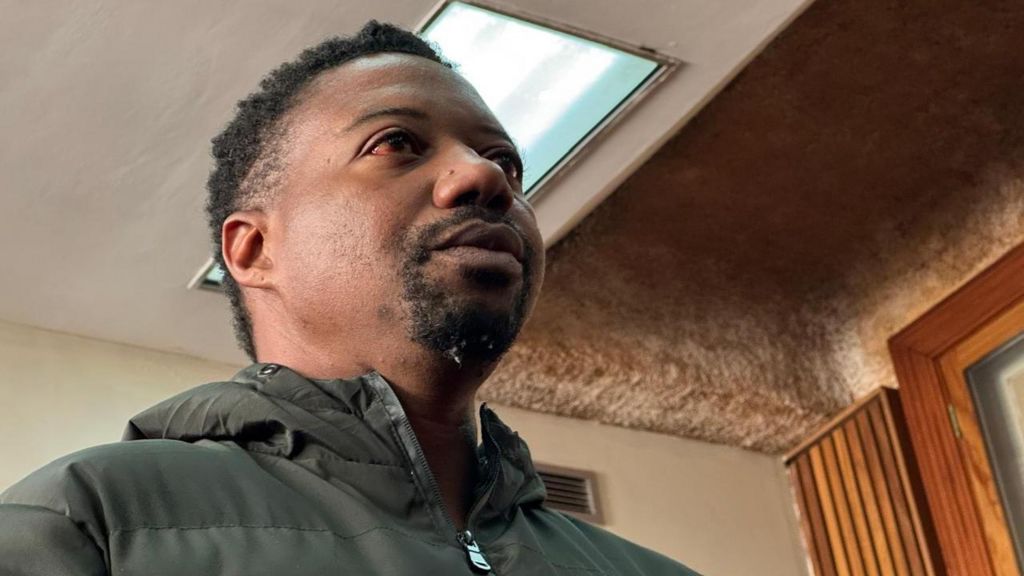
    The accused, Christopher Okello Onyum, stands accused of launching a machete attack on children at the Gaba Early Childhood Development Program, a neighborhood nursery school in Kampala’s Gaba suburb, on April 2. According to witness accounts, Onyum gained entry to the facility by posing as a parent, exchanged a short conversation with school administrators, then locked the school’s entrance gate before turning his weapon on the young students. The attack sent shockwaves across Uganda, and investigators have yet to establish a clear motive for the violence.

    When Onyum was detained immediately after the attack, an enraged local crowd attempted to seize and lynch him before police intervened to take him into custody safely. At the opening of trial Monday, Onyum entered a formal plea of not guilty on four counts of aggravated murder. If ultimately convicted, he could be sentenced to death.

    This trial marks the first operational use of Uganda’s mobile court framework, a policy that received formal approval via a government legal notice published in March. Designed to bring judicial proceedings closer to affected communities and allow public access to cases of widespread national interest, the system has sparked heated debate from its rollout. President Museveni’s directive to hold this specific trial in a public, local setting has drawn sharp criticism from legal groups, who argue the order amounts to inappropriate overreach by the executive branch that risks undermining the integrity of the trial.

    The Uganda Law Society, the country’s premier professional body for legal practitioners, issued a public statement condemning the directive, arguing it violates the accused’s constitutional right to a fair trial. In harsh terms, the organization called the proceeding “not justice” but “a judicial lynching rally,” warning that the public, high-pressure setting risks sensationalizing the tragedy inflicted on the victims’ families rather than delivering impartial justice.

    Despite the controversy, hundreds of local residents gathered at the trial site, a tent set up on the grounds of a nearby local church, to observe the opening proceedings. For its part, Uganda’s judiciary has pushed back against critics, defending the mobile court model as an innovative step to expand public access to justice. In a statement defending the decision to hold the trial, the judiciary said the proceeding reflects its ongoing “commitment to taking justice closer to the people through innovative approaches.”

  • Ghanaian footballer killed in armed attack on his team, Berekum Chelsea

    Ghanaian footballer killed in armed attack on his team, Berekum Chelsea

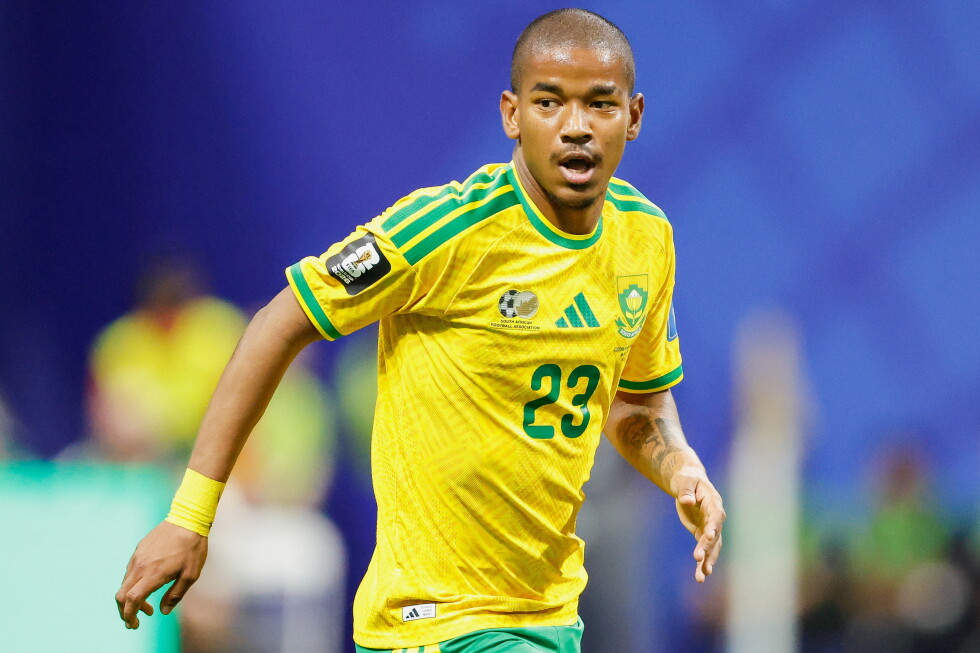
    A devastating tragedy has shaken Ghana’s football community after promising young striker Dominic Frimpong was killed in a suspected armed robbery targeting his club, Berekum Chelsea, the Ghana Football Association (GFA) has confirmed. The fatal attack unfolded as the team traveled back to their base following a scheduled Ghana Premier League fixture, when gunmen ambushed their convoy.

    In an official public statement released on Monday, the GFA shared its deep grief over the sudden loss of the 22-year-old player, extending its sincerest condolences to Frimpong’s immediate family, his affected Berekum Chelsea teammates, and the entire technical and administrative staff of the club. The football governing body emphasized that Frimpong stood out as one of the domestic league’s brightest emerging young prospects, whose relentless commitment to the sport and infectious love for the game embodied the core spirit that Ghanaian football prides itself on.

    The attack has sent shockwaves across national football circles, with fans and fellow players across the country paying tribute to the young talent cut down far before his professional potential could be fully realized. As of the GFA’s latest update, no further details on the identities of the attackers or potential arrests have been released to the public. This story is developing, and additional updates will be published as more information becomes available.

  • Pope making first papal visit to Algeria to launch Africa trip and honor locally born St. Augustine

    Pope making first papal visit to Algeria to launch Africa trip and honor locally born St. Augustine

    VATICAN CITY (Rewritten Report) — History is being made this week as Pope Leo XIV, the first American-born pontiff in Catholic history, touches down in Algeria on Monday for the first-ever papal visit to the North African nation. The two-day stop kicks off an ambitious 11-day, four-country tour across Africa — a region increasingly recognized as the dynamic growing heart of the global Catholic Church — that will also take him to Cameroon, Angola, and Equatorial Guinea.

    Upon arrival at Algiers’ international airport, Pope Leo was scheduled to be welcomed by Algerian President Abdelmadjid Tebboune, followed by an official meeting at the El Mouradia presidential palace. The first day of the itinerary includes an address to national authorities, a visit to Algiers’ iconic Great Mosque, an interfaith gathering at the landmark Our Lady of Africa basilica, and a solemn prayer vigil at a nearby monument honoring migrants who lost their lives in shipwrecks while attempting to cross the Mediterranean to Europe.

    The 19th-century Roman-Byzantine basilica, constructed during France’s colonial rule of Algeria, will host a unique interfaith gathering bringing together a Catholic nun, a Pentecostal worshiper, and a Muslim representative to share testimonies ahead of the pope’s remarks. The trip’s official motto, drawn from Pope Leo’s standard opening greeting for all his public engagements, is “Peace be with you,” and Vatican officials have confirmed that advancing interfaith harmony between Christians and Muslims and a global message of peace will serve as the visit’s core themes, particularly amid rising religious and geopolitical conflict around the world.

    Vatican statistics show Algeria is home to a tiny Catholic community of roughly 9,000 people, most of whom are foreign residents, living alongside a majority Sunni Muslim population of nearly 47 million. Remarkably, Algiers Archbishop Jean-Paul Vesco, a French cardinal, noted that nine out of 10 daily visitors to the Our Lady of Africa basilica are Muslim, a quiet demonstration of everyday coexistence in the country. “It’s wonderful to be able to show that we can be brothers and sisters together, building a society despite our different religions,” Vesco told the Associated Press on the eve of the pope’s arrival. “And that is what our church has been doing since this country gained independence.”

    Despite this grassroots harmony, the visit takes place against a backdrop of ongoing international scrutiny of religious freedom in Algeria. The U.S. government has included Algeria on its special watch list for severe religious freedom violations, noting that while the country’s constitution recognizes faiths other than Islam and permits private worship that adheres to public order regulations, proselytizing to Muslims by non-Muslims is a criminal offense, and multiple independent Christian denominations have faced government pressure including forced church closures. Some Algerian citizens have raised questions about the long-term impact of the papal visit on religious minorities: “I imagine it’s a good thing that a pope is visiting Algeria,” said Selma Dénane, a student in the coastal city of Annaba. “But what will it change afterward? Will Christians be able to say, ‘I am a Christian’ without fear or stigmatization?’”

    The trip also includes a powerful tribute to religious martyrs of Algeria’s brutal modern history. Three decades after winning independence from France, the country descended into a 1990s civil war known locally as the “black decade,” which killed an estimated 250,000 people as government forces battled an Islamist insurgency. Nineteen Catholics were among those killed, including seven Trappist monks from the Tibhirine monastery south of Algiers, who were kidnapped and murdered in 1996, as well as two nuns from Pope Leo’s own Augustinian religious order. On Monday, the pope will pay homage to the 19 martyrs, all of whom were beatified in 2018 in the first such ceremony ever held in the Muslim world. He will also meet with remaining Augustinian nuns who operate an interfaith social services program out of the Algiers basilica that supports people of all religious backgrounds.

    Archbishop Vesco pointed out a striking coincidence: Pope Leo was elected to the papacy on May 8, which is the Catholic feast day of these 19 Algerian martyrs. Vesco extended an invitation to visit immediately after Leo’s election, and the pope has long drawn inspiration from the community: he has adopted a phrase from Christian de Chergé, the martyred prior of the Tibhirine monastery, as a personal mantra — speaking of “unarmed and disarming peace” — and has cited the line repeatedly since the night of his election. “Obviously he will speak a lot about peace, it’s urgent and current,” Vesco said.

    Beyond its interfaith and pastoral goals, the Algeria visit is a deeply personal pilgrimage for Pope Leo, a lifelong member of the Augustinian order. The order draws its founding inspiration from St. Augustine of Hippo, the 5th-century theological and philosophical giant of the early Christian church, who was born in what is now Algeria and spent nearly all his life in the region. On Tuesday, the pope will travel to Annaba, the modern city built on the site of ancient Hippo where St. Augustine served as bishop for 30 years, to walk in the saint’s footsteps.

    From his first public address after his election, Pope Leo has introduced himself as a “son of St. Augustine,” and has referenced the early church father repeatedly in speeches, homilies, and official documents over his first year in office. Paul Camacho, associate director of the Augustinian Institute at Villanova University — Pope Leo’s Augustinian-run alma mater near Philadelphia — noted that references to St. Augustine are a consistent throughline in the pope’s teaching. “I don’t know if I have seen a statement, a homily, an apostolic letter or exhortation that doesn’t reference Augustine,” Camacho said. “The shadow that he casts on Western thought, not just the Roman Catholic Church but on Western thought more broadly, is very, very long indeed.”

    This reporting was compiled from original on-the-ground contributions by Ouali and Santalucia in Algiers, Algeria.

  • Pope Leo says he does not fear Trump, citing Gospel as he pushes back in feud over Iran war

    Pope Leo says he does not fear Trump, citing Gospel as he pushes back in feud over Iran war

    A high-stakes public clash between history’s first U.S.-born pontiff and sitting U.S. president has erupted over the ongoing U.S.-Israel war in Iran, with Pope Leo XIV rejecting Donald Trump’s harsh attacks and reaffirming his commitment to the Catholic Church’s longstanding call for global peace.

    The confrontation unfolded after Leo delivered a pointed message during a Saturday prayer service at St. Peter’s Basilica, held the same day U.S. and Iranian negotiators sat down for face-to-face talks in Pakistan amid a fragile ceasefire. Though the pope did not name Trump or U.S. officials directly, he criticized what he called the “delusion of omnipotence” that fuels ongoing conflicts worldwide — a remark widely interpreted as a rebuke of the Trump administration’s framing of the Iran war, which has been justified through appeals to U.S. military superiority and religious endorsement.

    Leo doubled down on his position Monday while speaking to reporters aboard the papal plane, midway through the first leg of his 11-day trip to Africa. He pushed back against Trump’s weekend broadside, emphasizing that the Vatican’s appeals for peace and reconciliation are rooted in Gospel teachings, not political opposition to the U.S. president.

    “To put my message on the same plane as what the president has attempted to do here, I think is not understanding what the message of the Gospel is,” Leo told The Associated Press. “And I’m sorry to hear that but I will continue on what I believe is the mission of the church in the world today.”

    The pontiff stressed that his general calls for peace are not direct attacks on Trump or any other political leader. He noted he has no intention of engaging in a public political debate, and will not step back from his core mission of spreading the Gospel’s call for peacemaking.

    “I will not enter into debate. The things that I say are certainly not meant as attacks on anyone. The message of the Gospel is very clear: ‘Blessed are the peacemakers,’” Leo said. “I will not shy away from announcing the message of the Gospel and inviting all people to look for ways of building bridges of peace and reconciliation, and looking for ways to avoid war any time that’s possible.”

    When asked about the Trump administration’s criticism, he added simply: “I have no fear of the Trump administration.”

    Trump first launched his extraordinary attack on Sunday, during a trip from Florida back to Washington. In a lengthy social media post and subsequent remarks to reporters on the tarmac, the president said he “is not a fan of Pope Leo” and claimed the pontiff “is not doing a very good job” as leader of the Catholic Church. He labeled Leo “a very liberal person” and accused him of catering to the U.S. radical left, going far beyond his criticism of the pope’s comments on the Iran war.

    In his social media post, Trump argued he did not “want a Pope who thinks it’s OK for Iran to have a Nuclear Weapon,” a claim Leo has never publicly made. He also criticized Leo for opposing the Trump administration’s January ousting of Venezuelan President Nicolás Maduro, writing: “I don’t want a Pope who thinks it’s terrible that America attacked Venezuela, a Country that was sending massive amounts of Drugs into the United States.”

    Trump went so far as to claim that he was directly responsible for Leo’s ascension to the papacy, writing: “If I wasn’t in the White House, Leo wouldn’t be in the Vatican.” He added that “Leo should get his act together as Pope, use Common Sense, stop catering to the Radical Left, and focus on being a Great Pope, not a Politician. It’s hurting him very badly and, more importantly, it’s hurting the Catholic Church!”

    He repeated the false claim that Leo supports Iran’s nuclear program in subsequent comments to reporters, and added the unfounded assertion that Leo “likes crime I guess.” Later that day, Trump also posted an altered image portraying him with saint-like healing powers comparable to Jesus Christ, showing him in a biblical-style robe laying hands on a sick man, surrounded by onlookers, American symbols, and religious imagery.

    The conflict has drawn reactions from religious and political leaders on both sides of the Atlantic. Archbishop Paul S. Coakley, president of the U.S. Conference of Catholic Bishops, issued a statement saying he was “disheartened” by Trump’s comments. “Pope Leo is not his rival; nor is the Pope a politician. He is the Vicar of Christ who speaks from the truth of the Gospel and for the care of souls,” Coakley said.

    Across the Atlantic, Italian political leaders from all ideological factions have expressed solidarity with Pope Leo. Italian Prime Minister Giorgia Meloni publicly voiced support for his peace mission, while Elly Schlein, leader of Italy’s main opposition party, called Trump’s attacks “extremely serious.”

    The public clash comes amid a uniquely polarized religious and political landscape in the U.S. AP VoteCast data from the 2024 presidential election shows Trump won 55% of the Catholic vote, but his administration maintains extremely close ties to conservative evangelical Protestant leaders, who have publicly claimed the war on Iran has heavenly endorsement. Defense Secretary Pete Hegseth has urged Americans to pray for victory “in the name of Jesus Christ,” and when asked whether he believes God approves of the war, Trump responded: “I do, because God is good — because God is good and God wants to see people taken care of.”

    Prior to the current ceasefire, when Trump publicly warned of mass strikes against Iranian civilian infrastructure that would wipe out “an entire civilization,” Leo called the remarks “truly unacceptable.” The pontiff has previously doubled down on his anti-war stance, citing Old Testament scripture to argue that “God does not listen to the prayers of those who wage war, but rejects them.”

    While disagreements between sitting popes and U.S. presidents are not unheard of, direct, public confrontation of this intensity is extremely rare for both sides.

  • Pope prioritises world’s fastest-growing Catholic region in major Africa tour

    Pope prioritises world’s fastest-growing Catholic region in major Africa tour

    Pope Leo XIV is set to kick off a high-stakes 11-day pastoral tour across four African nations this Monday, with a core mission to shift global focus to the continent amid its rapidly growing role in global Catholicism, a senior Vatican official has confirmed. This trip marks only the second major international visit the Pope has undertaken since his election to the papacy in May last year, underscoring the Vatican’s growing prioritization of African Catholic communities.

    Recent 2024 demographic data underscores why the tour is ranked as a personal priority for Pope Leo: more than 288 million Catholics — over one-fifth of the global Catholic population — currently reside in Africa, making the continent one of the fastest-growing regions for the Catholic Church. Latest Vatican surveys also confirm a striking, consistent increase in the number of baptized Catholics across the region, further cementing Africa’s centrality to the Church’s future.

    Covering nearly 18,000 kilometers across 18 separate flights, the Pope’s itinerary includes stops in 11 cities across Algeria, Cameroon, Angola, and Equatorial Guinea. In a deliberate symbolic choice, Pope Leo has selected Algeria — a majority Sunni Muslim nation and the only stop on the tour without a large Catholic population — as his first port of call. The country holds deep personal significance for the Pope: it is the birthplace of 4th-century theologian St. Augustine, and Pope Leo is the first pontiff from the religious order that follows Augustine’s teachings of community and humility, principles that have shaped his papacy.

    This visit will mark the first time any pope has traveled to Algeria. A core focus of the Algeria leg will be advancing interfaith dialogue between Christianity and Islam: the Pope will visit the Great Mosque of Algiers, as well as the Basilica of Our Lady of Africa, a shared pilgrimage site for both Muslims and Christians. The basilica’s iconic Black Madonna statue bears an inscription reading “Pray for us and the Muslims,” a testament to the shared spiritual heritage of the two faiths in the region. Father Peter Claver Kogh, rector of the basilica, shared with the BBC that the Catholic community expects Pope Leo to encourage their work building a peaceful, harmonious world where people of all faiths coexist. Still, the choice to open the tour in Algeria has drawn criticism from international human rights groups, which have documented the imprisonment of Christian and Ahmadi Muslim minorities for charges of “unauthorized worship” and offending Islam, a practice that remains widespread in the country.

    After departing Algeria, the Pope will travel to Cameroon, where a decade-long separatist conflict in the country’s two Anglophone regions will frame his visit. The United Nations estimates that at least 6,000 people have been killed in the violence, which grew out of tensions between English-speaking separatists and the Cameroonian government dominated by French-speaking leaders, and more than 500,000 people have been displaced from their homes. Bamenda, the capital of the conflict-battered North-West region, will host a papal Mass for peace and justice at the city’s airport, a gathering many local residents hope will become a catalyst for national reconciliation. Ernestine Afanwi, a 45-year-old displaced woman who fled Bamenda after separatist fighters destroyed her home and shop, now lives with her six children in a makeshift settlement for internally displaced people in Yaoundé, the capital. She told the BBC that if she could meet the Pope personally, she would share her story and ask him to bless the war-torn region, saying she believes his visit can bring long-awaited resolution to the conflict.

    The third stop on the tour, Angola, will center on the themes of peace and post-conflict reconstruction, following a 27-year bloody civil war that ended in 2002. Between 40% and 55% of Angolans identify as Catholic, with the Church’s presence in the country dating back to the late 15th century, when Portuguese explorers and missionaries first arrived on the Angolan coast. During his visit, the Pope will meet with local bishops and celebrate an open-air Mass expected to draw roughly 200,000 faithful worshippers.

    The final stop on the tour is Equatorial Guinea, where more than 70% of the population identifies as Catholic. The Pope is expected to address issues of social justice during his visit, as the country’s long-ruling President Teodoro Obiang Nguema has held power for nearly 50 years, making him one of the longest-serving sitting heads of state in the world. Critics have repeatedly accused Obiang’s government of widespread human rights abuses and systemic oppression, allegations the regime has consistently denied. In addition to meeting with national authorities, Pope Leo will visit a local psychiatric hospital and a prison, and hold a gathering with the country’s youth.

    While this is Pope Leo’s first pastoral visit to Africa since his election to the papacy, the 70-year-old pontiff is no stranger to the continent: before his elevation, when he was still Cardinal Robert Prevost, he traveled to multiple African nations including Kenya and Tanzania. Over the 11-day tour, he will deliver roughly 25 public addresses, meet with national political leaders, engage with local Catholic communities, and host a series of interfaith engagement events.

    Vatican officials note that the ambitious, intensive itinerary is a clear signal of the Holy See’s commitment to deepening its engagement with African Catholicism. By choosing to undertake such an extensive tour of the continent, Pope Leo aims to reinforce Africa’s central role in global Catholic life, framing it as a region defined by profound faith, enduring resilience, and massive potential for future growth, according to Vatican statements.

  • Civilians feared killed after reports of air strike on Nigerian market

    Civilians feared killed after reports of air strike on Nigerian market

    Northeastern Nigeria is at the center of escalating controversy after an alleged accidental air strike by the Nigerian military on a busy weekly village market near the Yobe-Borno state border left scores of civilians feared dead, in what would be the latest in a string of deadly civilian casualties from counter-insurgency operations targeting Boko Haram militants.

    The strike occurred Saturday on the Jilli market in Borno State’s Gubio local government area, during what the Nigerian Air Force (NAF) described as a “mop-up” operation against remaining terrorist factions. In an official statement, the NAF confirmed it carried out targeted strikes on what it labeled as “identified terrorist locations” in the Jilli axis, noting the mission was designed to eliminate fleeing insurgent remnants and regrouping cells that have taken advantage of the region’s rugged, hard-to-access terrain to rebuild their networks. The service has so far declined to confirm it hit the market or verify any civilian casualties from the operation.

    This zone of northeastern Nigeria has been the epicenter of a 15-year Boko Haram insurgency that has left more than 35,000 people dead and displaced over 2 million residents, with frequent military operations targeting insurgent strongholds near the Yobe-Borno border. The Jilli weekly market draws hundreds of traders and shoppers from cross-border communities in both states, making it a busy gathering point for local commerce at the time of the strike.

    As of Sunday, official casualty counts remain deeply conflicting across local and international sources. Citing multiple on-the-ground sources including a Yobe state councillor, three local residents, and an official from an international humanitarian organization, Reuters reported Saturday that at least 200 civilians were killed in the strike, with injured survivors transported to medical facilities in both Yobe and Borno states. Local councillor Lawan Zanna Nur Geidam called the event “a very devastating incident”. Two other major Nigerian national outlets, The Sun and Punch, have cited local sources putting the death toll at 10, with an unspecified number of additional people wounded. Abuja-based newspaper Daily Trust, meanwhile, cited an eyewitness account reporting at least 56 fatalities and 14 hospitalizations.

    Ahmed Ali, a 43-year-old trader who was at the market during the strike and sustained injuries, described the chaos of the attack to Reuters: “I became so scared and attempted to run away, but a friend dragged me and we all lay on the ground.”

    State emergency authorities have acknowledged the incident but have not confirmed a casualty count. In a Sunday Facebook post, the Yobe State Emergency Management Agency said it had received preliminary reports of an incident at Jilli Market that caused casualties among market participants, noting it had immediately activated emergency response protocols and deployed assessment teams to the remote area. The agency added that key details including the nature of the incident and the final number of casualties remain unverified as of Sunday. Brigadier General Dahiru Abdulsalam also confirmed via Facebook that residents from Yobe’s Geidam local government area, which borders the strike site in Borno, were among those affected.

    Amnesty International’s Nigeria branch has issued a sharp condemnation of the strike, putting the confirmed death toll at more than 100 people. In a post on the social platform X, the organization argued that “Launching air raids is not a legitimate law enforcement method by anyone’s standard. Such reckless use of deadly force is unlawful, outrageous and lays bare the Nigerian military’s shocking disregard for the lives of those it supposedly exists to protect.”

    This incident fits a documented pattern of repeated civilian casualties from Nigerian military counter-insurgency operations in the northeast over the past decade. Military air strikes targeting Islamist militants have previously mistakenly hit civilian sites including residential villages, camps for internally displaced persons, and public marketplaces, drawing ongoing criticism from human rights groups over inadequate safeguards to protect civilian populations.

  • At least 100 dead in Nigeria after air force ‘misfire’ on market, sources say

    At least 100 dead in Nigeria after air force ‘misfire’ on market, sources say

    MAIDUGURI, Nigeria — A tragic error in a Nigerian Air Force operation targeting extremist rebels has left more than 100 civilians, including children, dead after an airstrike hit an active weekly market in the country’s conflict-battered northeastern region, multiple sources including a leading global rights group and local media confirmed Sunday. The incident has reignited longstanding concerns about the heavy human cost of Nigeria’s 12-year counter-insurgency campaign in the Sahel.

  • The prophet and the mysterious death of Charmain Speirs

    The prophet and the mysterious death of Charmain Speirs

    More than a decade after 40-year-old Scottish woman Charmain Speirs was found dead in a Ghanaian hotel bathtub just six months after marrying self-proclaimed prophet Eric Adusah, a new BBC Disclosure documentary has uncovered critical omissions and unresolved inconsistencies in the official investigation into her death, alongside long-hidden accounts of abuse and manipulation from Adusah’s former partners.

    Charmain’s life, shaped by early hardship, led her to embrace Pentecostal Christianity as a source of comfort after struggling with post-natal depression as a single mother. Having weathered turbulent romantic relationships and personal tragedy — including the loss of one brother to a car crash and another to heroin addiction — she craved a partner rooted in faith, according to close friends. In spring 2014, she met Adusah, a Ghana-born prominent Pentecostal pastor who led the Global Light Revival Church and appeared regularly on Christian television, via a Christian dating platform. What followed was a whirlwind romance: the pair announced their engagement within weeks and married that September, shocking Charmain’s family who had not even known she was dating.

    After the wedding, Charmain stepped into the role of “first lady” of Adusah’s congregation, a position that transformed her social status within the movement. But cracks in the marriage quickly emerged. During a visit, friend Anne-Marie recalled Charmain confiding that her relationship lacked any love or affection. Pregnant with Adusah’s child, Charmain returned to her hometown of Arbroath, Scotland, to stay with her mother Linda, admitting the marriage was failing and that she planned to move home permanently. Just days later, she traveled to Ghana with Adusah, a trip that would be her last. Linda never saw her daughter alive again.

    According to police statements obtained by the BBC, Adusah told investigators that after a day of sightseeing with Charmain, he left the hotel just after midnight to travel to Accra for a 6 a.m. meeting ahead of a return flight to the UK, claiming Charmain had chosen to stay behind longer. But a hotel night worker, speaking to the documentary under the pseudonym Edward, revealed a key detail Adusah never disclosed to Ghanaian detectives: two unknown men arrived at the couple’s room 112 with Adusah late that night, stayed for nearly an hour, and helped him load bags into his car before he left. Adusah instructed hotel staff not to disturb his wife after his departure. Edward told the BBC he saw Charmain alive roughly five hours before Adusah and the men left the property.

    Ghanaian police documents confirm three men were present at the hotel that night, and two of the visitors have since been traced — both confirmed their presence through Adusah’s ministry, claiming they were only in the room to pray. One claimed Charmain was lively and active during the visit, while the other only confirmed she was present. A third man has never been located or interviewed by investigators.

    The BBC commissioned retired Scottish Detective Superintendent Allan Jones to review the entire Ghanaian police case file. Jones described Adusah’s failure to mention the late-night visitors as deeply suspicious. “If you’ve got that many people coming to that room, even as potential defence witnesses, you should absolutely mention them,” Jones noted. Further, when the BBC tracked down the reverend Adusah claimed he was meeting in Accra that morning, the cleric did not confirm Adusah’s alibi. Jones added that this critical alibi check was never conducted by Ghanaian investigators, a major gap in the probe. The Ghana Police Service did not respond to the BBC’s requests for comment on the investigation’s shortcomings.

    After Charmain’s body was found, Adusah framed his wife as a suicidal, long-term drug user — a narrative that secured his release from police custody on suspicion of murder due to insufficient evidence. The lead pathologist on the case, Dr. Afua Abrahams, recorded a probable cause of death as heroin overdose after finding heroin metabolites in Charmain’s blood and liver samples, and noted no obvious signs of violent trauma. But the case raises immediate red flags: heroin is extremely rare in Koforidua, the small Ghanaian city where Charmain was staying, and police found no drug paraphernalia, no traces of heroin in the hotel room, and no drugs among her personal belongings.

    More than 20 of Charmain’s close family and friends uniformly deny that she used drugs or was suicidal. Her mother Linda told the BBC Charmain despised drug use, often saying she could not understand why anyone would harm their body that way. Bridesmaid Mehrunissa Thomas added that Charmain would never have used drugs while pregnant, calling the claim totally out of character. A subsequent second post-mortem examination conducted in the UK tested Charmain’s hair for opioids and returned a negative result, confirming she was not a long-term drug user.

    The BBC’s investigation also uncovered that Adusah uses multiple aliases: he is known as Eric Adu Brefo in Ghana and Eric Isaiah Kusi Boateng in Maryland, the U.S. state where he currently resides and still preaches. Multiple former partners came forward to describe patterns of coercive control, emotional abuse, and manipulation rooted in his religious authority. One former partner, speaking under the pseudonym Emily, recalled Adusah controlling every aspect of her life, from her hairstyle and clothing to restricting her contact with family and confiscating her phone. He used religious doctrine to manipulate her, she said, framing his control as God’s will to avoid resistance.

    Charmain’s now 19-year-old son Isaac, who lived with the couple for a time, recalled firsthand witnessing physical and psychological abuse. “I heard my mum screaming and crying, and when he came to hit me, she stepped between us and he punched her in the face,” Isaac told the documentary. “He controlled every part of her life: her phone, her money, her clothes, even what she ate. That wasn’t a marriage — it was him dictating every part of her existence. What prophet hits a child and abuses their wife? He’s not a man of God, he’s an evil person.”

    Linda Speirs also said she discovered evidence of abuse when she found multiple bald patches on the back of Charmain’s scalp, which her daughter admitted came from Adusah pulling her hair. A church insider who gave a statement to UK police also revealed that shortly before her death, Charmain had obtained a secret second phone after Adusah confiscated her primary device. She had discovered Adusah was using a false name, lying about his age, and had another wife living in Ghana, and was planning to file for divorce. The insider told police she received a call from Charmain the night before she died, during which she could hear Adusah shouting and slamming his hand on the table, before a final bang cut the call short. This statement was never shared with Ghanaian investigators because UK authorities declined to share evidence with a country that retains the death penalty.

    When the BBC tracked Adusah to his current home in Maryland, he acknowledged the investigation but claimed the repeated questions had caused him severe emotional distress, saying he had already endured profound trauma after losing his wife and unborn child. He declined to answer any specific questions about the allegations of abuse, the gaps in his statement, or the multiple aliases.

    The full, three-part documentary *Charmain and the Prophet* is set to premiere on Monday 13 April, airing on BBC Two at 10 p.m. GMT and BBC One Scotland at 8 p.m. GMT, with all episodes available on BBC iPlayer following the broadcast. To this day, the full truth of what happened in hotel room 112 remains unconfirmed, and Isaac continues to search for answers about his mother’s death.

  • Benin votes for new president with finance minister favored to succeed Talon

    Benin votes for new president with finance minister favored to succeed Talon

    Voters across Benin flocked to more than 17,000 polling stations on Sunday to select a new head of state, bringing a close to 10 years of rule under outgoing President Patrice Talon, whose tenure leaves behind a divided national legacy marked by robust economic expansion, escalating extremist instability in the country’s northern region, and widespread accusations of opposition suppression.

    At the center of the election are two candidates: Romuald Wadagni, the 49-year-old former finance minister and handpicked successor of Talon leading the ruling coalition, and Paul Hounkpè, the only opposition contender cleared to appear on the ballot. A total of nearly 8 million eligible Beninese are registered to participate in the vote for the West African nation, which counted more than 15 million total residents in 2024. Like most sub-Saharan African states, Benin has a predominantly young population. Polling was scheduled to conclude at 4 p.m. local time, with official preliminary projections expected to be released within 48 hours of closing.

    Most political analysts forecast a likely victory for Wadagni, an outcome shaped by the ruling bloc’s total domination of national legislative politics following January’s parliamentary election. During that vote, all opposition parties failed to meet the 20% support threshold required to earn seats in the 109-member National Assembly, leaving Talon’s two allied parties in full control of the legislative branch. Leading opposition figure Renaud Agbodjo, head of the Democrats party, was entirely barred from running in Sunday’s presidential contest after he could not secure the required number of parliamentary endorsements. Critics argue this requirement was deliberately designed to exclude political rivals from the race.

    Wadagni has centered his campaign on his 10-year record leading Benin’s finance ministry, pointing to the country’s consistent economic expansion as proof of his effective governance. Last year alone, Benin’s economy grew by 7%, cementing its position as one of West Africa’s most stable and high-performing economies. “Ten years at the Finance Ministry have given him something rare in African politics: a quantified record — verifiable and difficult to dismantle in a serious debate,” explained Fiacre Vidjingninou, a political analyst at the Lagos-based Béhanzin Institute.

    Despite Benin’s longstanding reputation as one of Africa’s most stable democratic nations, opposition leaders and global human rights groups have repeatedly accused Talon of weaponizing the national justice system to marginalize political opponents. Both Amnesty International and Human Rights Watch have documented a systematic crackdown on dissent during Talon’s tenure, highlighting widespread arbitrary detentions, stricter limits on public protest, and growing pressure on independent media outlets. In recent years, mass public protests over soaring living costs were quickly dispersed and suppressed by government security forces.

    The election also comes amid rising political and security instability across West Africa. In December, just months before the presidential vote, a group of military officers launched an unsuccessful coup attempt to overthrow Talon’s government, the latest in a string of attempted military takeovers across the African continent in recent years. Regional analysts note most recent coup attempts follow a consistent pattern: rooted in disputed election results, constitutional unrest, widespread security failures, and deep youth discontent with ruling governments. A core grievance cited by the December coup plotters was the sharp deterioration of security in northern Benin.

    For years, northern Benin has grappled with spillover extremist violence from neighboring Burkina Faso and Niger, where regional governments have battled Jama’at Nusrat al-Islam wal-Muslimin (JNIM), an al-Qaida-affiliated jihadi insurgent group. The tri-border region where the three nations meet has long been a hotspot for extremist activity, a crisis that has worsened in recent years after both Burkina Faso and Niger fell under the control of military juntas, eliminating much of the cross-border security cooperation that previously limited insurgent expansion.