标签: Africa

非洲

  • Dubai at Grammys 2026: Style icon Karen Wazen walks the red carpet

    Dubai at Grammys 2026: Style icon Karen Wazen walks the red carpet

    The 68th Annual Grammy Awards ceremony in 2026 witnessed a significant moment of Middle Eastern representation as Dubai-based Lebanese style icon Karen Wazen graced the prestigious red carpet. The prominent content creator and fashion influencer captivated attendees in a bespoke shimmering gold ensemble crafted by renowned Lebanese designer Nicolas Jebran.

    With an Instagram following exceeding 8 million, Wazen represents one of the Arab world’s most influential fashion voices. Her appearance marked a cultural milestone, with the influencer expressing profound gratitude for the opportunity. On her social media platforms, she reflected: “What a day… Grateful to @grammys & @cbstv for the experience. My 16-year-old self would never believe!!! Still processing it all.”

    During an exclusive interview with Virgin Radio Dubai’s Kris Fade on the red carpet, Wazen conveyed her pride in representing the region on music’s global stage. Despite her extensive experience as a global ambassador for wearable brand Whoop and veteran attendance at high-profile events including the Cannes Film Festival, she admitted to experiencing pre-ceremony nerves. “I always get nervous before any red carpet, but I have to say this one was very, very special,” she confessed. “Everywhere you turn, it’s like one celebrity after another. So it’s quite cool.”

    When questioned about her most anticipated performance of the evening, Wazen immediately identified Justin Bieber as her top choice. Beyond her influencer status, Wazen maintains her namesake eyewear brand and has graced the covers of Harper’s Bazaar Arabia and Elle Arabia while establishing partnerships with luxury fashion houses including Dior and Prada.

  • Banknote bouquets could land you in jail, Kenya’s central bank warns

    Banknote bouquets could land you in jail, Kenya’s central bank warns

    The Central Bank of Kenya has issued a formal warning against the increasingly popular practice of transforming banknotes into floral-style bouquets, a trend that has gained significant traction through social media influencers and celebrity endorsements. These monetary arrangements, particularly popular during Valentine’s Day celebrations, involve meticulously rolling and fastening currency notes of various denominations to resemble traditional flower bouquets.

    In an official statement released Monday, the banking authority clarified that such creative manipulations constitute defacement of national currency, an offense punishable by up to seven years imprisonment under Kenyan law. The bank detailed how the practice involves folding, rolling, gluing, stapling, and pinning notes together using adhesives and fastening materials, ultimately compromising their structural integrity.

    The technical consequences have proven substantial, with damaged notes causing operational disruptions across automated teller machines (ATMs) and cash-counting equipment. This has resulted in increased currency rejection rates and generated unnecessary replacement costs for both financial institutions and the public.

    Despite these restrictions, the central bank emphasized it does not oppose monetary gifting traditions, instead encouraging alternative presentation methods that preserve note quality. The timing of this announcement proves particularly significant given Kenya’s status as a leading global flower producer, with many citizens noting the irony of choosing currency manipulations over fresh floral arrangements.

    Social media reactions have ranged from amused to supportive, with some commentators praising the regulation as a welcome relief from expensive and wasteful gifting practices. The announcement has sparked broader discussions about cultural traditions, economic practicality, and appropriate Valentine’s Day celebrations in the East African nation.

  • China, Egypt mark 70 years of formal ties

    China, Egypt mark 70 years of formal ties

    As China and Egypt commemorate seven decades of formal diplomatic relations, cultural and educational exchanges are emerging as the cornerstone of this enduring partnership. The bilateral relationship, which began when Egypt became the first African nation to establish ties with China on May 30, 1956, has evolved into a comprehensive strategic friendship characterized by deepening people-to-people connections.

    Cultural diplomacy has taken center stage in the anniversary celebrations, with experts from both nations emphasizing the role of arts and education in strengthening bilateral relations. Fan Di’an, Chairman of the China Artists Association, recently noted during his visit to Egypt that both civilizations share remarkable historical parallels visible in pottery, ceremonial masks, and symbolic elements like the lotus flower. “Egypt and China possess world-class museums and iconic heritage sites,” Fan stated, “which stand as enduring symbols of their civilizations and reflect deep cultural connections from ancient times to the present.”

    The public appetite for cross-cultural exchange was demonstrated by the overwhelming success of the ‘On Top of the Pyramid’ exhibition in Shanghai, which attracted over 2.7 million visitors and extended to 24-hour operations during its final week due to unprecedented demand.

    Educational cooperation has seen substantial growth over the past decade, with Chinese language programs expanding across Egyptian institutions. Major universities including Cairo University, Ain Shams University, and Suez Canal University now host Confucius Institutes or dedicated Chinese language departments, while more than 14 Egyptian colleges offer comprehensive Chinese programs nationwide.

    In the technological sphere, experts like Samir Mohamed, an independent technology and education specialist, advocate for integrating artificial intelligence and modern technologies into cultural production to ensure the civilizational bond extends into a digitally advanced future. The two nations have conducted over 60 joint cultural events and artistic workshops in recent years, spanning traditional music, folk arts, and youth educational programs.

    Archaeological collaboration represents another significant dimension of the partnership. Joint excavation efforts at the Karnak Temple Complex in Luxor, involving teams from the Chinese Academy of Social Sciences and Egypt’s antiquities authorities, recently uncovered a previously unknown sacred lake and other artifacts that promise to provide valuable insights into ancient Egyptian history.

    Hassan Wasfi, Head of the Fine Artists Syndicate in Alexandria, summarized the relationship as “anchored in history and evidenced by countless cultural events,” while Chinese Consul-General in Alexandria Yang Yi emphasized that the anniversary provides ample opportunities for further exchange and cooperation between these two ancient civilizations.

  • Families mourn those killed in a Congo mine landslide as some survivors prepare to return

    Families mourn those killed in a Congo mine landslide as some survivors prepare to return

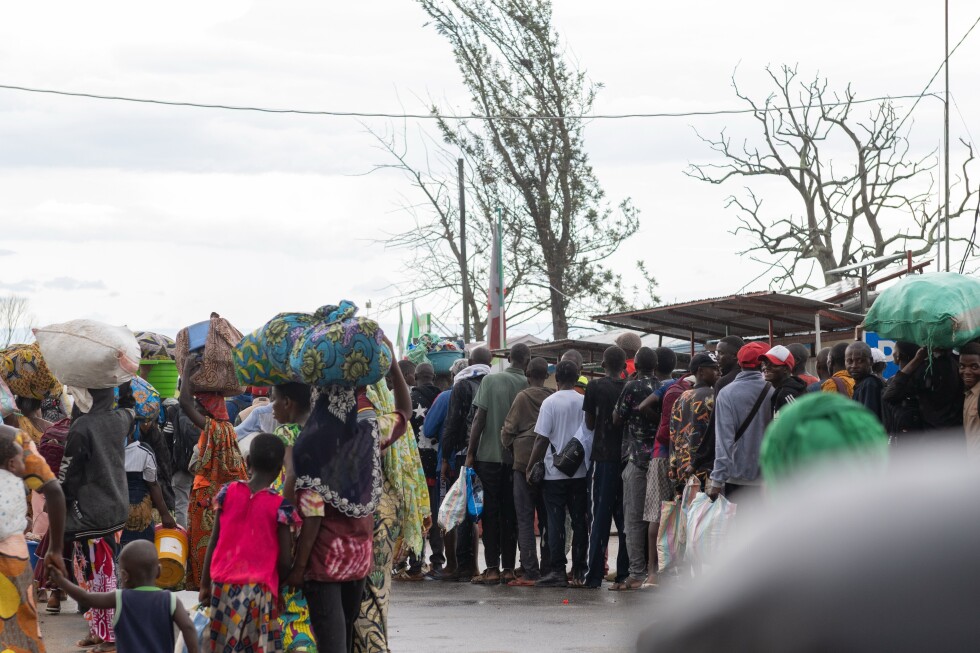
    GOMA, Democratic Republic of Congo — Eastern Congo confronts a devastating tragedy as communities mourn the loss of at least 200 artisanal miners killed in a catastrophic landslide at the rebel-controlled Rubaya coltan mining complex. The disaster struck last Wednesday following torrential rains, collapsing a network of hand-dug tunnels and trapping an unknown number of workers who remain missing.

    The mining site, located approximately 40 kilometers west of Goma, has been under the control of Rwandan-backed M23 rebels since early 2024. It employs thousands of miners who extract valuable minerals using rudimentary tools and techniques passed down through generations.

    In Goma’s Mugunga neighborhood, the family of 39-year-old Bosco Nguvumali Kalabosh gathered in mourning. His photograph displayed against a wall served as the centerpiece for grieving relatives and neighbors. “He was supposed to return to Goma on Thursday,” lamented his older brother, Thimothée Kalabosh Nzanga. Kalabosh, a decade-long veteran of the mines who owned his own pits, leaves behind a widow and four young children.

    Despite the overwhelming loss, economic necessity drives survivors back to the hazardous worksite. Tumaini Munguiko, who survived the collapse while losing five friends and his older brother, explained the grim reality: “Seeing our peers die is very painful. But despite the pain, we are forced to return to the mines to survive.” Munguiko described multiple previous disasters as “almost normal” in their frequency.

    Geological instability during rainy seasons creates perpetual danger in Rubaya. Miners excavate extensive parallel tunnels with inadequate structural support and no safe evacuation routes. According to former miner Clovis Mafare, uncontrolled digging without safety measures means “in a single pit, there can be as many as 500 miners, and because the tunnels run parallel, one collapse can affect many pits at once.”

    The absence of insurance or compensation compounds the tragedy. Mafare noted that while families might receive minimal funeral assistance, “that small amount isn’t compensation.” Kalabosh’s family has received no financial support for their loss.

    Rubaya’s coltan mines have become strategic assets in Congo’s ongoing conflict, frequently changing hands between government forces and rebel groups. The extracted columbite-tantalite ore produces tantalum and niobium—both classified as critical raw materials by major global economies. These minerals power modern technology from mobile phones and computers to missile systems and jet engines.

    The region’s isolation exacerbates the crisis. Rubaya has been virtually disconnected for two weeks with no mobile network or internet. Residents must pay approximately $2 for 30 minutes of connectivity through private Starlink systems. Poor infrastructure and persistent conflict maintain unreliable cellular and electrical services.

    Political recriminations have followed the tragedy. Congo’s government issued a statement on X expressing solidarity with victims while accusing rebels of illegally and unsafely exploiting natural resources and blaming Rwanda. An M23 spokesperson countered by accusing the government of politicizing the disaster and citing previous collapses at government-controlled mines.

  • Eala delights Filipino fans in Abu Dhabi with commanding win

    Eala delights Filipino fans in Abu Dhabi with commanding win

    Filipino tennis prodigy Alexandra Eala delivered a spectacular performance at the Mubadala Abu Dhabi Open on Monday, securing a decisive victory against Turkey’s Zeynep Sonmez with a commanding 6-4, 6-3 straight-sets win. The 20-year-old left-handed sensation, currently ranked 45th globally, showcased exceptional form before an enthusiastic crowd of Filipino supporters at Zayden Sports City.

    Eala’s impressive showing comes as a strong rebound from her recent quarterfinal exit at the WTA 125 Challenger tournament in Manila and her first-round departure from the Australian Open last month. The young athlete expressed gratitude for the growing fan support, noting, ‘I’ve been competing before increasingly larger audiences recently and I’m gradually finding my rhythm. I truly value all the fans who attend with their families, particularly on weekdays.’

    Following her match, Eala received special recognition from Alfonso Ferdinand Ver, the Philippine Ambassador to the UAE, highlighting the significance of her representation on the international stage.

    In other tournament action, seventh-seeded Jelena Ostapenko of Latvia engaged in a dramatic three-set battle against Russia’s Oksana Selekhmeteva, ultimately prevailing 5-7, 7-6 (7/4), 6-2. Meanwhile, Ukrainian player Dayana Yastremska delivered an upset by eliminating Brazilian star Beatriz Haddad Maia with a 6-2, 7-5 victory.

    Tournament Director Nigel Gupta expressed enthusiasm about the event’s quality, stating, ‘Abu Dhabi witnessed another exceptional day of tennis. The strong attendance throughout the event has been tremendously encouraging, and particularly heartening to see numerous schoolchildren enjoying today’s matches. The draw produced an electrifying matchup between two immensely supported athletes, and while only one could emerge victorious, we extend our congratulations to Eala. We anticipate with great excitement what the remainder of the tournament will bring.’

  • Exclusive: Why Pakistan’s India boycott hits ICC and BCCI where it hurts

    Exclusive: Why Pakistan’s India boycott hits ICC and BCCI where it hurts

    In an unprecedented move that has reverberated throughout the international cricket community, Pakistan has officially withdrawn from its high-stakes T20 World Cup match against arch-rival India scheduled for February 15 in Colombo. This calculated decision, endorsed by the Pakistani government and supported by former cricketing legends, represents a profound protest against what many perceive as systemic imbalances within the International Cricket Council’s governance structure.

    The geopolitical tensions underlying this boycott center on recent ICC decisions, particularly the handling of Bangladesh’s tournament participation and the controversial removal of Mustafizur Rahman from the Indian Premier League. Former Pakistan wicketkeeper Rashid Latif, in an exclusive interview, articulated the growing sentiment among many cricket nations that the ICC has consistently favored the Board of Control for Cricket in India (BCCI) in critical decision-making processes.

    Latif emphasized the significance of Pakistan’s stance, noting that while the BCCI remains cricket’s most financially powerful entity, the sport’s integrity suffers when competitive balance is compromised. The former captain highlighted specific incidents including the ICC’s refusal to relocate Bangladesh’s matches to co-host Sri Lanka despite establishing a precedent during last year’s Champions Trophy when India’s matches were moved to Dubai for security reasons.

    Adding to the diplomatic friction was last year’s ‘handshake gate’ incident during the Asia Cup, where Indian players refused customary post-match gestures with Pakistani counterparts months after the neighboring nuclear powers nearly escalated into full-scale conflict.

    The financial implications of this boycott are substantial, with India-Pakistan matches typically generating approximately $400 million in broadcasting and advertising revenue. This fixture consistently ranks among the most-watched sporting events globally, making Pakistan’s withdrawal a significant economic blow to both the ICC and broadcast partners.

    Despite forfeiting potential points in Group A, where Pakistan faces comparatively weaker opponents including the Netherlands, Namibia, and the USA, the team’s World Cup prospects remain viable following their recent series victory over Australia. However, questions persist regarding how Pakistan would handle a potential knockout-stage encounter against India.

    The ICC has issued statements warning of ‘long-term implications’ for Pakistan’s cricket future, but many analysts believe the organization cannot afford to alienate a nation that represents nearly 400 million passionate cricket followers. This standoff ultimately underscores the delicate balance between sporting excellence, political realities, and commercial interests in modern international cricket.

  • Standard Chartered raises $170 million in DIFC deal

    Standard Chartered raises $170 million in DIFC deal

    In a strategic financial maneuver executed on February 2, 2026, Standard Chartered Bank has successfully raised $170 million through the issuance of a Certificate of Deposit via its Dubai International Financial Centre (DIFC) branch. This transaction was conducted under the bank’s established UK electronic commercial paper and certificate of deposit program, marking a significant advancement in utilizing Dubai as a pivotal platform for international capital mobilization.

    Certificates of Deposit represent short-term investment instruments that financial institutions employ to secure funding from substantial investors, including institutional entities and asset management firms. For the broader public, this signifies a regulated borrowing mechanism where the bank obtains short-term capital while providing investors with a secure, tradable instrument guaranteed by a globally recognized financial entity.

    The execution of this financial operation through the DIFC underscores the United Arab Emirates’ expanding influence as a global financial nexus, strategically connecting capital flows between Asia, the Middle East, Africa, and European markets. Camil Zoghby, Head of Treasury Markets for the Middle East, North Africa and Pakistan at Standard Chartered, emphasized that “this issuance represents the first of many in the region and constitutes a crucial milestone in enhancing our funding resilience while extending our global liquidity reach.”

    This financial development not only strengthens Standard Chartered’s funding infrastructure and access to diverse international capital pools but also validates the UAE’s sophisticated financial ecosystem. The nation’s sustained investments in robust regulatory frameworks, transparent market operations, and advanced digital financial infrastructure have positioned Dubai as an increasingly attractive destination for complex international funding activities.

    The transaction simultaneously benefits multiple stakeholders: investors gain exposure to low-risk, short-term investment vehicles backed by a globally active banking institution, while the UAE reinforces its standing as a credible and sophisticated jurisdiction for international financial operations. By selecting the DIFC as the platform for this issuance, Standard Chartered actively contributes to the UAE’s broader ambition of establishing itself as a preeminent global financial center bridging Eastern and Western capital markets.

  • UAE government adopts regulated stablecoin as a mode of payment for the government services

    UAE government adopts regulated stablecoin as a mode of payment for the government services

    The United Arab Emirates has achieved a groundbreaking milestone in digital governance by formally authorizing the use of AE Coin, a regulated stablecoin, as an official payment method for all federal government services. This landmark decision represents the first nationwide implementation of a central bank-licensed stablecoin for government fee payments anywhere in the Middle East region.

    The strategic initiative, announced during Abu Dhabi Finance Week, positions the UAE at the forefront of institutional Web3 adoption and public-sector digital transformation. AE Coin operates as the UAE’s first central bank-licensed, fully reserved payment token backed by the UAE dirham, administered through the AEC Wallet platform powered by Al Maryah Community Bank (Mbank).

    To operationalize this visionary framework, three major financial institutions—Commercial Bank of Dubai (CBD), Abu Dhabi Islamic Bank (ADIB), and Network International—have executed separate Memoranda of Understanding with Mbank. These agreements establish the necessary payment infrastructure to facilitate AE Coin transactions across all federal ministries, authorities, and government service channels.

    Saeed Saeed Rashed Al Yateem, Assistant Undersecretary for Resources and Budget at the Ministry of Finance, emphasized that this recognition “reinforces the UAE’s position as one of the most advanced nations in building a fully integrated financial and digital infrastructure.” The integration of this blockchain-based digital currency into government revenue systems demonstrates the country’s commitment to harnessing advanced technologies for more efficient and reliable public services.

    Industry leaders celebrated the development as transformative for the UAE’s financial ecosystem. Mohammed Wassim Khayata, CEO of Al Maryah Community Bank, described the move as “a powerful demonstration of how regulated digital finance can enhance public services, simplify transactions, and accelerate national innovation.” Ramez Rafeek, General Manager of AED Stablecoin LLC, noted that this implementation “sets a new regional benchmark for real-world utility” of virtual assets.

    The initiative aligns with the UAE’s broader vision of creating a next-generation digital government where services become more accessible, responsive, and integrated across channels. By enabling instant, low-cost payments with enhanced security protections, the framework advances financial inclusion while providing more flexible digital payment options for citizens and businesses alike.

  • Shanties in a Lagos lagoon: Bulldozed and burnt

    Shanties in a Lagos lagoon: Bulldozed and burnt

    In the heart of Lagos, Nigeria’s sprawling metropolis, a humanitarian crisis unfolds as thousands of residents face forced evictions from their waterfront homes in Makoko, the country’s largest informal settlement. The Lagos State government maintains these demolitions target structures built dangerously close to high-voltage power lines, citing critical health and safety concerns. However, community members and advocacy groups allege these actions represent systematic land appropriation for elite urban development projects.

    Anna Sobie, a mother of five, exemplifies the human toll of this operation. Her family now sleeps on the fractured wooden platform that once supported their home, exposed to the elements without adequate shelter. “We’re sleeping in an open space under the rain,” Sobie recounts, describing how excavators arrived with minimal warning while her family was inside their home.

    The demolitions, which began two days before Christmas, have reportedly displaced over 10,000 residents and destroyed more than 3,000 structures including homes, schools, clinics, and churches according to a coalition of ten non-governmental organizations. These groups document alarming tactics including the use of armed security personnel, bulldozers, and alleged arson attacks on occupied dwellings.

    Historical context reveals Makoko was established in the 19th century by fishing communities, with residents claiming customary land rights predating modern Lagos. The settlement’s population estimates range from 80,000 to 200,000 people, many of whom are low-income families and migrants seeking economic opportunities in Nigeria’s commercial capital.

    Governor Babajide Sanwo-Olu’s administration defends the actions as necessary urban management, emphasizing the proximity of structures to electrical infrastructure that poses lethal risks. Special Adviser on Urban Development Olajide Abiodun Babatunde stated: “No responsible government anywhere in the world can allow people to live directly under high-tension cables or obstruct vital waterways.”

    The government has promised financial compensation to affected families but has not provided alternative accommodation. This response has failed to satisfy residents like Elizabeth Kakisiwe, who returned from market to find her home demolished and possessions destroyed. “When rain fell days later, we were drenched,” she describes. “At night, we sit in the cold.”

    Tensions escalated recently when police deployed tear gas against more than 1,000 protesters marching toward the state legislature, resulting in injuries and alleged fatalities. Community leaders report five deaths, including children, from tear gas exposure during earlier demolition operations—claims the government says it will investigate.

    Urban development experts note this conflict occurs against Lagos’s severe housing deficit, which has grown from 2.95 million units in 2016 to 3.4 million in 2025 despite increased construction. The city’s rapid population growth and escalating costs have pushed more residents into informal settlements, creating recurring clashes between urban development goals and community rights.

    As excavators continue their work along the lagoon, displaced residents salvage firewood from debris while children repair fishing nets amid the destruction. The remaining structures stand as fragile testaments to a community fighting to preserve its existence against the pressures of modern urban development.

  • The Ultimate Golf Challenge returns: Season 3 tees off at scenic Saadiyat Beach Golf Club

    The Ultimate Golf Challenge returns: Season 3 tees off at scenic Saadiyat Beach Golf Club

    Abu Dhabi’s prestigious Saadiyat Beach Golf Club prepares to host the opening round of the Ultimate Golf Challenge (UGC) Season 3 on February 5, 2026, marking the return of the UAE’s premier corporate golf tournament. Ten elite teams comprising the nation’s top amateur golfers will commence their campaign at the region’s first ocean-front designed course, renowned for its challenging coastal winds and strategic hazards.

    The competitive field features defending champions Noble Legacy Masters alongside inaugural winners Tristar Gladiators and eight other formidable squads: The A Team, Alpha Ninjas, Brain Dubai, Mayfair Chippies, Meteora Magicians, Shershaah Eagles, Sultans of Swing, and Three Comma Masters. Each organization has spent months refining rosters through meticulous handicap analysis and strategic pairing preparations.

    Tournament Commissioner Kunal Seth noted the elevated competitive standards, stating: ‘The level of preparation and team strategies surpass previous seasons. Every franchise arrives with championship aspirations, recognizing that each round will critically impact the final standings.’

    The four-tournament series will progress across the UAE’s most iconic courses following the Saadiyat opener: Jumeirah Golf Estates’ Earth Course (February 26, matchplay format), Dubai Creek Golf & Yacht Club (April 2, best-ball Stableford), and concluding at Emirates Golf Club’s Faldo Course (May 7, individual Stableford).

    Noble Legacy Masters co-owner Achal Ghai emphasized team cohesion as the decisive factor: ‘Our previous victory demonstrated that belief and trust create championship teams. We return with strengthened resolve and enhanced unity.’ Meanwhile, The A Team has incorporated new talent alongside experienced players under mentors Aman and Ayesha Chopra, adopting a philosophy balancing competitive excellence with camaraderie.

    The opening round employs a specialized format where teams field two five-player squads, with the four highest Stableford scores from each group contributing to the cumulative team total. This structure emphasizes both individual skill and collective performance while testing adaptability to Saadiyat’s distinctive environmental challenges, including strategic bunkering and wildlife-preserved fairways occasionally shared with local gazelles.