标签: Africa

非洲

  • Dubai Ruler honours Gambia’s Minister of Tourism with Best Minister Award at WGS 2026

    Dubai Ruler honours Gambia’s Minister of Tourism with Best Minister Award at WGS 2026

    DUBAI, UAE – In a ceremony highlighting global governmental excellence, Sheikh Mohammed bin Rashid Al Maktoum, Vice President and Prime Minister of the UAE and Ruler of Dubai, presented Gambia’s Minister of Tourism and Culture Abdoulie Jobe with the distinguished Best Minister Award during the World Governments Summit 2026. The recognition celebrates transformative leadership and innovative approaches to public service that create substantial community impact.

    Sheikh Mohammed emphasized the award’s significance beyond individual achievement, stating: “This honor represents a celebration of governmental efficiency and acknowledges the positive role embodied by the world’s most effective ministers. It recognizes exceptional leaders dedicated to advancing public service sectors and enhancing quality of life through innovation, sustainable development, and diligent effort.”

    Minister Jobe’s recognition stems from his groundbreaking work in transforming Gambia’s tourism landscape through two pioneering initiatives. The Tourism Diversification and Resilience Enhancement Project has successfully promoted inclusive growth by providing comprehensive support to micro-, small-, and medium-sized tourism enterprises. Through the Yokuté Accelerator program, local entrepreneurs received extensive training in business development, entrepreneurship, and access to joint funding opportunities.

    A cornerstone of Jobe’s strategy involves building climate resilience within the tourism sector by developing ecotourism and domestic tourism assets, thereby reducing dependence on vulnerable coastal tourism. Under his leadership, the ministry conducted thorough assessments of potential riverfront and ecotourism projects, identifying and prioritizing ten climate-resilient tourism centers in collaboration with technical partners.

    Concurrently, Jobe oversaw the Digital Transformation and Evidence-Based Tourism Planning Project, which modernized tourism governance through advanced technology and enhanced data systems. By working with national institutions, the ministry significantly improved tourism statistics capabilities, establishing digital infrastructure that supports data-driven planning, strengthens transparency, and improves service delivery across the entire tourism value chain.

    The Best Minister Award, organized by the World Governments Summit Organisation in partnership with PricewaterhouseCoopers (PwC), aims to celebrate exceptional ministerial contributions that foster excellence in public service and implement sustainable initiatives driving socio-economic advancement. The award also recognizes efforts to inspire fellow government leaders to embrace innovation and foresight in addressing pressing global challenges.

  • Why a beauty spot in South Africa could be about to run out of water

    Why a beauty spot in South Africa could be about to run out of water

    The picturesque South African coastal town of Knysna, renowned for its azure waters and pristine beaches along the Garden Route, has declared a state of disaster as it confronts an impending water catastrophe. With approximately 55% of potable water vanishing through dilapidated pipelines, this tourist haven now grapples with the terrifying prospect of taps running completely dry—a scenario dubbed “day zero.”

    Beneath Knysna’s idyllic surface lies a crumbling water infrastructure exacerbated by persistent drought conditions. The Akkerkloof dam, the town’s primary reservoir, currently holds merely 20 days worth of reserves. This crisis has forced severe water rationing measures, limiting consumption to 50 liters per person daily—drastically lower than the 142 liters typically used by individuals in the United Kingdom.

    The water emergency has already manifested at local facilities. A retirement center endured a ten-day complete water outage last October, prompting owner Franco de Grandis to invest R250,000 ($15,700) in emergency infrastructure including storage tanks and pressure pumps. “Without water, we cannot function,” de Grandis emphasized, highlighting the critical nature of the situation.

    Non-governmental organizations have mobilized relief efforts. Gift of the Givers coordinates daily water deliveries via tankers from privately dug boreholes. Local coordinator Mario Ferreira noted concerning normalization of the crisis: “The disturbing thing is people start thinking this is the way of life and it shouldn’t be.”

    Newly inaugurated Mayor Thando Matika acknowledges inheriting decades of infrastructure neglect, with previous administrations citing financial constraints even for basic maintenance. The national government has allocated $1.25 million in emergency funding for immediate interventions including repairing seven existing boreholes, constructing an additional borehole, and revitalizing the desalination plant. Long-term strategies involve water recycling initiatives and potential dam construction.

    The tourism sector remains apprehensive about the “day zero” terminology. Elmay Bouwer of the Great Knysna Business Council cautions against alarmism while advocating for conservation education: “We should instead tell people how to preserve the water we have.”

    Experts warn that Knysna’s predicament reflects a national crisis. Dr. Ferial Adam of Watercan notes that millions of South Africans already experience perpetual “day zero” conditions without household running water. This reality is starkly evident in Khayalethu township, where 60-year-old Khanyiswa Sewula routinely carries buckets to municipal water distribution points.

    The convergence of climate change, infrastructure decay, and access inequality creates a precarious situation that demands urgent, comprehensive solutions beyond temporary measures.

  • Ronaldo missed match due to frustration with Al-Nassr’s quiet transfer window: Reports

    Ronaldo missed match due to frustration with Al-Nassr’s quiet transfer window: Reports

    Cristiano Ronaldo’s conspicuous absence from Al-Nassr’s lineup during their 1-0 victory against Al-Riyadh on Monday stemmed from strategic discontent rather than physical incapacity, according to multiple sports media investigations. The Portuguese icon voluntarily withdrew from selection due to mounting frustration with the club’s failure to secure high-profile signings before the Saudi Pro League’s transfer deadline.

    Despite occupying second place in the league standings, Al-Nassr’s conservative approach to the transfer window contrasted sharply with their archrivals’ ambitions. League leaders Al-Hilal are reportedly finalizing a landmark acquisition of Karim Benzema – Ronaldo’s former Real Madrid colleague – intensifying the competitive pressure within the Saudi top flight.

    ESPN sources confirm the 40-year-old forward maintains full fitness and retains the confidence of manager Jorge Jesus. The self-imposed exclusion doesn’t reflect any deterioration in their professional relationship, nor does it signal Ronaldo’s desire to terminate his lucrative contract extension signed just eight months ago in June 2025.

    The five-time Ballon d’Or winner continues to demonstrate extraordinary scoring prowess, having netted 91 times in 95 league appearances since his high-profile arrival in Riyadh. His career tally of 961 goals across club and international competitions remains unmatched in football history.

    Al-Nassr’s narrow victory marked their fifth consecutive league triumph, narrowing the gap to just one point behind unbeaten Al-Hilal. However, Ronaldo’s symbolic protest underscores growing concerns about the club’s ability to maintain competitiveness against increasingly ambitious domestic rivals.

  • BTS in Dubai: Videos of K-pop superstars at DXB flood the Internet

    BTS in Dubai: Videos of K-pop superstars at DXB flood the Internet

    Dubai International Airport became the epicenter of global K-pop excitement on February 3, 2026, as South Korean supergroup BTS made an unexpected appearance during a transit stop. The seven-member band, currently traveling to Lisbon, Portugal, generated massive social media buzz as footage of their ordinary airport activities captivated millions worldwide.

    Eyewitness videos circulating across Twitter and TikTok platforms depicted the Grammy-winning artists engaging in remarkably mundane travel routines. The footage showed members examining Dubai Chocolate products at duty-free shops – particularly noteworthy given this local confectionery’s recent viral resurgence in South Korean culinary trends. Additional clips captured the idols patiently awaiting transportation on airport buggies, with member J-Hope observed casually twiddling his thumbs during the wait.

    The airport sighting triggered an outpouring of emotional responses from Middle Eastern fans, many expressing overwhelming excitement at witnessing their idols in the UAE, however briefly. One fortunate traveler reportedly obtained an autograph from rapper Suga (Min Yoongi) while aboard their Emirates flight, sharing photographic evidence across social platforms.

    This transit occurrence coincides with preparations for the group’s highly anticipated musical comeback. Titled ‘Arirang,’ their new studio album is scheduled for global release on March 20, 2026, to be followed by an extensive world tour commencing in Seoul. While specific Middle Eastern concert dates remain unconfirmed, industry insiders anticipate regional performances potentially occurring during 2027.

    The Dubai sighting demonstrates BTS’s continued global influence, transforming routine travel into an international media event that highlights the enduring power of artist-fan connections in the digital age.

  • Airbus is experiencing a ‘golden age’ of demand, CEO says

    Airbus is experiencing a ‘golden age’ of demand, CEO says

    Airbus Chief Executive Guillaume Faury has characterized the current market environment as a ‘golden age’ for aircraft demand, while simultaneously acknowledging significant production constraints that prevent the European aerospace giant from capitalizing fully on this unprecedented opportunity.

    Speaking at the World Government Summit in Dubai, Faury revealed that global demand for air travel and new aircraft has reached historic levels, driven by increasing passenger numbers and airlines’ urgent need for more fuel-efficient fleets. This surge has resulted in a record backlog of orders that Airbus is struggling to fulfill due to persistent supply chain complications stemming from the pandemic.

    The CEO detailed how the aerospace industry’s complex ecosystem, built over decades, was severely disrupted during COVID-19 when production plummeted for 18-24 months. The industry lost substantial skilled workforce during this period, creating a expertise gap that cannot be rapidly replaced. Faury emphasized that aerospace manufacturing relies heavily on individual skills and experience, making recovery particularly challenging.

    With approximately three million individual components comprising each Airbus aircraft, delays in even single parts can halt entire production lines. Engines specifically remain the most significant bottleneck, with Faury predicting continued challenges through 2025 and likely into 2026.

    Despite these constraints, Faury welcomed the commercial pressure from airlines seeking faster deliveries as evidence of market strength. ‘It’s a good problem to have, to have customers asking for your products,’ he noted, while acknowledging the operational difficulties this demand creates.

    Addressing competitive landscape changes, Faury recognized China’s COMAC as an emerging player in commercial aviation with its certified C919 aircraft operating domestically. However, he pointed out that COMAC remains dependent on Western supply chains and expertise, with European certification still pending. Faury expressed confidence in Airbus’s ability to maintain competitiveness through innovation and technological investment in what he characterized as a market large enough for multiple players.

  • Ethiopia’s prime minister accuses Eritrea of mass killings during Tigray war

    Ethiopia’s prime minister accuses Eritrea of mass killings during Tigray war

    ADDIS ABABA, Ethiopia — In a landmark parliamentary address on Tuesday, Ethiopian Prime Minister Abiy Ahmed formally acknowledged for the first time that Eritrean military forces participated extensively in the Tigray conflict, leveling serious allegations of mass killings and systematic destruction against them. This declaration marks a dramatic reversal from the government’s previous stance and significantly escalates diplomatic tensions between the neighboring nations.

    The two-year Tigray war, which concluded with a peace agreement in 2022, resulted in an estimated 400,000 fatalities according to international observers. Prime Minister Ahmed detailed specific atrocities, asserting that Eritrean troops “demolished houses in Shire, massacred our youth in Axum, and looted factories in Adwa” during joint operations with Ethiopian forces against Tigrayan regional fighters.

    Eritrea’s Information Minister Yemane Gebremeskel swiftly dismissed these allegations as “cheap and despicable lies” unworthy of formal response. This exchange occurs amidst reports of renewed hostilities in the Tigray region, prompting Ethiopia’s national carrier to suspend flights to the area last week due to security concerns.

    The underlying conflict extends beyond wartime allegations to fundamental geopolitical interests. Landlocked Ethiopia has increasingly expressed its need for sovereign access to sea ports, with Prime Minister Ahmed asserting that “The Red Sea and Ethiopia cannot remain separated forever.” Ethiopia lost its Red Sea coastline when Eritrea gained independence in 1993 following decades of armed struggle.

    Gebremeskel countered that Ahmed’s accusations represent a recent rhetorical shift motivated by maritime ambitions, noting that Ethiopian leadership had previously decorated Eritrean military officials with state medals. The minister characterized Ethiopia’s position as developing a “delusional malaise of ‘sovereignty access to the sea.’”

    The deteriorating relationship represents a stark reversal from the diplomatic breakthrough achieved in 2018, when Abiy received the Nobel Peace Prize for reconciling with Eritrea. Current intelligence assessments suggest Eritrea may be forming alliances with Tigrayan forces, while both nations accuse each other of preparing for renewed conflict. Regional analysts warn that these developments threaten to destabilize the entire Horn of Africa.

  • Seif al-Islam Gadhafi, son of Libya’s late dictator, killed in north Africa country, officials say

    Seif al-Islam Gadhafi, son of Libya’s late dictator, killed in north Africa country, officials say

    Libyan officials confirmed on Tuesday the death of Seif al-Islam Gadhafi, the once-presumed heir to former dictator Moammar Gadhafi, in what security sources describe as a targeted killing. The 53-year-old was slain at his residence in Zintan, located approximately 136 kilometers southwest of Tripoli, according to anonymous security officials from western Libya.

    Multiple sources verified the incident, including Khaled al-Zaidi, Gadhafi’s legal representative, who announced the death via social media without elaboration. Abdullah Othman Abdurrahim, who led Gadhafi’s political team in UN-mediated peace talks, similarly confirmed the killing on Facebook. Local media outlet Fawasel Media, citing Abdurrahim, reported that armed assailants carried out the assassination at Gadhafi’s home, prompting an immediate prosecutor-led investigation.

    Gadhafi’s political organization issued an official statement characterizing the event as a ‘cowardly and treacherous assassination,’ claiming that four masked individuals stormed the residence, disabled surveillance systems, and executed him following an altercation. The statement emphasized these actions as deliberate attempts to conceal evidence of what they termed ‘heinous crimes.’

    Seif al-Islam, born in Tripoli in June 1972, was the second son of the longtime ruler and held a distinctive position within the regime. Educated at the London School of Economics where he pursued doctoral studies, he frequently presented himself as a reform-oriented figure during his father’s authoritarian rule.

    His death represents another turbulent chapter in Libya’s unstable trajectory since the NATO-supported uprising of 2011, which culminated in Moammar Gadhafi’s overthrow and death after four decades in power. Captured by Zintan fighters in late 2011 while attempting to escape to Niger, Seif al-Islam remained imprisoned until June 2017 when a rival government granted him amnesty. He had resided in Zintan since his release.

    The younger Gadhafi faced significant legal challenges, including a 2015 in absentia death sentence from a Libyan court for inciting violence and murdering protesters during the revolution. Additionally, the International Criminal Court had issued warrants for his arrest on crimes against humanity charges related to the 2011 conflict.

    In a controversial political maneuver, Gadhafi declared his presidential candidacy in November 2021, generating substantial opposition from anti-Gadhafi factions across Libya’s divided political landscape. Although the High National Elections Committee ultimately disqualified him, the presidential election itself was postponed indefinitely due to persistent disputes between rival governments and armed factions that have controlled the country since the civil war.

  • Saif al-Islam Gaddafi, son of ex-Libyan leader, reportedly killed

    Saif al-Islam Gaddafi, son of ex-Libyan leader, reportedly killed

    Conflicting reports emerged from Libya on Tuesday regarding the alleged death of Saif al-Islam Gaddafi, the prominent son and once-presumed heir of former Libyan leader Muammar Gaddafi. According to statements from the head of his political team to the Libyan News Agency, the 53-year-old has been killed under unclear circumstances.

    Aisha Gaddafi, sister of the controversial figure, contributed to the developing narrative by telling Libyan television that her brother had died in the vicinity of the Libya-Algeria border. However, she provided no specific details regarding the cause of death, leaving a significant information vacuum.

    The reports remain entirely unverified, with various Libyan media outlets circulating competing accounts about the incident. This lack of official confirmation has created a cloud of uncertainty around the fate of a man who was long considered the most powerful and feared figure in Libya after his father.

    Saif al-Islam Gaddafi’s complex legacy includes playing a pivotal role in Libya’s diplomatic reconciliation with Western nations from the early 2000s until the regime’s collapse. Following the 2011 uprising that resulted in his father’s overthrow and death, Gaddafi faced imprisonment by a rival militia in Zintan for nearly six years.

    His political career was overshadowed by serious allegations from the International Criminal Court, which sought to try him for crimes against humanity related to his alleged involvement in suppressing opposition protests during the 2011 revolution. The current developing situation leaves many questions unanswered as the international community awaits verified information.

  • ‘300 million don’t know if they will eat next meal’: Global aid leaders in Dubai

    ‘300 million don’t know if they will eat next meal’: Global aid leaders in Dubai

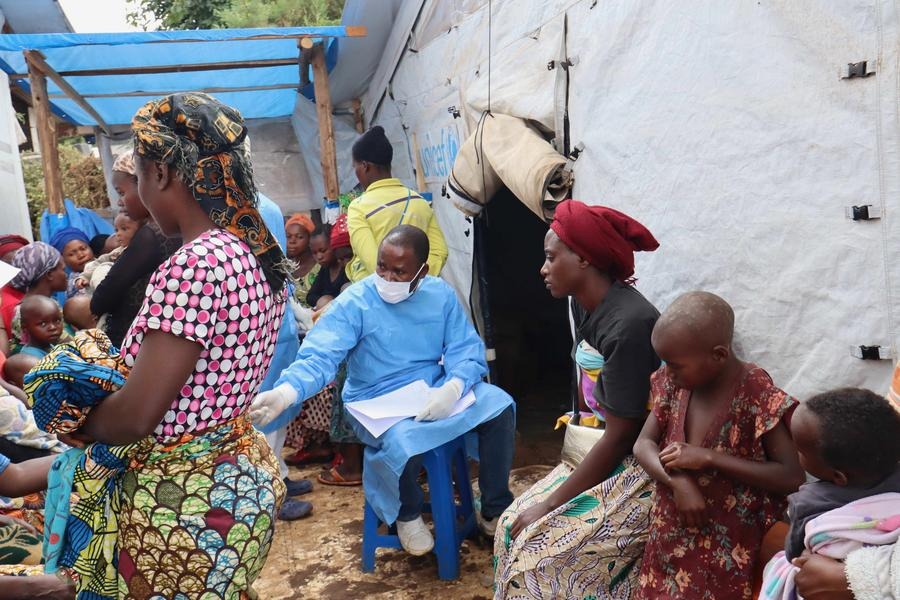
    DUBAI – Amidst high-level discussions on governance and innovation at the World Governments Summit, a stark warning emerged from global aid leaders about the escalating hunger crisis affecting hundreds of millions worldwide. UNICEF Executive Director Catherine Russell and World Food Programme Assistant Executive Director Rania Dagash-Kamara delivered sobering accounts of a humanitarian emergency reaching catastrophic proportions.

    The statistics paint a grim picture: approximately 300 million people globally face acute food insecurity, uncertain whether they will receive their next meal. This number represents what aid officials describe as the most severe category of hunger, where survival becomes a daily uncertainty.

    Russell emphasized the human tragedy behind the numbers, noting that 14 million children faced severe malnutrition risks last year – equivalent to nearly half a million classrooms of 30 children each. During hospital visits in conflict zones like Afghanistan and Yemen, she witnessed malnourished infants sharing beds, their bodies too weakened to even cry. “At that stage, children are not resting,” Russell stated. “They are simply trying to survive.”

    Dagash-Kamara provided harrowing field accounts, including a Somali mother who walked four days to reach a food distribution center after burying two children during her journey. “This is the level of desperation we are facing,” she told summit attendees.

    The crisis is compounded by the deadly synergy between malnutrition and disease. As Dagash-Kamara explained, “People don’t usually die from hunger alone. They die from the illnesses that come with it” – a consequence of malnutrition weakening immune systems.

    Despite proven solutions like ready-to-use therapeutic food (RUTF) that can save severely malnourished children, aid organizations face critical funding shortages amid growing needs. Russell noted the paradox: “We know how to save lives. What we don’t always have is sufficient funding or access.”

    Both leaders highlighted school feeding programs as particularly effective interventions, describing them as long-term investments in children’s futures. Dagash-Kamara shared the story of a Syrian girl who saved half her school sandwich for her mother, illustrating how such programs provide both nutrition and dignity.

    The officials called for innovative partnerships with private sector entities and digital creators to amplify reach and engagement. With people spending over five hours daily on mobile devices, Russell emphasized that content creators “know how to reach people where they are and make them stop and care.”

    As Ramadan approaches, Dagash-Kamara highlighted initiatives like the “ShareTheMeal” app, which provides meals for just 80 cents, encouraging families to involve children in charitable giving.

    Russell concluded with a powerful appeal from the global platform: “Every child deserves what we want for our own children: health, education, and a future. These challenges are not insurmountable. They require collective responsibility.”

  • Olympic officials from Africa quiz 2028 Los Angeles Summer Games leaders on visa concerns

    Olympic officials from Africa quiz 2028 Los Angeles Summer Games leaders on visa concerns

    MILAN — African representatives within the International Olympic Committee raised significant apprehensions regarding U.S. visa accessibility during discussions with Los Angeles 2028 organizers on Tuesday. The dialogue unfolded at an IOC conference where six future Olympic hosts presented progress updates, with the United States currently experiencing substantial domestic political tensions.

    IOC members from Ethiopia and Djibouti specifically questioned how the LA organizing committee would ensure “equal access” for international spectators and visitors attempting to enter the United States for the Summer Games in approximately two and a half years. The concerns were particularly relevant for residents from dozens of countries currently facing U.S. travel restrictions.

    Lydia Nsekera of Burundi, another African IOC member, later characterized the visa uncertainty as “a great worry for everybody,” including team officials. Although the Trump administration wasn’t explicitly mentioned during the Olympic meeting, the context of current U.S. immigration policies formed the subtext of discussions occurring just days before Vice President JD Vance’s scheduled appearance at the Winter Games opening ceremony.

    LA 2028 chairman Casey Wasserman addressed the assembly with prepared remarks acknowledging that “the world is complicated and unpredictable,” adding that organizers “are not naïve to this reality” and would “face it head on.” The concerns gained tangible dimension when Ethiopian IOC member Dagmawit Girmay Berhane revealed that people from 175 countries have already registered interest in purchasing tickets for the 2028 Summer Games.

    While the U.S. government has committed to visa exemptions for athletes and sports event participants, ordinary fans face standard visa application scrutiny. Berhane questioned how equal opportunity would be ensured for all ticket registrants seeking visa services. In response, U.S. Olympic Committee president Gene Sykes referenced a dedicated State Department office handling Games-related visa issues and noted that the upcoming men’s World Cup soccer tournament, co-hosted by the U.S., Canada and Mexico, would provide a practical test run for visa processing systems.

    Djibouti’s representative Aïcha Garad Ali suggested appointing a special “ambassador for visas” similar to Paris 2024’s successful initiative, which “facilitated life for us as African residents.” Sykes acknowledged this was “certainly something we can give consideration to.”

    Wasserman concluded by framing the Olympic Games as “the singular unifying force for the world” and urged focus on unity rather than division, describing Los Angeles as “not just a mirror of America, but a mirror of the world itself.” The chairman’s appearance occurred amidst unrelated personal scrutiny following the weekend release of government documents related to Jeffrey Epstein, containing flirtatious 2003 emails between Wasserman and Epstein associate Ghislaine Maxwell, for which Wasserman has expressed deep regret.